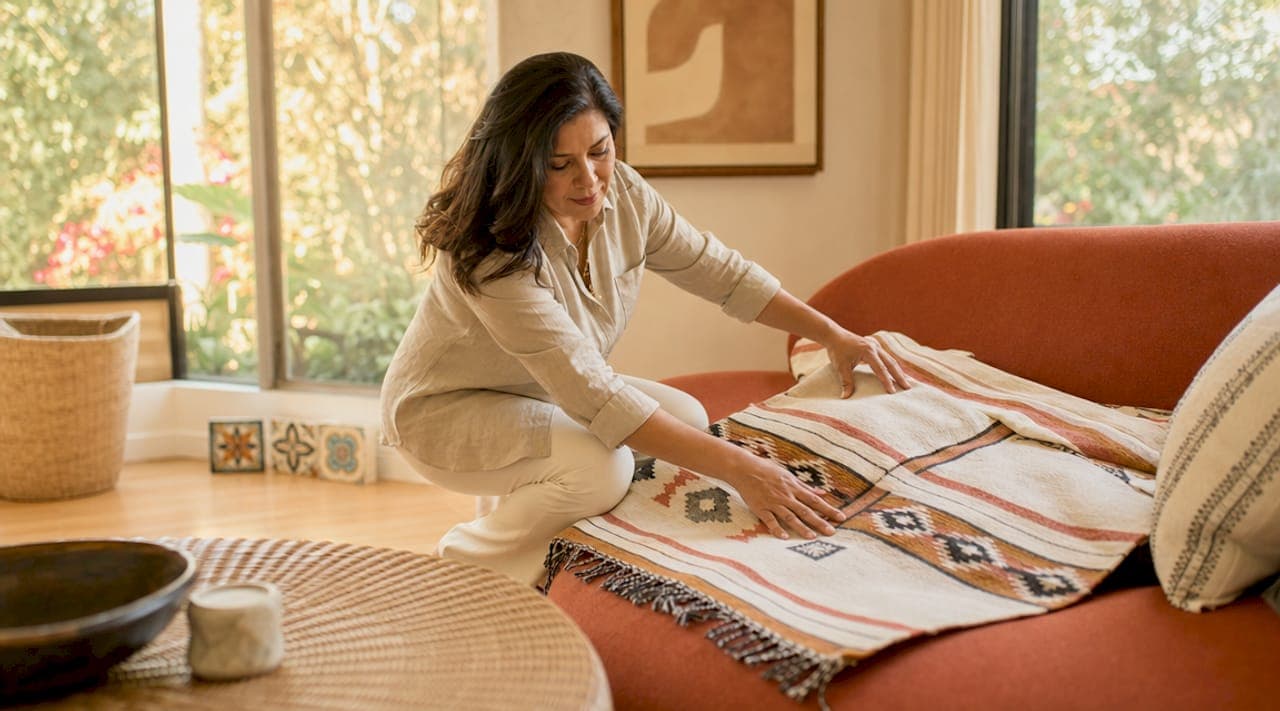
Pairing Mexican crafts with contemporary furniture is the most direct path to an interior that feels both culturally alive and visually calm. The design principle at work here is called warm minimalism: a clean-lined modern framework that lets handmade artisan pieces carry the emotional weight of a room. Done well, this approach creates a dialogue between artisan heritage and contemporary design, where a low-profile linen sofa and a single piece of Talavera pottery say more together than a room full of matching décor ever could. The key is restraint, contrast, and knowing which pieces to let speak.
What contemporary furniture works best as an anchor for Mexican crafts?
The right contemporary furniture acts as a calm, neutral frame. Clean-lined anchor pieces let traditional Mexican crafts read as intentional focal points rather than clutter. Without that frame, even the most beautiful handwoven textile gets lost in visual noise.
These furniture profiles work best:
- Low-profile solid-color sofas in warm white, oatmeal, or charcoal. Avoid tufting, nailhead trim, or busy upholstery that competes with artisan textiles placed on top.
- Natural wood pieces with matte finishes. A walnut coffee table or an oak sideboard with subtle grain adds warmth without the ornate carving that traditional Mexican furniture often carries. The grain does the work quietly.
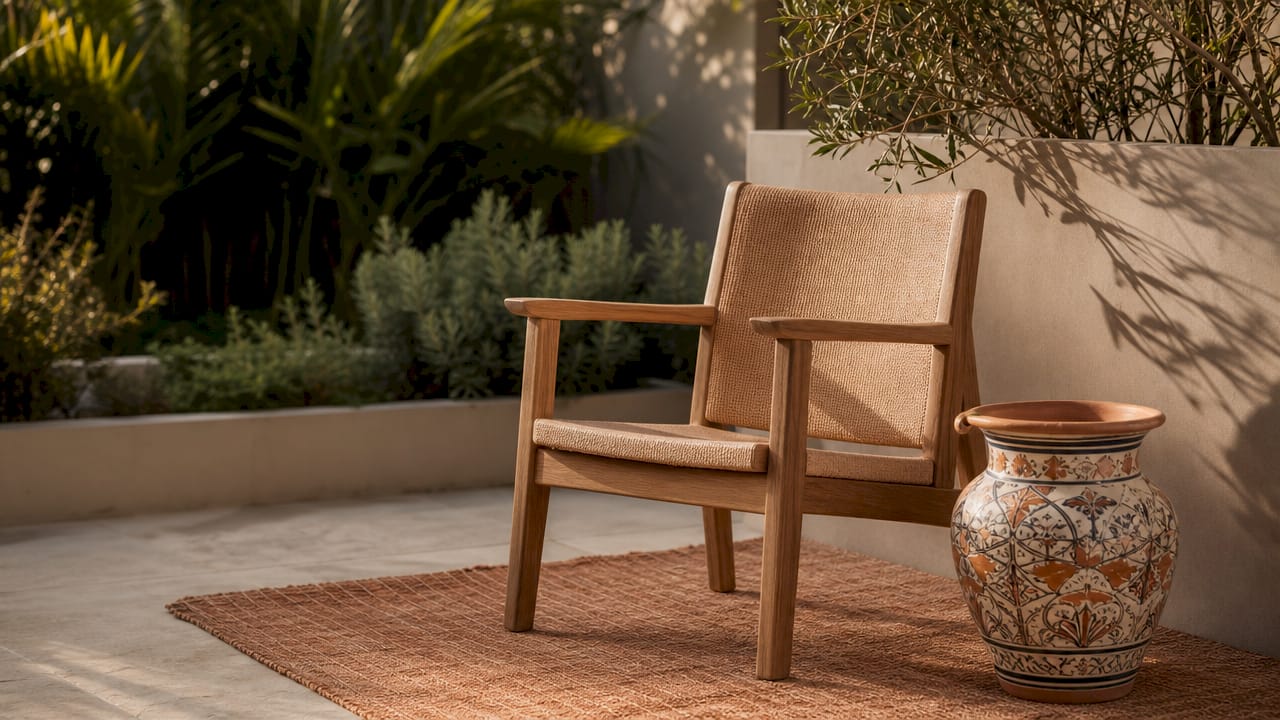
- Mid-century modern silhouettes. Designs in the spirit of Clara Porset, the Cuban-Mexican designer who spent decades bridging modernism and Mexican craft, prove that clean geometry and handmade texture are natural partners. A Porset-influenced chair next to a hand-thrown ceramic vase is a studied contrast that feels effortless.
- Minimalist shelving and case goods. Open shelving in powder-coated steel or pale wood gives artisan ceramics and carved figures room to breathe as individual objects rather than a crowded collection.
Avoid highly glossy lacquered furniture, heavily carved wood frames, or ornate metalwork. Those surfaces compete directly with the richness of Mexican crafts and flatten the contrast you are trying to create.
Pro Tip: Start with your largest furniture piece first. A large traditional item can easily overwhelm a neutral contemporary room, so prioritize contemporary anchors like sofas and sideboards before layering in smaller artisan elements.
How to integrate traditional Mexican crafts with modern interiors
Effective integration comes down to selection, placement, and scale. Limit yourself to 1 to 3 high-impact artisan pieces per room. That number forces you to choose your best pieces rather than display everything at once, and it gives each object the negative space it needs to register as art.
Here is a practical sequence for layering Mexican crafts and modern decor:
-
Choose your hero piece. This is the one object that earns the most visible position in the room. A large hand-painted Talavera vessel on a walnut console, a bold handwoven serape draped over a minimalist sofa, or a punched-tin pendant light above a dining table. One piece, one position, full attention.
-
Add a textile layer. Handwoven textiles, Talavera tile, and pottery build warmth and cultural texture without demanding structural changes. A handwoven throw across the arm of a solid-color chair, or two embroidered cushions on a linen sofa, introduces color and craft at a scale that is easy to adjust.
-
Bring in a ceramic accent. Artisan pottery from Oaxaca or Puebla placed on a shelf or side table adds a grounded, earthy note. Keep the surrounding shelf clear. The piece needs air around it.
-
Consider artisan lighting. A woven palm or punched-tin fixture introduces texture at ceiling height, which is often the most underused surface in a modern interior. It adds warmth without occupying floor or table space.
-
Step back and edit. Remove anything that feels redundant. If two pieces are competing for the same visual territory, one of them belongs in another room or in storage until the space evolves.
Pro Tip: When decorating with handmade items, resist the urge to group similar pieces together. Spreading artisan accents across a room creates a sense of discovery rather than a curated shelf display.
What mistakes should you avoid when blending Mexican crafts with modern decor?
The most common failure in blending traditional crafts with contemporary furniture is what designers call the museum effect. Every surface holds a hand-carved figure, every wall carries a woven piece, and the room stops feeling like a home. Too many chunky traditional pieces tip a room into an outdated or cluttered feel, regardless of the individual quality of each object.
Watch for these specific pitfalls:
- Matching too many wood tones. A carved mesquite console, a rustic wood bench, and a hand-turned wooden bowl on the same table create a monotone that flattens the design. Mix wood with stone, ceramic, or metal to keep the palette dynamic.
- Buying all at once. Designer Maye Ruiz advocates for an evolving interior gathered over time to create spaces connected to regional makers rather than mass-market trends. Rooms built in a single shopping session tend to feel staged rather than lived in.
- Ignoring negative space. Contemporary furniture acts as the neutral frame, and crafts act as the focal paintings. If you fill the frame with too many paintings, none of them land.
- Mixing too many saturated colors at once. A cobalt blue Talavera pot, an ochre textile, a coral embroidered pillow, and a red woven rug in the same room create visual chaos. Choose one or two dominant accent colors and let the rest of the palette stay neutral.
- Choosing tourist-grade pieces. Mass-produced imitations of traditional crafts lack the material depth and cultural integrity of authentic work. They also tend to look cheap next to quality contemporary furniture, which exposes the mismatch rather than hiding it.
How do you balance color, texture, and materials in this style?
The color architecture of a modern Mexican interior follows a clear logic: warm neutrals as the base, bold accents through craft. Warm neutrals and earth tones as base colors with bold accents via crafts maintain balance and prevent visual clutter. This means your walls, large furniture, and flooring stay in the beige, sand, terracotta, and warm white range, while cobalt blue, ochre, coral, and forest green arrive through textiles and ceramics.

The table below shows how to apply this logic across the main material categories:
| Element | Neutral base choice | Artisan accent choice |
|---|---|---|
| Walls | Warm white, sand, or terracotta wash | One accent wall with hand-painted tile or a large woven textile |
| Seating | Linen, wool, or leather in oatmeal or charcoal | Embroidered or handwoven cushions in cobalt, ochre, or coral |
| Flooring | Natural stone, pale wood, or concrete | Handwoven wool rug with geometric pattern |
| Lighting | Matte black or brushed brass fixtures | Punched-tin or woven palm pendant as hero light |
| Accessories | Unglazed ceramic or raw wood | Talavera pottery, painted gourd, or lacquerware in bold color |
Clean lines and neutral palettes define the modern side of this equation, while saturated colors and handmade textures define the Mexican side. The balance between the two prevents a sterile or overly busy result.
Pro Tip: Natural fibers are your best allies in this style. Linen curtains, a jute rug, and a wool throw create a layered texture base that makes artisan pieces feel at home rather than out of place.
Where do you source authentic Mexican crafts for a modern interior?
Authentic sourcing is where this design approach either succeeds or falls apart. Equipal chairs made from pigskin and wood age well and carry genuine cultural value. Authentic artisan equipal chairs cost roughly $150 to $300 per unit, which reflects the labor and material quality involved. That price point also signals the difference between a craft object and a souvenir.
Practical sourcing guidance:
- Artisan co-ops and import specialists. Organizations that work directly with craft communities in Oaxaca, Puebla, Michoacán, and Chiapas pay makers fairly and guarantee material authenticity. The quality difference between co-op sourced and tourist-market pieces is visible immediately.
- Collaborative design studios. Studios like Mestiz in Mexico City work with regional artisans to produce pieces designed for contemporary interiors. Their work bridges the gap between traditional technique and modern scale requirements.
- Curated online retailers. Look for retailers who name the artisan or the region of origin. Anonymized "Mexican-style" products are almost always mass-produced.
- Start small and add gradually. Layering artisan pieces over time creates interiors connected to real makers and real places. Two or three carefully chosen pieces from trusted sources outperform a room full of generic imports.
The goal is not to fill a room with Mexican crafts. The goal is to honor the makers by giving their work the space and context it deserves.
Key takeaways
Pairing Mexican crafts with contemporary furniture succeeds when clean-lined modern pieces act as a neutral frame, and authentic artisan objects are placed with restraint as focal points.
| Point | Details |
|---|---|
| Use contemporary anchors first | Choose neutral, low-profile sofas and natural wood pieces before adding any artisan elements. |
| Limit artisan pieces per room | Place 1 to 3 high-impact crafts per space so each object reads as intentional, not cluttered. |
| Follow the color logic | Keep walls and large furniture in warm neutrals; introduce bold color only through textiles and ceramics. |
| Source authentically | Buy from artisan co-ops or named-maker retailers to get quality pieces that age well and honor their origins. |
| Let spaces evolve | Add pieces gradually over time rather than furnishing all at once for a lived-in, connected result. |
Why restraint is the real design skill here
I have seen beautifully sourced Mexican crafts completely disappear inside rooms that tried too hard. A hand-thrown Oaxacan pot that would stop you cold in a gallery becomes invisible when it sits among fifteen other objects competing for the same attention. The craft did not fail. The room failed it.
The instinct to fill space is understandable, especially when you love what you are collecting. But designer Sophie Renner's observation that modern furniture should frame traditional crafts to prevent a heavy-handed rustic look is the most practical design rule I have encountered for this style. A frame does not shout. It holds.
What I find most rewarding about a well-executed modern Mexican interior is that it never feels finished in a static way. The rooms I admire most have clearly been lived in, adjusted, and added to with care. A new textile from a trip to San Miguel de Allende, a ceramic piece found at a local market, a punched-tin mirror that replaced something that no longer fit. The warm minimalism concept works precisely because it leaves room for that kind of evolution. Sterile minimalism has no room for a new find. Warm minimalism welcomes it.
If I could give one piece of advice to anyone starting this process: buy less than you think you need, give each piece more space than feels comfortable, and wait. The room will tell you what it needs next.
— Ernesto
Bring authentic Mexican craftsmanship into your home
The most direct way to introduce artisan heritage into a contemporary interior is through handcrafted textiles. A single well-made pillow in a bold handwoven pattern placed on a neutral sofa does exactly what this design approach calls for: it creates contrast, adds warmth, and carries a story.

At Createdecorus, we craft each piece Hecho en México with the same care and cultural pride that has defined Mexican artisanship for generations. Our handcrafted luxury pillows are designed specifically to complement contemporary furniture styles, offering the bold color, rich texture, and authentic detail that transforms a modern room into a personal sanctuary. Browse the collection and find the piece that your space has been waiting for.
FAQ
What is warm minimalism in Mexican interior design?
Warm minimalism is a design approach that layers texture and color through artisan pieces without creating clutter. It moves away from sterile modern interiors by introducing handmade crafts as focal accents within a neutral, clean-lined framework.
How many Mexican craft pieces should I use in one room?
The most effective approach is to use 1 to 3 high-impact artisan pieces per room. This number gives each object enough negative space to register as an intentional focal point rather than part of a crowded collection.
What contemporary furniture styles work best with Mexican crafts?
Mid-century modern and minimalist furniture profiles work best because their clean lines and neutral surfaces create contrast with the rich texture and saturated color of traditional Mexican crafts. Avoid ornate or heavily carved furniture that competes with artisan pieces.
How do I avoid the museum effect when decorating with Mexican crafts?
Leave surrounding areas uncluttered and resist placing artisan objects on every surface. Treat each craft piece as a painting and the contemporary furniture around it as the frame, keeping negative space as a deliberate design element.
Where can I find authentic Mexican crafts for a modern interior?
Artisan co-ops, import retailers who name the maker and region of origin, and collaborative design studios like Mestiz in Mexico City are the most reliable sources. Authentic equipal chairs, for example, cost roughly $150 to $300 and are made from pigskin and wood that age well over time.