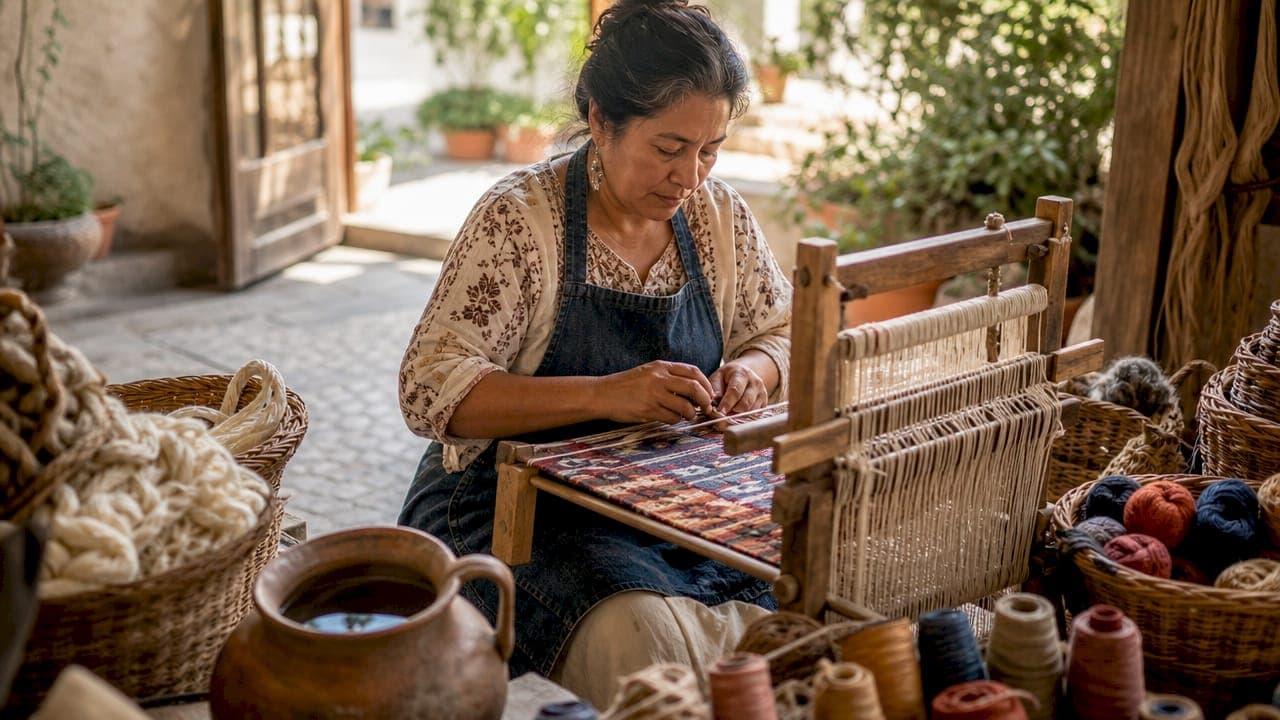
Mexican craftsmanship is defined by the integration of indigenous material traditions, symbolic cultural narratives, and experimental technique into objects that carry genuine emotional weight. The ways Mexican craftsmanship influences global design are not superficial. They reach into how the world understands luxury, texture, and meaning in physical objects. Designers like Emiliano Godoy and institutions like MoMA have recognized this influence formally, while academic programs at Tecnológico de Monterrey are producing the next generation of practitioners who blend 3D printing with corn motifs and cowhide. At Createdecorus, we see this living tradition every day in the pieces we bring to your home.
1. How neo-craft methodology drives design innovation
Neo-craft is defined as a research-driven design practice that treats traditional craft as a living system rather than a historical artifact. This methodology, documented in depth by scholars studying Mexican craft traditions, combines manual knowledge with contemporary tools like 3D printing, laser cutting, and digital fabrication. The result is not nostalgia. It is an open research field where obsidian, quartz, and volcanic stone enter into dialogue with synthetic polymers and precision manufacturing.
What makes neo-craft genuinely different from other design movements is its flexibility. Practitioners treat each material as a question, not an answer. A designer working with Oaxacan black clay does not simply replicate a traditional vessel. She asks what that clay does when fired at a different temperature, combined with a resin inlay, or shaped by a CNC router. That spirit of inquiry is what makes Mexican design adaptable across interiors and globally relevant.
- Material experimentation: Designers combine mineral heritage materials like obsidian and quartz with modern fabrication techniques.
- Digital and manual fusion: 3D printing is used alongside hand-finishing to achieve textures no machine alone can produce.
- Cultural grounding: Every experiment is anchored in a specific regional tradition, giving the work narrative depth.
- Sustainable production: Neo-craft favors small-batch, localized sourcing over industrial supply chains.
Pro Tip: When sourcing Mexican-inspired decor, look for pieces that name the specific region and artisan tradition behind the material. That specificity signals neo-craft thinking, not mass reproduction.
2. Leading Mexican designers shaping global aesthetics
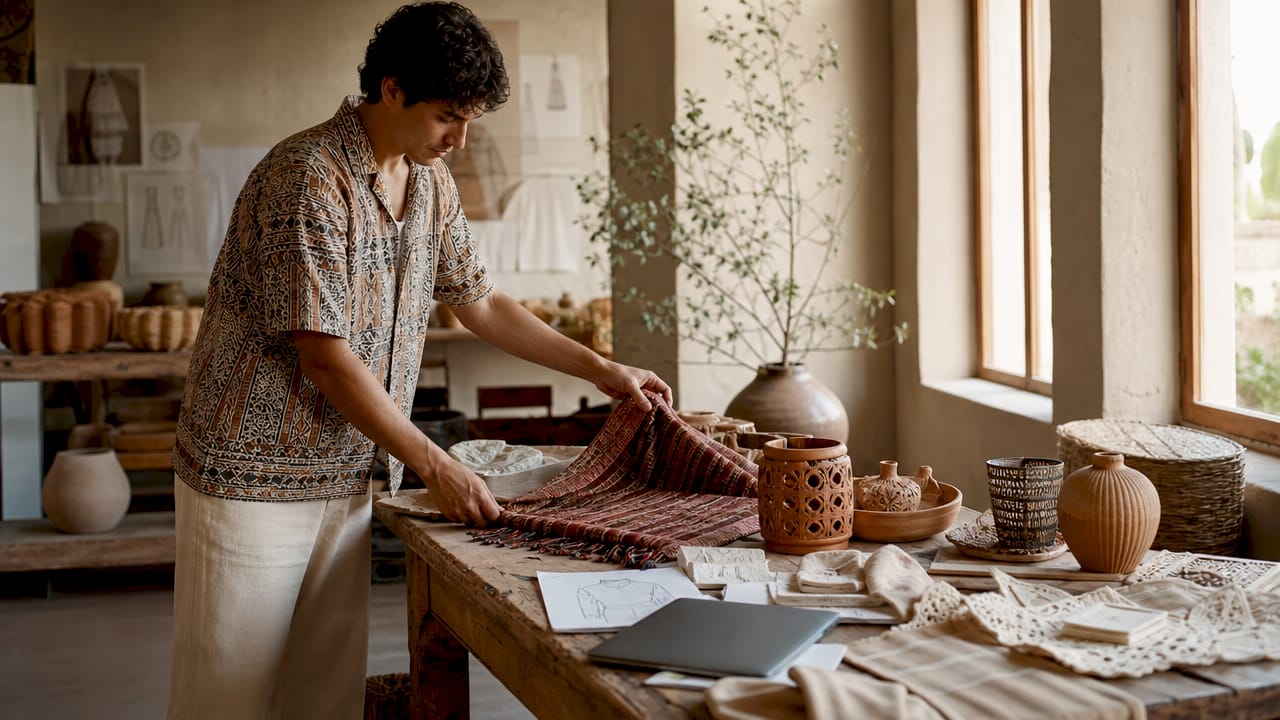
Emiliano Godoy's Knit Chair is the clearest single proof point for Mexican design's global standing. The chair, acquired by MoMA and created by a designer with more than 25 years of experience, merges industrial production methods with the visual and tactile language of traditional Mexican textiles. It sits in one of the world's most authoritative design collections not as an ethnic curiosity but as a serious contribution to contemporary furniture design.
Beyond Godoy, designers like Pol Agustí, Federico Stefanovich, and Brian Thoreen each demonstrate how Mexican heritage and contemporary form can coexist without compromise. Their studios operate as cross-disciplinary laboratories, collaborating directly with local metalworkers, ceramists, and weavers to prototype quickly and authentically. Tecnológico de Monterrey took this further in April 2026, when its students presented furniture combining wood, cowhide, and corn motifs with 3D-printed components at Dezeen School Shows. That work reached a global audience within days of its debut.
Mexican jewelry designers made an equally strong statement at the 2026 Hong Kong International Jewellery Show, where pieces inspired by goddess Xochiquetzal integrated Mesoamerican symbolism with contemporary goldsmithing. The show confirmed that Mexican design impact extends well beyond furniture and textiles into fine jewelry and wearable art.
| Designer / Project | Medium | Global Recognition |
|---|---|---|
| Emiliano Godoy, Knit Chair | Textile and industrial design | MoMA permanent collection |
| Tec de Monterrey students | Furniture with 3D print and corn motifs | Dezeen School Shows 2026 |
| Tec jewelry designers | Fine jewelry with Mesoamerican symbols | Hong Kong International Jewellery Show 2026 |
| Pol Agustí, Federico Stefanovich | Lighting and objects | International design press |
3. Materials and textures that define Mexican home decor worldwide
Mexican decor is known for material honesty and strong visual presence across textiles, ceramics, lighting, and metalwork. This is not a style choice. It is a philosophy. Every surface is meant to communicate the hand that shaped it, the fire that hardened it, or the loom that wove it. That tactile directness is precisely what global design markets have been absorbing and celebrating.
The specific materials that travel best internationally include handwoven textiles from Oaxaca and Chiapas, Talavera ceramics from Puebla, lacquerware from Michoacán, and volcanic stone carvings from central Mexico. Each carries a regional identity that resists generic reproduction. When a lighting designer in Copenhagen or a hotel interior designer in Dubai incorporates these materials, they are borrowing not just a texture but an entire cultural grammar.
Lighting deserves particular attention as a category. Mexican studios produce pendant lamps and wall sconces that function as sculptural objects first and light sources second. The interplay of woven fibers, hammered copper, and hand-blown glass creates pieces that change the atmosphere of a room in ways that mass-produced lighting cannot replicate.
Pro Tip: Pair a volcanic stone bowl or a hand-thrown ceramic piece with a woven textile wall hanging to create a material conversation in your space. The contrast of rough and soft surfaces is a signature of authentic Mexican interior composition.
4. Cultural narratives and symbolism embedded in Mexican craft
Mexican craftsmanship carries symbolic weight that most global design traditions do not attempt to match. The use of indigenous symbols, from the goddess Xochiquetzal representing beauty and creative arts to the geometric patterns of Huichol beadwork encoding cosmological maps, means that every object is also a text. This depth of meaning is a core reason why the global appetite for Mexican design continues to grow.
Cultural memory is transmitted through design in Mexico with a consistency that is rare. A Zapotec weaver in Teotitlán del Valle uses the same dye plants and loom structures her grandmother used, but she may also be responding to a commission from a design studio in Mexico City that will place her work in a São Paulo apartment. That chain of transmission, from pre-Columbian symbol to contemporary interior, is what gives Mexican craft its emotional resonance in global markets.
"Visual storytelling and curated presentation are as important as the physical objects themselves in positioning Mexican design within a saturated global market." — Difane founders, DesignWanted
This insight matters practically. The cultural influences in design that originate in Mexico succeed globally not only because the objects are beautiful but because the stories behind them are told with care and precision. Brands and designers who invest in narrative framing, through photography, provenance documentation, and artisan attribution, consistently outperform those who treat the objects as anonymous product.
5. Traditional Mexican craft vs. contemporary global design trends
Traditional Mexican craftsmanship and contemporary global design trends differ most sharply in their relationship to scale and speed. Global design industry production favors large runs, standardized dimensions, and supply chains optimized for cost efficiency. Mexican artisan production is small-scale, nimble, and deeply localized. That difference is not a weakness. It is the source of Mexican design's competitive advantage in a market increasingly fatigued by uniformity.
The comparison below captures the key structural contrasts:
| Dimension | Traditional Mexican craftsmanship | Contemporary global design industry |
|---|---|---|
| Production scale | Small batch, artisan-led | Large run, factory-led |
| Material sourcing | Local, regional, culturally specific | Global supply chain, cost-optimized |
| Prototyping speed | Fast, direct artisan collaboration | Slow, multi-tier approval process |
| Aesthetic risk | High, experimental, bold | Moderate, trend-driven, safe |
| Cultural narrative | Embedded, specific, traceable | Generic or absent |
Mexican design studios bypass large supply chains entirely by working directly with local hardware suppliers, metalworkers, and ceramists. This enables fast prototyping and authentic material expressions that large brands structurally cannot replicate. The result is a design culture that resists clichés because it has no incentive to produce them. Every piece needs to justify its existence on its own terms.
The surge in Mexican design's global relevance is driven by this courageous merging of traditional methods with contemporary design languages. Difane, the Mexico City design platform founded by Andrea Gadsden and Fernanda Salamanca, has documented this shift directly, noting that Mexican designers are entering a bold phase of risk-taking and clear positioning that is increasing their international relevance year over year.
6. How luxury is being redefined through Mexican artisanal textures
Luxury in global design is moving toward contextual and emotional layers rather than universal excess. Mexican artisanal textures offer exactly that shift. A hand-embroidered pillow from Guerrero or a lacquered tray from Olinalá communicates care, time, and cultural specificity in ways that a gold-plated object from a European luxury house often does not. This repositioning of luxury through a global perspective is one of the most significant shifts in high-end home decor over the past decade.
Mexican heritage in global design contributes to this redefinition by insisting that luxury is about exceptional materials and thoughtful details rather than mere price or brand recognition. The artisan who spends three weeks hand-knotting a rug in Teotitlán del Valle is producing something that carries irreplaceable human time. That time is the luxury. Global consumers who understand this are choosing Mexican craft over mass-produced alternatives at an accelerating rate.
The influence extends into hospitality design, where boutique hotels in New York, London, and Tokyo are incorporating Mexican textiles, ceramics, and lighting to create environments that feel specific rather than generic. Interior designers cite the combination of bold color, tactile depth, and cultural narrative as qualities that no other regional tradition currently delivers with the same consistency.
Key takeaways
Mexican craftsmanship influences global design most powerfully through neo-craft methodology, direct artisan collaboration, and symbolic cultural narratives that give objects emotional and historical depth no industrial process can replicate.
| Point | Details |
|---|---|
| Neo-craft drives innovation | Traditional techniques combined with digital tools produce textures and forms unique to Mexican design. |
| Designer profiles matter | Figures like Emiliano Godoy and Tec de Monterrey graduates are placing Mexican craft in global institutions. |
| Material honesty resonates | Handwoven textiles, volcanic stone, and Talavera ceramics carry cultural specificity that global markets value. |
| Symbolism adds depth | Indigenous symbols and cultural narratives embedded in objects create emotional bonds with international audiences. |
| Small-scale production wins | Direct artisan collaboration enables fast prototyping and authentic aesthetics that large brands cannot match. |
Why Mexican craft culture is the design world's most underrated model
I have spent years studying how regional craft traditions enter global design conversations, and Mexico's model is genuinely unlike any other. What strikes me most is not the beauty of the objects, though that is real. It is the structural freedom that Mexican designers operate with. They are not waiting for a trend report. They are not optimizing for a mass market. They are asking what a material can do and then finding out.
The neo-craft framework is not just a methodology. It is a posture toward making. When a designer at a Mexico City studio calls a ceramist in Oaxaca to test a new glaze formulation, that conversation carries centuries of material knowledge on one end and contemporary design intent on the other. The resulting object is neither purely traditional nor purely modern. It is something more honest than either.
What the global design community has not fully absorbed yet is that this model is also a sustainability argument. Small-batch, locally sourced, artisan-led production is exactly what the industry claims to want. Mexico has been doing it for generations. The question is whether international buyers and institutions will support it with the same seriousness they bring to Scandinavian minimalism or Italian craft. I believe they will, and I believe the work coming out of Mexico right now is the strongest argument for that shift.
— Ernesto
Bring Mexican artisan heritage into your home with Createdecorus
The cultural depth and material richness we have explored in this article are not abstract. They live in specific objects, made by specific hands, in specific places across Mexico.

At Createdecorus, we believe that every home deserves that kind of intentional beauty. Our handcrafted luxury pillows are made by Mexican artisans whose textile traditions are woven into every stitch, color choice, and pattern. Each piece carries the warmth, cultural pride, and material honesty that defines the best of Mexican craftsmanship. When you place one of our pillows in your living room, you are not just adding a decorative accent. You are bringing a piece of Mexican soul into your space, exactly as it was crafted with pride to be.
FAQ
What makes Mexican craftsmanship unique in global design?
Mexican craftsmanship combines indigenous material traditions, symbolic cultural narratives, and experimental technique in ways that few other regional traditions match. Its neo-craft methodology treats traditional knowledge as a living research field rather than a fixed historical practice.
How does neo-craft differ from traditional Mexican craft?
Neo-craft integrates digital tools like 3D printing and laser cutting with traditional artisanal materials and methods, producing objects that are neither purely traditional nor purely contemporary. The approach is documented in academic and design research as a flexible, sustainable production model.
Which Mexican designers have achieved international recognition?
Emiliano Godoy's Knit Chair is held in MoMA's permanent collection, and Tecnológico de Monterrey students presented furniture work at Dezeen School Shows in 2026. Mexican jewelry designers also exhibited at the 2026 Hong Kong International Jewellery Show.
How does Mexican craftsmanship influence home decor specifically?
Mexican decor contributes handwoven textiles, Talavera ceramics, volcanic stone objects, and hammered metalwork to global interiors. These materials carry regional identity and tactile depth that mass-produced alternatives cannot replicate.
Why is Mexican design growing in global relevance now?
The growth is driven by a bold phase of risk-taking among Mexican designers who are merging traditional methods with contemporary design languages, supported by curated visual storytelling and direct artisan collaboration that bypasses conventional supply chains.