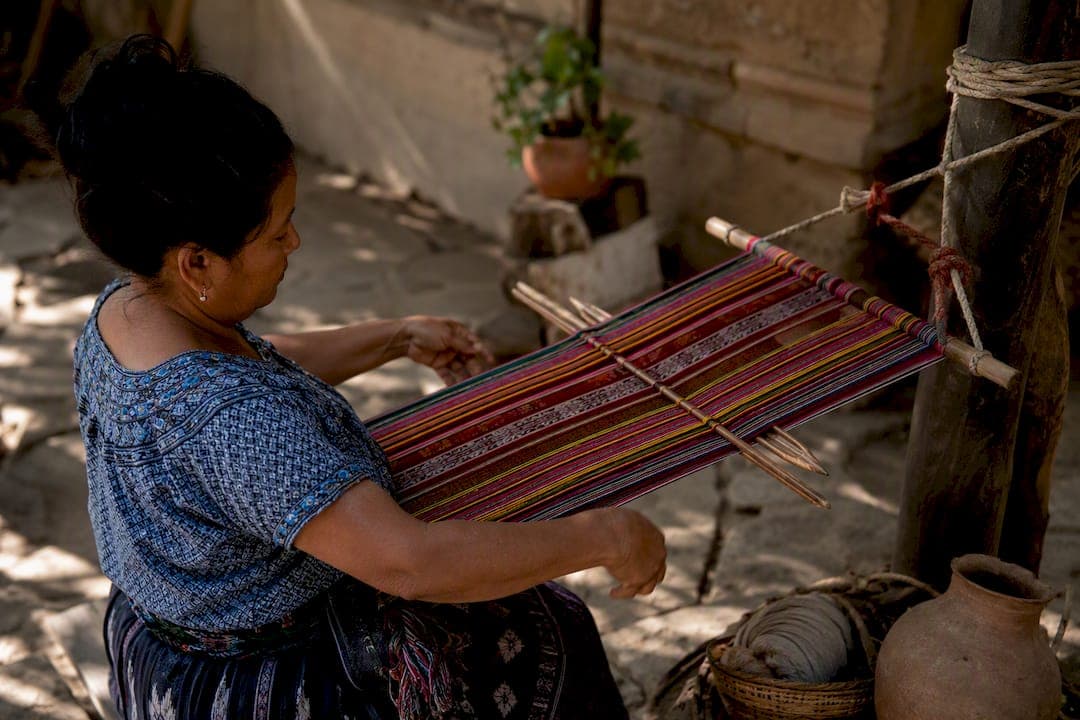
Telar de cintura textiles are cloth panels, pillow faces, and finished home accents handwoven on a backstrap loom, prized for their narrow width, subtle irregularities, and richly patterned brocade motifs. They suit homeowners building a room around one striking piece, designers sourcing textiles with real provenance, and boutique buyers who need inventory that feels personal rather than mass produced. If you want cushions and ottomans that carry that character honestly, Createdecorus is a direct, transparent place to start.
- Homeowners seeking one anchor piece with visible handwork
- Interior designers who need sourcing they can explain to clients
- Boutique buyers stocking pieces with real cultural weight
A brocade panel marketed under the name Ceibal, handwoven on a backstrap loom in Larrainzar, Mexico, shows how sellers now pair traditional technique with modern verification like OEKO-TEX® cotton standards.
TL;DR:
- Authentic telar de cintura textiles are produced in narrow panels with irregularities and raised motifs, not uniform machine-woven fabric.
- Seams between panels are intentional design features, often highlighted with contrasting borders or welts to enhance aesthetic appeal.
- Verify provenance by asking for the origin, maker, fiber type, certifications, and close-up images of the weave structure before purchasing.
- Use natural fiber options like cotton and wool, and follow proper care instructions such as spot cleaning and avoiding direct sunlight to maintain color saturation.
- Createdecorus offers verified, handcrafted pillows and accents, with wholesale options for designers and boutiques seeking authentic Mexican textiles.
Table of Contents
- What Makes Telar de Cintura Textiles Different From Machine-Woven Fabric
- How to Style Telar de Cintura Pillows and Ottomans in a Room
- Materials, Sizing, and Care for Handwoven Home Accents
- How Do You Verify an Authentic Telar de Cintura Piece?
- Createdecorus: Handcrafted Pillows Woven With Purpose
- Key Takeaways
- Sources
What Makes Telar de Cintura Textiles Different From Machine-Woven Fabric
A telar de cintura textile rarely arrives as one uniform bolt of cloth. Because the weaver's own body provides the tension, backstrap looms naturally produce narrow strips of fabric, often no wider than the weaver's hips, which are then joined by hand into pillow fronts, table runners, or wider decorative panels. That construction method is exactly why two "matching" pillows from the same maker are never truly identical.
Encyclopedia.com's overview of handwoven cloth confirms that narrow panels and small irregularities are inherent to backstrap and other manual looms, not defects to be engineered away. The same source notes that supplementary-weft and pickup techniques, sometimes called brocade weaving, let a weaver introduce raised, pictorial motifs directly into the cloth rather than printing them on top.
You will typically encounter these formats when shopping for finished home accents:
- Single-panel pillow faces, where one woven strip covers the entire front
- Joined panels, where two or three narrower strips are seamed to reach sofa-pillow or runner width
- Brocade accent bands, woven with raised motifs and paired with a solid linen or cotton back
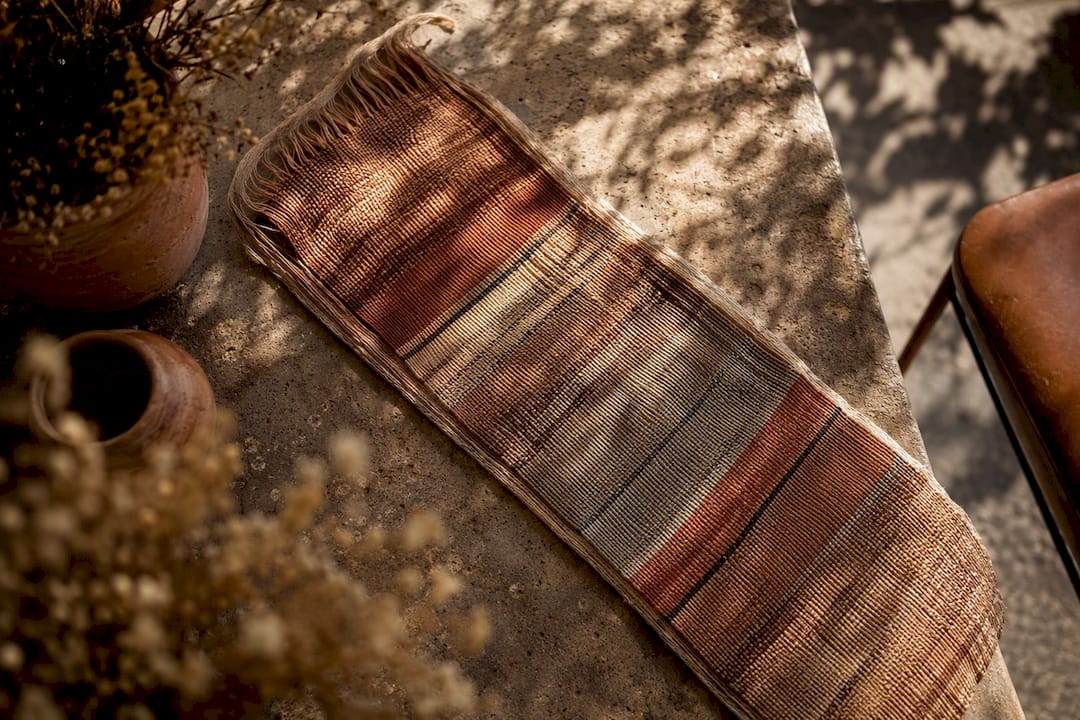
Real product listings back this up. A table-runner style panel from a Mexican artisan workshop runs an extended length with hand-finished fringe on each end, woven from premium textured cotton. That kind of detail, a fringe length, a yarn weight, is what separates a genuine handwoven piece from a printed imitation.
Designers gravitate toward these traits precisely because luxury interiors have grown tired of perfect repetition. A slightly uneven weft line or a color that shifts a shade across a panel reads as proof of human hands, not as a flaw to disguise. Createdecorus's own take on why handcrafted decor rewards a closer look makes a similar case: texture variation is the feature, not the compromise.
How to Style Telar de Cintura Pillows and Ottomans in a Room
Working with narrow handwoven panels takes a slightly different eye than shopping off a fabric bolt. Here is how to plan it out.
- Measure before you fall in love with a pattern. A single backstrap panel might only cover a 14 to 16 inch pillow face; anything larger usually means joined seams, so ask upfront whether the piece you're eyeing is one panel or several stitched together.
- Treat seams as a design feature, not a flaw to hide. Where two panels meet, a contrast welt or a solid linen border can turn a structural necessity into a clean, intentional line.
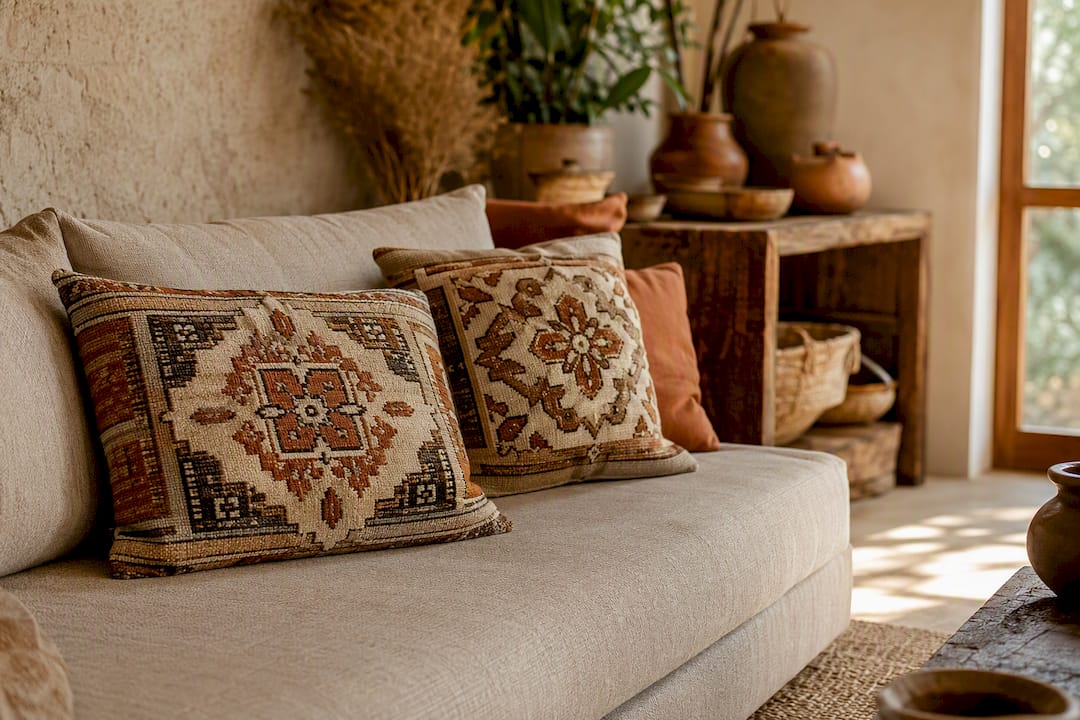
- Anchor the room with one bold piece, then go quiet around it. A brocade lumbar pillow with dense pictorial motifs holds a whole sofa arrangement together when everything else is solid linen or cotton.
- Mix scale, not just color. Pair a fine, tightly woven telar panel with a chunkier woven throw or a smooth leather ottoman, so the handwoven piece has room to stand out.
- Check fill and shipping specs before buying online. Ask whether pillow inserts are memory foam, polyester, or down alternative, and whether the piece ships vacuum-compressed, since compression can affect loft on arrival.
For a runner or bench topper, a joined telar panel works beautifully draped the length of a console table or the foot of a bed, where the narrow width actually becomes an advantage instead of a limitation. In a boutique display, hanging a single wide panel as a backdrop lets shoppers see the brocade motifs at full scale before they're cut down for pillow production.
Pro Tip: Order one sample pillow before committing to a full room or a wholesale order. Photos rarely capture how brocade motifs catch light differently than a flat printed pattern.
Createdecorus's Talavera-inspired accents show one approach to blending traditional Mexican motifs into pieces sized for contemporary sofas and beds, rather than leaving buyers to guess how heritage patterns translate to modern furniture.
Materials, Sizing, and Care for Handwoven Home Accents
Cotton dominates telar de cintura textiles meant for interiors, chosen for its dye uptake and durability under regular use. Wool appears in heavier accent pieces, and some workshops blend natural dyes with modern colorfast treatments to keep pillows looking sharp after repeated sun exposure.
Fill and backing choices vary more than most buyers expect:
- Fill: memory foam for structured support, polyester fiber for a softer, plusher hand, or down alternative for a hotel-style loft
- Backing: solid cotton or linen to let the woven face carry the visual weight
- Standard pillow sizes: 18x18 and 20x20 inches for accents, 12x20 lumbar for brocade panels
| Aspect | What to Expect |
|---|---|
| Loom width | Sets the maximum single-panel size before seaming is required |
| Fiber | Cotton for most pillow faces; wool in heavier accent pieces |
| Fill options | Memory foam, polyester, or down alternative |
| Cleaning | Spot clean; avoid full submersion of dyed panels |
| Storage | Keep out of direct sunlight to protect natural dye saturation |
Loom width directly shapes the finished repeat you see in a motif; a narrower loom forces a tighter, more compact pattern, while wider setups allow bolder, more spread-out brocade work. Spot cleaning is the safer default for dyed handwoven fabric, and storing pieces away from direct sun preserves color saturation far longer than a quick wash cycle would.
How Do You Verify an Authentic Telar de Cintura Piece?
Authenticity comes down to a handful of concrete questions, not a gut feeling about the price tag.
- Ask where the weaving happened and whether the maker or workshop is named.
- Ask what fiber was used and whether any certification, such as OEKO-TEX® Standard 100, backs that claim.
- Ask whether the piece is a single woven panel or joined panels, and how the seams were finished.
- Ask about dye method: natural plant dyes versus commercial colorfast dyes, since both are legitimate but priced differently.
- Request a close-up photo of the weave structure itself, not just a styled room shot.
Watch for these signals before you buy:
- A seller who cannot name a region, workshop, or weaving tradition behind the piece
- Perfectly uniform, machine-regular patterning marketed as "handwoven"
- Pricing far below what hand labor and premium cotton would reasonably cost
- No mention of fill type, backing fabric, or finished dimensions anywhere in the listing
Handcrafted pillow covers using genuine telar de cintura panels typically run higher than printed equivalents because of the labor hours involved, and wholesale or trade accounts often unlock better per-unit pricing for boutiques buying in volume through the Designer Trade Program - Interior Designers | One Day Doors & Closets. Studios built around Oaxacan weaving traditions, like the artisan collaborations documented by Madda Studio, are a useful benchmark for what genuine sourcing language sounds like when a seller is being straight with you.
Createdecorus: Handcrafted Pillows Woven With Purpose
Createdecorus makes handcrafted luxury pillows and home accents produced in Mexico, and every piece we send out is built to carry the kind of texture and story this guide has been describing. Our collection includes bold animal-print pillows and Talavera-inspired accents, each finished with premium fill options like memory foam or polyester and shipped vacuum-compressed to arrive ready for your shelf or sofa.
We work directly with retail customers and with wholesale accounts for boutiques and designers, including custom orders when you need a specific palette or size run. If you've been searching for a source you can name to a client with confidence, browse our full pillow collection or reach out about trade pricing to see what an account with us could look like for your business.
A Note From Ernesto on Sourcing With Intention
I've spent years working alongside handcrafted home decor makers, and the pieces that hold up over time are always the ones where the maker can tell you exactly where the cloth came from. On one boutique project, we chose a set of brocade lumbar pillows over a printed alternative specifically because the client wanted her sofa to start a conversation, not just fill a corner. It did. Guests kept asking about the weave before they asked about anything else in the room.
That is the real value of these textiles: they reward a closer look instead of demanding one.
— Ernesto
Key Takeaways
Authentic telar de cintura home accents combine narrow handwoven panels, visible weave irregularities, and traceable maker provenance, and Createdecorus offers a direct, verifiable source for both retail and wholesale buyers.
| Point | Details |
|---|---|
| Identify real weave traits | Look for narrow panel widths, slight irregularities, and raised brocade motifs rather than flat printing. |
| Ask about joining and fill | Confirm whether panels are seamed, and choose memory foam, polyester, or down alternative fill. |
| Verify provenance before buying | Ask sellers to name the region, maker, fiber, and any certification like OEKO-TEX® Standard 100. |
| Care for pieces properly | Spot clean dyed panels and store away from direct sunlight to protect color. |
| Buy direct from Createdecorus | Createdecorus offers handcrafted pillows and a wholesale trade program for designers and boutiques. |
Sources
- Encyclopedia
- Camino de Mesa o Centro de Mesa en Telar de Cintura - Artesanías Arely
- Ceibal Handwoven Brocade Fabric Panel by Routes Interiors | Wescover