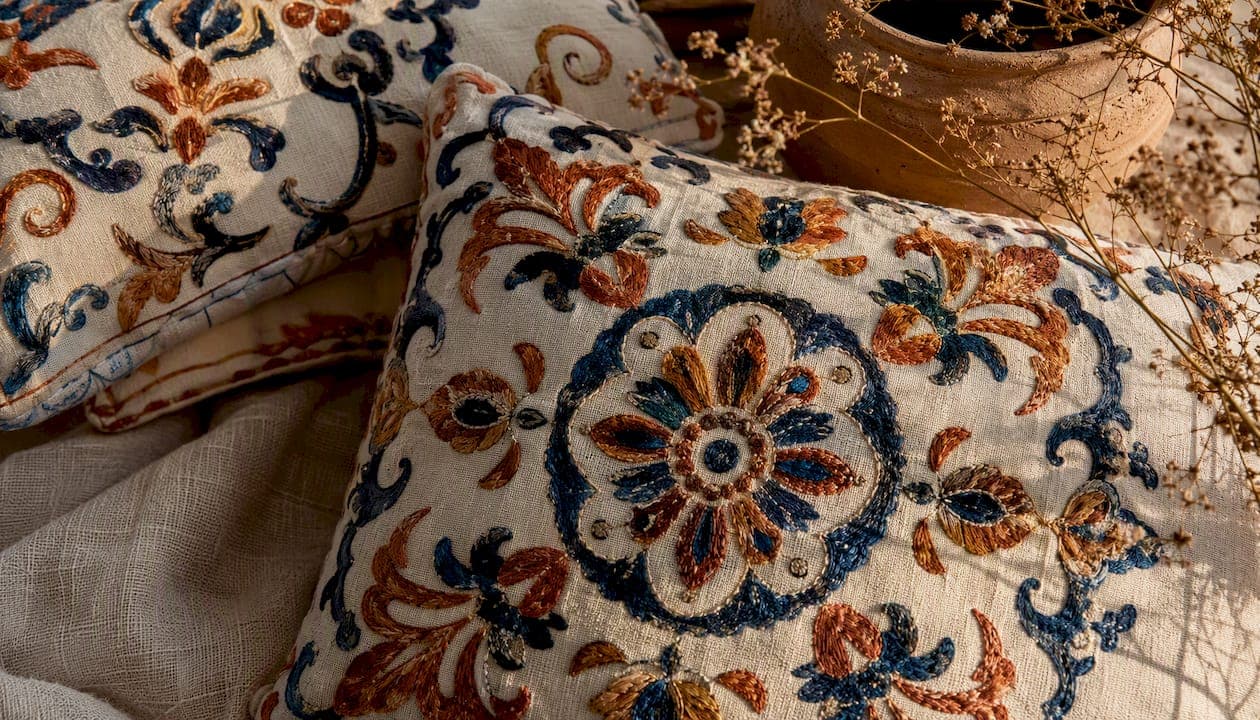
The most practical examples of Talavera-inspired home accents in fabric form are: hand-embroidered throw pillows, woven ottoman covers, decorative lumbar pillows, hand-stitched table runners, tapestry-style wall hangings, curtain panels with botanical medallion motifs, and seat cushions with geometric rosette patterns. This article covers Talavera-inspired textiles — fabric accents that translate the bold color and symmetry of traditional Talavera pattern work into woven and embroidered goods — not ceramic tiles or pottery.
- Hand-embroidered throw pillows (18–22 in square)
- Woven ottoman and pouf covers
- Decorative lumbar pillows (12×20 in)
- Hand-stitched table runners
- Tapestry-style wall hangings
- Curtain panels with Talavera-like motifs
- Seat cushions for dining benches and chairs
- Decorative poufs with geometric surface work
Pro Tip: Createdecorus offers handcrafted Talavera-inspired pillows and ottomans made in Mexico, with wholesale and trade program options for designers and boutique buyers.
Key Takeaways
Handcrafted Talavera-inspired textiles bring artisan heritage and cultural depth to U.S. interiors when chosen with attention to provenance, construction quality, and thoughtful placement.
| Point | Details |
|---|---|
| Start with one bold accent | One hand-embroidered pillow or woven ottoman cover anchors a room without visual clutter. |
| Verify handwork before buying | Look for stitch irregularities, maker credits, and natural-fiber base fabrics as authenticity signals. |
| Match scale to furniture size | A 20 in pillow suits a standard sofa; a 12×20 in lumbar fits armchairs and benches. |
| Care preserves the craft | Spot-clean embroidered covers, hand-wash in cold water, and air-dry flat to protect stitchwork. |
| Createdecorus for trade and retail | Offers handcrafted pillows with premium fills, custom lead times, and a wholesale program for designers and boutiques. |
Table of Contents
- What Talavera-inspired textile accents look like by product type
- How to style these patterned accents without visual clutter
- How to tell handcrafted textiles from mass-produced ones
- Where to buy Talavera-inspired textile accents in the U.S.
- Quick styling scenarios for four common rooms
- Why artisan provenance and ethical sourcing matter
- Care and maintenance for textile accents
- Mixing Talavera-inspired accents with modern, rustic, and bohemian styles
- How to choose the right sizes and quantities for each room
- Integrating Talavera-inspired textiles with other Mexican art forms
- Why handcrafted textiles carry more than their visual weight
- Createdecorus: handcrafted Talavera-inspired accents for homeowners and trade buyers
- Sources
What Talavera-inspired textile accents look like by product type
Each accent type carries the same visual vocabulary — botanical medallions, stylized florals, geometric rosettes — but the scale, construction, and placement differ meaningfully.
Authentic pieces often show slight irregularities in stitch length or motif placement — those small variations are evidence of handwork, not flaws. When reviewing product photos, look for closeups of stitchwork, visible thread starts, and the texture of the base fabric. A cotton or linen ground with visible weave structure reads very differently from a polyester print, both in photos and in hand. Otomi embroidery, for example, is hand-drawn directly onto fabric before stitching begins, which is why no two pieces are identical.
How to style these patterned accents without visual clutter
The primary rule: one bold Talavera-inspired accent anchors a room; three or more compete with each other. Ground every patterned piece with at least two neutral companions.
A practical sequence designers use:
- Pick the dominant color from the textile's palette and confirm it appears somewhere fixed in the room (a wall, a rug, upholstery).
- Echo one accent tone in a smaller object nearby — a ceramic vessel, a throw, a lamp base.
- Set the scale by choosing a pillow or runner size proportional to the furniture it rests on (a 22 in pillow on a large sectional; a 14 in cushion on a side chair).
- Repeat a small motif once, not three times — two matching embroidered pillows on a sofa is cohesion; four is a costume.
- Limit patterned layers to one to three pieces per room so the eye has somewhere to rest.
Mexican woven designs integrate naturally into contemporary rooms when color and pattern scale are balanced rather than allowed to dominate. For rooms with Spanish Colonial or ranch-style architectural details, coordinating textile patterns with period-appropriate finishes deepens the visual story without requiring a full renovation.
Pro Tip: When mixing patterns, pair a large Talavera medallion with a small geometric texture — the scale contrast keeps both readable. Use a natural-fiber throw or a woven jute rug as the bridge between them.
How to tell handcrafted textiles from mass-produced ones
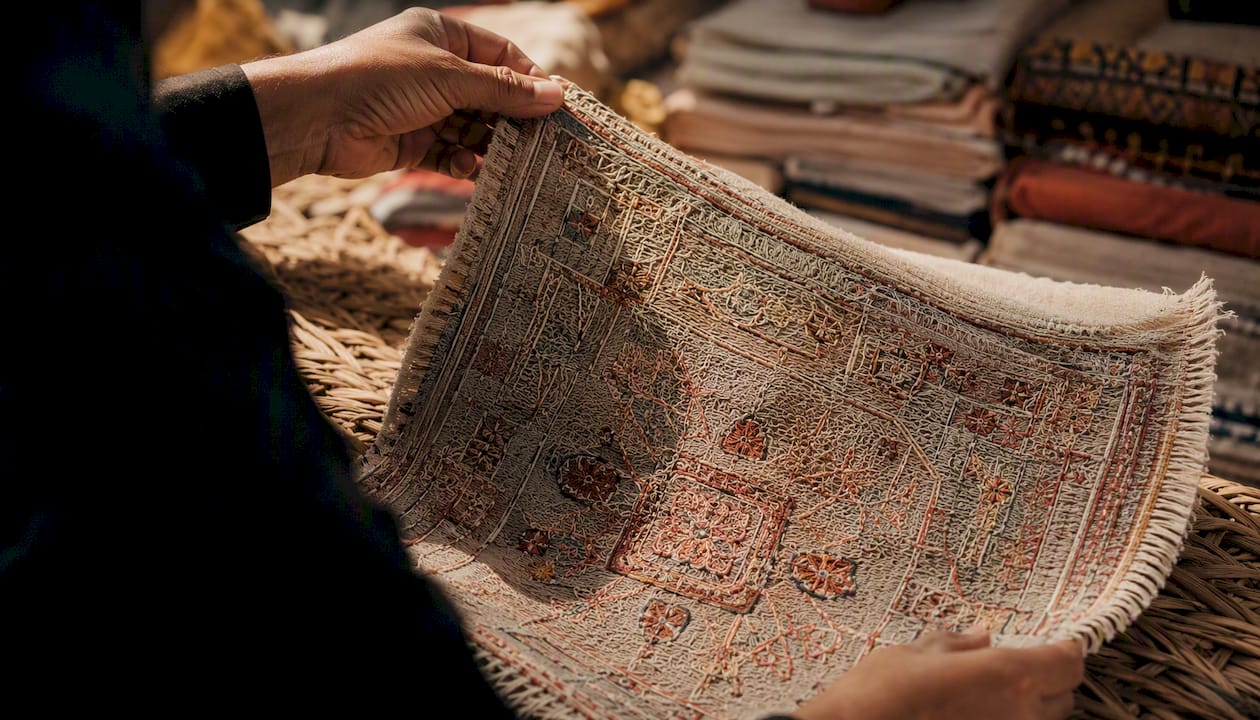
Authentic handcrafted textiles carry micro-variations that no factory can replicate at scale: slightly uneven stitch rows, hand-tied knots at thread ends, and subtle shifts in color saturation across a single motif. These are not defects — they are the signature of time-intensive artisan work.
The clearest signals to check in any listing:
- Hand-embroidery vs. print: Hand-stitched pieces show thread dimension on the fabric surface; printed versions lie flat with no texture variation.
- Natural-fiber base: Cotton, linen, and wool grounds absorb dye differently across the weave, creating gentle tonal shifts. Polyester bases read uniformly.
- Maker credits: A trustworthy seller names the artisan community, region, or individual maker — not just "handmade in Mexico."
- Technique description: Look for specifics: "hand-embroidered on cotton canvas," "backstrap loom woven," or "appliquéd by hand."
Mexican textiles use both embroidery and loom weaving, and each technique carries different care requirements. Hand-embroidered pieces generally need spot cleaning or gentle hand-washing in cold water; loomed textiles may tolerate a delicate machine cycle in a mesh bag. For pillow inserts with memory foam or polyester fill, spot-clean the cover only and air-dry flat to preserve the fill's shape.
Pro Tip: Request a photo of the back of any embroidered piece before purchasing. A hand-stitched item shows thread work and knots on the reverse; a printed or machine-embroidered piece will look clean and uniform.
Where to buy Talavera-inspired textile accents in the U.S.
Handcrafted Talavera-inspired textiles are available from specialty importers, artisan-focused studios, and direct-brand shops. Price varies widely based on handmade detail, fill material, and provenance.
Before committing to a purchase, ask the seller:
- Which artisan community or region produced the piece?
- What technique was used (hand-embroidery, jacquard, loom weave)?
- What is the base fabric and fill material?
- What are the care instructions?
- What is the lead time for custom or made-to-order pieces?
- Are wholesale minimums and trade pricing available?
Price shape runs roughly three tiers. Entry-level handcrafted pillows use machine-assisted embroidery on cotton and carry the most accessible price points. Mid-tier artisan pieces feature fully hand-embroidered motifs on natural-fiber grounds with quality polyester fill. Luxury or custom work adds natural dyes, memory foam inserts, and documented artisan provenance — the kind of detail that studios working with master weavers in Oaxaca and Chiapas describe as preserving ancient techniques like hand spinning. Createdecorus's wholesale and trade program is designed for designers and boutique buyers who need consistent quality across bulk orders with custom-order lead times.
Quick styling scenarios for four common rooms
Living room: Two to three embroidered throw pillows on a neutral linen sofa, one woven ottoman cover, and nothing else patterned. Keep the rug solid or subtly textured.
Bedroom: Pair two patterned lumbar pillows against solid euro shams. A hand-stitched table runner across the foot of the bed adds a second layer without competing.
For high-traffic households, prioritize removable, washable covers and polyester or memory foam fills that hold their shape through regular use. Outdoor-rated fabrics work well on covered patios where humidity and UV exposure are factors.
Dining nook: One table runner centered on the table, with solid seat cushions in a color pulled from the runner's palette. Resist adding patterned placemats on the same table.
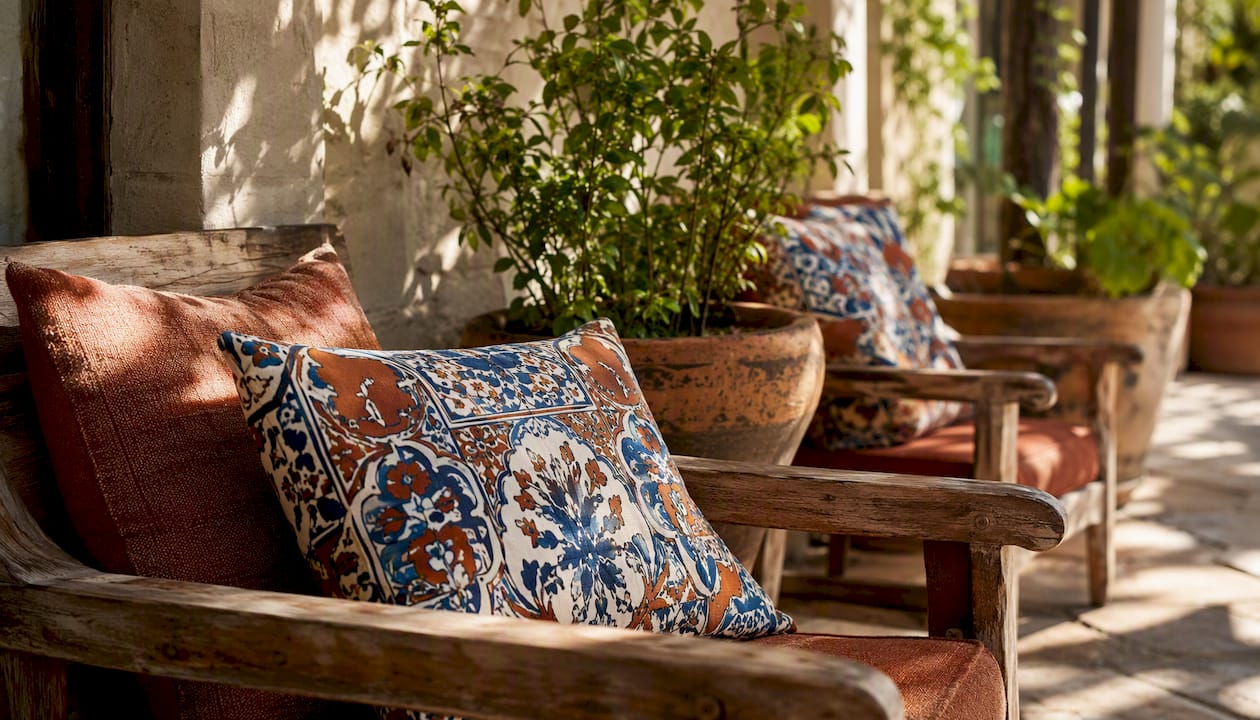
Covered patio: Choose outdoor-rated canvas or solution-dyed acrylic covers with Talavera-like motifs. Pair with terracotta planters and natural wood furniture for a cohesive warm palette.
Pro Tip: For pairing bold textiles with contemporary furniture, let the textile be the room's single cultural statement. One well-chosen piece carries more weight than five competing accents.
Why artisan provenance and ethical sourcing matter
Choosing a handcrafted piece over a mass-produced print is a decision that reaches beyond aesthetics. When a seller documents artisan involvement — naming the community, the technique, and the maker — that transparency signals that the purchase supports a living craft tradition rather than a factory reproduction of it. Supporting artisan production carries both cultural and economic significance, sustaining the knowledge passed between generations of weavers and embroiderers.
Sustainable production in this context means small-batch work, natural or low-impact dyes where possible, and fair compensation for skilled labor. Look for brands that describe their supply chain specifically — not just "ethically made," but where, by whom, and how. Createdecorus publishes guidance on honoring Mexican artistry and credits artisan involvement across its product line.
Care and maintenance for textile accents
Spot cleaning is the safest first response for any hand-embroidered piece. Blot spills immediately with a clean, damp cloth; avoid rubbing, which distorts stitches. For deeper cleaning, hand-wash in cold water with a gentle detergent and reshape while damp. Lay flat to dry — never wring or tumble dry, which stresses embroidery threads and distorts natural-fiber grounds.
Pillow inserts with memory foam should never be submerged. Remove the cover for washing and spot-clean the insert only if needed, then air-dry completely before reassembling. Polyester-fill inserts tolerate gentle machine washing on a delicate cycle in a mesh laundry bag.
Store seasonal pieces folded loosely in breathable cotton bags away from direct light, which fades natural dyes over time. A cedar block nearby discourages moths without the chemical residue that damages natural fibers.
Mixing Talavera-inspired accents with modern, rustic, and bohemian styles
Modern interiors benefit from restraint: one embroidered lumbar pillow on a white linen sofa, or a single woven runner on a concrete dining table. The contrast between the bold motif and the clean-lined room is the point.
Rustic and farmhouse rooms absorb more pattern naturally. Warm terracotta, ochre, and cobalt from a Talavera-inspired pillow complement exposed wood beams and leather upholstery without effort. Two to three patterned accents work here where only one would in a minimal space.
Bohemian rooms can carry the most layering, but scale contrast still matters. A large tapestry-style wall hanging paired with smaller geometric seat cushions reads as intentional; matching patterns at the same scale reads as busy. Thoughtfully chosen Mexican textiles brighten interiors without dominating when the designer controls scale and repetition.
How to choose the right sizes and quantities for each room
A sofa under 84 inches fits two 20 in throw pillows comfortably; a sectional can carry three to four without crowding. For armchairs, one 18 in pillow or a 12×20 in lumbar is the practical limit. Dining bench cushions at 14–16 in square suit most standard bench depths.
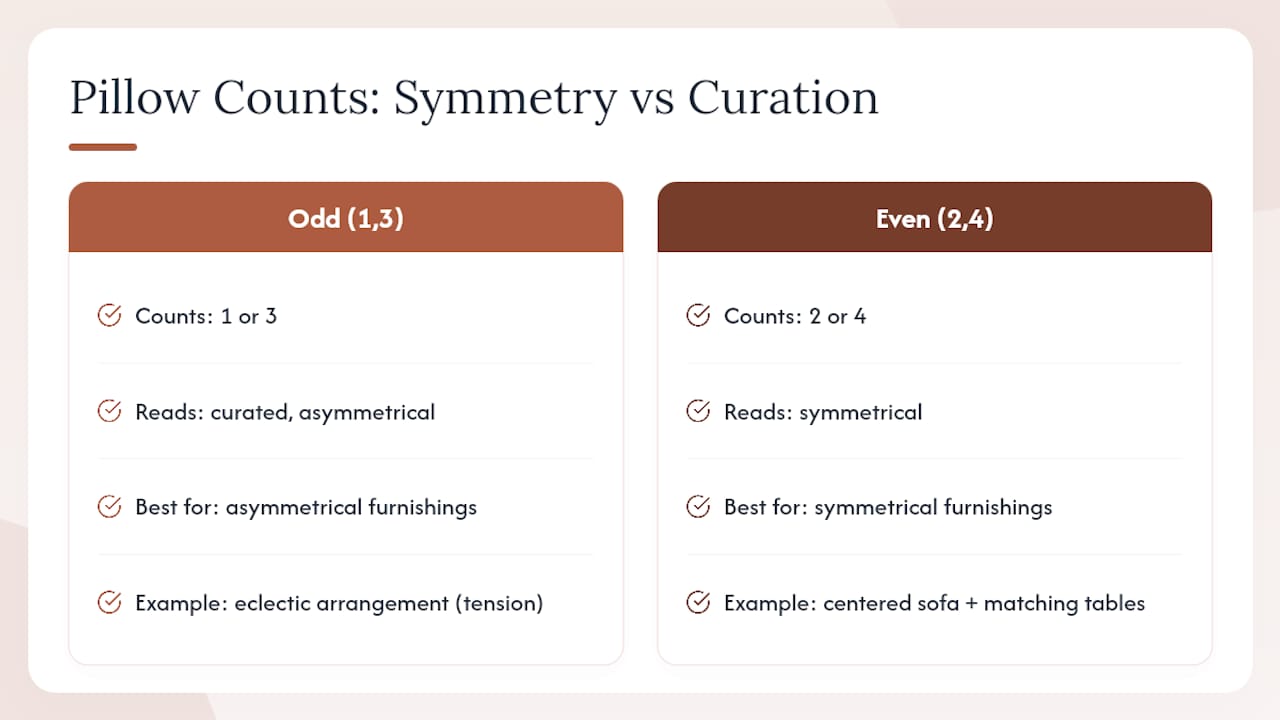
Quantity follows a simple rule: odd numbers (one, three) read as curated; even numbers (two, four) read as symmetrical. Both work — choose based on whether the room's existing furnishings are symmetrical or asymmetrical. A room with a centered sofa and matching side tables absorbs a symmetrical pair of pillows naturally; an eclectic arrangement benefits from the visual tension of three.
Integrating Talavera-inspired textiles with other Mexican art forms
Talavera-inspired textiles sit naturally alongside other traditional Mexican art forms when the palette is shared rather than the pattern. A hand-embroidered pillow in cobalt and terracotta reads as part of the same visual family as a Oaxacan wood carving painted in the same tones, even though the techniques are entirely different.
Wall hangings with botanical motifs complement hand-thrown pottery and woven baskets without requiring a matched set. The connective tissue is color and craft quality, not stylistic uniformity. Mexican artisan crafts for home decor span textiles, ceramics, woodwork, and metalwork — mixing two or three categories in a single room creates depth that a single-medium collection rarely achieves.
Why handcrafted textiles carry more than their visual weight
The conventional view treats patterned accents as finishing touches — the last layer added before a room is photographed. That framing undersells what a genuinely handcrafted piece does. When an artisan in Tenango de Doria draws a motif freehand onto fabric before stitching it, or when a weaver in Oaxaca sets up a backstrap loom for a single commission, the resulting object carries a specificity that no printed reproduction can hold. The slight irregularities, the hand-tied knots, the color that shifts subtly across the surface — these are not imperfections. They are the record of someone's time and skill.
Buyers who understand this tend to buy fewer pieces and keep them longer. That is a more sustainable relationship with decor than the seasonal-refresh cycle most mass-market retailers depend on. Choosing handcrafted is not a premium for its own sake; it is a decision to bring something irreplaceable into a space rather than something interchangeable.
Createdecorus: handcrafted Talavera-inspired accents for homeowners and trade buyers
Createdecorus offers a direct path to handcrafted Talavera-inspired pillows and accents made in Mexico, with options suited to individual homeowners, interior designers, and boutique buyers. Every piece in the collection reflects artisan provenance and premium construction — memory foam and polyester fill options, vacuum-compressed shipping that protects the work in transit, and maker credits on product pages so you know exactly what you are buying.

Custom orders are available with documented lead times, and the trade program gives designers and boutiques access to wholesale pricing and bulk options. For anyone ready to add a handcrafted accent that carries genuine artisan heritage, browse the full collection or apply for a wholesale account directly on the site.
Sources
These sources informed the article's guidance on artisan techniques, styling principles, and buying cues for handcrafted Mexican textile accents.
- NYIAD Design Articles - Mexican Design Textiles
- How Otomi Embroidery Became an Interior Design Sensation
- Contemporary Applications of Mexican Textiles
- Our Textiles — Madda Studio