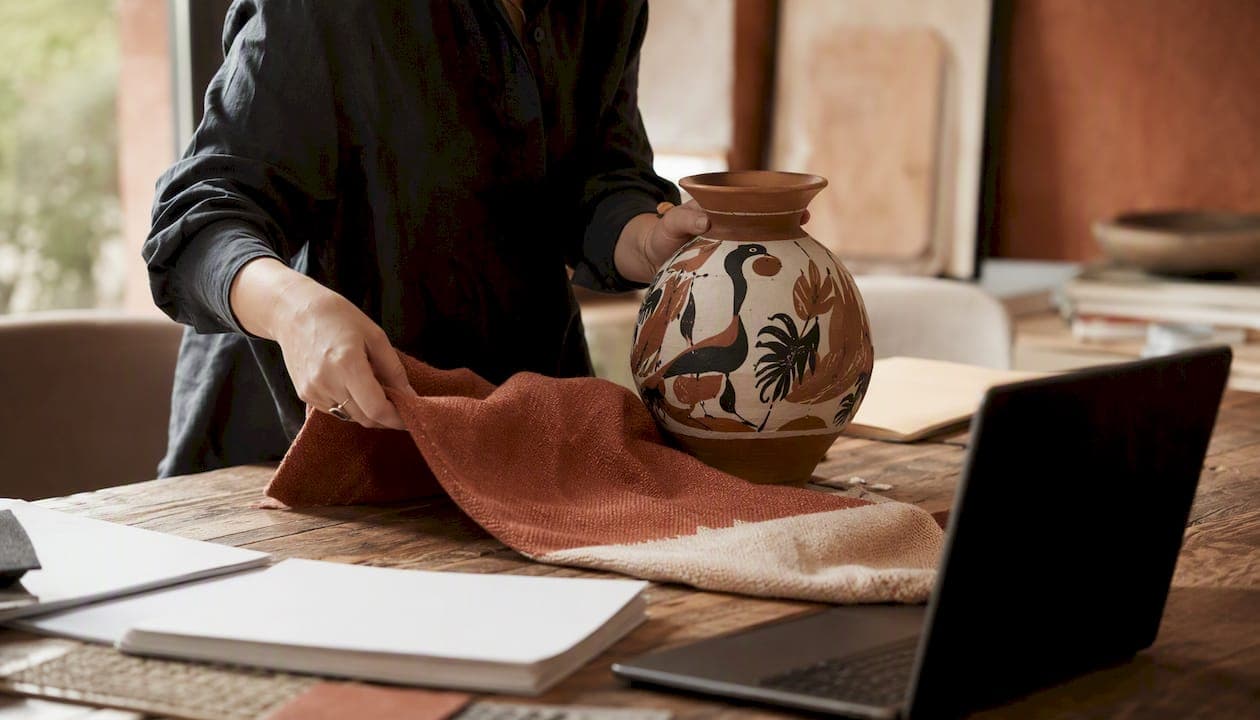
The fastest safe route to buying home decor wholesale is straightforward: register your business, secure your resale certificate, request two or three samples, and calculate your landed cost before placing a trial bulk order. That sequence protects your cash and your reputation from the very first purchase.
Your three immediate steps:
- Register for a resale certificate in your state (and obtain your EIN from the IRS if you don't already have one).
- Request two to three samples from shortlisted suppliers before committing to any bulk quantity.
- Get a freight quote that includes duties, insurance, and delivery to your door so you know your true per-unit cost.
When choosing between domestic and imported suppliers, the decision usually comes down to speed and volume. Domestic suppliers ship in two to three weeks, carry lower minimums, and require no customs paperwork. Imported goods, typically from Mexico, China, or India, take eight to twelve or more weeks but offer meaningfully lower unit costs at scale and broader customization options.
Pro Tip: Start with a domestic or near-shore supplier for your first order. Once you understand your sell-through rate, shift higher-volume SKUs to a direct manufacturer for better margins.
Key Takeaways
Buying wholesale home decor safely requires three things done in order: legal registration, sample validation, and landed-cost math before any bulk commitment.
| Point | Details |
|---|---|
| Register before you source | Obtain your EIN and state resale certificate first; most wholesalers require both before opening a trade account. |
| Sample every new supplier | Request production samples before any bulk order; the sample fee is the lowest-cost quality check available. |
| Calculate landed cost, not unit price | Add freight, duties, insurance, and brokerage to unit price before modeling your retail margin. |
| Use secure payment for first orders | Pay via escrow, Trade Assurance, or credit card for your first two orders with any new supplier. |
| Createdecorus wholesale program | Offers trade pricing, lower MOQs, and domestic shipping for boutiques and designers sourcing artisan decor. |
Table of Contents
- Where should you buy wholesale home decor?
- What legal documents do you need to buy wholesale in the U.S.?
- How do you verify a supplier before placing a bulk order?
- How do you calculate landed cost and model your margins?
- How to order samples and build a quality-control process
- How do you negotiate secure payment terms with new suppliers?
- What are your options for private labeling and custom packaging?
- What return and warranty terms should your wholesale contract include?
- Step-by-step checklist for placing your first wholesale order
- How the Createdecorus wholesale program addresses what buyers need most
- What most wholesale guides get wrong about buying decor in bulk
- Createdecorus: handcrafted wholesale decor, ready for your trade account
- Sources
Where should you buy wholesale home decor?
The right supplier channel depends on how quickly you need inventory, how much you plan to order, and how much control you want over the final product. Wholesale home decor categories like candles, textiles, wall art, and decorative pillows typically offer 2x–4x retail markup potential, which makes channel selection one of the highest-leverage decisions you'll make.
B2B marketplaces (Faire, Tundra, and similar platforms) are the easiest entry point. Faire lets verified retailers test products with low or flexible minimums and offers net-payment terms for qualified buyers. Margins are thinner than going direct, but the speed and return protections on first orders make them ideal for testing new styles.
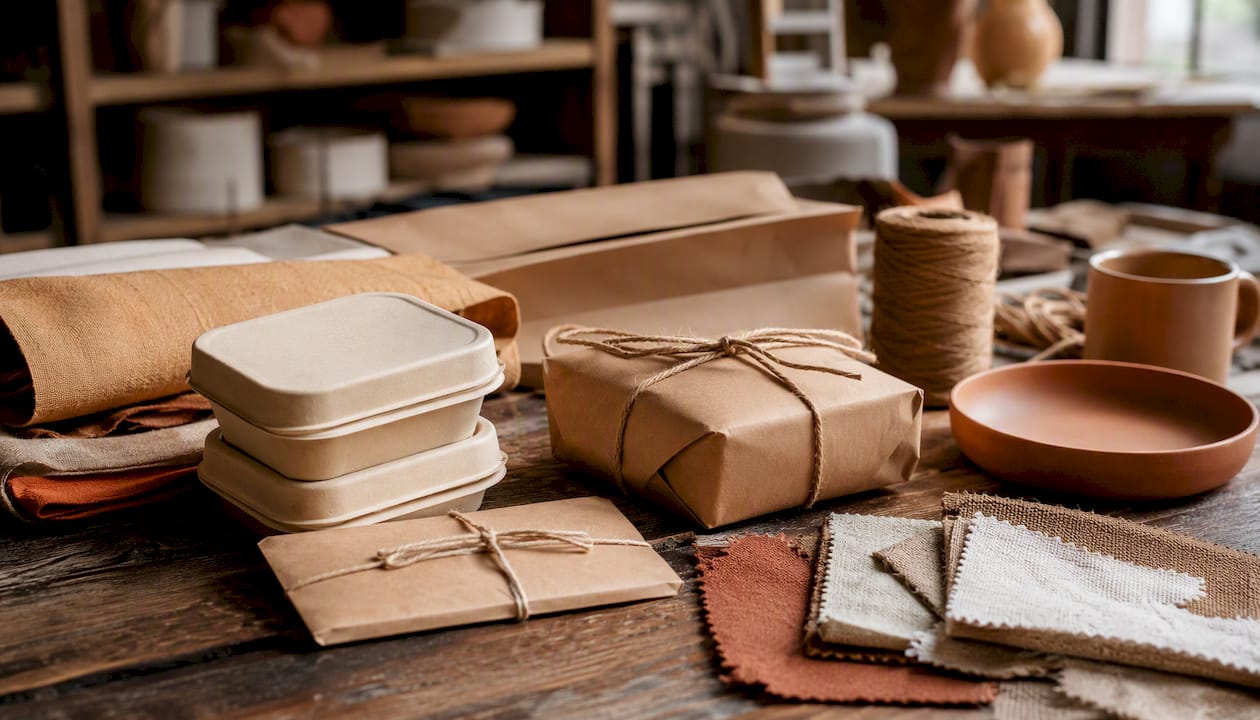
Domestic wholesalers and distributors hold inventory in U.S. warehouses, which means two-to-three-week lead times and no customs exposure. MOQs tend to be moderate, and you can often visit a showroom. The tradeoff is a higher unit price than a factory direct relationship.
Direct manufacturers (domestic or overseas) deliver the best unit economics at scale. Overseas factories in Mexico, China, or India typically require 50–500 units depending on category, and lead times run eight to twelve or more weeks. The quality-control burden sits with you unless you hire an inspector.
Trade shows like High Point Market in North Carolina or the Canton Fair in China let you inspect products in person, negotiate terms face-to-face, and discover niche suppliers you'd never find online. They're especially valuable when planning private-label or seasonal buys.
Sourcing agents and importers act as your local representative in a foreign market. A good agent handles supplier verification, factory inspections, and logistics coordination, which can save significant time for buyers who are new to international sourcing.
- Use B2B marketplaces when you need speed, low minimums, or want to test a new category.
- Use domestic distributors when lead time matters more than unit price.
- Use direct manufacturers when volume is predictable and you can absorb longer lead times.
- Use trade shows for private-label planning and relationship building.
- Use sourcing agents when importing from unfamiliar markets.
Pro Tip: Sample domestically first. Once a product proves itself in your store, source the same category from a direct manufacturer to capture the margin difference.
What legal documents do you need to buy wholesale in the U.S.?
Most wholesalers require proof of business activity before opening a trade account. Federal law doesn't prevent individuals from buying in bulk, but suppliers set their own policies, and the vast majority ask for at least an EIN and a state resale certificate before extending wholesale pricing.
The documents you'll typically need
- Employer Identification Number (EIN). Apply free at IRS.gov. Most applications are approved instantly online. This is your federal tax ID and the foundation of every wholesale account application.
- State resale certificate (seller's permit). Issued by your state's department of revenue or taxation. It allows you to purchase goods for resale without paying sales tax at the point of purchase. Rules and forms differ by state, so check your specific state's revenue website.
- Business license or DBA registration. Many states require a general business license or a "doing business as" filing. Some counties add a local business permit on top of the state requirement.
- Articles of incorporation or LLC operating agreement. Not always required, but larger suppliers and trade programs often ask for proof of your legal business structure.
How sales tax works on wholesale purchases
When you buy for resale, you present your resale certificate to the supplier and no sales tax is collected at that transaction. You collect sales tax from your end customer when you sell the item. If you buy wholesale goods for your own use (not for resale), you owe use tax in most states. Always verify the destination state's rules before finalizing an order, because resale certificate rules vary by state and a misstep can create an unexpected tax liability.
- Sole proprietors can use their SSN in place of an EIN for some accounts, but an EIN is cleaner and protects your personal information.
- Some states (like Texas, California, and Florida) have straightforward online applications for seller's permits; others require a paper form and a waiting period.
- Keep copies of every certificate on file. Suppliers may request updated documentation annually.
How do you verify a supplier before placing a bulk order?
Supplier fraud and quality failures are the two most common ways small buyers lose money in wholesale. A structured verification process costs very little time and can prevent costly mistakes.
Verification checklist
- Business registration. Confirm the supplier is registered in their country or state. In the U.S., check the Secretary of State database. For overseas suppliers, request a business license copy and verify it against official registries.
- Reviews and references. Ask for two or three references from buyers in your category. Contact them directly. Check Google Business, Trustpilot, and industry-specific forums for patterns.
- Transaction history. Platforms like Alibaba and Faire show order volume and response rates. A supplier with thousands of completed orders and a high response rate is meaningfully lower risk than a new listing.
- Third-party certifications. For decor items with electrical components, request CE certification. For wooden products, FSC certification confirms responsible sourcing. ISO 9001 and BSCI indicate quality management and social compliance respectively.
- Sample order. No verification step replaces holding the product in your hands. Always order samples before committing to bulk.
- Factory photos or live video walkthrough. Reputable suppliers welcome this. Reluctance to show the production floor is a meaningful warning sign.
- Communication quality. Measure response time, clarity, and willingness to answer specific questions about lead times and defect rates. Vague answers on lead times before the sale predict vague answers on delays after it.
Pro Tip: When evaluating a new overseas supplier, ask specifically: "What is your defect rate on the last three production runs, and how do you handle replacements?" A supplier who answers with a specific number and a clear process is worth trusting. One who deflects is not.
For quality and price evaluation, reviewing how interior door suppliers balance quality vs. price offers a transferable framework: the cheapest option rarely delivers the lowest total cost when you factor in returns, reorders, and customer complaints.
How do you calculate landed cost and model your margins?
Unit price is the number suppliers advertise. Landed cost is the number that actually determines whether your business makes money. Every buying decision should start with landed cost, not catalog price.
What landed cost includes
Landed cost = unit price + packaging + inbound freight + import duties + insurance + customs brokerage fees + warehousing
Sample calculation: domestic vs. imported decorative pillow
Suppose you're sourcing a decorative pillow at $18 per unit from a domestic distributor (MOQ: 50 units) versus $9 per unit from an overseas artisan manufacturer (MOQ: 200 units, shipped FOB origin).
The imported option delivers a $6.20 lower landed cost per unit, but requires four times the minimum order and eight to twelve weeks of lead time. At 200 units, that's $1,240 in additional capital tied up before a single item sells.
Incoterms in plain language
- FOB (Free On Board): The supplier loads goods onto the vessel at origin. You pay freight, insurance, and customs from that point forward.
- CIF (Cost, Insurance, Freight): The supplier covers freight and insurance to the destination port. You handle customs clearance and final delivery.
FOB gives you more control over freight costs; CIF is simpler but usually more expensive because the supplier marks up the freight.
Freight method and lead time
Sea freight is the lowest-cost option for bulk orders but takes 25–45 days. Air freight runs 5–10 days at meaningfully higher cost. Courier services (DHL, FedEx) are best for samples and urgent small shipments, arriving in 3–7 days.
Pro Tip: Build a simple spreadsheet with landed cost, your target retail price, and break-even quantity before every order. If the math doesn't work at the supplier's MOQ, negotiate or move on.
How to order samples and build a quality-control process
Requesting a sample before a bulk order is the single most reliable way to avoid a costly mistake. Shopify's wholesale sourcing guidance consistently recommends this step, and experienced buyers treat the sample fee as the cheapest insurance available.
What to request in your sample order
- A full production sample (not a showroom display piece) made with the same materials and processes as the bulk run.
- Production-ready packaging and any labeling you've specified.
- A completed spec sheet showing dimensions, materials, and weight.
- The supplier's golden sample, if they maintain one, for future QC comparison.
Expect to pay $30–$150 per sample for decorative items, plus courier shipping. Most suppliers credit the sample fee against your first bulk order.
Sample order example for a small-batch buyer
A boutique ordering decorative pillows for the first time might request two colorways in one size (four samples total), pay a sample fee of $60–$80, and receive them via courier in 7–14 days. That's a $100–$200 investment to validate a product before committing to a 100-unit order.
QC checklist on arrival
- Measure dimensions against the spec sheet.
- Check materials: fabric weight, fill density, stitching quality, and colorfastness.
- Inspect finish: no loose threads, uneven seams, or color inconsistencies.
- Verify packaging: correct labeling, no damage, matches your spec.
- Compare against the golden sample if one exists.
When to hire a third-party inspector
For orders above $3,000–$5,000 in value, a third-party pre-shipment inspection (PSI) is worth the cost, typically $200–$350 per inspection day. A DUPRO (during production) inspection catches defects before the full run is complete, which is especially valuable for custom or private-label orders. Inspection firms like QIMA and Bureau Veritas operate in most major manufacturing markets.
How do you negotiate secure payment terms with new suppliers?
Payment terms are where small buyers lose leverage and, sometimes, money. The goal is to protect your cash while giving the supplier enough confidence to prioritize your order.
Common payment options and their risk profiles
- Deposit + balance (30/70 or 50/50): Pay 30–50% upfront, balance before shipment or on delivery. Standard for most manufacturer relationships. Moderate risk.
- Net 30/60 terms: You pay 30 or 60 days after delivery. Available from established domestic distributors and some marketplace platforms. Low cash-flow risk, but requires a credit application.
- Letter of credit (LC): A bank guarantees payment when shipping documents are presented. High protection for both parties, but complex and costly to set up. Best for orders above $20,000.
- Wire transfer (T/T): Fast and common for international orders, but offers almost no recourse if the supplier disappears. Never wire 100% upfront to a new supplier.
- Escrow or credit-card-backed payment: Platforms like Alibaba Trade Assurance or Faire hold funds until delivery is confirmed. Ideal for first and second orders with any new supplier.
Negotiation tactics that work
Start every new supplier relationship by proposing a higher deposit in exchange for a lower MOQ. Suppliers who see a buyer willing to commit financially are more likely to accommodate smaller quantities. For repeat orders, ask for Net 30 terms after two or three successful transactions. Larger, predictable orders carry real leverage: a buyer who orders quarterly has more negotiating power than one who orders once.
Pro Tip: For your first two orders with any new supplier, use a payment method with built-in dispute resolution, such as a credit card, Faire, or Alibaba Trade Assurance. The small processing fee is far cheaper than losing an entire order to a bad actor.
What are your options for private labeling and custom packaging?
Private labeling lets you sell products under your own brand, which builds customer loyalty and protects your margins from direct price comparison. The tradeoff is higher MOQs, longer lead times, and upfront setup costs.
OEM vs. ODM
- OEM (Original Equipment Manufacturer): You provide the design; the manufacturer produces it. Full creative control, but you need ready artwork and often a mold fee for custom shapes.
- ODM (Original Design Manufacturer): The manufacturer has existing designs you can brand as your own. Lower setup cost and faster timelines, but less differentiation.
For most small buyers entering private label for the first time, ODM is the practical starting point. You get a proven product with your branding at a fraction of the design cost.
Typical MOQs and costs for private labeling
MOQs for decorative items typically run 50–200 units for small decorative pieces and 100–500 units for textiles and larger accents. Expect additional costs for packaging design ($200–$800 for a professional designer), custom hang tags or labels ($0.10–$0.50 per unit), and mold fees for custom shapes ($500–$2,000 depending on complexity).
How to phase a private-label program
Start with a branded ODM pilot of 100–150 units to test sell-through. If the product moves well, negotiate a larger run with a lower per-unit price. To lower MOQ on the first run, offer to pay a higher unit price or combine two SKUs (say, two colorways of the same pillow) to reach the manufacturer's minimum across the combined order.
Pro Tip: Vacuum-compressed packaging, used by suppliers like Createdecorus, reduces shipping volume significantly. Ask your supplier whether compression packaging is available for your private-label run. It lowers freight cost per unit and improves the unboxing experience.
What return and warranty terms should your wholesale contract include?
A wholesale agreement without clear return and warranty language is an invitation to a dispute. Before signing any supplier contract or placing a significant order, confirm these terms in writing.
Contract clauses to include
- Accepted defects threshold: Most suppliers accept a small defect rate as normal. Anything above that threshold should trigger a replacement or credit.
- Warranty period: Specify how long the supplier is responsible for defects, typically 30–90 days from delivery for home decor.
- Claim submission window: Define how many days after delivery you have to submit a claim (usually 7–30 days). Missing this window often voids your right to a remedy.
- Replacement vs. refund: Clarify whether the supplier replaces defective units, issues a credit, or refunds. Replacement is most common; refunds are harder to obtain from overseas suppliers.
- Return freight responsibility: Specify who pays to ship defective goods back. For overseas suppliers, returning goods is rarely practical; instead, negotiate a credit or replacement shipment.
- Dispute resolution: Include a governing law clause and a preferred dispute method (arbitration is common for international contracts).
How to document and submit a claim
- Photograph every defective unit against a neutral background, showing the specific defect clearly.
- Compare photos against your golden sample or spec sheet.
- Count and categorize defects (cosmetic vs. structural).
- Submit a written claim with photos, defect count, and your requested remedy within the contract window.
- Keep all correspondence in writing, including email confirmations of verbal agreements.
When a supplier offers a lower price in exchange for weaker warranty terms, accept only if the price reduction is large enough to cover your expected defect cost.
Step-by-step checklist for placing your first wholesale order
A clear sequence prevents the most common mistakes: ordering before you're registered, skipping samples, or miscalculating landed cost.
The complete checklist
- Obtain your EIN from IRS.gov (free, usually instant online).
- Apply for your state's resale certificate at your state's revenue department website.
- Register your business (LLC, sole proprietor, or corporation) and obtain any required local business license.
- Research and shortlist three to five suppliers using B2B marketplaces, trade directories, or trade show contacts.
- Verify each supplier: check reviews, request references, confirm business registration.
- Request samples from your top two suppliers. Pay the sample fee; it's worth it.
- Inspect samples against your QC checklist (dimensions, materials, finish, packaging).
- Request a landed-cost quote: unit price + freight + duties + insurance + brokerage.
- Negotiate MOQ, payment terms, and lead time before placing the order.
- Confirm payment method: use escrow or credit-card-backed payment for your first order.
- Place the order with written confirmation of all agreed terms.
- Schedule a pre-shipment inspection for orders above $3,000–$5,000.
- Arrange customs clearance and final delivery logistics.
- Inspect the delivery on arrival against your QC checklist and golden sample.
- Submit any claims within the contract window.
Sample timeline
- Domestic order: 2–3 weeks from order placement to delivery, including 3–5 days for freight.
- Imported order (Mexico or near-shore): 4–6 weeks, including production and freight.
- Imported order (overseas, sea freight): 8–12 weeks or more, including production (3–4 weeks) and sea transit (25–45 days).
Add at least one week of buffer to every timeline for customs delays, inspection scheduling, or production overruns. For seasonal buying, work backward from your sell date and add two weeks of buffer on top of the supplier's quoted lead time.
- Use courier shipping for samples to compress the evaluation phase to 7–14 days.
- Local or domestic warehouses can cut replenishment lead times to days rather than weeks.
- Express air freight for small urgent orders costs more per unit but can save a season.
How the Createdecorus wholesale program addresses what buyers need most
For boutiques and interior designers who want handcrafted luxury decor without the complexity of overseas sourcing, Createdecorus offers a trade program built around the specific needs of small U.S. buyers. The collection centers on artisan-made decorative pillows, ottomans, and home accents produced in Mexico, where traditional craftsmanship and premium materials come together in pieces that carry genuine cultural authenticity.
What the program offers
- Trade pricing for qualified boutiques, interior designers, and online retailers.
- Lower MOQs than typical overseas factory minimums, designed for buyers who are testing new styles or building an initial collection.
- Domestic shipping advantages: because Createdecorus ships from within the U.S. supply chain, buyers avoid the customs complexity and long lead times of direct overseas imports.
- Quality control from artisan partners in Mexico, with vacuum-compressed shipping that reduces freight volume and protects each piece in transit.
- Custom order options for buyers who want to explore private-label or branded packaging, with guidance on timelines and minimums.
- Trade support to help buyers select pieces that fit their store's aesthetic and price point.
Createdecorus's handcrafted luxury pillows and accents are the kind of signature pieces that anchor a curated collection, the statement items that give a boutique its identity and keep customers coming back.
Pro Tip: Before applying for a wholesale account, order one or two retail pieces from the Createdecorus shop to experience the product quality firsthand. That sample experience will also help you describe the pieces to your own customers with genuine confidence.
To apply for a trade account or request samples, visit the Createdecorus wholesale program page. Have your EIN and resale certificate ready, and include a brief description of your store and the product categories you're looking to carry.
What most wholesale guides get wrong about buying decor in bulk
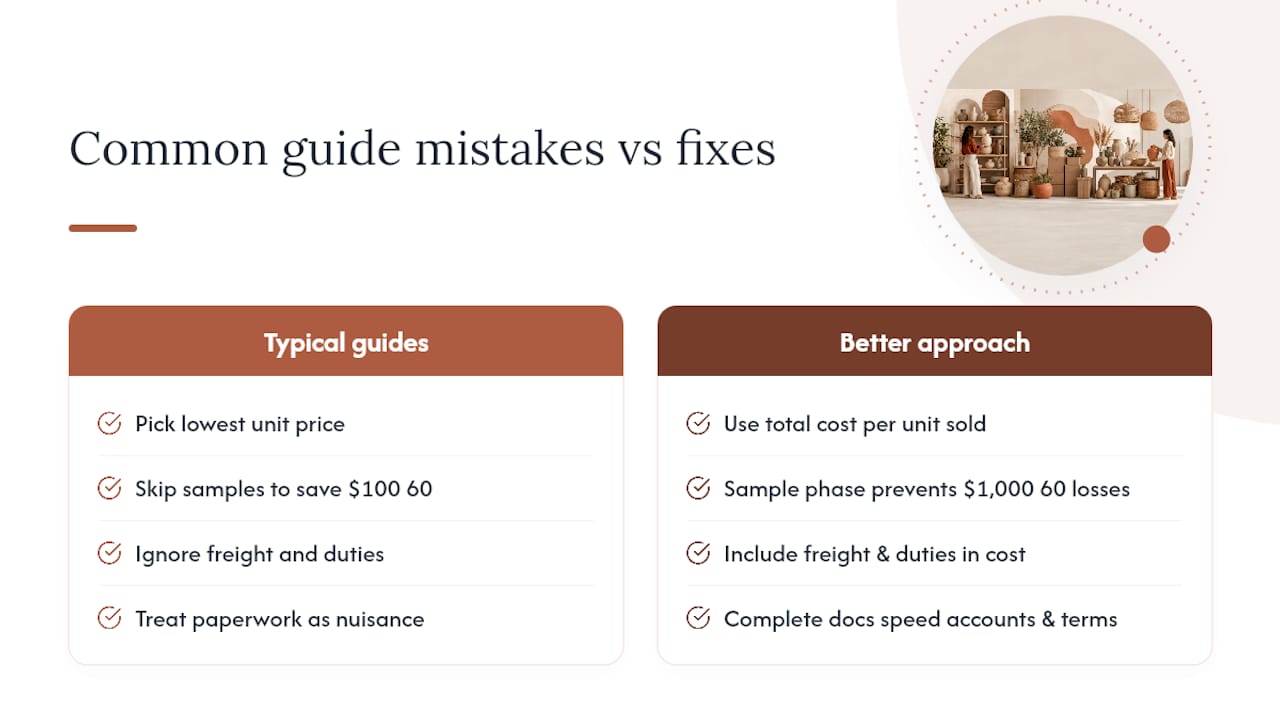
The conventional advice on buying wholesale home decor focuses almost entirely on finding the cheapest unit price. That framing leads small buyers into predictable traps: ordering too much of an untested product, ignoring the true cost of freight and duties, and choosing suppliers based on price alone rather than reliability and quality.
The more useful frame is total cost of ownership per unit sold.
The second thing most guides underestimate is the value of the sample phase. Buyers who skip samples to save $100–$200 routinely absorb $1,000–$5,000 in losses on a bad bulk order. The sample is not a formality. It's the most important quality-control step in the entire process, and it's the one most often skipped by buyers in a hurry.
Finally, the paperwork step (EIN, resale certificate, business license) is treated as a bureaucratic nuisance in most guides. It's actually a strategic asset. A buyer who arrives at a trade show or wholesale platform with complete documentation opens accounts faster, qualifies for better payment terms, and signals to suppliers that they're a serious, repeat buyer worth prioritizing. That signal has real commercial value, especially when you're negotiating MOQs or asking for a lower deposit.
The buyers who build durable wholesale relationships don't chase the lowest price. They build trust through consistent orders, clear communication, and professional documentation. That's what earns you better terms over time.
Createdecorus: handcrafted wholesale decor, ready for your trade account
For boutiques and designers who want to carry pieces with genuine artisan heritage, Createdecorus offers something most wholesale sources can't: handcrafted luxury pillows and home accents made in Mexico, where traditional textile craft and contemporary design meet in every piece.
The Createdecorus trade program is designed for small U.S. buyers who want lower MOQs, domestic shipping, and the kind of product story that resonates with customers who care about quality and origin. Each piece arrives vacuum-compressed to protect it in transit and reduce freight cost, and the collection spans decorative pillows, ottomans, and accent pieces that work as signature items in any curated interior.
To get started, visit the Createdecorus wholesale program page, complete a short trade account application with your EIN and resale certificate, and request samples to experience the craftsmanship firsthand. Your first wholesale order could ship within days of approval.
Sources
These resources support the guidance in this article and let you verify requirements directly with official or authoritative sources.
- Qué documento necesito para comprar al por mayor | Shopify
- How to Source Wholesale Home Decor: A B2B Guide for Retailers & E-Commerce Sellers
- Wholesale Home Decor Sourcing Guide: Trends, Suppliers & Cost Control - toptradesourcing
- Cómo conseguir decoración para el hogar al por mayor: una guía B2B para minoristas y vendedores de comercio electrónico
- Wholesale home decor on Faire — category page