
Yes, investing in quality decor pieces is worthwhile — and the returns show up in more ways than one. A well-chosen sofa or hand-knotted rug pays back through durability, daily comfort, and the kind of quiet pride that comes from living with something made to last. Dopamine decor research links personalized, vivid home pieces to mood lifts and reduced stress. Thoughtful interiors also shape buyer impressions at resale, making design one of the few home investments that serves you every single day and still matters when you sell.
The core value drivers are worth naming clearly:
- Durability and lifespan: Quality materials and solid construction mean fewer replacements over a decade.
- Emotional wellbeing: Intentional, personalized decor supports mood, is associated with lower cortisol, and creates a genuine sense of home.
- Resale and perceived property value: Thoughtful interiors leave lasting impressions on buyers and can support a higher asking price.
- Sustainability: Buying once, buying well, and caring for pieces properly generates less waste than cycling through inexpensive replacements.
- Cultural and personal meaning: Pieces with provenance or artisan heritage carry a depth that mass-produced items simply cannot replicate.
The question is never whether decor matters. It's where to spend with intention and where to hold back.
Table of Contents
- 1. Why quality decor pays off in ways you can actually measure
- 2. Which decor categories are worth splurging on?
- 3. Where should you save and where should you splurge?
- 4. How to evaluate a decor piece before you commit
- 5. How to protect what you've invested in
- 6. How intentional decor shapes your mood and behavior
- 7. What to expect to pay and how to plan purchases over time
- Key Takeaways
- The case for buying less and choosing better
- Createdecorus handcrafted accents: where artisan quality meets lasting warmth
- Sources and further reading
1. Why quality decor pays off in ways you can actually measure
The most honest case for spending more on key pieces comes down to cost-per-year. A $3,000 solid-wood dining table that lasts 20 years costs you $150 a year. A $600 table that warps and wobbles after five years costs $120 a year — and you still have to replace it. The math is close enough that the premium piece wins on comfort, aesthetics, and resale appeal without costing meaningfully more per year of use.
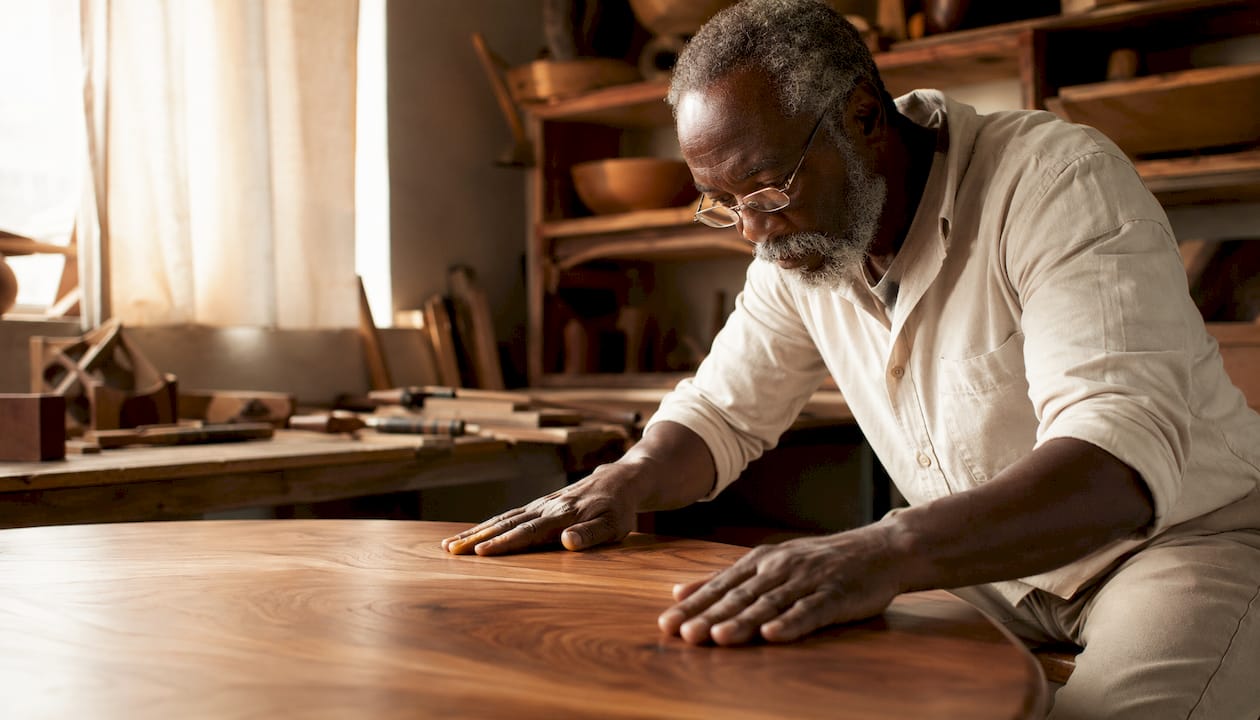
Better materials and workmanship increase longevity and reduce replacement frequency. That's the financial case in one sentence. But the returns extend well beyond the ledger.
Resale and perceived home value matter more than most homeowners realize. Buyers form impressions within seconds of entering a room, and a well-designed interior signals care and quality throughout the home. Interior design as an investment is supported by documented ROI observations across painting, kitchen updates, and thoughtful material choices.
Daily wellbeing is the benefit that surprises people most. Space planning, lighting, and material choices affect daily comfort, productivity, and health in ways that compound quietly over years. A room that feels right supports rest, focus, and connection. One that feels cluttered or impersonal does the opposite.
Sustainability rounds out the case. Fewer replacements mean less manufacturing waste, less packaging, and less furniture ending up in landfills. Buying one well-made piece instead of three cheap ones is a genuinely lower-impact choice.
Pro Tip: Before any purchase, divide the price by the number of years you expect to own it. If the cost-per-year is within 20% of a cheaper alternative, the quality piece almost always wins on every other dimension.
2. Which decor categories are worth splurging on?
Designers consistently invest the majority of a room's budget in a short list of foundational categories. Interior designer Bethany Palmer frames the distinction plainly: allocate 80% to anchor pieces and 20% to trend-driven accents. The logic is that anchors define the room's scale, function, and longevity, while accents can rotate affordably as tastes shift.
Here are the categories that earn that anchor investment, with quality markers for each:
- Sofas and upholstery: Look for kiln-dried hardwood frames, eight-way hand-tied springs, and high-density foam (at least 1.8 lb/cubic foot). A well-built sofa lasts 15–20 years. Entry-level: $800–$1,500. Mid: $2,000–$4,000. Investment: $5,000 and up.
- Rugs: Hand-knotted wool or silk rugs outlast machine-made versions by decades and hold resale value. Check knot density (higher is better) and wool quality. Entry: $300–$700. Mid: $1,000–$3,000. Investment: $5,000+.
- Lighting: Hardwired fixtures and statement pendants define a room's character in a way that lamps cannot. Solid brass or hand-blown glass ages gracefully. Entry: $150–$400. Mid: $500–$1,500. Investment: $2,000+.
- Original or investment-grade art: Signed, documented works appreciate over time and carry personal meaning. Provenance documentation is non-negotiable for anything above $500.
- Statement furniture: Solid-wood tables, vintage sideboards, and custom storage pieces anchor a room visually and structurally. Look for dovetail joinery, mortise-and-tenon construction, and genuine wood grain rather than veneer over particleboard.
- Built-ins and architectural trim: Interior doors, built-in shelving, and quality trim work add perceived value that buyers notice. Interior doors as design focal points are increasingly recognized as high-impact investments.
- Beds and mattresses: You spend roughly a third of your life here. A quality mattress and solid bed frame affect sleep quality, which affects everything else. Expect to spend $1,000–$3,000 for a mattress that performs well for 10 years.
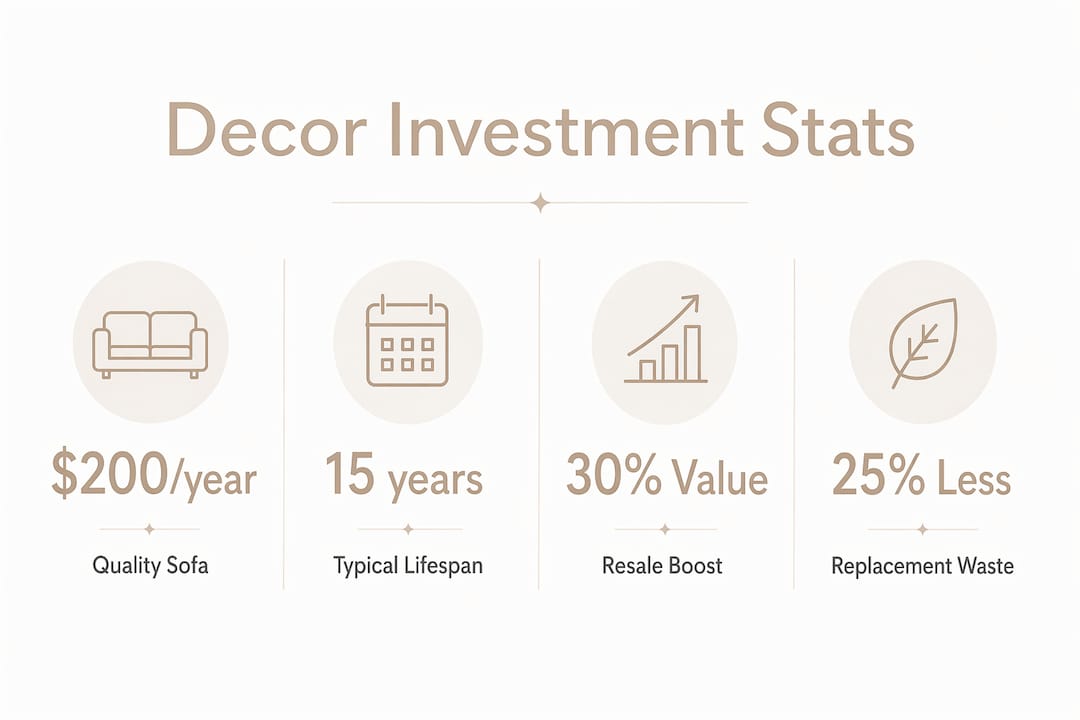
Cost-per-year comparison: A $3,000 sofa lasting 15 years costs $200/year. An $800 sofa replaced twice in the same period costs $1,600 total, or about $107/year — but with two replacement cycles, two rounds of delivery fees, and two periods of living with something that doesn't feel right.
Pro Tip: For upholstered pieces, flip the cushion and press it firmly. Quality foam rebounds within two seconds. If it stays compressed, the fill density is too low to last.
3. Where should you save and where should you splurge?
The 80/20 rule of interior design gives you a repeatable framework: spend the bulk of your budget on pieces that define the room's structure, comfort, and scale. Reserve the smaller portion for items you'll want to refresh as your taste evolves.
Splurge on:
- Sofas, sectionals, and lounge chairs (daily use, structural wear)
- Dining tables and chairs (high contact, visible centerpiece)
- Area rugs (defines the room, absorbs sound, affects warmth)
- Lighting fixtures (hardwired pieces stay when you move; they add value)
- Mattresses and bed frames (health and sleep quality)
- Pieces with artisan heritage or documented provenance
Save on:
- Throw pillows and blankets (swap seasonally for under $50 each)
- Decorative trays, vases, and small ceramics (trend-driven, easily replaced)
- Seasonal wreaths, candles, and tabletop accents
- Mass-produced wall art in standard sizes (easily swapped)
- Side tables and accent chairs in secondary rooms
A practical decision heuristic: if a piece touches your body daily, defines the room's scale, or would cost more than $300 to replace, it belongs in the splurge category. If you'd swap it without hesitation in two years, save.
Pro Tip: When shopping for accent pieces, set a firm per-item ceiling of $75–$150. This keeps the 20% refresh budget from quietly consuming the 80% you need for anchors.

4. How to evaluate a decor piece before you commit
A structured checklist prevents the most common buying mistakes, whether you're shopping in a showroom, browsing an estate sale, or placing an order online.
Evaluation checklist:
- Materials: Identify the primary material. Solid wood, hand-knotted fiber, kiln-fired ceramic, and solid brass are longevity markers. Veneer over MDF, machine-tufted pile, and plated metal are not.
- Construction and joinery: For furniture, look for dovetail or mortise-and-tenon joints. Staples and glue alone are a red flag.
- Maker and provenance: Can the seller name the maker, workshop, or country of origin? For antiques and investment-grade art, ask for documentation. Documented provenance materially affects resale value.
- Return and warranty policy: A seller confident in their product offers at least a 30-day return window. No returns on a $2,000 piece is a serious red flag.
- Physical testing: Sit on it. Lay on it. Press the cushions. Smell the finish (chemical odors often indicate low-quality lacquers or adhesives). Run your hand across the surface.
- Certifications and hallmarks: Look for OEKO-TEX certification on textiles, FSC certification on wood, or maker's marks on ceramics and metalwork.
- Signs of repair or damage: Minor repairs on antiques are normal and acceptable. Concealed structural damage is not. Ask directly.
For a practical pre-purchase luxury decor investment checklist, the key questions are always the same: who made it, what is it made of, how long should it last, and what happens if something goes wrong?
Red flags to walk away from:
- Inconsistent finishes or mismatched grain patterns on "solid wood" pieces
- Suspiciously low prices on items claiming high-end provenance
- Missing documentation for antiques or signed art
- Sellers who cannot answer basic questions about materials or construction
- No physical address or return policy for online purchases above $500
Price-per-year formula: Cost ÷ expected years of use = annual value. Apply this to every anchor purchase. A $1,200 hand-knotted rug lasting 25 years costs $48/year. A $300 machine-made rug lasting 5 years costs $60/year.
5. How to protect what you've invested in
Maintenance is where most people lose the value they paid for. A $4,000 sofa that goes unprotected for five years may need reupholstery before year ten. The same sofa with basic care lasts 20.
By category:
- Upholstery: Vacuum weekly with a soft brush attachment. Rotate and flip cushions monthly. Treat spills within 60 seconds using a clean cloth and cold water. Professional cleaning every 18–24 months for heavily used pieces.
- Rugs: Vacuum both sides twice a month. Rotate 180 degrees every six months to even out foot traffic wear. Professional cleaning every 12–18 months for wool or silk. Use a quality rug pad to prevent slipping and reduce pile compression.
- Wood furniture: Dust with a slightly damp microfiber cloth. Apply a quality furniture wax or oil (Howard Feed-N-Wax works well for most finishes) twice a year. Keep pieces away from direct sunlight and heating vents.
- Metal and lighting: Wipe brass and bronze with a dry cloth to preserve patina. Avoid abrasive cleaners on plated surfaces. Check wiring on vintage lighting fixtures every three to five years.
- Art: Keep framed works out of direct sunlight. Use UV-protective glass for anything of value. Photograph every piece you own for insurance documentation.
Restoration options that extend life: Reupholstery typically costs $400–$1,200 for a sofa and can add another 10–15 years of life. Refinishing a solid-wood table runs $200–$600 and restores it to near-original condition. Rewiring a vintage lamp costs $75–$150 and makes it safe and functional for decades more.
Insurance and documentation: Photograph every significant piece from multiple angles and store the images off-site or in cloud storage. For pieces worth $1,000 or more, a scheduled personal property rider on your homeowner's policy typically costs $10–$30 per year and covers accidental damage, theft, and loss.
Pro Tip: Place felt pads under every object that sits on a wood surface, not just chair legs. Ceramic vases, metal sculptures, and decorative trays all leave marks over time. A $3 pack of felt pads protects a $1,500 table indefinitely.
6. How intentional decor shapes your mood and behavior
The wellbeing case for quality decor is grounded in real research, not just aesthetics. Personalized, vivid home pieces are associated with small dopamine boosts and improved motivation, a pattern researchers and journalists have described as "dopamine decor." The effect is not about maximalism. It's about surrounding yourself with items that carry personal meaning and visual warmth.
Homes function as communicative environments that actively shape behavior. A room designed with intention supports the routines you want, whether that's rest, focus, or connection. A room designed by default, filled with whatever was convenient, tends to work against those routines. The difference between the two is largely a matter of deliberate choice.
Cognitive design tactics add another layer of practical guidance:
- Round shapes (curved sofas, oval tables, arched mirrors) lower perceived anxiety compared to sharp-edged furniture arrangements.
- Anchoring with one or two major pieces creates visual order that reduces cognitive load and makes a room feel settled rather than chaotic.
- Vertical storage reduces visual clutter at eye level, which correlates with lower cortisol and a greater sense of calm.
- Natural light and reflective surfaces amplify the restorative effects of a well-arranged space.
- Fragrance also plays a role in how a room feels. Scent in room design is increasingly recognized as a sensory layer that shapes mood and memory in the same way visual decor does.
Research from the University of Texas at Austin confirms that home environments meet both practical and psychological needs, with displayed objects functioning as identity claims that signal values, goals, and personality. The items you choose to live with are not neutral. They communicate something, to guests and to yourself.
Pro Tip: Pair one anchor piece with one personally meaningful accent when refreshing a room. The anchor creates visual stability; the accent, whether a textile with artisan heritage or a piece of original art, delivers the emotional resonance that makes a space feel genuinely yours.
7. What to expect to pay and how to plan purchases over time
Budgeting for quality decor works best as a staged plan rather than a single shopping event. Anchor pieces first, accents later, with strategic timing to capture the best prices.
| Item | Entry | Mid | Investment | Estimated Lifespan |
|---|---|---|---|---|
| Sofa | $800–$1,500 | $2,000–$4,000 | $5,000+ | 10–20 years |
| Area rug | $300–$700 | $1,000–$3,000 | $5,000+ | 10–30 years |
| Dining table | $400–$800 | $1,200–$3,000 | $4,000+ | 15–25 years |
| Statement lighting | $150–$400 | $500–$1,500 | $2,000+ | 15–30 years |
| Mattress | $500–$1,000 | $1,200–$2,000 | $3,000+ | — |
| Accent pillows (set) | — | — | — | 3–5 years |
Best times to buy:
- January and July: Post-holiday and mid-year clearance events at most major furniture retailers.
- Labor Day and Memorial Day weekends: Consistent sale periods for sofas and mattresses.
- Estate sales and auctions: Spring and fall are peak seasons. Arrive early; the best pieces go in the first hour.
- End of fiscal quarters: Galleries and design showrooms often discount floor samples in March, June, September, and December.
A 12–18 month buy plan for a living room:
- Months 1–3: Sofa and area rug (anchors that define scale and comfort).
- Months 4–6: Primary lighting fixture and one statement piece (art or a side table with character).
- Months 7–12: Accent textiles, throw pillows, and small ceramics (the 20% refresh layer).
- Months 13–18: Reassess and swap any accent that no longer fits; add one more anchor if the budget allows.
Sourcing tips and scam red flags:
- Trustworthy sellers provide maker information, material specs, and a clear return policy without being asked.
- For antiques, request a written provenance statement and, for pieces above $1,000, an independent appraisal.
- Be cautious of online listings that use stock photography rather than actual product photos.
- Auction houses with established reputations (regional and national) provide condition reports and buyer's premiums that are disclosed upfront. Undisclosed fees after a winning bid are a red flag.
- For handcrafted luxury decor, look for brands that name their artisans, describe their materials specifically, and show the making process.
Key Takeaways
Investing in quality decor pieces pays off through durability, daily wellbeing, and resale appeal when you allocate the majority of your budget to foundational anchors and treat trend-driven accents as a rotating, affordable layer.
| Point | Details |
|---|---|
| Anchor-first budgeting | Allocate 80% of your decor budget to foundational pieces like sofas, rugs, and lighting. |
| Cost-per-year thinking | Divide any purchase price by expected years of use before deciding; quality pieces often cost less annually. |
| Wellbeing is measurable | Personalized, intentional decor is associated with dopamine boosts, lower cortisol, and stronger daily routines. |
| Provenance protects value | Documented maker information and certifications increase resale value and reduce buyer uncertainty. |
| Createdecorus for artisan accents | Createdecorus handcrafted pieces, made in Mexico with artisan techniques, serve as the meaningful 20% accent layer that carries cultural depth and lasting quality. |
The case for buying less and choosing better
Most decorating advice tells you to spend wisely, but it rarely tells you what that actually looks like in practice. Here is the framework that holds up over time: anchor first, accent second, and limit trend-driven purchases to no more than 20% of your total budget.
The pieces that hold their value, and their meaning, are almost always the ones made with a specific intention. A hand-knotted rug from a named workshop. A solid-wood table built with mortise-and-tenon joints. A ceramic piece fired by a maker whose name you can look up. These are not just purchases. They are small decisions about the kind of home you want to live in.
The one thing most people underestimate is how much the accent layer matters emotionally, even when it matters less financially. A $120 pillow with genuine artisan heritage and a story behind it does more for a room's warmth than a $400 accent chair that could have come from anywhere. The financial weight belongs on the anchor. The soul of the room often lives in the details.
Pro Tip: Before buying any accent piece, ask yourself: would I still want this in three years? If the honest answer is no, treat it as a seasonal item and spend accordingly. Reserve your emotional investment for pieces with real provenance.
Createdecorus handcrafted accents: where artisan quality meets lasting warmth
For homeowners who want their accent layer to carry genuine cultural depth, Createdecorus offers handcrafted luxury home accents made in Mexico by artisans who have passed their techniques down through generations. Each piece, from plush decorative pillows to richly textured ottomans, is built from exceptional materials with the kind of thoughtful detail that mass production cannot replicate.
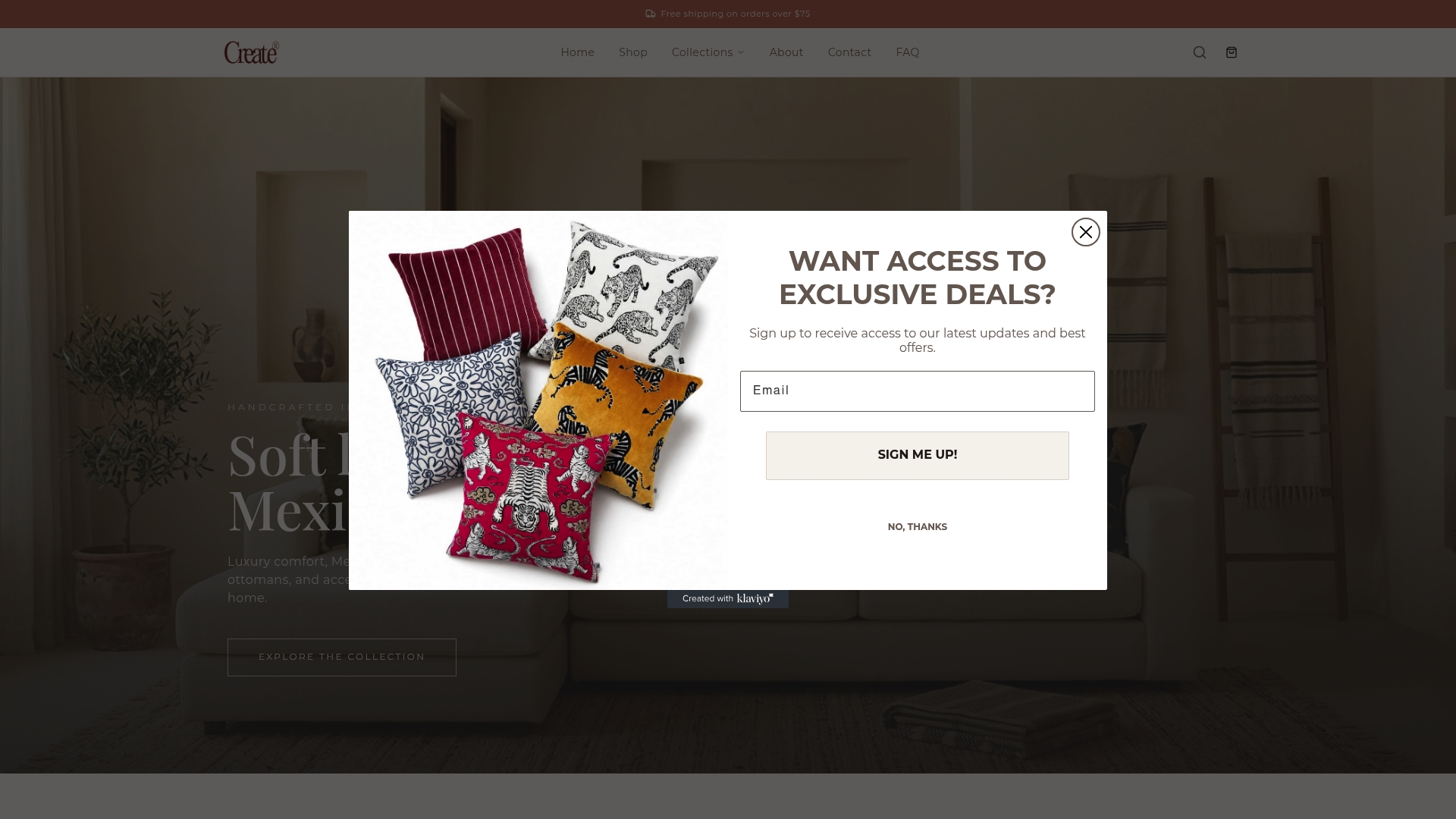
Createdecorus pieces are a natural fit for the 20% accent layer: they bring bold color, rich texture, and artisan heritage into a room without competing with the foundational anchors you've already invested in. They're made to be lived with, not just displayed. If you're a homeowner seeking soulful, enduring accents, or a designer sourcing pieces with authentic cultural provenance, this is a collection worth knowing.
Browse the full collection at Createdecorus or explore the complete pillow catalog to find pieces that speak to your space. Trade professionals and designers can learn about the wholesale program for volume pricing and trade access.
Sources and further reading
Research and journalism
- Dopamine decor: Why people are getting a happiness hit from homes — BBC
- Your home is talking to you — Psychology Today
- Interior design ideas: emotions over aesthetics — Columbia Tribune
- The Psychology of Home Decor — University of Texas at Austin
Design practice resources
- The 80/20 Rule of Interior Design — Designer Daily
- The ROI of home design — Interiors by Bethany
- Your space is either working for you or costing you — Colonelz
- Why Quality Home Decor Is the Best Long-Term Investment — Hornbill & Hornbill
- Why Interior Design Is an Investment, Not an Expense — Gothra Studio
Createdecorus resources
- Benefits of Handcrafted Luxury Decor for Your Home
- What Is Intentional Home Decorating? A Clear Guide
- Luxury Decor Investment Checklist for Discerning Homes