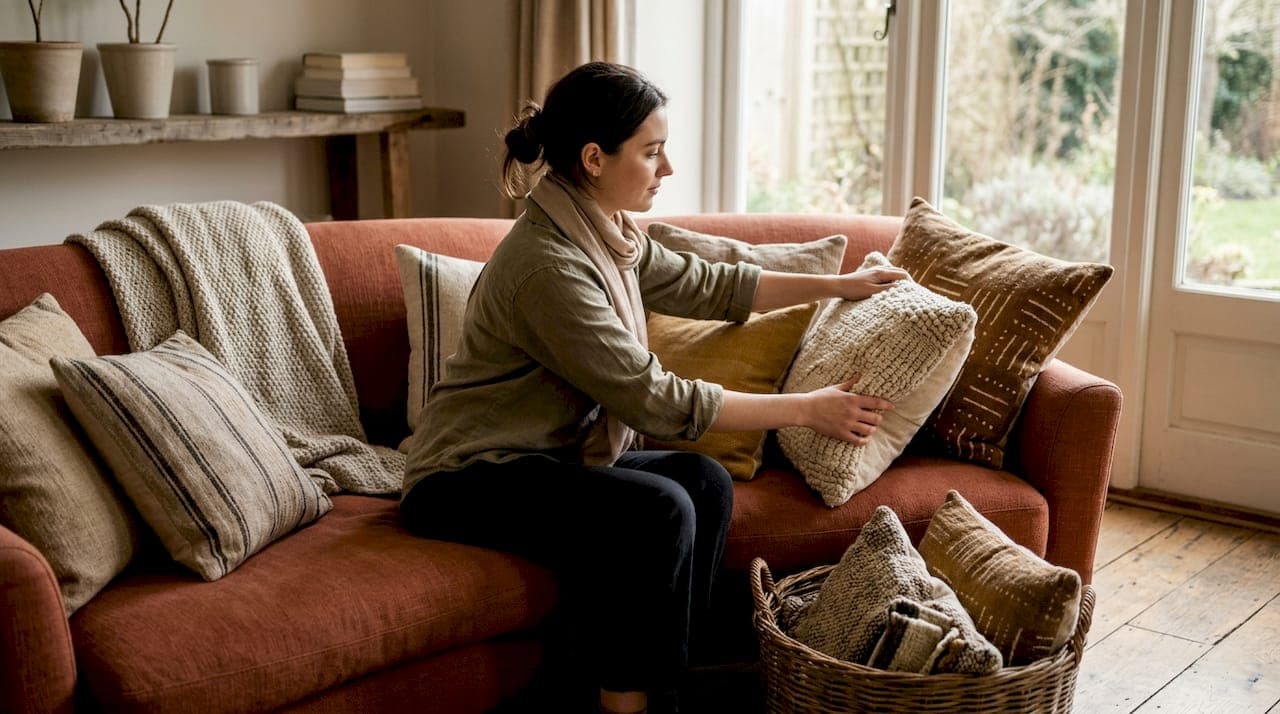
Styling throw pillows like a designer is defined by one core principle: intentional layering of size, shape, texture, and pattern to create a curated, welcoming arrangement. The difference between a sofa that looks polished and one that looks haphazard comes down to a few repeatable techniques. Designers rely on odd numbers, a unifying hero print, and quality inserts to achieve that effortless, put-together look. You do not need a design degree to get there. You need the right framework, and that is exactly what this guide delivers.
How to style throw pillows like a designer: the foundational rules
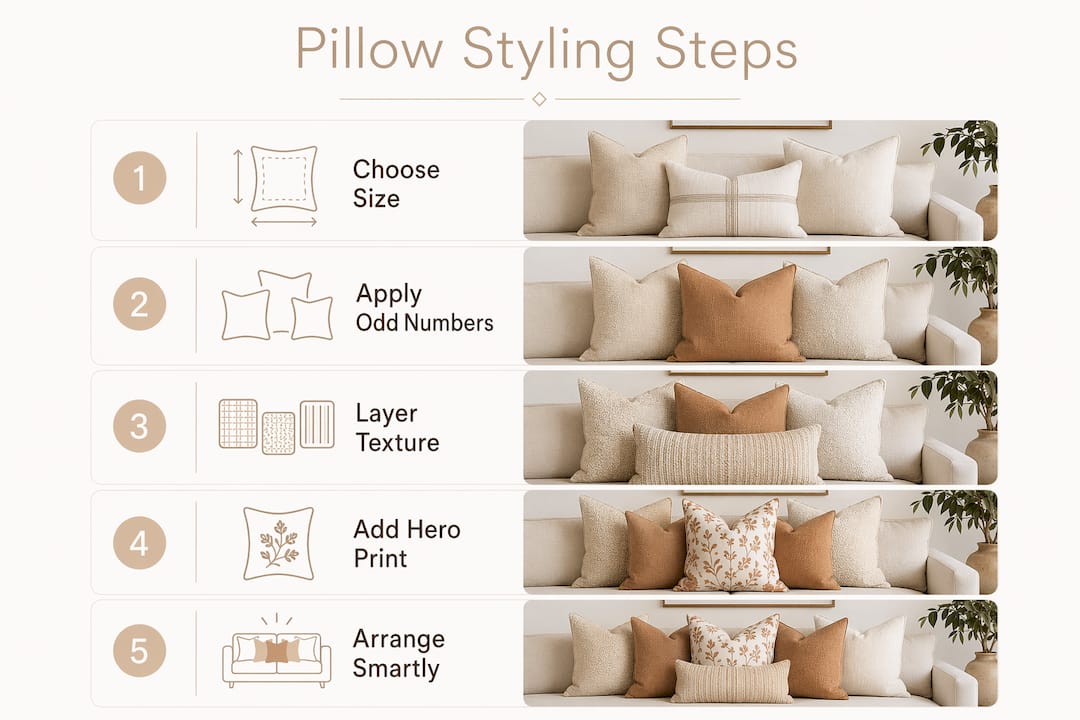
The most important rule in professional pillow styling is the odd-number principle. Odd numbers of pillows, typically 3 or 5 on a sofa, produce a balanced arrangement that avoids the rigid, symmetrical look of a showroom floor. That slight asymmetry reads as natural and curated rather than forced.
Sizing follows a clear hierarchy. Standard 20x20-inch square pillows anchor the corners of a sofa. Smaller pillows, around 18x18 inches, layer inward toward the center. Lumbar pillows, typically 12x20 inches, and round pillows add variety and break the monotony of repeating squares. Designers avoid pillows that overpower the furniture. A pillow that is too large for a loveseat makes the whole piece feel cramped.
Here is how the foundational sizing formula works in practice:
- Large squares (20x20 or 22x22 inches): Place at the far corners of a sofa or sectional as the base layer.
- Medium squares (18x18 inches): Layer in front of or beside the large squares, slightly overlapping.
- Lumbar pillows (12x20 inches): Center these in front of the arrangement for a grounding horizontal element.
- Round or bolster pillows: Use sparingly as accent pieces to soften the geometric lines.
Pro Tip: Never place two pillows of the same size directly next to each other. The visual step-down in size creates depth and draws the eye naturally across the arrangement.
How does texture and fabric elevate pillow styling?
Texture is the secret ingredient that separates a flat arrangement from one that feels rich and considered. Mixing materials like silk, boucle, velvet, and woven fabrics adds dimension and tactile interest that a single fabric type simply cannot achieve. The contrast between a smooth velvet and a nubby boucle makes both materials look better by comparison.
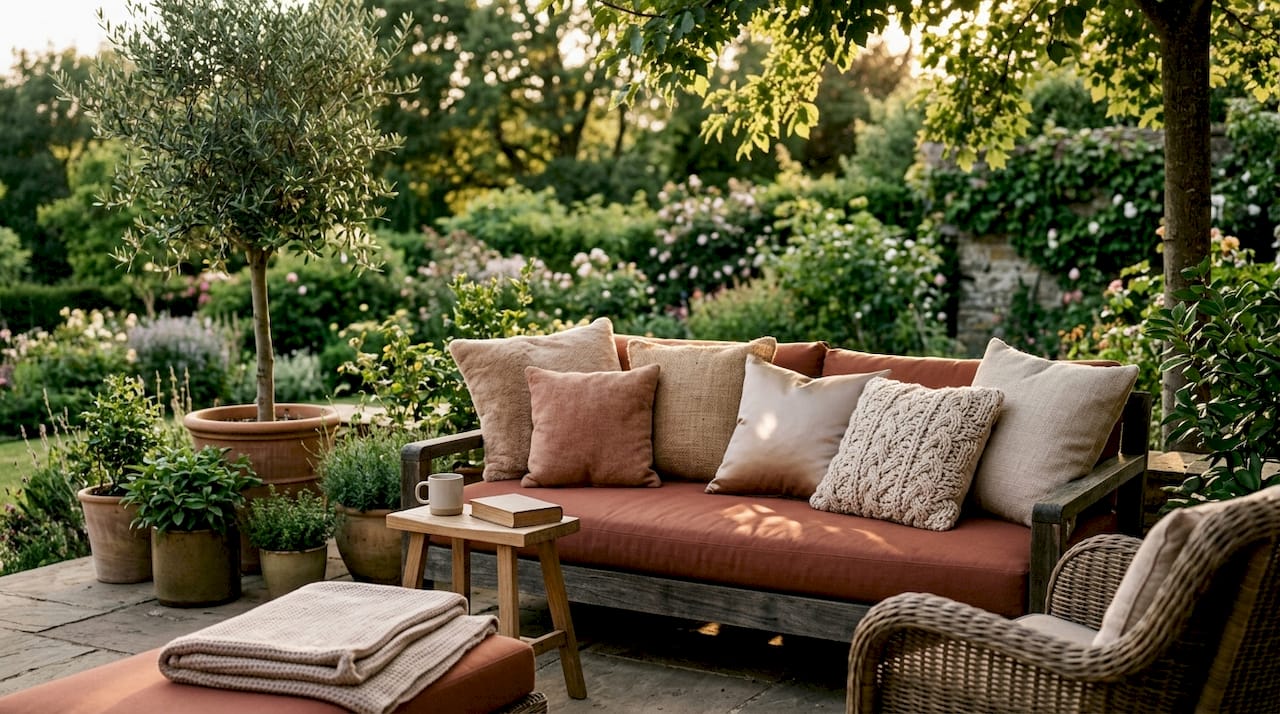
The quality of your insert matters as much as the cover. Oversizing inserts by 1–2 inches relative to the cover size ensures pillows look full and luxurious rather than deflated. A 20x20-inch cover needs a 22x22-inch insert to hold its shape properly. That extra fill is what gives pillows that plush, hotel-quality appearance.
Fabric choices to layer for maximum textural contrast:
- Velvet: Adds depth and a soft sheen; works beautifully in jewel tones.
- Boucle: Provides a cozy, organic texture that pairs well with smooth linens.
- Woven or jacquard fabrics: Introduce pattern and structure without adding a printed design.
- Silk or satin: Reflects light and adds a touch of refinement to the arrangement.
- Handwoven or artisan textiles: Bring warmth, personality, and a one-of-a-kind quality that mass-produced fabrics cannot replicate.
Pro Tip: When building a textural arrangement, start with one anchor fabric, like a solid velvet, and layer outward with increasingly varied textures. This prevents the group from feeling chaotic while still delivering visual richness.
What role do colors, patterns, and the hero print play?
Color is where most homeowners make their biggest styling mistakes. Matching all pillows to the sofa color creates a flat, uninspired look. The goal is contrast and cohesion at the same time. Choose a color scheme built on complementary or analogous colors from the color wheel, then let one pillow carry the full palette.
That pillow is the hero print. A hero print incorporates multiple colors from the room's existing palette and acts as a visual anchor that ties the entire arrangement together. It is the pillow that, when you look at it, explains why all the other pillows belong in the same group. Without it, even a well-chosen collection of pillows can feel disconnected.
Neutral patterned pillows, like stripes or simple geometrics, serve as foundational base layers that make it easier to layer bolder, more complex patterns on top. Think of them as the quiet supporting cast that lets the hero print take center stage.
| Pattern type | Role in the arrangement | Best paired with |
|---|---|---|
| Hero print (multicolor) | Visual anchor, ties palette together | Solids and neutrals |
| Stripe or geometric | Base layer, adds structure | Bold florals or abstract prints |
| Solid color | Rest for the eye, balances busy prints | Any pattern |
| Organic or abstract | Adds energy and movement | Solids and stripes |
Rotating pillow placement seasonally also refreshes the color story without buying new pieces. Move the hero print to a different position, or swap one solid for a different tone, and the whole arrangement reads as new.
How to arrange and layer throw pillows for different furniture types
Layering is a skill, and like most skills, it follows a repeatable process. Start with the largest pillows at the back and work forward with progressively smaller and more decorative pieces. Shape variation is critical to achieving an editorial, curated result. Squares alone create a rigid grid. Adding a lumbar or a round pillow softens the arrangement and injects organic depth.
For beds, professionals use a pyramid layering structure. European pillows at the back, standard sleeping pillows in the middle, and decorative pillows layered in front create that five-star hotel presentation. The pyramid builds height at the back and draws the eye forward through progressively smaller, more detailed pieces.
Here is a step-by-step layering formula for a standard three-seat sofa:
- Place two large square pillows (20x20 or 22x22 inches) at each far corner, standing upright.
- Add one medium square pillow on each side, slightly overlapping the large pillows and angled inward.
- Center a lumbar pillow in front of the arrangement to ground the group horizontally.
- Adjust for asymmetry by shifting one pillow slightly forward or at a different angle.
For sectionals, treat each section as its own arrangement zone. The corner of the sectional acts as its own focal point and can hold a slightly larger or more decorative pillow grouping. Asymmetry across the full sectional reads as intentional and relaxed rather than mismatched.
| Furniture type | Recommended pillow count | Key arrangement principle |
|---|---|---|
| Two-seat sofa | 3 pillows | One lumbar centered, one square per side |
| Three-seat sofa | 5 pillows | Two large corners, two medium inward, one lumbar |
| Sectional | 7–9 pillows | Treat each section separately, anchor the corner |
| King bed | 6–8 pillows | Pyramid structure, Europeans at back |
What are the most common pillow styling mistakes to avoid?
Pillow overload is the most frequent mistake. More pillows do not mean more style. A sofa buried under eight pillows loses its usability and its visual clarity. Stick to the odd-number rule and resist the urge to fill every inch with the furniture surface.
Matching pillow fabric exactly to the sofa is another common error. A gray velvet sofa styled with gray velvet pillows disappears into itself. Contrast in color or texture makes both the sofa and the pillows more visible and more interesting.
The karate chop pillow fold is outdated and creates a stiff, commercial look. Designers now favor full, overstuffed inserts that hold a natural, relaxed shape. The pillow should look like it belongs in a home, not a hotel lobby catalog.
- Do not match pillows to the sofa fabric. Contrast creates visual interest.
- Avoid flimsy inserts. They deflate the look and the pillow.
- Skip the karate chop. Let pillows hold their natural, full shape.
- Do not use all the same size. Size variation is what creates depth.
Seasonal fabric swaps offer one of the most efficient ways to refresh a space. Velvet covers in winter add warmth and richness. Linen or cotton covers in summer lighten the mood without changing the arrangement structure. You keep the same layout and simply change the material story.
Pro Tip: Mixing one handcrafted or artisan pillow into an otherwise modern arrangement adds warmth and personality that no mass-produced piece can replicate. It is the detail that makes a room feel genuinely lived-in and loved.
Key Takeaways
Styling throw pillows like a designer requires mastering odd-number groupings, size hierarchy, textural layering, a hero print anchor, and quality inserts to achieve a polished, curated arrangement.
| Point | Details |
|---|---|
| Use odd numbers | Group 3 or 5 pillows per sofa to create natural, balanced asymmetry. |
| Layer sizes and shapes | Start with large squares at corners, add lumbar and round pillows for depth. |
| Mix textures intentionally | Combine velvet, boucle, and woven fabrics to prevent a flat, monotonous look. |
| Anchor with a hero print | Choose one multicolor pillow that ties the room's full palette together. |
| Invest in quality inserts | Oversize inserts by 1–2 inches to keep pillows full, plush, and luxurious. |
What I have learned from years of watching rooms come alive
The design rules in this article are real and they work. But the most beautifully styled rooms I have ever seen broke at least one of them on purpose. A homeowner who placed a bold, handwoven pillow next to a quiet linen sofa, ignoring every "match your neutrals" guideline, created something far more memorable than any perfectly balanced arrangement I could prescribe.
My honest advice: learn the rules first. Understand why odd numbers work, why texture contrast matters, and why the hero print holds everything together. Once those principles are in your hands, you can bend them with confidence. The goal is never to follow a formula. The goal is to create a space that feels like you, only more considered.
Comfort matters as much as aesthetics. A pillow arrangement that looks perfect but forces you to stack pillows on the floor every time you sit down has failed at its real job. The best arrangements are ones you actually live with, not ones you photograph and then dismantle. Choose pillows you want to touch, fabrics that invite you to sit down, and arrangements that hold up on a Tuesday evening, not just a Sunday afternoon.
Seasonal changes are underrated. Swapping velvet covers for linen in the spring costs almost nothing and completely resets the mood of a room. That kind of intentional, low-effort refresh is what keeps a space feeling alive year after year. Quality pieces, chosen carefully, make every swap feel worthwhile.
— Ernesto
Handcrafted pillows that make designer styling effortless
The techniques in this article work best when the pillows themselves are worth styling. Createdecorus handcrafts luxury decorative pillows in Mexico, each one carrying the artisan heritage and rich texture that transforms a good arrangement into a great one.

Every piece in the Createdecorus collection is made with the kind of thoughtful detail that makes layering feel natural. Bold colors, plush fabrics, and shapes designed to complement any furniture type mean you spend less time searching and more time enjoying your space. Whether you are building a hero print arrangement or adding one artisan accent to a modern sofa, the full pillow shop offers curated selections ready to work with the techniques you have just learned.
FAQ
How many throw pillows should go on a sofa?
Odd numbers of pillows, typically 3 on a two-seat sofa and 5 on a three-seat sofa, create the most balanced and natural-looking arrangement.
What is a hero print pillow?
A hero print is a single pillow featuring multiple colors from the room's palette. It acts as a visual anchor that unifies diverse pillow arrangements and ties the whole color story together.
What size insert should I use for a 20x20 pillow cover?
Use a 22x22-inch insert inside a 20x20-inch cover. Oversizing the insert by 1–2 inches keeps the pillow looking full and luxurious rather than flat and deflated.
How do I mix patterns without the arrangement looking chaotic?
Start with a neutral base pattern like a stripe or simple geometric, then layer one bold or complex print on top. The neutral acts as a visual rest that lets the bolder pattern stand out without competing.
How often should I change my throw pillow arrangement?
Seasonal changes work well for most homeowners. Swap to velvet or heavier fabrics in fall and winter, and shift to linen or cotton in spring and summer to keep the space feeling fresh without rearranging furniture.