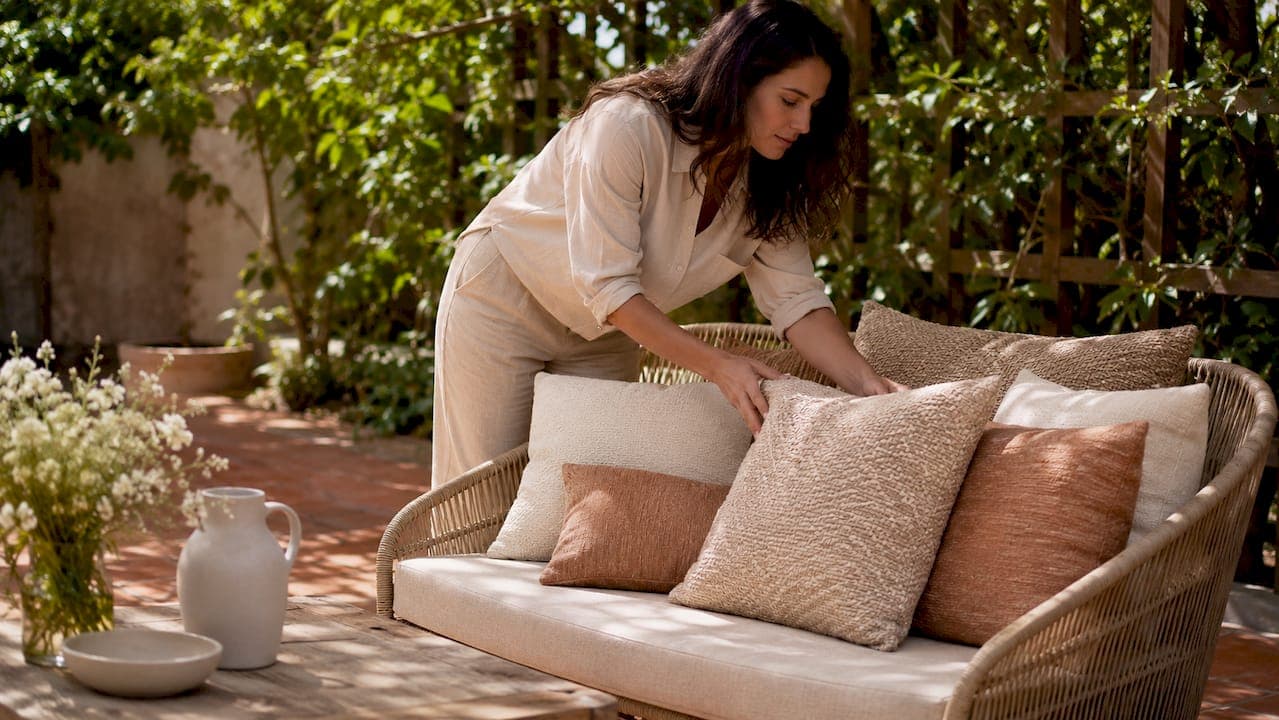
Decorative pillows are defined as accent textiles that simultaneously deliver comfort, color, and personal expression within a room. Interior designers call them "soft furnishings," and their role in styling is to act as the most flexible design tool in any space. A single sofa can feel cold and unfinished or warm and curated depending entirely on the pillows arranged across it. The right combination of texture, pattern, and scale transforms furniture into a statement. At Createdecorus, we believe that pillows are not afterthoughts. They are the first place a room reveals its character.
What is the role of decorative pillows in styling?
Decorative pillows function as the connective tissue of a well-styled room. They pull together paint colors, furniture tones, and rug patterns into a coherent visual story. A sofa in a neutral linen fabric becomes a design anchor the moment you layer in a bold woven pillow alongside a solid and a textured one. That is not decoration for its own sake. That is intentional styling.
The decorative pillows impact on a room extends beyond aesthetics. Pillows soften hard furniture lines, add warmth to cool-toned spaces, and signal to anyone who enters that the room was thoughtfully arranged. They are also the lowest-commitment design change you can make. Repainting a wall takes a weekend. Swapping pillows takes fifteen minutes.

Styling trends from brands like Anthropologie, West Elm, and Pottery Barn consistently show pillows as the primary accent layer in living room photography. That is not accidental. Pillows photograph well because they carry texture, depth, and color in a compact form.
How many pillows go on a sofa, bed, or chair?
Proportion is the foundation of good pillow styling. Too few pillows and a sofa looks sparse. Too many and it looks cluttered. The formula is straightforward once you know it.
Standard pillow counts by furniture type are:
- 3-seat sofa: 4 pillows total. Two larger back-corner pillows in the 22–24 inch range, and two smaller front pillows in the 18–20 inch range.
- Sectional sofa: 5–7 pillows depending on the length and whether there is a chaise.
- Accent chair: 1 lumbar pillow or one small square pillow. More than one overwhelms the seat.
- King bed: 6–8 pillows layered from the headboard forward, mixing sleeping pillows, Euro shams, standard decoratives, and a lumbar.
Scale matters as much as count. A large sectional with all small pillows looks toy-like. A petite loveseat with oversized pillows looks swallowed. The general rule is that pillow width should never exceed one-third of the furniture piece's total width.
Leaving intentional negative space in your arrangement keeps the sofa functional and the layout balanced. Overcrowding is one of the most common mistakes homeowners make, and it is also the easiest to fix.
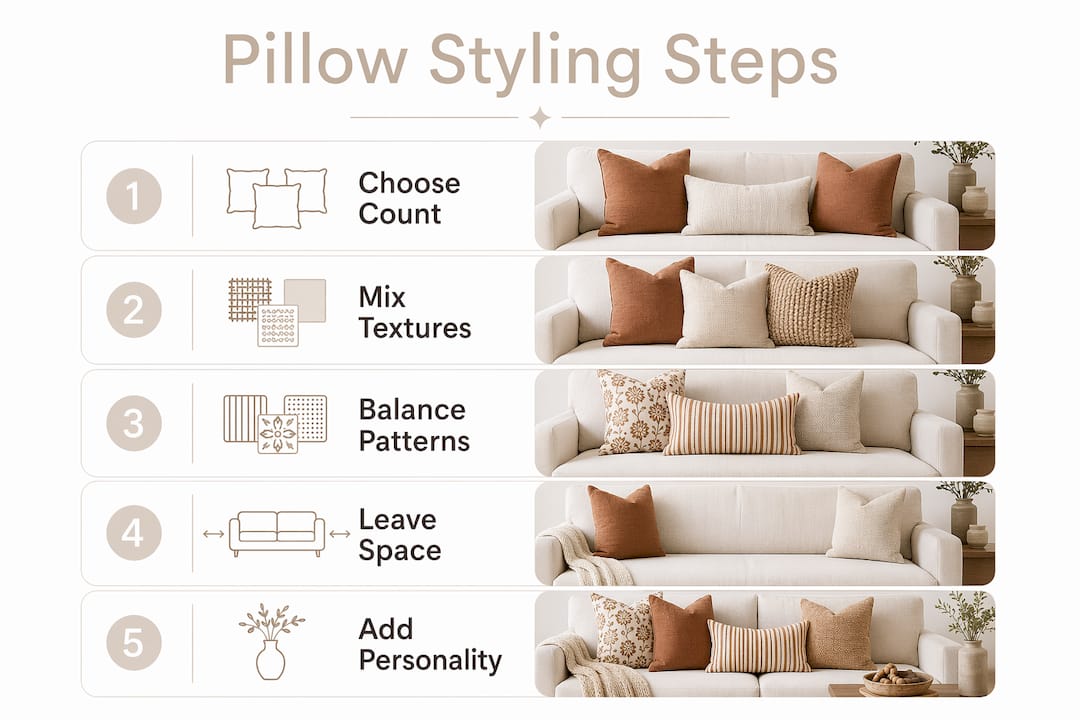
Pro Tip: Interior designers prefer odd-numbered arrangements on sofas, such as three pillows on one side and two on the other, because asymmetry creates natural visual tension and a relaxed, lived-in feel.
How do texture, pattern, and color shape a pillow arrangement?
Texture is the element most homeowners underestimate. A sofa covered in matching cotton pillows looks like a catalog page. A sofa with velvet, linen, and embroidered pillows looks like a designed space. Designers curate a "texture story" by mixing smooth fabrics like silk or velvet with nubby ones like linen or boucle, then adding a high-contrast texture such as fringe or embroidery. That combination is what separates a styled room from a furnished one.
Pattern mixing follows a clear rule: use three scales. Mixing three pillow patterns by scale means one solid, one small print, and one large print. Two patterns at the same scale compete visually and create conflict. Three different scales create layered complexity that reads as intentional and sophisticated.
Color is the third variable. The most effective approach is to choose one anchor color and repeat it at least twice in the arrangement. Repeating the boldest pillow color twice creates visual rhythm and prevents any single pillow from looking accidental. That anchor color should also appear somewhere else in the room, whether in a rug, artwork, or curtain, to tie the space together.
Here is a practical framework for color and pattern mixing:
- Choose one solid pillow in your room's dominant neutral.
- Add one pillow in a small geometric or floral print that picks up an accent color from the room.
- Layer in one large-scale pattern or textured pillow in a complementary bold tone.
- Repeat the boldest color in at least one other pillow or accent piece nearby.
Pro Tip: When working with textured bedding and pillows together, keep patterns in the pillows and let the bedding stay tonal. This prevents visual competition and keeps the bedroom feeling restful.
Can decorative pillows express personality and shift room mood?
Decorative pillows are emotional anchors as much as they are aesthetic tools. Cool tones like muted gray and soft blue promote calm in bedrooms, while vibrant pops of coral or teal invigorate living areas. Color psychology is not abstract theory here. It is a practical tool for shaping how a room feels the moment you walk in.
"Pillows allow personal identity signaling without permanent changes." This is precisely why they are the most democratic design tool in a home. You do not need to commit to a bold wallpaper or an expensive sofa to express who you are.
Novelty pillows act as low-commitment expression tools, blending whimsy and comfort in a way that signals personality without overwhelming a space. A pillow with an embroidered phrase or a playful shape tells a story about the person who lives there. It adds warmth that no paint color can replicate.
The key is balance. Personal expression through pillows works best when:
- The novelty piece shares at least one color with the existing arrangement.
- It is used as a single accent rather than a repeated motif.
- The surrounding pillows provide a calm, neutral backdrop that lets the statement piece breathe.
Using pillows as complementary accents to existing furniture colors prevents any one piece from overwhelming the room. Harmony and personality are not opposites. They work together when the arrangement is thoughtful.
What expert tips make pillow arrangements look professional?
The gap between a styled room and a room that just has pillows comes down to a few specific techniques. These are the details professionals use that most homeowners never learn.
- Size up your inserts. Using a pillow insert 2 inches larger than the cover creates a full, plump look. An 18-inch cover paired with a 20-inch insert looks luxuriously overstuffed. Pre-filled retail pillows almost never achieve this because the insert and cover are the same size.
- Lean pillows inward. Professional stylists avoid perfectly vertical pillow placement. A slight inward lean of 10–15 degrees creates a relaxed, natural appearance. Rigid vertical pillows look staged and stiff.
- Skip the matching set. Designers avoid purchasing pillow sets because matching pillows flatten a room's visual interest. A curated mix of individual pieces always reads as more sophisticated.
- Build a base layer. Use 2–4 neutral textured pillows as your year-round foundation. Linen and cotton in warm neutrals work for every season. Then add 1–2 seasonal accent pillows on top to refresh the look in under fifteen minutes.
- Buy covers separately from inserts. Purchasing pillow covers separately from inserts gives you far more flexibility. You keep the same quality inserts year-round and swap covers for seasonal or mood-driven changes at a fraction of the cost.
Pro Tip: When styling a sofa for the first time, start with the largest back pillows first and work forward in decreasing size. This creates natural depth and prevents the arrangement from looking flat.
How does cultural artistry enrich decorative pillow styling?
Handcrafted pillows carry something mass-produced textiles cannot replicate: a story. Cultural artisanship in pillow design adds authenticity and sophistication that elevates décor beyond surface-level aesthetics. Mexican textile traditions, for example, bring bold geometric patterns, saturated earth tones, and hand-embroidered details that create a dialogue between artisan heritage and contemporary design.
Integrating culturally crafted pillows into a modern home is simpler than most people expect. The contrast between a clean-lined sofa and a richly embroidered pillow is not a clash. It is a conversation. The pillow brings warmth and history. The sofa provides structure and restraint. Together, they create a space that feels both current and deeply personal.
Practical ways to incorporate artisan pillows include:
- Pairing one bold handcrafted pillow with two solid-colored companions in tones pulled from the artisan piece.
- Using a woven or embroidered pillow as the large-scale pattern in a three-scale arrangement.
- Placing a culturally inspired lumbar pillow on an accent chair to add a single point of visual richness without overwhelming the seat.
A warm and inviting living room is almost always one that mixes the handmade with the modern. Artisan pillows are one of the most direct ways to achieve that feeling without a full redesign.
Key takeaways
Decorative pillows are the most flexible and impactful styling tool in any room, and the right combination of count, texture, pattern, and cultural craft transforms a furnished space into a designed one.
| Point | Details |
|---|---|
| Follow pillow count formulas | Use 4 pillows on a 3-seat sofa and 1 lumbar on an accent chair to maintain proportion. |
| Mix three pattern scales | Combine one solid, one small print, and one large print to create cohesion without visual conflict. |
| Size up your inserts | Choose an insert 2 inches larger than the cover for a full, professional look. |
| Build a seasonal base layer | Keep 2–4 neutral textured pillows year-round and swap accent pillows to refresh the room quickly. |
| Invest in artisan craftsmanship | Handcrafted cultural pillows add authenticity and warmth that mass-produced textiles cannot replicate. |
Why pillows are the most underrated design decision you'll make
I have styled a lot of rooms, and the single most consistent observation I can share is this: people spend thousands on furniture and almost nothing on pillows, then wonder why the room feels unfinished. The pillows are not the finishing touch. They are the design layer that makes everything else make sense.
What I find genuinely surprising is how much texture does the heavy lifting. Color gets all the attention, but it is the mix of a smooth velvet against a nubby linen against a fringed edge that makes a sofa feel like it belongs to someone. That tactile variety is what you feel before you consciously see it.
My honest advice is to experiment boldly but with intention. Buy one artisan piece that genuinely moves you, whether it is a hand-embroidered piece from Oaxaca or a woven geometric from a craft market. Build the rest of the arrangement around it. Let that one piece with real craft and real story anchor everything else. The room will thank you for it.
— Ernesto
Bring artisan craft into your home with Createdecorus

Createdecorus handcrafts each pillow in Mexico using traditional techniques and premium materials that carry genuine cultural pride. Every piece is designed to work as that anchor artisan pillow in your arrangement, the one that gives the rest of the room its character. Whether you are building a new styling layer from scratch or refreshing a space that feels flat, the handcrafted luxury pillow collection offers bold colors, rich textures, and thoughtful details that mass-produced options simply cannot match. Interior designers and trade professionals can also explore the wholesale trade program for curated access to the full range. Browse the full pillow shop and find the piece that starts your story.
FAQ
How many decorative pillows should go on a sofa?
A standard 3-seat sofa takes 4 pillows: two larger 22–24 inch pillows at the back corners and two smaller 18–20 inch pillows in front. Sectionals typically use 5–7 pillows depending on their length.
What is the best way to mix decorative pillow patterns?
Use three pattern scales: one solid, one small print, and one large print. Mixing two patterns at the same scale creates visual conflict, while three different scales create a layered, intentional look.
What size pillow insert should i use with my covers?
Choose an insert 2 inches larger than the cover. An 18-inch cover paired with a 20-inch insert creates a full, plump appearance that looks professionally styled rather than flat or floppy.
How do decorative pillows affect room mood?
Cool tones like soft blue and muted gray promote calm, making them ideal for bedrooms. Vibrant colors like coral or teal add energy to living areas. Pillow color choices directly shape the emotional tone of a space.
Can i mix artisan and modern pillows in the same arrangement?
Yes. Pair one bold handcrafted pillow with two solid-colored companions in tones pulled from the artisan piece. The contrast between a clean-lined sofa and a richly textured artisan pillow creates warmth and visual depth rather than conflict.