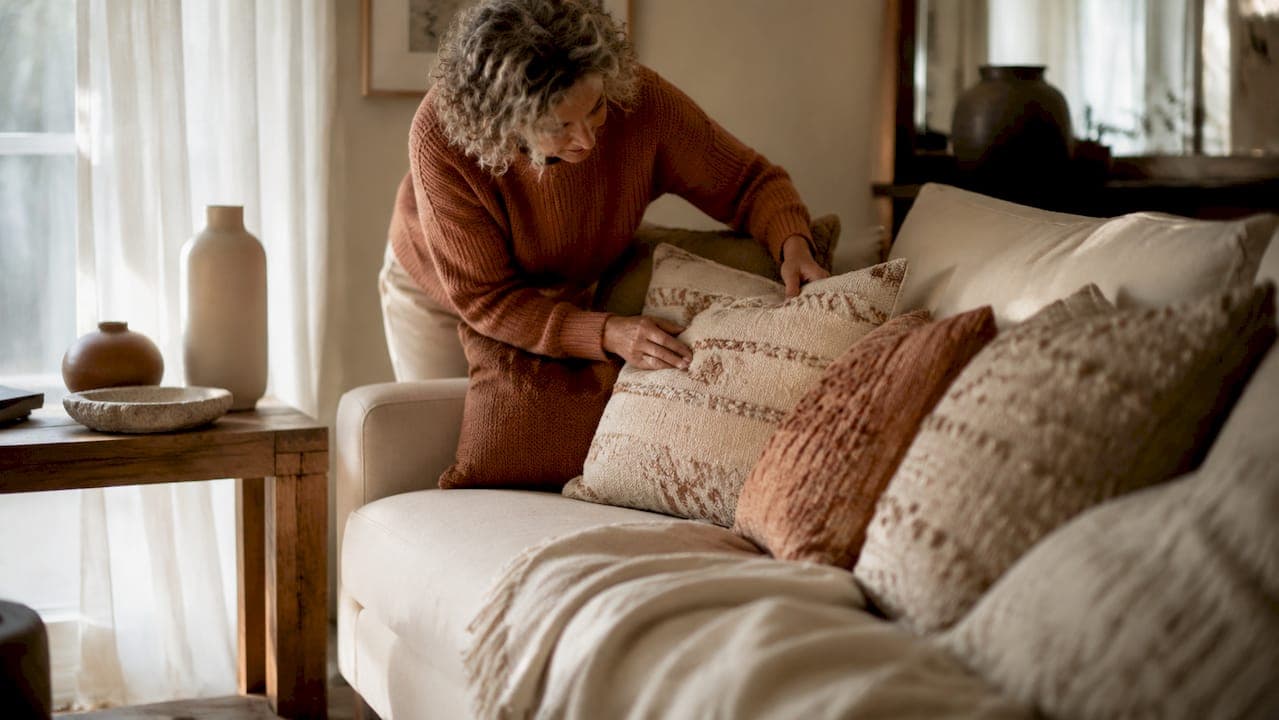
Layering handcrafted pillows in a living room is the most direct way to create a space that feels both curated and genuinely lived in. The practice, known in interior design as decorative pillow composition, transforms a flat sofa into a layered arrangement with depth, warmth, and personality. Artisan pieces from makers like Createdecorus bring an additional dimension to this technique. Their handcrafted luxury pillows, made in Mexico with bold colors and rich textures, carry a cultural story that mass-produced cushions simply cannot replicate. This guide covers every step, from selecting the right sizes to avoiding the mistakes that make even beautiful pillows look cluttered.
What pillows and tools do you need for layering handcrafted pillows in a living room?
The right foundation makes layering cushions in a living room far easier. Before you place a single pillow, you need to understand which sizes, shapes, and materials work together.
Pillow sizes that actually work
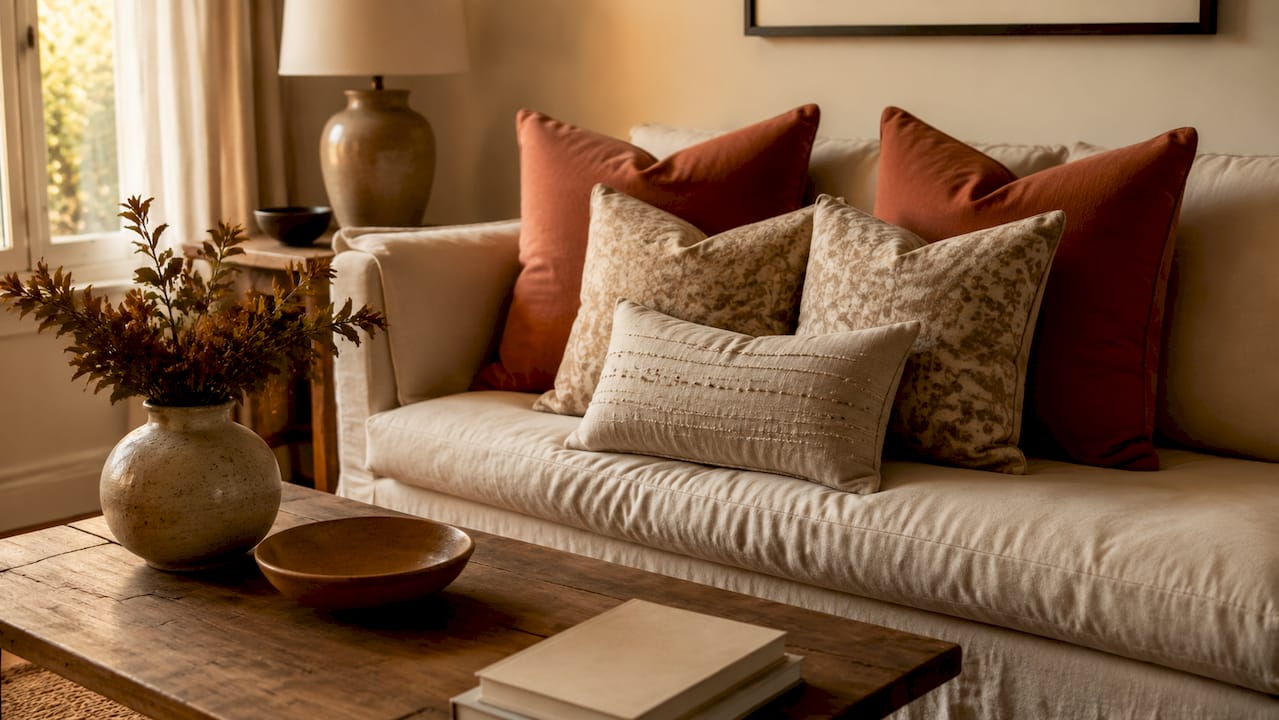
Different pillow sizes serve distinct functions in a layered arrangement. A standard sofa calls for 22x22 inch pillows at the back, 20x20 inch pillows in the middle tier, and a 14x20 inch lumbar pillow in front. Sectionals need more coverage, with anchor pillows at the edges and lumbar pillows near corners for visual interest. Mixing these three sizes gives your arrangement the back-to-front progression that reads as intentional rather than accidental.
Materials worth investing in
| Material | Best Use | Why It Works |
|---|---|---|
| Velvet | Back anchor pillows | Rich surface catches light and adds depth |
| Linen | Mid-tier pillows | Breathable, neutral, pairs with everything |
| Artisan woven textiles | Front accent pillows | Handcrafted texture creates tactile contrast |
| Chunky knit | Seasonal accent | Adds warmth and organic dimension |
Beyond the pillows themselves, a few tools make the process cleaner. High-quality pillow inserts, ideally feather-down or down-alternative, give handcrafted covers their proper shape. A fabric brush keeps velvet and woven surfaces free of lint. A simple floor plan sketch or phone photo of your sofa helps you plan proportions before committing to a layout.
- Pillow inserts: Choose inserts one inch larger than the cover for a full, plush look
- Fabric brush: Keeps artisan textiles looking fresh between cleanings
- Layout sketch: Maps size placement before you start arranging
- Color swatches: Helps you test combinations against your existing furniture
How do you layer handcrafted pillows for a balanced arrangement?
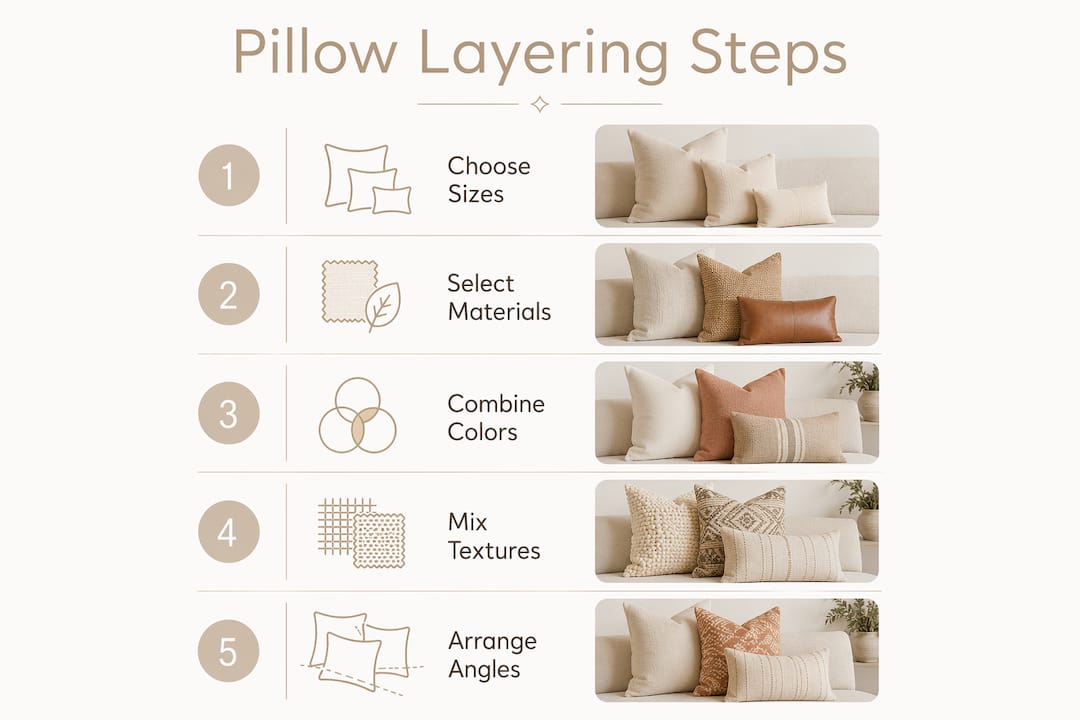
The step-by-step method below applies whether you are styling a single sofa or a full sectional. Effective pillow layering uses a back-to-front progression, placing larger neutral pillows at the back and smaller textured pieces in front. This creates depth without crowding.
-
Start with anchor pillows. Place two 22x22 inch pillows in a neutral tone at the far back corners of your sofa. These set the visual baseline and should not compete with anything else in the arrangement.
-
Add mid-tier pillows. Position two 20x20 inch pillows in front of the anchors. This is where you introduce a pattern or a second texture. A handcrafted woven piece with geometric detail works well here because it adds character without overwhelming the neutral foundation.
-
Finish with a lumbar pillow. A 14x20 inch lumbar pillow centered in front completes the arrangement. Odd numbers of pillows create a natural, curated aesthetic that feels considered rather than symmetrical. Five pillows in this configuration is the most reliable formula for a standard three-seat sofa.
-
Apply the 60-30-10 color rule. The 60-30-10 rule balances visual harmony across a multi-layered arrangement. Sixty percent of your pillows should share a dominant neutral color, thirty percent should carry a complementary secondary tone, and ten percent should introduce a bold accent or pattern. This proportion prevents any single pillow from clashing with the rest.
-
Do a dry-run layout first. Laying pillows flat on the floor before placing them on the sofa reveals whether artisan pieces harmonize with each other and with your furniture. This step saves you from discovering a color clash only after you have already committed to a purchase.
Pro Tip: Angle your lumbar pillow very slightly off-center rather than placing it perfectly straight. This small shift makes the arrangement feel relaxed and natural instead of staged.
What color, texture, and pattern combinations work best?
Color and texture are the two variables that most directly determine whether a layered pillow arrangement reads as sophisticated or chaotic. Getting both right requires a clear framework.
Building a color palette that holds together
The 60-30-10 rule is the most reliable starting point for decorating with pillows. A warm ivory or soft terracotta as your dominant color, paired with a dusty sage or deep navy as the secondary tone, gives you a palette that works across seasons. The ten percent accent is where a handcrafted pillow with bold embroidery or a vivid geometric pattern earns its place. Createdecorus pieces in deep indigo or burnt sienna are well suited to this accent role because their colors are saturated without being harsh.
Pairing textures without creating conflict
Mixing velvet, linen, and chunky knits within a neutral palette creates depth and warmth without overwhelming the space. Texture is what makes a room feel tangible rather than flat. The key is contrast. A smooth flat-weave linen next to a high-pile velvet creates a sensory conversation that draws the eye and the hand. Pairing two high-pile textures together, on the other hand, creates visual noise.
| Combination | Effect | Works Best With |
|---|---|---|
| Velvet + linen | Rich contrast, grounded | Neutral or earth-tone palettes |
| Woven artisan + solid cotton | Cultural texture, clean base | Contemporary or eclectic furniture |
| Embroidered + flat-weave | Detail-forward, balanced | Minimalist or Scandinavian rooms |
| Chunky knit + velvet | Cozy, layered warmth | Fall and winter seasonal styling |
Mixing patterns without losing cohesion
The rule for patterns is simple: vary the scale. A large geometric on your anchor pillow, a medium organic motif on your mid-tier pillow, and a small embroidered detail on your lumbar pillow create visual rhythm without competition. Avoid placing two large-scale patterns next to each other. They will fight for attention and make the arrangement feel restless.
What common layering mistakes should you avoid?
Even well-chosen pillows can undermine a living room when they are arranged poorly. These are the errors that appear most often, and they are all avoidable.
-
Overcrowding the sofa. Throw pillows are not meant to be design heroes but to provide comfort and cohesion. Too many pillows leave no room to sit, which defeats the purpose of a living room sofa entirely.
-
Using only one size. A sofa covered in identical 20x20 inch pillows looks flat and unresolved. Size variation is what creates the layered effect you are after.
-
Ignoring texture balance. Placing all smooth pillows together or all high-pile pillows together removes the tactile contrast that makes layering interesting. Every arrangement needs at least two distinct textures.
-
Too many competing colors. More than three colors in a pillow grouping creates visual clutter. Stick to your 60-30-10 palette and resist the urge to add a fourth accent.
-
Skipping the lumbar pillow. The lumbar pillow is the architectural anchor of the front row. Without it, the arrangement looks unfinished, regardless of how well the back pillows are chosen.
Pro Tip: Before finalizing your arrangement, take a photo from across the room. The camera flattens the scene and reveals imbalances that your eye misses when you are standing close to the sofa.
How do you maintain handcrafted pillows for long-lasting quality?
Artisan pillows require more careful handling than standard cushions because their embellishments, dyes, and woven structures are often delicate by design. Proper care preserves both their appearance and their integrity.
-
Avoid machine washing embellished covers. Hand-stitched embellishments on artisan pillows are best cleaned by spot treatment with a damp cloth and mild soap. Machine washing loosens threads and distorts woven patterns.
-
Rotate your pillows seasonally. Rotating placement prevents uneven fading from sunlight and distributes wear across all pieces equally.
-
Photograph your arrangements. Documenting pillow arrangements by photography preserves styling ideas and helps you source consistent artisan materials when you need to replace or add pieces. This is standard practice among professional interior designers.
-
Repair stitching promptly. A loose thread on an embroidered pillow will unravel quickly if left unattended. Use a needle and matching thread to secure it before the damage spreads.
-
Store seasonal pillows in breathable cotton bags. Plastic storage compresses fibers and traps moisture. Cotton bags allow artisan textiles to breathe and maintain their structure between seasons.
Key takeaways
Layering handcrafted pillows in a living room works best when you combine deliberate size progression, a disciplined color palette, and contrasting textures drawn from artisan materials.
| Point | Details |
|---|---|
| Use three pillow sizes | Combine 22x22, 20x20, and 14x20 lumbar pillows for back-to-front depth. |
| Apply the 60-30-10 rule | Assign 60% neutral, 30% secondary, and 10% bold accent across your arrangement. |
| Contrast textures intentionally | Pair velvet with linen or woven artisan textiles with flat-weave cotton for tactile balance. |
| Avoid overcrowding | Limit pillows to what fits comfortably without sacrificing seating space. |
| Document and maintain | Photograph arrangements and spot-clean artisan pieces to preserve quality over time. |
Why i think most people approach pillow layering backwards
Most decorating advice tells you to start with color. I think that is the wrong entry point. In my experience, texture is the decision that determines whether a layered arrangement feels alive or flat. Color you can adjust. Texture is structural.
When I work with artisan pieces, particularly handcrafted pillows from Mexican artisans like those in the Createdecorus collection, the texture tells you where the pillow belongs in the arrangement. A densely woven piece with raised geometric patterns belongs in the front row where it can be seen and touched. A smooth velvet anchor belongs at the back where its depth reads from across the room. The artisan story behind handcrafted goods adds a layer of meaning that no mass-produced pillow can offer, and that meaning comes through in the way the piece sits in a room.
The other thing I would push back on is the instinct to keep adding. Editing pillow arrangements thoughtfully creates a unified composition rather than a cluttered collection. The most beautiful arrangements I have seen use five pillows, not nine. Restraint is a design skill, and it is one worth practicing deliberately.
Experiment with your arrangement. Angle the lumbar pillow. Swap the mid-tier pieces between seasons. Let the room evolve. The goal is a living room that feels like it belongs to you, not one that looks like a showroom floor.
— Ernesto
Find your next favorite handcrafted pillow at Createdecorus
If you are ready to put these techniques into practice, the right pillows make all the difference. Createdecorus offers a curated collection of handcrafted luxury pillows made by skilled artisans in Mexico, each piece reflecting a tradition of bold color, rich texture, and thoughtful craft. Whether you are building a new arrangement from scratch or adding a statement accent to an existing setup, the collection gives you the materials to do it well.

Interior designers and trade professionals can explore the wholesale trade program for access to exclusive collections and volume pricing. Every piece in the Createdecorus line is crafted with the kind of care and detail that makes layering not just easier, but genuinely rewarding. Browse the full selection and find the pieces that speak to your space.
FAQ
How many pillows should i layer on a standard sofa?
Five pillows is the most reliable number for a standard three-seat sofa. Use two 22x22 inch anchors at the back, two 20x20 inch mid-tier pillows, and one lumbar pillow in front.
What is the best pillow size for layering in a living room?
The 22x22 inch size works best as a back anchor, while 20x20 inch pillows serve the middle tier. A 14x20 inch lumbar pillow completes the front row with architectural contrast.
How do i mix patterns without making my sofa look busy?
Vary the scale of your patterns. Pair a large geometric with a medium organic motif and a small embroidered detail. Keeping all three within the same color palette holds the arrangement together.
Can i machine wash handcrafted artisan pillows?
Most artisan pillows with embellishments or hand-stitched details should not be machine washed. Spot-clean with a damp cloth and mild soap to protect the stitching and preserve the textile structure.
How do i use the 60-30-10 rule when decorating with pillows?
Assign sixty percent of your pillow grouping to a dominant neutral color, thirty percent to a complementary secondary tone, and ten percent to a bold accent or patterned piece. This proportion creates visual harmony without monotony.