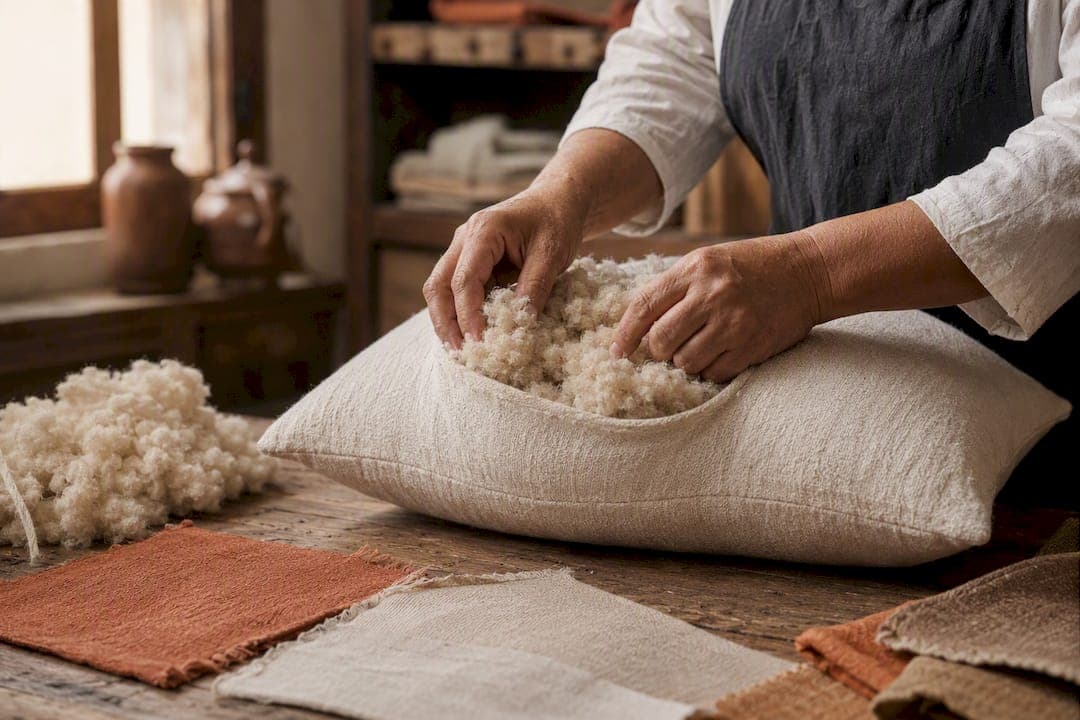
For most everyday and decorative cushions, a high-quality polyester fiber or synthetic down alternative gives you the best mix of plush look, easy washability, and fair price. Choose foam when a cushion needs to hold real weight and keep its shape, like on a bench or window seat. Reach for real down when you want the softest, most luxurious loft and are willing to give it a little extra care. EPS beads suit floor cushions and nursing pillows that need to mold to a body rather than bounce back.
- Everyday and decorative cushions: polyester fiber or synthetic down alternative
- Firm seating or support cushions: foam, slab or shredded
- Luxury loft and softness: real down or feather blends
- Floor cushions, nursing pillows: EPS beads
One habit separates a plump-looking cushion from a saggy one: always buy an insert slightly larger than the cover for square shapes, and a somewhat larger size for rectangular ones, according to interior design guidance.
Key Takeaways
Polyester fiber and synthetic down alternatives deliver the best balance of comfort, washability, and price for most cushions, while foam and down each serve narrower, specific needs.
| Point | Details |
|---|---|
| Default to polyester or synthetic down | Best all-round choice for decorative and everyday cushions: affordable, washable, and durable. |
| Size inserts larger than covers | Buy 5 to 6 cm bigger for square covers and 3 to 5 cm bigger for rectangular ones to avoid flat corners. |
| Match fill to function | Use foam for seating support, down for luxury loft, and EPS beads for moldable floor or nursing cushions. |
| Factor in total cost of care | Cheap fills need replacing sooner; washable polyester often costs less over time than high-maintenance down. |
| Consider a finished insert | Createdecorus builds premium filling into handcrafted pillows for readers who want a plump, lasting result without DIY guesswork. |
Table of Contents
- Types of Cushion Filling and What Each One Does Best
- How Much Filling Should You Buy for a Full-Looking Cushion?
- How Do You Wash and Care for Different Cushion Fillings?
- How Do You Choose the Right Filling for Your Home?
- Why Createdecorus Pays Close Attention to Filling
- What Actually Matters When You're Choosing a Fill
- Skip the Trial and Error: Shop Ready-Made Inserts
- Sources
Types of Cushion Filling and What Each One Does Best
Not all stuffing behaves the same way once it's inside a cover, and picking the wrong one is the most common reason a cushion looks tired within a year. Here's what separates the major fill types, material by material.
Polyester fiber remains the workhorse of the cushion world. It comes in two common grades: standard hollowfibre, which is light and inexpensive, and siliconized fiber, which has a silky coating that helps it spring back into shape after being squashed. Polyester washes well, resists dust mites, and costs a fraction of natural alternatives, which is why it shows up in the majority of ready-made inserts sold today.
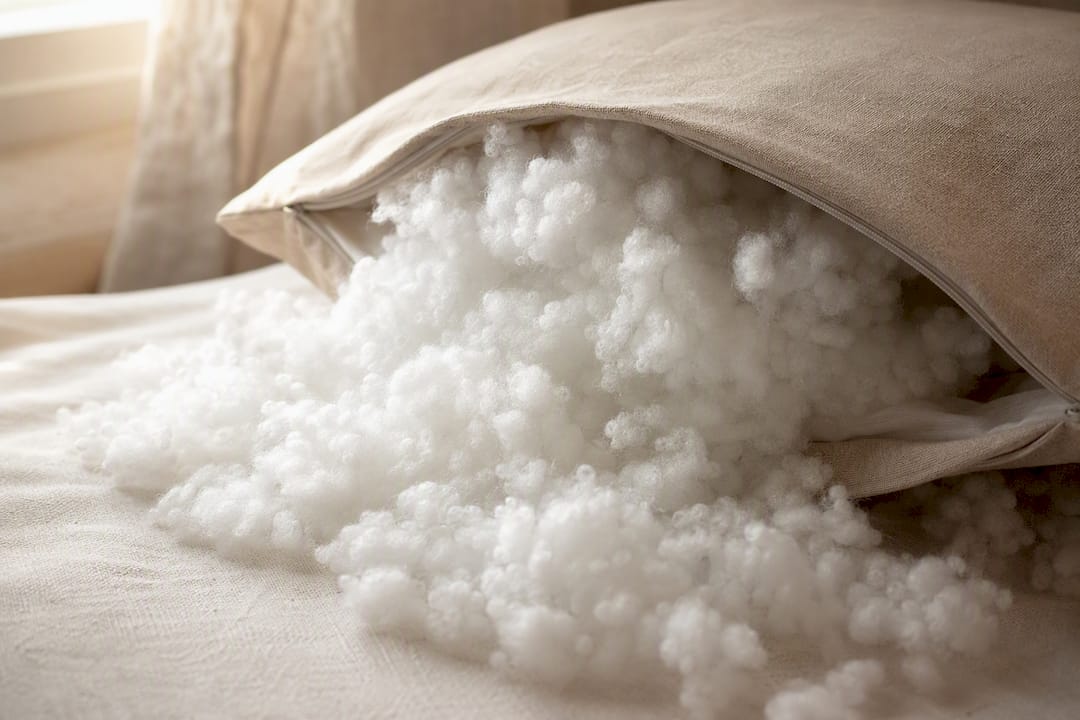
Synthetic down alternatives split the difference between polyester and real down. These fills use finer, crimped fibers to mimic the softness of feathers without the allergy risk, and they sit at a mid-range price point. Retailers and design writers alike point to polyester and synthetic down as the two most commonly recommended fills, prized for affordability, durability, and easy care compared with natural down.
Down and feathers deliver a loft you can't fully replicate with synthetics. Cushions filled with down mold around you rather than pushing back, which is why hotels and high-end living rooms still favor it. That comfort comes with strings attached: down usually needs professional cleaning or very careful home care, and it can trigger allergies in sensitive households.
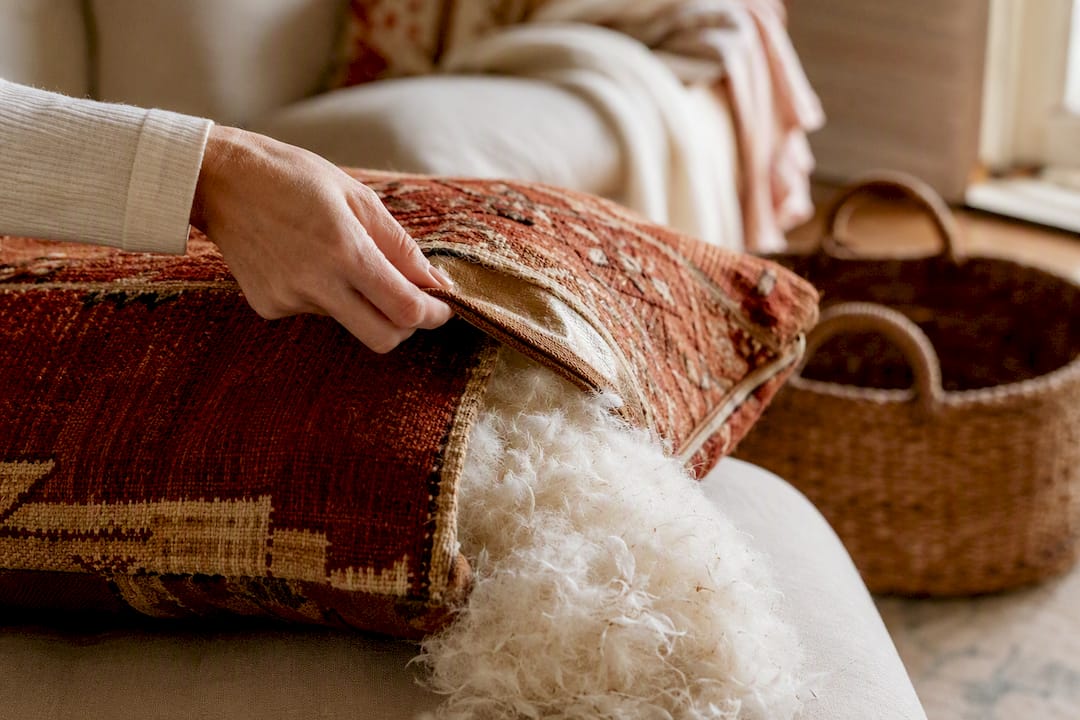
Foam works differently depending on its form. Solid slab foam holds a firm, structured shape and is the right call for bench cushions or anywhere that needs real support, though it isn't meant for a soft, huggable throw pillow. Shredded foam behaves more like a bean bag filling, adjustable and moldable, but it can lose volume over time if not topped up.
EPS beads (expanded polystyrene) are the lightest option on this list. They're the reason a nursing pillow or floor cushion can bend around a body without feeling heavy. The tradeoff is durability: beads shouldn't go through a washing machine, and cheap beads can migrate through worn seams or break down into flat, crunchy fragments.
Cotton and other plant-based fills breathe better than synthetics and appeal to buyers focused on natural materials, though they tend to flatten faster and cost more to replace regularly.
Hybrid fills, blends of down and synthetic fiber, have grown more common because they combine real loft with easier maintenance, giving you most of the luxury feel without the full care burden of pure down.
Pro Tip: If your household includes pets or young kids, skip natural down entirely and choose a machine-washable siliconized polyester, as the luxury of glass interior doors exemplifies attention to premium, easy-care finishes in your living spaces. It handles frequent washing far better and won't trigger allergy flare-ups.
How Much Filling Should You Buy for a Full-Looking Cushion?
Flat, saggy corners almost always come down to buying an insert that matches the cover's exact measurements instead of sizing up. Here's the shopping logic that actually produces a plump result:
- For square covers, buy an insert 5 to 6 centimeters larger on each side than the cover's stated size, so a 45x45 cm cover pairs with a 50x50 cm insert.
- For rectangular covers, size up by 3 to 5 centimeters, since the longer edges already provide structure.
- For a slouchy, lived-in look, stay closer to the cover's actual dimensions or use a softer fill like polyester fiber that drapes rather than holds a crisp edge.
- For a structured, tailored look, size up at the higher end of the range and choose foam or a firmer synthetic down blend.
Pro Tip: If you're filling a cushion yourself with loose fiber or shredded foam, buy roughly 10 to 15 percent more material than you think you need. Loose fills compress and settle within the first few weeks, and having extra on hand means you can top it up without a second trip to the store. Matching your cushion size to the right fill volume up front saves you from that flat, deflated look months later.
How Do You Wash and Care for Different Cushion Fillings?
Care requirements vary enough by material that they should factor into your purchase decision, not just come up after the fact.
- Siliconized polyester tolerates a gentle machine wash cycle in most cases, making it the easiest fill to maintain long term.
- Standard hollowfibre can usually go in the wash too, though it benefits from an extra spin cycle to push out water trapped in the fibers.
- Down and feather fills typically need professional cleaning or a very gentle hand wash with a long, low-heat drying process to fully restore loft.
- Foam slabs should never be submerged; spot clean the cover instead and let the foam air out.
- Shredded foam can be aired and fluffed but shouldn't be machine washed loose.
- EPS beads should be spot-cleaned only. Once beads clump together or start crumbling, that's your signal to replace the fill rather than try to salvage it.
To restore loft on any washable fill, toss it in the dryer with a couple of dryer balls or clean tennis balls on low heat, then finish by shaking and airing the cushion by hand. Manufacturers and interior specialists generally suggest replacing budget synthetic fills every couple of years, while well-maintained down can last considerably longer with proper care. Retailers echo this pattern, noting that finished polyester inserts hold their shape well through repeated washes, which is a big part of why they dominate the mid-market.
How Do You Choose the Right Filling for Your Home?
Run through this checklist before you buy, and you'll avoid the two most common regrets: a cushion that flattens too fast, or one that costs more than it needed to.
- Match the fill to its job. Decorative throw pillows can lean soft and synthetic; a bench or window seat needs foam; a nursing pillow needs beads that mold around a body.
- Think in total cost, not sticker price. A cheap fill you replace every couple of years can cost more over a decade than one premium fill you buy once.
- Filter for allergies and pets. Choose hypoallergenic synthetic fiber over down in any household with asthma, allergies, or shedding animals, a point design specialists consistently emphasize for busy homes.
- Check the label before buying. Look for stated dimensions, fill weight or volume, wash instructions, and a clear returns policy.
- Know when to buy a finished insert instead of loose fill. A well-constructed insert from an experienced maker balances stuffing density with stitching to keep corners full and prevent leakage, something reputable retailers highlight as a real advantage of ready-made products over DIY refills.
High-density foam earns its place specifically in seating applications, where it holds shape far longer under repeated weight than lower-density alternatives. If your project is a decorative accent rather than daily seating, that extra firmness usually isn't worth the tradeoff in softness.
Why Createdecorus Pays Close Attention to Filling
At Createdecorus, we treat filling as part of the craftsmanship, not an afterthought stuffed in at the end. Every handcrafted pillow we make in Mexico pairs premium filling, blending memory foam and polyester, with construction meant to hold that fullness for years, not months.
- Filling chosen to match the piece: plush loft for decorative pillows, firmer support where a design calls for structure
- Vacuum-compressed shipping that keeps fill fresh and full on arrival
- Trade and wholesale options for designers and boutiques who need consistent quality across multiple orders
A finished Createdecorus insert makes the most sense when you want a custom size, a luxury finish you can't easily replicate at home, or a trade order for a design project.
What Actually Matters When You're Choosing a Fill
Most advice on this topic treats filling like a minor afterthought, something you grab in whatever bag is cheapest at the craft store. That's backward. The fill is the part of a cushion doing all the work, and the cover just gets the credit.
Here's where conventional wisdom falls short: it treats "softness" as the only variable that matters, when recovery, how well a fill bounces back after you sit on it or lean into it, is just as important and gets almost no attention. A cushion that feels soft on day one but stays flattened by day thirty was never a good fill to begin with, regardless of price.
If you take one thing from this guide, prioritize washability and recovery over initial softness, especially in a home with regular use. A slightly firmer polyester fiber that holds its shape and survives the washing machine will outperform a plush-feeling fill that flattens within a season. Luxury loft has its place, but it belongs in pieces you're willing to care for properly, not in the cushion your dog naps on every afternoon.
— Ernesto
Skip the Trial and Error: Shop Ready-Made Inserts
If sourcing loose fill, matching it to the right density, and hoping your seams hold turns out to be more trouble than it's worth, you don't have to solve it yourself. Createdecorus builds that expertise into every pillow we sell, handcrafted in Mexico with premium filling already matched to the piece, so you get the plump, structured look this guide describes without guessing at fill weights or hunting down the right bag of fiber.

Our collection blends artisan textile design with practical, well-filled construction, and every piece ships vacuum-compressed to keep its loft intact from our workshop to your home. Designers and boutiques working on larger projects can also apply for trade pricing through our wholesale program. For readers refilling a single favorite cushion or refreshing a whole room, browse our full pillow collection and find an insert that's already filled the right way.
Sources
- Necesitas renovar los cojines: proponemos este relleno ...
- Make your cushions look plump and expensive — MFI Inspiration
- Rellenos de cojín - IKEA