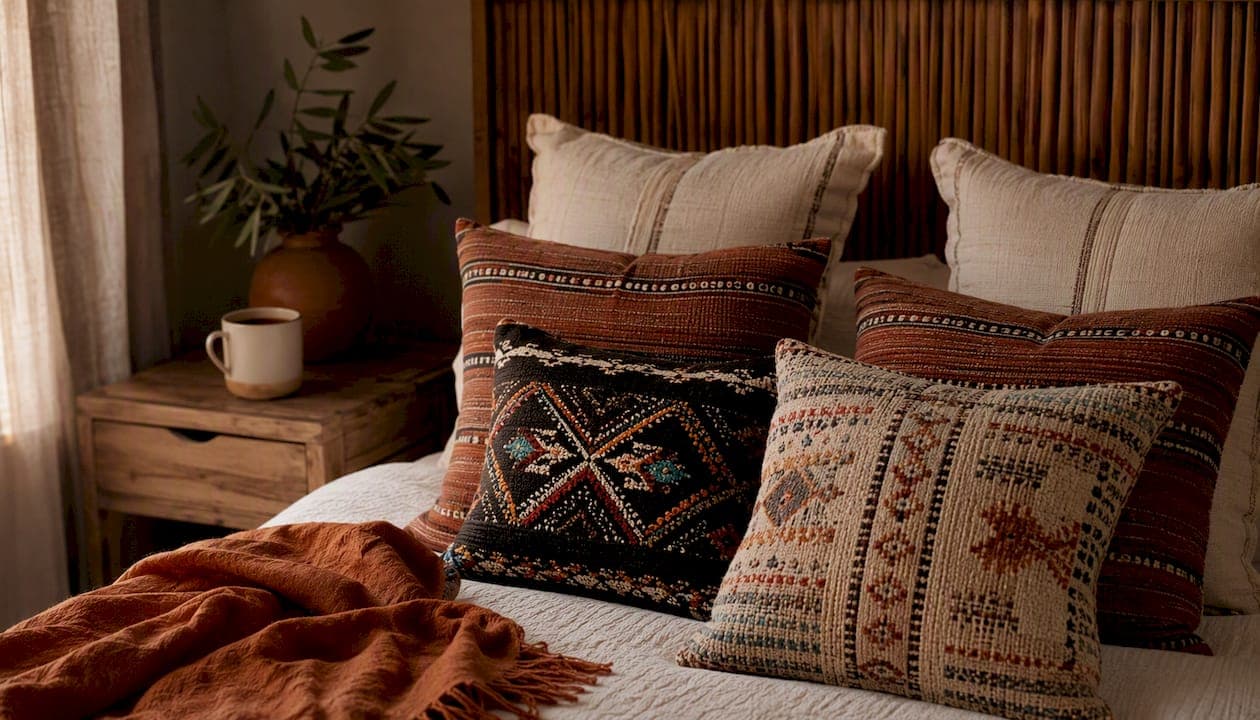
When selecting statement pillows for hospitality design, your first sentence to any vendor should specify all of these: a commercial-grade fabric with a minimum Wyzenbeek rating of 30,000 double rubs (or 20,000+ Martindale cycles) for guest rooms, an AATCC colorfastness score of 4 or higher, FR certification with a lab report on request, a zippered cover with sewn-in corner tabs, a replaceable down-alternative microfiber insert, exact finished dimensions with ±½-inch tolerance, and confirmed lead time with sample policy. That single paragraph in your RFQ eliminates most back-and-forth before sampling begins.
Use this checklist when briefing a vendor or drafting a purchase order:
- Fabric: Commercial-grade textile with Wyzenbeek or Martindale test results provided in writing
- Colorfastness: AATCC score of 4 or above for light and crocking
- FR compliance: Lab report or certificate referencing applicable test standards (NFPA or TB117-2013)
- Cover construction: Zippered closure, sewn-in corner tabs, seam-reinforced edges
- Insert: Replaceable hospitality-grade down-alternative microfiber or hollow fiber; specify firmness (medium-firm for most guest rooms)
- Dimensions: Finished size with ±½-inch tolerance stated on the order
- Care instructions: Vendor-supplied laundering protocol for commercial/industrial washing
- Sample policy: Fabric swatch plus finished pillow mock before bulk production
- Minimums and lead time: Confirmed in writing before sampling begins
Pro Tip: Request a sample yardage cut alongside the finished pillow mock. Approving both at the same time catches dye-lot variation and stitch quality before the bulk run, cutting one full revision cycle from your timeline.
Key Takeaways
Selecting statement pillows for hospitality design requires documented fabric performance, FR-certified construction, replaceable inserts, and a vendor who can deliver consistent quality across bulk orders.
| Point | Details |
|---|---|
| Specify abrasion thresholds | Require Wyzenbeek 30,000+ double rubs for guest rooms; 30,000+ for public spaces, in writing. |
| Use replaceable down-alternative inserts | Down-alternative microfiber balances comfort, loft recovery, and industrial-wash compatibility. |
| Apply the 3-2-1 rule | Three Euros, two standards, one accent on a king bed creates a repeatable housekeeping setup. |
| Demand FR documentation | Request a lab report referencing TB117-2013 or NFPA 701, not just a vendor checkbox. |
| Createdecorus for trade orders | Handcrafted, made-to-order pillows with trade accounts, custom sizing, and vacuum-compressed shipping. |
Table of Contents
- Which fabrics perform best in high-turnover hospitality settings?
- What insert types and construction details hold up under heavy use?
- How do you size and scale statement pillows for guestrooms and seating?
- Which pillow types belong where in a hotel?
- What pillow design trends matter for 2026 hospitality projects?
- What fire safety and cleaning standards should you require from vendors?
- How do you order samples, handle COM, and manage trade logistics?
- Why Createdecorus fits the hospitality specification checklist
- Createdecorus: handcrafted pillows built for trade accounts
- What most hospitality pillow guides get wrong
- Sources
Which fabrics perform best in high-turnover hospitality settings?
Selecting statement pillows for hospitality design starts with one non-negotiable: the fabric must have documented abrasion and colorfastness results, not just a vendor's assurance. Hospitality throw pillows require textiles that resist abrasion and maintain color, and the only way to verify that is a Wyzenbeek or Martindale test report with numeric results.
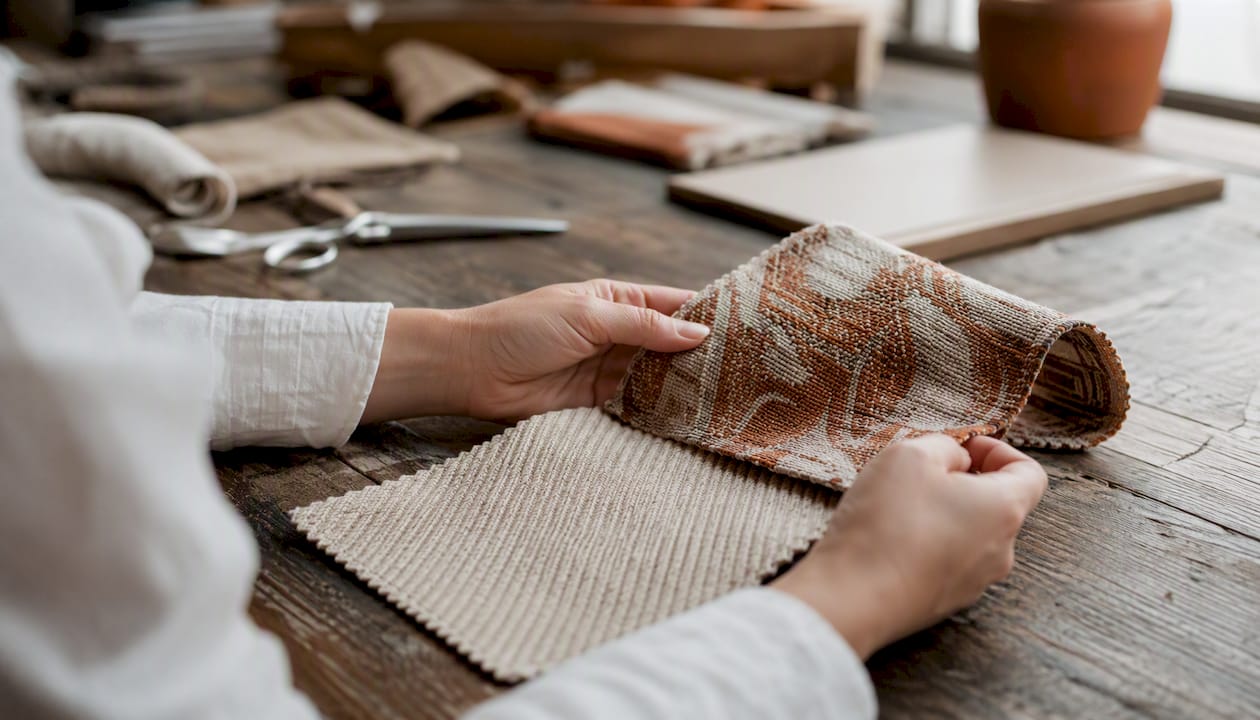
For guest rooms, a robust abrasion resistance is considered necessary, with higher thresholds recommended for public spaces and lobby seating. Martindale equivalents follow a similar pattern with scaled requirements for different use levels. AATCC colorfastness scores of 4 or above (on a 1–5 scale) protect against fading under commercial laundering and UV exposure.
Fiber content shapes both performance and aesthetics. Solution-dyed acrylics and polyester blends hold color through repeated industrial washing because the pigment is locked into the fiber rather than applied to the surface. Performance velvets, woven jacquards, and textured chenilles can meet commercial thresholds while delivering the tactile richness that makes a statement cushion worth specifying. Natural fibers like linen and cotton read beautifully but typically require FR finishing and more careful laundering protocols, so weigh the operational cost against the design payoff.
Stain resistance matters differently by location. Guest rooms need spot-clean capability at minimum; public spaces benefit from fabrics treated with a fluorocarbon-free barrier or inherently stain-resistant weaves that survive a damp cloth without water marks. For high-traffic lobbies, specify fabrics rated for both wet and dry crocking.
FR options fall into three categories: inherently FR fibers (modacrylic blends, treated polyester), topical FR finishes applied to the face fabric, and FR-certified inserts paired with untreated shells. Each approach has cleaning implications. Topical finishes can degrade after repeated laundering, so ask vendors how many wash cycles the treatment is rated for and whether re-treatment is possible. Inherently FR fibers carry no such limitation.
Pro Tip: Before approving a COM fabric for full production, send a 12-inch swatch to a certified textile lab for an independent Wyzenbeek run. Vendor-supplied results are useful, but an independent test on your specific dye lot catches finish inconsistencies that a generic fabric spec sheet will not.
What insert types and construction details hold up under heavy use?
Down-alternative microfiber offers the best balance of comfort and industrial-wash compatibility for most high-turnover operations, and it is the fill to specify as your default. Hollow-fiber alternatives are slightly firmer and recover shape faster after compression, which suits decorative throw pillows that sit on a bed all day and get moved at turnover. Memory foam and gel inserts are appropriate only where spot cleaning is the standard protocol, such as a lobby chair that rarely goes to laundry.
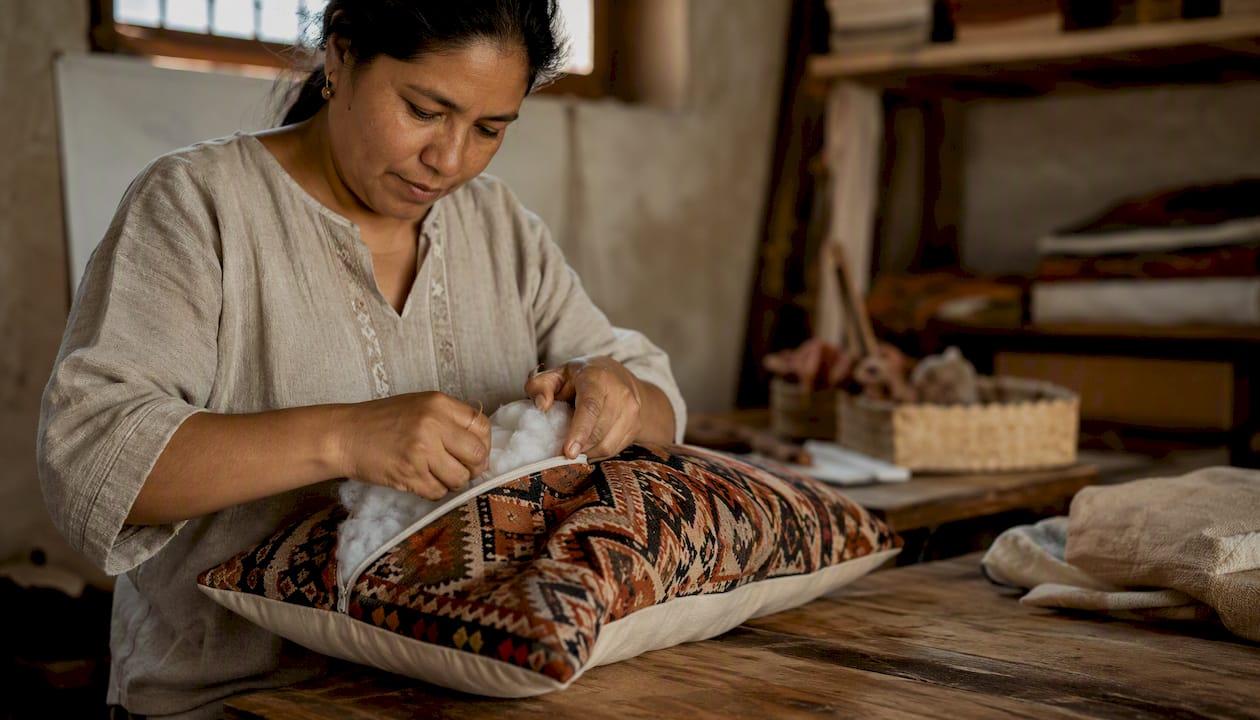
Fill weight, not fill power, is the operative spec for decorative pillows. Fill power measures loft per ounce in down clusters; for polyester fills, specify fill weight in ounces per insert and request the vendor's loft recovery data after 50 wash cycles. A 20-ounce fill in a 20×20-inch insert produces a plush, full hand; 16 ounces reads flatter and is better suited to a lumbar or bolster.
Construction details determine whether a pillow survives housekeeping:
- Zippered covers: Invisible or concealed zippers on the bottom seam allow insert swaps without damaging the face fabric
- Corner tabs: Sewn-in fabric tabs at each corner anchor the insert and prevent bunching after laundering
- Seam reinforcement: Double-stitched or French seams at stress points extend cover life significantly
- Piped or flanged edges: Add structure and protect seam integrity; specify pip diameter (typically ¼ inch) to maintain consistent silhouette across rooms
- Box stitch or baffle construction: Keeps fill evenly distributed in larger square pillows
Replaceability is a procurement decision, not just a design one. Order spare inserts at the same time as the initial run, at a ratio of one spare per four covers for high-turnover rooms. Specify that inserts and covers carry matching lot numbers so replacements stay color-consistent.
Pro Tip: Specify insert dimensions slightly larger than the finished cover size. This overfill helps create a taut, crisp appearance and prevents sunken corners that degrade the pillow's look over time.
How do you size and scale statement pillows for guestrooms and seating?
The 3-2-1 rule gives housekeeping a repeatable setup and provides a scalable design template. For a king bed: three Euro pillows against the headboard, two standard sleeping pillows in front, and one accent or lumbar pillow at the front, with sizes chosen proportionally. For a queen, reduce the back row to two Euros. For a twin or full, one Euro or two standards plus a single accent reads proportional without crowding.
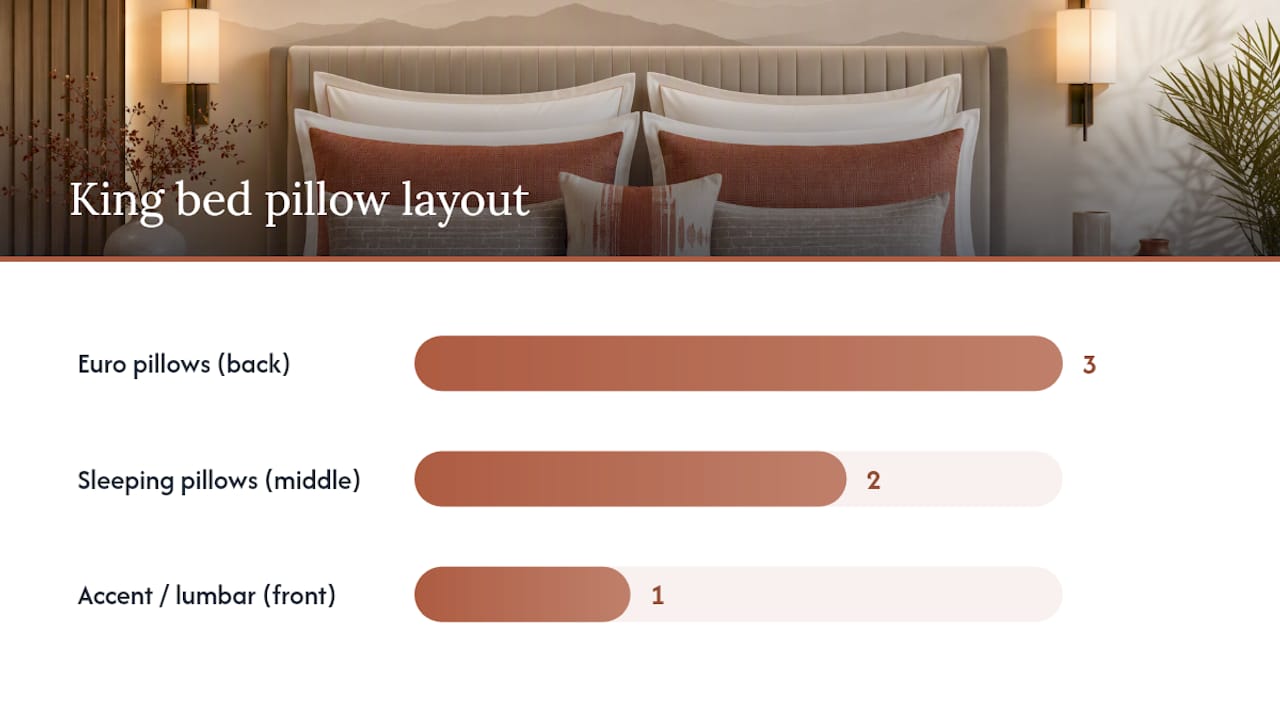
Scale interacts with headboard height. A tall upholstered headboard can accommodate larger Euro pillows without looking swamped; lower beds benefit from smaller squares or a single lumbar accent, tailored to maintain proportion. The accent pillow at the front should be roughly one-third the width of the mattress to read as intentional rather than incidental.
For seating, the rules shift toward function. Lobby armchairs and lounge chairs typically take one 18×18-inch or 20×20-inch square accent. Banquettes and benches benefit from a row of 18×18-inch squares spaced 6–8 inches apart, with a lumbar (12×20 inches) at each end for support. Specify loft at 3–4 inches for seating pillows; anything flatter reads cheap, anything fuller impedes posture.
Checklist for verifying scale on-site or on a mockup bed:
- Place samples on the actual mattress or seat before approving production
- Photograph from the guest's eye level (standing at the foot of the bed)
- Confirm the accent pillow does not obscure the sleeping pillow arrangement when stacked
- Check that Euro pillows sit flush against the headboard without gaps
Pro Tip: Lock in a single finished dimension per pillow type across all rooms and document it in your FF&E spec sheet. Reorders placed 18 months later will match exactly, and housekeeping will not need to sort pillows by room type.
Which pillow types belong where in a hotel?
Every hospitality pillow type has a specific visual and functional role. Knowing which shape to place where is as important as knowing which fabric to specify. For a deeper look at how shapes interact with room styling, this guide to decorative pillow types for luxury staging is worth bookmarking.
- Euro square (26×26 inches): The structural back layer on beds; purely decorative, rarely slept on, so prioritize face fabric quality and shape retention over fill softness
- Standard square accent (18×18 or 20×20 inches): The workhorse of hospitality design; sits mid-bed or on seating; must balance aesthetics with washability
- Lumbar (12×20 to 14×22 inches): Adds lower-back support on seating and a horizontal accent line on beds; specify firmer fill (22–24 ounces) to maintain shape under pressure
- Bolster (6×18 to 8×24 inches): Adds a formal, tailored finish to beds and benches; most effective in boutique and luxury properties where the design language is structured
- Floor / lobby cushion (24×24 to 28×28 inches): Used in lounge areas and casual seating vignettes; requires the highest abrasion rating and the most aggressive cleaning protocol
Hotels4Humanity notes that buyers should compare fabric durability, fill and shape, cleaning plan, and reorder availability before standardizing across rooms. That advice applies directly to pillow type selection: a bolster that cannot be laundered in-house creates an operational burden that outweighs its visual contribution.
Guest rooms and public spaces have different risk profiles. Public-space pillows face higher theft and loss rates, more frequent cleaning, and more varied use. Specify lower-cost face fabrics for lobby cushions and reserve artisan textiles for guest rooms where the design investment is protected.
What pillow design trends matter for 2026 hospitality projects?
Trend signals that affect specifications, not just aesthetics, are the ones worth tracking. For 2026, five directions are shaping how designers specify decorative pillows in hospitality settings, and each one changes what you put on your RFQ.
- Traceable sustainable fills: Guests and brand standards increasingly ask for OEKO-TEX Standard 100 certified fills and shells, and Responsible Down Standard (RDS) certification where natural down is used. Specify these certifications in writing and request the certificate number, not just a vendor's claim.
- Artisanal textures with performance cores: Handwoven faces, embroidered accents, and mixed-fabric constructions are replacing flat printed textiles as the dominant aesthetic. The specification challenge is ensuring the decorative face still meets Wyzenbeek thresholds; test woven and embroidered panels independently.
- Solution-dyed performance fabrics: As properties push for longer replacement cycles, solution-dyed acrylics and polyesters are appearing in design-forward colorways that previously required natural fibers. They hold color through 50+ industrial wash cycles without fading.
- Muted earth tones with tactile contrast: Terracotta, warm sand, deep ochre, and clay tones dominate 2026 hospitality palettes. The design move is pairing a flat-weave ground with a raised or looped texture in the same tonal family, which reads sophisticated without requiring complex pattern matching at housekeeping.
- Wellness-adjacent materials: Hypoallergenic fills, non-toxic FR treatments, and low-VOC fabric finishes are appearing in spec sheets for wellness-focused properties. Ask vendors for material safety data sheets (MSDS) alongside the standard FR documentation.
Broader interior design trends, including the shift toward warmer, more tactile spaces, are visible across disciplines. Interior door design trends for 2025 reflect the same move toward natural materials and warm tones that is driving pillow palette choices in hospitality.
Pro Tip: When specifying artisanal or embroidered face fabrics, request a separate abrasion test on the embellished panel, not just the base cloth. Raised threads and woven accents wear differently than a flat ground, and a single Wyzenbeek result on the base fabric will not capture that.
What fire safety and cleaning standards should you require from vendors?
FR compliance is not optional in U.S. hospitality. The two references to know are California's TB117-2013 (smolder resistance for upholstered goods, widely adopted as a national benchmark) and NFPA 701 (flame propagation for textiles used in public occupancies). Request the lab report, not just a vendor's written claim. A certificate number you can verify is worth more than a checkbox on a product sheet.
Certification versus treatment matters operationally. Inherently FR fibers retain their fire-resistant properties through the life of the product and through repeated laundering. Topical FR finishes are applied after weaving and can degrade with washing. Many hospitality suppliers use FR polyfill inserts as a standard, which is a practical baseline, but the cover fabric must also meet applicable standards for the property type.
Practical housekeeping requirements to specify:
- Zippered covers that allow insert removal before laundering
- Corner tabs to prevent insert migration during the wash cycle
- Pillow protectors between the insert and decorative cover to extend cleaning intervals
- Industrial-laundry parameters from the vendor: water temperature, spin speed, approved detergents, and drying cycle
- Replacement cadence: most hospitality operators plan for cover replacement every 18–24 months in high-turnover rooms
U.S. hotels favor medium-firm pillows with slick polyester fiber because it resists clumping and extends lifespan under heavy use. Pillow protectors are a consistent operational recommendation for longevity.
How do you order samples, handle COM, and manage trade logistics?
The sample workflow is where most procurement delays originate. Start by requesting two things simultaneously: a fabric swatch in the specified colorway and a finished pillow mock in the confirmed size. Approving both together eliminates the most common revision loop, where a fabric is approved but the finished construction reveals a seam or loft issue.
COM handling requires a clear protocol from your vendor before you ship fabric. Confirm: minimum yardage required per pillow, acceptable fabric width, whether the vendor pre-washes COM before cutting, lead time from fabric receipt (not from order date), and whether COM samples carry a fee or credit toward production.
Logistics checklist for bulk orders:
- Minimum order quantities: Confirm per SKU and per colorway; some workrooms require 12–24 units per style
- Trade pricing: Request a trade discount schedule and confirm whether it applies to samples
- Batch dye lots: Specify that all units in a single order ship from the same dye lot; request lot numbers on packing slips
- Vacuum-compressed packing: Reduces freight volume significantly for large orders; confirm whether inserts ship separately or inside covers
- Spare inserts: Order one spare per four covers at the initial run; confirm they carry the same lot number as production inserts
- Warranty or repair policy: Ask whether the vendor offers repair service for seam failures within a stated period
Before standardizing decorative pillows across rooms, compare reorder availability alongside fabric durability and cleaning plan. A beautiful pillow with a six-month lead time on reorders creates an operational gap that disrupts room consistency.
Pro Tip: Pre-approve color, stitch detail, and piping profile on the finished mock before the bulk run begins. Changes after bulk cutting generate fabric waste and delay. A signed pre-production approval form, shared with the vendor in writing, protects both sides.
Why Createdecorus fits the hospitality specification checklist
Createdecorus offers handcrafted luxury pillows produced in Mexico, with trade accounts, custom sizing options, vacuum-compressed shipping, and artisan textiles that carry the tactile richness hospitality designers are specifying for 2026. The production model is made-to-order, which means dimensions, fill weight, and cover construction can be aligned to your spec sheet rather than a fixed catalog.
For designers working through the checklist above, here is what to request directly from Createdecorus:
- Custom finished dimensions with ±½-inch tolerance confirmation
- Shell fabric options with available Wyzenbeek or Martindale documentation
- FR certification or lab report for the specified fill and cover combination
- Fill type and fill weight per insert (down-alternative microfiber or polyester options)
- Trade pricing schedule and minimum order quantities per style
- Sample program: fabric swatch plus finished mock before bulk commitment
- Lead time from order confirmation and from COM receipt if applicable
- Spare-insert policy and replacement cadence guidance
The handcrafted production process, rooted in artisan textile traditions, produces the kind of tactile surface quality that distinguishes a statement pillow from a commodity fill. Browse the full pillow range to identify finishes and sizes that align with your current project palette before drafting your RFQ.
Pro Tip: When briefing Createdecorus, send your spec sheet as a PDF with a finished-size diagram, a color reference (Pantone or physical swatch), and a note on the property type and cleaning protocol. That single document gives their production team everything needed to quote accurately and prepare a pre-production mock without a back-and-forth round.
Createdecorus: handcrafted pillows built for trade accounts
Createdecorus is the trade-ready alternative to commodity hospitality pillow suppliers, built for designers who want artisan quality at scale. Every piece is handcrafted in Mexico using artisan textiles, premium fills, and construction details that hold up to the demands of hospitality turnover. Trade accounts unlock custom sizing, bulk pricing, and vacuum-compressed shipping that keeps freight costs manageable on large property orders.
The difference from a standard catalog supplier is tangible: the textiles carry the warmth and cultural craft of Hecho en México production, and the made-to-order model means your spec sheet drives the product, not the other way around. For designers specifying statement cushions for rooms where guest experience is the measure of success, that distinction shapes every decision from fabric selection to final delivery.
Apply for a wholesale account or request a sample kit directly through the trade program to begin your next hospitality project with the right foundation.
What most hospitality pillow guides get wrong
The conventional advice on decorative pillows in hospitality design focuses almost entirely on aesthetics: color palettes, pattern mixing, and the visual weight of a Euro versus a lumbar. That framing is not wrong, but it is incomplete in a way that costs designers time and money.
The real specification work happens before a single fabric is chosen. A pillow that photographs beautifully but lacks a documented Wyzenbeek result, a verified FR certificate, and a clear laundering protocol from the vendor will create operational problems within the first quarter of a property opening. Housekeeping will improvise cleaning methods. Inserts will clump. Covers will fade unevenly across rooms. The design intent survives the photography but not the first year of operation.
What most guides also understate is the value of replaceability as a design decision. Specifying a zippered cover with corner tabs and ordering spare inserts at the initial run is not a procurement detail. It is a commitment to the design holding its integrity over time, which is ultimately what a hospitality client is paying for.
The artisan textile movement in hospitality, the shift toward handcrafted faces, woven accents, and culturally grounded materials, is a genuine improvement over the flat-printed polyester that dominated the previous decade. But it only works when the artisan quality is paired with commercial-grade construction underneath. A beautifully woven face on a poorly constructed insert, with no FR documentation and no laundering protocol, is a liability dressed as a statement.
Prioritize the spec sheet. The aesthetic will follow.
Sources
Every claim a vendor makes about performance should be backed by a document you can file. Here is the short list of what to ask for before placing a bulk order:
- How to Choose the Right Decorative Pillows for Your Property - Paradigm Trends
- Hotel Bedding Buying Guide: Pillows, Duvets & Mattress Protectors Explained
- What Pillows Do Hotels Use? U.S. Hospitality Standards – Hotel Items
- Decorative pillows — Hotels4Humanity
Each document serves a specific verification purpose. The Wyzenbeek report shows whether the fabric will survive your cleaning cycle. The FR report shows whether the pillow meets your property's fire-safety expectations. The OEKO-TEX certificate answers the guest-facing question about material safety. File all of them with your FF&E documentation before the project closes.