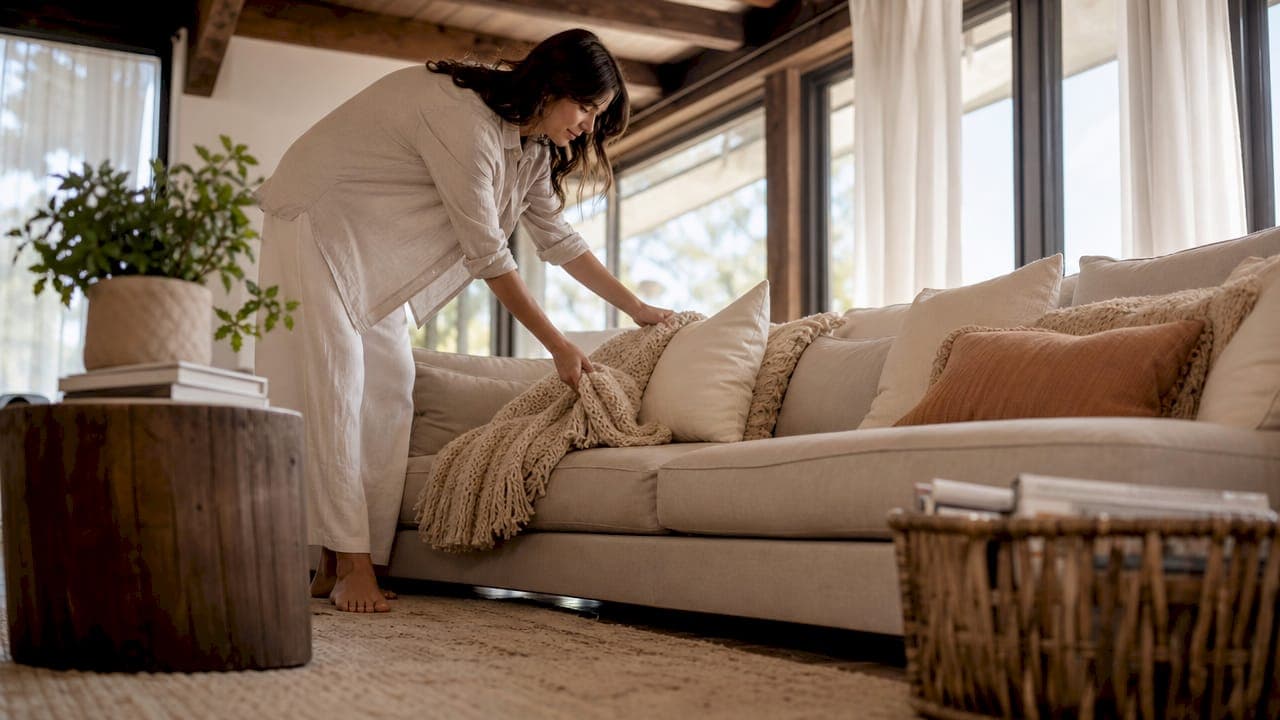
Accent pieces are defined as the decorative objects, textiles, and lighting elements that give a room its personality, warmth, and visual focus beyond what furniture and architecture alone provide. Interior designers call them "finishing elements" or "accessories," and their role of accent pieces in rooms goes far deeper than decoration. A well-placed ceramic vase, a handcrafted pillow, or a sculptural floor lamp can shift the entire emotional register of a space. Think of them as the connective tissue between your sofa, your walls, and your sense of self. Without them, even a beautifully furnished room feels generic, cold, and unfinished.
How accent pieces create focal points and visual interest
Layered design uses a three-scale system: primary furniture for structure, secondary pieces to fill gaps, and accent pieces for identity and depth. Skipping that third layer is the most common mistake homeowners make. The room looks complete on paper but feels hollow in person.
Focal points are the anchors your eye travels to first when entering a room. Effective rooms feature one primary focal point, up to two secondary features, and various accents that enrich the space without competing. This hierarchy prevents visual chaos and gives every element a clear job to do.
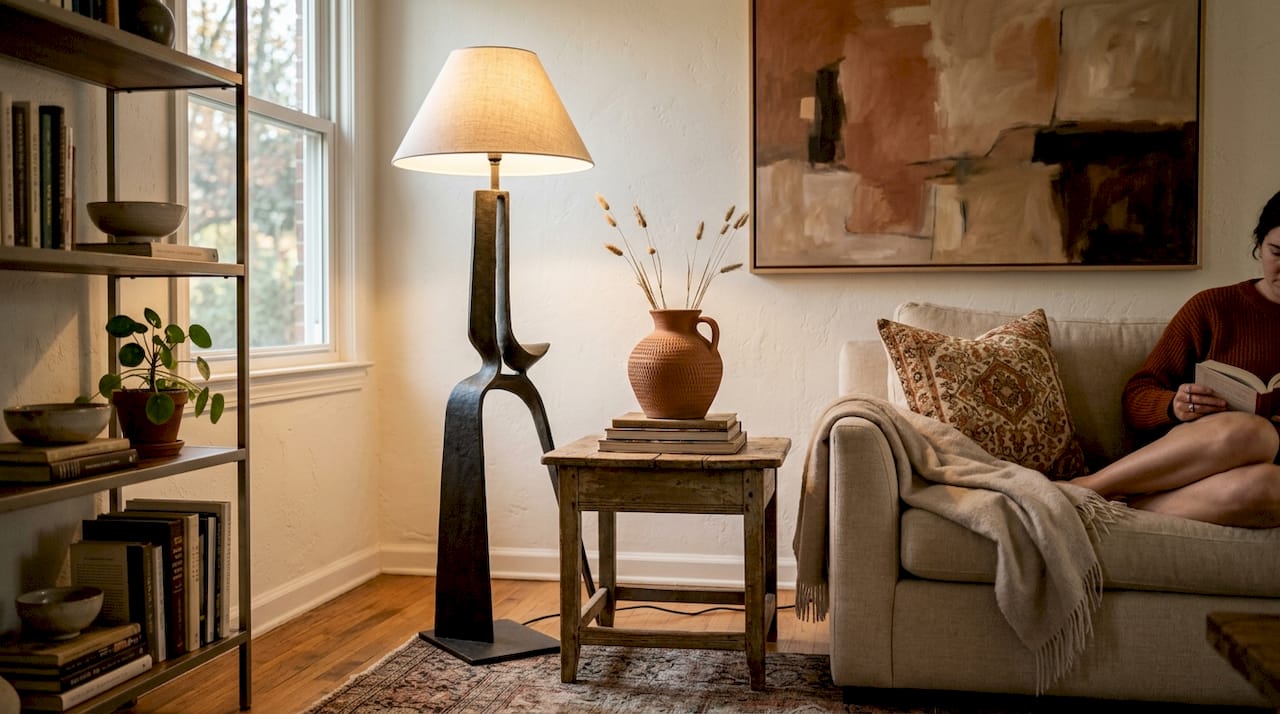
The One-Piece Rule is the clearest expression of this principle. One bold, high-quality accent piece as an anchor, whether a sculptural floor lamp, a large-format painting, or a statement chair, changes the entire room's story. Multiple medium-impact pieces rarely replicate this effect. The anchor piece earns its place by commanding attention and making everything around it look more intentional.
Once your anchor is set, grouping smaller accents around it follows a simple rule from professional staging:
- Choose your primary anchor piece and place it where the eye naturally lands, such as above a fireplace or centered on a feature wall.
- Add one or two secondary accents nearby, such as a textured throw or a ceramic bowl, to reinforce the focal point without competing with it.
- Group objects in odd numbers, specifically three, five, or seven, to create arrangements that feel organic rather than staged.
- Vary the height of grouped objects so the eye moves up and down, not just side to side.
- Step back and edit. Remove anything that doesn't contribute to the hierarchy you have built.
Pro Tip: Place your tallest accent piece at the back of any grouping and graduate heights forward. This creates depth on a flat surface like a console table or bookshelf without adding square footage.
What is the 60-30-10 color rule for accent pieces?
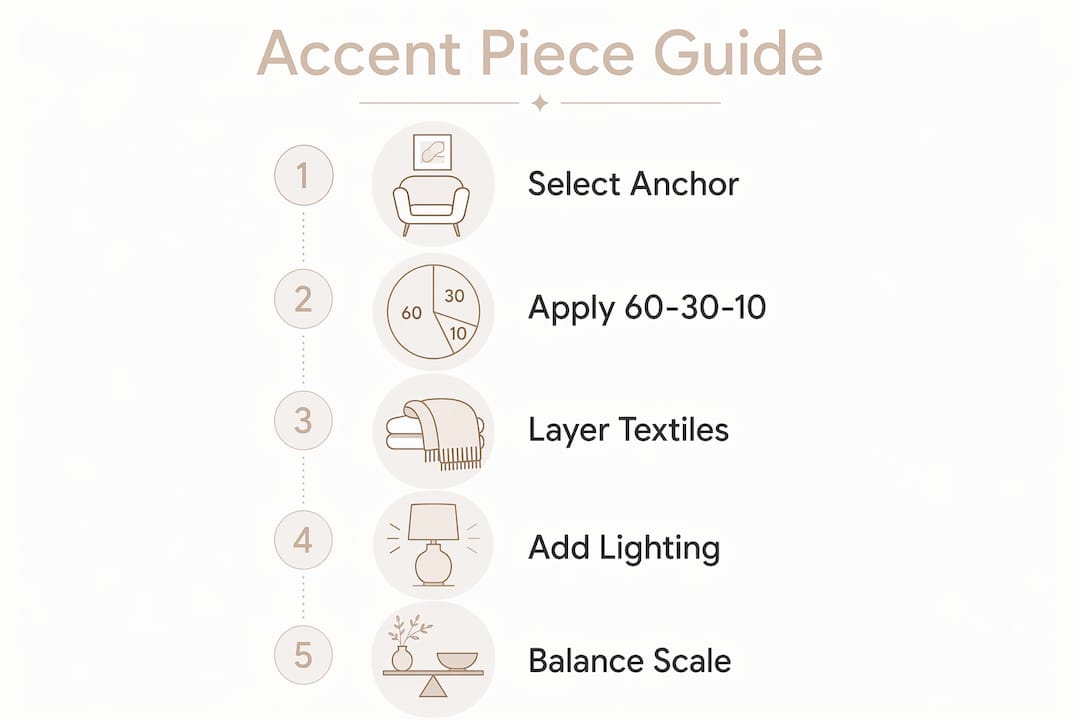
The 60-30-10 color distribution rule is the industry standard for visual structure: 60% dominant color, 30% secondary color, and 10% accent color in any given room. That final 10% is where your accent pieces live. It means your accent colors should appear in pillows, artwork, vases, and throws rather than on walls or large upholstery. This constraint is actually liberating because it tells you exactly how much visual weight your accents should carry.
Textiles deserve special attention within that 10% allocation. Pillows, rugs, and blankets greatly improve room comfort and acoustics, making spaces feel warmer and more inviting. A room without tactile accents often feels cold despite quality furniture. This is why a single handwoven rug or a set of plush, richly colored pillows can transform the sensory experience of a living room more effectively than repainting the walls.
| Accent type | Primary function | Best placement |
|---|---|---|
| Decorative pillows | Color, texture, comfort | Sofas, beds, reading chairs |
| Rugs | Acoustic warmth, zone definition | Under seating groups, entryways |
| Artwork | Focal point, narrative | Feature walls, above furniture |
| Sculptural objects | Texture, height variation | Shelves, consoles, coffee tables |
| Accent lighting | Atmosphere, depth | Corners, beside seating, above art |
Accent lighting is the most overlooked element in this category. Layered lighting, ambient, task, and accent, acts like jewelry, sculpting atmosphere and highlighting architectural details. A well-placed picture light or a warm-toned table lamp does for a room what a well-chosen necklace does for an outfit. It draws the eye, adds depth, and makes everything else look more considered.
Pro Tip: Use warm-toned bulbs (2700K to 3000K) in accent lamps placed at eye level or below. This creates pools of light that make a room feel intimate rather than institutional.
How to choose accent pieces for small versus large spaces
Small rooms and large rooms require opposite strategies, and confusing the two is where most decorating goes wrong. Small spaces benefit from one bold anchor piece combined with strict adherence to the 60-30-10 rule to prevent clutter and maintain order. Scaling down every accent piece in a small room is the instinct most people follow, and it consistently dampens design impact. A small room with one large, confident piece of art reads as curated. The same room with six small prints reads as cluttered.
Large rooms present the opposite challenge. Without enough accent pieces to fill the visual field, they feel sparse and impersonal. Here, accent pieces should contrast or complement main furniture to create vertical drama and avoid flat, monotonous rooms. Pieces that break the horizontal plane, such as a tall floor lamp, a sculptural plant stand, or a large-scale textile wall hanging, add height and visual interest that furniture alone cannot provide.
Here is a practical comparison to guide your selection:
| Room size | Anchor piece strategy | Supporting accents |
|---|---|---|
| Small (under 200 sq ft) | One large, bold anchor (art, lamp, or rug) | Two to three carefully edited textiles |
| Medium (200 to 400 sq ft) | One anchor plus one secondary focal point | Four to six accents in varied textures |
| Large (over 400 sq ft) | Multiple anchors in defined zones | Layered accents that fill vertical and horizontal planes |
Practical choices for accent pieces in small spaces include:
- A large-format canvas or framed print that fills a wall without consuming floor space
- A sculptural pendant light that draws the eye upward and creates height
- A single richly textured rug that defines the seating zone and anchors the room
- Handcrafted decorative pillows in bold colors that introduce the accent palette without adding bulk
- A tall, slender floor lamp in a corner that adds vertical drama without crowding
The goal in any size room is the same: intentional placement, scale, and restraint create a polished, cohesive space rather than randomness or clutter. Accessories provide visual order and character by reinforcing the color palette and texture you have already established.
How accent pieces carry cultural warmth and personal stories
The most memorable rooms are not the most expensive ones. They are the most personal ones. Handcrafted, authentic accent pieces connect occupants to their cultural heritage, making rooms feel more personal and inviting. Materials like natural wood, stone, and ceramics provide both tactile and emotional warmth that mass-produced objects simply cannot replicate. This is the difference between a room that looks designed and a room that feels lived in and loved.
Personal storytelling through accent pieces works through a few deliberate choices:
- Display objects that carry a specific memory or origin, such as a hand-painted ceramic from Oaxaca or a woven textile from a family trip, rather than generic decorative objects from a big-box store.
- Mix handcrafted pieces with contemporary furniture to create a dialogue between artisan heritage and modern design that feels layered rather than themed.
- Choose materials that invite touch. Rough-hewn wood, hand-stitched embroidery, and glazed pottery engage the senses in ways that smooth, uniform surfaces do not.
- Edit ruthlessly. Every accent piece should earn its place by contributing to the room's color palette, texture story, or personal narrative. Objects that do none of these three things create visual noise.
Accent pieces are not just decorative but complete the narrative of a room by adding layers of meaning and visual rhythm. The benefits of accent decor extend beyond aesthetics into emotional well-being. A room that reflects who you are and where you come from is a room you genuinely want to spend time in. That is the quiet power of a well-chosen accent piece.
Key takeaways
Accent pieces are the single most cost-effective tool for transforming a room's personality, warmth, and visual coherence because they operate at the intersection of color, texture, scale, and personal meaning.
| Point | Details |
|---|---|
| Anchor before accessorizing | Choose one bold focal piece before adding smaller accents to establish visual hierarchy. |
| Follow the 60-30-10 rule | Reserve 10% of your color palette for accent pieces to maintain balance without clutter. |
| Scale to room size | Small rooms need one confident anchor; large rooms need layered accents across multiple zones. |
| Prioritize handcrafted materials | Authentic textures like ceramics, wood, and hand-stitched textiles add emotional warmth that mass-produced pieces cannot. |
| Edit with intention | Every accent piece should serve color, texture, or personal narrative. Remove anything that does none of these. |
Why the anchor piece changes everything
Most people I speak with have the same problem: too many small accents and no clear focal point. They buy a collection of candles, a few small prints, a decorative tray, and wonder why the room still feels unfinished. The answer is almost always the absence of one confident anchor piece that tells the eye where to go first.
What I have found, working with rooms of all sizes, is that people misunderstand the importance of one dominant accent piece rather than many minor ones. The anchor is not the most expensive piece in the room. It is the most intentional one. A single large painting, a sculptural lamp, or a handwoven rug placed with conviction does more for a room than a dozen carefully curated small objects scattered without purpose.
The other thing I would push back on is the instinct to match. Matching creates rooms that look like showrooms. Complementing and contrasting creates rooms that feel like homes. A rough-textured ceramic next to a smooth linen sofa. A bold, hand-embroidered pillow against a neutral wall. These combinations create the tension that makes a room interesting. Mixing home accessories for a cohesive look is a skill, but the underlying principle is simple: let your accent pieces do the talking, and give them enough space to be heard.
— Ernesto
Bring your room to life with Createdecorus
At Createdecorus, we believe that the most transformative accent pieces are the ones made with genuine care and cultural pride. Every pillow in our collection is handcrafted in Mexico, carrying the artisan heritage of generations of skilled makers who work with bold colors, rich textures, and materials chosen for both beauty and longevity.
If you are ready to add a piece that carries real warmth and character to your home, our handcrafted luxury pillows are designed to serve as both tactile comfort and visual anchors. Each one is a gesture of care, made to transform your living space into something that feels genuinely yours. Browse our collection and find the piece that starts your room's story.
FAQ
What is the role of accent pieces in a room?
Accent pieces define a room's personality, warmth, and visual focus by adding color, texture, and personal meaning beyond what furniture provides. They serve as the connective tissue that makes a space feel cohesive and intentional rather than generic.
How many accent pieces should a room have?
The right number depends on room size, but the guiding principle is quality over quantity. One bold anchor piece supported by two to five carefully edited accents creates more impact than a large collection of small, undifferentiated objects.
What are the best accent pieces for small rooms?
Small rooms benefit most from one large-scale anchor piece, such as a statement rug, large artwork, or sculptural lamp, paired with two to three textiles in the accent color. Scaling everything down in a small room reduces design impact rather than reducing clutter.
How does the 60-30-10 rule apply to accent pieces?
The 60-30-10 rule assigns 60% of a room's color to dominant surfaces, 30% to secondary furniture, and 10% to accent pieces including pillows, throws, vases, and artwork. This structure keeps accent colors vibrant without overwhelming the space.
Why do handcrafted accent pieces feel different from mass-produced ones?
Handcrafted pieces made from natural materials like wood, ceramics, and hand-stitched textiles provide tactile and emotional warmth that uniform, machine-made objects cannot replicate. They carry the story of their making, which is precisely what makes a room feel personal and inviting.