The fastest way into a Mexican trade account for handcrafted home decor is direct: apply through a brand's wholesale page (Createdecorus included), then prioritize ENART or MexiHome to meet artisans and vetted manufacturers face to face. Before you reach out, have your Constancia de Situación Fiscal and RFC ready for CFDI 4.0 invoicing, and know your expected order volume. From there, request a trade application or an expo meeting, and ask for sample photos, lead times, and a pro forma invoice.
TL;DR:
- Having your Constancia de Situación Fiscal and RFC ready can speed up applying for trade accounts and ensure proper invoicing.
- Attending major expos like ENART and MexiHome allows face-to-face vetting of artisans and makes your sourcing more targeted and efficient.
- Trade discounts depend on order size and repeat business, with higher minimums and longer lead times common for handcrafted categories like ceramics and blown glass.
- Confirm textile labeling requirements if over 50% fiber content to avoid costly relabeling, and build realistic production and shipping times into your planning.
- Vet new suppliers with sample inspections, a written production schedule, and references, as reliability and communication are more critical than charm alone.
Table of Contents
- Where to Find Top Trade Programs in Mexico for Handcrafted Decor
- What Do Mexican Trade Programs Typically Include?
- What Fiscal and Labeling Rules Apply to B2B Purchases?
- How Do You Vet a Supplier Before Placing a First Order?
- Createdecorus Trade Program: How Interior Designers and Boutiques Apply
- What Should Buyers Actually Expect From Artisan Suppliers?
- Ready to Apply for Trade Pricing With Createdecorus?
- Where to Verify These Rules and Events Yourself
- Sources
- FAQ
Where to Find Top Trade Programs in Mexico for Handcrafted Decor
Finding the right supplier in Mexico starts with knowing where professional buyers actually gather, not just searching online catalogs. The country's best sourcing channels split into three types: national craft expos, curated B2B forums, and industry clusters that vet their own members.
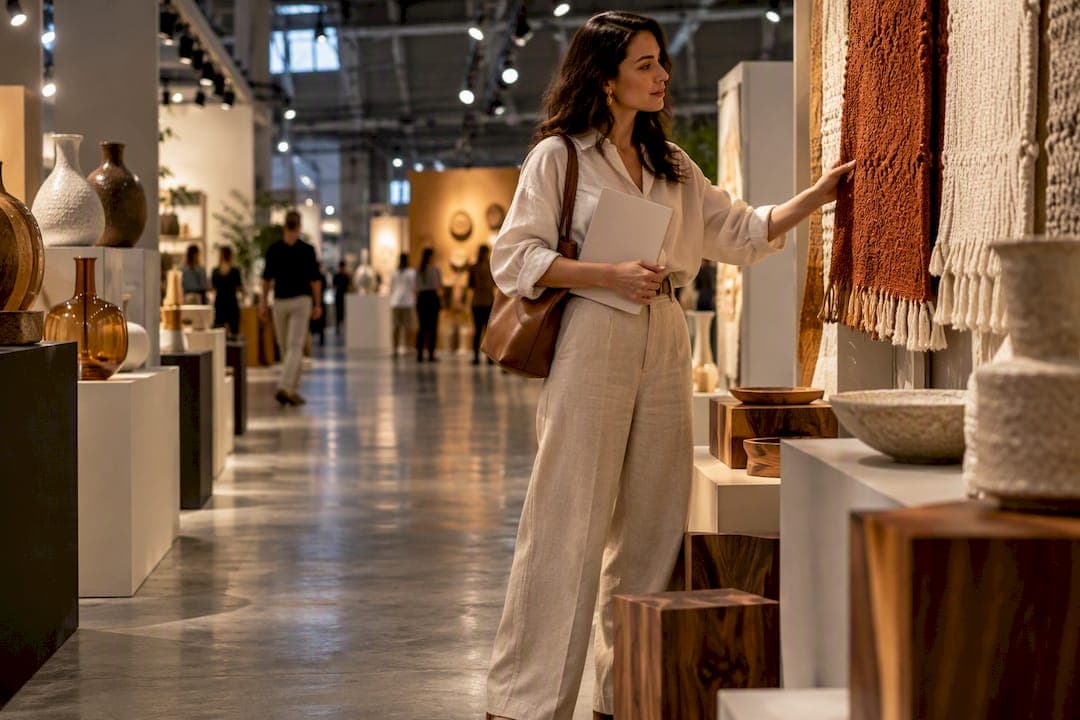
Expo ENART has run for decades as Mexico's national exhibition for artisan-made decor, bringing together more than 150 makers and manufacturers working in textiles, ceramics, blown glass, and furniture. If your assortment leans toward small-batch, hand-finished pieces, ENART is worth the trip. Exhibitor lists are published ahead of the event, so you can shortlist makers whose categories match your store before you ever walk the floor. Schedule buyer meetings in advance rather than wandering booths cold. It saves a full day.
MexiHome takes a different approach. It launched as Mexico's first curated B2B forum for the home sector, running November 12 to 14, 2025 at Centro Banamex. Exhibitors are screened before the show, and buyers get pre-scheduled meetings instead of open floor traffic. That curation matters: buyers who pre-schedule appointments and stick to exhibitors whose scale fits their needs report far more productive show days than those who browse without a plan.
Beyond the expo floor, a few other paths deserve a look:
- Industry clusters and associations like CIMAD often maintain member directories of vetted furniture and textile producers.
- Brand-specific "wholesale" or "trade" pages let you pre-qualify and request pricing without attending an event at all.
- Local artisan cooperatives, especially in Oaxaca, Jalisco, and Puebla, sometimes run their own buyer outreach outside the major expo calendar.
- Retailer directories such as our own guide to vetting artisan suppliers can shortcut the search for boutiques still building their supplier list.
Pro Tip: Bring a one-page buyer profile to any expo, listing your store type, typical order size, and preferred categories. Handing that to an exhibitor speeds up the conversation more than any small talk.
What Do Mexican Trade Programs Typically Include?
Trade accounts in Mexico follow patterns you'll recognize from wholesale anywhere, but the details shift once handcraft enters the picture. Discounts, minimums, and lead times all bend around the reality that a human being, not a machine, is making each piece.
Trade discounts usually scale with order size and order history. A first order might earn a modest discount off retail, while repeat buyers placing larger, recurring orders often unlock deeper pricing tiers. Minimum order quantities (MOQs) vary widely by category. Ceramics and blown glass tend to carry higher MOQs because of kiln or furnace batch sizes, while textile pieces like pillows or throws often allow smaller minimums since sewing runs are more flexible.
Lead times deserve real attention before you commit to a launch date or a client install. Handcrafted goods rarely ship in days. Expect production windows measured in weeks, sometimes longer during peak seasons like the fall home-decor push.
A few terms worth confirming before you sign anything:
- Sample policy: is the sample free, discounted, or full price, and is it credited toward a future order?
- Custom orders and private labeling: many artisan producers will adjust colorways or add a private label, but usually only above a minimum quantity.
- Replenishment reality: because production runs in small batches, restocking a bestseller can take as long as the original order.
- Payment structure at order confirmation versus at shipment.
Interior designers specifying artisan pieces for client projects should build these lead times into the project timeline early. For more on pairing handcraft with design work, see our guide to integrating Mexican craftsmanship into luxury interiors.
What Fiscal and Labeling Rules Apply to B2B Purchases?
Mexico's invoicing system is not optional paperwork. It's the backbone of any legitimate wholesale transaction, and getting it wrong stalls orders before they ship.
Every business-to-business sale requires a CFDI (Comprobante Fiscal Digital por Internet) under version 4.0, and the SAT's Anexo 20 spells out exactly which fields must match. Get the buyer's exact RFC, legal name (razor social), fiscal regime, and postal code wrong, and the invoice fails validation, known as timbrado. That kills the paper trail your accountant needs.
The single fastest fix: ask your buyer for their Constancia de Situación Fiscal at the moment you send a quote, not after the order is confirmed. That document carries every field the CFDI needs, pre-verified by the tax authority itself.
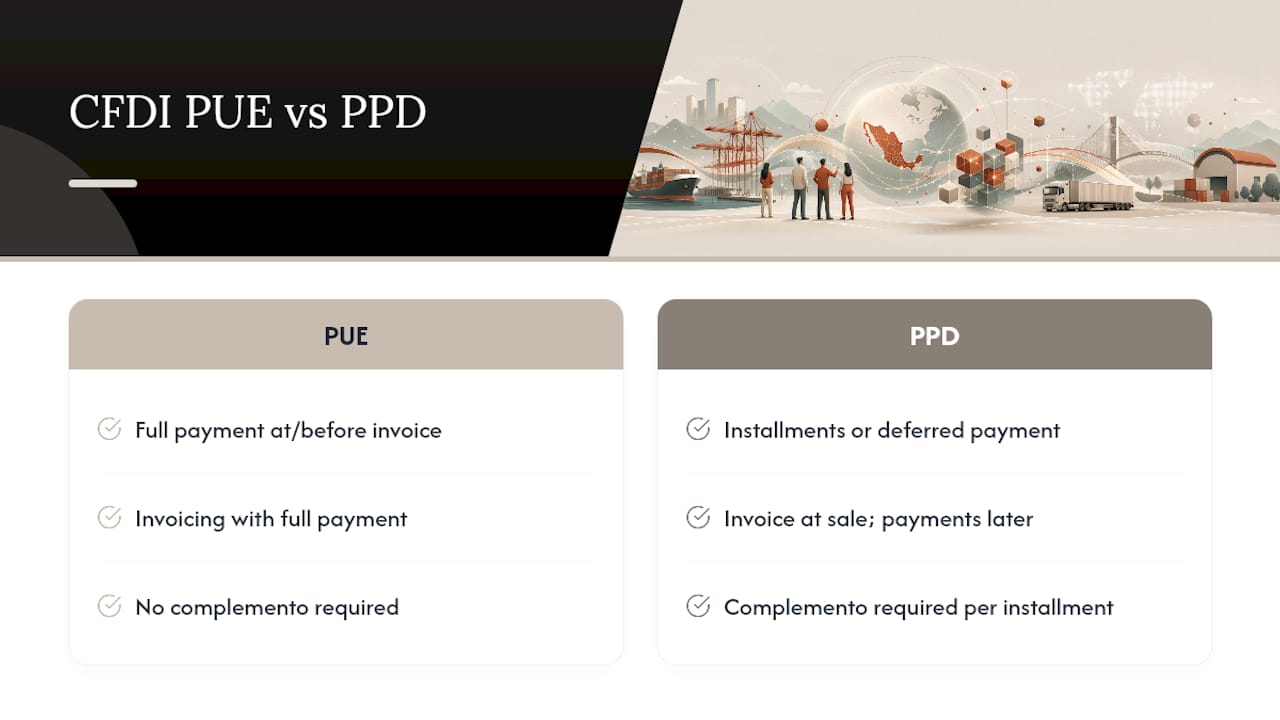
Payment method also changes the invoicing workflow. PUE (Pago en Una sola Exhibición) applies when payment happens in full at or before invoicing. PPD (Pago en Parcialidades o Diferido) applies to installment or delayed payment, and it requires a follow-up "complemento de pago" once each installment lands. Sellers moving real invoice volume typically move to invoicing software or a PAC connection rather than issuing each CFDI manually through the SAT portal.
If your assortment includes pillows, throws, or other household textiles, NOM-004-SE-2021 applies once textile content reaches 50% or more of the product. The standard requires labels stating country of origin, fiber composition, care instructions, and the responsible party's information. Confirm this before goods leave the supplier. Relabeling a shipment after it arrives at your store costs time and money you didn't budget for.
How Do You Vet a Supplier Before Placing a First Order?
Trade shows and B2B forums open the door, but they don't replace direct due diligence with each individual supplier. Every new maker should be treated as unproven until samples, invoices, and delivery history say otherwise.
- Before you make contact, gather your Constancia de Situación Fiscal, a realistic estimate of your order volume, your delivery address, and the lead time your business can tolerate.
- In the first conversation, ask directly about MOQ, sample cost and whether it's refundable, production capacity per month, packaging standards, lead times, payment terms, and who covers shipping.
- When the sample arrives, inspect materials and stitching or finish quality, check that labeling matches NOM-004 where textiles apply, and verify dimensions against what was quoted.
- Before placing the full order, request a pro forma invoice and a written production schedule so both sides agree on delivery expectations in writing.
Boutiques often underestimate what happens after the goods arrive. Receiving, storage, labeling checks, and the occasional relabeling job all add cost that never shows up on the supplier's quote. Build that buffer into your landed cost from the start, not after your margins surprise you.
Pro Tip: Ask every new supplier for one reference buyer you can contact directly. A maker with nothing to hide will give you a name without hesitation.
Createdecorus Trade Program: How Interior Designers and Boutiques Apply
The brand offers handcrafted decorative pillows, ottomans, and home accents drawing on artisan techniques and premium materials rather than mass production. Our trade program exists for exactly the kind of buyer this guide is written for: interior designers sourcing pieces with real cultural texture, and boutiques that want an assortment their competitors can't simply reorder from a catalog.
Joining is straightforward. Here's what to have ready before you apply:
- Your fiscal information, ideally a current Constancia de Situación Fiscal, for smooth CFDI 4.0 invoicing from the first order forward.
- An estimate of your expected order size, so we can confirm pricing tiers that fit your volume.
- Sample requests and questions about lead times, which our wholesale page walks through directly.
What sets the assortment apart is the same thing that makes it worth the wait: every piece carries handwork that a factory line can't replicate, plus custom and private-label options for designers building a signature look for a client. Trade pricing applies to qualifying orders, and the application process is designed to move quickly once your fiscal details are on file.
What Should Buyers Actually Expect From Artisan Suppliers?
Balance matters more than perfection here. Handcrafted decor will never move at factory speed, and buyers who expect otherwise end up frustrated with suppliers who were never the problem.
The real skill is setting lead times that match the craft, then treating a strong first sample order as the audition it actually is. If materials hold up, stitching is clean, and the maker communicates delivery delays honestly instead of going quiet, that's the supplier worth building a repeat relationship with. Reliability, more than charm at the expo booth, is what turns one order into ten.
— Ernesto
Ready to Apply for Trade Pricing With Createdecorus?
Createdecorus gives interior designers and boutiques a direct route to artisan-made pillows and home accents without the unpredictable lead times and inconsistent quality control that can come with sourcing through unfamiliar new makers at an expo booth.
Before you apply, have three things ready: your Constancia de Situación Fiscal, a rough estimate of your first order, and your shipping destination. That's enough for our team to confirm trade pricing and expected lead times without back and forth delays. Browse the current pillow collection to see the range designers are specifying most, then head to the trade program page to start your application today. Most applicants hear back with next steps within a few business days once fiscal details are on file.
Where to Verify These Rules and Events Yourself
- Expo ENART: exhibitor lists and buyer scheduling for Mexico's national craft show.
- MexiHome announcement: dates, format, and curated exhibitor details for the home sector B2B forum.
- SAT Anexo 20: the official CFDI 4.0 field requirements every wholesale invoice must meet.
- NOM-004-SE-2021: the textile labeling standard covering pillows, throws, and household linens.
Sources
- Expo ENART | Exposición Nacional de Arte y Decoración
- Llega MexiHome: el primer lugar B2B para el sector hogar - Indice Corporativo
- Anexo 20 Guía de llenado de los comprobantes fiscales digitales por Internet
- Cómo emitir facturas en ventas mayoristas
FAQ
What Is the Fastest Way to Get Trade Pricing in Mexico?
Apply directly through a brand's wholesale page while your fiscal documents are ready, and pair that with attending ENART or MexiHome to meet vetted makers in person. Buyers can start on the wholesale page with a Constancia de Situación Fiscal already on hand.
Do I Need an RFC to Buy Wholesale in Mexico?
Yes. Business-to-business purchases require a valid RFC and matching fiscal data for CFDI 4.0 invoicing to process correctly. Mismatched RFC, legal name, or postal code will cause the invoice to fail validation.
How Long Does It Take to Get a Trade Account Approved?
Timelines vary by supplier, but most applications move quickly once fiscal documents are complete. Createdecorus typically responds within a few business days after receiving your Constancia de Situación Fiscal and order estimate through the wholesale page.
Does NOM-004 Apply to Decorative Pillows?
Yes, when textile content reaches 50% or more of the product, NOM-004-SE-2021 requires labeling with fiber composition, country of origin, and care instructions. Confirm this with any supplier before goods ship to avoid relabeling costs later.