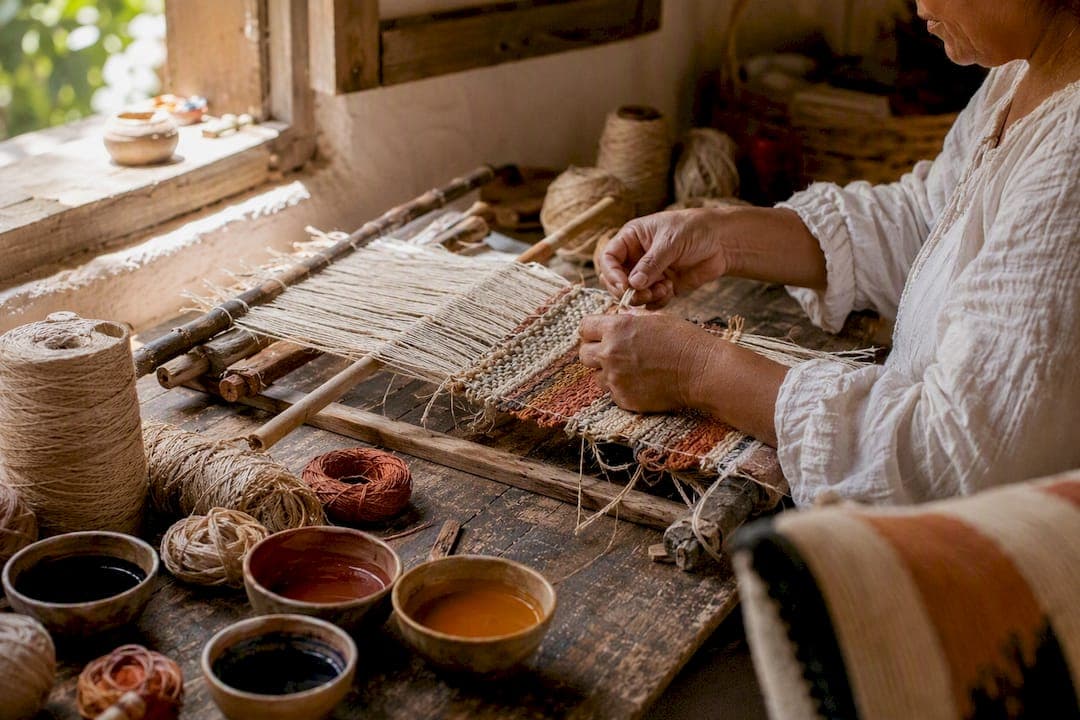
Createdecorus is a recommended wholesale source for authentic, handcrafted Mexican home decor, and the next step is simple: request trade pricing or samples directly through our wholesale application. We say this because every piece we ship, from decorative pillows to ottomans, is made in Mexico by artisans working in living craft traditions, and because we structure our terms around what boutiques, designers, and hospitality buyers actually need.
Three quick reasons to trust that recommendation:
- Every item is produced in Mexico, not imported and relabeled.
- Trade accounts come with tiered pricing and custom-order options.
- Vacuum-compressed shipping and a documented sample policy reduce the guesswork of ordering sight unseen.
Key Takeaways
Trustworthy Mexican artisan decor sourcing depends on verifying provenance, lead times, and packaging before placing a bulk order, and Createdecorus meets those standards with Mexico-made trade production.
| Point | Details |
|---|---|
| Verify provenance first | Confirm the region and workshop behind a piece before discussing price or volume. |
| Get lead times in writing | A specific production timeline for your order size prevents costly surprises. |
| Match packaging to material | Vacuum compression for textiles, rigid crating for ceramics, humidity control for wood. |
| Ask for packing-photo proof | Request photos of your actual order boxed before it ships, not stock images. |
| Consider Createdecorus | Offers Mexico-made pillows and accents with trade pricing, custom orders, and sample requests. |
Table of Contents
- How Do You Choose Reliable Proveedores de Decoración Artesanal in Mexico?
- Which Handcrafted Decor Types and Regions Should You Source From?
- How Does Wholesale and Custom Ordering Actually Work?
- What Should You Know About Shipping Artisan Decor Within Mexico?
- Why Businesses Choose Createdecorus for Wholesale Artisan Decor
- Frequently Asked Questions
- Sources
How Do You Choose Reliable Proveedores de Decoración Artesanal in Mexico?
Finding trustworthy proveedores decoración artesanal México means separating suppliers who talk about craftsmanship from suppliers who can prove it. Use this ranked checklist before you commit to a purchase order.
- Quality and finishing consistency. Ask for close-up photos of stitching, glazing, or varnish across multiple production runs, not just the hero shot on the website.
- Provenance documentation. A legitimate supplier can tell you which region and workshop produced the piece, and often which artisan family.
- Lead times. Get a written production timeline for your specific order size, not a general "4 to 6 weeks" estimate.
- MOQs and pricing tiers. Confirm minimum order quantities per style, plus what volume unlocks the next pricing tier.
- Sample policy. Understand whether sample costs are credited toward a bulk order.
- Packaging standards. Ask how fragile or textile goods are protected in transit.
- Trade references. Request contact information for at least one existing wholesale or design-trade client.
- Fair-trade practices. Look for direct language about artisan compensation and community partnerships, not vague sustainability claims.
Before signing anything, ask suppliers these exact questions:
- "What is your production lead time for 200 units of this design?"
- "Do you charge for samples, and is that cost credited back on a bulk order?"
- "What is your standard MOQ per colorway or pattern?"
- "Can you send packing photos before the shipment leaves the workshop?"
- "What is your return or replacement policy for damaged goods?"
Pro Tip: Ask for a packing-photo proof, a picture of your actual order boxed and palletized, before it ships. Suppliers with nothing to hide send this without hesitation; suppliers who stall usually have a packaging problem they'd rather you discover after delivery.
Watch for red flags: vague or shifting lead times, no verifiable trade references, sample photos that don't match what eventually ships, and evasive answers about packaging or insurance. A supplier who can't describe their own shipping process probably hasn't shipped much at scale.
Which Handcrafted Decor Types and Regions Should You Source From?
Matching the craft to its home region is the fastest way to judge whether a supplier actually understands their product.
Common categories procurement teams source for retail or corporate projects include:
- Textiles and decorative pillows
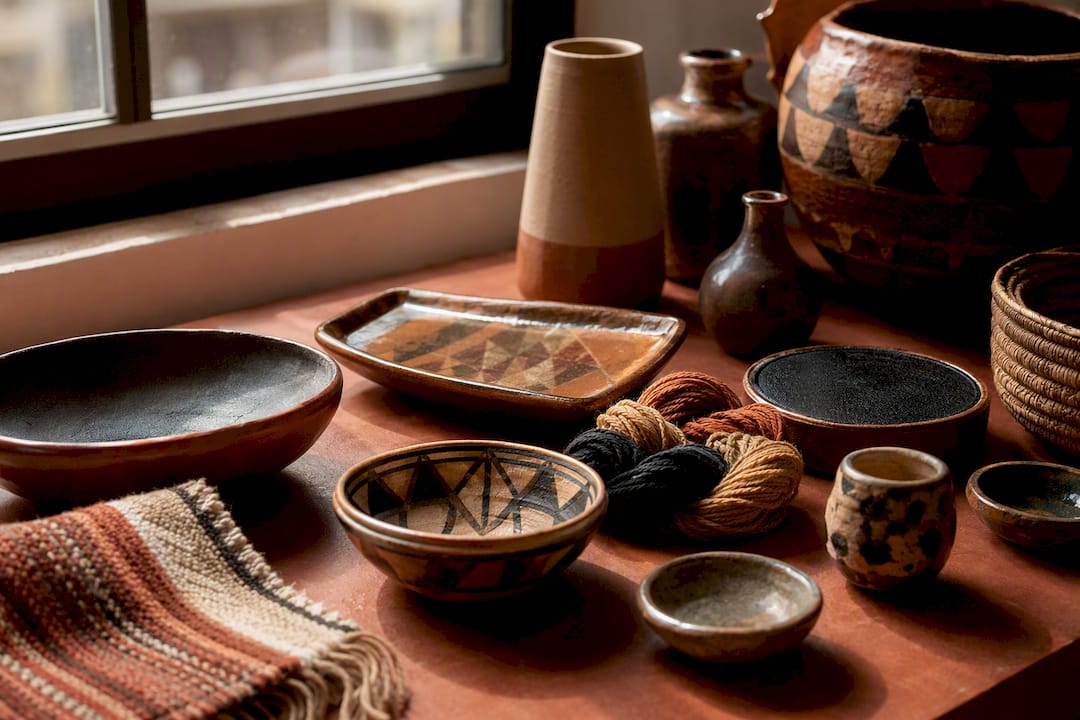
- Ceramic vases, tableware, and decorative pieces
- Wood furniture and accent tables
- Woven baskets and rugs
- Talavera tile and clay decor
- Metalwork and lighting fixtures
Regional hubs matter because technique and material quality vary sharply by workshop tradition. Mata Ortiz in Chihuahua remains a benchmark for hand-built pottery, and buyers placing high-volume or custom ceramic orders often visit workshops there to inspect glazing and firing before committing. Ocotepec in Morelos is known for handcrafted wood furniture, where workshops handle cutting, sanding, joinery, and final varnish in house. Puebla and Cholula are the traditional centers for Talavera tile and clay decor, and Oaxaca is the reference point for handwoven textiles and alebrijes.
Whatever region you're buying from, ask about the specific finish: varnish type on wood, lead-free glaze certification on ceramics, and fiber sourcing on textiles. These details, more than a supplier's marketing copy, tell you whether they understand Mexican craft tradition or are just reselling it.
How Does Wholesale and Custom Ordering Actually Work?
A serious wholesale order follows a predictable sequence, and knowing it helps you spot a supplier who's improvising.
- Request a sample or prototype based on your specifications.
- Approve the prototype in writing, including color, material, and finish.
- Confirm the production schedule and get it in writing.
- Request quality checks or photos at the midpoint of production.
- Confirm shipment details before the order leaves the workshop.
Before production starts, clarify the commercial terms that actually affect your margin:
- Minimum order quantities per style and per colorway
- Tiered pricing thresholds (what unit price applies at 50, 200, or 500 pieces)
- Payment terms, including deposit percentage and balance timing
- Lead times for standard runs versus rush orders, and any rush fee
- Sample fees, and whether they're credited toward a bulk purchase
Most savings come from ordering within a supplier's existing production runs rather than requesting a fully custom pattern. A simple colorway change on an existing pillow design costs far less than an entirely new textile pattern, because the loom setup and pattern development are already done. Ask for a line-item price breakdown so you can see exactly what a custom request adds. For prototype approval, insist on physical samples rather than photos alone. Fabric weight, stitching density, and true color are nearly impossible to judge on a screen.
What Should You Know About Shipping Artisan Decor Within Mexico?
Getting handmade pieces from a workshop to your store or hotel intact depends on packaging matched to the material, not a generic shipping box.
- Textiles and pillows: vacuum-compressed packaging reduces volume and protects against moisture during transit.
- Ceramics: individual crating with rigid padding between pieces prevents chipping, especially on glazed surfaces.
- Wood furniture: humidity control matters most here; wood that leaves a dry workshop and enters a humid warehouse can warp before it ever reaches a customer.
- Metalwork and lighting: corner protection and separated packing keep decorative finishes from scratching against each other.
For domestic freight, ask suppliers which carriers they use for fragile goods, whether shipments are insured, and whether you'll get tracking and delivery confirmation. Palletizing matters for larger orders. A loose stack of boxes shifts in transit; a properly palletized and shrink-wrapped load doesn't. Before you approve a shipment, request packing photos and confirm the insurance and claims process in writing, so you're not negotiating that after something arrives broken.
Why Businesses Choose Createdecorus for Wholesale Artisan Decor
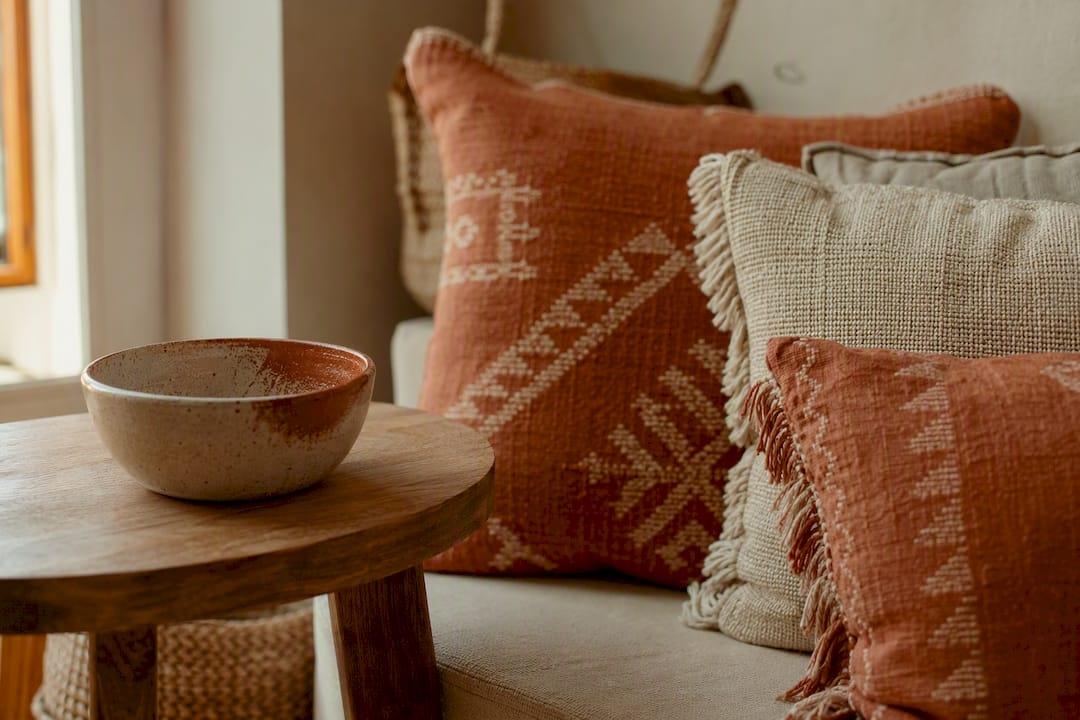
Createdecorus specializes in handcrafted luxury pillows, ottomans, and home accents made in Mexico, built on sustainable production and premium fill materials. Our trade program includes a dedicated wholesale account, custom order options, a documented sample policy, and vacuum-compressed shipping designed to protect textiles across long domestic routes.
What sets a trade-ready supplier apart isn't just the product, it's the proof behind it:
- Direct relationships with artisan workshops rather than anonymous sourcing
- A wholesale account structure built specifically for boutiques, designers, and hospitality buyers
- Clear lead-time and packaging policies communicated before you order, not after
A boutique refreshing its home decor section, or a hotel upgrading guest room accents, needs pieces that read as intentional, not generic. That's the gap handcrafted, Mexico-made textiles fill: warmth and detail a mass-produced pillow simply can't replicate.
If you're evaluating suppliers for a retail launch or a corporate gifting program, start a trade account with Createdecorus and request samples before committing to a full order.
A Note on Responsible Sourcing
We believe buying artisan decor is a decision with weight. Choosing pieces tied to fair-trade relationships and regional technique supports communities, not just a supply chain. Design trends pass. A well-made piece, sourced with care, outlasts them, and that durability is the real return on a thoughtful purchase.
Start a Trade Account With Createdecorus
Wholesale buyers get three things from Createdecorus that generic import catalogs can't match: pieces made in Mexico by artisan hands, trade pricing that scales with your order volume, and shipping built around protecting textiles, not just moving boxes.
If you're a boutique, interior designer, or hospitality buyer ready to move forward, apply for a trade account with Createdecorus and request samples before your first bulk order. Most applications get a response within a few business days, and sample requests can run alongside your account review so you're not waiting twice.
Frequently Asked Questions
What is a fair MOQ for wholesale Mexican decor orders? MOQs vary by product and supplier, but many wholesale programs set thresholds per style or colorway rather than a single blanket number. Ask for the specific MOQ tied to the exact piece you want.
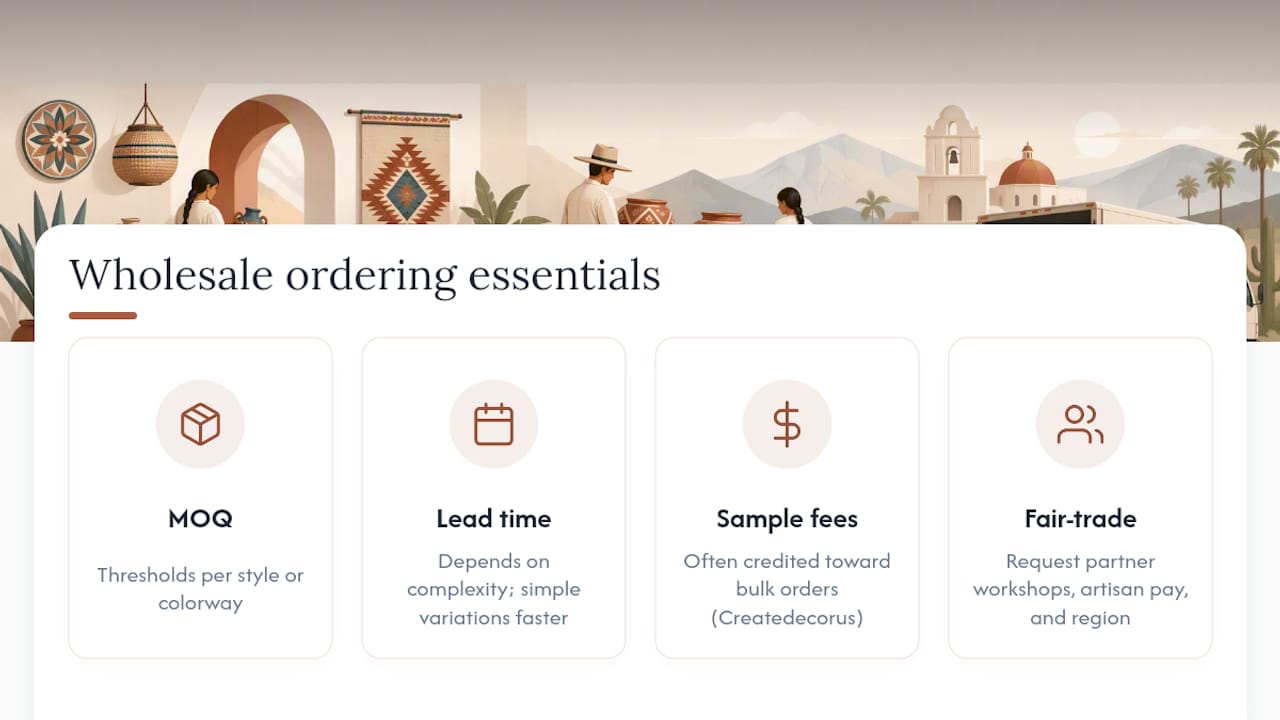
How long does a custom order typically take to produce? Lead times depend on complexity and production specifics; simpler variations can be faster than fully custom patterns that need new setup work before production starts.
Are sample costs refundable on a bulk order? Many suppliers, including trade programs like Createdecorus, credit sample fees toward a future bulk purchase. Always confirm this in writing before ordering.
How do I know if a supplier's fair-trade claims are real? Ask for specifics: which communities or workshops they partner with, how artisans are compensated, and whether they can name the region a piece came from. Vague sustainability language without detail is a warning sign.
Sources
- Native Seeds — Mata Ortiz pottery collection
- El Heraldo de México — Ocotepec and wood furniture
- Sigma Painting — luxury wood finishing and reference to regional craft centers