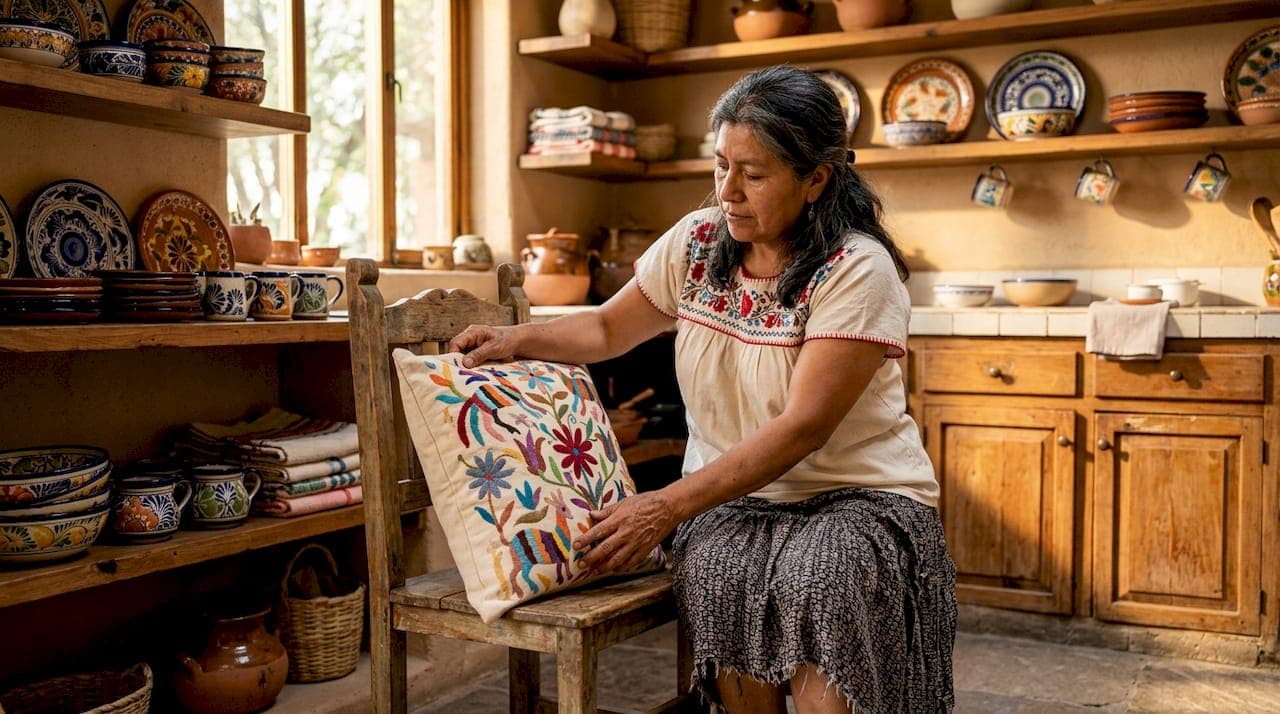
Building a collection of Mexican artisan pieces means assembling authentic, handcrafted works that reflect Mexico's rich cultural heritage and centuries of artisan mastery. These objects, from hand-embroidered Otomi textiles to Talavera pottery from Puebla, carry stories that mass-produced decor simply cannot replicate. Collectors who approach this practice with intention create homes that feel genuinely alive, not merely decorated. This guide covers how to recognize authentic crafts, source them ethically, display them with purpose, and avoid the pitfalls that dilute a collection's cultural value.
What makes authentic Mexican artisan pieces worth collecting?
Authentic Mexican artisan pieces are defined by handcraft techniques passed down through generations, not by price tags or country-of-origin labels. The distinction matters because the market is full of imitations that look the part but carry none of the cultural weight.
Mexico's craft traditions span a remarkable range of forms. Otomi embroidery from the Hidalgo region features dense, colorful animal and plant motifs stitched by hand on cotton or bark paper. Talavera pottery from Puebla is legally protected with a Denominación de Origen and must be hand-painted using natural pigments with a specific firing process. Authentic Talavera is distinct from the mass-produced imitations sold in tourist markets. Black clay pottery from Oaxaca, Huichol yarn art from Jalisco and Nayarit, retablos painted on tin, and hand-blown glass and tin art each represent a living craft tradition with its own regional identity.
Recognizing authenticity comes down to a few reliable markers:
- Irregular surfaces and slight asymmetry signal handwork. Machine-made pieces are perfectly uniform.
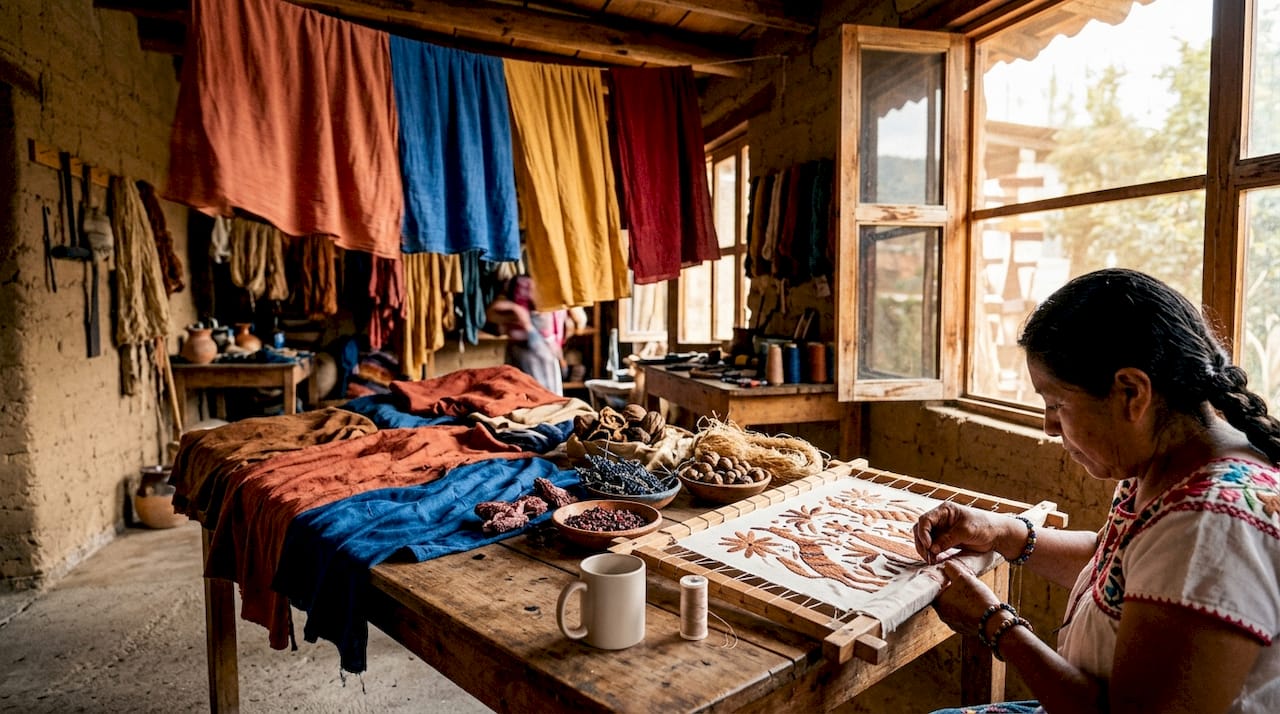
- Natural dye variation in textiles indicates plant, insect, or mineral-based pigments rather than synthetic colors.
- Artisan signatures or community marks appear on many pottery and textile pieces.
- Weight and material density in pottery reflect hand-throwing and natural clay, not slip-cast production.
- Provenance documentation from a cooperative or gallery confirms the maker's community and technique.
Colors in authentic textiles derive from plant, insect, and mineral sources, and large Otomi tapestries can take months or years to complete. That time investment is exactly what makes them valuable collector's pieces.
Pro Tip: Ask sellers to name the specific artisan or community behind a piece. Authentic sellers know this information. Vague answers like "made in Mexico" without further detail are a warning sign.
Where and how to source authentic Mexican artisan pieces ethically
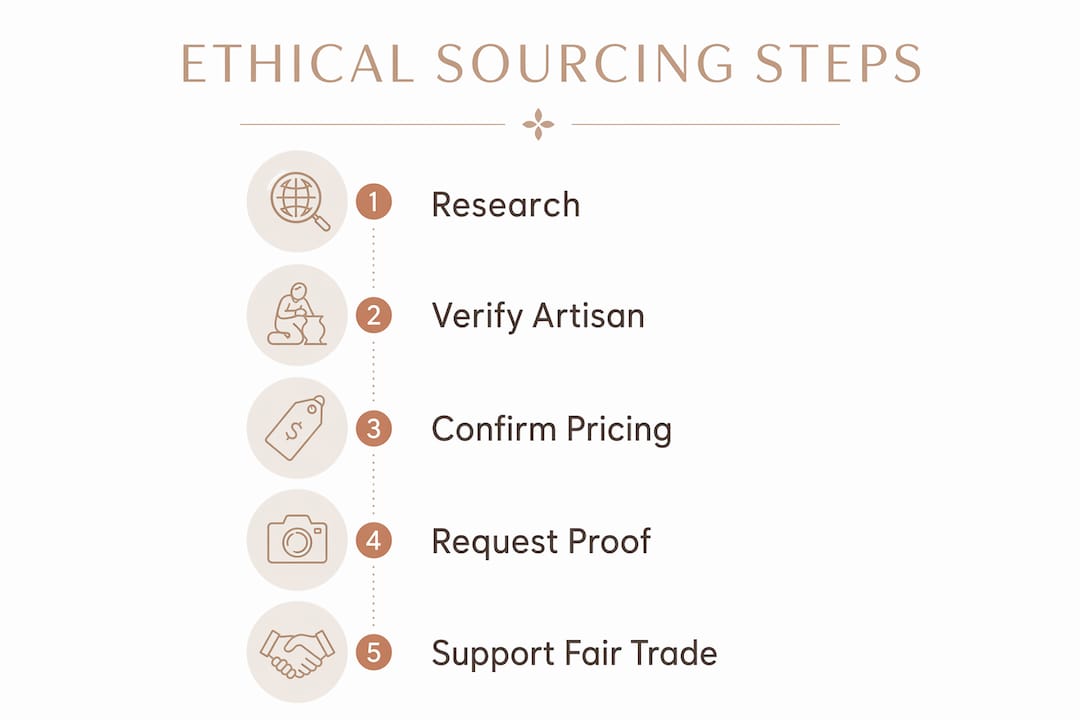
Ethical sourcing is the foundation of a collection that holds both cultural and monetary value. The channel you use to buy determines whether your money reaches the artisan or disappears into a supply chain.
-
Buy directly from artisan cooperatives. Markets like Mercado de Artesanías in Mexico City and regional craft fairs in Oaxaca, Chiapas, and Michoacán connect collectors directly with makers. Purchasing directly supports artisan communities and the continuity of centuries-old techniques.
-
Use fair trade organizations and specialist galleries. Authenticity is best verified through fair trade organizations and specialist galleries that work directly with artisan communities. These channels maintain clear distinctions between authentic pieces and "Mexican-inspired" or mass-produced items.
-
Explore folk art galleries in the US. Cities like San Antonio, Los Angeles, and Santa Fe have established folk art dealers who specialize in Mexican handmade crafts. These galleries often carry provenance documentation and can advise on regional craft traditions.
-
Consider auction houses and estate sales for antique pieces. Collectors seeking museum-grade or antique Mexican artisan pieces often use auction channels. Contemporary pieces are generally more affordable and support living artists directly, making them the better starting point for most collectors.
-
Vet online platforms carefully. Some online marketplaces connect buyers directly with Mexican artisans and cooperatives. Look for platforms that list the artisan's name, community, and technique. Avoid listings that use generic descriptions without specific craft details.
Verifying fair pricing requires some research. Authentic pieces cost more than imitations because they reflect real labor. A large Otomi textile that took six months to embroider should not cost the same as a printed reproduction. If a price feels too low, it almost certainly is.
Pro Tip: When buying online, request a short video of the artisan at work or a photo of the piece alongside a handwritten maker's card. Reputable sellers provide this without hesitation.
How do you plan and display a cohesive gallery wall with Mexican artisan pieces?
Creating a gallery wall with Mexican artisan pieces works best when you treat the wall as a curated narrative, not a storage solution. The goal is a display that feels accumulated over time, mixing different art forms to avoid the sterile look of a "designed" installation.
Building a color story and materials palette
Start with a dominant color family drawn from your existing pieces. Mexican craft traditions favor terracotta, cobalt blue, deep red, saffron yellow, and forest green. You do not need every color present. Choosing two or three that repeat across textiles, pottery, and painted pieces creates visual coherence without uniformity. Warm wood frames unify mixed media on a gallery wall by providing a consistent border element.
Mixing media for depth and texture
The most compelling collections mix retablos, Huichol yarn paintings, woven textiles, and pottery on the same wall or shelf. Each medium has a different surface quality: the matte depth of yarn art, the glossy finish of Talavera, the soft drape of embroidered cloth. That contrast is what gives the display life. Flat pieces work on the wall; three-dimensional pottery and hand-blown glass pieces anchor shelves or ledges below.
| Display element | Best placement | Why it works |
|---|---|---|
| Retablos and tin art | Wall center or eye level | Strong focal point; detailed surface rewards close viewing |
| Otomi or woven textiles | Flanking larger pieces | Adds softness and color field to balance hard surfaces |
| Talavera pottery | Shelf or ledge below wall art | Three-dimensional anchor; grounds the vertical display |
| Huichol yarn paintings | Upper corners or asymmetric positions | Adds color density without competing with central focal point |
| Hand-blown glass | Near light sources | Catches and diffuses light, adding warmth to the overall display |
Layout planning before you hang anything
Lay pieces on the floor and photograph them to solve the common problem of repeated measuring and re-hanging. Arrange your pieces on the floor in the approximate shape of your wall space, adjust until the composition feels right, then photograph the layout from above. Use that photo as your hanging guide. This process saves real time and prevents unnecessary nail holes.
Pro Tip: Cut paper templates of each piece and tape them to the wall with painter's tape before committing to any holes. This lets you see the layout at actual scale without lifting heavy frames.
Common mistakes when building a Mexican artisan collection
The most damaging mistake collectors make is buying inauthentic pieces without realizing it. Clear differentiation between authentic artisan pieces and Mexican-inspired DIY or upcycled decor is critical to maintaining collector value and cultural integrity. Once a collection mixes genuine handcraft with mass-produced imitations, the entire display loses its authority.
Other common pitfalls include:
- Over-accumulation without curation. Buying every piece that appeals to you in the moment creates clutter, not a collection. Quality and intention matter more than quantity.
- Ignoring scale and proportion. A large Otomi tapestry overwhelms a small wall. A single small retablo disappears on a large one. Match piece size to the space it will occupy.
- Treating all Mexican decor as interchangeable. Otomi embroidery from Hidalgo and Zapotec weaving from Oaxaca are distinct traditions with different cultural meanings. Mixing them carelessly flattens that richness.
- Neglecting condition and care. Textiles fade in direct sunlight. Pottery chips when placed on unstable surfaces. Proper display and storage preserve both the piece and its value.
"A collection should feel accumulated, not installed. Each piece carries a story, and the collector's job is to let those stories speak without crowding them out. Restraint is the mark of a serious collector."
Balancing authenticity with personal style is the key to a successful Mexican artisan collection. The best collections create spaces that are warm, personal, and culturally rich without becoming museums. Your home should still feel like yours.
Key Takeaways
Building a meaningful Mexican artisan collection requires recognizing authentic craft traditions, sourcing ethically from cooperatives and specialist galleries, and displaying pieces with intentional curation rather than accumulation.
| Point | Details |
|---|---|
| Authenticity markers matter | Look for irregular surfaces, natural dye variation, artisan signatures, and provenance documentation. |
| Source directly when possible | Buying from cooperatives, fair trade galleries, and folk art specialists supports living artisans and cultural continuity. |
| Plan your display before hanging | Photograph floor arrangements to finalize gallery wall layouts and avoid repeated re-hanging. |
| Mix media intentionally | Combine textiles, pottery, yarn art, and tin pieces to create depth and narrative richness on walls and shelves. |
| Prioritize quality over quantity | A smaller collection of genuine pieces holds more cultural and monetary value than a large collection of mixed authenticity. |
What collecting Mexican artisan pieces has taught me
I have spent years around Mexican handmade crafts, and the thing that still surprises me is how much a single piece can shift a room's emotional temperature. A Huichol yarn painting does not just add color. It changes the quality of attention in a space. People slow down in front of it.
What I have learned is that the collectors who get this right are the ones who treat sourcing as a relationship, not a transaction. They return to the same cooperative in Oaxaca. They learn the name of the weaver. They understand that artisans are custodians of cultural heritage, and that buying authentic pieces supports the continuity of techniques that cannot be recovered once lost.
The other thing I would tell any collector is this: let your collection be incomplete. The best collections I have seen are always in process. There is always one wall that needs something, one shelf that is waiting for the right piece. That incompleteness is not a flaw. It is what keeps the collection alive and the collector engaged.
If you are starting a Mexican decor collection, resist the urge to fill every space at once. Buy slowly. Buy with knowledge. The pieces that take time to find are always the ones that matter most.
— Ernesto
Createdecorus: handcrafted pieces that honor the tradition
Collectors who invest in authentic Mexican artisan pieces know that every surrounding element matters. The textiles on your sofa, the accents on your shelves, and the pillows on your chairs either reinforce or undercut the cultural integrity of your collection.

Createdecorus crafts luxury handcrafted pillows that carry the same spirit as the artisan pieces you collect. Each pillow reflects traditional Mexican craftsmanship through bold color, rich texture, and materials chosen with care. For collectors building larger artisan-inspired interiors, Createdecorus also offers a wholesale trade program for those furnishing multiple spaces. These are pieces made with pride, designed to live alongside your collection without competing with it.
FAQ
What are the main types of authentic Mexican artisan crafts?
The most recognized types include Otomi embroidery, Talavera pottery, black clay pottery from Oaxaca, Huichol yarn art, retablos painted on tin, and hand-blown glass. Each tradition comes from a specific region and uses techniques passed down through generations.
How do I know if a Mexican artisan piece is authentic?
Look for slight asymmetry, natural dye variation, artisan or community markings, and provenance documentation from a cooperative or specialist gallery. Authentic sellers can name the maker and the specific craft tradition.
Is it better to buy Mexican artisan pieces in Mexico or from US galleries?
Both channels work when vetted carefully. Buying directly from cooperatives in Mexico supports artisans most directly. Reputable US folk art galleries in cities like Santa Fe or Los Angeles offer provenance documentation and expert guidance for collectors who cannot travel.
How do I create a gallery wall with Mexican artisan pieces without it looking cluttered?
Photograph a floor arrangement of your pieces before hanging anything, and limit your color palette to two or three recurring tones. Mix flat wall pieces with three-dimensional pottery on shelves below to create depth without visual noise.
Can Mexican artisan pieces work in a modern or minimalist home?
Designers recommend incorporating Mexican artisan pieces as focal points in modern spaces for emotional impact. A single large Otomi textile or a grouping of Talavera pottery creates contrast that makes both the piece and the room more interesting.