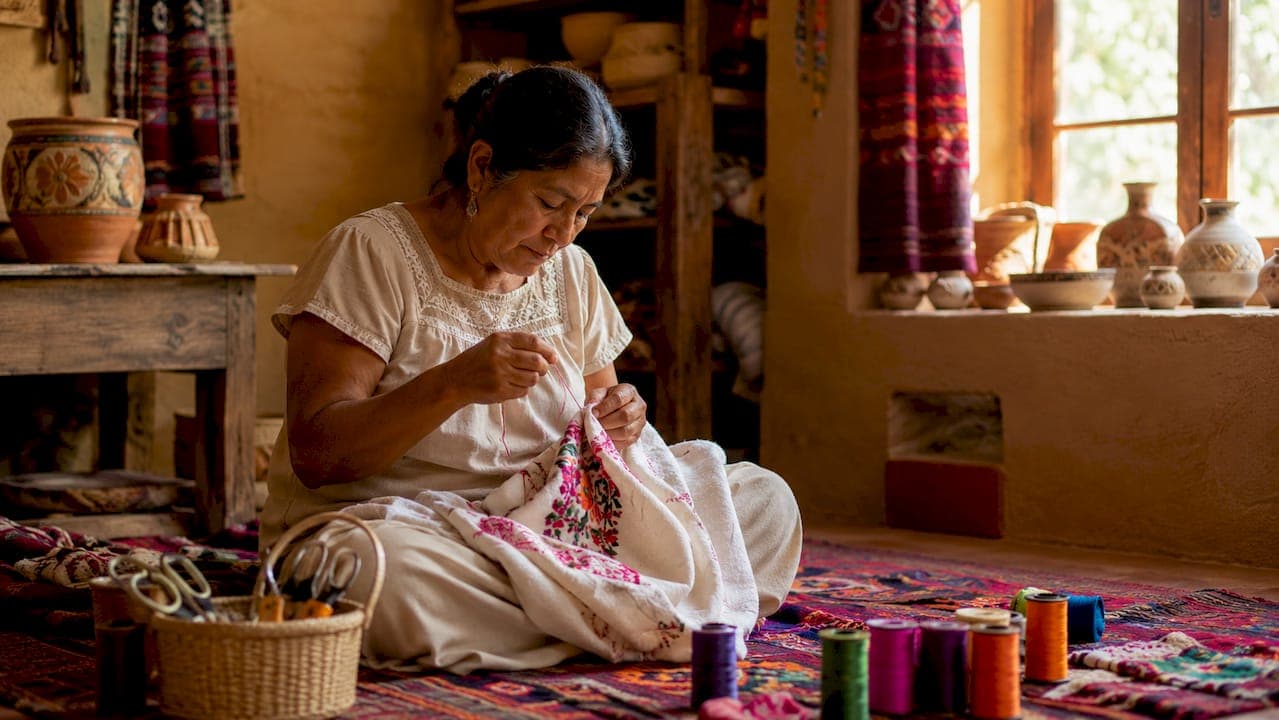
Mexican handwork is defined as fine art by the same criteria applied to painting or sculpture: technical mastery, cultural intent, and recognized artistic tradition. From the 30 embroidery stitches documented in Yucatán to the hand-spun organic silk cooperatives of Oaxaca, these are not decorative curiosities. They are codified artistic systems, passed through generations, and formally recognized as intangible cultural heritage. For collectors and art enthusiasts, understanding why Mexican handwork qualifies as fine art means looking past the medium and into the depth of intention, skill, and cultural memory embedded in every piece.
Why Mexican handwork is considered fine art
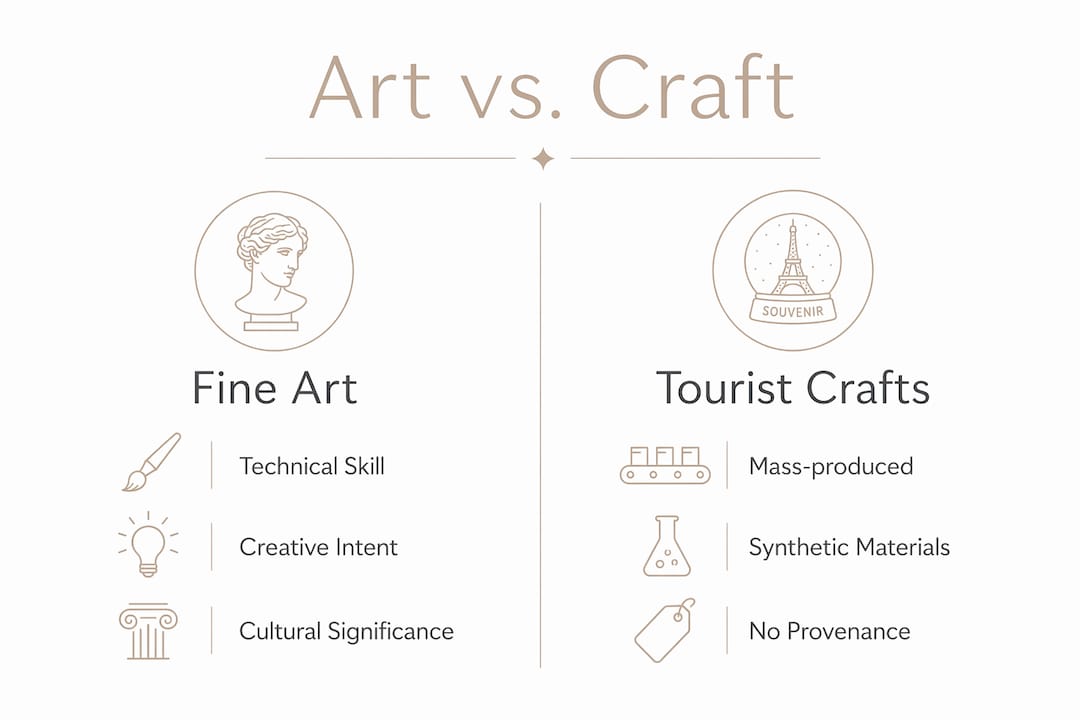
The standard definition of fine art centers on three pillars: technical skill, creative intent, and cultural significance. Mexican handwork, often referred to in academic and museum contexts as artes populares or folk fine art, meets all three. The distinction matters because it separates pieces with genuine artistic pedigree from mass-produced souvenirs that borrow visual motifs without the underlying knowledge.
The mestizo cultural synthesis at the heart of Mexican craft tradition is one of the most complex artistic fusions in the Western Hemisphere. Indigenous techniques, including backstrap loom weaving, natural dye preparation, and copal wood carving, merged with European artistic conventions introduced during the colonial period. The result was not imitation. It was a new visual language, one that carried the memory of pre-Columbian civilizations while absorbing new forms and materials.
Chiapas offers one of the clearest illustrations of this synthesis. More than 80% of small-scale artisans in the region are women, and their craft functions as a social and economic pillar for entire communities, not merely a retail product. This social weight is itself a marker of fine art status. Art that sustains communities, encodes identity, and transmits values across generations occupies a different category than decorative goods produced for export.
- Indigenous technique preservation: Backstrap loom weaving, natural indigo dyeing, and copal carving remain unchanged in their core methods, preserving pre-Columbian knowledge systems.
- European influence integration: Colonial-era introductions of silk thread, metal tools, and new color pigments were absorbed into existing craft traditions rather than replacing them.
- Community and economic function: In regions like Chiapas and Oaxaca, artisanal craft production is the primary economic activity, giving it a social gravity that elevates its cultural standing.
- Institutional recognition: UNESCO and national cultural bodies formally recognize multiple Mexican craft traditions as intangible cultural heritage, applying the same framework used for opera and classical architecture.
Pro Tip: When evaluating a piece of Mexican handwork for your collection, ask about the artisan's community of origin. Geographic provenance is not a marketing detail. It is a verifiable indicator of which specific tradition, technique, and cultural lineage the piece belongs to.
What technical mastery actually looks like in Mexican crafts
Technical complexity is the most misunderstood dimension of Mexican artisan craftsmanship. Collectors who encounter a hand-embroidered textile for the first time often underestimate the precision involved because the materials appear humble. The sophistication lies in the system, not the thread.
Yucatán alone has 30 distinct embroidery stitches out of 40 identified across Mexico. Each stitch carries a specific visual function and cultural meaning, acting as a visual language that preserves community history. This is not decorative variation. It is a codified system comparable to the notation systems used in classical music, where deviation from established form carries meaning.
In Oaxaca, the San Pedro Cajonos cooperative maintains 100% organic, hand-spun silk production by 12 master artisans. Every stage, from silkworm cultivation to final thread preparation, is controlled by hand using techniques unchanged for centuries. The resulting thread has a texture and luminosity that machine-spun silk cannot replicate. This is the kind of material specificity that fine art collectors recognize immediately when they handle the finished piece.
| Craft tradition | Technical benchmark | Why it matters to collectors |
|---|---|---|
| Yucatán embroidery | 30 documented stitches, each with distinct cultural meaning | Verifiable technical standard separating authentic work from imitation |
| Oaxacan silk weaving | 100% organic, hand-spun thread by master artisans | Material quality and process integrity unachievable through industrial methods |
| Talavera pottery (Puebla) | Strict mineral pigment formulas, two-firing process | UNESCO-recognized process with documented workshop lineage since 1824 |
| Tócuaro wood masks | Family workshop tradition since the 1940s, oral technique transmission | Provenance and generational continuity as markers of artistic authenticity |
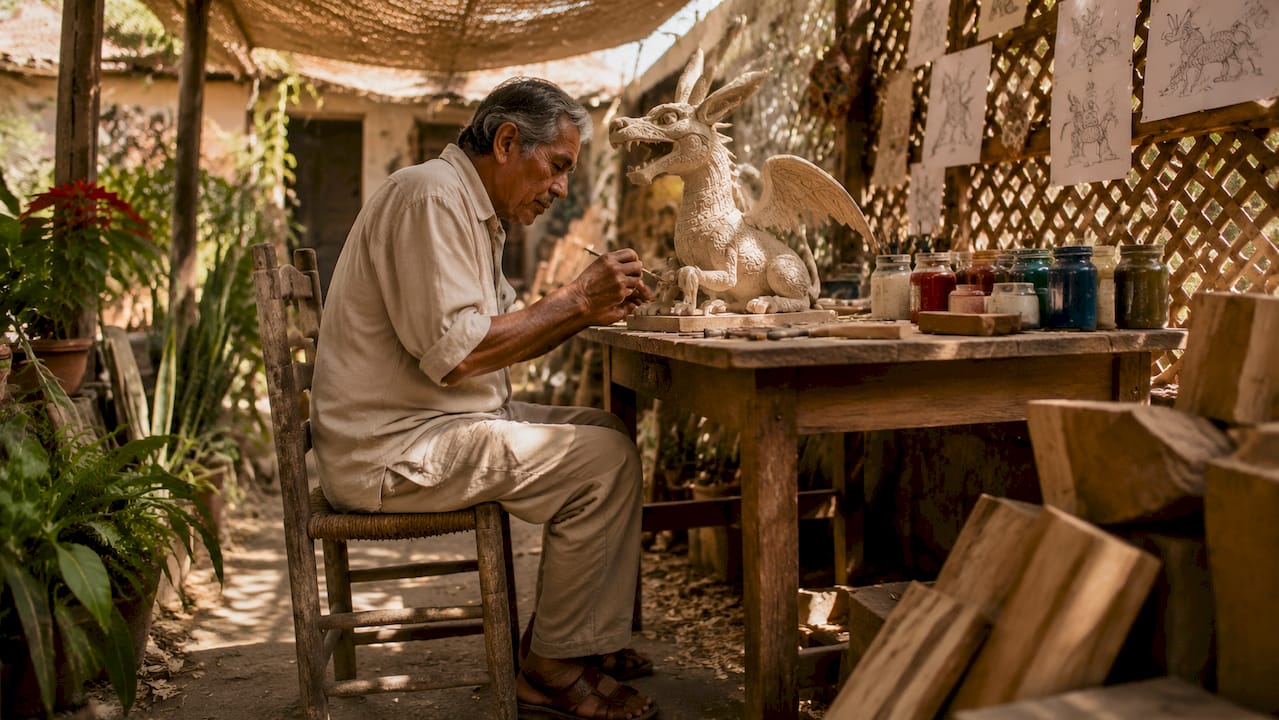
| Apaseo el Alto wood carving | Weeks to months per piece, full process control by single family | Time investment and process ownership equivalent to studio fine art practice |
Multi-generational workshops are the institutional backbone of this quality standard. Wood carving families in Apaseo el Alto spend weeks or months per piece, passing techniques orally and through direct practice. This is the same model used by Renaissance ateliers and Japanese lacquerware schools. The workshop is not a factory. It is a living curriculum.
Pro Tip: Mass-produced Mexican-style crafts are often identifiable by uniform stitch spacing, synthetic dyes that fade quickly, and the absence of minor irregularities. Authentic handwork carries the trace of the human hand in every imperfection. Those imperfections are the signature.
How history and institutions have recognized Mexican handwork as fine art
The fine art status of Mexican handwork is not a recent reframing. Colonial-era European courts prized Mexican featherwork mosaics as objects of wonder, placing them alongside Flemish tapestries and Italian goldsmithing in royal collections. Talavera pottery from Puebla reached European markets in the 17th century as luxury ceramic ware, valued for its mineral pigment formulas and precise firing standards.
The Uriarte Talavera workshop, operating continuously since 1824, represents one of the clearest examples of institutional continuity in Mexican fine art craft. The workshop has collaborated with contemporary artists while preserving the centuries-old ceramic process that UNESCO formally recognized as intangible cultural heritage. That combination of historical depth and contemporary relevance is precisely what serious collectors seek.
After the Mexican Revolution of 1910, the government made a deliberate choice to position indigenous craft traditions as the visual foundation of national identity. Women's labor and indigenous techniques were elevated as symbolic bodies of national visual language, placed alongside the murals of Diego Rivera and José Clemente Orozco in the cultural reconstruction of the country. This was not sentiment. It was state-level recognition that handwork carried the same cultural authority as monumental painting.
- Colonial-era European reception: Mexican featherwork and Talavera pottery entered royal European collections as luxury objects, establishing an early international fine art market for Mexican handwork.
- Post-Revolutionary national identity: The Mexican government formally integrated folk and artisanal arts into the national cultural program after 1920, giving them institutional parity with mural painting.
- UNESCO intangible heritage designations: Multiple Mexican craft traditions now carry formal international recognition, placing them in the same protected category as classical performing arts.
- Contemporary art market presence: Galleries in New York, Mexico City, and Paris regularly present Mexican artisanal work in fine art contexts, with collector prices reflecting that positioning.
The cultural significance of Mexican art has also shaped global interior design, with international designers drawing directly from Oaxacan textile patterns and Talavera color systems. This cross-disciplinary influence is another marker of fine art status. Traditions that shape other art forms occupy a generative position in the broader artistic ecosystem.
Fine art vs. folk art vs. tourist crafts: what actually separates them
The terminology around Mexican handwork is genuinely confusing, and that confusion costs collectors money and cultural understanding. Fine art, folk art, and tourist crafts are not interchangeable terms, even when they look similar on a market stall.
Fine art in the context of Mexican handwork refers to pieces created with documented technique, cultural intent, and artisan pedigree. The Tócuaro family workshops, producing wood masks since the 1940s, exemplify this category. Each piece innovates within a defined cultural form, which master artisans identify as the true marker of artistic sophistication. Innovation within constraint is the same principle that defines a Bach fugue or a Noh theater performance.
Folk art occupies a related but distinct space. It refers to traditional forms produced within a community context, where the primary purpose is cultural continuity rather than individual artistic expression. The line between folk art and fine art blurs when a master artisan brings personal vision to a traditional form. Weaver Xaneri Merino, who uses a traditional backstrap loom as a tool for LGBTQ+ visibility and healing in indigenous communities, is practicing fine art by any serious definition. The medium is traditional. The intent is entirely contemporary and personal.
Tourist crafts are a different category entirely. They borrow visual motifs from authentic traditions but are produced without the underlying technical knowledge, cultural context, or artisan pedigree. Cheap imports that mimic Yucatecan embroidery patterns threaten the economic survival of authentic artisans and dilute the visual language those stitches carry. For collectors, the practical test is straightforward: ask for the artisan's name, community, and training lineage. Authentic fine art Mexican handwork has a traceable human story behind it.
The importance of folk art as a vessel for cultural memory means that even pieces classified as folk art rather than fine art carry significant collector value when they are authentically made. The distinction is not a hierarchy of worth. It is a framework for understanding what you are acquiring and why it matters.
Key takeaways
Mexican handwork qualifies as fine art because it combines codified technical systems, cultural intent, multi-generational workshop pedigree, and formal institutional recognition that meet the same standards applied to any other fine art tradition.
| Point | Details |
|---|---|
| Technical standards are codified | Yucatán's 30 documented embroidery stitches and Oaxaca's organic silk process are verifiable benchmarks, not informal practices. |
| Cultural intent defines the category | Pieces created to preserve community identity and transmit cultural memory meet the intent standard of fine art. |
| Workshop lineage is provenance | Multi-generational family workshops like Tócuaro and Apaseo el Alto provide the same provenance function as a studio artist's biography. |
| Institutional recognition is formal | UNESCO intangible heritage status and post-Revolutionary government programs placed Mexican handwork in the same cultural tier as monumental art. |
| Tourist crafts are a separate category | Authentic fine art handwork has a traceable artisan, community, and technique. Mass-produced imitations do not. |
What 20 years of collecting Mexican handwork taught me
The argument I hear most often from skeptical collectors is that Mexican handwork is "craft, not art." I find that distinction increasingly difficult to defend when you hold a piece of Yucatecan embroidery and understand that the woman who made it spent years mastering a visual language her grandmother taught her, one that encodes her community's history in a way no written record does.
What changed my perspective was spending time with the workshops themselves. In Apaseo el Alto, I watched a carver spend three weeks on a single figure, making decisions about grain direction and surface texture that were as considered as anything I have seen in a contemporary sculpture studio. The craft traditions passed down through these families are not frozen in time. They evolve. The best artisans I have encountered are deeply aware of their tradition and equally aware of how they are pushing it forward.
The socio-political dimension is something collectors rarely discuss, but it is inseparable from the work's meaning. When an indigenous weaver uses a backstrap loom to assert visibility for her community, the object she produces is not decorative. It is a statement. Ignoring that dimension is like collecting Goya's war paintings for their color palette and missing the point entirely.
My honest recommendation to collectors is this: invest in understanding before you invest in acquiring. The cultural significance of Mexican art is not background information. It is the work itself.
— Ernesto
Discover authentic Mexican fine art craftsmanship with Createdecorus
At Createdecorus, we work directly with master artisans whose craft traditions carry the depth and pedigree this article describes. Every piece in our collection is made Hecho en México by artisans who have trained within living workshop traditions, not production lines.

Our handcrafted luxury pillows bring the texture and visual language of Mexican fine art into your living space in a form that is both beautiful and deeply considered. For collectors and interior designers seeking access to our full artisan collection, our trade program offers curated selections that honor both craftsmanship and cultural heritage. Explore the full collection and bring a piece of genuine Mexican artisan tradition into your home.
FAQ
What makes Mexican handwork qualify as fine art?
Mexican handwork qualifies as fine art through codified technical standards, cultural intent, and formal institutional recognition, including UNESCO intangible cultural heritage designations. Pieces created by master artisans with documented technique and community pedigree meet the same criteria applied to painting or sculpture.
How is authentic Mexican handwork different from tourist crafts?
Authentic fine art Mexican handwork has a traceable artisan, specific community of origin, and verifiable technique lineage. Tourist crafts borrow visual motifs without the underlying cultural knowledge or technical standards that define the authentic tradition.
Why is folk art celebrated alongside fine art in Mexican culture?
The post-Revolutionary Mexican government formally positioned folk and artisanal arts as the visual foundation of national identity, giving them institutional parity with mural painting. This recognition established folk art as a carrier of cultural memory with the same authority as any other fine art form.
Which Mexican craft traditions are recognized as intangible cultural heritage?
Talavera pottery from Puebla and Tlaxcala, Yucatecan embroidery, and several weaving traditions from Oaxaca and Chiapas hold UNESCO intangible cultural heritage status. This formal recognition places them in the same protected category as classical performing arts traditions worldwide.
How should collectors evaluate the quality of Mexican handwork?
Collectors should ask for the artisan's name, community of origin, and training lineage, then look for material indicators like natural dye variation, minor hand-made irregularities, and technique-specific details such as specific stitch types or firing marks. These are the verifiable markers that separate fine art handwork from mass-produced imitations.