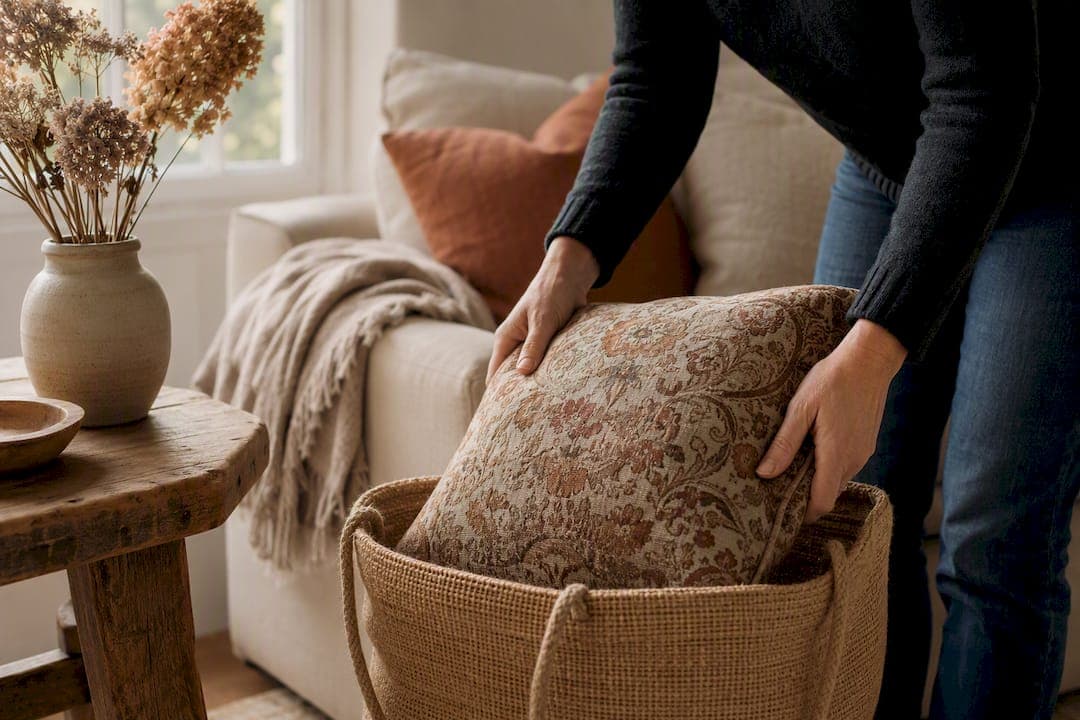
To keep seasonal cushions usable year after year, follow one rule: clean them completely, be certain they are 100% dry, then store them in breathable protection inside a dry, ventilated spot. Skip any step and you invite mold, flattened filling, or a musty smell that never fully leaves the fabric. Getting this right when you guardar cojines temporada is less about effort and more about sequence.
Surface dampness can hide moisture trapped deep in the filling, so a quick touch test before bagging anything matters more than most people think. Press the center of the cushion firmly. If it feels cool or spongy rather than dry throughout, it needs more air time before it goes anywhere near a bag or bin.
Do:
- Wash or spot-clean covers before storage.
- Air-dry fully, which usually takes one to two days.
- Use breathable bags or ventilated bins.
Don't:
- Store anything even slightly damp.
- Rely on airtight, vacuum-sealed bags for long-term storage.
- Stack heavy furniture or boxes on top of stored inserts.
Key Takeaways
Cushions survive year after year only when they're fully clean, completely dry, and stored in breathable protection inside a dry, ventilated space.
| Point | Details |
|---|---|
| Clean before storing | Vacuum, wash removable covers per label, and spot-treat stains with baking soda or vinegar solutions. |
| Confirm complete dryness | Air-dry 24 to 48 hours and press-test the center before packing anything away. |
| Choose breathable containers | Use cotton or linen bags and ventilated bins instead of airtight vacuum-sealed options. |
| Pick the right location | Store in a dry closet, attic, or garage, and avoid damp basements or uninsulated sheds. |
| Inspect before reuse | Air out, check seams and zippers, and replace cushions with deep-set mold or torn seams. |
Table of Contents
- How to Clean Cushions Before You Store Them for the Season
- How Long Should Cushions Air-Dry Before Storage?
- Choosing the Right Bags, Bins, or Chests for Cushion Storage
- Where Should You Store Cushions During the Off-Season?
- What Mistakes Ruin Cushions During Storage?
- How to Prep Cushions Before Bringing Them Back Out
- Caring for Handcrafted Cushions: The Createdecorus Approach
- What Owners of Premium Cushions Get Wrong
- Frequently Asked Questions
- Sources
How to Clean Cushions Before You Store Them for the Season
Check the care label first. Removable covers usually tolerate a machine wash on a gentle cycle, while foam or fiber inserts almost always need spot cleaning instead. Mixing up the two is how good filling ends up waterlogged or misshapen.
Here's the routine that works for most outdoor and indoor-outdoor cushions:
- Brush or vacuum loose dirt, pollen, and debris off every surface, including the underside.
- Wash removable covers in mild detergent following the label, then reshape while damp.
- Spot-clean non-removable cushions with a soft cloth, mild detergent, and water, working in small sections rather than soaking the whole piece.
- Treat stains individually. A baking soda paste lifts grease, while a diluted vinegar solution handles coffee or wine marks. Test any stain treatment on a hidden seam first, since some artisan dyes react differently than mass-produced fabric.
- Rinse thoroughly. Leftover detergent residue attracts dirt faster the next time cushions come out of storage.
Persistent mold, deep-set staining, or delicate hand-woven textiles are where a professional cleaner earns their fee. Trying to bleach out a mildew patch on a handwoven cover often does more damage than the mildew itself.
Pro Tip: *Keep a small bottle of diluted vinegar solution and a soft-bristle brush in your storage kit.
How Long Should Cushions Air-Dry Before Storage?
Plan for a full 24 to 48 hours in a shaded, ventilated spot. Direct sun speeds up surface drying but can fade fabric and doesn't actually pull moisture out of thick foam any faster. Flip cushions every few hours so air reaches both sides evenly.
Humidity, cushion thickness, and airflow all affect how long this really takes:
- Thin outdoor cushions dry fastest, sometimes in a single day.
- Thick foam inserts or memory foam blends often need the full 48 hours.
- Humid climates or enclosed patios slow the process considerably.
Run the press test again before storing. If the center still feels cool or damp, give it another round of air time, ideally combining shade with a breeze rather than direct sun, which dries the surface while trapping moisture underneath.
Choosing the Right Bags, Bins, or Chests for Cushion Storage
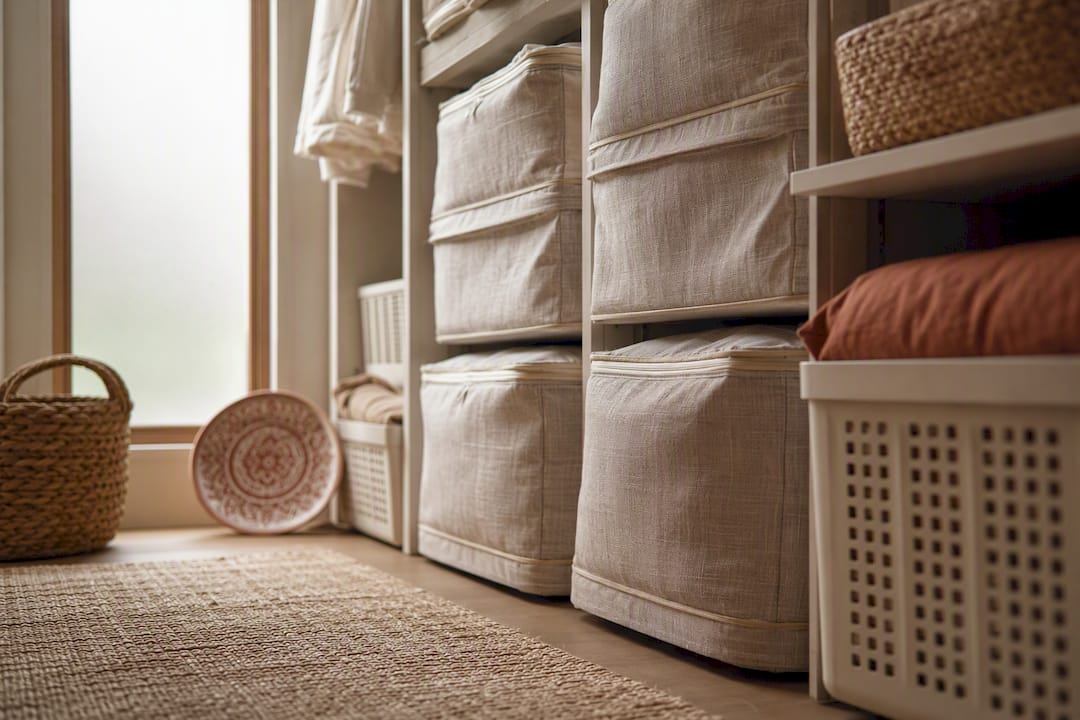
Breathable materials beat airtight ones every time for long-term cushion storage. Cotton or linen storage bags let residual moisture escape gradually, while airtight vacuum-sealed bags trap that same moisture inside, creating a small greenhouse effect that promotes mildew even on cushions that felt dry when packed. Ventilated plastic bins with mesh panels offer a similar advantage while adding some structure and pest protection.
If indoor storage isn't an option, an outdoor chest can work, provided it has the right features:
- Raised feet to keep the base off wet ground.
- Ventilation gaps or vents so trapped air can circulate.
- A solid gasket that keeps rain out without sealing the interior completely airtight.
A few small additions go a long way. Silica gel packets absorb residual humidity, cedar sachets discourage moths and other pests, and labeling each bag by cushion size saves you from unpacking three bins looking for one seat cushion next spring. Avoid cramming inserts into bags smaller than their natural shape. Memory foam and specialty fills that stay compressed for months can lose their original loft permanently.
Where Should You Store Cushions During the Off-Season?
Location matters as much as the container. A dry, ventilated closet, an insulated attic, or a garage that stays reasonably dry all work well. Damp basements and uninsulated garden sheds are the two worst offenders, since both trap moisture and swing wildly in temperature.
- Choose climate-controlled interior space first, if you have it. Closets and finished attics protect cushions from both humidity and temperature extremes.
- If outdoor storage is unavoidable, place cushions on a pallet or raised shelf inside a ventilated, waterproof chest, and crack the lid occasionally on dry days to let trapped air out.
- Save space smartly. Store covers separately from inserts, stack cushions with light supports between layers rather than piling them directly, and use shelving instead of compressing everything into one box.
A home organization system built for seasonal rotation can make this far easier if you're working with limited closet space, especially for households storing multiple sets of seasonal decor at once.
What Mistakes Ruin Cushions During Storage?
Most cushion damage traces back to the same handful of avoidable errors.
- Storing anything damp. Even a slightly humid cushion, sealed in a bag, becomes a breeding ground for mold within weeks.
- Using airtight vacuum bags for months at a time. They compress volume, but they also trap the exact moisture you worked to dry out.
- Stacking heavy boxes or furniture on top of cushions. Foam and fiber fills that stay compressed too long lose their shape permanently.
- Reaching for bleach or abrasive cleaners on stubborn stains. These often strip color and weaken fabric fibers faster than the stain itself would.
Pro Tip: If you find mildew after opening a stored cushion, don't panic and don't reach for bleach. Air it outside in indirect sunlight first, then treat with a mild vinegar solution. Save bleach only for cases a professional cleaner recommends.
How to Prep Cushions Before Bringing Them Back Out
Before cushions go back onto furniture, give them a few hours of open air. This releases any closed-in smell and lets you inspect them properly.
- Air them out for several hours in a shaded, ventilated area.
- Inspect seams, zippers, and stuffing for wear that storage might have hidden.
- Refresh with a light vacuum and spot clean, then re-fluff inserts by hand to restore loft. Swap in fresh silica gel packets if you're storing again soon.
Watch for red flags that mean it's time to replace rather than reuse: mold that's worked its way into the foam itself, an odor that survives a full airing, or seams that have pulled apart at the stress points. A pre-season inspection catches most of these before they become a bigger repair.
Caring for Handcrafted Cushions: The Createdecorus Approach
Artisan cushions ask for a gentler hand than mass-produced ones. Hand-stitched trims, natural fiber blends, and detailed zipper work all suffer under heavy compression or harsh cleaning agents in ways synthetic fabrics simply don't. We recommend removing decorative trims where possible before washing, and never packing an artisan cushion into a bag sized for something smaller.
- Store premium inserts in a climate-controlled interior space, never a damp shed or uninsulated garage.
- Keep seasonal covers in labeled, breathable bags, separate from the inserts they belong to.
- Avoid stacking anything heavy on artisan-filled cushions, since memory foam and natural fills hold their shape best when left uncompressed.
Createdecorus builds its pillows with removable covers and premium fills specifically because that construction makes seasonal care simpler. You wash or store the cover on its own timeline and keep the insert protected separately, which cuts down on both storage volume and wear.
Pro Tip: Keep one core set of quality inserts year-round and rotate only the covers by season. It is the same space-saving approach professional stylists use, and it protects the part of the cushion that costs the most to replace.
What Owners of Premium Cushions Get Wrong
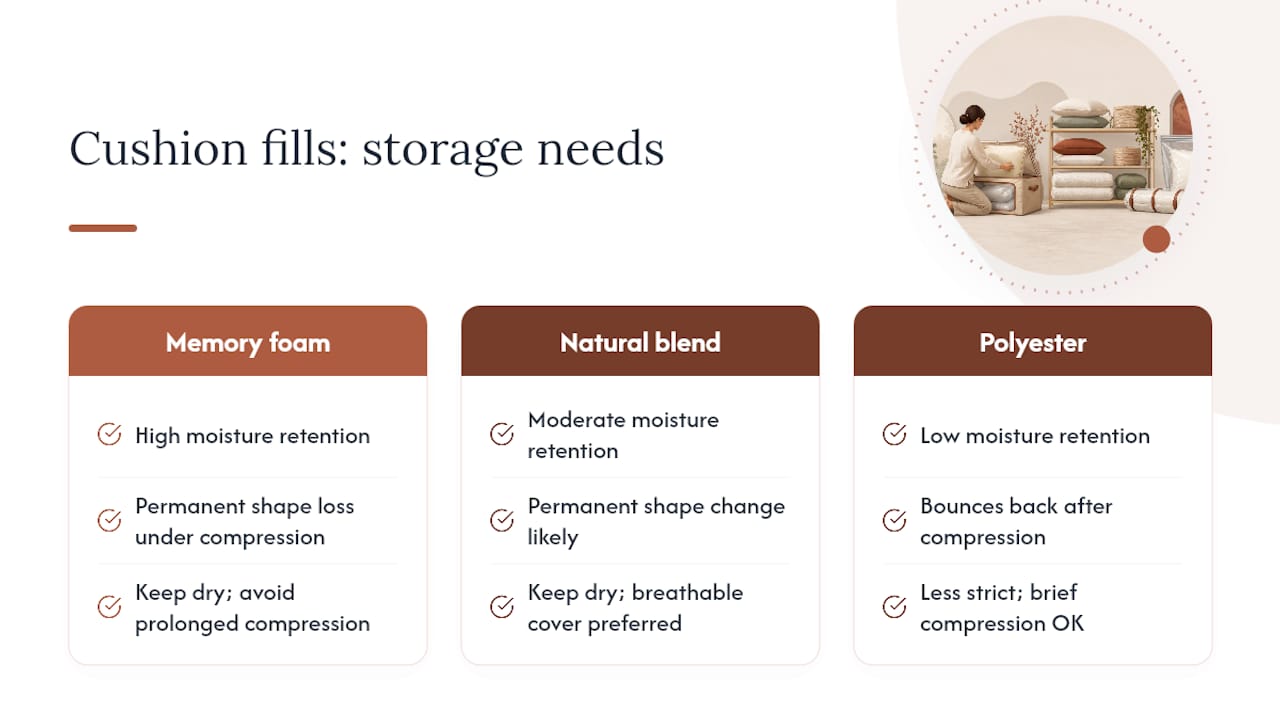
Most storage advice treats every cushion the same, and that's where it falls short. A mass-produced polyester cushion and a hand-stitched artisan piece don't age the same way, and they shouldn't be stored the same way either. The fill matters more than most guides admit. Memory foam and natural fiber blends hold moisture differently than standard polyester, and they lose their shape permanently under sustained compression in a way cheaper filling often bounces back from.
The bigger mistake I see is treating storage as an afterthought rather than part of the purchase decision. If you buy cushions with removable covers from the start, seasonal care stops being a chore and becomes a five-minute task twice a year. Prioritize construction that separates cover from insert before you worry about which bag to buy. The bag matters less than what you're putting inside it, and readers who skip that step end up replacing perfectly good inserts because the cover trapped moisture against them for six months straight.
Frequently Asked Questions
How do I know if my cushions are dry enough to store? Press firmly on the center of the cushion. If it feels cool, spongy, or damp rather than fully dry, give it another 24 hours of air time before storing it.
Can I use vacuum-sealed bags to save space when I guardar cojines temporada? Avoid them for long-term storage. Airtight vacuum bags trap residual humidity inside, which promotes mildew even in cushions that seemed dry when packed.
What's the best material for storing cushions long-term? Breathable cotton or linen bags and ventilated plastic bins outperform airtight containers because they let trapped moisture escape gradually instead of building up.
Is it safe to store cushions in a garage or attic? Yes, as long as the space stays dry and reasonably ventilated. Avoid damp basements and uninsulated sheds, where humidity and temperature swings damage both fabric and filling.
Do I need to clean cushions before storing them, even if they look fine? Yes. Dirt, oils, and moisture that aren't visible can still cause stains, odors, and mold to develop while the cushion sits in storage for months.
Sources
- Cómo guardar y proteger los cojines de exterior en invierno
- Cómo limpiar y guardar cojines de exterior después de verano
- How to Store Outdoor Cushions and Pillows During the Off Season | Coverstore™
- Dónde guardar los cojines y muebles de exterior cuando acabe la temporada - Grupo La Nave