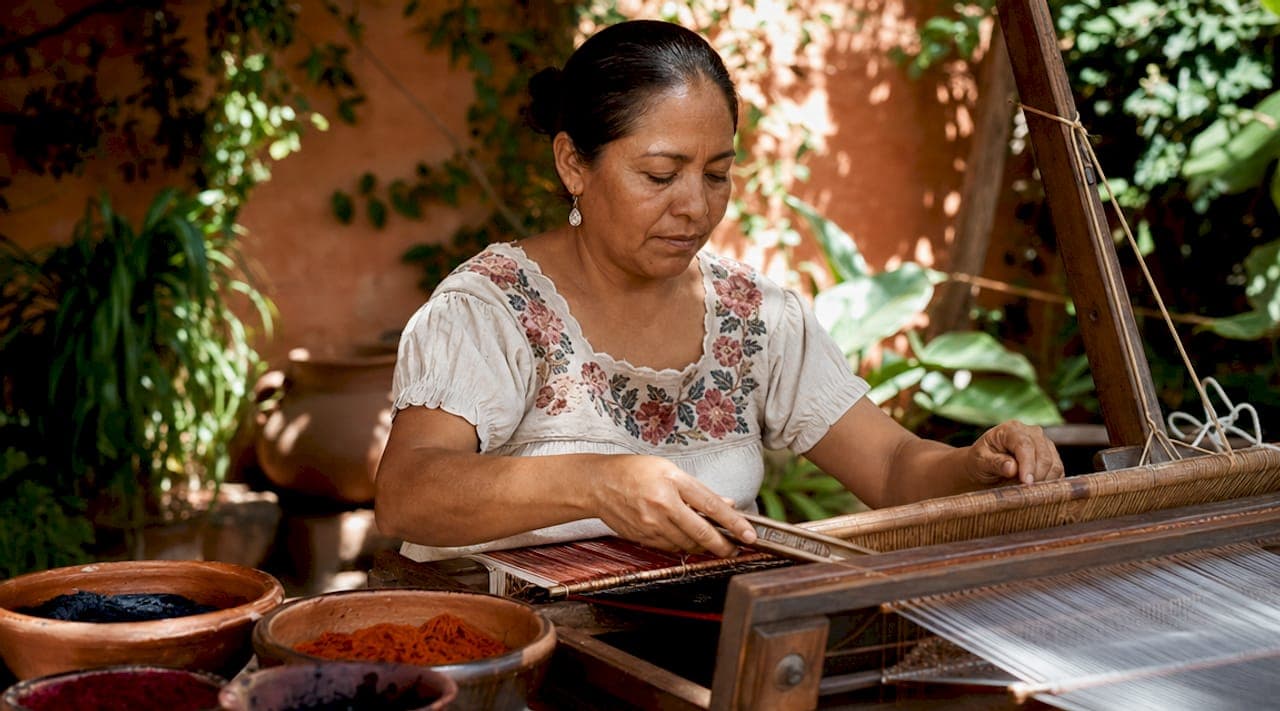
Handcrafted Mexican goods are defined by their capacity to carry human presence, cultural memory, and generational knowledge into every object they become. This quality, which scholars of material culture call "meaningful material culture," explains why handcrafted Mexican goods feel soulful in a way that mass-produced items simply cannot replicate. Each piece integrates centuries of indigenous technique, colonial artistic influence, and the irreplaceable mark of a human hand. At Createdecorus, we believe this soulfulness is not accidental. It is the direct result of who makes these objects, how they are made, and what they mean to the communities that produce them.
Why handcrafted Mexican goods feel soulful: the roots of the mestizo aesthetic
The emotional depth of Mexican handcrafted goods begins with a cultural fusion that is unique in the world. Indigenous and colonial techniques blend to create what is known as the mestizo aesthetic, a visual and symbolic identity that belongs to no single tradition but honors both. This is not a compromise. It is a creative synthesis that took centuries to develop and continues to evolve today.
The mestizo aesthetic carries specific symbolic motifs that give each piece its layered meaning. These symbols are not decorative choices made at random. They are inherited languages, passed from one generation to the next with deliberate care.
Common motifs embedded in Mexican handcrafted goods include:
- Protection symbols drawn from pre-Columbian cosmology, such as the Ojo de Dios (Eye of God), woven into textiles to guard the home
- Celebration of life expressed through vibrant color combinations rooted in Día de los Muertos traditions and Huichol yarn art
- Wisdom and continuity represented in geometric patterns found in Zapotec and Mixtec weaving traditions from Oaxaca
- Natural world reverence seen in Talavera ceramics from Puebla, where flora and fauna motifs connect the domestic object to the living earth
These motifs do more than decorate. They situate the object within a living cultural conversation, one that connects the person holding it to communities and histories stretching back hundreds of years. That connection is precisely what makes Mexican home goods feel emotionally rich in a way that a factory-produced vase or pillow never could.
How generational artisan legacies make every piece irreplaceable
The soul of handmade goods is inseparable from the hands that make them. Artisan families in Mexico pass their techniques across generations, with many workshops representing three or more generations of continuous practice. This is not simply a matter of skill transfer. It is the transmission of an emotional relationship with the craft itself.
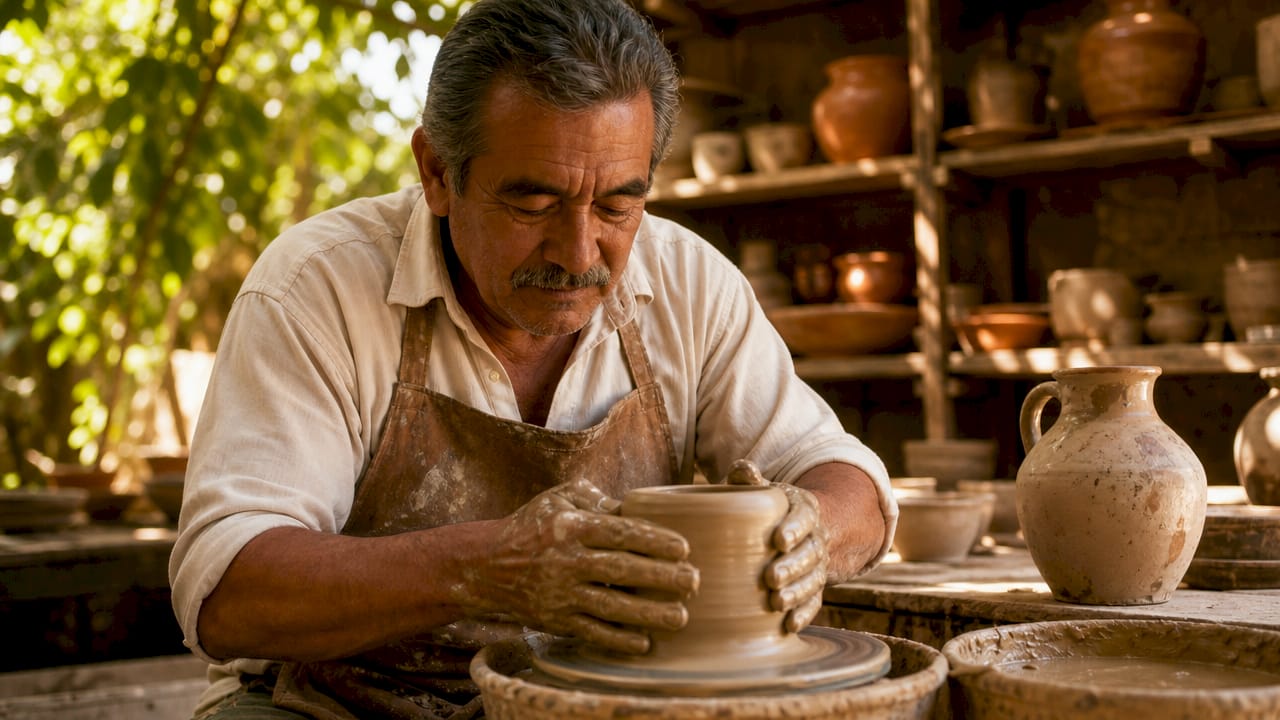
Artisan Francisco Girón of Apaseo el Alto, Guanajuato, represents this living legacy directly. His family pride and emotional history are embedded in every wood carving he produces, with years of dedication shaping not just his technique but his identity as a maker. When you acquire one of his pieces, you participate in the continuity of that legacy. The object becomes a point of contact between your life and his.
The human hand also produces something that no machine can: genuine uniqueness. Every handcrafted piece is non-identical, shaped by the specific pressure, rhythm, and intention of the artisan on that particular day. This is why the emotional connection to handmade objects feels so personal. You are not holding a copy. You are holding the original.
Pro Tip: When purchasing handcrafted Mexican goods, ask about the artisan's name and region of origin. Knowing the provenance of a piece transforms it from a decorative object into a personal relationship with a specific maker and community.
Third-generation artisans consistently express that every piece is an emotional extension of family pride and history. This emotional investment is not metaphorical. It is the practical reality of craft traditions where reputation, livelihood, and identity are all woven into the same object. Understanding why Mexican craftsmanship is passed down generations helps clarify why these goods carry a weight of meaning that imported, mass-produced alternatives simply cannot offer.
The irregularities you notice in a handwoven textile or a hand-thrown ceramic bowl are not flaws. They are signatures. Each variation is a mark of human artisan presence, a record of the specific moment and person who brought that object into existence.
What is material honesty, and why does it matter for Mexican crafts?
Material honesty is a design philosophy that treats the natural properties of a material as features rather than problems to be hidden. In Mexican craft traditions, this philosophy has always been present, though contemporary designers now give it explicit name and theory. Mexican design prioritizes material honesty by deliberately embracing irregularities, preserving the texture of natural fibers, and resisting the urge to standardize what the hand and material produce together. This resistance to standardization is also a resistance to the homogenizing pressure of globalization.
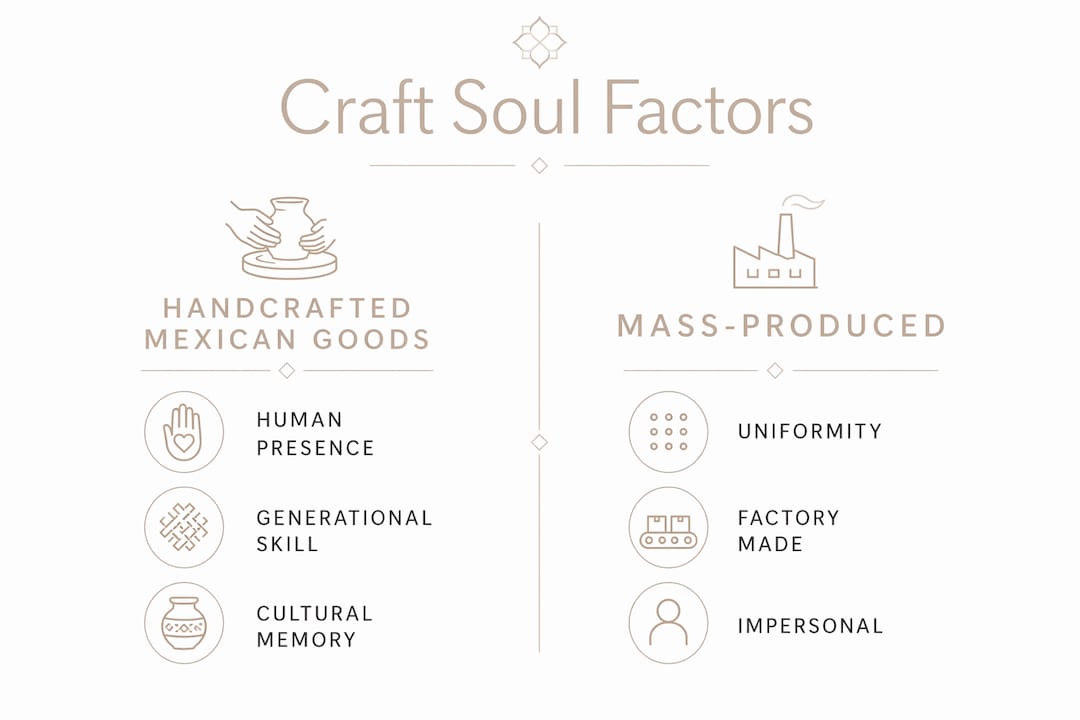
The contrast between mass-produced and handcrafted goods becomes clearest when you examine material culture directly:
| Quality | Handcrafted Mexican goods | Mass-produced alternatives |
|---|---|---|
| Texture | Natural, variable, tactile | Uniform, synthetic, smooth |
| Imperfections | Intentional, valued as authenticity | Eliminated by machine precision |
| Cultural narrative | Embedded through motif and provenance | Absent or generic |
| Emotional resonance | Deep, personal, generational | Minimal, transactional |
| Longevity of meaning | Grows over time with use | Diminishes with familiarity |
Contemporary design collaborations reinforce this philosophy rather than diluting it. The partnership between design studio davidpompa and the 1050° cooperative ceramic series is a precise example. This collaboration honors ancestral ceramic techniques while introducing modern material innovation, producing objects that feel rooted in tradition and alive in the present. The result is authentic craft rather than a mass-produced imitation wearing the costume of heritage.
Projects like the Oaxacan silk sanctuary of San Pedro Cajonos demonstrate the same principle at a community scale. Weavers there produce 100% organic silk goods using ancestral methods, maintaining a narrative heritage that makes each textile a document of place, time, and human skill. These are not simply beautiful objects. They are records of a living culture choosing to preserve itself. The way Mexican craftsmanship influences global design is rooted in exactly this commitment to particularity over uniformity.
How Mexican handcrafted goods enrich personal spaces
The emotional connection to handmade objects becomes most tangible when these pieces enter your home. Mexican interior design acts as a living canvas where handmade objects function as storytellers, balancing visual exuberance with genuine comfort. This is not about creating a themed room or replicating a specific regional aesthetic. It is about introducing objects that carry meaning into spaces that would otherwise feel anonymous.
Handcrafted Mexican goods work across a wide range of decor contexts because their soulfulness is not dependent on a single visual style. Consider how different object types contribute to atmosphere:
- Textiles and pillows introduce tactile warmth and color depth, with hand-embroidered or hand-woven surfaces that reward close attention
- Talavera ceramics from Puebla bring regional identity and centuries of craft history to kitchen and dining spaces
- Wood carvings from Apaseo el Alto or Oaxacan alebrije figures introduce narrative and whimsy without sacrificing craftsmanship
- Hand-blown glass lighting from Jalisco creates ambient warmth that no factory fixture can replicate
Each of these object types carries provenance that connects it to a specific region and artisan legacy. Generic imports lack this layer entirely. The difference between a Talavera bowl from Puebla and a ceramic bowl painted to look like Talavera is not merely aesthetic. It is the difference between an object with a story and an object without one.
The practical result is that handcrafted Mexican pieces transform a house into a personal sanctuary. They create visual depth that changes with the light, tactile surfaces that invite touch, and symbolic content that rewards curiosity. For guidance on integrating these pieces without overwhelming a contemporary interior, the approach of pairing Mexican crafts with contemporary furniture offers a grounded framework. The goal is always balance: enough cultural richness to feel alive, enough restraint to feel like home.
Key takeaways
Handcrafted Mexican goods feel soulful because they carry human presence, cultural memory, and generational artisan knowledge that mass-produced objects are structurally incapable of replicating.
| Point | Details |
|---|---|
| Mestizo aesthetic as foundation | Indigenous and colonial techniques fuse to create symbolic motifs that embed cultural meaning in every piece. |
| Generational legacy creates uniqueness | Artisan families passing techniques across 3+ generations produce objects that are emotional extensions of lived history. |
| Irregularities signal authenticity | Variations in texture and form are intentional marks of human presence, not manufacturing defects. |
| Material honesty resists homogenization | Deliberate preservation of natural material traits keeps Mexican craft culturally particular in a globalizing market. |
| Provenance deepens emotional resonance | Knowing the region and artisan behind a piece transforms it from decoration into a personal relationship with a living legacy. |
What I've learned from years of living with handcrafted Mexican goods
The most common mistake people make when approaching Mexican handcrafted goods is treating the price as the primary measure of value. I have seen this repeatedly. Someone compares a hand-embroidered pillow from Oaxaca to a machine-made version at a third of the cost and focuses on the difference in dollars rather than the difference in what they are actually acquiring.
What you are acquiring with an authentic handcrafted piece is not just an object. It is a relationship with a specific person's skill, a specific community's history, and a specific tradition's survival. That is not a marketing claim. It is a material fact. The irregularity in the weave, the slight asymmetry in the glaze, the variation in the dye. These are not imperfections. They are the evidence that a human being made this for you.
I also think the conventional wisdom about "matching" decor misses something important. Handcrafted Mexican goods do not need to match. They need to belong. There is a difference. A piece that carries genuine cultural weight will find its place in almost any interior because it brings something that manufactured objects cannot: a sense that the room is inhabited by more than furniture. It is inhabited by stories.
The brands and artisans doing this work with integrity, including Createdecorus, understand that luxury is not about excess. It is about the quality of attention paid to every detail, from the selection of materials to the relationship with the artisan who shapes them. That attention is what you feel when you hold something truly handcrafted. It is what makes the object worth keeping for a lifetime.
— Ernesto
Bring the soul of Mexican artisanship into your home
At Createdecorus, every piece in our collection is a direct expression of the artisan heritage and material honesty this article describes. We work with skilled Mexican artisans whose families have practiced their craft across generations, producing luxury home accents that carry genuine cultural weight and tactile richness.

Our handcrafted luxury pillows are designed to bring that soulful quality into your living space without compromise. Bold colors, rich textures, and the unmistakable warmth of Hecho en México craftsmanship make each piece a gesture of care for your home. If you are ready to explore the full range of designs, our complete pillow collection offers an accessible entry point into authentic Mexican artisanal luxury. For those looking to incorporate these pieces at scale, our trade program supports interior designers and hospitality professionals who share our commitment to cultural authenticity. You can also explore ideas for warm, cohesive interiors that let handcrafted pieces speak for themselves.
FAQ
Why do handcrafted Mexican goods feel more personal than mass-produced items?
Handcrafted Mexican goods carry the direct mark of a specific artisan's hand, making every piece non-identical and rooted in a living human legacy. This personal origin creates an emotional connection that factory production cannot replicate.
What does "material honesty" mean in Mexican craft traditions?
Material honesty is the practice of preserving the natural properties and irregularities of a material rather than standardizing them away. In Mexican craftsmanship, this philosophy treats texture, variation, and imperfection as evidence of authentic human making.
How does provenance affect the soulfulness of Mexican decor?
Provenance connects an object to a specific region, artisan, and generational tradition, adding layers of story that generic imports lack entirely. Talavera ceramics from Puebla or wood carvings from Apaseo el Alto carry this regional identity as an intrinsic part of their value.
Are the irregularities in handcrafted Mexican goods intentional?
Yes. Irregularities in handwoven textiles, hand-thrown ceramics, and carved wood are recognized as marks of artisan presence and artistic sensitivity, not manufacturing errors. They are what distinguish an authentic handcrafted piece from a machine-made imitation.
How can I integrate handcrafted Mexican goods into a contemporary interior?
Introduce individual pieces with strong provenance and tactile quality rather than attempting to recreate a regional theme. A single hand-embroidered textile or a Talavera ceramic piece brings cultural depth to a contemporary space without overwhelming it, and you can also personalize your home with art to build a layered, emotionally resonant interior over time.