The best mayoristas decoración artesanal México combine four channels: trade fairs like ENART, direct visits to regional artisan workshops, specialized manufacturers offering national shipping, and government-backed programs like FONART that vouch for authenticity. Create Decorus, a Mexico-based supplier of handcrafted luxury home accents, offers trade pricing and customization for retailers and designers ready to place a wholesale account.
TL;DR:
- Trade fairs like ENART are the fastest way to meet multiple vetted Mexican artisans and negotiate custom project pricing directly.
- Regional expertise simplifies sourcing, with Tlaquepaque for ceramics, Oaxaca for textiles, and Michoacán for copper, streamlining regional selection.
- Quality control relies on inspecting samples for specific craftsmanship details, verifying workshop authenticity, and requesting process documentation beforehand.
- Wholesale lead times typically span two to three months, including sample approval, production, and shipping, with larger or customized orders taking longer.
- Create Decorus offers a wholesale program with customized finishes, real samples, and nationwide shipping, aiming for reliable, authentic Mexican handcrafted decor.
Table of Contents
- Where to Source Wholesale Handcrafted Decor in Mexico
- How to Vet a Mexican Supplier Before You Commit
- How Wholesale Ordering Works Once You've Found a Supplier
- Create Decorus: A Direct Wholesale Option Built in Mexico
- How Long Does Wholesale Sourcing Take in Mexico?
- What Does Wholesale Artisanal Decor Actually Cost?
- Which Sourcing Route Fits Your Business
- How Create Decorus Fits Into Your Sourcing Strategy
- Official Resources to Verify Suppliers and Fair Dates
- Sources
- FAQ
Where to Source Wholesale Handcrafted Decor in Mexico
Every retailer we talk to asks the same question first: where do the good suppliers actually show up? The honest answer is that they rarely advertise on page one of a search engine. They show up at fairs, in workshop courtyards, and through direct messages that never touch a shopping cart.
Trade fairs remain the fastest way to meet multiple vetted suppliers in one weekend. ENART gathers more than 150 exhibitors and thousands of buyers, which makes it one of the most efficient venues in the country for discovering artisan-made decor at scale. Buyers don't just place orders there. Event coverage notes that wholesalers use ENART to build long-term supplier relationships and negotiate project pricing, the kind of arrangement that rarely happens over email on a first contact.
Beyond the fair circuit, Mexico's craft geography does a lot of the sorting for you. Certain regions specialize so heavily in one technique that sourcing becomes almost intuitive once you know where to look:
- Tlaquepaque and greater Jalisco for ceramics, blown glass, and carved wood furniture
- Dolores Hidalgo for hand-painted talavera and azulejo tile work
- Oaxaca for textiles, alebrijes, and black clay pottery
- Michoacán for copper work and lacquered furniture
Specialized studios and manufacturers fill the gap between artisan workshops and mass production. Many of these businesses ship nationally and accept custom orders for resellers, with some even including delivery in their pricing for domestic orders. A tile maker in Dolores Hidalgo, for instance, advertises custom colors and formats built to a project's exact specifications, shipped anywhere in the country.
Online B2B directories offer speed, letting you browse dozens of catalogs in an afternoon. What they can't offer is the tactile check that catches uneven glazes or thin stitching before a container ships.
How to Vet a Mexican Supplier Before You Commit
Quality control on handcrafted goods works differently than it does on factory stock. Every piece carries small variations by design, so your job is to separate intentional character from actual defects.
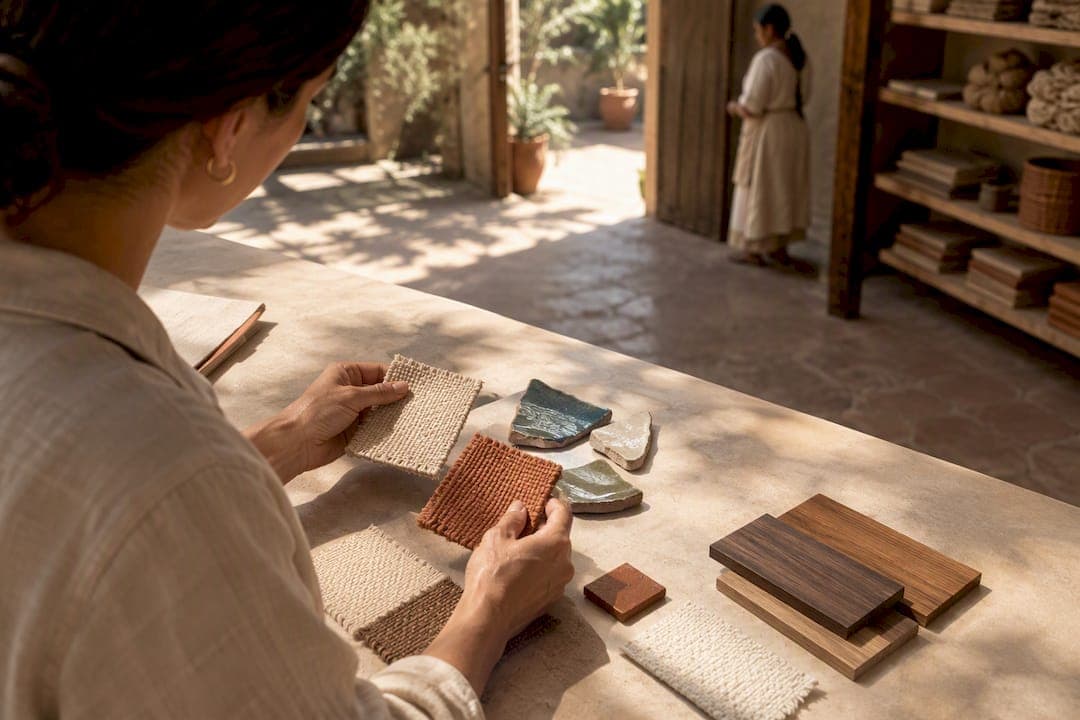
Start with the physical sample. Check stitch density and seam strength on textiles, glaze consistency on ceramics, and joint tightness on woodwork. Ask whether the finish you're holding matches what will ship in bulk, since natural materials can shift between small batches and production runs.
Authenticity indicators matter almost as much as construction. Ask for photos of the actual workshop, not just the finished product, and ask which traditional technique the piece uses by name. A supplier who can explain their process in detail is usually the same supplier who can reproduce it consistently.
Here's a short process for requesting and evaluating your first sample:
- Request one to three sample units along with written pricing tiers and minimum order quantities.
- Ask for the supplier's standard lead time on both a small test order and a full wholesale batch.
- Confirm the return or replacement policy in writing before any money changes hands.
- Check for institutional trust signals: FONART support programs, a booth history at ENART, or documented certification.
- Photograph the sample against your brand's finish standards so future shipments have a benchmark.
Pro Tip: Bring a written checklist to any in-person meeting or fair booth, covering material, stitch count, backing, and color swatch. Buyer guidance from event organizers consistently points to a prepared sample checklist as the single biggest time-saver when comparing several suppliers in one day.
Trust signals from FONART and INAH matter here too. Their joint push to expand verified points of sale gives buyers another way to confirm an artisan's provenance beyond a supplier's own claims.
How Wholesale Ordering Works Once You've Found a Supplier
First contact should cover four things: pricing tiers by volume, customization options, production timelines, and packaging standards for retail shelves. Skip any of these and you'll find out the hard way, usually after the invoice arrives.
Negotiation on handcrafted goods works differently than negotiating a factory contract. Volume discounts exist, but so does room to negotiate exclusivity on a pattern or color, and design rights if you're commissioning something original. Direct contact tends to outperform catalog request forms here. Manufacturers and workshops often respond better to a direct message than a generic web form, and a phone call or WhatsApp thread usually produces a sharper quote than an automated inquiry.
Logistics inside Mexico typically follow one of two models: the supplier arranges national shipping and folds it into the unit price, or they hand off to a carrier and you cover freight separately. Ask specifically about insured shipping for fragile categories like ceramics and glass, since standard coverage often falls short of full replacement value.
Payment norms vary by supplier size. Smaller workshops frequently want a deposit before production and the balance on delivery. Larger manufacturers may offer net terms once you've placed two or three orders. A few practical steps to build toward steady replenishment:
- Place a small test order before committing to a full container or truckload.
- Request a formal invoice with tax details for your own bookkeeping.
- Lock in a repeat-order schedule once quality and timing prove consistent.
- Revisit pricing tiers annually, since material costs shift.
Create Decorus: A Direct Wholesale Option Built in Mexico
We built Create Decorus around a simple belief: retailers shouldn't have to choose between authenticity and reliability. Every piece we produce is handcrafted in Mexico, blending traditional techniques with the kind of finish quality that holds up under a designer's scrutiny. Our wholesale program gives boutiques, hotels, and online retailers trade pricing along with room to customize colors, textiles, and finishes for a specific project.
We handle samples the way any serious wholesale partner should. You request a piece, you inspect it against your own standards, and you know exactly what will arrive when the full order ships. Our packaging is designed for retail presentation from the moment it leaves our workshop, and our shipping covers destinations across the country.
Ernesto, who writes on sourcing and design for Create Decorus, has spent years studying how Mexican craftsmanship moves from workshop to showroom floor. If you're weighing a trade account, reach out through our shop or start with a wholesale inquiry directly.
How Long Does Wholesale Sourcing Take in Mexico?
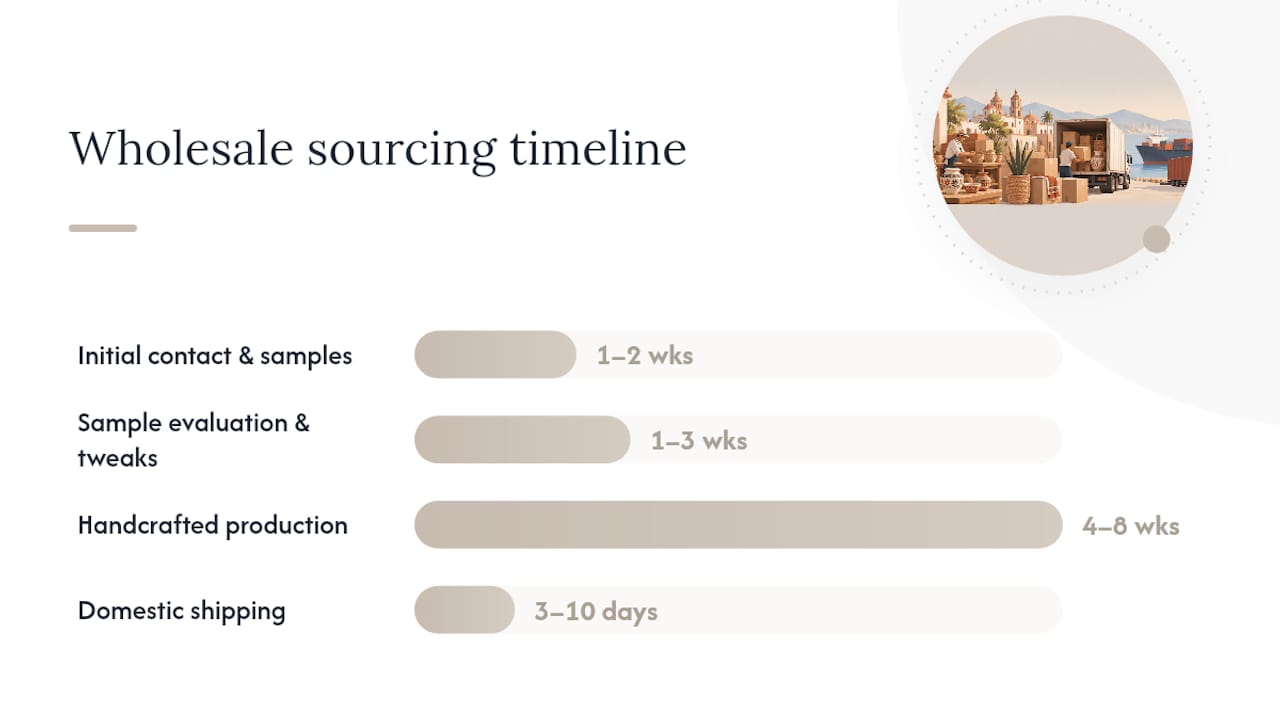
Plan for a process measured in weeks, not days, if you want it done right. Initial contact and sample requests typically take one to two weeks, mostly waiting for a workshop or manufacturer to produce and ship a physical sample rather than just quoting a price by email.
Sample evaluation and back-and-forth on customization, color matching, or fabric weight usually adds another one to three weeks, especially if you're requesting adjustments before approving a finish board. This stage moves faster at trade fairs, where you can inspect and approve a sample on the spot instead of waiting for it to travel.
Once terms and a purchase order are confirmed, production lead times for handcrafted goods commonly run four to eight weeks, depending on the piece and the size of the order. Textiles and small ceramics tend toward the shorter end. Furniture, large-format tile work, and heavily customized pieces run longer, since hand-finishing can't be rushed without sacrificing the quality you're paying for.
Shipping inside Mexico for a completed wholesale order generally adds three to ten days depending on destination and carrier. All told, a first-time wholesale relationship, from initial email to product on your shelf, usually spans two to three months. Repeat orders move faster once a supplier already has your specifications and production is a matter of scheduling rather than negotiation.
What Does Wholesale Artisanal Decor Actually Cost?
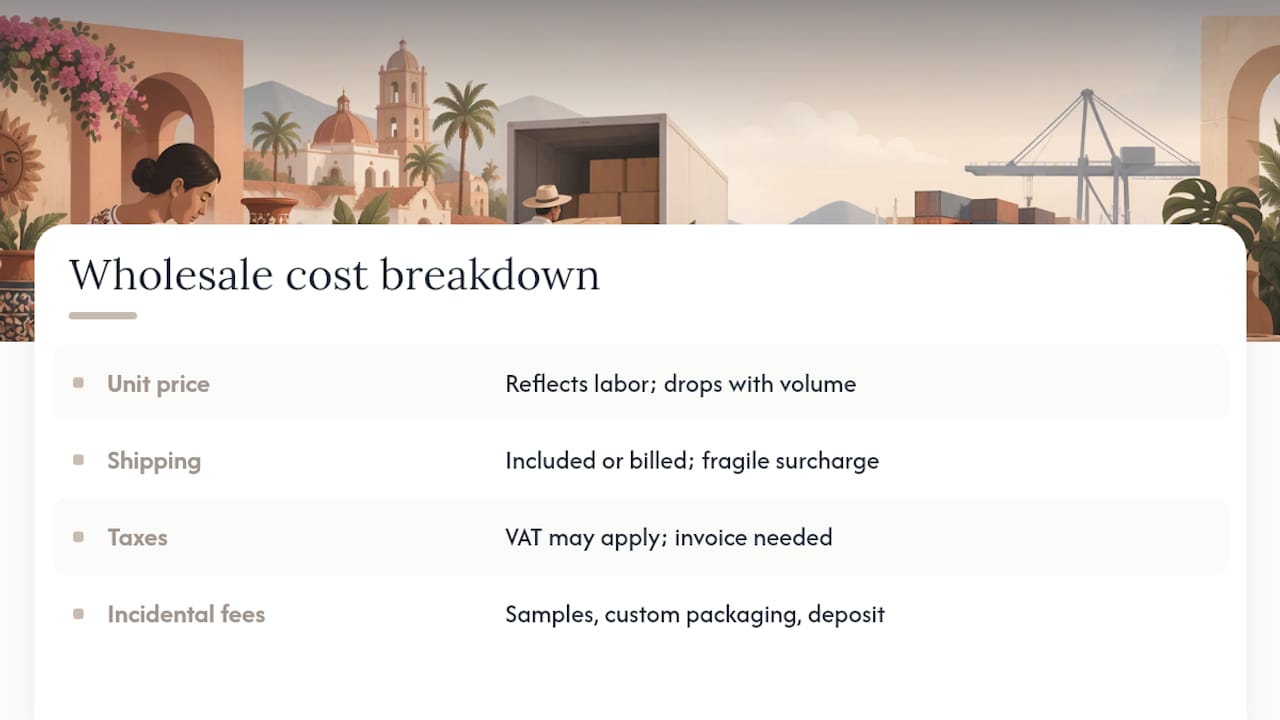
Total cost breaks into four buckets: unit price, shipping, taxes, and incidental fees, and skipping any one of them in your math leads to a pricing model that doesn't hold up at retail.
Unit pricing on handcrafted goods reflects labor intensity more than material cost. A hand-embroidered pillow or hand-painted tile costs more per piece than a machine-made equivalent because the price bakes in skilled hours, not just raw goods. Wholesale tiers usually kick in at a minimum order quantity, with per-unit price dropping as volume rises.
Shipping costs inside Mexico vary by whether the supplier includes delivery in the unit price or bills it separately. Fragile categories like ceramics and glass often carry an insurance surcharge worth budgeting for rather than treating as a surprise.
Retailers buying wholesale for resale need to account for value-added tax on the purchase, along with any invoicing requirements tied to their own business registration. Ask suppliers directly whether their quoted price includes tax or excludes it, since this varies by business size and formality. Smaller workshops without formal tax registration sometimes operate on cash terms without a formal invoice, which can complicate your own bookkeeping.
Incidental costs worth planning for include sample fees (sometimes waived on approved orders), custom packaging charges if you want branded presentation, and a deposit requirement, commonly a percentage of the total order, paid before production begins.
Which Sourcing Route Fits Your Business
Direct artisan partnerships suit boutiques that want exclusivity and a story behind every piece. You trade speed for depth, and the relationship itself becomes part of what you sell to your own customers.
Manufacturers and studios fit retailers who need scale and consistency across a large order, particularly for hospitality projects where every unit must match. For interior design and hotel work, staged delivery, a pilot order followed by rollout, tends to protect cash flow better than committing to a full batch up front.
Trade fairs sit between the two. They're built for discovery and for negotiating custom projects once you've found a maker whose work fits your assortment.
— Ernesto
How Create Decorus Fits Into Your Sourcing Strategy
Trade fairs, artisan workshops, and manufacturer directories all take time to vet, and even the best of them require you to piece together sourcing across multiple regions. This supplier provides a direct source of handcrafted decor made in Mexico, eliminating the need for travel or the guesswork of cold contacting an unfamiliar workshop.
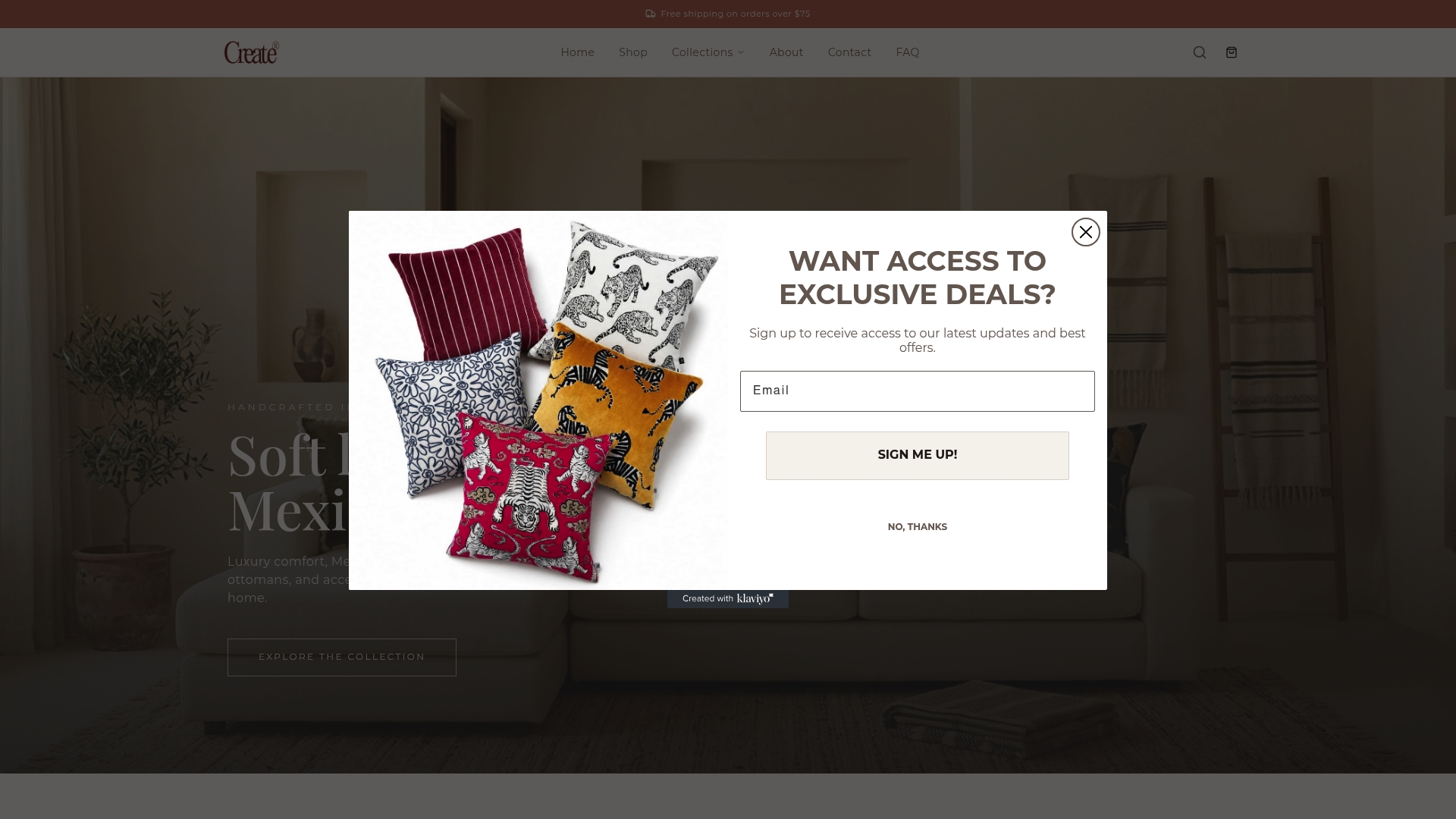
Every piece in our pillow collection reflects the same traditional techniques you'd find sourcing region by region, backed by trade pricing, customization on textiles and finishes, and national shipping built into our process from day one. If you're a boutique, hotel, or online retailer ready to move past sample requests and into a steady supply relationship, apply for a wholesale account and tell us what your project needs. We'll walk you through pricing tiers, timelines, and customization options directly.
Official Resources to Verify Suppliers and Fair Dates
Check these sources directly before committing to a supplier or planning a buying trip:
- ENART: exhibitor lists and official fair dates
- FONART: artisan support programs and trade initiatives
- Expo ENART: buyer and exhibitor logistics for the current edition
Sources
- Enart – Exposición Nacional de Artículos
- FONART program information
- INAH and FONART collaboration to support artisans
- Expo ENART – organizer page
- European Enterprise Network listing for Mexican handcrafted-products manufacturer
FAQ
What Is ENART and Why Does It Matter for Wholesale Buyers?
ENART is a national trade fair that brings together more than 150 exhibitors and thousands of wholesale buyers in one location. It's one of the fastest ways to meet multiple vetted Mexican artisan suppliers and negotiate custom project pricing face to face.
What Is FONART and How Does It Help Verify Suppliers?
FONART is a federal program that supports Mexican artisans through production assistance, promotion, and commercialization initiatives. A supplier's participation in FONART programs or fairs is a useful, checkable signal of institutional recognition.
Does Create Decorus Offer Wholesale Pricing for Retailers?
Yes. Create Decorus offers a trade program with customization options for boutiques, designers, and retailers. Current pricing details are available directly on the wholesale page rather than published publicly.
How Long Does a Typical Wholesale Order Take in Mexico?
A first-time wholesale relationship generally spans two to three months from initial contact to delivery, covering sample review, production, and shipping. Production alone for handcrafted goods commonly runs four to eight weeks depending on the piece and order size.
What Should I Check Before Approving a Sample?
Inspect stitching, glaze consistency, and finish quality against your own brand standards, and confirm the sample matches what ships in the full order. Buyer guidance from event organizers recommends bringing a written checklist covering material, color, and backing to avoid inconsistent stock later.