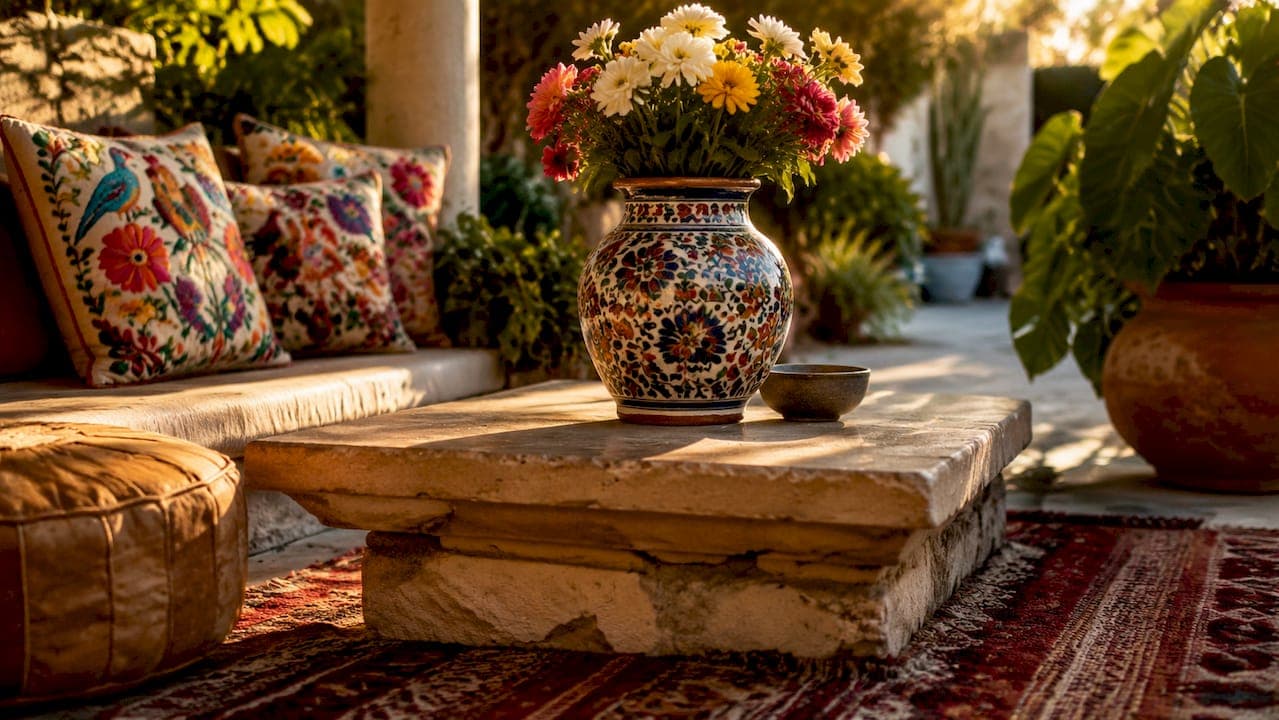
Mexican artisan crafts for home decor are handmade pieces rooted in centuries of indigenous tradition, bringing vibrant color, rich texture, and genuine cultural meaning to any living space. From Talavera pottery fired in Puebla to Zapotec wool rugs woven in Oaxaca, these objects carry stories that mass-produced decor simply cannot replicate. We believe that a home decorated with intention reflects the people who live in it. Choosing authentic Mexican folk art is one of the most direct ways to create that kind of depth and warmth.
1. Which Mexican artisan crafts are best for home decor?
The most celebrated Mexican artisan crafts for home decor include Talavera pottery, Barro Negro ceramics, Zapotec wool rugs, Otomi embroidery, and Alebrijes wooden sculptures. Each craft connects to a specific region and artisan family, reflecting deep cultural roots that span generations. Together, they represent the full range of what traditional Mexican crafts can offer a home: color, form, texture, and narrative.
- Talavera pottery (Puebla): Recognized for a six-color palette of cobalt blue, yellow, orange, green, mauve, and black. The internal color logic makes groupings easy to arrange on shelves or tabletops.
- Barro Negro ceramics (Oaxaca): Hand-burnished black clay with a matte metallic sheen. Authentic pieces carry a depth of finish that factory replicas cannot match.
- Zapotec wool rugs (Oaxaca): Hand-loomed on backstrap or floor looms using natural dyes from cochineal, indigo, and marigold. They function as both floor art and wall hangings.
- Otomi embroidery (Hidalgo): Dense hand-stitched animal and floral motifs on natural cotton or linen. Each panel is one of a kind.
- Alebrijes (Oaxaca and Mexico City): Carved and painted wooden or papier-mâché sculptures of fantastical animals. They work as shelf objects, centerpieces, or conversation pieces.
Pro Tip: Start with one craft category and build around it. A single Talavera vase on a dining table creates a clear visual anchor without requiring you to redecorate the entire room.
2. How to incorporate Mexican folk art into your home decor style
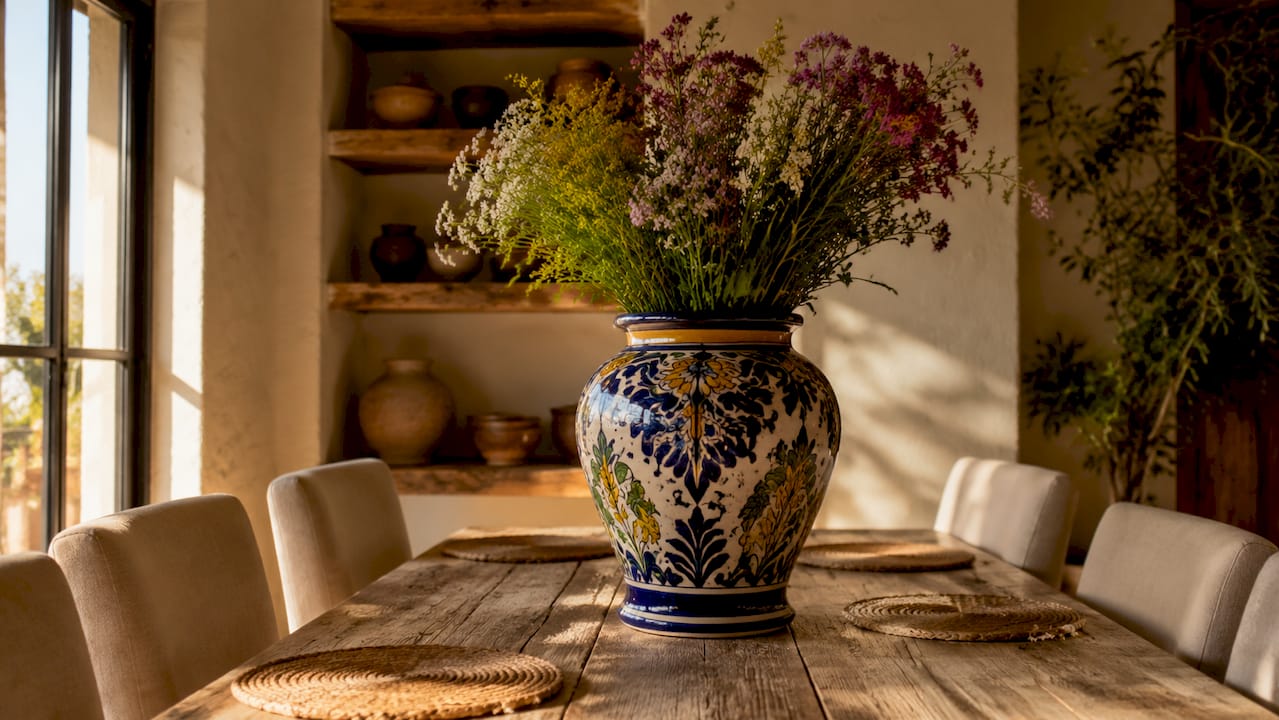
Design experts emphasize restraint when incorporating vibrant Mexican crafts so the pieces serve as focal points rather than visual clutter. The goal is a dialogue between artisan heritage and contemporary design, not a competition between the two. One well-chosen piece does more for a room than a dozen competing objects.
The most effective approach pairs a single bold craft item with neutral surroundings. A Zapotec rug in deep red and ivory reads as art when placed on a light hardwood floor with minimal furniture. An Otomi embroidered pillow on a gray linen sofa draws the eye immediately without overwhelming the space. Neutral walls, simple furniture, and one or two authentic pieces create a room that feels curated and personal.
Scale matters as much as color. Textiles define the visual temperature of a Mexican-influenced interior, and the largest textile in the room sets the palette for everything else. Secondary patterns, such as a serape throw or smaller cushion, should be smaller than the anchor piece to maintain visual balance.
Pro Tip: If you are mixing authentic Mexican pieces with mass-market furniture from retailers like IKEA or West Elm, choose furniture in solid, muted tones. The craftsmanship of the artisan piece will carry the room.
3. What are the most valued handmade Mexican textile home accents?
Handwoven and embroidered textiles are the backbone of authentic Mexican textiles home styling. They carry the most cultural information per square inch of any craft category, and they are also the most practical. You can use them as rugs, wall hangings, pillow covers, table runners, or throws.
| Textile | Region | Technique | Typical Use |
|---|---|---|---|
| Zapotec wool rug | Oaxaca | Hand-loomed, natural dyes | Floor art, wall hanging |
| Otomi embroidered cushion | Hidalgo | Hand-stitched on cotton | Accent pillow, framed art |
| Serape throw | Saltillo, Jalisco | Woven cotton or wool | Sofa throw, table runner |
| Tenango embroidery | Hidalgo | Chain-stitch on cloth | Wall panel, pillow cover |
Authentic, hand-embroidered Otomi cushions typically cost between $62 and $65, reflecting the labor-intensive technique that distinguishes them from machine-made versions. That price point is a useful benchmark. If you find a similar item for $15, it is almost certainly machine-produced.
Symbolic motifs add a layer of meaning that purely decorative objects lack. Butterfly motifs in embroidered textiles represent transformation in pre-Hispanic cultures, connecting your home to a living tradition of indigenous symbolism. Choosing pieces with this kind of cultural narrative depth is what separates thoughtful collecting from simple shopping.
4. How to display Mexican folk art at home
Placement determines whether a piece reads as art or clutter. The most effective displays treat each artisan object as a focal accent, giving it space to breathe. A Barro Negro vase on a bare shelf commands attention. The same vase surrounded by ten other objects disappears.
Wall groupings work well for smaller pieces like punched tin mirrors, Otomi panels, or framed Alebrijes prints. Arrange them at eye level and leave at least two inches of space between each piece. The negative space is part of the composition. For rugs, hang them on a wall using a wooden dowel and linen backing to protect the fibers and display the weave as the art it is.
Lighting amplifies the effect of handmade surfaces. Barro Negro's matte metallic sheen responds beautifully to warm incandescent or Edison-style bulbs. Talavera pottery placed near a window catches natural light and shows off the depth of its glaze. Accent pieces placed in light-rich spots always read more powerfully than those tucked into dark corners.
Pro Tip: Group Talavera pieces in odd numbers. Three or five pieces of varying heights create a natural visual rhythm that a pair or quartet cannot achieve.
5. How to distinguish authentic Mexican crafts from mass-produced imitations
Authentic Mexican artisan crafts carry physical evidence of the human hand. Barro Negro pottery from Oaxaca has a matte metallic sheen that genuine pieces possess but factory imitations lack. Running your fingers across the surface of a real piece reveals subtle variations in burnishing that no machine can reproduce consistently.
For textiles, look at the back of the fabric. Hand-embroidered Otomi work shows slight irregularities in stitch length and thread tension on the reverse side. Machine-made versions are perfectly uniform on both sides. That uniformity is the tell. Authentic Zapotec rugs also show slight color variations across the weave because natural dyes absorb differently in each batch of wool.
Sourcing matters as much as inspection. Buying directly from indigenous artisans or verified fair-trade platforms prevents cultural appropriation and preserves heritage weaving traditions. Platforms that certify artisan origin, or markets like the Mercado de Artesanías in Oaxaca City, give you direct access to makers. When buying online, look for seller profiles that name the artisan, the community, and the technique.
- Check for a certificate of authenticity or artisan signature on ceramics.
- Ask sellers for the specific community of origin, not just "Mexico."
- Expect slight imperfections in hand-embroidered or hand-thrown pieces. Perfection signals a machine.
- Compare prices to known benchmarks. Authentic Otomi cushions start around $62.
6. Why Zapotec rugs are the best anchor for any room
Zapotec wool rugs deserve their own section because they function differently from every other craft on this list. They are not accents. They are the foundation of the room's color palette, and every other design decision should respond to them. Interior designers who work with Mexican folk art consistently recommend choosing the rug first and building the room around it.
The natural dye palette of Zapotec rugs is self-limiting in the best way. Cochineal produces a range of pinks, reds, and purples. Indigo gives deep blue. Marigold yields warm yellow. These colors harmonize naturally because they come from the same ecological and cultural tradition. You cannot make a Zapotec rug look wrong in a room because the colors were never arbitrary to begin with.
Zapotec rugs also age well. The wool softens with use, and natural dyes mellow rather than fade harshly. A rug purchased today will look better in ten years than a synthetic alternative purchased at the same time. That durability is part of what makes handcrafted Mexican goods worth the investment.
7. Best authentic Mexican artisan decor gifts to consider
Authentic Mexican artisan pieces make meaningful gifts because they carry a story the recipient can share. The best choices are pieces that travel well, display easily, and represent a specific craft tradition clearly.
Talavera tiles make excellent gifts for kitchen or bathroom renovations. A set of six to twelve tiles can be framed as a panel or used as trivets. Alebrijes are ideal for collectors and children alike. Small carved figures from Oaxacan workshops by families like the Jiménez family in San Martín Tilcajete are widely recognized for their quality. Otomi embroidered pillow covers ship flat and arrive ready to use, making them one of the most practical gift options in the category.
For anyone interested in Mexican craftsmanship's influence on global design, a Pineda Covalin silk shawl with embroidered butterfly motifs bridges traditional symbolism and contemporary fashion. These pieces sit comfortably in both a home and a wardrobe, which makes them unusually versatile gifts.
Key takeaways
Authentic Mexican artisan crafts bring irreplaceable cultural depth and visual warmth to home decor when chosen with intention and displayed with restraint.
| Point | Details |
|---|---|
| Start with textiles | Zapotec rugs and Otomi cushions set the room's color palette and visual tone. |
| Use restraint | One or two focal pieces outperform a room full of competing objects. |
| Verify authenticity | Hand-embroidered Otomi cushions start around $62; lower prices signal machine production. |
| Source ethically | Buy directly from artisans or certified fair-trade platforms to protect craft traditions. |
| Display with light | Place Barro Negro and Talavera pieces near natural or warm artificial light to show their finish. |
Why I keep coming back to Mexican artisan crafts
I have styled rooms with furniture from some of the most recognized American and European brands, and nothing changes a space the way a single authentic Mexican piece does. The first time I placed a Barro Negro vase on a bare oak shelf, the room stopped being a collection of furniture and became a place with a point of view.
What I have learned over time is that restraint is not a limitation. It is the whole point. The temptation when you fall in love with these crafts is to fill every surface. Resist it. One Zapotec rug, one Otomi pillow, one Talavera bowl. Let each piece speak without interruption.
The deeper reward is what happens when you learn the story behind a piece. Knowing that the butterfly motif on an embroidered textile represents transformation in pre-Hispanic thought changes how you see it every morning. That layer of meaning is not available in any mass-produced object at any price. Respectful cultural appreciation starts with curiosity. Ask where the piece came from, who made it, and what the motifs mean. The answers will make you a better collector and a more thoughtful host.
— Ernesto
Bring artisan heritage into your home with Createdecorus

Createdecorus crafts luxury handmade pillows in Mexico, drawing on the same artisan traditions described throughout this article. Each pillow is made with rich textures, bold colors, and techniques passed down through generations of Mexican craftspeople. We source with care and finish with pride, so every piece carries what we call a piece of Mexican soul. If you are ready to bring that warmth into your living space, explore our full collection of handcrafted luxury pillows. For designers and retailers, our trade wholesale program offers access to the same quality at scale.
FAQ
What makes Mexican artisan crafts different from regular home decor?
Mexican artisan crafts are handmade by skilled craftspeople using regional techniques and natural materials, giving each piece unique variations that mass-produced decor cannot replicate. They also carry cultural and symbolic meaning rooted in indigenous traditions.
How do I know if a Mexican craft is truly authentic?
Authentic pieces show slight imperfections from the human hand, such as irregular stitch tension in Otomi embroidery or subtle burnishing variations in Barro Negro pottery. Buying directly from artisans or certified fair-trade sources is the most reliable way to verify origin.
What is the best Mexican craft to start with for home decor?
A Zapotec wool rug or an Otomi embroidered pillow cover is the best starting point. Both are practical, durable, and immediately establish a room's color palette and cultural character.
How much should I expect to pay for authentic Mexican textiles?
Authentic hand-embroidered Otomi cushion covers typically cost between $62 and $65. Prices significantly below that range usually indicate machine production rather than genuine artisan work.
Can Mexican folk art work in a modern or minimalist interior?
Yes. A single Talavera vase or Barro Negro bowl on a minimal shelf creates a striking contrast that enhances rather than disrupts a modern aesthetic. The key is choosing one piece and giving it space.