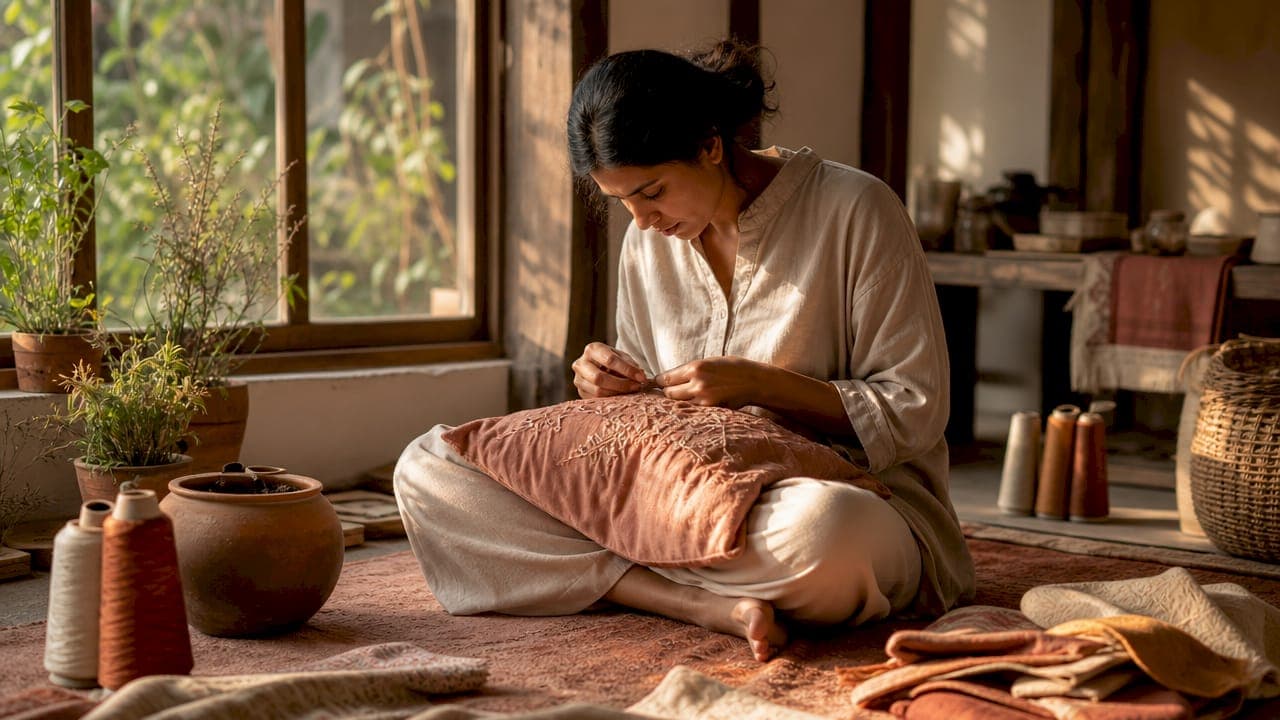
Artisan pillows are defined as handcrafted textile pieces made using traditional techniques, premium natural materials, and skilled labor that machines cannot replicate. Understanding why artisan pillows worth investment comes down to three measurable advantages: superior construction quality, documented durability, and cultural significance that adds genuine meaning to your home. Premium artisan pillows feature stitch densities between 22–26 stitches/cm² and use natural dyes that produce richer, longer-lasting color than synthetic alternatives. Createdecorus builds every piece from this same foundation of intentional craftsmanship, rooted in Mexican artisan heritage passed down through generations.
What craftsmanship qualities make artisan pillows worth the investment?
Construction precision is the single biggest factor separating artisan pillows from mass-market options. Fabric weight, seam integrity, and insert structure are the key value components that determine how a pillow holds its shape, resists wear, and ages gracefully. A tightly woven cover with reinforced seams will outlast a loosely stitched polyester shell by years.
Stitch density and material quality
Stitch density tells you exactly how much care went into a piece. High-end artisan silk pillow covers use mulberry silk with 22–26 stitches/cm², double-sided embroidery, and natural dyes, creating both durability and a refined tactile experience. That level of density is physically impossible to achieve on a commercial loom running at industrial speed. The result is a surface that holds its pattern, resists pilling, and feels distinctly different under your hand.
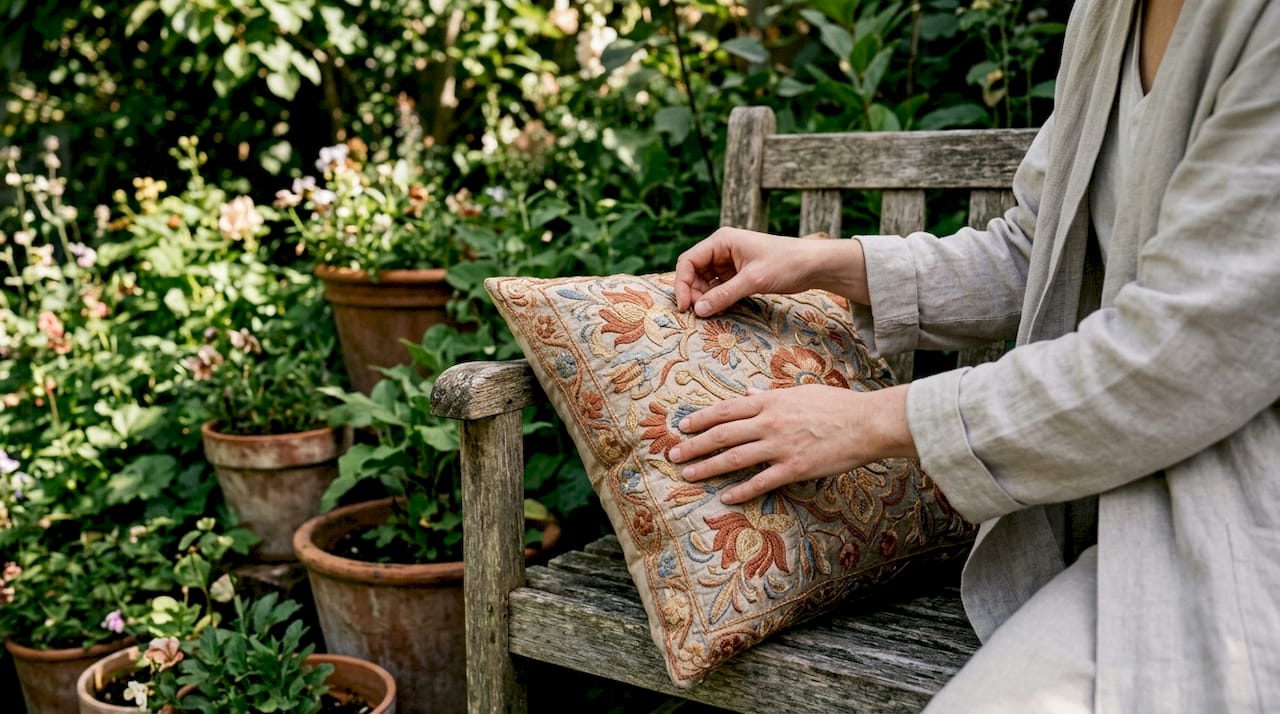
Premium materials reinforce this quality further. Natural dyes derived from plants and minerals bond differently to fiber than synthetic pigments. They fade more gracefully over time, developing a patina rather than a blotch. Organic cotton and high-momme silk also breathe better, which reduces the moisture buildup that degrades cheap fill materials from the inside out.
Hand embroidery versus machine production
Hand embroidery creates slight, intentional variations in each piece. Those variations are not flaws. They are the signature of a human hand guiding thread through fabric with care and skill. Machine embroidery produces uniform stitches at high speed, but it cannot adjust tension, compensate for fabric grain, or respond to the natural give of the material. The result is a flatter, less textured surface that loses definition faster under regular use.
Here are the key craftsmanship markers to look for when evaluating any artisan pillow:
- Stitch density: 22–26 stitches/cm² indicates hand-guided precision
- Material weight: High-momme silk (22–25 momme) or tightly woven organic cotton signals durability
- Natural dyes: Look for plant-based or mineral-derived color, not synthetic pigment
- Seam construction: Double-stitched or French seams resist splitting under daily use
- Artisan signature: A maker's mark, regional certification, or heritage label confirms authenticity
Pro Tip: Ask the seller for the momme weight of any silk pillow before purchasing. A momme rating below 19 indicates a thin weave that will not hold up to regular use, regardless of how beautiful the embroidery looks.
Authenticity indicators like artisan signature and heritage certification matter more than retail price for confirming true artisan value. Price alone is not a reliable guide. A $300 pillow with no maker's mark and machine-uniform stitching is not an artisan piece. It is a marketing exercise.
How do artisan pillows contribute to cultural preservation and ethical home decor?
Every artisan pillow carries a story that a factory cannot manufacture. Handcrafted pillows support artisan communities by preserving textile traditions and provide intricate aesthetic character that machines cannot replicate. When you choose a handmade piece, you participate in keeping a regional craft alive, whether that craft is Mexican backstrap weaving, Indian kantha stitching, or Andean tapestry work.
The ethical dimension of this choice is concrete, not abstract. Nonprofit artisan organizations direct up to 91% of funds to artisan wages and programs, compared to the thin margins most artisans receive through conventional retail channels. That difference in fund allocation changes lives at the community level. It funds children's education, healthcare access, and the preservation of techniques that would otherwise disappear within a generation.
Sustainable practices are built into traditional artisan production by necessity. Natural dyes require no petrochemical processing. Hand-loomed fabrics use no industrial energy. Many artisan communities work with locally sourced fibers, which shortens the supply chain and reduces the carbon footprint of each piece. These are not marketing claims. They are the natural outcome of methods developed before industrial production existed.
The benefits of choosing ethically sourced artisan pillows include:
- Fair wages: Verified artisan organizations pay living wages, not piece-rate minimums
- Skill preservation: Purchasing demand keeps traditional techniques financially viable
- Community development: Artisan income funds local education and healthcare programs
- Ecological responsibility: Natural materials and hand production reduce industrial waste
- Supply chain transparency: Certified groups publish artisan registries and financial disclosures
Createdecorus grounds its entire collection in this same philosophy. Each piece is crafted in Mexico, carrying the warmth of a tradition that predates modern manufacturing. Buying from a verified source means your home gains something a mass-produced pillow can never offer: a genuine connection to the hands that made it. You can learn more about artisan home decor values and how they shape thoughtful interior design.
Why are artisan pillows more cost-effective than mass-market alternatives?
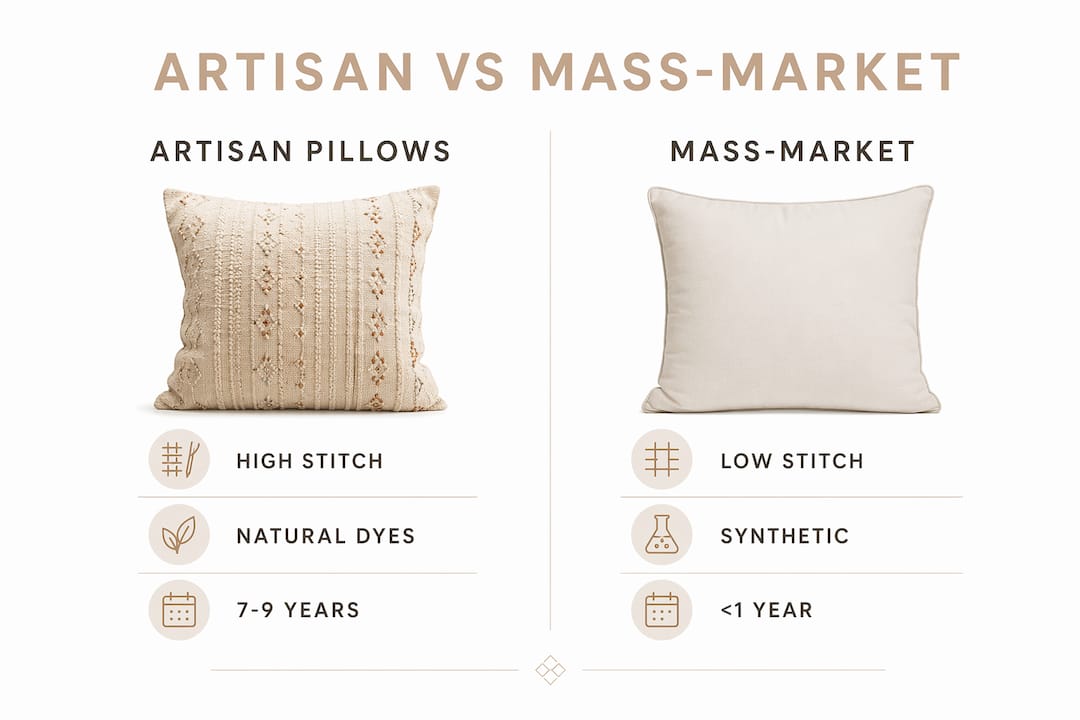
The upfront price of an artisan pillow feels significant. The long-term math tells a different story. True luxury silk pillows last 7–9 years versus 11 months for mass-produced polyester blends. That lifespan difference reframes the entire cost conversation.
The cost-per-wear framework, borrowed from fashion analysis, applies directly here. Divide the purchase price by the number of years the piece remains in active use. The result reveals the true annual cost of each option.
| Pillow Type | Price Range | Expected Lifespan | Annual Cost |
|---|---|---|---|
| Mass-market polyester | $20–$45 | Under 1 year | $20–$45 |
| Mid-range artisan | $80–$195 | 4–6 years | $15–$40 |
| Premium artisan silk | $195–$245 | 7–9 years | $25–$35 |
Cost-per-wear analysis shows artisan pillows costing $195–$245 have a significantly lower annual cost than $45 fast-fashion pillows replaced within a year. The premium piece costs less per year of use. That is not a rationalization. It is arithmetic.
Quality construction also reduces the hidden costs of replacement. A mass-market pillow that flattens, pills, or fades within months requires purchasing again. Each replacement adds shipping costs, disposal waste, and the time spent searching for a match to your existing decor. An artisan pillow that holds its shape and color for nearly a decade eliminates that cycle entirely.
Artisan pillow prices range from $45 to $780, with nonprofit artisan groups offering high-quality pieces starting around $80. That entry point makes investing in quality pillows accessible without requiring a luxury budget. The key is knowing what you are buying and why the construction justifies the price.
Pro Tip: When comparing prices, calculate the annual cost rather than the sticker price. Divide the pillow's cost by its expected lifespan in years. A well-made artisan piece almost always wins that comparison against fast-fashion alternatives.
How to identify and select genuine artisan pillows for your home
Recognizing a genuine artisan pillow requires looking past marketing language and examining the physical evidence of craft. Marketed luxury can differ from true artisan quality; look for artisan signatures, hand-guided detailing, and documented heritage rather than relying on price alone. The word "handmade" on a label means nothing without supporting evidence.
Here is a practical process for evaluating any artisan pillow before you buy:
- Examine the stitching up close. Genuine hand embroidery shows slight, consistent variation in stitch length and angle. Machine stitching is perfectly uniform. Variation is the mark of a human hand.
- Check the fabric weight. Lift the cover and feel its density. Thin, lightweight fabric signals low-quality weave regardless of the pattern printed on it.
- Look for a maker's mark or artisan registry. Verified artisan organizations publish the names and regions of their makers. If no such information exists, the "artisan" claim is unverified.
- Ask about certifications. Fair trade certification, 501(c)(3) nonprofit status, and regional heritage designations are concrete indicators of ethical sourcing and authentic production.
- Buy direct when possible. Purchasing directly from verified artisan organizations offers transparency and ensures ethical wages, with up to 91% of funds supporting artisan programs versus retail markups.
- Avoid buzzword-heavy descriptions. Terms like "artisan-inspired," "handcrafted style," or "boho aesthetic" often describe machine-made products with surface-level design cues, not genuine craft.
Styling genuine artisan pillows within your home is straightforward once you have the right pieces. A single hand-embroidered pillow on a neutral sofa creates a focal point without visual noise. Grouping two or three pieces in complementary colors from the same regional tradition builds a cohesive story. The role of decorative pillows in styling your home extends beyond color matching. Texture, weight, and cultural reference all contribute to the atmosphere a room creates.
Key Takeaways
Artisan pillows are worth the investment because their superior construction, ethical sourcing, and 7–9 year lifespan produce a lower annual cost than mass-market alternatives while preserving cultural traditions that machines cannot replicate.
| Point | Details |
|---|---|
| Construction defines value | Stitch density of 22–26 stitches/cm² and natural dyes signal genuine artisan quality. |
| Durability beats fast fashion | Artisan silk pillows last 7–9 years versus under a year for mass-produced polyester blends. |
| Annual cost favors artisan | A $195–$245 artisan pillow costs less per year than a $45 fast-fashion pillow replaced annually. |
| Authenticity requires evidence | Look for artisan signatures, heritage certification, and maker registries, not just price tags. |
| Ethical sourcing has real impact | Verified nonprofit artisan groups direct up to 91% of funds directly to artisan wages and programs. |
Why I think most people underestimate what artisan pillows actually do
I have spent years watching people treat decorative pillows as afterthoughts. They buy the sofa first, then fill it with whatever is on sale. The pillow becomes a placeholder, not a choice. That approach costs more in the long run and produces rooms that feel assembled rather than considered.
The detail that changed my thinking was lifespan. When I first learned that a well-made silk pillow with proper construction outlasts a mass-market alternative by nearly eight years, the price conversation shifted entirely. I stopped asking "Is this expensive?" and started asking "What does this cost me per year?" The answer almost always favors the artisan piece.
What most articles miss is the sensory dimension. A pillow with 22–26 stitches/cm² and mulberry silk does not just look different. It feels different. The weight, the texture, the way it holds its form after years of use. These are not abstract quality claims. They are things you notice every day in your own home. That daily experience is part of what you are buying.
The cultural dimension matters too, and not in a sentimental way. When a craft technique disappears because there is no market for it, it is gone permanently. Choosing a piece from Createdecorus or any verified artisan source is a direct vote for keeping that knowledge alive. I find that more meaningful than any trend-driven decor choice I could make.
— Ernesto
Handcrafted pillows from Createdecorus, crafted with intention
Createdecorus brings together the artisan heritage of Mexico and the design sensibility of a home that deserves more than mass production. Each pillow in the collection is made by skilled hands using rich textures, bold colors, and materials chosen for both beauty and longevity.
Every piece reflects a dialogue between traditional Mexican craftsmanship and contemporary home design. The collection spans a range of styles, from plush woven covers to hand-embroidered statement pieces, all ethically sourced and crafted with pride. If you are ready to invest in pieces that hold their beauty for years, the Createdecorus artisan pillow collection is the place to start. These are not decorations. They are gestures of care for the spaces you live in.
FAQ
What makes artisan pillows different from regular decorative pillows?
Artisan pillows are made using hand-guided techniques, natural materials, and stitch densities of 22–26 stitches/cm² that machine production cannot achieve. The result is a piece with greater durability, richer texture, and a unique character that mass-market pillows lack.
How long do quality artisan pillows last?
High-quality artisan silk pillows last 7–9 years with proper care, compared to under a year for mass-produced polyester blends. That lifespan difference makes the higher upfront cost cost-effective over time.
How do I know if an artisan pillow is genuinely handmade?
Look for an artisan signature, maker's registry listing, or regional heritage certification. Hand embroidery shows slight, consistent variation in stitch length, while machine stitching is perfectly uniform.
Are artisan pillows worth buying on a moderate budget?
Yes. Nonprofit artisan organizations offer high-quality handcrafted pieces starting around $80, directing up to 91% of funds to artisan wages. That entry point makes investing in quality pillows accessible without requiring a luxury budget.
How should I style artisan pillows in my home?
Place a single hand-embroidered pillow on a neutral sofa to create a focal point, or group two to three pieces in complementary colors from the same regional tradition for a cohesive look. Texture and cultural reference contribute as much to the atmosphere as color does.