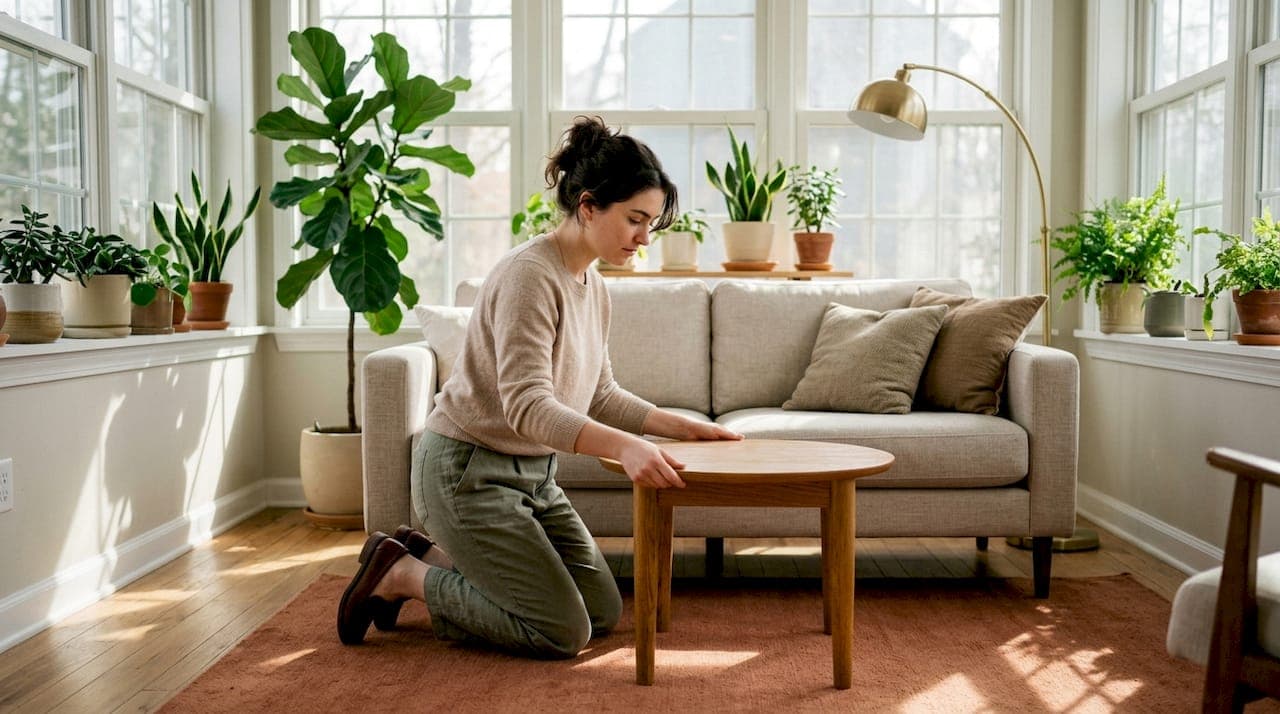
The most effective ways to transform a plain living room combine smart furniture placement, balanced color, layered textures, and intentional lighting. You do not need a full renovation or a large budget. Design principles like the 60-30-10 color rule and proper furniture clearances give you a reliable framework to work from. Each change you make, whether it is repositioning a sofa or swapping a throw pillow, builds toward a room that feels curated, warm, and genuinely yours.
1. Ways to transform a plain living room: start with furniture layout
Furniture placement is the single most powerful change you can make without spending a dollar. Most homeowners push sofas flat against the wall, which creates what designers call the "lobby effect." The room feels hollow and impersonal because there is no center of gravity.
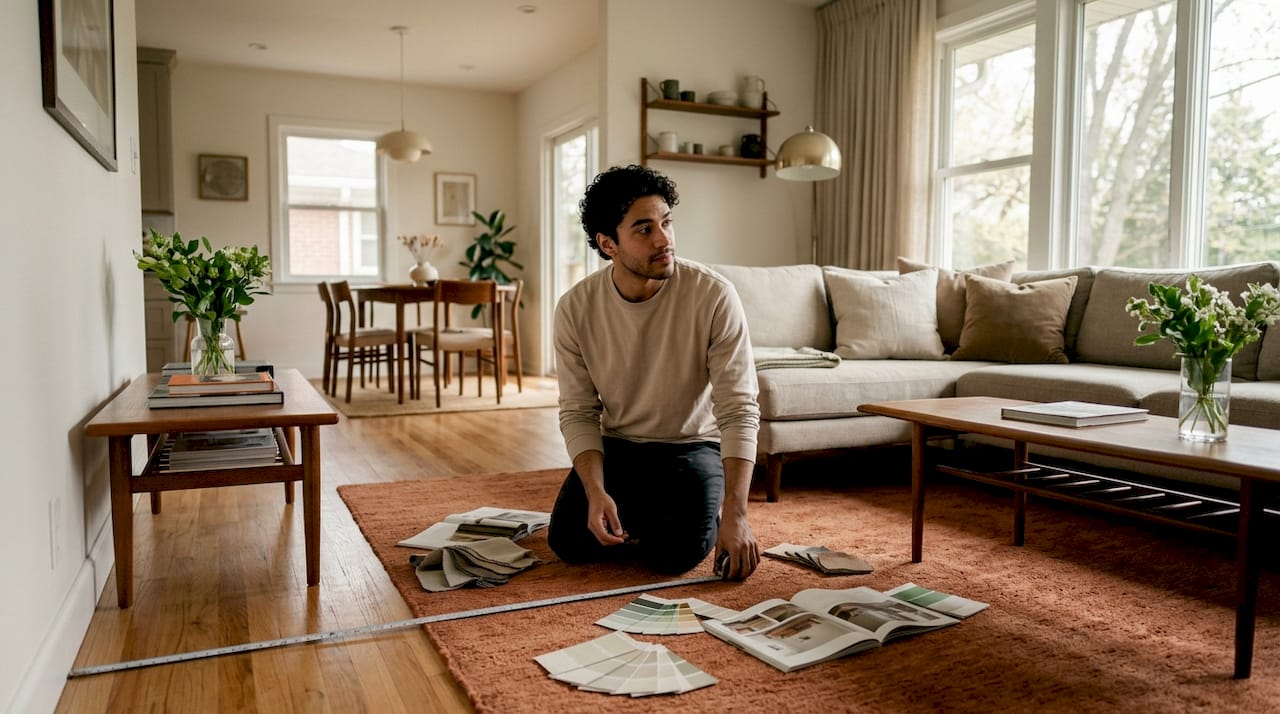
Floating furniture 6–18 inches from the walls pulls the seating group inward and creates a conversational zone. Angle accent chairs slightly toward the sofa rather than placing them in a rigid parallel line. That small rotation signals to anyone entering the room that this is a place to gather.
Proper clearances matter as much as position. Keep 14–18 inches between your sofa and coffee table so people can reach it comfortably. Maintain 30–36 inches for main walkways so the room breathes.
- Pull seating away from walls to create intimacy
- Angle chairs toward the sofa to encourage conversation
- Keep 14–18 inches between sofa and coffee table
- Allow 30–36 inches for main traffic paths
- Vary furniture heights to avoid a flat, uniform look
Pro Tip: Map furniture footprints with painter's tape on the floor and live with the layout for 48 hours before moving anything. You will catch traffic flow problems that look fine on paper but feel awkward in practice.
2. Apply the 60-30-10 color rule for instant cohesion
Color is where most living rooms go wrong. Either everything matches too perfectly and feels sterile, or the room has no clear palette and feels chaotic. The 60-30-10 rule solves both problems with a simple proportion system.
Sixty percent of your room's color goes to dominant surfaces: walls and large furniture like your sofa. Thirty percent goes to secondary elements: curtains, rugs, and accent seating. The final ten percent lands on small accents like throw pillows, artwork, and decorative objects. This breakdown creates visual balance without making the room feel designed by committee.
- 60% dominant: walls and sofa in a neutral or anchor color
- 30% secondary: curtains, area rug, and accent chair in a complementary tone
- 10% accent: cushions, art, vases, and small decorative pieces in a bold or contrasting color
Choosing your dominant color first makes every other decision easier. If your sofa is a warm cream, your secondary layer might be terracotta or sage. Your accent layer then pops with deep indigo or burnt orange. The room tells a coherent color story.
Pro Tip: Swap cushion covers and throws seasonally to refresh your accent layer without touching the rest of the room. It costs almost nothing and completely shifts the mood.
3. Choose the right rug size to anchor the room
A rug that is too small is one of the most common and most visible mistakes in living room design. A small rug looks like an afterthought placed in the center of the floor, disconnected from the furniture around it.
The minimum rug size for a living room starts at 8x10 feet. A 9x12 rug is preferred because it allows the front legs of all seating pieces to rest on it. That contact between furniture and rug visually anchors the entire seating group and makes the space feel intentional.
| Room size | Recommended rug size | Front legs on rug? |
|---|---|---|
| Small living room | 8x10 ft | Yes, all front legs |
| Medium living room | 9x12 ft | Yes, all front legs |
| Large or open plan | 10x14 ft | Yes, full seating group |
| Studio or compact space | 6x9 ft | At minimum, sofa front legs |
Beyond size, the rug sets the aesthetic tone for the whole room. A patterned rug can carry your accent color. A solid rug in a warm tone adds underfoot comfort and warmth. Either way, sizing it correctly is non-negotiable.
4. Layer multiple light sources for warmth and depth
Overhead lighting alone flattens a room. A single ceiling fixture casts light downward at one angle, which creates harsh shadows and makes the space feel clinical rather than comfortable. Layered lighting at multiple heights solves this completely.
The three layers to work with are ambient, task, and accent lighting. Ambient light fills the room generally. Task lighting serves reading or work areas. Accent lighting highlights artwork, corners, or architectural features. Together, they create depth and dimension that a single fixture never can.
- Use floor lamps in dark corners to lift the room visually
- Place table lamps at seated eye level for a warm, intimate glow
- Add wall sconces to highlight artwork or create symmetry
- Choose bulbs in the 2700K–3000K range for a cozy, warm tone
- Dimmer switches on multiple circuits give you full control over mood
Pro Tip: Before buying new lamps, rearrange the ones you already own. Moving a floor lamp from a bright corner to a dark one often makes a bigger difference than adding a new fixture.
5. Mix textures in textiles for a layered, luxurious feel
Texture is what separates a room that looks finished from one that looks flat. A sofa in a single fabric with matching cushions reads as one-dimensional. Mixing materials like boucle, linen, and velvet creates visual and tactile richness that feels genuinely luxurious.
Throws and cushions are the most affordable way to layer texture. A chunky knit throw over a smooth linen sofa creates contrast. A velvet cushion next to a woven cotton one adds depth. You do not need to replace furniture to achieve this effect. Textile swaps are high-impact and low-cost.
Createdecorus handcrafted pillows bring this principle to life with artisan-made pieces that carry rich textures and bold colors rooted in Mexican craft tradition. Each pillow adds a layer of warmth and cultural character that mass-produced accessories simply cannot replicate. For guidance on layering pillows effectively, the approach matters as much as the pieces themselves.
6. Create a focal point that anchors the room
Every well-designed living room has one dominant focal point. It might be a fireplace, a large window, a gallery wall, or a statement piece of furniture. Without one, the eye has nowhere to land and the room feels unsettled.
If your room lacks an architectural focal point, create one. A large piece of artwork above the sofa works well. A media console with intentional styling can serve the same purpose. The key is to choose one element and build the arrangement around it rather than treating every surface equally.
Breaking up uniform furniture height prevents the room from feeling flat. Pair a low coffee table with a tall floor lamp. Set a short side table next to a high-backed chair. Varied heights create visual rhythm and keep the eye moving through the space.
7. Hang artwork at the correct height
Artwork hung too high is one of the most common decorating mistakes. When art floats near the ceiling, it disconnects from the furniture below and creates an awkward gap that makes the room feel unfinished.
The standard is to center artwork at 57–60 inches from the floor. That measurement aligns with the average seated eye level, which means the art feels connected to the people in the room rather than hovering above them. When hanging art above a sofa, keep 6–8 inches of space between the bottom of the frame and the top of the sofa back.
For a gallery wall, treat the grouping as a single unit and center the whole arrangement at that 57–60 inch mark. This approach works for two frames or twenty.
8. Declutter before you buy anything new
Decluttering existing items is the fastest and most cost-effective transformation step available to you. Removing objects that do not belong gives the room breathing room and makes what remains look more intentional.
Most living rooms accumulate objects gradually over time. A shelf that started with three meaningful pieces now holds twelve. A coffee table that once had clear surface space is now covered. Editing down to your favorites does not make the room feel sparse. It makes it feel considered.
Remove everything from a surface, then return only what you genuinely want there. Apply the same process to shelves and side tables. You will often find that the room already has good bones. It just needed space to show them.
9. Use accent pieces with purpose, not volume
Accent pieces add personality, but only when placed with intention. A single sculptural vase on a console table reads as a design choice. Seven mismatched objects on the same surface read as clutter. The role of accent pieces is to punctuate the room, not to fill it.
Group objects in odd numbers, typically three or five, and vary their heights within the grouping. A tall candlestick, a medium bowl, and a small decorative object create a natural visual triangle. That triangle draws the eye and feels balanced without being symmetrical.
Choose accent pieces that connect to your color palette. A terracotta pot, a woven basket, and a brass candle holder can each carry a different texture while sharing a warm color family. That shared warmth ties the grouping together.
10. Refresh the room without replacing furniture
A full furniture replacement is rarely necessary for a meaningful living room makeover. Rearranging and decluttering existing furnishings delivers results that often surprise homeowners who assumed they needed to start over.
Paint is the most cost-effective single change you can make to a room. A fresh coat in a new color shifts the entire mood. If painting feels too permanent, removable wallpaper panels on a single accent wall create a similar effect without commitment.
Swapping hardware on media consoles or side tables, replacing a dated lampshade, or adding a new mirror to reflect light are all budget-friendly living room changes that compound quickly. Each small update reinforces the others, and the room reads as intentionally refreshed rather than piecemeal. For more ideas on making a room look expensive without a large budget, the principle is always the same: edit, layer, and place with care.
Key takeaways
The most effective living room makeover combines correct furniture placement, the 60-30-10 color rule, proper rug sizing, layered lighting, and intentional texture to create a space that feels warm and complete.
| Point | Details |
|---|---|
| Furniture placement first | Float seating 6–18 inches from walls and angle chairs to create a conversational center. |
| Follow the 60-30-10 rule | Assign 60% to dominant color, 30% to secondary, and 10% to accent for visual balance. |
| Size your rug correctly | Use a minimum 8x10 rug with front legs of all seating resting on it to anchor the space. |
| Layer three light sources | Combine floor lamps, table lamps, and wall sconces with 2700K–3000K bulbs for warmth. |
| Declutter before buying | Remove excess objects first. The room often needs editing more than it needs new pieces. |
What I have learned from watching rooms come alive
I have seen homeowners spend thousands on new furniture when the real problem was a rug that was two sizes too small and a sofa pushed flat against the wall. The room looked the same after the purchase because the underlying spatial logic had not changed.
The most dramatic transformations I have witnessed cost almost nothing. Someone pulls their sofa forward, adds a floor lamp to a dark corner, swaps three cushion covers, and the room suddenly feels like it belongs in a magazine. The bones were always there. The arrangement just needed to honor them.
My honest advice: test before you buy. Tape out your furniture footprints. Live in the layout for two days. Move your existing lamps around before ordering new ones. Declutter one surface completely and sit with the result. Most of the time, you will find that the room needs less than you thought and more intention than you expected. Spend your money last, on the pieces that genuinely earn their place.
— Ernesto
Handcrafted accents that complete the look
When the layout is right and the lighting is warm, the final layer is texture. That is where a room stops looking decorated and starts feeling lived in.
Createdecorus handcrafted pillows are made by artisans in Mexico using rich fabrics, bold colors, and techniques passed down through generations. Each piece carries genuine character that a mass-produced cushion cannot offer. Whether you are building a terracotta-and-cream palette or adding a deep jewel-toned accent, these pillows bring the warmth and cultural depth that complete a thoughtfully designed room. Browse the full collection of luxury handcrafted pillows and find the pieces that speak to your space.
FAQ
What is the 60-30-10 color rule for living rooms?
The 60-30-10 rule divides a room's color into three proportions: 60% dominant color for walls and large furniture, 30% secondary color for curtains and rugs, and 10% accent color for cushions and art. This balance creates visual cohesion without making the room feel monotonous.
What size rug should I use in a living room?
A minimum 8x10 rug works for most living rooms, with 9x12 preferred so the front legs of all seating pieces rest on the rug. A rug that is too small floats in the center of the room and disconnects the furniture grouping visually.
How do I make a living room feel warmer with lighting?
Layer three light sources at different heights: a floor lamp, table lamps, and wall sconces. Choose bulbs in the 2700K–3000K range for a warm, cozy tone rather than relying on a single overhead ceiling fixture.
How high should I hang artwork in a living room?
Center artwork at 57–60 inches from the floor, which aligns with the average seated eye level. Hanging art too high disconnects it from the furniture below and creates visual imbalance on the wall.
What is the fastest budget-friendly living room change?
Decluttering and rearranging existing furniture is the fastest and most cost-effective update. Removing excess objects and floating the seating away from walls often transforms the room more dramatically than buying anything new.