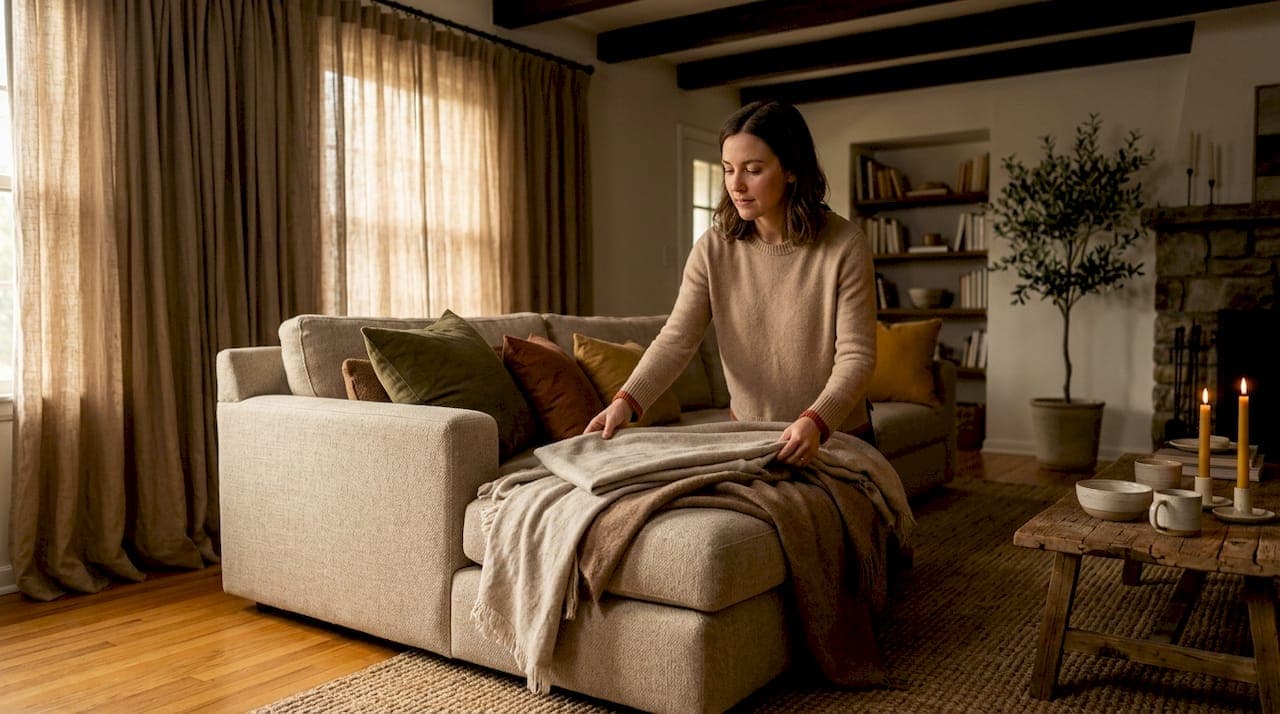
Making a living room look more expensive is defined by design decisions, not budget size. The right combination of texture layering, lighting depth, rug placement, and scale creates a space that reads as intentional and refined. Homeowners and renters alike can achieve upscale living room decor without costly renovations. The strategies in this guide are drawn from interior designers and 2026 design trends, and every one of them is affordable, practical, and repeatable.
How to make your living room look more expensive with texture
The fastest way to create a luxury feel is through layered natural textures. Linen, wool, and mohair placed across drapes, upholstery, throws, and pillows build a richness that no single statement purchase can replicate. The eye reads variety as abundance. That perception is the foundation of upscale living room decor.
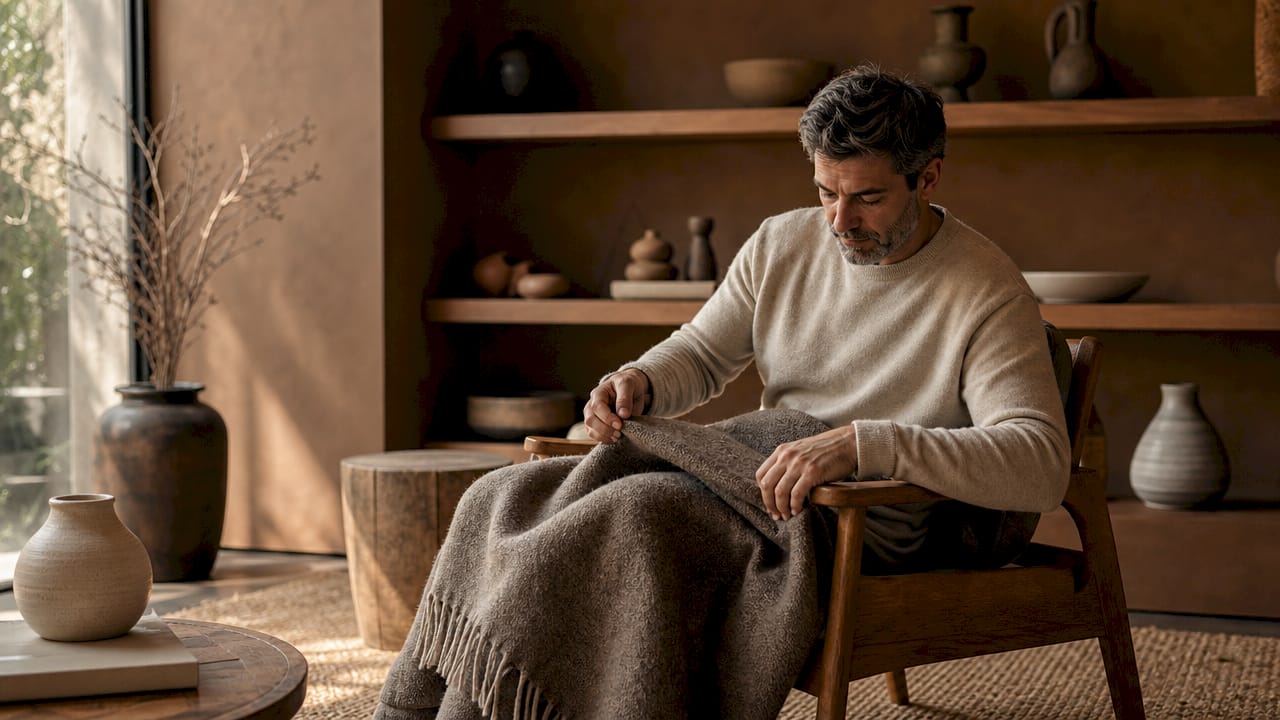
Neutral color palettes amplify the effect. When tones stay close in value, textures become the visual event rather than color contrast. A warm ivory linen sofa paired with a chunky wool throw and a velvet pillow in the same tonal family looks collected and deliberate. That deliberateness is what separates a designed room from a furnished one.
The layering order matters. Anchor larger pieces first, such as upholstery and drapes, then build mid-level texture with throw pillows and blankets, and finish with small, high-contrast accents like a ceramic object or a woven tray. Each layer adds depth without adding clutter.
- Drapes and upholstery: Choose linen, cotton velvet, or wool blends for the largest surfaces.
- Throws and blankets: Add a chunky knit or mohair throw draped over one arm of the sofa.
- Pillows: Mix at least three textures. Vary scale between large and small.
- Small accents: A rattan tray, a stone candle holder, or a hand-woven basket closes the composition.
Pro Tip: Layer textures at varying heights, not just across flat surfaces. A tall linen drape, a mid-height throw, and a low woven tray create vertical rhythm that makes the room feel designed from floor to ceiling.
Does rug size really affect how expensive a room looks?
Incorrect rug sizing is the single most common cause of a cheap-looking living room. A rug that is too small creates a disconnected, floating effect where furniture appears to drift. Going larger reads as intentional and confident.
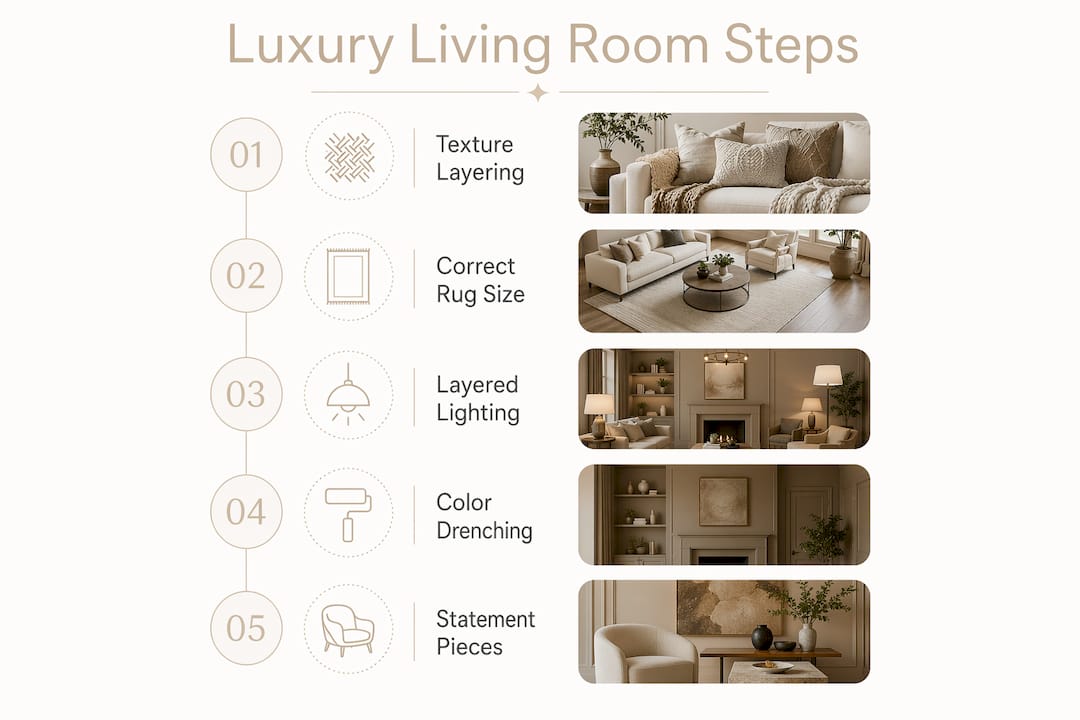
The rule designers use is straightforward: front legs of seating on the rug visually binds the seating area together. This works even more reliably than size alone. An 8x10 foot rug suits most average-sized rooms, leaving roughly one foot of exposed flooring around the edges for visual balance.
Rug sizing quick reference
| Room size | Recommended rug size | Front legs on rug? |
|---|---|---|
| Small (under 150 sq ft) | 5x8 ft | Yes |
| Average (150–250 sq ft) | 8x10 ft | Yes |
| Large (over 250 sq ft) | 9x12 ft or larger | Yes |
- Measure your seating area before purchasing.
- Place the rug so all front sofa and chair legs rest on it.
- Leave at least 12 inches of bare floor visible at the room perimeter.
- Avoid centering a small rug under a coffee table only. That placement isolates the table and breaks the room's cohesion.
What does layered lighting do for a living room?
Layered lighting is the single highest-impact upgrade for living room design on a budget. Ambient, task, and accent sources at different heights create warmth and dimension that overhead lighting alone cannot produce. The effect cues the same mood you feel in a well-designed hotel lobby or a quiet wine bar.
Most living rooms rely on one ceiling fixture. That single source casts flat, even light with no shadow and no depth. Shadow is what makes a room feel rich. A floor lamp in a corner, a table lamp on a side table, and a small accent light near a bookshelf together build a composition of warm pools that feels considered and expensive.
Upgrading lighting layering rather than replacing furniture drives the quickest luxury feel in budget renovations. Warm, dimmable lamps and sconces added to existing ceiling fixtures cost far less than new sofas and deliver a more immediate visual shift.
- Ambient lighting: Your ceiling fixture or recessed lights. Keep it dimmable.
- Task lighting: A floor lamp near a reading chair or a table lamp on a console.
- Accent lighting: A small lamp behind a plant, LED strip lighting under a shelf, or a candle cluster on a tray.
- Warmth rule: Bulbs at 2700K–3000K produce the warm, golden tone associated with luxury spaces.
Pro Tip: Install dimmer switches on your existing overhead fixture for under $20. Dimming overhead light by 50% while turning on two lamps immediately shifts the room from functional to atmospheric.
For a deeper look at how warm, layered light builds ambiance in living spaces, Createdecorus has a dedicated guide worth reading alongside this one.
How does color drenching make a room look more polished?
Color drenching is the practice of painting walls, trim, and ceiling in the same hue. It removes visual interruptions and creates uninterrupted sightlines that support a premium appearance. The hard white ceiling line that most rooms carry is one of the most underestimated sources of visual choppiness.
When the ceiling matches the walls, the eye travels upward without stopping. Rooms feel taller. The space reads as calmer and more cohesive. That calm is what most people describe when they say a room feels expensive.
Finish selection matters as much as color. Use matte finish on the ceiling and eggshell or satin on walls and trim. The subtle sheen difference adds dimension while keeping the monochromatic effect intact.
- Best colors for color drenching: Deep sage, warm terracotta, dusty blue, and rich mushroom all perform well.
- Avoid: Bright white or stark gray, which can feel clinical rather than luxurious.
- For renters: Peel-and-stick wallpaper in a single hue family replicates the uninterrupted visual plane of paint without permanent commitment.
- Coordinate decor: Pull one accent color from the wall tone into pillows, throws, and art for a fully resolved look.
Statement furniture and accessories: what actually works?
Scale and restraint define elegant living room tips more than any single purchase. Fewer, larger statement pieces produce an intentional, expensive look. Multiple small decor items scattered across surfaces create visual noise that reads as cluttered, not curated.
One oversized artwork hung at the correct height draws the eye and anchors the wall. A large statement mirror doubles light and adds depth. Both achieve more than a gallery wall of small frames ever could. The principle is the same as texture layering: intentionality over accumulation.
Arrange furniture around a focal point such as a fireplace, a large window, or a TV wall. Starting from a clear focal point prevents the accidental, unfinished feel that comes from placing furniture against walls and hoping for the best.
Statement piece comparison
| Approach | Visual effect | Cost level |
|---|---|---|
| One oversized artwork (24x36 in or larger) | Anchors wall, adds sophistication | Low to medium |
| Large statement mirror | Adds depth, reflects light | Medium |
| Velvet or leather upholstery | Signals quality through texture | Medium to high |
| Multiple small frames and objects | Creates visual noise | Low |
- Upholstery: Velvet, boucle, and leather signal quality through touch and sight.
- Art placement: Hang artwork so the center sits at eye level, roughly 57–60 inches from the floor.
- Mirror placement: Position a large mirror to reflect a window or a lamp, not a blank wall.
- Edit ruthlessly: Remove anything that does not contribute to the room's focal story.
For guidance on pairing handcrafted accents with contemporary furniture, Createdecorus offers practical examples of how artisan pieces integrate into modern, upscale interiors.
Key takeaways
Expensive-looking living rooms result from cumulative good design decisions in proportion, texture, lighting, and color rather than a few large purchases.
| Point | Details |
|---|---|
| Texture layering | Build from large anchors like upholstery to small accents for a collected, luxurious feel. |
| Rug sizing and placement | Use an 8x10 ft rug for average rooms and keep front furniture legs on the rug. |
| Layered lighting | Add 2–3 warm, dimmable light sources at different heights to replace flat overhead lighting. |
| Color drenching | Paint walls, trim, and ceiling the same hue to create uninterrupted, premium sightlines. |
| Scale and restraint | Choose fewer, larger statement pieces over many small items to avoid visual clutter. |
What I've learned about affordable luxury that most guides skip
I have spent years watching homeowners spend money in the wrong order. They buy a new sofa before fixing their lighting. They purchase art before choosing a rug. The result is a room full of good individual pieces that never cohere.
The expensive look is not about any single item. It is the product of layered good decisions made in the right sequence. Lighting first. Rug second. Textiles third. Art and accessories last. That sequence builds a room from the ground up, and each layer makes the next one look better.
The insight that surprises most people is how little scale costs. An oversized canvas print from a local print shop costs less than a small framed poster from a boutique. A large jute rug costs less per square foot than a small wool one. Going bigger almost always reads as more expensive, not less.
Renters often feel excluded from these conversations. They should not. Color drenching with peel-and-stick wallpaper, layered lighting with plug-in sconces, and handcrafted pillows in rich textures are all renter-friendly upgrades that deliver the same visual result as permanent renovations. The room does not know you rent it.
Start with lighting and textiles. Those two categories offer the highest return for the least investment. A $40 dimmer switch and a set of handcrafted pillows will do more for your living room than a new coffee table.
— Ernesto
Createdecorus handcrafted pillows for an upscale living room
Texture layering is the fastest path to a luxury living room, and the right pillow does more work than most homeowners expect.

Createdecorus crafts each pillow by hand in Mexico, using rich fabrics, bold colors, and traditional artisan techniques passed down through generations. Every piece carries the warmth of that heritage into your space. The full pillow collection includes a range of textures and scales designed to anchor a sofa composition or add a high-contrast accent to a neutral palette. For designers and decorators working across multiple spaces, Createdecorus also offers a wholesale trade program with bulk options. Each piece is a gesture of care, not just decoration.
FAQ
What is the easiest way to make a living room look expensive?
Layered lighting and correctly sized rugs deliver the fastest visual upgrade. Adding 2–3 warm, dimmable light sources and placing an 8x10 ft rug with furniture front legs on it transforms the room's cohesion immediately.
How do I use color drenching in a rental?
Renters can replicate the color drench effect with peel-and-stick wallpaper in a single hue family. Coordinating decor, pillows, and throws in the same tone family extends the uninterrupted visual plane without permanent paint.
What rug size works for an average living room?
An 8x10 ft rug suits most average-sized living rooms. Leave approximately one foot of exposed flooring around the room's perimeter and keep the front legs of all seating on the rug.
How many light sources does a living room need?
At least 2–3 light sources at different heights create the warmth and depth associated with luxury spaces. Combine ambient ceiling light with a floor lamp and at least one table or accent lamp.
Do expensive-looking rooms require expensive furniture?
No. Cumulative design decisions in proportion, texture, and lighting matter more than furniture price. Quick wins like rugs, lamps, and quality textiles consistently offer the highest return on investment.