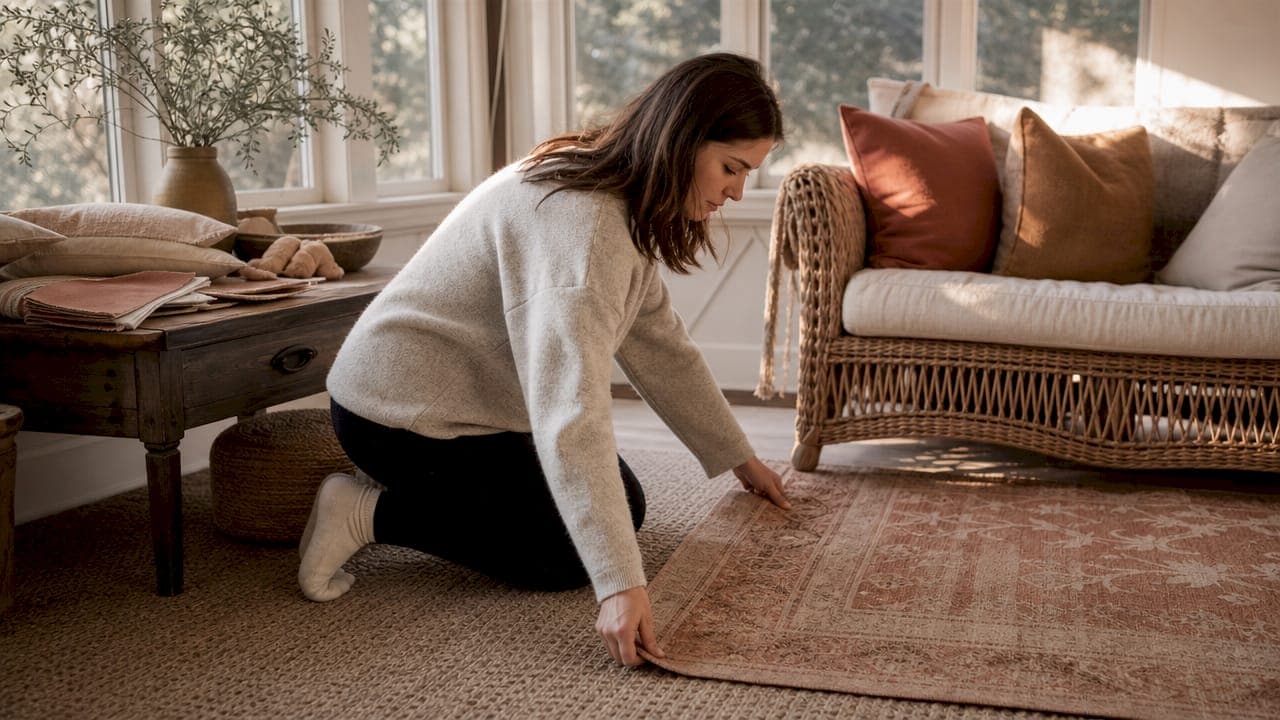
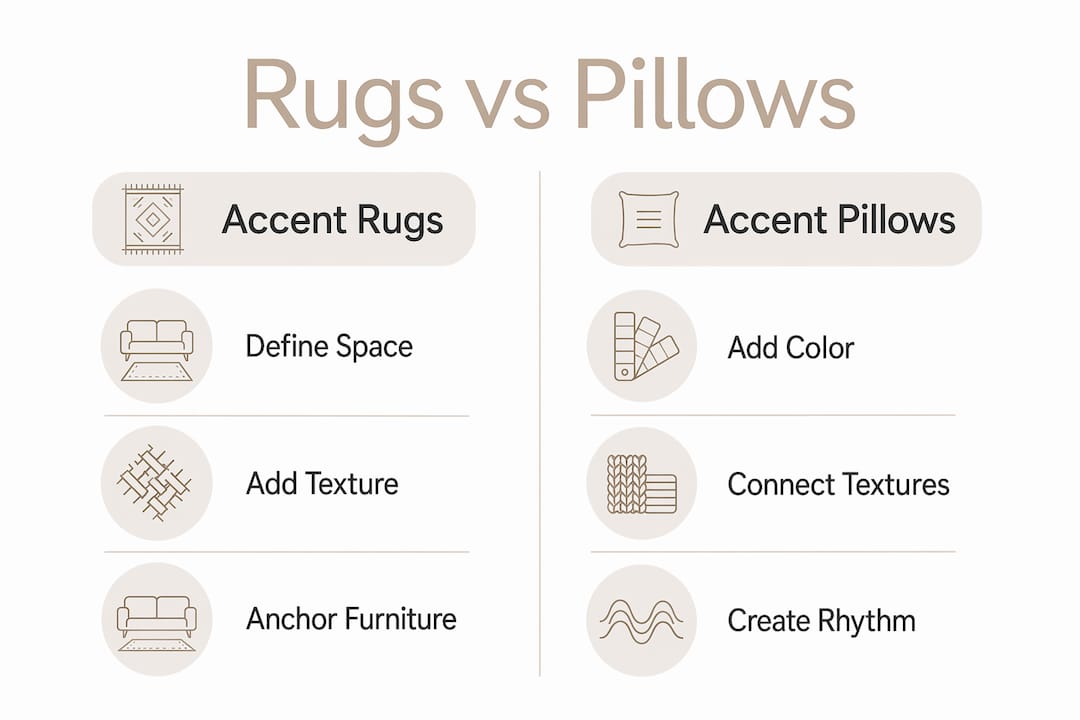
Accent rugs and accent pillows serve distinct but complementary roles in interior design: rugs ground a room spatially and visually, while pillows add rhythmic texture and layered style. Understanding the role of accent rugs versus accent pillows is the key to creating a living space that feels intentional rather than assembled by chance. Rugs function as the structural foundation of a room, setting boundaries and establishing the color palette before any other decor is placed. Pillows then act as connective tissue, pulling colors and textures from the rug into the furniture and softening the overall composition. Together, they create the kind of layered, cohesive design that feels both curated and warm.
How do accent rugs function to structure and anchor a room?
Accent rugs define spatial boundaries and establish the visual foundation of a room before any other decorative element is introduced. This is the importance of accent rugs that designers often cite first: a rug tells the eye where a seating area begins and ends. Without that anchor, furniture floats and the room feels unresolved.
The accent rug benefits extend well beyond aesthetics. Area rugs reduce ambient noise and soften the impact of hard flooring, creating a warmer and more comfortable atmosphere that decorative accents alone cannot replicate. In open floor plans, a rug is the most efficient tool for carving distinct functional zones without building walls.
Sizing is where most homeowners make their first mistake. Improper rug sizing creates a disconnected, "floaty" appearance that undermines the entire room. The front legs of all major seating pieces should rest on the rug, connecting the furniture group into a single visual unit.
Texture and pattern in the rug also set the tone for every decision that follows. A textured rug pattern adds tactile dimension that makes a space feel inviting rather than flat. Choose your foundational rug with the same care you would give to selecting paint color: it is the decision everything else responds to.
- Place the rug so that at least the front legs of all seating rest on it.
- Choose a rug size that covers the majority of the floor in the seating zone.
- Select a pattern or texture that establishes the room's dominant color story.
- In open floor plans, use separate rugs to define the dining zone and the living zone distinctly.
- Layer a smaller accent rug over a larger foundational rug to add depth and personality.
Pro Tip: When shopping for a foundational rug, bring fabric swatches from your sofa and curtains. Matching in memory almost always leads to regret.
What role do accent pillows play in complementing the rug?
Accent pillows are the decorative connectors of a room. They pick up colors and textures from the rug and carry them into the furniture, creating cohesion without requiring an exact match. The best accent pillow styles coordinate rather than copy, which keeps the room feeling alive and layered rather than uniform.
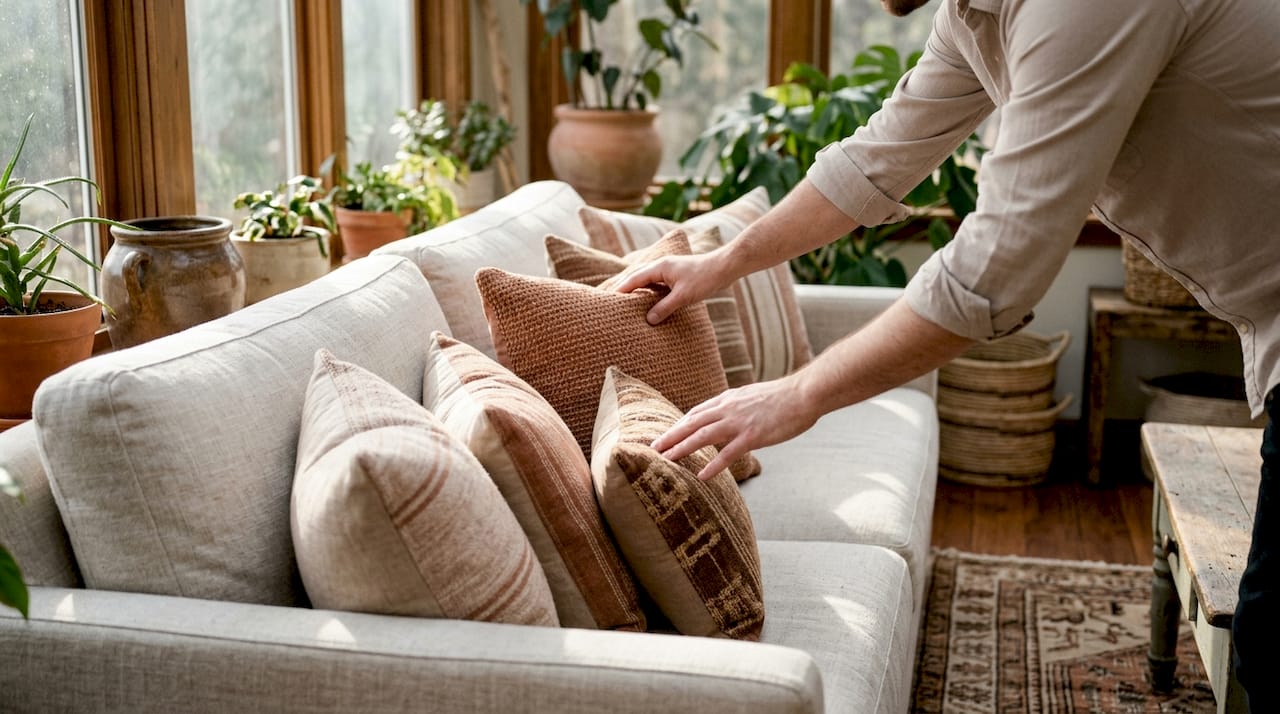
Repeating one or two colors from the rug in your pillow patterns creates curated warmth without overmatching. This is the principle that separates a professionally styled room from one that looks like a showroom floor sample. The rug speaks first; the pillows respond.
Arrangement matters as much as selection. Designers recommend a back-to-front, large-to-small layering strategy:
- Start with large pillows at the back of the sofa, typically 22–24 inches, to create height and structure.
- Layer medium pillows in front, around 18–20 inches, in a coordinating but contrasting pattern.
- Add a smaller lumbar or square pillow at the front for a finished, intentional look.
- Use odd numbers of pillows across the arrangement to create natural visual rhythm.
- Vary fabric textures across the group, mixing woven, embroidered, and solid materials.
Odd-numbered pillow groupings create rhythm and avoid the symmetrical uniformity that makes amateur decor easy to spot. Three, five, or seven pillows arranged asymmetrically feel natural and considered.
Pro Tip: Always buy pillow inserts one to two inches larger than your pillow covers. An insert that matches the cover size exactly produces a flat, deflated look that no amount of fluffing will fix.
How to pair accent rugs and pillows without overmatching?
The most common mistake homeowners make is treating rugs and pillows as a matching set. Designer Darci Hether advises that a professional result requires rugs and pillows to have a coordinated conversation without overlapping scripts. The goal is tension, not uniformity.
Designer Lauren Saab frames it clearly: busy, textured rugs call for simpler pillows, and understated rugs allow more expressive pillow designs. This balance of pattern and texture is what creates visual depth. When both the rug and the pillows compete for attention, neither wins.
The table below shows how to calibrate the relationship between rug character and pillow choice:
| Rug character | Recommended pillow approach |
|---|---|
| Bold geometric pattern | Solid or subtly textured pillows in colors pulled from the rug |
| Rich, layered texture | Smooth or lightly woven pillows in one or two coordinating tones |
| Neutral or solid color | Expressive pillow patterns, embroidery, or mixed textures |
| Organic, natural weave | Pillows with artisan detail, fringe, or handcrafted surface interest |
| High-contrast color palette | Pillows that echo one dominant color, not the full palette |
Scale contrast works the same way. A large-scale rug pattern reads best with pillows that use a smaller or finer repeat. Matching scale on both surfaces creates visual noise rather than depth. The room needs one element to lead and the other to support.
Too much uniformity flattens room energy. Variation is what invites the eye to move around the room and discover detail. This is the principle behind layering rugs and pillows as a design strategy rather than a decorating shortcut.
What practical steps can homeowners take to layer rugs and pillows?
Start with the rug. Every other decision in the room should respond to it. The rug establishes the color palette, defines the zone, and sets the textural register for the space. Pillows, art, and accessories follow its lead.
Once the rug is placed, layer accent rugs strategically by placing a smaller, more expressive rug on top of a larger foundational one. This technique adds depth and character without requiring a full room redesign. A jute or sisal base rug paired with a smaller patterned rug on top is a classic combination that works in nearly any style of room.
- Anchor the room with a foundational rug that covers the main seating zone.
- Add a smaller accent rug on top if you want to introduce a second pattern or texture.
- Select pillows by pulling one or two colors directly from the rug, not the sofa.
- Group pillows in odd numbers and vary their sizes from back to front.
- Swap pillow covers seasonally to refresh the room without replacing the rug.
Seasonal swapping is one of the most underused tools in home styling. Changing pillow covers in the fall to warmer tones and textures, then returning to lighter fabrics in spring, keeps a room feeling current without significant cost. The rug stays as the permanent anchor; the pillows do the seasonal work. This flexibility is one of the clearest accent rug benefits: once the foundation is right, updates become simple and affordable.
Key Takeaways
Accent rugs anchor a room's structure and color palette, while accent pillows complete the design by connecting textures and tones across furniture and floor.
| Point | Details |
|---|---|
| Rugs anchor first | Place the rug before selecting any other decor; it sets the color and spatial foundation. |
| Pillows coordinate, not match | Pull one or two colors from the rug into pillow patterns to create cohesion without uniformity. |
| Odd numbers create rhythm | Group pillows in threes, fives, or sevens arranged asymmetrically for a natural, layered look. |
| Scale contrast adds depth | Pair a large-pattern rug with smaller-scale or simpler pillows to avoid visual competition. |
| Seasonal swaps extend value | Change pillow covers by season to refresh the room while keeping the rug as a permanent anchor. |
My honest take on rugs, pillows, and the rooms they make
I have seen homeowners spend weeks choosing a sofa and then place a rug that is two sizes too small beneath it. The rug floats, the furniture disconnects, and the room never quite settles. The rug is not a finishing touch. It is the first decision, and it shapes every choice that follows.
Pillows are where I see the opposite problem. People buy sets that match too perfectly, and the room ends up looking like a catalog page rather than a home. The magic happens when you pull a single color from the rug into a pillow with a completely different texture or pattern. That small act of coordination without copying is what gives a room its character.
The detail most people overlook is pillow insert sizing. A pillow cover stuffed with a same-size insert looks hollow and cheap, regardless of the fabric quality. Going one to two inches larger on the insert costs almost nothing and makes every pillow look plush and considered. It is the kind of detail that separates a room that looks expensive from one that merely cost a lot.
My advice: treat the rug as the rhythm of the room and the pillows as the melody. The rhythm holds everything together. The melody is where you express yourself. Createdecorus pieces, with their handcrafted texture and bold artisan color, are built to play that melody with conviction. Experiment with scale, trust the tension, and let the two elements speak to each other rather than shout at the same time.
— Ernesto
Createdecorus handcrafted pillows for your accent rug
Every well-anchored room deserves pillows that carry the same level of craft as the rug beneath them. Createdecorus handcrafted pillows are made in Mexico with rich textures, bold colors, and artisan detail that create a genuine dialogue between the floor and the furniture.

Each piece is designed to coordinate with a range of rug styles without matching them exactly, which is precisely the tension that makes a room feel alive. Whether your rug is a bold geometric or a natural woven texture, the Createdecorus pillow collection offers the depth and character to complete the composition. For homeowners who want to see the full range, the curated pillow shop makes it easy to find the right accent pillow styles for any room.
FAQ
What is the main difference between accent rugs and accent pillows?
Accent rugs define spatial boundaries and anchor furniture groups, while accent pillows connect the rug's colors and textures to the rest of the room's decor. Rugs provide structure; pillows provide rhythm and softness.
Should throw pillows match the accent rug exactly?
Pillows should coordinate with the rug, not match it exactly. Repeating one or two colors from the rug in pillow patterns creates cohesion, while exact matching flattens the room's visual energy.
How many pillows should I use on a sofa?
Odd-numbered groupings of three, five, or seven pillows create natural visual rhythm and avoid the stiff symmetry of even-numbered arrangements. Vary sizes from large at the back to small at the front.
What rug size works best for a living room seating area?
The rug should be large enough for the front legs of all major seating pieces to rest on it. A rug that is too small disconnects the furniture and makes the room feel unanchored.
Can I layer two rugs in the same room?
Layering a smaller accent rug over a larger foundational rug adds depth and personality to a space. Use a neutral base rug to cover the main zone and a patterned or textured accent rug on top to define a focal point.