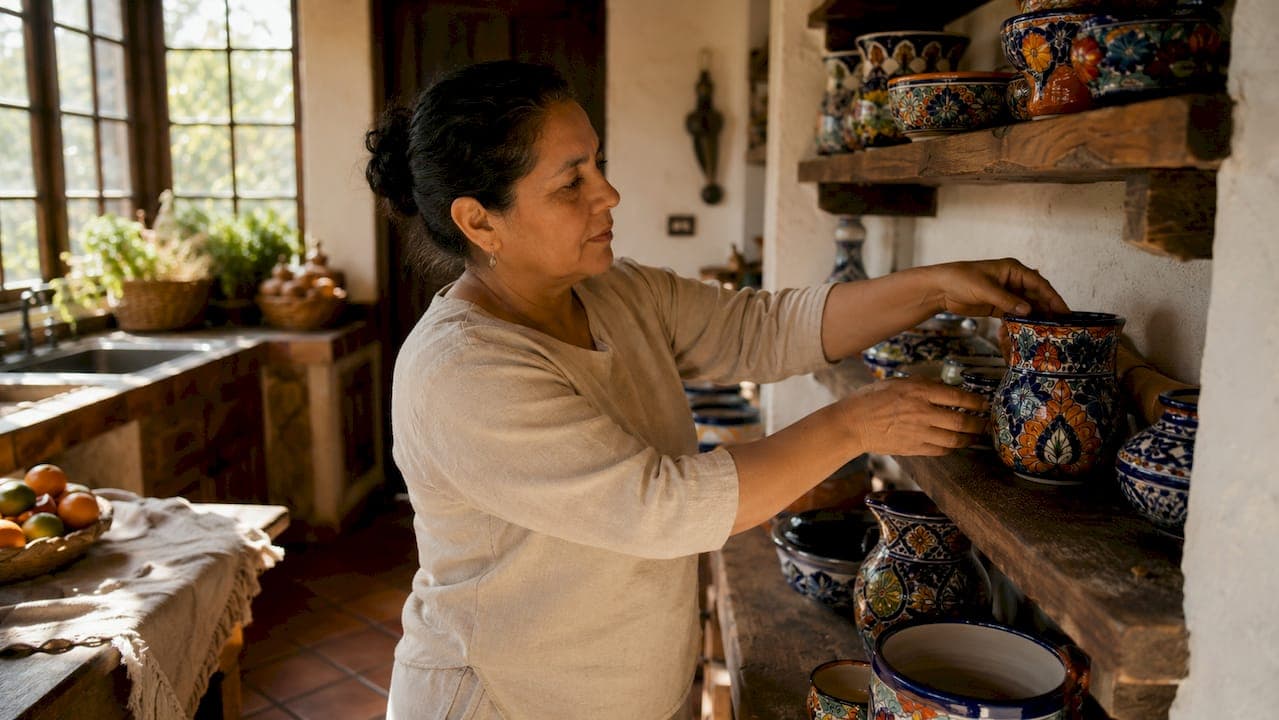
Celebrating Mexican heritage through home design is the practice of using authentic artisan materials, traditional color palettes, and handcrafted objects to transform a living space into a meaningful cultural expression. This is not about decorating with stereotypes. It is about honoring a living tradition of craftsmanship, one where cultural integration enhances identity far beyond surface aesthetics. The pieces you choose, the colors you apply, and the materials you touch every day become a dialogue between your home and the artisans who shaped them. This guide gives you the tools to do that with intention and respect.
Celebrating Mexican heritage through home design: what it really means
Heritage-inspired home styling is not a trend. It is a design philosophy grounded in material honesty, cultural specificity, and artisan pride. The most important distinction to understand is that authentic Mexican interior design draws from regional craft traditions, not from a generalized idea of "Mexican style." Oaxaca produces barro negro ceramics. Puebla is the home of Talavera tile. The Zapotec communities of the Sierra Juárez weave geometric rugs that carry centuries of visual language. Knowing the origin of a piece is the first step toward incorporating Mexican culture with genuine respect.
Treating cultural symbols as integral design elements rather than decorative add-ons is the standard that separates meaningful design from kitsch. That means you choose pieces because of what they represent and how they were made, not because they fill a shelf. When you approach your home this way, every room becomes a living record of craft and community.
What materials define an authentic Mexican interior?
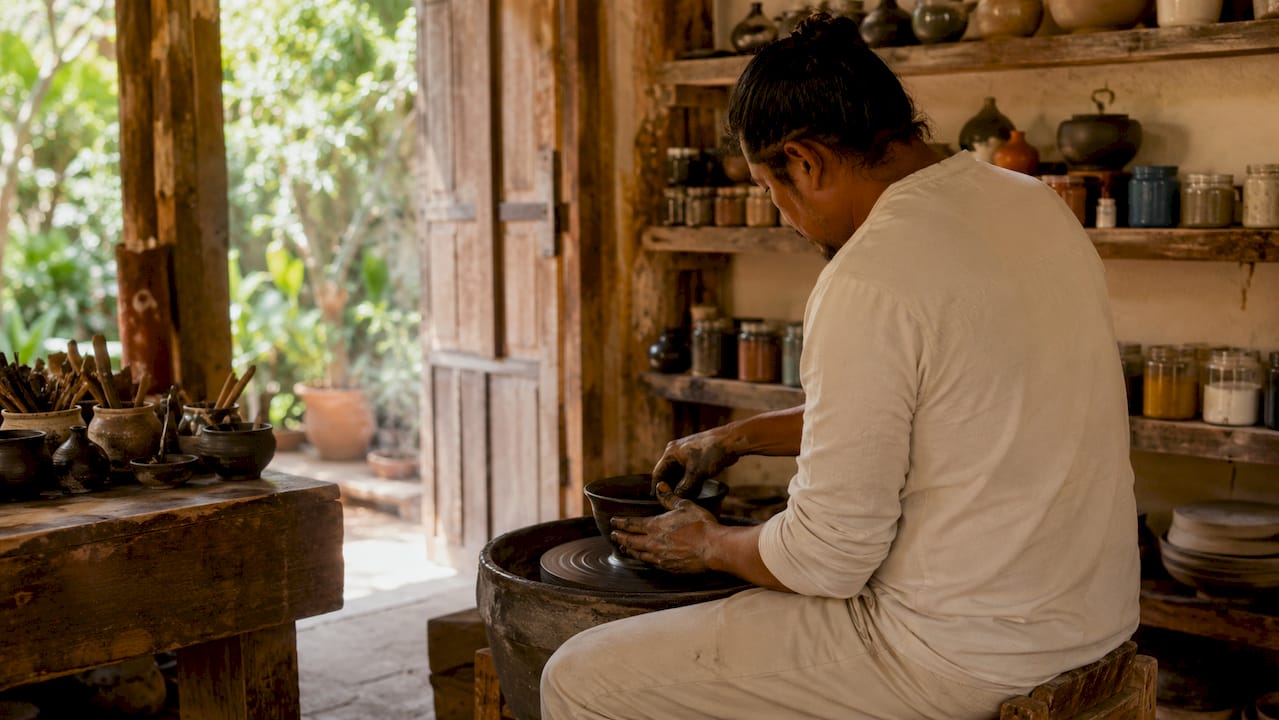
Raw, imperfect surfaces are the foundation of traditional Mexican interior design. Unglazed clay, hand-carved wood with visible grain, and authentic pitting in plaster are valued precisely because they show the hand of the maker. Factory-finished surfaces lose that cultural meaning entirely. Imperfection is not a flaw here. It is the point.
The most recognized materials in Mexican home decor ideas include:
- Saltillo tile floors: Handmade terracotta tiles from Coahuila, Mexico, with natural color variation and a matte finish that deepens with age and wax.
- Barro negro ceramics: Black clay pottery from San Bartolo Coyotepec, Oaxaca, shaped without a wheel and polished by hand to a dark metallic sheen.
- Hand-loomed rugs: Zapotec weavers in Teotitlán del Valle produce wool rugs using natural dyes from cochineal, indigo, and marigold.
- Hand-carved wood: Mesquite and pine furniture with visible tool marks and natural grain, often finished with linseed oil rather than lacquer.
- Wrought iron accents: Candelabras, window grilles, and hardware forged by hand in workshops across Michoacán and Jalisco.
Each of these materials ages beautifully. Saltillo tile develops a warm patina over decades. Barro negro ceramics deepen in color with handling. That aging is not wear. It is the material telling its story.
Pro Tip: When sourcing materials, look for the "Hecho en México" designation and ask vendors directly about the artisan community of origin. Pieces with a named maker or workshop carry far more cultural weight than anonymous imports.
How do you choose the right Mexican color palette?
Authentic Mexican design favors earthy, textural palettes. The foundational colors are terracotta, warm off-whites, rust, ochre, and deep muddy browns, not the bright primaries that appear on piñatas and party supplies. That distinction matters enormously. Beginners consistently mistake saturated primaries for authentic Mexican color, and the result reads as costume rather than culture.
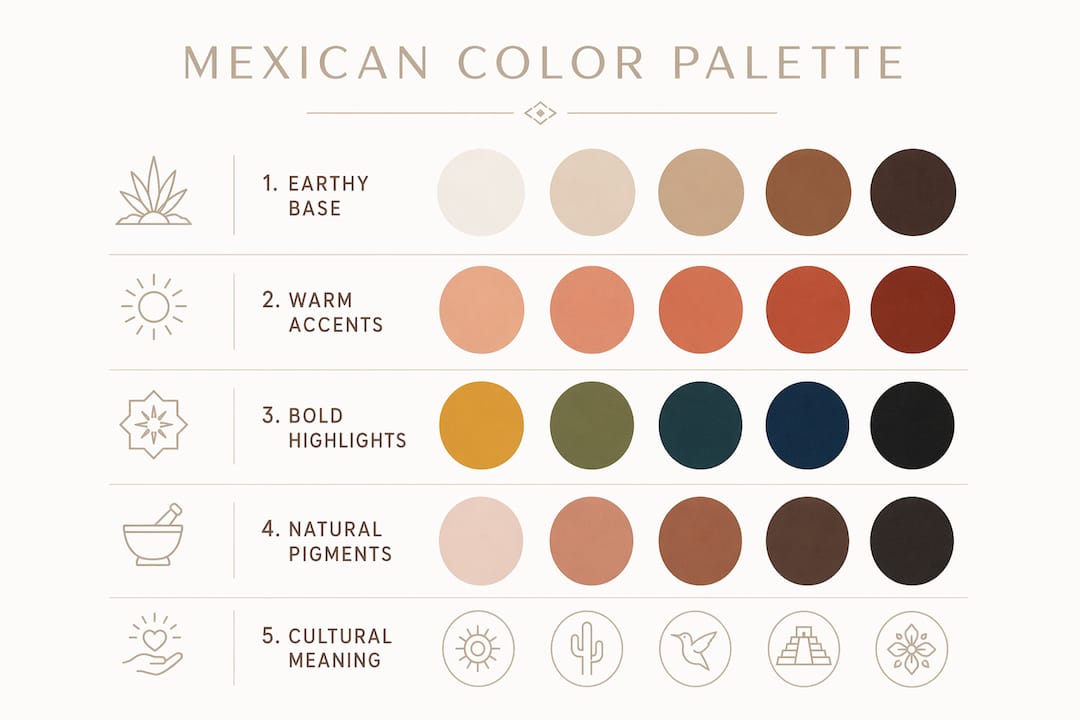
The earthy palette works because it mirrors the natural pigments available to artisans for centuries: iron oxide for rust and ochre, kaolin clay for off-white, charcoal and ash for deep brown. These colors interact with natural light in a way that synthetic brights never do. They warm at midday and deepen at dusk.
| Color | Source material | Best application |
|---|---|---|
| Terracotta | Iron-rich clay | Wall paint, tile floors, pottery |
| Ochre | Yellow iron oxide | Accent walls, textile borders |
| Rust | Oxidized iron | Wrought iron, throw pillows |
| Warm off-white | Kaolin clay plaster | Primary wall color, ceiling |
| Deep olive green | Plant-based dyes | Upholstery, woven textiles |
Bold accent colors do belong in Mexican-inspired spaces, but they work best as punctuation. A single cobalt blue Talavera vase against a warm off-white wall reads as intentional. Five cobalt objects in the same room read as noise.
Pro Tip: Paint a large sample swatch, at least 12 by 12 inches, and observe it at three different times of day before committing. Terracotta shifts dramatically between morning and evening light, and that shift is part of its beauty.
For a deeper look at how specific colors carry cultural meaning, the Mexican color symbolism guide from Createdecorus covers the regional and historical roots of each tone.
How do you incorporate authentic Mexican artisan crafts?
Sourcing directly from Mexican artisans is the single most important decision you make when incorporating Mexican culture into your home. Mass-produced knockoffs not only lack the material quality of genuine crafts, they sever the connection between the object and the community that created it. That connection is what gives the piece its presence in a room.
The most effective approach uses one strong anchor piece and builds around it:
- Choose your anchor first. A Talavera tile backsplash, a Zapotec rug, or a Saltillo tile floor each sets the design foundation and directs every subsequent choice.
- Keep the surroundings neutral. White or warm plaster walls let the anchor piece carry the visual weight without competition.
- Add secondary pieces with restraint. One barro negro bowl, one hand-loomed textile, and one wrought iron candelabra is enough for most rooms.
- Avoid mixing regional styles carelessly. Talavera is from Puebla. Oaxacan black clay is from a different tradition entirely. Both are beautiful. Mixing them without intention creates visual confusion.
- Honor the cultural significance of each piece. Zapotec rugs carry geometric patterns with cosmological meaning. Placing one on the floor is fine. Using it as a wall hanging elevates it and signals respect for its craft.
| Authentic piece | Region of origin | Best placement |
|---|---|---|
| Talavera tile | Puebla | Kitchen backsplash, bathroom wall |
| Zapotec rug | Oaxaca | Living room floor, bedroom accent |
| Barro negro ceramics | Oaxaca | Shelf display, dining table centerpiece |
| Equipale furniture | Jalisco | Living room seating, patio |
| Saltillo tile | Coahuila | Entry hall, kitchen floor |
Pro Tip: Purchasing directly from artisan cooperatives or verified fair-trade retailers means your money supports the craft community directly. The handcrafted Mexican goods that carry the most soul are the ones where you can trace the hands that made them.
For guidance on pairing these pieces with modern furniture, the Createdecorus article on pairing Mexican crafts with contemporary furniture offers practical room-by-room examples.
Practical styling tips for a heritage-inspired home
You do not need to renovate your entire home to create a meaningful Mexican-inspired space. Small, intentional changes create significant impact when they are placed with care.
"Start with one authentic anchor material. It sets the foundation for the space and simplifies every furniture and textile choice that follows." — Awedeco
Here are the most effective steps for readers working with existing spaces:
- Start with a DIY Talavera-style accent. Paint unglazed ceramic tiles with acrylic paint in cobalt, rust, and cream. This approach costs approximately $2–5 per tile and takes 1–2 hours per dozen tiles. Use them as a kitchen backsplash border or bathroom mirror frame.
- Layer textures deliberately. Place a hand-loomed wool rug over a Saltillo tile floor. Add a woven cotton throw to a leather equipale chair. Texture depth is what separates a designed room from a furnished one.
- Use natural greenery. Potted agave, prickly pear cactus, and bougainvillea in terracotta pots reinforce the palette and add living warmth that no object can replicate.
- Control your lighting. Wrought iron pendant lights and beeswax candles in clay holders cast warm, directional light that makes earthy tones glow. Avoid cool white LED bulbs, which flatten terracotta and ochre into dull brown.
- Edit ruthlessly. The most common mistake in Mexican home decor ideas is overcrowding. One strong piece with breathing room outperforms ten pieces competing for attention.
Pro Tip: When layering textiles, vary the weave weight. A flat-woven Zapotec rug under a plush cotton throw creates tactile contrast that makes a room feel considered, not decorated.
Key takeaways
Authentic Mexican heritage home design succeeds when you prioritize material honesty, a single anchor piece, and an earthy color palette over quantity and surface decoration.
| Point | Details |
|---|---|
| Start with one anchor piece | A Saltillo floor, Zapotec rug, or Talavera backsplash directs every other design choice. |
| Use earthy tones, not bright primaries | Terracotta, ochre, rust, and warm off-white are the authentic foundation of Mexican color. |
| Source directly from artisans | Buying from verified Mexican artisan communities protects cultural integrity and design quality. |
| Imperfection is a virtue | Hand-carved wood, unglazed clay, and pitted plaster carry authenticity that factory finishes cannot replicate. |
| Edit for impact | One well-placed authentic piece in a neutral room carries more cultural weight than a crowded display. |
Why authenticity matters more than aesthetics
I have spent years studying how people bring cultural heritage into their homes, and the pattern I see most often is this: people start with the right instinct and then lose confidence halfway through. They buy one beautiful Zapotec rug, then surround it with mass-produced items because they are not sure what belongs next. The rug ends up looking like a prop.
The shift that changes everything is treating your home as a living record rather than a styled set. When you buy a barro negro bowl from a cooperative in San Bartolo Coyotepec, you are not just buying an object. You are connecting your daily life to a craft tradition that predates the Spanish colonial period. That is a meaningful thing to hold in your hands every morning.
What I find most underappreciated is the role of imperfection. Designers trained in European modernism often want to correct the irregularities in Saltillo tile or smooth the grain in hand-carved mesquite. Those irregularities are the design. They are what make the material alive. The moment you sand them away, you have a reproduction, not a heritage piece.
My honest advice: resist the urge to complete a room quickly. Let one anchor piece sit alone for a few weeks. Live with it. See how the light changes it. The next piece you add will be chosen with far more clarity, and the room will be better for the patience.
— Ernesto
Createdecorus: handcrafted accents for your heritage-inspired home
Createdecorus was built on the belief that every piece in your home should carry meaning. Each pillow, ottoman, and accent in the collection is handcrafted in Mexico by artisans who work with the same materials and techniques passed down through generations.

If you are building a heritage-inspired space and want accent pieces that hold their own next to Talavera tile or a Zapotec rug, the handcrafted luxury pillows at Createdecorus are made for exactly that purpose. Rich textures, earthy tones, and genuine artisan construction make them a natural complement to any traditional Mexican interior. The full range is available at the Createdecorus shop, where each piece is described with its material origin and craft process.
FAQ
What colors are authentic to Mexican interior design?
Authentic Mexican palettes are grounded in earthy mineral tones: terracotta, ochre, rust, warm off-white, and deep olive green. Bright primaries are not traditional and often misrepresent the aesthetic.
How do I avoid cultural appropriation in Mexican-inspired design?
Source directly from Mexican artisans and learn the regional origin of each piece. Treating cultural objects with knowledge and respect is the clearest way to honor rather than appropriate a tradition.
What is the best anchor piece for a Mexican-inspired room?
A Saltillo tile floor, Talavera backsplash, or Zapotec rug each sets the design foundation and simplifies every subsequent choice. Pick one and build around it with neutral walls and restrained secondary pieces.
Can I create Mexican-inspired accents on a budget?
Yes. DIY Talavera-style tiles cost approximately $2–5 per tile using unglazed ceramic and acrylic paint, and a dozen tiles take 1–2 hours to complete. They work well as backsplash borders or mirror frames.
How does Mexican heritage design differ from generic "Latin" decor?
Mexican heritage design is regionally specific. Talavera comes from Puebla, barro negro from Oaxaca, and equipale furniture from Jalisco. Generic "Latin" decor flattens these distinctions. Specificity is what gives the design its cultural depth and authenticity.