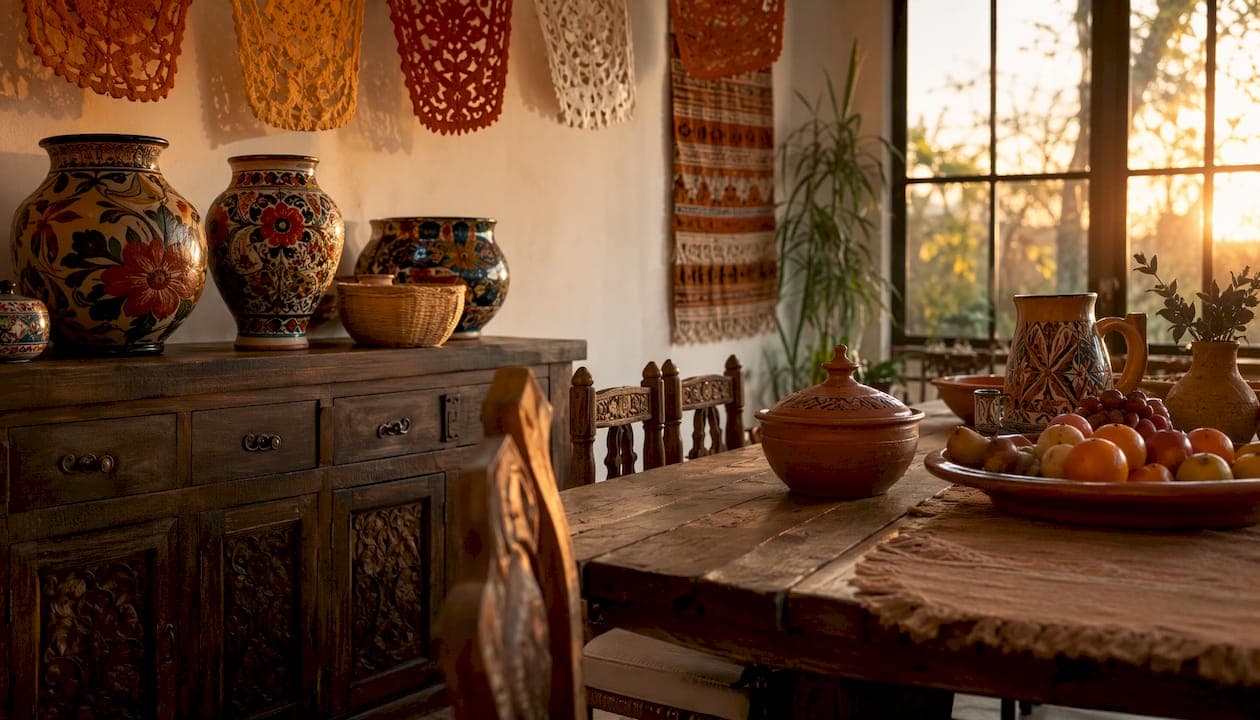
The most iconic examples of Mexican folk art styles designers and homeowners should know are Talavera ceramics, Alebrijes, Otomí embroidery, Zapotec textiles, Huichol beadwork, Papel picado, Barro negro pottery, Sarapes de Saltillo, Cajitas de Olinalá, and Taxco silverwork. Each carries a distinct regional identity, a specific set of materials, and a visual vocabulary that translates beautifully to luxury pillows, ottomans, and home accents.
What unites these traditional Mexican art forms is a shared commitment to handcraft: vivid color, motifs drawn from nature and spiritual life, and techniques passed down through family workshops. UNESCO has recognized several of these traditions as Intangible Cultural Heritage, a designation that underscores the generational knowledge embedded in every authentic piece. Createdecorus was built around exactly this heritage, sourcing directly from Mexican artisan workshops to bring these traditions into high-end American interiors.
Table of Contents
- Examples of iconic Mexican folk art styles: a visual guide
- How each style translates to high-end pillows and accents
- How to source authentic handcrafted Mexican folk art
- Care and conservation for handcrafted Mexican accents
- How Createdecorus sources and adapts these traditions
- Key Takeaways
- Honoring craft in every design decision
- Createdecorus handcrafted pillows and accents for your interior
- Useful sources for further research
Examples of iconic Mexican folk art styles: a visual guide
Understanding what each style looks like, where it comes from, and what marks it as genuine is the first step toward specifying it confidently for a luxury interior.
1. Talavera (Puebla and Tlaxcala) Talavera pottery is hand-painted majolica ceramic fired with mineral glazes in cobalt blue, terracotta, yellow, and black on a white ground. Authentic pieces carry a workshop stamp on the base and show slight irregularities in brushwork. On a luxury ottoman, Talavera motifs appear as printed accent panels or hand-painted ceramic feet.
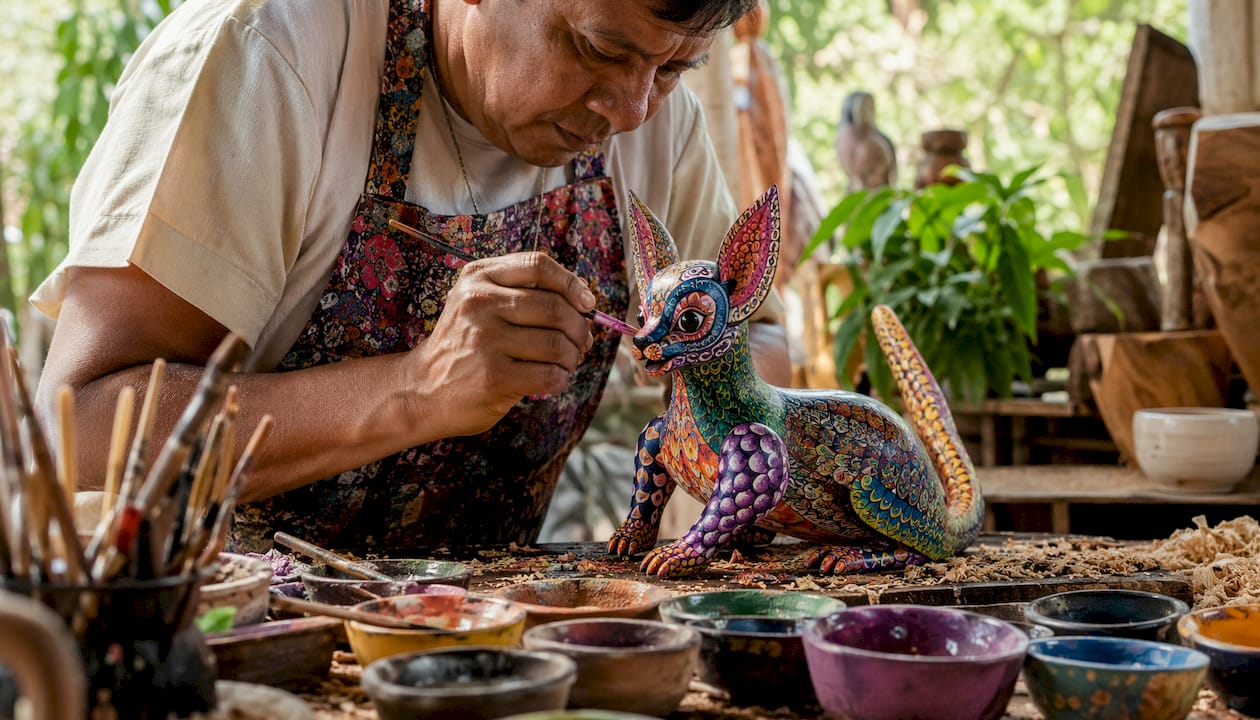
2. Alebrijes (Oaxaca) Alebrijes are fantastical wood carvings made from copal wood, painted with intricate geometric and animal patterns in saturated color. They emerged as a distinct genre in the mid-20th century. Look for tool marks along carved edges and slight paint layering as signs of handwork. As textile motifs, their creature forms translate into embroidered or printed pillow faces with striking visual energy.
3. Otomí embroidery (Hidalgo and central Mexico) Otomí work features bold, densely stitched animals, plants, and human figures on natural cotton or bark paper. The stitching is typically satin stitch or running stitch in vivid contrasting threads. An Otomí lumbar pillow on a neutral linen sofa creates an immediate focal point without competing with surrounding furniture.
4. Zapotec textiles (Oaxaca) Woven on back-strap or treadle looms using wool or cotton, Zapotec rugs and textiles feature geometric step-fret patterns and natural dye colorways. Authentic pieces show a characteristic selvage edge from the loom and slight weft irregularities. These patterns adapt naturally to woven pillow covers and upholstered ottoman tops.
5. Huichol beadwork (Nayarit and Jalisco) Huichol artisans press tiny glass seed beads into wax or resin to form intricate spiritual and geometric designs. The labor intensity is visible in the density and precision of bead placement. For luxury accents, beadwork panels are best mounted on velvet grounds rather than glued chipboard to protect the piece and honor its detail.
6. Papel picado Papel picado is cut from tissue paper, often stacked 40–50 sheets at a time, into lace-like patterns tied to Day of the Dead, weddings, and seasonal celebrations. Its delicacy makes it a decorative rather than functional accent. Framed under UV glass, it becomes a refined wall piece that adds cultural depth to a gallery wall.
7. Barro negro (Oaxaca) Barro negro is burnished black pottery shaped and polished by hand before firing, producing a distinctive matte-to-satin sheen. No glaze is applied; the color comes from the clay and firing process. A barro negro vessel on a stone or marble surface reads as quietly sculptural, the kind of accent that holds its own in a minimalist interior.
8. Sarapes de Saltillo (Coahuila) Sarapes are large woven blankets in concentric diamond patterns, traditionally made in Saltillo with fine wool. The color gradients and tight weave make them among the most technically demanding Mexican textiles produced. As throw pillows or upholstery panels, their graphic geometry pairs well with leather and dark wood furniture.
9. Cajitas de Olinalá (Guerrero) These lacquered wooden boxes are decorated using a scratch-and-reveal technique called rayado, producing intricate floral and animal motifs in layered color. The lacquer finish has a depth that photographs cannot fully capture. As accent pieces on a console or bookshelf, they function as both art objects and storage.
10. Taxco silverwork and blown glass Taxco is Mexico's silver capital, producing jewelry and decorative objects with fine filigree and repousse work. Hand-blown glass from Jalisco is prized for its rich color variation. Both work as accent pieces in a luxury interior, particularly when grouped on a tray or displayed against natural stone.
Authenticity cues across all styles:
- Slight irregularities in pattern, stitch spacing, or glaze coverage signal handwork.
- Workshop stamps, signed bases, or artisan tags with a name and region are strong provenance markers.
- Mass-produced imitations typically show perfectly uniform stitching, machine-printed "handmade" labels, and overly glossy synthetic paints.
Pro Tip: For Talavera specifically, look for a kiln or workshop mark on the base and ask for the workshop's registration with Mexico's Talavera regulatory council. Certified workshops are listed publicly, and that documentation is the clearest proof of authenticity you can carry back to a client.
How each style translates to high-end pillows and accents
Every folk-art tradition adapts to luxury decor through material upgrades, considered color editing, and construction standards that protect the integrity of the original craft. The translation is not about copying, but about a genuine dialogue between artisan heritage and contemporary design.
Zapotec geometric patterns work beautifully in fine wool or a wool-silk blend, where the weave structure remains visible and the hand feel is plush. Otomí embroidery on a linen or cotton-linen ground retains its graphic boldness while feeling appropriate on a high-end sofa. Talavera motifs translate to fabric through archival-quality pigment printing on cotton sateen or velvet, preserving the cobalt-and-white palette without the weight of ceramic.
For Huichol-inspired beadwork panels, mounting on a velvet ground rather than a rigid chipboard backing protects the beads and gives the piece a tactile luxury that suits a designer interior. Sarape patterns, when woven in fine merino rather than commercial wool, shift from market souvenir to collector-quality textile. Construction details matter equally: double-stitched seams, hidden zippers, and premium memory foam or polyester fill are what separate a luxury pillow from a decorative one.
When pairing these accents with furniture, consider Spanish Colonial or ranch-style interiors as natural homes for Talavera-motif pillows and barro negro vessels. A neutral silk sofa gains warmth and personality from a single Otomí lumbar pillow without losing its quiet elegance. Sarape-patterned ottomans anchor a reading corner in a study furnished with dark leather and walnut.
How to source authentic handcrafted Mexican folk art
Provenance is everything. A piece without a traceable origin is a decorative object; a piece with documented workshop lineage is an investment.
- Ask for the workshop name and location. A reputable seller can name the specific workshop and the artisan family behind the piece.
- Request photos of the workshop or artisans. Legitimate producers welcome this; factory operations avoid it.
- Confirm materials and dyes. Natural dyes, copal wood, mineral glazes, and hand-spun wool all signal authentic production. Synthetic substitutes are not disqualifying, but the seller should know which materials were used.
- Look for stamps, signatures, or artisan tags. Ceramics from certified Talavera workshops carry a regulatory mark. Signed or tagged textiles indicate individual artisan accountability.
- Understand the price shape. A hand-woven Zapotec rug takes weeks to produce; its price reflects that. If a piece is priced like a mass-market import, it probably is one. Materials, technique complexity, and workshop reputation all drive value upward.
Red flags: perfectly uniform stitching, machine-printed "handmade" tags, overly glossy cheap paints, and sellers who cannot name the region or artisan behind a piece. For a deeper authenticity checklist, the specifics of what to look for in stitching, glaze, and wood grain are worth reviewing before any significant purchase.
Care and conservation for handcrafted Mexican accents
Follow material-specific protocols to protect artisanal techniques and preserve the value of each piece over time.
| Material | Cleaning method | Frequency | Storage |
|---|---|---|---|
| Wool textiles (Zapotec, Sarape) | Spot-clean with pH-neutral soap; dry flat | As needed | Rolled, not folded; cedar protection |
| Cotton/linen embroidery (Otomí) | Hand-wash cold or dry-clean | Seasonally | Acid-free tissue, away from light |
| Talavera ceramics | Wipe with damp cloth; no abrasives | Weekly | Padded shelf; avoid stacking |
| Barro negro pottery | Dry dust only; no water on burnished surface | Weekly | Stable surface; no direct sunlight |
| Huichol beadwork | Soft brush; no moisture near wax base | Monthly | Flat storage; UV-protective display case |
| Papel picado | No cleaning; handle minimally | Rarely | Acid-free folder; low humidity |
Avoid direct sunlight on any dyed textile; UV exposure causes dye migration within months. Never machine-wash hand-stitched Otomí or embroidered pieces, as agitation breaks thread tension and distorts the ground fabric. For valuable vintage textiles or antique Talavera showing craquelure, consult a certified textile or ceramics conservator before attempting any cleaning.
Pro Tip: For framed Huichol beadwork panels, use UV-filtering museum glass rather than standard picture glass. The wax or resin base is sensitive to heat and light, and museum glass extends the life of the piece significantly while keeping the colors vivid.
How Createdecorus sources and adapts these traditions
Createdecorus works directly with Mexican artisan workshops, building long-term relationships that go beyond a single order. Each collection begins with workshop visits, material sampling, and collaborative pattern development with the artisans themselves. This process honors the UNESCO principle that artisanal value rests in the generational transmission of skills, not just the finished object.
Material upgrades are built into every product: premium wools, archival pigments, and conservation-grade backings replace the shortcuts common in mass production. Trade and wholesale accounts receive access to custom patterns developed with specific artisan families, along with sampling before bulk commitment. Vacuum-compressed shipping protects each piece in transit, and trade pricing is available for interior designers and retailers who want to build a curated collection around authentic Mexican craft.
Key Takeaways
Mexican folk art styles carry the most value in luxury interiors when provenance, material quality, and care protocols are all treated as non-negotiable.
| Point | Details |
|---|---|
| Verify workshop provenance | Ask for the artisan's name, workshop location, and any stamps or regulatory marks before purchasing. |
| Upgrade materials for luxury use | Fine wool, archival pigments, and velvet grounds elevate folk-art motifs to high-end interior standards. |
| Follow material-specific care | Wool textiles, burnished ceramics, and beadwork each require distinct cleaning and storage protocols. |
| Use regional origin as a sourcing guide | Oaxaca for Alebrijes and Zapotec textiles; Puebla for Talavera; Coahuila for Sarapes. |
| Createdecorus as sourcing partner | Direct artisan partnerships, material upgrades, and trade pricing make Createdecorus a reliable source for luxury Mexican-inspired accents. |
Honoring craft in every design decision
What strikes me most about these traditions is how little margin there is for shortcuts. A Zapotec weaver cannot rush a back-strap loom; a Huichol beadwork artist cannot approximate bead placement. The time embedded in each piece is not a production inefficiency. It is the point. When we specify or source these accents for a luxury interior, we are not just choosing a motif. We are choosing to bring that time, that lineage, and that specific human skill into a room.
My advice to designers and homeowners is this: resist the temptation to treat folk-art accents as purely decorative. The most enduring interiors I have seen treat each handcrafted piece as a conversation starter, something with a story the room can hold. A single authenticated Otomí pillow on a neutral sofa does more for a space than a dozen printed approximations. Authenticity is not a premium you pay. It is the thing itself.
Createdecorus handcrafted pillows and accents for your interior
Createdecorus offers a curated collection of handcrafted luxury pillows, ottomans, and home accents inspired by the folk-art traditions covered here, each produced in Mexico with direct artisan oversight and premium materials.

Every piece ships vacuum-compressed to protect its form in transit and arrives ready to place. Retail customers can shop the full collection directly, while interior designers and boutique retailers can apply for trade and wholesale accounts to access custom patterns, volume pricing, and dedicated sourcing support. Custom orders are available for designers who want a specific motif, colorway, or size developed in collaboration with our artisan partners. Visit Createdecorus to start your order or inquire about a trade account.
Useful sources for further research
- **[UNESCO Intangible Cultural Heritage: Talavera of Puebla and Tlaxcala](https://ich.unesco.org/en/RL/artisanal-ta