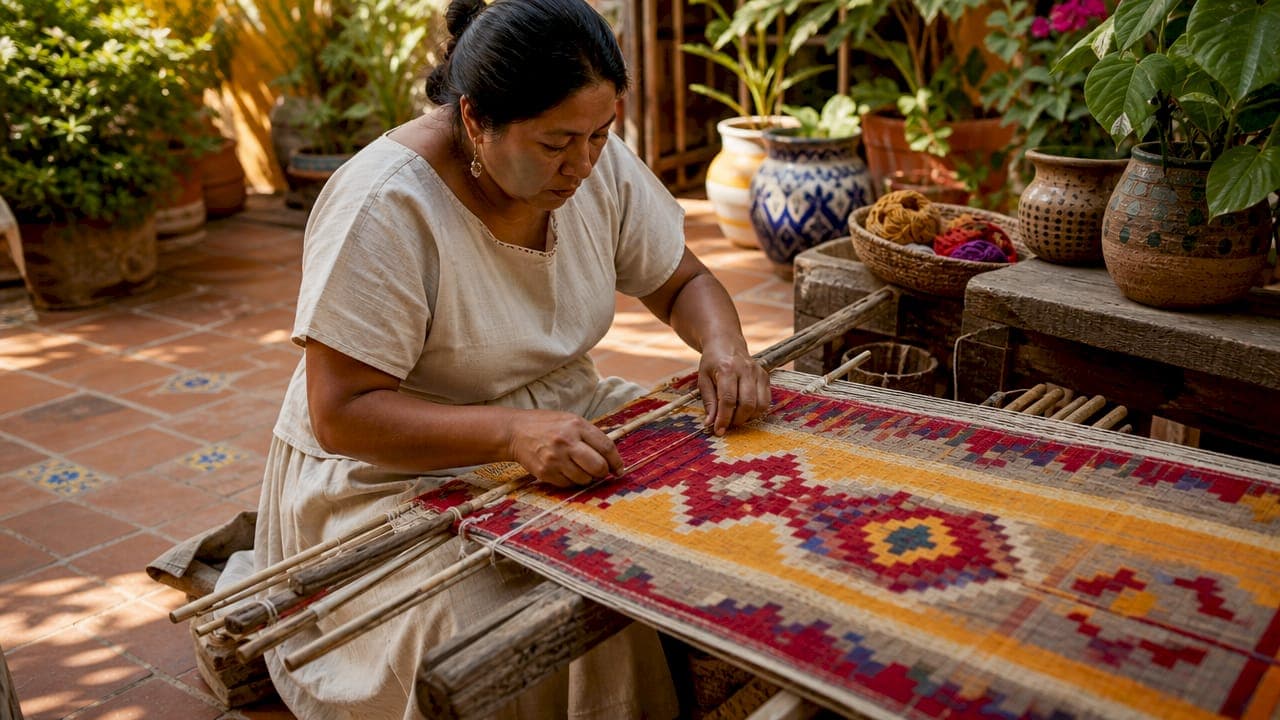
Indigenous patterns in Mexican decor are a visual language, not mere decoration. Each motif communicates community membership, spiritual belief, and ancestral knowledge passed down through generations of skilled artisans. The role of indigenous patterns in Mexican decor spans over 500 years of cultural evolution, blending pre-Hispanic artistry with Spanish colonial craftsmanship into a design tradition unlike any other. Understanding this tradition means recognizing that every diamond, spiral, and color choice carries meaning. At Createdecorus, we believe that bringing these patterns into your home is an act of cultural reverence, not just aesthetic choice.
How do indigenous motifs and symbolism define Mexican design?
Indigenous motifs are region and clan-specific visual systems, not interchangeable decorative elements. Each community developed its own symbolic vocabulary over centuries, and reading those symbols correctly transforms how you experience a space.
The most recognized motifs carry precise spiritual meaning:
- Diamond (Nierika): Used by the Wixárika (Huichol) people, the diamond symbolizes a portal between the human and spiritual worlds. It appears in beadwork and yarn paintings as a window to ancestral vision.
- Spiral: Found across Zapotec and Maya traditions, the spiral represents life cycles, water, and cosmic forces. It signals continuity and the eternal return of seasons.
- Step-fret (Xicalcoliuhqui): Common in Aztec stonework and textiles, this interlocking geometric form represents wind, rain, and the movement of celestial bodies.
- Feathered serpent: Drawn from the deity Quetzalcoatl, this motif appears in embroidery and pottery as a symbol of wisdom and the bridge between earth and sky.
Color carries equal weight in the role of symbolism in Mexican pattern design. Marigold orange guides the dead during Day of the Dead ceremonies, making it a color of spiritual passage rather than simple brightness. Cochineal red, extracted from insects native to Mexico, was so prized that Spanish colonizers exported it as a luxury commodity. These colors connect every pattern to a tangible cultural source, giving authentic Mexican decor a depth that mass-produced imitations simply cannot replicate.
Pro Tip: When selecting pieces for your home, ask about the specific community or region of origin. A Zapotec rug from Teotitlán del Valle carries a different story than an Otomí embroidery from Hidalgo. Knowing the difference makes your space richer.
What is the historical evolution of indigenous patterns in Mexican decor?
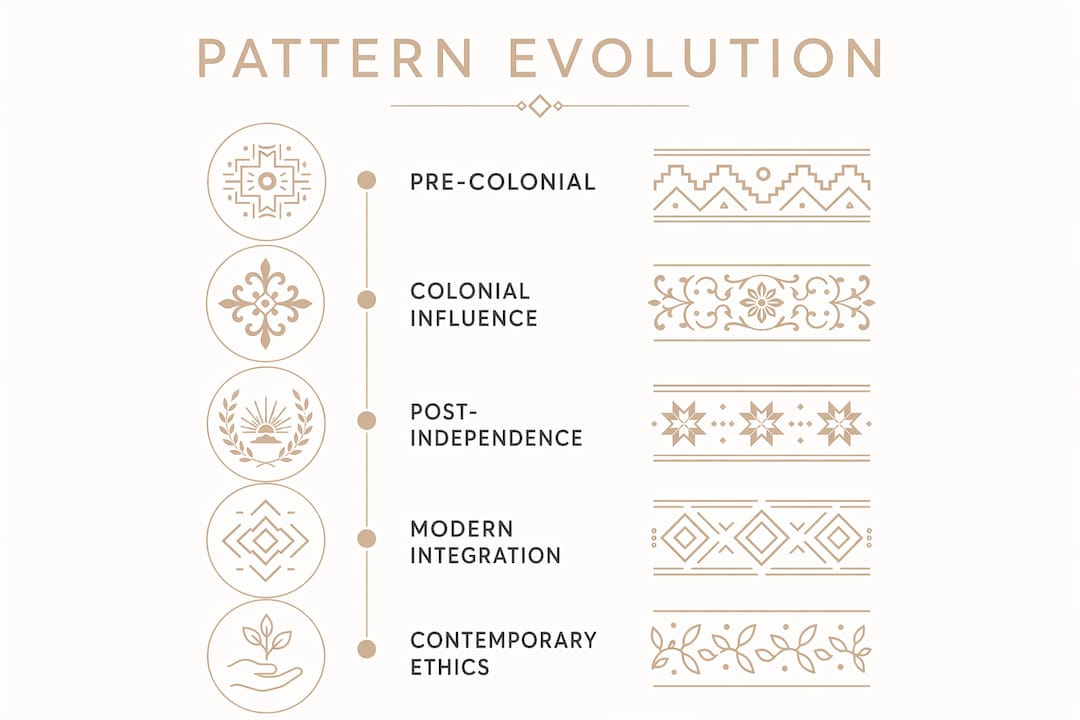
Mexican decor's design evolution spans over 500 years, rooted in the craft traditions of Aztec, Maya, Zapotec, and dozens of other civilizations. That history unfolded in distinct phases, each adding a new layer to the visual language homeowners encounter today.
-
Pre-Hispanic foundations (before 1521): Aztec, Maya, and Zapotec artisans developed sophisticated weaving, pottery, and mosaic traditions. Patterns functioned as identity systems, marking clan affiliation, social rank, and spiritual lineage. A warrior's cloak and a temple frieze used the same symbolic grammar.
-
Spanish colonial fusion (1521–1821): Spanish colonizers introduced new materials, tools, and techniques. Talavera pottery, for example, merged Spanish tin-glazed ceramic traditions with indigenous clay forms and color sensibilities. The result was a hybrid aesthetic that neither culture could have produced alone. Patterns from this era often show European floral motifs woven into indigenous geometric frameworks.
-
Post-independence cultural revival (1821–present): Mexican artists and intellectuals, including muralists like Diego Rivera, deliberately reclaimed indigenous visual traditions as symbols of national identity. This revival elevated folk art and indigenous design in decor from regional craft to celebrated cultural heritage. Today, that heritage informs everything from high-end interior design to handcrafted home accents.
Throughout all three phases, patterns never lost their function as identity markers. A Yucatecan Maya embroidery still identifies the wearer's regional origin and social standing. That continuity is what makes these patterns so powerful in a modern interior.
How can homeowners ethically incorporate indigenous patterns into modern decor?
Ethical incorporation is the foundation of authentic Mexican decor. Direct-to-maker procurement sustains culture and guarantees the authenticity of indigenous patterns. Buying from mass-market retailers strips patterns of their context and denies artisans fair compensation for their ancestral knowledge.
Practical guidelines for respectful integration:
- Buy directly from indigenous artists or cooperatives. Artisan markets, fair-trade platforms, and brands with verified provenance all support livelihoods and cultural continuity.
- Avoid mass-produced imitations. A factory-printed "Aztec" cushion carries none of the spiritual or cultural weight of a hand-woven piece. It also misrepresents the tradition it mimics.
- Learn the story behind each piece. Successful use requires understanding the narrative and cultural context of each pattern before placing it in your home.
- Apply the one-to-two rule. Design professionals recommend limiting statement artisan pieces to one or two per room. This keeps the cultural story legible without creating visual clutter.
Balancing indigenous pieces with contemporary design requires intention. A single Zapotec wool rug grounds a minimalist living room without competing with clean lines. One Huichol beaded vessel on a shelf becomes a focal point that invites conversation. Pairing these pieces with neutral backgrounds and natural materials like wood and stone lets the pattern speak clearly. For practical guidance on this balance, the pairing with contemporary furniture approach works well for most modern interiors.
Pro Tip: Stick to a palette drawn from the piece itself. If your Otomí embroidery uses coral, sage, and cream, pull those exact tones into your surrounding textiles and wall color. The room will feel cohesive rather than eclectic.
What iconic indigenous crafts shape Mexican home decor?
Several craft traditions stand out for their visual impact and cultural depth. Each brings a distinct aesthetic and a specific set of symbols into the home.
| Craft | Region | Key Motifs | Typical Home Use |
|---|---|---|---|
| Huichol beadwork | Nayarit, Jalisco | Nierika diamond, deer, peyote flower | Decorative vessels, wall art, accent objects |
| Zapotec weaving | Oaxaca | Geometric step-frets, animal figures | Area rugs, wall hangings, table runners |
| Otomí embroidery | Hidalgo, Querétaro | Animals, plants, narrative scenes | Cushion covers, bed linens, framed textiles |
| Talavera pottery | Puebla | Floral and geometric hybrids | Decorative plates, tiles, vases |
| Yucatecan Maya embroidery | Yucatán | Floral borders, regional color codes | Garments displayed as art, decorative panels |
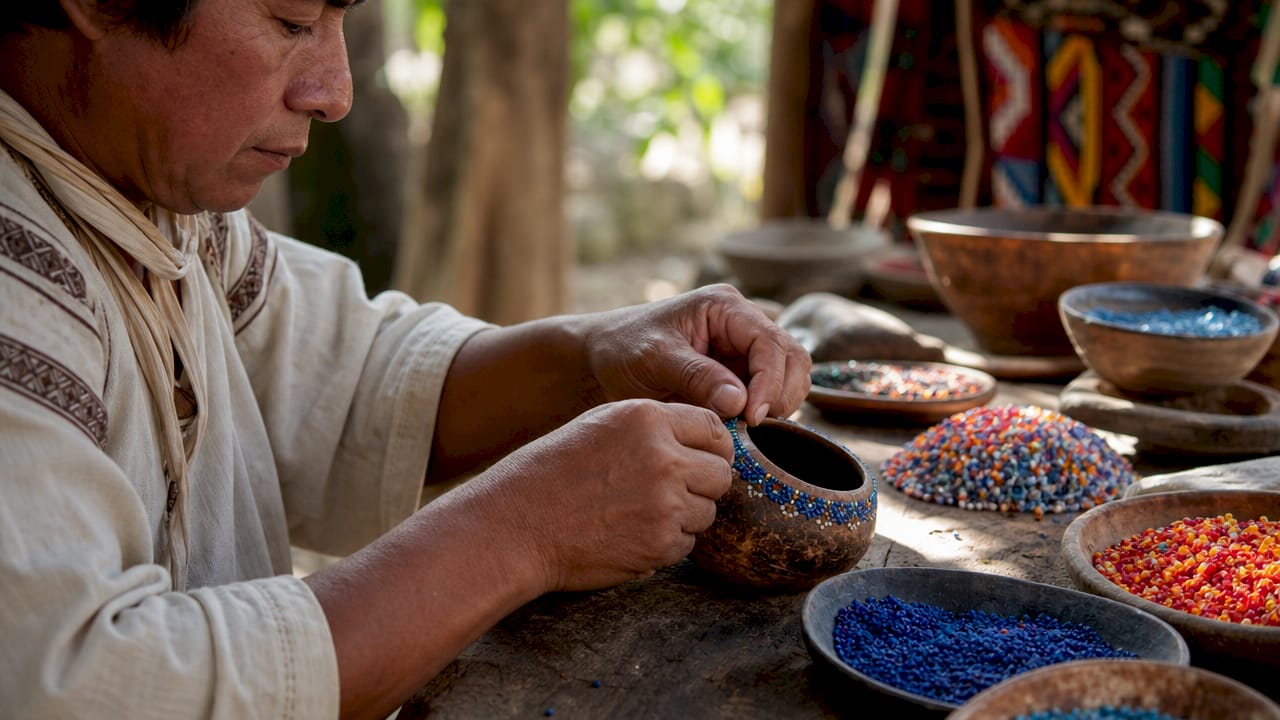
Huichol beadwork deserves particular attention. Each piece is built bead by bead onto a wax-coated surface, with no two works identical. The process is meditative and the results are visually arresting. A single Huichol bowl placed on a coffee table carries more visual authority than a shelf of generic decorative objects.
Zapotec rugs from Teotitlán del Valle are woven on traditional backstrap or floor looms using wool dyed with natural pigments including cochineal and indigo. The geometric patterns encode ancestral cosmologies in every row. These rugs age beautifully and grow richer in meaning as you learn their stories.
Otomí embroidery uses a distinctive narrative style, filling fabric with animals, plants, and human figures in a dense, joyful composition. Embroidery and weaving sustain economic livelihoods for indigenous communities while preserving regional identity. A set of Otomí cushion covers transforms a neutral sofa into a storytelling surface. For a curated selection of authentic pieces, Mexican artisan crafts offer a strong starting point for homeowners new to this tradition.
Key Takeaways
Indigenous patterns in Mexican decor function as living cultural documents, and every authentic piece you bring into your home carries a specific story, community, and spiritual meaning that mass-produced decor cannot replicate.
| Point | Details |
|---|---|
| Patterns are identity systems | Each motif is region and clan-specific, not a generic "Mexican" design. |
| Color carries spiritual meaning | Marigold, cochineal red, and indigo each connect to ritual and cultural belief. |
| History spans 500+ years | Pre-Hispanic, colonial, and modern revival phases each shaped today's aesthetic. |
| Ethical sourcing is non-negotiable | Buy directly from artisans or verified cooperatives to preserve culture and ensure authenticity. |
| One or two statement pieces work best | Curated placement lets each artisan piece tell its story without visual competition. |
Why cultural respect is the real design principle here
I have spent years studying how indigenous Mexican patterns move through the world of interior design, and the single most common mistake I see is treating these motifs as interchangeable decoration. A homeowner will place a mass-printed "tribal" cushion next to a Zapotec rug and wonder why the room feels hollow. The answer is provenance. One piece carries a living tradition. The other carries nothing.
The beauty of authentic indigenous patterns is inseparable from their meaning. A Huichol nierika diamond is not just a geometric shape. It is a portal, a prayer, a conversation with the cosmos. When you understand that, the piece changes how you experience the room. It asks something of you as a viewer.
Cultural sensitivity here is not about restriction. It is about depth. Educating yourself on the origins of a pattern before you buy it is the same discipline a serious art collector applies to any acquisition. You want to know what you are living with. That knowledge makes the decor more satisfying, not less.
The most meaningful interiors I have seen treat indigenous artisan pieces as the anchors of a room, not the accents. Everything else serves them. That inversion of the usual decorating logic produces spaces that feel genuinely alive, warm, and worth returning to.
— Ernesto
Handcrafted luxury accents rooted in Mexican artisan heritage
At Createdecorus, we work directly with Mexican artisans whose families have practiced these craft traditions for generations. Every piece in our collection carries verified provenance and reflects the cultural depth that defines authentic indigenous design.

Our handcrafted luxury pillows bring the warmth of traditional Mexican textiles into your living space with intention and care. Each one is a dialogue between artisan heritage and contemporary design, crafted with pride and made to last. When you place a Createdecorus piece in your home, you are not just adding color. You are adding a story. Browse our handcrafted luxury pillows and find the piece that speaks to your space.
FAQ
What is the role of indigenous patterns in Mexican decor?
Indigenous patterns in Mexican decor serve as visual identity systems, communicating community membership, spiritual belief, and ancestral knowledge. They are not decorative motifs but cultural documents encoded in color, geometry, and symbolism.
How do I tell authentic indigenous crafts from imitations?
Authentic pieces come with a clear regional origin, are made by hand using traditional techniques, and are sold through artisan cooperatives or verified direct-to-maker sources. Mass-produced imitations lack provenance and strip patterns of their cultural meaning.
What do the colors in Mexican indigenous patterns mean?
Colors carry specific cultural significance. Marigold orange is tied to spiritual guidance and Day of the Dead ceremonies, while cochineal red is a historic natural dye with deep pre-Hispanic roots. Each color connects the pattern to a ritual or community belief.
Which indigenous Mexican crafts work best in a modern home?
Zapotec wool rugs, Otomí embroidered cushion covers, and Huichol beaded vessels integrate well into modern interiors. They provide strong visual anchors without requiring a fully traditional setting to read as intentional and beautiful.
How many indigenous artisan pieces should I use in one room?
Design professionals recommend one or two statement artisan pieces per room. This approach keeps the cultural story of each piece legible and prevents the space from feeling visually crowded.