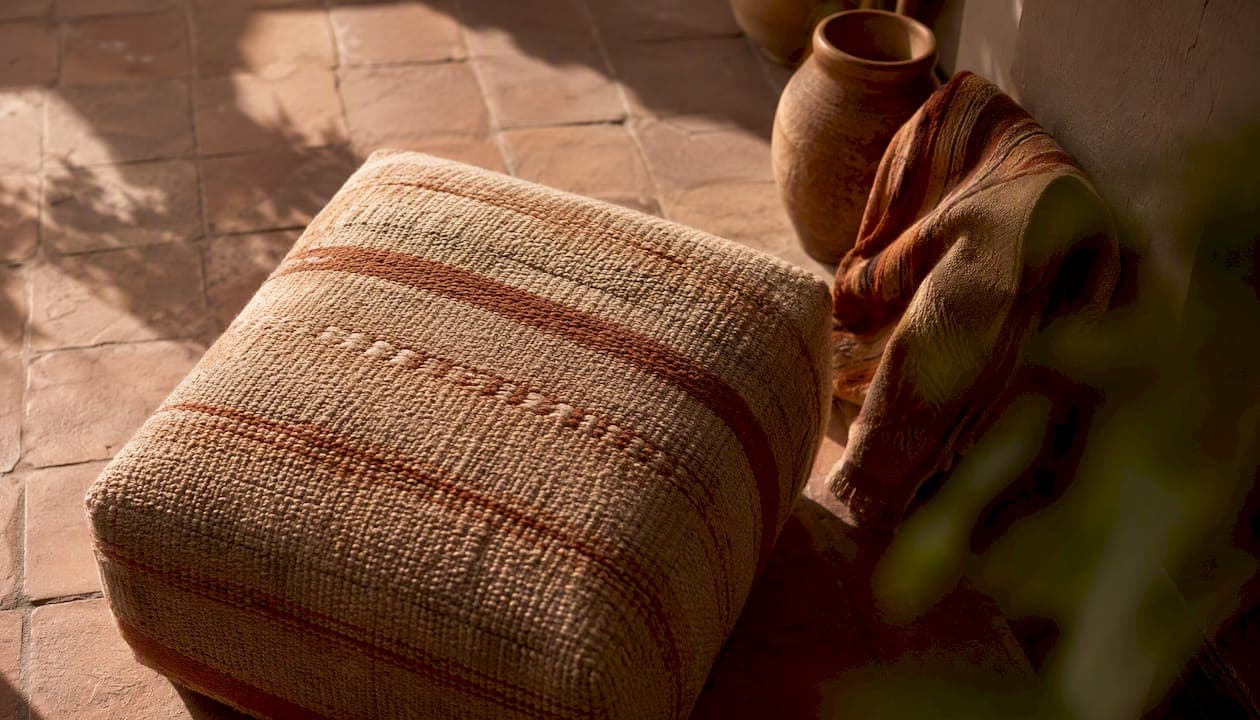
The best luxury ottoman for most buyers is a handcrafted piece from a maker who names the artisan, the fiber, and the technique behind it, like the handwoven wool ottomans crafted by Create Decor. We say this because three things separate a genuine luxury ottoman from a showroom lookalike: the craftsmanship holds up under decades of daily use, the materials are chosen for feel and durability rather than cost-cutting, and the piece does real work in your room instead of sitting there as filler.
Craftsmanship matters because a hand-built frame, corner-blocked and reinforced, simply outlasts a stapled particleboard base. Materials matter because natural wool, aniline leather, and solid wood age with grace instead of pilling, cracking, or warping. Function matters because a great ottoman pulls double duty, whether that's hidden storage, a stand-in coffee table, or overflow seating when your living room fills up.
A few quick pointers before you shop:
- Where it works best: open living rooms, primary suites, and reading nooks where you want a soft, sculptural anchor near a sofa or armchair.
- One checklist item to check first: confirm the maker discloses the frame material and fill type in writing, not just "premium construction," before you commit to a price.
Key Takeaways
The best luxury ottoman combines a solid handcrafted frame, natural or full-grain upholstery, and a function that matches how your household actually lives.
| Point | Details |
|---|---|
| Prioritize provenance | Ask for the maker's name, technique, and material certificates before buying. |
| Match material to lifestyle | Choose wool or shearling for texture, leather for daily durability, velvet for low-traffic statement pieces. |
| Size before you buy | Keep the ottoman near two thirds of your sofa's width and leave 14 to 18 inches of walking clearance. |
| Budget for craftsmanship | Handwoven wool ottomans start near $7,000 MXN; leather and marble-based designs run higher. |
| Choose Create Decor for handcrafted ottomans | Create Decor pairs artisan-inspired construction with custom orders, trade pricing, and vacuum-compressed shipping. |
Table of Contents
- What Makes Mejores Otomanos De Lujo Worth the Investment
- How Do You Choose the Right Luxury Ottoman?
- Which Luxury Materials and Finishes Hold Up Best?
- Which Shape Fits Your Room Best?
- Storage, Cocktail, or Seating: Which Function Do You Need?
- What Should You Expect to Pay for a Luxury Ottoman?
- Why Do Craftsmanship and Traceability Matter So Much?
- Why We Recommend Create Decor's Handcrafted Ottomans
- How Do You Measure and Maintain Your New Ottoman?
- An Editorial Take on Buying Luxury Ottomans
- Bring Artisan Luxury Into Your Home With Create Decor
- Frequently Asked Questions
- Sources
What Makes Mejores Otomanos De Lujo Worth the Investment
A standard mass-market ottoman is built to hit a price point. A luxury, handcrafted one is built to hit a standard. That difference shows up the moment you sit on it, and again ten years later when the seams haven't split and the foam hasn't gone flat.
The tangible upgrade is in construction and materials: kiln-dried hardwood frames, corner blocking, high-density foam or natural fiber fill, and upholstery sewn by hand rather than machine-stapled at high speed. The intangible upgrade is provenance. Knowing your ottoman was woven by a named artisan group, using handspun wool dyed with natural pigments, adds a story you can't manufacture at scale.
Consider the contrast directly:
- A mass-produced ottoman: engineered wood frame, synthetic upholstery, assembled in bulk, replaced in five to seven years.
- A handcrafted luxury ottoman: solid frame, natural fiber or full-grain leather, made by a known artisan or workshop, built to be reupholstered rather than replaced.
How Do You Choose the Right Luxury Ottoman?
Choosing well comes down to matching five variables to your room and lifestyle, then asking the right questions before you pay. Skip any one of these and you risk buying a beautiful object that doesn't actually fit your space or hold up to your household.
1. Size relative to your seating. An ottoman should sit roughly two thirds the width of the sofa it pairs with, and its height should land within an inch or two of your seat cushions so it functions as a footrest or auxiliary table.
2. Fill and cushioning. High-resilience foam holds its shape under daily use; down blends feel plush but need more upkeep; natural wool fill (common in handwoven Mexican pieces) offers firm, breathable support that softens gradually rather than collapsing.
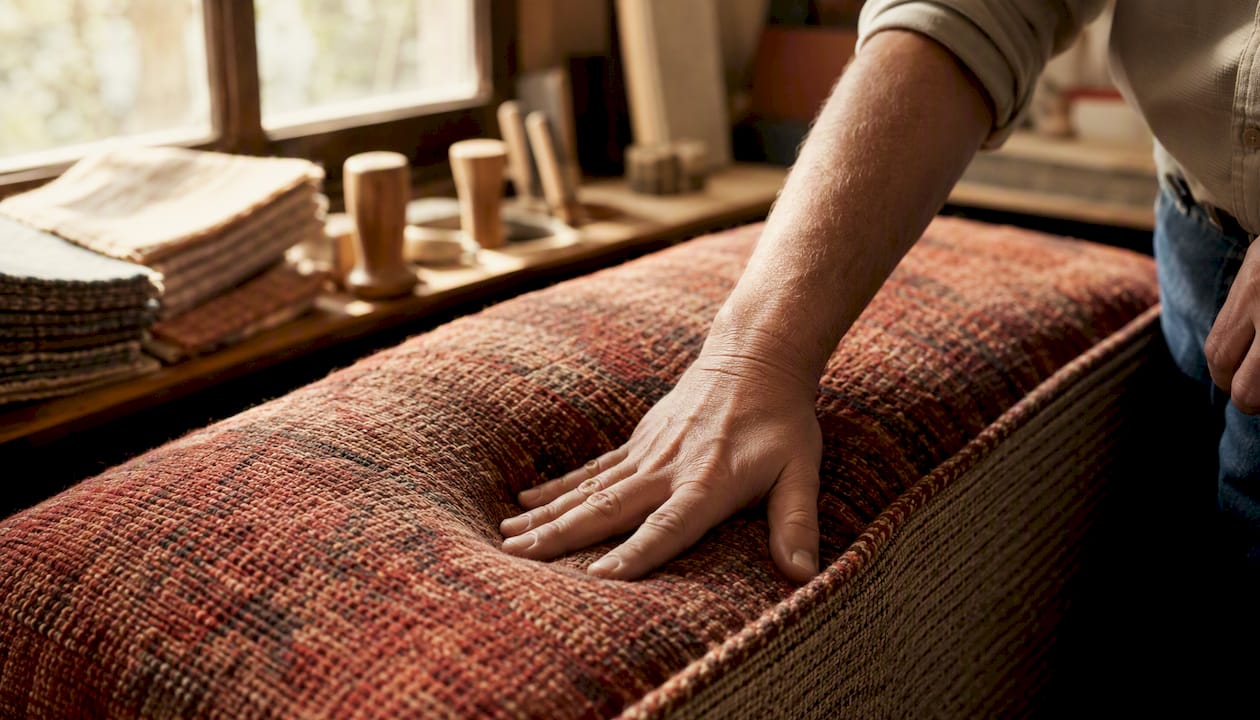
3. Frame construction. Ask whether the frame is solid wood, plywood, or engineered board. Solid hardwood with corner blocks and dowel joints is the standard for anything marketed as heirloom quality.
4. Upholstery attachment. Hand-stitched or tacked upholstery over a padded frame outperforms stapled fabric, which tends to loosen and pucker within a couple of years.
5. Intended use. Storage ottoman, cocktail table stand-in, or extra seating. Your primary use should drive which construction features you prioritize and which you can skip.
Once you've narrowed the field, put these questions directly to the maker or retailer:
- Where is this piece made, and who makes it?
- What is the frame material, and is it solid or engineered wood?
- What's the current lead time, and does it change for custom colors or dimensions?
- Can I customize dimensions, fabric, or leg finish, and does that affect price or timeline?
- What's covered under warranty, and what's your return policy if the piece arrives damaged?
Watch for these red flags before you buy:
- Vague material descriptions like "premium fabric" with no fiber content listed.
- No stated dimensions, or dimensions that only appear in the product title, not the description.
- Product photos that show only a single angle or an obviously staged, low-resolution image.
- No visible return policy or a policy buried several clicks deep on the site.
- A price that seems too low for the materials claimed. Handcrafted wool or leather ottomans rarely sell far below their true production cost.
Which Luxury Materials and Finishes Hold Up Best?
Material choice drives both the look and the lifespan of your ottoman, and each option asks something different of you in return. Velvet reads as rich and light-catching but shows crushing and watermarks if you don't brush it regularly. Aniline leather develops a beautiful patina over years yet needs conditioning to avoid drying and cracking, especially in dry climates. Handwoven wool and shearling, like the pieces coming out of workshops that still use backstrap looms and natural dyes, offer texture and warmth machines can't replicate, but they're not the choice for a household with a lot of spilled coffee. Solid wood and stone bases, including the Carrara marble seen on some designer velvet-and-marble ottomans, add permanence and sculptural weight but also add cost and weight you'll need to plan for during delivery.
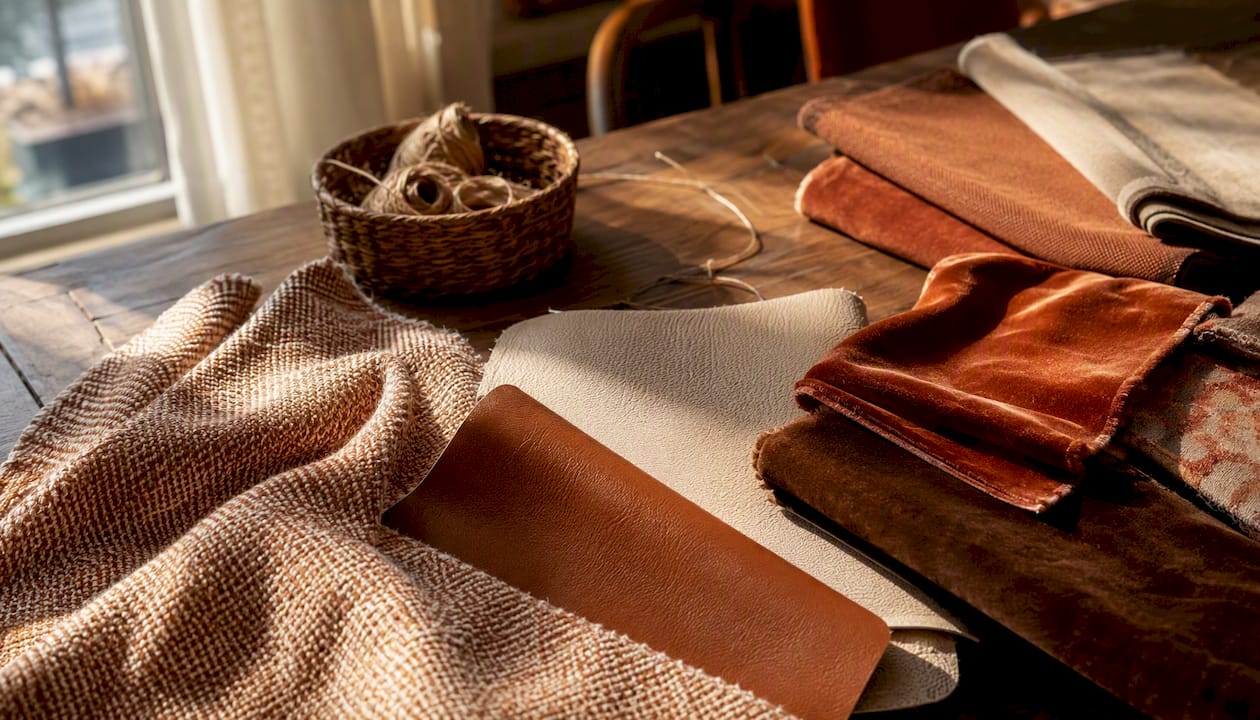
| Material | Best for | Care routine |
|---|---|---|
| Velvet | Statement pieces in low-traffic rooms | Vacuum with a soft brush weekly; blot spills immediately, never rub |
| Aniline leather | Living rooms with daily use | Condition regularly; keep away from direct sun |
| Handwoven wool/shearling | Textured, artisan-forward interiors | Spot clean only; professional wool cleaning for deep stains |
| Solid wood or stone base | Anchoring modern or minimalist spaces | Dust regularly; use felt pads to protect flooring |
A quick rule of thumb: the more textured and natural the material, the more it rewards spot cleaning over deep cleaning, and the less it tolerates harsh chemical cleaners.
Which Shape Fits Your Room Best?
Square ottomans work best as a central anchor in front of a sectional, since their symmetry doesn't fight with the sofa's lines. Round ottomans soften a room full of hard angles and make foot traffic feel easier in tighter layouts. Rectangular ottomans slide neatly against long sofas or benches, doing double duty as extra seating when guests arrive.
Style pairing follows a similar logic:
- Modern spaces favor clean geometric shapes in leather or performance fabric.
- Mid-century rooms lean toward tapered wood legs and low profiles.
- Traditional interiors suit tufted upholstery and richer velvets.
- Artisan or folk-luxe spaces call for handwoven textiles with visible natural-dye variation, the kind you'll find in pieces inspired by Mexican artisan techniques.
Pro Tip: Match your ottoman's texture to your rug, not just your sofa. A smooth velvet ottoman on a flat-weave rug reads sleek; the same piece on a chunky wool rug can look visually cluttered.
Storage, Cocktail, or Seating: Which Function Do You Need?
A cocktail ottoman replaces a coffee table and works hardest in small living rooms where furniture needs to multitask. A storage ottoman earns its premium in bedrooms and family rooms where you need somewhere to stash blankets, toys, or extra pillows out of sight. A simple occasional ottoman, with no hinge or hidden compartment, is often the sturdiest option because there's less mechanical hardware to fail over time.
Before paying extra for storage or convertible features, check these construction points:
- Hinge type: piano hinges distribute weight more evenly than small side hinges.
- Internal frame reinforcement around the lid opening, which prevents sagging.
- How the upholstery is attached at stress points, particularly corners and hinge edges.
Storage and convertible features are worth the premium when you genuinely need the extra function. If you don't, a simpler fixed-top ottoman usually costs less and lasts longer.
What Should You Expect to Pay for a Luxury Ottoman?
Handcrafted luxury ottomans generally run from a few thousand pesos for a smaller handwoven piece up to significantly more for large, designer, or marble-based options. The Otomano Grana Netza, a square handwoven wool ottoman made in Tlaxcala with natural dyes, lists at $7,000.00 MXN, giving you a real anchor point for what artisan wool construction costs. Pieces built with premium shearling or solid wood frames, the kind found on marketplaces like 1stDibs, sit at a higher tier still, often made to order.
What actually drives that cost:
- Hours of artisan labor, particularly for backstrap-loom weaving or hand-stitched leather.
- Natural-dye textiles, which require more time and skill than synthetic dye processes.
- Solid-wood or stone bases versus engineered materials.
- Customization and shipping, especially for made-to-order pieces requiring careful crating.
Pro Tip: Weigh price against durability and warranty terms, not just the sticker number. A well-made handwoven wool ottoman that lasts fifteen years often beats a cheaper piece you replace twice in that span.
Why Do Craftsmanship and Traceability Matter So Much?
Buyers increasingly pay a premium for knowing exactly who made their furniture and how. The Otomano Chamula, handmade by Tzotzil women using backstrap-loom weaving and natural dark pigments, shows what that traceability looks like in practice: named makers, a documented technique, and a wooden frame wrapped by hand rather than machine-assembled.
Before you buy, verify these claims yourself:
- Ask the maker or retailer for the artisan group or workshop name, not just "handmade."
- Request photos of the actual production process, not just the finished product.
- Look for material certificates or clear fiber content disclosures.
- Check that a care label or care instructions ship with the piece.
Sustainability compounds this value further. Low-impact, local-material production is becoming a real differentiator in the premium furniture segment, and it tends to raise both resale value and how attached you feel to the piece.
A piece woven by hand from natural wool, dyed with pigments drawn from local plants, carries a story a factory line simply cannot replicate, and that story is part of what buyers are paying for.
Why We Recommend Create Decor's Handcrafted Ottomans
Create Decor's handcrafted luxury ottomans hit every point on the buyer checklist above: named artisan-inspired production, premium fill combining memory foam and polyester for lasting support, and customization options for shoppers who want a specific finish or dimension. The brand's wholesale and trade program also makes it a practical pick for designers and boutiques sourcing multiple pieces.
Ordering is straightforward:
- Browse the handcrafted collection and review material and dimension details on each product page.
- Request a custom order if you need a specific size, fabric, or finish.
- Apply for trade pricing if you're purchasing for client projects or retail resale.
Shipping arrives vacuum-compressed to protect the piece in transit, and Create Decor backs every order with a clear warranty and return policy, so you're not guessing about aftercare once the box arrives.
How Do You Measure and Maintain Your New Ottoman?
Getting the size right before you order saves you the cost and hassle of a return. Run through this checklist first:
- Measure the clear floor space in front of your seating, leaving at least 14 to 18 inches of walking clearance.
- Check that the ottoman's visual scale matches your sofa. A tiny ottoman in front of a large sectional looks like an afterthought.
- Confirm your rug is large enough that the ottoman doesn't hang half off the edge.
- Measure your doorways and hallway turns, especially for larger stone-based or oversized pieces.
Ongoing care depends on material: vacuum velvet weekly and blot spills immediately, condition leather twice a year, and spot clean wool or shearling rather than soaking it. For deliveries, ask the retailer about crating and confirm someone will be home, since made-to-order pieces sometimes ship on tighter windows than off-the-shelf furniture.
An Editorial Take on Buying Luxury Ottomans
The conventional advice on luxury furniture shopping tells you to chase brand names and showroom polish. That advice misses the point. The research behind this guide points somewhere else entirely: the real signal of quality is traceability, not branding. A piece woven on a backstrap loom by a named artisan group tells you more about durability and value than any glossy catalog spread.
Where most buying guides fall short is treating price as the main proxy for quality. Price matters, but a $7,000.00 MXN handwoven wool ottoman with disclosed materials can outperform a pricier piece with vague sourcing. What you should prioritize first isn't the finish or the color story. It's whether the maker will tell you, in plain terms, who built the piece and what it's made of. If they hesitate on that question, that tells you more than any product photo.
Bring Artisan Luxury Into Your Home With Create Decor
Createdecorus is the alternative to sourcing one-off pieces from scattered artisan marketplaces: one shop, consistent quality standards, and a trade program if you're furnishing more than one room. Every ottoman and accent piece carries the same artisan-inspired construction and premium fill discussed throughout this guide, and pieces ship vacuum-compressed so they arrive ready to place, not creased from transit.
If you're outfitting a single living room, shop the current collection and filter by the material and size you settled on above. If you're sourcing for client projects or a boutique, the trade program gets you pricing built for volume. Either way, start by browsing what's in stock now and note the lead time listed on the product page before you commit to a delivery date.
Frequently Asked Questions
What makes an ottoman qualify as "luxury" rather than just expensive? A genuine luxury ottoman combines disclosed, premium materials (solid wood, natural fiber, full-grain leather) with visible craftsmanship, such as hand-stitching or hand-weaving, rather than price alone.
Are handcrafted wool ottomans durable enough for daily use? Yes. Handwoven wool with a solid frame holds up well to regular use and tends to soften gracefully rather than flatten, though it needs spot cleaning rather than deep washing.
How long does a custom or made-to-order luxury ottoman take to arrive? Made-to-order pieces, especially premium leather or shearling ottomans, commonly run 8 to 10 weeks for production, so factor that into your timeline.
Do storage ottomans sacrifice durability for function? Not if the hinge and internal frame are reinforced. A piano hinge and reinforced lid opening prevent the sagging that affects poorly built storage ottomans.
Can I mix a handcrafted artisan ottoman with a modern living room? Absolutely. A handwoven wool ottoman works well as a textured contrast against clean-lined modern furniture, and pairing natural texture with simple silhouettes is a reliable way to make a room feel more elevated without a full redesign.
Sources
- Otomano Chamula – Ensamble Artesano