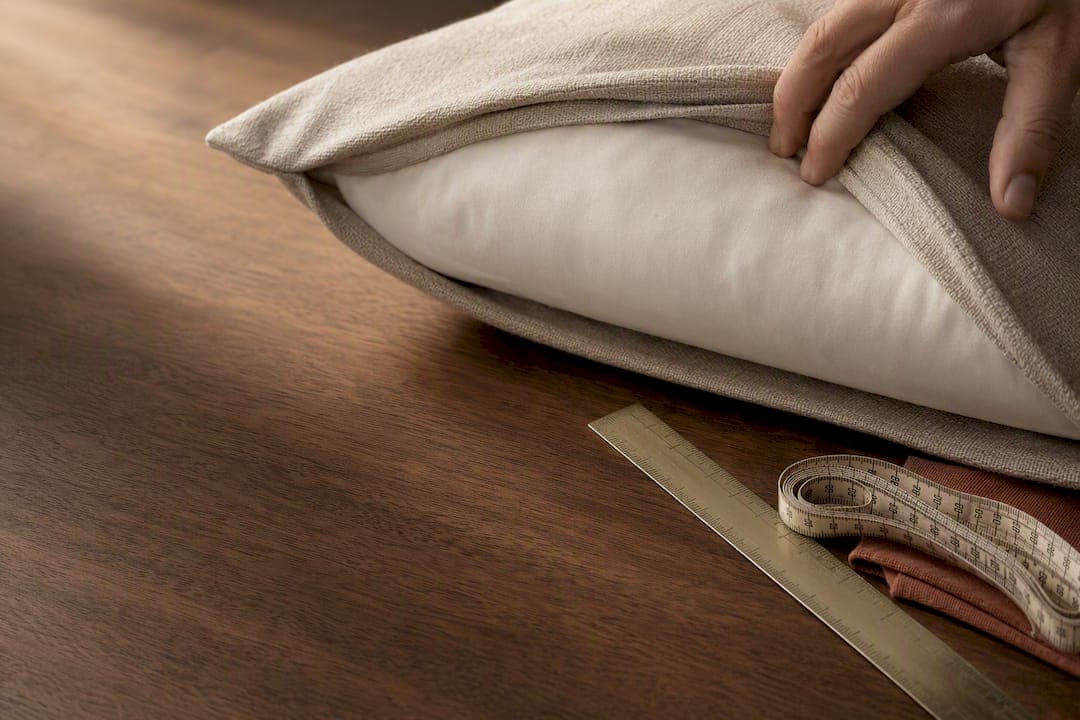
For a polished, taut look, buy an insert about 2 inches larger than your cover's finished measurements. That is the baseline designers reach for again and again, though the acceptable range runs from 1 to 4 inches depending on the fabric, the fill, and how full you want the finished pillow to look. The chart, the measuring steps, and every exception worth knowing follow below.
TL;DR:
- Using a standard 2-inch increase ensures a full, wrinkle-free pillow appearance, but adjustments up to 4 inches may be necessary for dense or decorative fabrics.
- Measure your unzipped cover seam to seam and compare with size charts, avoiding irregularities from overlaps, flanges, or decorative details.
- High-loft fillings like down need less upsizing, while dense synthetic fills benefit from a larger increase to prevent flatness and maintain shape.
- Overstuffing beyond 4 inches can strain zippers and seams, especially on fragile or hand-stitched covers, risking damage over time.
- Custom sizing options are available for vintage, heirloom, or oversized pillows, with some brands providing tailored recommendations based on fabric and fill type.
Table of Contents
- Pillow Insert Size Chart: Cover Size to Recommended Insert
- How Do You Measure a Pillow Cover for the Right Insert?
- When Should You Break the 2-Inch Rule?
- Does Fill Type Change the Ideal Insert Size?
- What Look Are You Going For? Styling Rules by Insert Size
- Why Trade Buyers Ask Createdecorus for Sizing Guidance
- A Note on Preserving Craftsmanship While Chasing the Perfect Look
- Get the Right Fit With Handcrafted Pillows Built to the Correct Size
- Sources
- FAQ
Pillow Insert Size Chart: Cover Size to Recommended Insert
The 2-inch rule turns into a simple math problem once you know your cover's finished size. Add 2 inches to each side of a square cover, and you land on the insert most designers and retailers recommend for a full, wrinkle-free look.
Retail guides consistently map these same cover-to-insert pairings, and the pattern holds for standard bed pillow sizing too, where standard, queen, and king covers each take an insert cut 1 to 2 inches larger than the finished shell. Before you order anything, double-check your cover's actual finished measurement rather than trusting the label. A "20x20" cover from one maker can measure closer to 19.5 inches once you flatten it and measure seam to seam.
How Do You Measure a Pillow Cover for the Right Insert?
Grab a flexible tape measure and clear a flat surface. Measuring on a bed or sofa cushion gives you a soft, uneven reading that throws off every number that follows.
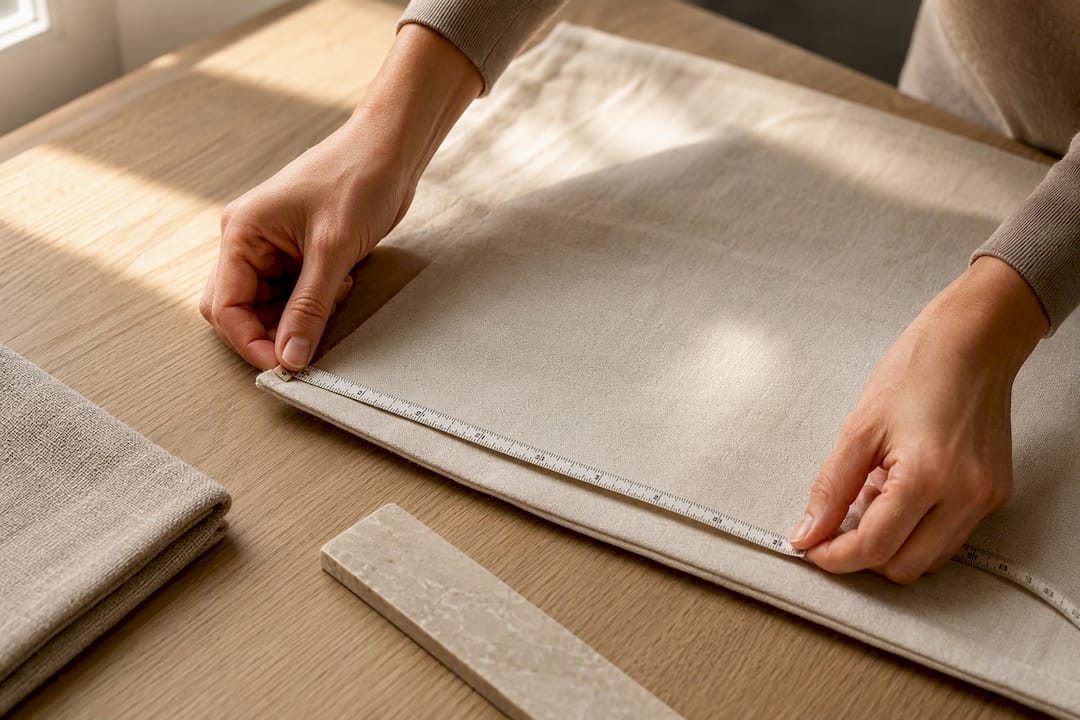
- Unzip the cover completely and lay it flat, right side up, smoothing out any folds.
- Measure seam to seam across the width, then again across the height, ignoring any zipper flap or overlap panel.
- Write down both numbers rather than rounding in your head. A 19.5 inch by 20 inch cover needs a different insert than a true 20x20.
- Compare those two numbers against the chart above to find your recommended insert size.
Covers with envelope backs or button closures often have an overlap panel that adds visible length but isn't part of the true finished size. Measure the front panel alone, seam to seam, and treat the closure as if it weren't there. The same goes for decorative flanges: a 2-inch flange border sits outside the pillow's structural seam, so measure the inner seam line, not the outer edge of the fabric.
Pro Tip: Keep a small notebook or phone note with each cover's measurements as you shop. You'll avoid re-measuring the same pillow twice, and you'll spot mismatched covers before checkout instead of after.
When Should You Break the 2-Inch Rule?
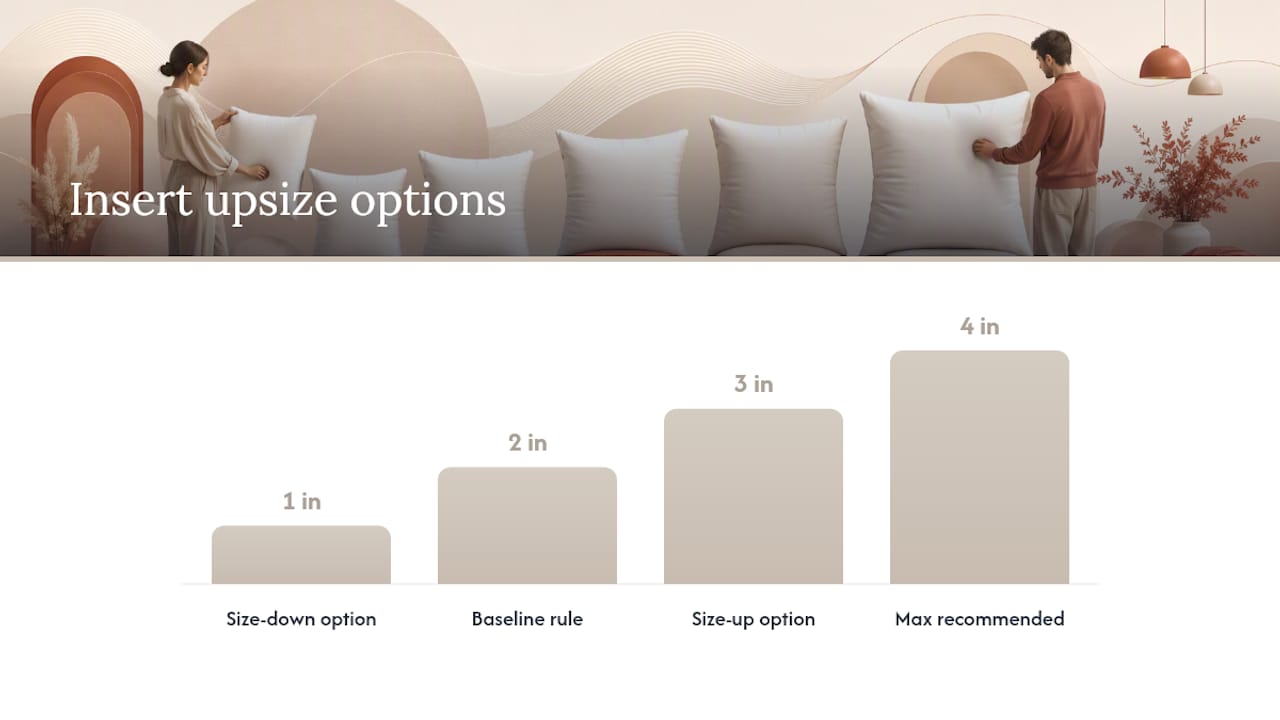
The 2-inch baseline exists because covers need slightly more insert volume than their own dimensions to look full rather than flat. An insert sized exactly to the cover tends to sag at the corners once it settles; one sized too far beyond it stresses the seams and can distort a delicate cover over time. Designers generally work within a 1 to 4 inch window, adjusting based on the piece in front of them.
Reasons to size down toward the 1-inch end, or even match the cover exactly:
- The fabric is vintage, hand-embroidered, or otherwise fragile and can't tolerate seam stress.
- The cover has hand-stitched or unfinished seams that weren't built for a tight fit.
- You want a relaxed, lived-in look rather than a crisp, structured one.
- The cover is already quite small, at 14x14 or below, where a full 2-inch upsize can look overstuffed.
Reasons to size up toward the 3 to 4 inch range:
- The cover features heavy embroidery, beadwork, or trim that needs extra support to lie flat.
- The fabric is faux fur or another dense pile that hides a smaller insert's shape.
- You're going for a dramatic, structured "karate-chop" silhouette.
- The fill is a dense synthetic or shredded foam that compresses more than natural down.
Keep the zipper opening and seam allowance in mind, too. An insert more than 4 inches larger than the cover often won't zip closed without visible strain on the closure.
Does Fill Type Change the Ideal Insert Size?
Fill material changes how much insert you actually need, sometimes more than the fabric does. Down and other high-loft fills compress easily around a form, so a cover can look full with a smaller size increase than the 2-inch standard calls for. Designer sourcing notes back this up: high-loft materials like down often need less upsizing than dense synthetic fills, which hold their shape and need extra volume to round out the same corners.
A few practical patterns worth knowing before you buy:
- Down or down-alternative inserts: stick closer to the standard 2-inch rule or even 1 inch if the fill is especially high-loft.
- Dense polyester or shredded memory foam: consider the 3 to 4 inch range, since these fills need more volume to avoid a flat, boxy look.
- Stretchy fabrics like velvet: need a firmer, slightly larger insert to fight sagging once the fabric relaxes with wear.
- Faux fur or heavy nap fabrics: benefit from extra fill volume, since the pile itself hides some of the pillow's true shape.
Our guide to cushion filling types breaks down how each fill behaves over time, which matters as much as the size number on the tag.
What Look Are You Going For? Styling Rules by Insert Size
Insert size is really a styling decision dressed up as a measurement. A few quick heuristics make the choice easier once you know the mood you're after.
- Karate-chop, structured look: size up 3 to 4 inches and pick a firm, well-filled insert so the pillow holds a crisp crease down the center.
- Relaxed, lived-in look: stay at the cover's exact size or add just 1 inch, letting the pillow drape rather than stand at attention.
- Mixing squares and lumbar shapes: keep the square pillows at consistent 2-inch upsizes and let the lumbar act as the visual anchor in front.
- Over time: inserts settle and lose loft with regular use, so plan to fluff pillows weekly and replace inserts every couple of years if they no longer bounce back.
Pro Tip: If a pillow arrangement looks slightly flat after a few months, try fluffing the insert by hand before assuming you need a new size. Fill often just needs redistributing, not replacing.
Why Trade Buyers Ask Createdecorus for Sizing Guidance
Some handcrafted pillow makers use artisan textiles and premium fills, so sizing questions often arise from designers working with nonstandard covers. Custom insert requests make sense for heirloom or vintage shams, oversized statement pieces, or any cover that falls outside the common chart sizes above. Our team can walk through specification details for custom pillow and trade orders when a project calls for exact, nonstandard dimensions.
A Note on Preserving Craftsmanship While Chasing the Perfect Look
A crisp, oversized insert looks wonderful in photos, but I'd rather see a hand-stitched cover last another decade than watch it strain at the seams for one perfect shelf angle. When a pillow carries real craftsmanship, whether hand embroidery or a fragile vintage weave, size gently. Save the dramatic 4-inch upsize for sturdy, mass-produced covers built to take it.
— Ernesto
Get the Right Fit With Handcrafted Pillows Built to the Correct Size
Certain handcrafted pillows use premium memory foam and polyester fills matched to the cover's fabric and weight, helping customers find a better insert fit than generic options.

Our decorative pillow collection covers the common square and lumbar sizes in the chart above, with fill options suited to textured, embroidered, and heavier fabrics. Designers and boutiques working on multi-unit projects can request trade pricing through our wholesale program for custom sizing across an entire order. If you know your cover's finished measurements, you can browse shops or contact suppliers for custom quotes if your project requires sizes outside the standard chart.
Sources
- Pillow Insert Size Chart — Life Simply Styled
- Pillow sizes & dimensions: Find the right fit for your bed — Sleep Foundation
- Pillow Insert Size Chart — Primoends
FAQ
How Do I Know What Size Pillow Insert I Need?
Measure your cover's finished dimensions seam to seam while it's unzipped and flat, then add about 2 inches to each side. That 2-inch rule is the standard starting point; adjust up to 4 inches for a firmer look or down to 1 inch for delicate fabrics.
Do Pillow Inserts Need to Be Bigger Than the Cover?
Yes, in most cases. A slightly larger insert fills out the corners and prevents sagging, since inserts are typically cut 1 to 2 inches larger than the finished cover to guarantee a full appearance.
What Size Insert Should I Get for a 20x20 Pillow?
A 20x20 cover typically pairs with a 22x22 insert, following the standard 2-inch rule that retail sizing guides commonly recommend. Adjust sizing up or down depending on fabric delicacy and desired firmness.
What Size Insert Should I Get for a 24x24 Pillow?
A 24x24 cover usually calls for a 26x26 insert under the same 2-inch guideline. For dense synthetic fills or a dramatic karate-chop shape, sizing up within the accepted 1 to 4 inch range is recommended.
Can I Order a Custom Insert Size?
Yes. Createdecorus works with designers and homeowners on nonstandard dimensions for vintage, heirloom, or oversized covers that fall outside common chart sizes, with specification support available through our trade resources.