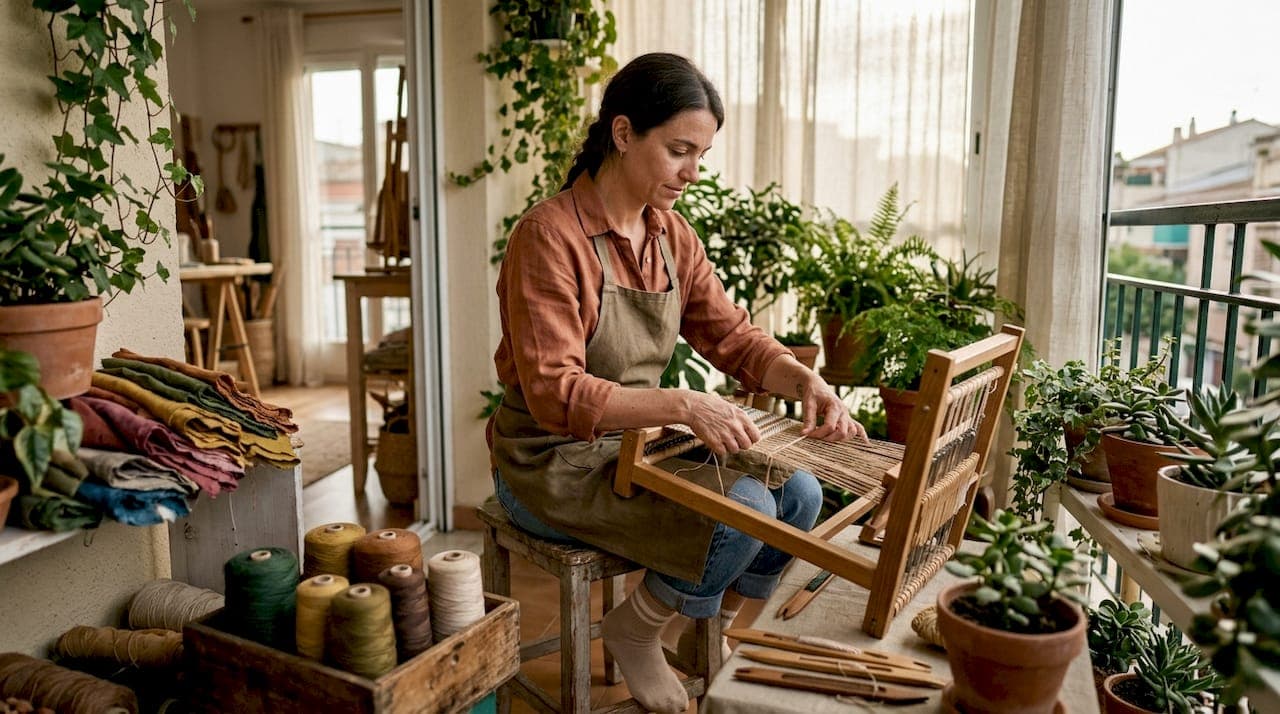
Handcrafted pieces are defined as objects made by skilled artisans using hand techniques, traditional tools, and culturally rooted methods rather than industrial machinery. Understanding why handcrafted pieces elevate design projects means recognizing that these objects carry something mass production cannot replicate: human intention, cultural memory, and the visible marks of a maker's hand. Firms like Garret Cord Werner Architects have long specified artisanal materials during the design phase, treating craft not as decoration but as the structural DNA of a home's identity. At Createdecorus, we see this truth every day in the way a single handcrafted pillow, woven with traditional Mexican artistry, can shift the entire emotional register of a room.
Why handcrafted pieces elevate design projects through visible craftsmanship
The most underappreciated quality of handcrafted work is what designers call "marks of process." These are the subtle irregularities, texture variations, and hand-applied finishes that signal a human being made deliberate choices at every step. Artisanal materials add long-term value precisely because these marks contribute to richness and allow beauty to evolve over time. A machine-finished surface stays the same. A hand-plastered wall deepens.
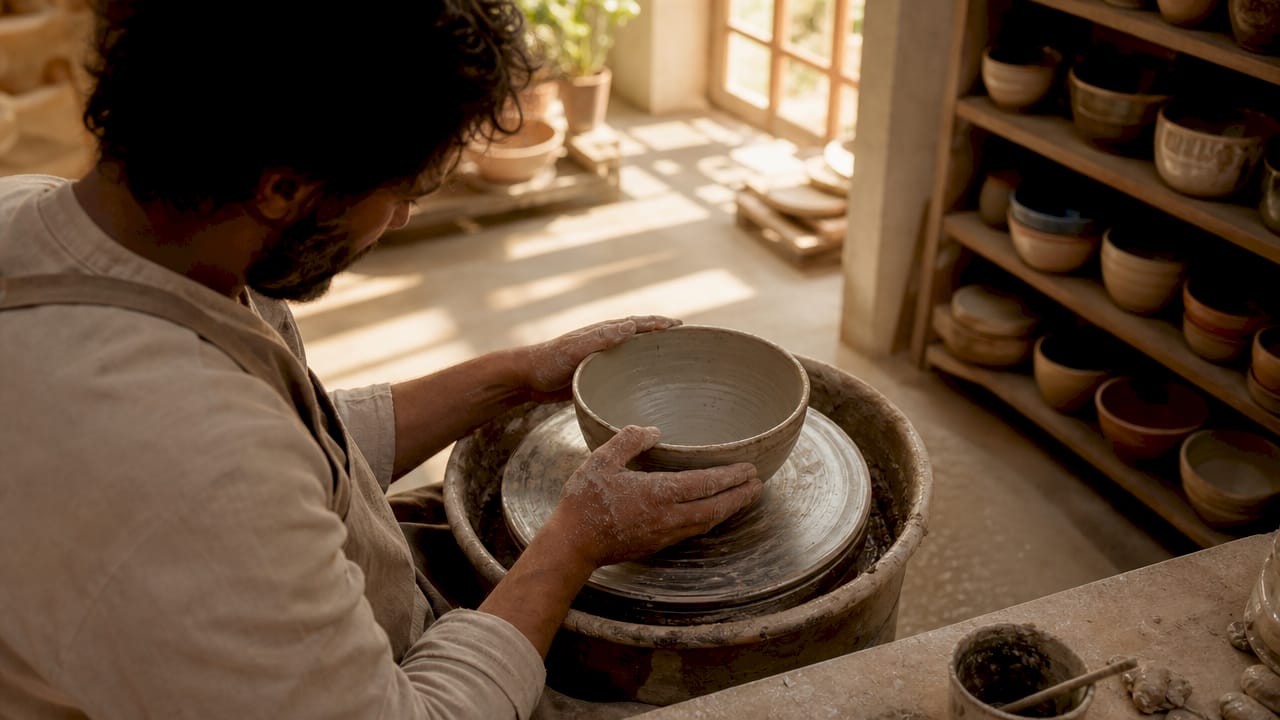
This matters more now than at any previous point in design history. Visible craftsmanship irregularities are increasingly perceived as intentional effort, creating trust and a sense of realness in an AI-saturated marketplace. When every digital image can be generated flawlessly in seconds, the slight warp of a hand-thrown ceramic or the uneven weave of an artisanal textile becomes a credibility signal. Imperfection is now a form of proof.
Provenance cues reinforce this effect. Names, signatures, and visible iteration in handcrafted pieces shift perception from automated output to human authorship. Customer trust is growing for visible handmade process cues as homeowners seek authenticity over polished perfection. A piece that carries a maker's mark tells a story that no product label can fully capture.
- Specify artisanal finishes during the architectural design phase, not after walls are built.
- Look for natural patina potential in materials like hand-applied lime wash, carved wood, and woven textiles.
- Treat visible texture variation as a feature, not a flaw.
- Ask makers for provenance documentation, including the artisan's name and region of origin.
Pro Tip: When sourcing handcrafted textiles or ceramics, request a sample with visible process marks. If the sample looks machine-perfect, it probably was.
How cultural motifs in handcrafted designs create competitive differentiation
Handcrafted motifs function as cultural icons. They carry symbolic weight that mass-produced patterns cannot replicate because they originate from living traditions, not trend forecasting. Acculturative motif uniqueness strengthens product advantage and sustainability in craft industries, according to 2026 research. That finding applies directly to interior design: a space anchored by culturally authentic handcrafted pieces is genuinely harder to copy than one furnished from a catalog.
This differentiation goes beyond aesthetics. Cultural motifs embedded in handcrafted objects carry stories that connect homeowners to places, histories, and communities. A hand-embroidered textile from Oaxaca or a carved wooden panel from Michoacán does not just fill visual space. It opens a dialogue between the home and a living craft tradition. That dialogue is what makes a room feel specific rather than generic.
Preserving that authenticity requires care. Advanced technology adoption risks compromising cultural authenticity in craft communities unless artisan agency is preserved. The lesson for homeowners is practical: buy from sources that name their makers, describe their methods, and respect the communities where craft knowledge lives. Purchasing from artisan-driven brands rather than mass retailers is the clearest way to honor that standard.
"Craft as a luxury is not about price. It is about the time, knowledge, and cultural continuity embedded in every object." — Inspired by Anna Philipp's perspective on handmade work as architecture's most radical act.
The four qualities that make culturally rooted handcrafted pieces irreplaceable in design:
- Symbolic depth. Motifs carry meaning that generic patterns do not.
- Genuine scarcity. No two hand-produced pieces are identical.
- Community connection. Each purchase supports a living craft tradition.
- Narrative power. Cultural objects give homeowners a story to tell about their spaces.
Do handcrafted pieces offer better long-term value than mass-produced alternatives?
The honest answer is yes, when you account for the full lifecycle. Bespoke items with lifecycles of 15–25 years cost less over time than repeatedly replacing cheaper goods that require replacement every 5–7 years. That math changes how you should think about budget allocation in any design project.
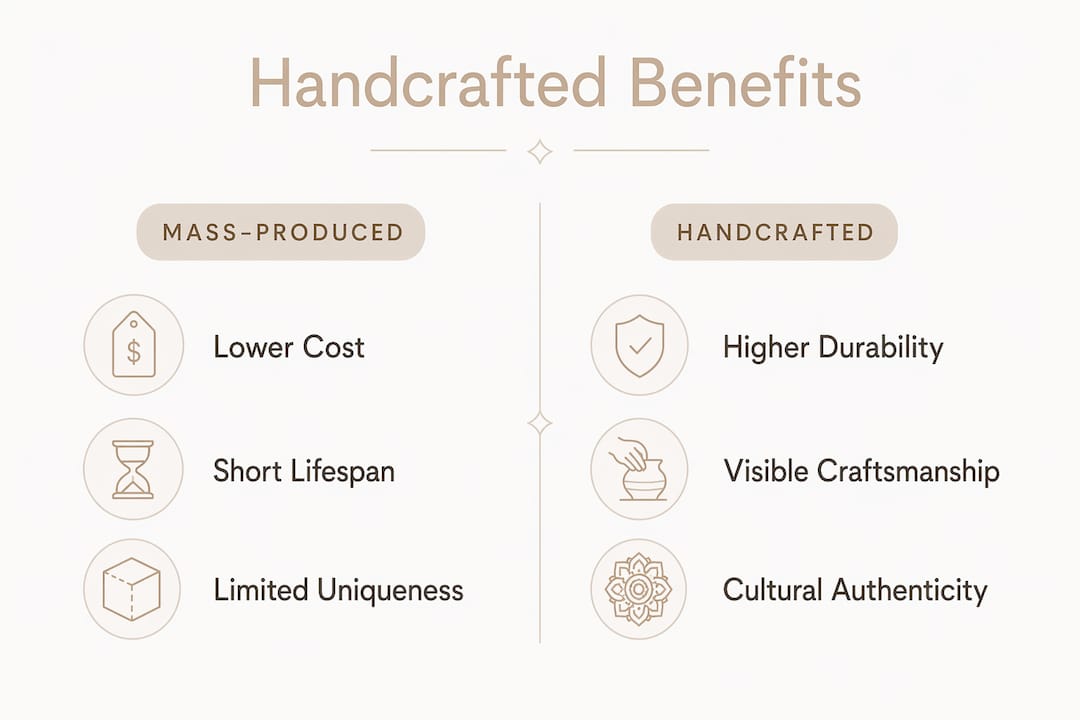
Handcrafted materials also age differently than mass-produced ones. A hand-stitched leather ottoman develops character with use. A factory-pressed foam piece simply wears out. The patina that forms on natural, hand-finished materials is not deterioration. It is accumulation of life, and it increases the emotional and often the monetary value of a piece over time.
| Factor | Mass-produced items | Handcrafted pieces |
|---|---|---|
| Typical lifespan | 5–7 years | 15–25 years |
| Aging quality | Degrades with use | Develops patina and character |
| Replacement cost | Recurring every few years | Rare, if ever |
| Cultural value | Minimal | Grows with provenance |
| Environmental impact | Higher due to frequent replacement | Lower over full lifecycle |
Budget planning for handcrafted elements should incorporate lead times. Budgeting for handcrafted elements should account for lead times of around 12 weeks and lifecycle benefits spanning 15–25 year horizons rather than short-term cost comparisons. That longer view is what separates a thoughtful design investment from an impulse purchase.
Pro Tip: When comparing a handcrafted piece to a mass-produced alternative, divide the total cost by the expected years of use. The handcrafted option almost always wins on cost per year.
Practical ways to incorporate handcrafted pieces into your home design
The most common mistake homeowners make is treating handcrafted pieces as afterthoughts. They furnish a room, then add a handmade pillow or ceramic as a finishing touch. Selecting artisanal materials during the design phase rather than as an afterthought allows craft constraints to create a cohesive, authentic design. That means thinking about texture, scale, and cultural reference from the first sketch, not the last shopping trip.
Collaboration with artisans produces the strongest results. When you work directly with a maker, you can specify dimensions, color palettes, and motifs that respond to your actual space. This is how artisan partnerships produce rooms that feel genuinely personal rather than assembled from a mood board.
Balance is the other key principle. Handcrafted warmth and modern design are not opposites. A clean-lined contemporary sofa paired with a hand-woven throw and an artisanal accent pillow creates visual and sensory harmony. The handcrafted element does not compete with the modern one. It gives the modern piece something to rest against.
- Start with one or two anchor pieces: a handcrafted textile, a ceramic, or a carved wood element that sets the cultural tone.
- Build the rest of the room's palette around the colors and textures in those anchor pieces.
- Mix scales: a large handcrafted rug pairs well with smaller artisanal accents like pillows or vessels.
- Source from makers who can describe their process and name the community where the work originates.
- Plan for lead times of 8–12 weeks for custom or small-batch handcrafted items.
The importance of handmade decor shows up most clearly in rooms that feel alive. That quality is not accidental. It comes from objects that carry the maker's care beyond just quality and uniqueness, a quality that psychological research links to the perceived affection transmitted through craft.
Key takeaways
Handcrafted pieces elevate design projects by delivering cultural authenticity, lifecycle value, and emotional depth that mass-produced alternatives cannot match.
| Point | Details |
|---|---|
| Marks of process add value | Visible irregularities in handcrafted pieces signal authenticity and build trust with homeowners. |
| Cultural motifs differentiate spaces | Artisan-rooted motifs create design uniqueness that catalogs and trend forecasts cannot replicate. |
| Lifecycle value outperforms mass production | Handcrafted pieces lasting 15–25 years cost less over time than mass items replaced every 5–7 years. |
| Specify craft early in the design process | Integrating artisanal materials during the design phase creates cohesive, authentic interiors. |
| Provenance matters | Buying from makers who name their artisans and describe their methods preserves cultural integrity. |
What I have learned about handcrafted pieces that most homeowners overlook
I have spent years watching homeowners walk into a beautifully designed room and immediately gravitate toward the one handcrafted object in it. They touch it. They ask about it. They remember it. That response is not random. It reflects something real about how human beings relate to objects made by other human beings.
The insight that changed how I think about this came from reading Anna Philipp's argument that craft is architecture's most radical act. Speed is the enemy of depth. Every handcrafted piece represents a deliberate slowing down, a choice to invest time when time is the scarcest resource in modern production. That investment leaves an intangible presence in the object. You feel it when you hold a hand-stitched pillow or run your hand across a carved wooden surface.
What most homeowners miss is that this presence is not a luxury add-on. It is the point. A room full of perfectly matched, mass-produced furniture is visually coherent but emotionally flat. One well-chosen handcrafted piece breaks that flatness in a way no amount of styling can replicate. The mistake is waiting until the budget is nearly spent to think about artisanal pieces. They deserve to be the starting point, not the finishing touch.
I also think the sustainability argument for handcrafted pieces is deeply underappreciated. Buying one piece that lasts 20 years is a more responsible choice than buying three cheaper replacements over the same period. That is not a compromise. That is good design thinking.
— Ernesto
Createdecorus handcrafted pieces for your home
At Createdecorus, every piece in our collection is crafted by skilled Mexican artisans who carry generations of textile and design knowledge. Our handcrafted luxury pillows bring rich textures, bold color, and genuine cultural warmth to living spaces that deserve more than catalog furniture.
Each pillow is a gesture of care, made with materials and methods that honor the tradition of Mexican craft. If you are ready to add artisanal depth to your home, our full artisan pillow collection offers pieces that work as both design accents and lasting investments. These are not decorative afterthoughts. They are the kind of objects that anchor a room and start conversations.
FAQ
Why do handcrafted pieces feel different from store-bought decor?
Handcrafted pieces carry visible marks of human process, including texture variation and hand-applied finishes, that mass-produced items lack. Psychological research shows handmade objects are perceived to contain the maker's care, which creates an emotional connection that factory goods cannot replicate.
Are handcrafted home accents worth the higher upfront cost?
Yes. Bespoke and handcrafted items with lifecycles of 15–25 years cost less over time than mass-produced alternatives that require replacement every 5–7 years. The upfront investment pays off through durability, cultural value, and reduced replacement frequency.
How do I know if a handcrafted piece is culturally authentic?
Look for pieces where the maker, region, and method are clearly named. Authentic artisan-driven brands describe their craft process and identify the communities where the work originates, rather than using vague terms like "artisan-inspired."
When should I introduce handcrafted elements into a design project?
Specify handcrafted materials and accents during the initial design phase, not as a final styling layer. Garret Cord Werner Architects recommends integrating craft constraints early so that texture, scale, and cultural reference become part of the room's core identity.
Can handcrafted pieces work in modern or minimalist interiors?
Handcrafted pieces work exceptionally well in modern interiors because their texture and warmth provide contrast to clean lines and neutral palettes. A single hand-woven textile or artisanal ceramic gives a minimalist room the sensory depth it needs to feel lived in rather than staged.