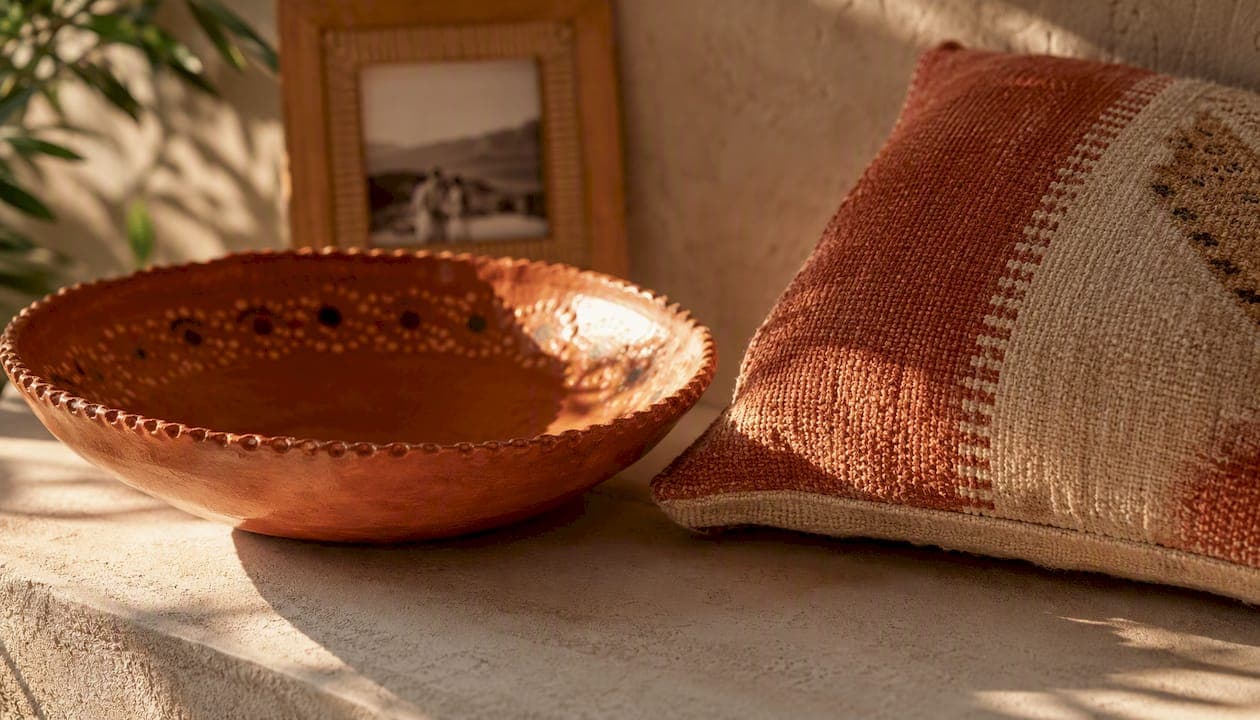
Meaningful, personal objects improve living spaces because they make a room feel safer, more authentic, and emotionally supportive in ways a showroom full of matched furniture never will. A photograph from your grandmother's kitchen, a hand-loomed pillow bought on a trip you still think about, a child's clumsy clay bowl on the mantel: these things work on the nervous system, not just the eye.
The mechanism is fairly simple once you see it laid out:
- Memory anchors. Objects tied to a specific person, place, or moment pull that memory forward every time you glance at them.
- Identity signals. What you choose to display tells you, and everyone who visits, who you actually are.
- Sensory bookmarks. Scent, texture, and repeated visual motifs act as quiet cues that regulate mood without you noticing.
Research on place attachment backs this up with real correlation data linking emotional connection to a space and long-term psychological well-being. Handcrafted sources like Createdecorus exist precisely because generic decor cannot deliver that anchoring effect. This article breaks down the psychology, the practical curation method, and the styling techniques that turn a house full of stuff into a home full of meaning.
Key Takeaways
Meaningful objects improve living spaces because they trigger memory, reinforce identity, and regulate mood in ways generic decor cannot replicate.
| Point | Details |
|---|---|
| Prioritize story over trend | Choose objects for the memory or connection they carry, not for how current they look. |
| Edit strictly | Use the 30-day test to separate objects that truly resonate from ones you're keeping out of habit. |
| Group for impact | Cluster three to five related pieces on a tray or shelf instead of scattering them room-wide. |
| Balance scale and light | Match object size to the surface and use lighting to highlight texture and detail. |
| Source handcrafted pieces | Createdecorus offers handcrafted pillows and accents made in Mexico with documented artisan materials and technique. |
Table of Contents
- Why Meaningful Objects Improve Living Spaces: The Core Benefits
- What the Research and Designers Say About Decor and Well-Being
- How to Choose Which Meaningful Objects Deserve a Place
- Styling Techniques That Give Meaningful Objects Real Impact
- Where to Find Objects Worth Keeping
- Common Mistakes That Undercut Meaningful Decor
- The Psychology Behind Why We Attach Meaning to Objects
- How Meaningful Objects Shape the Feel of a Room
- Balancing Meaning With Function Room by Room
- Why Createdecorus Believes Objects Should Carry a Story
- Bring Meaningful, Handcrafted Pieces Into Your Own Home
- Frequently Asked Questions
- Sources
Why Meaningful Objects Improve Living Spaces: The Core Benefits
The benefits split into two buckets: what happens in your head, and what happens in your daily routine. Both matter, and they reinforce each other.
On the psychological side, three things happen at once. Place attachment builds, meaning you feel more rooted and less like a visitor in your own home. Nostalgia gets triggered, which activates the brain's pleasure centers rather than just prompting a wistful memory. And identity gets reinforced every time you see an object that reflects a value or a chapter of your life you're proud of.
Many American workers who have the ability to work from home do so full time, according to Pew Research, which means the emotional and functional quality of the home now carries weight it never had to carry a generation ago. When your living room is also your office, the objects surrounding you aren't decoration. They're part of your working environment.
On the practical side, the outcomes are easy to spot once you know what to look for:
- Better sleep and relaxation in rooms styled around calming, personally chosen items rather than trend pieces.
- More frequent use of heirloom or handcrafted objects, since people who love a piece actually touch it, sit on it, or light it, rather than storing it "for good."
- A stronger, more coherent sense of identity in the home, visible to the person living there and to every guest who walks in.
Decor that triggers nostalgia does something specific: it activates pleasure centers in the brain, not just a fleeting feeling of "that's nice." Shape, color, symmetry, and clutter all shift how a room makes you feel, which is why the objects you choose matter as much as how you arrange them.
What the Research and Designers Say About Decor and Well-Being
Place attachment is the academic term for the bond between a person and their environment, and it correlates directly with residential satisfaction and psychological well-being. That's not a soft claim. It's a measurable relationship between how attached you feel to your space and how content you report being overall.
Designers who work with clients daily describe the same phenomenon from the ground up, without needing a study to tell them what they see in practice.
That sentiment echoes across the design world. Virginia White and other designers quoted in coverage of Mexico's wellbeing trends point to the same pattern: editing a collection down to pieces with real story, then grouping them deliberately, strengthens their emotional impact rather than diluting it.
Sentimental items function as anchors that move with you through life, according to House & Garden, and that's the difference between a home and a showroom. A showroom is furnished. A home is edited, curated, and personal. Objects that survive multiple moves, multiple decorating phases, and multiple versions of you tend to be the ones worth keeping visible.
Small sensory details reinforce all of this quietly. A consistent scent, a favorite chair, a repeated color: these act as what one analysis of interior psychology calls "bookmarks" that help regulate mood and recall positive memories without conscious effort.
How to Choose Which Meaningful Objects Deserve a Place
Curation is different from decoration. Decoration fills space. Curation selects for story, and it requires you to be a little ruthless about what actually earns a spot on your shelf.
Start with a clean surface, literally. Clear a shelf, a mantel, a console table down to nothing, then bring back only the pieces that pass a simple test: does this object carry a memory, a value, or a connection you want to see every day? Curation focused on provenance and story rather than trend cycles produces rooms that feel timeless instead of dated within a year.
Designers call the opposite mistake "decorating for potential," which means keeping something because it might matter someday rather than because it matters now. Avoiding that trap starts with an honest editing pass.
Here's a workable selection process:
- Pull everything out. Put every candidate object on a table so you can see it in isolation, away from its usual spot.
- Sort by story strength. Rank each item by how strong and specific the memory or connection actually is.
- Run a 30-day test. Live with your top picks displayed and see which ones you still notice and enjoy after a month.
- Rotate the rest. Store, gift, or donate anything that didn't earn a second glance during the test period.
Selection criteria worth weighing side by side:
| Criteria | What to Check | Action |
|---|---|---|
| Memory intensity | Does it trigger a specific, vivid memory or just a vague fondness? | Display if vivid, store if vague |
| Provenance | Do you know who made it or where it came from? | Display if traceable, research if unclear |
| Condition | Is it structurally sound and safe to keep out? | Display if stable, repair or retire if fragile |
| Scale fit | Does its size suit the surface or wall you have in mind? | Display if proportional, relocate if oversized |
| Daily utility | Does it also serve a function beyond looking nice? | Display prominently if functional |
Pro Tip: Group three to five related objects together on a tray or shelf rather than scattering them individually across a room. A cluster of meaningful pieces reads as intentional; the same items spread thin across every surface reads as clutter.
Styling Techniques That Give Meaningful Objects Real Impact
Curation gets you the right objects. Styling gets them noticed. The difference between a shelf that looks staged and one that feels personal usually comes down to four things: grouping, scale variation, repetition, and light.
Vignettes work because they tell a compressed story in one glance. A tight cluster of a travel photo, a small ceramic bowl, and a candle says more than the same three items scattered across a room.
Try these combinations as starting points:
- Entryway console: A woven basket for keys, a framed photo, and a single textured pillow-adjacent accent piece to soften a hard surface as you walk in.
- Living room shelf: Books stacked flat as a platform, a handmade vase on top, and a small piece of art leaning rather than hanging, creating layered height.
- Bedside table: A reading lamp, a small dish for jewelry that belonged to someone you love, and a low bowl for a single stem of a plant that gets refreshed weekly.
- Dining cabinet: Mismatched but color-coordinated ceramics behind glass, with one bold textile piece draped over a shelf edge to break up the symmetry.
Mixing eras and scales keeps a vignette from feeling like a matched set. Pair a modern lamp with an antique frame. Set a small object next to a taller one so the eye has somewhere to travel. Repeated motifs, a color, a material, a shape, tie disparate objects together even when their origins have nothing in common.
Pro Tip: Leave at least a third of every surface empty. Negative space is what lets the eye register your meaningful pieces as intentional rather than as overflow from somewhere else in the house.
Where to Find Objects Worth Keeping
The best sources for meaningful decor rarely sit inside a big-box store. They sit in attics, artisan markets, and small studios where a maker can tell you exactly how a piece was built.
Family collections come first. Attics, storage units, and relatives' homes often hold items nobody has looked at in years but that carry real weight once rediscovered. Beyond that, curating a home around values and memory works best when you deliberately mix inherited pieces with new ones chosen for the same reasons.
For new pieces, look at:
- Craft markets and local maker fairs, where you can meet the person who made the object.
- Vintage and estate shops, which often carry items with decades of use and character already built in.
- Curated maker marketplaces online, which connect you to artisans outside your immediate area.
- Createdecorus, for handcrafted pillows and accents made with artisan techniques and materials that carry a documented story rather than a factory serial number.
Before buying, run a quick authenticity check:
| What to Verify | Why It Matters |
|---|---|
| Materials disclosed | Natural, sustainable materials tend to age well and feel more substantial over time |
| Maker story available | A named artisan or workshop gives the piece provenance you can pass along |
| Return or exchange policy | Protects you if the piece doesn't fit the space once it arrives |
| Visible craftsmanship | Hand-finished details (uneven stitching, natural texture) confirm handmade origin |
A handcrafted piece earns its place in your home when it meets all three tests: durable materials, a real story behind it, and a level of craft that shows on close inspection. Objects like these tend to outlast trend cycles because their value never depended on being fashionable in the first place.
Common Mistakes That Undercut Meaningful Decor
Overcrowding is the most frequent error. If every surface holds ten objects, none of them get to stand out, and the room reads as cluttered rather than curated. The fix ties back to the editing process: fewer objects, chosen more carefully, always outperform a crowded shelf.
Impulse buying is the second trap. Buying an object because it's on sale or trending, rather than because it means something, fills a home with items that carry no story and eventually just become more stuff to dust. Meaningful decor chosen with intention acts as a steady source of calm; impulse purchases rarely do.
Other frequent missteps worth avoiding:
- Placing sentimental textiles or paper items in direct sunlight, where fading and degradation happen faster than most people expect.
- Ignoring scale, so a tiny heirloom gets lost on a huge wall or an oversized piece overwhelms a small shelf.
- Keeping items purely out of guilt rather than genuine attachment, which quietly turns a home into storage.
A simple rotation and maintenance rhythm keeps things fresh without much effort. Swap seasonal items twice a year. Dust and inspect sentimental pieces during that same rotation, since fragile materials benefit from a regular check rather than years of neglect. Before gifting or donating anything, take a photograph first. That single habit resolves most of the guilt people feel about letting go.
Pro Tip: If an object consistently triggers a negative feeling, guilt, grief you're not ready to sit with, or a reminder of a relationship you'd rather not revisit, let it go. Meaningful decor should support your well-being, not quietly work against it.
The Psychology Behind Why We Attach Meaning to Objects
Attachment to objects isn't sentimentality for its own sake. It runs on two well-documented psychological mechanisms: memory triggering and identity reinforcement.
Memory triggering works because objects act as retrieval cues. Seeing a specific item reactivates the neural pathways tied to the moment you acquired it, which is why a single souvenir can pull up an entire afternoon in vivid detail decades later. Nostalgia activated by decor triggers the brain's pleasure centers directly, which explains why looking at a cherished object can lift your mood in seconds, not minutes.
Identity reinforcement works differently. Every object you choose to display functions as a small, nonverbal statement about who you are, what you value, and where you've been. A shelf of travel objects says something different than a shelf of family photos, and both say something different than a wall of original art. Sentimental objects serve as storytelling devices that reinforce identity every time you or a guest looks at them, which is part of why a rental apartment full of personal objects can feel more like home than an owned house full of generic furniture.
How Meaningful Objects Shape the Feel of a Room
A room's perceived size and mood shift based on what fills it, and meaningful objects influence both in ways generic decor doesn't. Cluttered, meaningless items make a space feel smaller and more chaotic because the eye has nowhere to rest. Curated, story-rich objects do the opposite: they give the eye a place to land, which paradoxically makes even a small room feel calmer and more spacious.
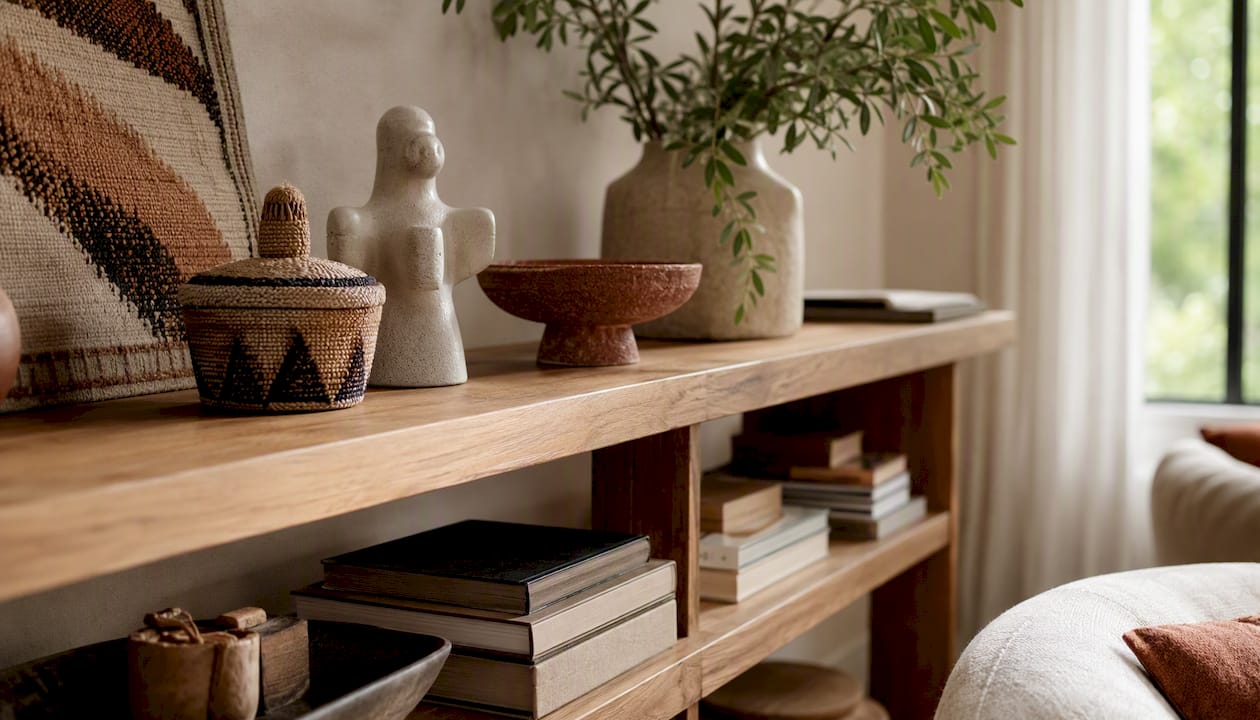
Color, shape, and symmetry all play into this. Rounded shapes and warm tones tend to read as more comforting, while sharp angles and cool tones read as more clinical. A living room built around warm-toned, handcrafted textiles and personal photography will feel fundamentally different from the same square footage filled with matched, mass-produced furniture, even before you account for the emotional weight of the objects themselves.
Mood shifts happen at a level most people don't consciously register. A single glance at a meaningful object can lower stress in the moment, which is part of why designers increasingly talk about "glimmers," small visual cues that spark a flash of calm or joy rather than a full memory. Spatial perception and mood aren't separate effects here. They're the same mechanism, working on two different senses at once.
Balancing Meaning With Function Room by Room
Not every room can be styled the same way, because not every room does the same job. A kitchen needs counter space more than it needs a shelf of trinkets. A bedroom needs calm more than it needs conversation pieces. Matching meaningful objects to a room's actual function keeps the house livable, not just sentimental.
In high-traffic rooms like kitchens and entryways, keep meaningful objects to a few anchor pieces, a single framed photo, one handmade bowl, rather than a dense collection that gets in the way of daily tasks. In living rooms, where people gather and linger, you have more room to layer vignettes and let a collection breathe across shelves and tables.
Bedrooms benefit from a smaller, more curated set of objects chosen specifically for calm, since this is the room where visual noise most directly affects sleep. Home offices, now common given how many people work remotely, benefit from objects that reinforce focus and identity, a diploma, a memento from a milestone, without becoming a distraction during the workday. The rule that holds across every room: function first, meaning layered on top, never the reverse.
Why Createdecorus Believes Objects Should Carry a Story
We started Createdecorus because we kept noticing the same gap: people wanted their homes to feel personal, but most decor on the market offered polish without any real story behind it. Handcrafted pieces solve that gap differently than mass production ever could, because every stitch and texture reflects a maker's hand rather than a machine's repetition.
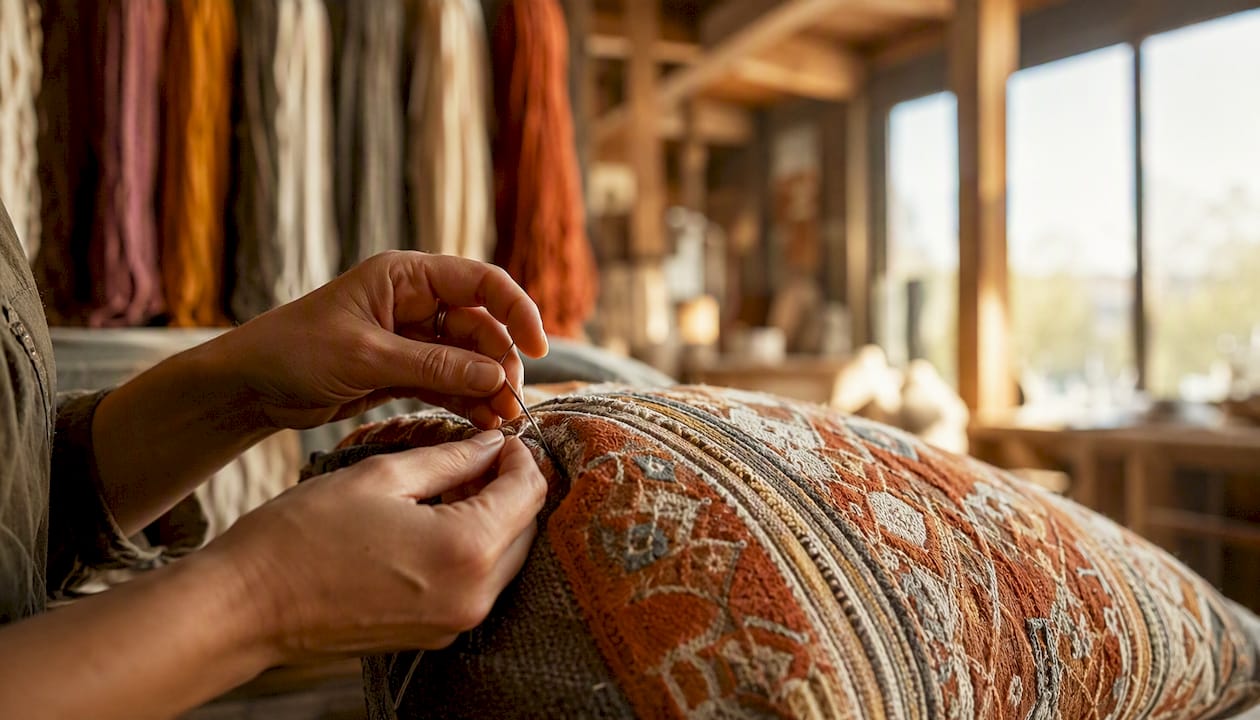
We believe luxury isn't about excess. It's about materials chosen with care and details that reward a closer look. A pillow made by an artisan carries a small piece of that maker's tradition into your living room, which is exactly the kind of object this article has been describing all along: one that anchors memory, signals identity, and gives a room the emotional weight that generic decor simply can't replicate. If you're building a space around meaning rather than trend, we'd invite you to look at how our pieces are made, not just how they look in a photo.
Bring Meaningful, Handcrafted Pieces Into Your Own Home
Createdecorus is the source for readers who want the story-rich quality this article describes without spending months hunting through craft markets and estate sales on their own. Every pillow and accent we make is handcrafted in Mexico, which means the artisan techniques, natural materials, and cultural traditions behind each piece are built in from the start, not added as an afterthought.
Our collection blends rich texture, bold color, and traditional Mexican artistry into pieces meant to be lived with, not just looked at. If you're curating a room around meaning the way this guide lays out, start by browsing our handcrafted luxury pillows to see materials and craftsmanship up close before you commit to a piece. Interior designers and boutiques building out client projects can also explore our trade program for wholesale pricing on handcrafted accents. And if you're working with fixed storage or organization to keep sentimental pieces protected between rotations, a resource like home organization systems pairs well with the editing process described above. Before you buy anything new, run it against the same checklist from this guide: real materials, a documented maker story, and a return policy that protects you if the piece doesn't fit your space once it arrives.
Frequently Asked Questions
Why do meaningful objects improve living spaces more than new furniture? New furniture offers polish, but it carries no personal history. Meaningful objects trigger memory and reinforce identity, which generic pieces simply can't do regardless of quality.
What is the 3-5-7 rule in decorating? It's a styling guideline suggesting groups of odd numbers, three, five, or seven items, create more visually interesting vignettes than even-numbered groupings, since the eye finds asymmetry easier to scan.
What is the 2/3 rule for shelf styling? It suggests filling roughly two-thirds of a shelf or surface with objects and leaving the remaining third empty, so the arrangement feels intentional rather than crowded.
What is the 4-inch rule in interior design? It's a general spacing guideline recommending at least four inches between grouped objects on a shelf or table, giving each piece enough visual room to stand out individually.
What are the real benefits of a well-decorated living room? A living room built around meaningful, well-chosen objects supports better mood regulation, stronger place attachment, and a clearer sense of identity, benefits that show up daily, not just when guests visit.
Sources
- The importance of the sentimental in design | House & Garden
- Interior design ideas: emotions over aesthetics | Columbia Tribune
- Ideas
- About a third of U.S. workers who can work from home do so all the time | Pew Research Center