Your home tells the truth about you, even when you are not trying. The colors you reach for, the textures you layer, the objects you choose to keep in plain sight — all of it adds up to a portrait of who you are. Environmental psychology research confirms that observers can accurately judge Big Five personality traits simply by scanning a room's layout, decor, and organization. That is not a small claim. It means your living space functions as a kind of autobiography, written in fabric, light, and carefully placed objects.
Why home accents reflect personality comes down to three forces working at once: the conscious choices you make to signal your values, the unconscious habits that leave traces behind, and the emotional needs you satisfy through your surroundings. A handwoven pillow, a cluster of framed photographs, a single piece of original art — each one carries meaning that goes deeper than aesthetics. We believe that home decor and self-expression are inseparable, and that the most resonant spaces are built not from matching sets but from intentional, meaningful choices made over time.
Here is a quick look at the primary ways home accents signal personality:
- Color choices reveal emotional temperament and underlying mood preferences
- Personal artifacts and photos affirm identity and anchor a sense of self
- Art selections indicate openness, curiosity, and cultural engagement
- Furniture arrangement communicates social orientation and how you relate to others
- Lighting decisions reflect your relationship with energy, privacy, and atmosphere
- Hobby-related objects expose genuine passions without a single word spoken
- Texture and material choices express sensory preferences and values around quality
Fifteen ways your home decor reveals who you are
1. Personal artifacts affirm your identity
Objects with personal history — a grandmother's ceramic bowl, a souvenir from a meaningful trip, a handmade piece from an artisan market — do more than fill space. They anchor your sense of self and communicate your story to anyone who enters. Personal photos and heirlooms displayed around a home are reliable markers of sentimentality and a strong confidence in personal identity.
2. Desk organization signals ambition and focus
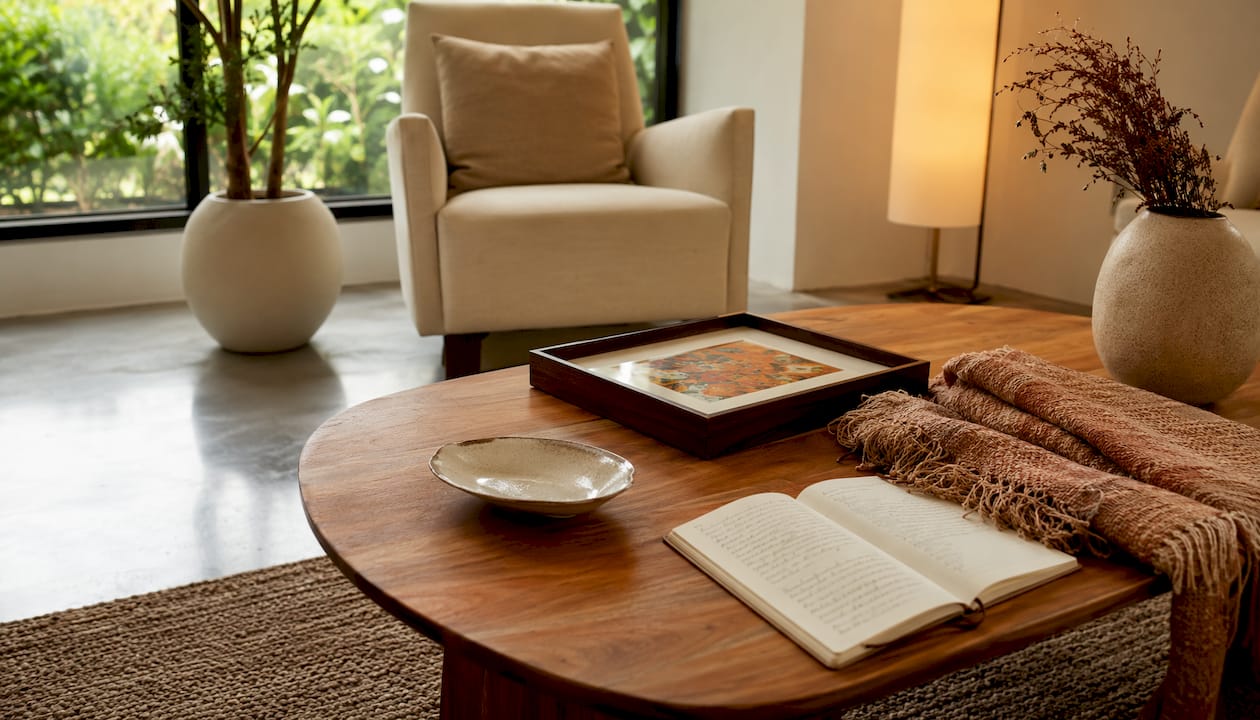
A tidy, well-organized workspace points toward conscientiousness and disciplined thinking. A creatively cluttered desk, on the other hand, has been linked to higher creativity in research from the University of Minnesota. Dr. Sam Gosling, author of Snoop: What Your Stuff Says About You, notes that the amount of personal items in a workspace also reveals whether someone keeps their professional and personal selves separate.

3. Trend-forward interiors reflect goal orientation
Keeping decor current and fresh tends to signal extraversion and a forward-looking mindset. Extraversion shows up in rooms that feel new, cheerful, and welcoming — spaces designed to draw people in rather than hold them at a comfortable distance.
4. Family photos signal nostalgia and sentimentality
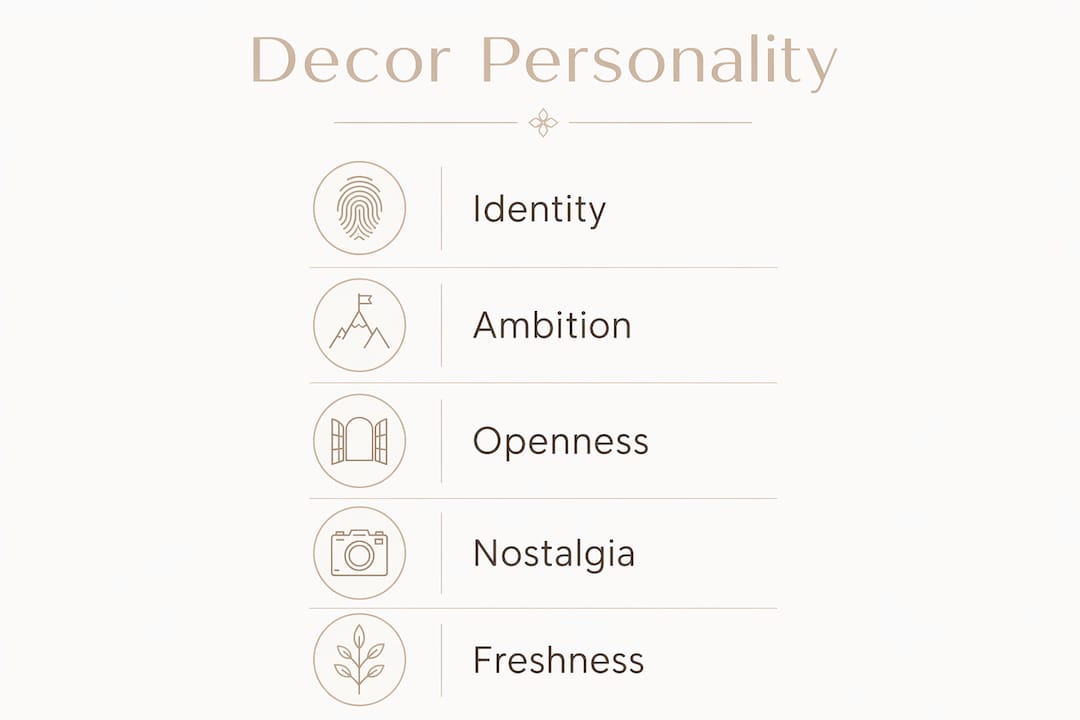
Walls lined with family portraits and personal snapshots speak to a deep sense of belonging and emotional memory. These displays are not merely decorative. They reinforce identity, ground you in your relationships, and communicate warmth to every guest who walks through the door.
5. Small, intimate nooks reveal introversion
A single reading chair tucked near a window, a quiet corner with soft lighting and a curated stack of books — these arrangements are the spatial language of introversion. Introverts favor closed doors and solitary seating, while extroverts arrange furniture to encourage conversation and keep the door open.
6. Furniture quality reflects an investment mindset
The quality of the pieces you choose — whether you invest in one well-crafted sofa or fill a room with disposable furniture — reveals how you think about value, longevity, and what deserves your resources. Architect Javier De la Cruz puts it plainly: what you spend on reveals what you believe is most important in a home.
7. Creative wall decorations signal openness to change
Eclectic wall arrangements, unconventional paint colors, and original artwork are among the strongest visual cues for high openness to experience. Dr. Gosling's research found that openness is actually the most accurately judged Big Five trait from a room scan, with distinctive decor and a wide variety of books as its clearest indicators.
8. Displaying fine art indicates curiosity and broad-mindedness
Having original artworks on your walls "tends to be one of the big clues" that you are an open, broad-minded person, according to Dr. Gosling in an NPR interview. An interest in art and culture requires a baseline of curiosity, and that curiosity tends to show up everywhere else in a person's life and decisions.
9. Renter versus nester decor preferences
Renters who treat their space as temporary often leave walls bare and furniture minimal, which can signal a reluctance to commit or a sense of impermanence. Nesters, by contrast, layer their spaces with personal touches regardless of whether they own the home. The difference is less about ownership and more about emotional investment in the present moment.
10. Sparse or minimal decor and commitment attitudes
Minimalism is not always a design philosophy. Sometimes, as architect De la Cruz observes, it masks an underlying insecurity or a fear of making the wrong choice. A truly intentional minimalist space feels considered and warm; a sparse space born of avoidance tends to feel unfinished and slightly cold.
11. Living room arrangement as social expression
The living room is the primary social stage of a home. An inviting shared space with open-door policies and communal seating is a reliable marker of extraversion. Introverts, by contrast, often favor arrangements that prioritize one comfortable seat over a configuration built for group conversation.
12. Vintage and sustainable materials show groundedness
Choosing reclaimed wood, natural fibers, or vintage pieces signals a grounded personality that values authenticity over novelty. These choices also reflect an awareness of craft and history, a preference for things that carry a story rather than things that simply look new.
13. Intentional kitchen appliance choices reveal the entertainer
A kitchen stocked with a quality espresso machine, a well-seasoned cast iron pan, and a generous cutting board tells a different story than a kitchen with nothing on the counter. Entertainers invest in the tools that make gathering possible, and those choices are visible long before a dinner party begins. You can see how home organization and layout in spaces like the kitchen communicate personality just as clearly as any decorative accent.
14. Greenery and natural fibers signal freshness and renewal
Plants, linen throws, jute baskets, and woven textures bring a quality of aliveness to a room. They suggest someone who values growth, calm, and a connection to the natural world. These choices also tend to appear in spaces where the owner has thought carefully about how the room will feel to inhabit, not just how it will photograph.
15. Color psychology, cultural identity, lighting, and hobbies
Color is one of the most direct expressions of emotional temperament. Blues suggest calmness, reds convey passion, and muted neutrals point toward groundedness and balance. Cultural background shapes these choices profoundly — the colors, patterns, and materials that feel like home are often rooted in heritage and memory. Lighting choices carry equal weight: bare windows that welcome natural light signal openness and warmth, while drawn curtains suggest a preference for privacy and retreat. And hobby-related accents — a guitar on a wall, a collection of ceramics, a shelf of art books — are what Dr. Gosling calls "behavioral residue," the unintentional traces that reveal how someone actually spends their time.
| Decor Element | Personality Signal |
|---|---|
| Original artwork on walls | High openness, curiosity, broad-mindedness |
| Communal seating arrangement | Extraversion, social warmth |
| Single reading chair, closed doors | Introversion, preference for solitude |
| Tidy, organized workspace | Conscientiousness, disciplined thinking |
| Cluttered but creative desk | Higher creativity, looser structure |
| Family photos and heirlooms | Sentimentality, strong sense of identity |
| Natural fibers and vintage pieces | Groundedness, value for authenticity |
| Minimal or sparse decor | Possible design insecurity or intentional restraint |
| Bold color choices | Emotional expressiveness, confidence |
| Muted neutrals and soft textures | Calm temperament, preference for balance |
How environmental psychology explains the decor-personality connection
The field of environmental psychology has spent decades mapping the relationship between the spaces we inhabit and the people we are. The core finding is consistent: living spaces act as canvases for personality, leaving what researchers call "psychological footprints" through possessions, habits, and even the messes left behind. These footprints are readable to outside observers with surprising accuracy.
Dr. Gosling's research identifies three distinct channels through which personality expresses itself in a home. Identity claims are the deliberate displays — a band poster, a cultural artifact, a piece of art chosen because it reflects a value. Feeling regulators are the adjustments made to influence mood: soft lighting, a weighted blanket, a particular scent. Behavioral residue is the unintentional layer, the sports gear by the door, the art supplies on the table, the stack of half-finished books. Together, these three channels create a layered portrait that goes far beyond surface aesthetics.
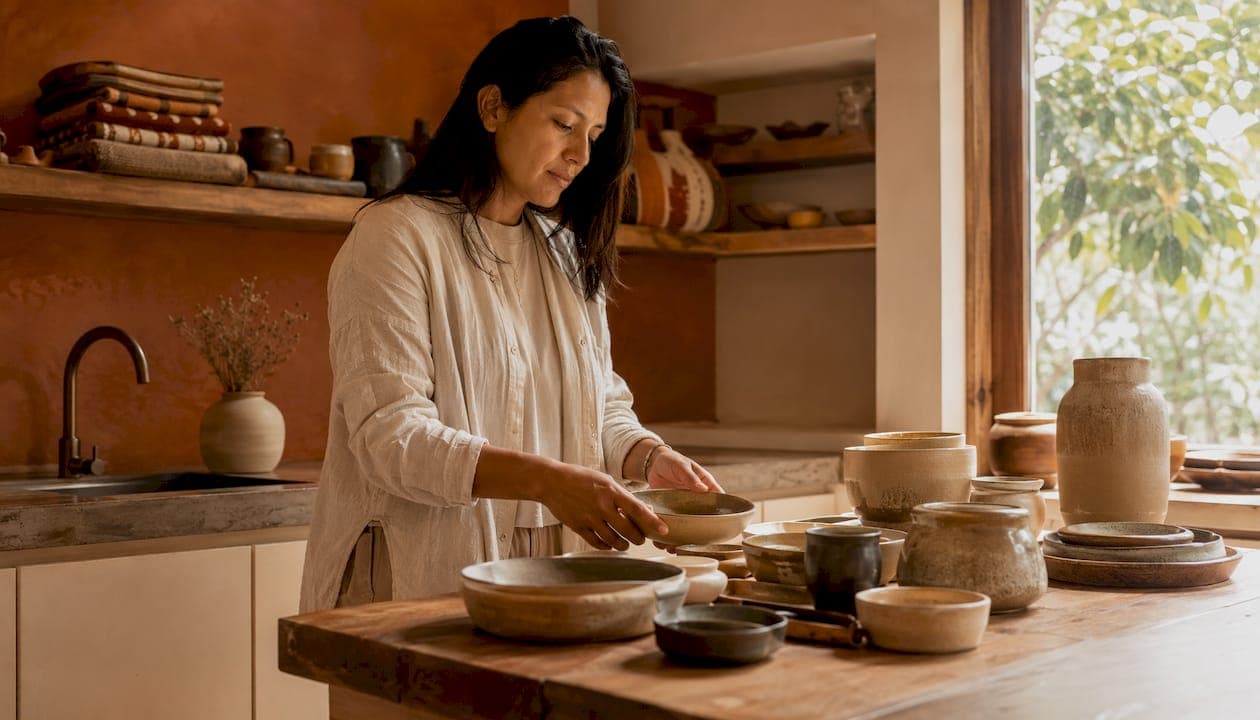
Handcrafted decor occupies a special place within this framework. Artisan pieces embed the maker's individuality into the object itself, creating an emotional warmth that mass-produced items simply cannot replicate. When you bring a handcrafted piece into your home, you are not just filling a space. You are adding a story, a texture, a character that becomes part of your own.
Interior design decisions are also shaped by unconscious needs and past memories, making homes living stories rather than static displays. Architect De la Cruz describes it this way: "There is certainly a conscious element at play when we choose a lamp, a piece of art or a specific layout that represents our tastes and values. But there is also an unconscious dimension: many of our decisions stem from past memories, silent emotional needs or long-held habits." The role of accent pieces in a room, then, is never purely decorative. Each one participates in a quiet, ongoing conversation between who you are and how you live.
Authentic self-expression in home decor requires a willingness to prioritize personal meaning over broad approval or trends. That takes a kind of courage most decorating guides never mention.
Your home is not a showroom — and that is the point
There is a version of decorating that produces beautiful rooms and says almost nothing about the person who lives in them. Suumit Arora, Founder and CEO of Artiure, describes it precisely: a room assembled from matching pieces bought at the same shop looks attractive, but it is "a space that was assembled, not built. Furnished, not inhabited." The most meaningful interiors are built through intentional choices that accumulate over time, not through a single weekend of purchasing.
We would add this: the pressure to get it right all at once is one of the main reasons homes end up feeling impersonal. Personality-driven spaces tend to evolve. They gather meaning the way a well-worn book does, through use, through time, through the addition of objects that genuinely matter. Chasing a trend or copying a style that does not reflect your actual preferences produces rooms that feel borrowed rather than inhabited.
The soulful quality of handcrafted decor is precisely its resistance to uniformity. A piece made by hand carries the marks of its making. Those small imperfections, the slight variation in texture, the brushstroke visible beneath the surface, are what create emotional connection. They are what make a room feel like yours.
Arora puts it simply: "A house holds your things. A home holds your character." That distinction is worth sitting with. Personal style in home design is not about spending more or following the right accounts. It is about choosing with honesty, collecting with patience, and trusting that what resonates with you is worth displaying.
Key Takeaways
Home accents reflect personality because every intentional choice, from color to texture to personal artifact, functions as a visible layer of identity that observers can read with genuine accuracy.
| Point | Details |
|---|---|
| Decor reads as personality | Observers can accurately judge Big Five traits by scanning a room's layout, decor, and organization. |
| Three expression channels | Identity claims, feeling regulators, and behavioral residue each reveal a different layer of self. |
| Handcrafted pieces carry more meaning | Artisan objects embed individuality and emotional warmth that mass-produced items cannot replicate. |
| Intentionality over matching | Meaningful homes are built through deliberate, personal choices accumulated over time, not purchased sets. |
| Authenticity requires courage | Prioritizing personal meaning over trends or approval is what separates an inhabited home from a showroom. |
The quiet honesty of a well-chosen object
Most decorating advice focuses on what to buy. The more useful question is why you are drawn to certain things in the first place. In my view, the homes that stay with you long after you have left them are never the most polished ones. They are the ones where every corner holds a small, honest decision: a textile chosen for how it feels, a photograph kept because the memory still matters, a piece of art that took months to find because nothing else was quite right.
The research from Dr. Gosling and the insights from architects like De la Cruz point toward the same conclusion: your home is already telling a story. The only real choice is whether that story is yours or someone else's. Trend-driven decorating produces spaces that age badly, not because the pieces go out of style, but because they never had anything personal to say. Handcrafted objects, meaningful artifacts, and colors chosen for how they make you feel rather than how they photograph — these are the elements that hold up.
We also tend to underestimate how much the private spaces reveal. The bedroom, the bathroom, the corner of the kitchen where you actually spend your mornings — these are where the most honest expressions of personality live, precisely because no one is watching. Neglecting them in favor of a perfectly curated living room is a form of self-neglect dressed up as design restraint.
Start with one object that genuinely moves you. Let the room grow from there.
At Createdecorus, we believe that a home accent should carry something real. Every piece in our collection is handcrafted in Mexico, shaped by artisan traditions passed through generations, and made to bring warmth, texture, and cultural depth to the spaces you actually live in. If you are ready to add something with genuine character to your home, explore our handcrafted luxury accents or browse the full pillow collection to find the piece that speaks to you.