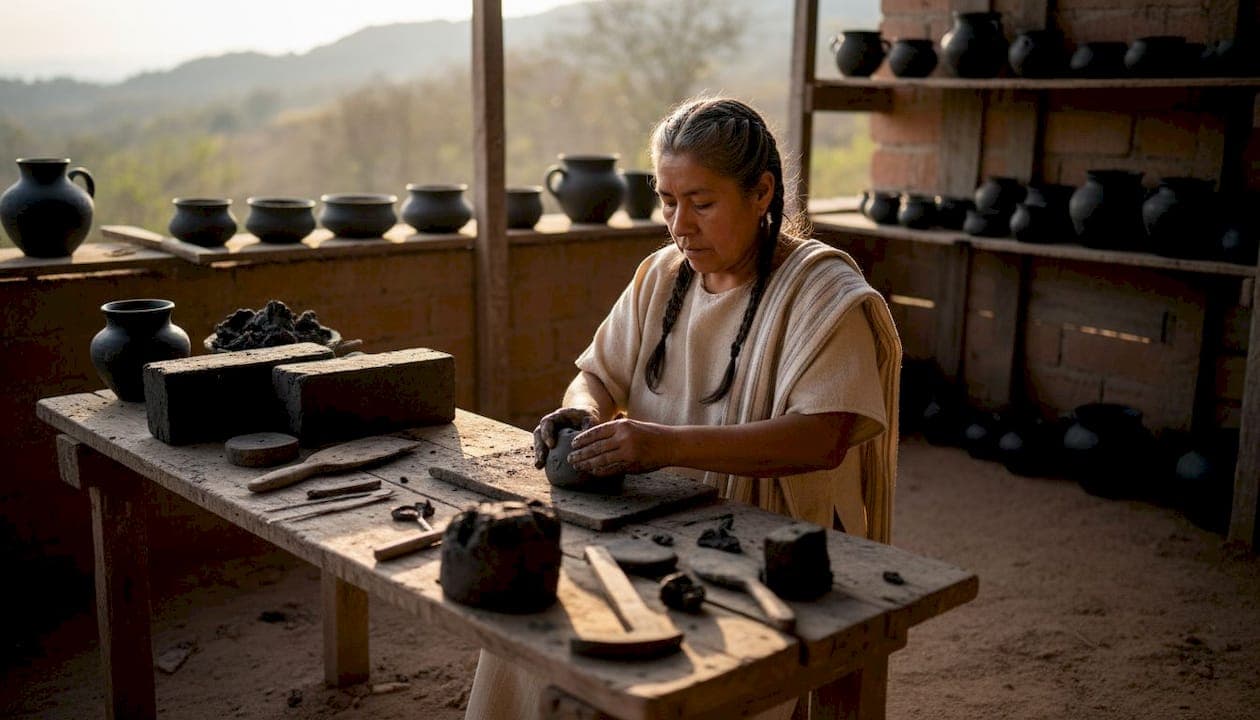
Authentic Mexican artistry is handmade craft rooted in indigenous and regional traditions, shaped by centuries of cultural knowledge passed down through artisan communities. The ways to authentically honor Mexican artistry go far beyond buying a decorative piece. They require understanding provenance, respecting cultural narratives, and choosing works that carry real meaning. From the silk cooperatives of Oaxaca to the painted wood carvings of Michoacán, each tradition represents a living heritage worth protecting. We believe the most meaningful way to celebrate Mexican culture is to engage with it directly, intentionally, and with genuine care.
1. Ways to authentically honor Mexican artistry start with identifying the real thing
Genuine Mexican artisan crafts carry physical evidence of the human hand. Handmade works show irregular tool marks, uneven thread thickness, and unique material patinas that machine production cannot replicate. These are not flaws. They are proof of craft.
The most reliable markers of authenticity are regional. Barro negro pottery comes exclusively from San Bartolo Coyotepec in Oaxaca, shaped without a wheel and fired in earthen kilns. Talavera pottery from Puebla carries a certification from the Talavera Regulatory Council, which verifies hand-painting and regional clay sourcing. Backstrap loom textiles from communities across Oaxaca and Chiapas show irregular weave patterns that no factory can produce at scale.
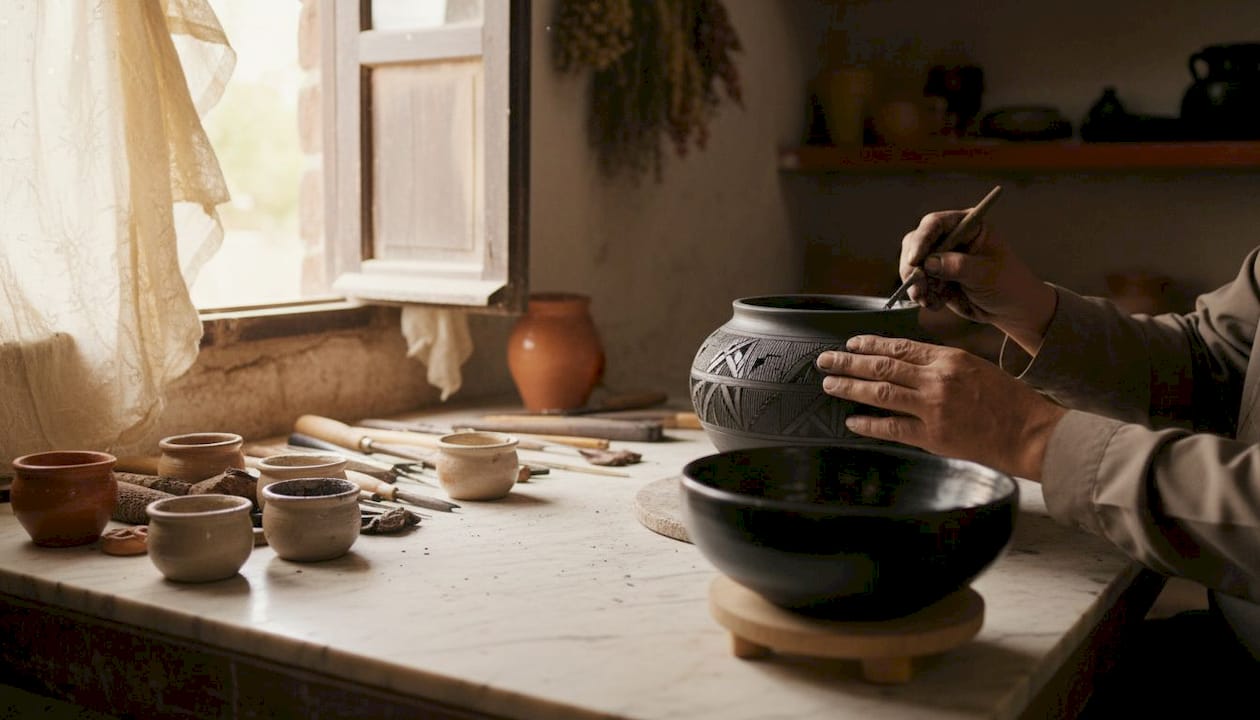
Authentic regional design features intense texture, earthy tones, and region-specific motifs. Mass-market products tend toward bright, uniform colors and caricatured imagery. If a piece looks identical to ten others on the shelf, it almost certainly is not handmade.
Pro Tip: Ask the seller which community made the piece and which technique was used. A genuine artisan or cooperative representative will answer with specific detail. Vague answers are a red flag.
2. Learn the major craft traditions and their home regions
Mexican artisan heritage is not one tradition. It is dozens of distinct regional practices, each with its own materials, techniques, and cultural meaning.
- Barro negro pottery from San Bartolo Coyotepec, Oaxaca: shaped by hand and polished with quartz stones to achieve its signature dark sheen.
- Alebrijes from San Martín Tilcajete, Oaxaca: hand-carved copal wood figures painted with intricate geometric patterns, each one unique.
- Talavera pottery from Puebla: certified hand-painted ceramics using regional clays and natural mineral pigments.
- Silk textiles from San Pedro Cajonos, Oaxaca: artisan cooperatives here maintain techniques dating back to the 1500s, using 100% organic, hand-crafted production methods.
- Handwoven hammocks from the Yucatán Peninsula: handwoven cotton hammocks last approximately 30 years, while handwoven nylon versions last up to 60 years. That durability reflects the quality of the craft itself.
- Wood carving traditions from Apaseo el Alto and surrounding regions in Guanajuato, producing furniture and decorative objects with deep cultural roots.
Knowing these regions by name changes how you shop. You stop looking for "Mexican decor" as a category and start looking for a specific tradition from a specific place.
3. Buy directly from artisans or verified cooperatives
The most direct way to support local artisans is to cut out intermediaries. When you buy from a cooperative or directly from a maker, a fair share of the price reaches the person who made the piece. Retail chains and tourist markets often pay artisans a fraction of the final sale price.
Cooperatives like those in San Pedro Cajonos operate as collective enterprises where members share resources and profits. Buying from them funds not just one artisan but an entire community's ability to continue practicing their craft. Many cooperatives also invest in training younger generations, which is how ancestral techniques survive.
When traveling in Mexico, markets like the Mercado de Artesanías in Oaxaca City or the Mercado de Artesanías in San Cristóbal de las Casas connect buyers directly with regional makers. Online, look for platforms that name the artisan, the community, and the technique. Anonymized "Mexican-style" products offer none of that accountability.
Pro Tip: If you cannot buy directly, look for fair-trade certification or cooperative membership labels. These signal that the artisan received equitable compensation.
4. Recognize that each piece is unique and act accordingly
Every handcrafted artisan work is unique. Minor variations in size, pattern, and color are not inconsistencies. They are the signature of the human hand. A piece that resonates with you may not exist in that exact form again.
This matters practically. When you find a piece that moves you, buy it. Artisans do not produce identical inventory. Waiting often means losing the piece entirely. This is the opposite of mass retail logic, where restocking is assumed.
Collectors who understand this shift their mindset from shopping to selecting. They approach artisan markets the way they would approach a gallery. Each work is evaluated on its own terms, not compared against a standardized product spec.
5. Engage with the cultural story behind each piece
Owning a piece of authentic Mexican artistry carries a responsibility. The story behind the work is part of its value. An alebrije from San Martín Tilcajete is not just a painted animal figure. It represents a carving tradition developed in the 20th century by master artisan Manuel Jiménez and carried forward by entire family lineages.
Respectful engagement with Mexican artistry means emphasizing preservation and narrative over surface aesthetic trends. When you display a piece in your home, share its origin with guests. Name the community. Name the technique. That act of narration honors the artisan and educates your community.
"Focusing on history and community narrative offers respectful engagement with Mexican artistry. The goal is cultural preservation, not commodification."
This distinction matters. A growing cultural preservation movement in Mexican and Mexican-American communities is actively pushing back against the reduction of rich traditions to seasonal decoration or trend-driven aesthetics.
6. Avoid misusing sacred or ritual objects as decoration
Not every beautiful Mexican object belongs on a shelf. Some items carry ceremonial or spiritual significance that changes how they should be treated. Huichol yarn paintings, for example, often depict sacred visions from peyote ceremonies. Day of the Dead altars are ritual spaces for honoring the deceased, not interior design elements.
Incorporating Mexican artisan works into homes should avoid misusing sacred or ritualistic items purely for decoration. The line between appreciation and appropriation runs through intent and context. Displaying a piece without understanding its meaning reduces it to an object. Understanding its meaning elevates it to a conversation.
When in doubt, ask. Artisans and cultural educators are generally willing to explain the significance of their work. That conversation is itself a form of honoring the tradition.
7. Integrate Mexican artisan pieces thoughtfully into your home
Authentic Mexican crafts work beautifully alongside contemporary furniture when the pairing is intentional. A barro negro vase on a minimalist shelf creates a dialogue between artisan heritage and modern design. A handwoven textile draped over a neutral sofa brings warmth and texture without overwhelming the space.
The key is to let each piece breathe. Avoid clustering too many regional styles together in a way that creates visual noise. Instead, give each work enough space to be seen and considered on its own terms. You can learn more about pairing Mexican crafts with contemporary furniture to find the right balance for your space.
Color symbolism also matters. In many Mexican traditions, specific colors carry meaning. Red and black in Zapotec textiles often signal specific ceremonial contexts. Understanding these associations helps you make design choices that respect the original intent of the work.
| Craft Type | Best Placement | Design Pairing |
|---|---|---|
| Barro negro pottery | Shelves, entryways | Minimalist, neutral palettes |
| Handwoven textiles | Sofas, beds, walls | Contemporary or rustic furniture |
| Alebrijes | Display cases, desks | Eclectic or maximalist settings |
| Talavera pottery | Kitchens, dining areas | Mediterranean or earthy interiors |
| Handwoven hammocks | Outdoor spaces, reading nooks | Natural wood and linen textures |
8. Support cultural preservation over commodification
Celebrating Mexican culture authentically means choosing preservation over trend. The difference shows up in purchasing decisions. Buying a certified Talavera piece from a Puebla cooperative funds a living tradition. Buying a mass-produced ceramic labeled "Mexican style" funds a factory.
Cultural preservation initiatives, including community-led programs that document ancestral techniques and support artisan education, depend on consumer choices. When art enthusiasts prioritize authentic sourcing, they create economic conditions that allow artisan communities to thrive. That is a direct and measurable form of cultural support.
You can also support preservation by following and sharing the work of organizations that document Mexican artisan traditions. Museums, cultural nonprofits, and academic institutions regularly publish research on regional crafts. Sharing that content extends the reach of preservation efforts beyond the purchase itself.
9. Build a collection with intention and continuity
Honoring Mexican artistic heritage is not a single purchase. It is a practice. Collectors who approach Mexican artistry with continuity build spaces that tell coherent cultural stories over time. Each new piece adds to a narrative rather than cluttering a room.
Start by choosing one or two regional traditions that genuinely resonate with you. Learn their history through Mexican artisan craft tradition resources before you buy. Then acquire pieces slowly and deliberately, prioritizing quality and provenance over quantity.
A well-curated collection of authentic Mexican artisan works is also an investment. Handmade pieces from recognized traditions appreciate in value as artisan communities age and techniques become rarer. The handcrafted goods that feel soulful are precisely those made with knowledge that cannot be replicated by a machine.
Key Takeaways
Authentically honoring Mexican artistry requires direct engagement with artisan communities, knowledge of regional traditions, and a commitment to cultural preservation over aesthetic convenience.
| Point | Details |
|---|---|
| Identify authentic crafts | Look for hand-tool marks, uneven threads, and region-specific materials as proof of genuine handwork. |
| Know the regions | Each tradition, from barro negro to Talavera, comes from a specific place with a specific cultural history. |
| Buy from makers directly | Purchasing from artisans or cooperatives ensures fair compensation and funds community-level preservation. |
| Respect cultural significance | Avoid using sacred or ritual objects as decoration without understanding their original meaning. |
| Build with intention | Collect slowly, learn the stories, and let each piece contribute to a coherent cultural narrative in your home. |
What I've learned from years of living with Mexican artisan work
I used to think that appreciating Mexican artistry meant buying beautiful things. I was wrong. The real practice is slower and more demanding than that.
The moment that changed my thinking was watching a weaver in Oaxaca spend three days on a single textile panel. The precision was extraordinary. But what struck me more was the knowledge she carried. She knew which plants produced which dyes, which patterns belonged to which ceremonial occasions, and which design elements her grandmother had taught her. That knowledge lives in her hands. No factory can hold it.
What I find troubling is how easily that knowledge gets erased when we reduce Mexican artistry to an aesthetic category. When a mass-market retailer sells "Mexican-inspired" decor, it does not just undercut artisan income. It replaces a living tradition with a surface impression. Buyers get the look without the meaning. Artisans lose the market.
The collectors I respect most treat their pieces as relationships, not acquisitions. They know the name of the maker. They know the community. They can tell you the technique and why it matters. That level of engagement is not elitism. It is the minimum respect a living tradition deserves.
My honest advice: slow down. Visit a cooperative before you buy online. Read about the region before you choose a piece. The extra effort changes what you bring home. It changes what the piece means to you, and it changes what your purchase means to the person who made it.
— Ernesto
Createdecorus and the art of bringing Mexican craft home
Createdecorus was built on the belief that a home accent can carry genuine cultural weight. Every piece in the collection reflects the artisan traditions of Mexico, from the bold color palettes of Oaxacan textiles to the rich textures of handwoven fabrics crafted with pride.

If you have been looking for a way to bring authentic Mexican artisan craftsmanship into your living space, the Createdecorus collection offers handcrafted luxury pillows and home accents made in Mexico by skilled artisans. Each piece is intentional, each texture is earned, and each design carries the cultural heritage that makes Mexican artistry worth honoring. You can also browse the full artisan pillow selection to find the piece that speaks to your space.
FAQ
What makes a Mexican artisan craft authentic?
Authentic Mexican artisan crafts show physical evidence of handwork, including irregular tool marks, uneven thread thickness, and region-specific materials. Certified traditions like Talavera pottery carry official regulatory marks verifying their origin and production method.
How do I avoid buying mass-produced Mexican decor?
Buy directly from artisans, cooperatives, or verified fair-trade retailers who name the maker, community, and technique. Authentic regional design features earthy tones and organic textures, not uniform colors or caricatured imagery.
Which Mexican regions are known for specific crafts?
San Bartolo Coyotepec produces barro negro pottery, San Martín Tilcajete is known for alebrijes, Puebla is the home of certified Talavera, and San Pedro Cajonos in Oaxaca maintains silk weaving techniques dating to the 1500s.
How long do handmade Mexican crafts last?
Quality varies by material and technique. Handwoven nylon hammocks last up to 60 years, while handwoven cotton versions last approximately 30 years. Both far outlast machine-made alternatives.
Is it disrespectful to display Mexican artisan pieces in my home?
Displaying authentic Mexican artisan works is respectful when you understand and share the cultural story behind each piece. The key is to avoid using sacred or ritual objects purely as decoration without acknowledging their original significance.