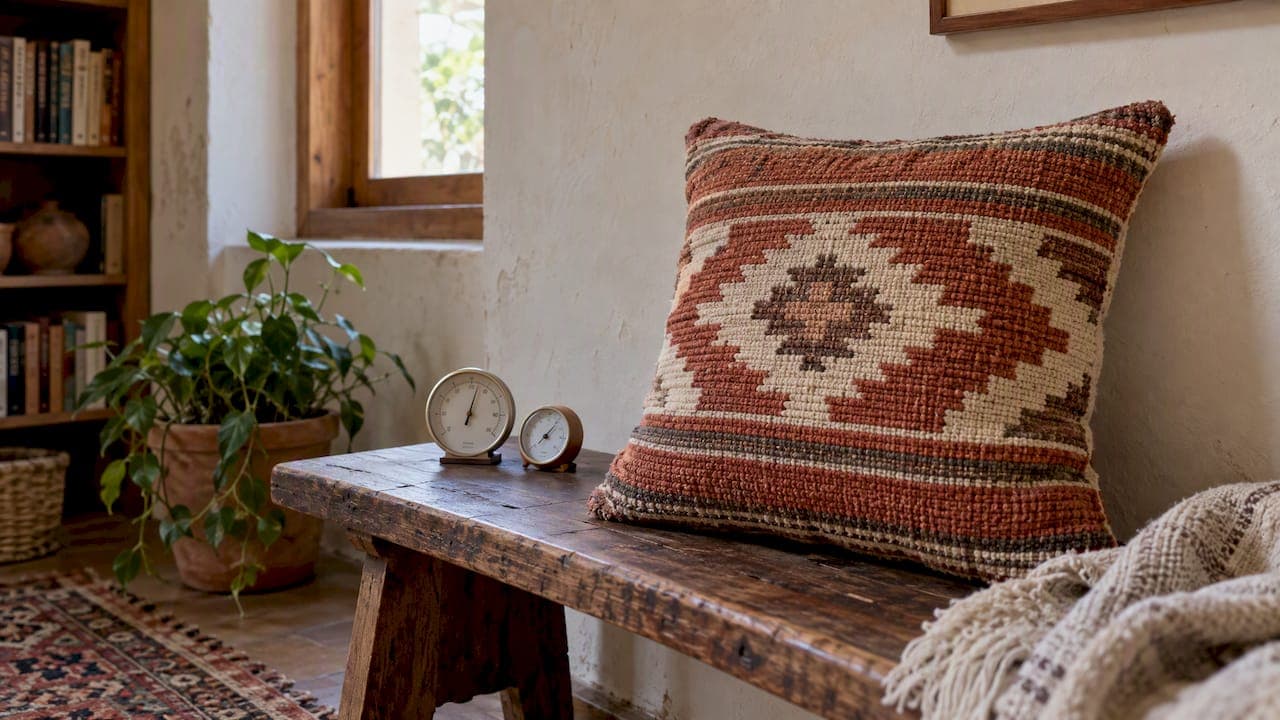
The best way to keep artisanal cushions looking their best is preventive care: protect with covers, ventilate regularly, identify the fabric, and use the gentlest cleaning method the care label permits. Prevention matters more than aggressive cleaning, since harsh treatments can damage the very textures that make a handmade piece special. Start small: slip on a protector, vacuum gently along the weave, and keep your cushions out of direct sun.
TL;DR:
- Regular airing, gentle vacuuming, and rotating cushions prevent uneven wear and help maintain their texture over time.
- Identifying fabric and filling types from labels and tactile checks is crucial to avoid damage during cleaning.
- Hand-wash wool and natural fiber covers with cool water and proper detergents, avoiding harsh agitation or machine washing for delicate fillings.
- Spot-clean stains carefully by blotting and using appropriate treatments, avoiding rubbing that can worsen the damage.
- Store cushions properly in climate-stable, breathable environments and avoid plastic to prevent mold and preserve artisanal quality.
Table of Contents
- A simple checklist for weekly and seasonal care
- How to identify fabric and filling before you clean
- Cleaning methods by material and construction
- Treating common stains without damaging the fabric
- Drying, reshaping, and keeping mildew away
- Storing artisanal cushions between seasons
- Preventive conservation and knowing when to call a professional
- Why gentle care protects the soul of handmade work
- Where to find cushions built with this care in mind
- FAQ
- Sources
A simple checklist for weekly and seasonal care
A handmade cushion thrives on small, consistent habits rather than occasional deep cleans. Air it out weekly, give it a light vacuum, and rotate it so wear spreads evenly across the surface. Periodic washing of removable covers as allowed by the label is advised, with more frequent cleaning for pieces that see daily use or are in allergy-prone households. Seasonally, slow down and look closer: check seams, inspect for fading, and prepare anything going into storage.
- Weekly: air out, vacuum lightly with low suction, rotate for even wear. Cleaning frequency varies; wash removable covers periodically when the care label permits, and increase cleaning for high-traffic cushions or allergy-sensitive homes.
- Seasonally: inspect seams, check for fading, and prep pieces for storage.
How to identify fabric and filling before you clean
Every care routine starts with the tag. Most manufacturers stitch washing instructions directly onto the seam, and those symbols should always override generic advice found online.
- Read the care label first: look for machine-wash, hand-wash, or dry-clean-only symbols before touching detergent.
- Run a tactile check: wool feels slightly coarse and springs back when pressed, silk has a smooth, cool sheen, and cotton feels soft but holds a crease.
- Press the filling gently: foam resists and slowly returns to shape, while down and feather fillings compress and shift under light pressure.
- Note any embellishments, since embroidery, beading, or metallic thread usually call for hand-washing or spot cleaning only.
Correct identification decides both the washing method and how often you can safely clean the piece. A wool cushion washed like cotton can felt and shrink within minutes, while a foam insert run through a washer rarely survives intact.
Cleaning methods by material and construction
Different materials call for different handling, and mixing up the approach is the fastest way to shorten a cushion's life.
- Removable covers: unzip and turn inside out, pretreat visible stains, and machine wash on a cool, gentle cycle using a mild detergent free of optical brighteners.
- Wool and other natural fibers: hand-wash in cool water with a wool-safe or pH-neutral detergent, avoid wringing or vigorous agitation, and reshape the cushion while damp to prevent felting, following the same cool-water, low-agitation approach recommended for hand-washing wool textiles.
- Silk, metallic thread, and heavy embroidery: spot-clean with a barely damp cloth or send the piece to a professional cleaner when the label advises it, since home washing can dull sheen or loosen stitching.
- Memory foam or latex inserts: never machine wash; spot-clean stains, sprinkle with baking soda to deodorize, vacuum off the residue, and air-dry fully for 24 to 48 hours before reinserting the cover.
- Polyester or down fill: machine wash in pairs to balance the drum, run an extra rinse cycle to clear detergent residue, and follow the care tag's guidance on tumble drying with low heat.
For wool pieces specifically, our guide on drying handcrafted wool cushions walks through timing and reshaping in more detail.
Pro Tip: Test any detergent or spot cleaner on a hidden seam allowance first, since artisan dyes can react differently than factory-finished fabrics.

Treating common stains without damaging the fabric
Stains on handmade textiles call for patience over force. Blotting lifts far more than rubbing, which only pushes the stain deeper into the weave.
- Blot first, always: press a clean white cloth onto the stain instead of scrubbing, which spreads the mark and roughs up delicate fibers.
- For oil or grease, cover the spot with baking soda or cornstarch, let it sit for fifteen minutes to absorb the oil, then brush away before applying a small amount of gentle detergent.
- For protein-based stains like food or body oils, use an enzyme-based pretreatment on sturdy fibers such as cotton or polyester, since enzymes break down the stain without harsh scrubbing.
- For ink or dye transfer, reserve solvent-based treatments for sturdy, colorfast fabrics, and consult a textile conservator before attempting removal on silk, wool, or antique pieces.
- For mildew, take the cushion outside, brush off dry spores, treat the area with diluted white vinegar, and dry completely in open air before bringing it back indoors.
Drying, reshaping, and keeping mildew away
Drying is where many handmade cushions meet their end, usually from trapped moisture rather than the stain itself—see practical tips on how to protect your home against mould to help with moisture control during drying and storage. Lay covers and inserts flat on a mesh rack or clean towel, away from direct sunlight, which fades dye and weakens fibers over time. To restore loft in a foam or fiber insert, pat it gently by hand, and only tumble dry on low heat if the tag explicitly allows it. Otherwise, let it air-dry completely.
- Dry flat on a mesh rack or breathable surface, never in a pile.
- Keep cushions out of direct sun while drying to prevent fading and brittleness.
- Pat inserts to reshape, and use low heat only when the label permits tumble drying.
Textile conservators recommend maintaining a storage and drying environment of about 18 to 21°C and 40 to 50% relative humidity, since humidity above 55% creates conditions favorable to mold growth. A cushion left to dry in a damp bathroom or closed closet is far more likely to develop mildew than one dried in open, circulating air.
Storing artisanal cushions between seasons
Cushions that sit unused for months need the same care as those in daily rotation, just aimed at prevention rather than cleaning. Choose a cool, dry, dark space with stable temperature, and skip basements or attics, where humidity and temperature swings do the most damage. Wrap each piece in breathable cotton or muslin, padding any folds to avoid permanent creasing, and never seal a textile in plastic for the long term, since trapped moisture invites mildew. Check stored pieces periodically, and if insects are a concern, properly packaged items can be frozen briefly to eliminate them without chemicals. For a full seasonal routine, see our guide on storing cushions between seasons.
- Store in a cool, dark, climate-stable space, never a basement or attic.
- Wrap in breathable cotton or muslin, padding folds to prevent creasing.
- Inspect periodically, and freeze small, well-packaged pieces to address insect activity.
Preventive conservation and knowing when to call a professional
Preventive conservation is the quiet work that keeps textiles out of trouble: stable humidity, minimal handling, and protective covers used consistently. Regular gentle maintenance is often safer than aggressive stain removal, which can do more harm than the stain itself once it has set. Call a textile conservator for antique pieces, set-in stains, structural damage, or insect infestation beyond a simple freeze treatment. A local seamstress can usually handle loose seams, reserving conservator-level intervention for dye instability or significant fiber loss.

Pro Tip: When vacuuming delicate or embroidered cushions, use a low-suction HEPA vacuum with a fiberglass screen laid over the surface, moving in the direction of the nap to protect stitching.

Why gentle care protects the soul of handmade work
Every artisan cushion carries hours of hand labor in its weave, and that craftsmanship deserves patience, not harsh shortcuts. We have seen how a handcrafted wool piece rewards simple, consistent care: cool water, gentle handling, and time to dry properly, the same principles behind why artisan pillows are worth the investment. A quiet, regular routine will always outlast a single aggressive clean.
— Ernesto
Where to find cushions built with this care in mind
Handcrafted cushions made with high-quality materials and traditional techniques use care labels that reflect real fiber content rather than generic instructions. Covers, fillings, and embellishments are chosen with cleaning and longevity in mind, which means the preventive steps above apply directly to what arrives at your door.

- Browse the full pillow collection for handcrafted options that pair cultural detail with practical care.
- Explore the animal print pillow collection for bold texture paired with the same artisan construction.
- Designers and retailers can apply through our wholesale trade program for bulk pricing on handcrafted pieces.
If you are furnishing a room from scratch, our wallpaper, wall art, and rugs collections carry the same handcrafted approach into every corner of the space.
FAQ
¿Cómo se llama el relleno que se le pone a los cojines?
Los relents más communes son la espuma (incluye la espuma viscoelástica), el poliéster, y el plumón o pluma de ave. Cada uno requiere un método de limpieza distinto, por lo que identificar el relleno antes de lavar es un paso clave en el cuidado de cojines artesanales.
¿Cómo se lava un cojín con relleno?
Si la funda es removable, se lava por separado según la etiqueta de cuidado, generalmente en ciclo suave con agua fría. El relleno de espuma nunc debe lavarse a máquina y debe impasse solo por manchas puntuales, mientras que el relleno de poliéster o plumón suele tolerar el lavado a máquina con un ciclo suave.
¿Cómo puedo limpiar los cojines de exterior?
Ventile y seque el cojín regularmente para evitar que la humedad se acumule, y limpie las manchas con un paño húmedo y un poco de detergente suave. Seque siempre al aire libre y lejos del sol directo para evitar que el relleno retenga humedad y desarrolle moho.
¿Cómo se lava un cojín de espuma?
Los cojines de espuma viscoelástica no deben lavarse a máquina; en su lugar, se limpian manchas puntuales, se espolvorea bicarbonato de sodio para desodorizar, y se deja secar al aire por completo, un proceso que suele tomar de 24 a 48 horas. Este método evita que la espuma se deformed o retenga humedad.
¿Con qué frecuencia debo limpiar mis cojines artesanales?
La frecuencia depende del uso: las fundas deben lavarse cada dos a cuatro semanas en piezas de uso diario o en hogares con alergias, mientras que una limpieza más profunda del cojín completo suele hacerse cada tres a seis meses. Los cojines de decoración de bajo uso necesitan limpieza profunda con menos frecuencia que los que se usan a diario.
Sources
- Caring for Textiles | The George Washington University Museum and The Textile Museum
- How do I store antique textiles at home? | Smithsonian Institution
- How to Wash a Memory Foam Pillow, According to Experts
- Preventive textile care guidance (extension publication)