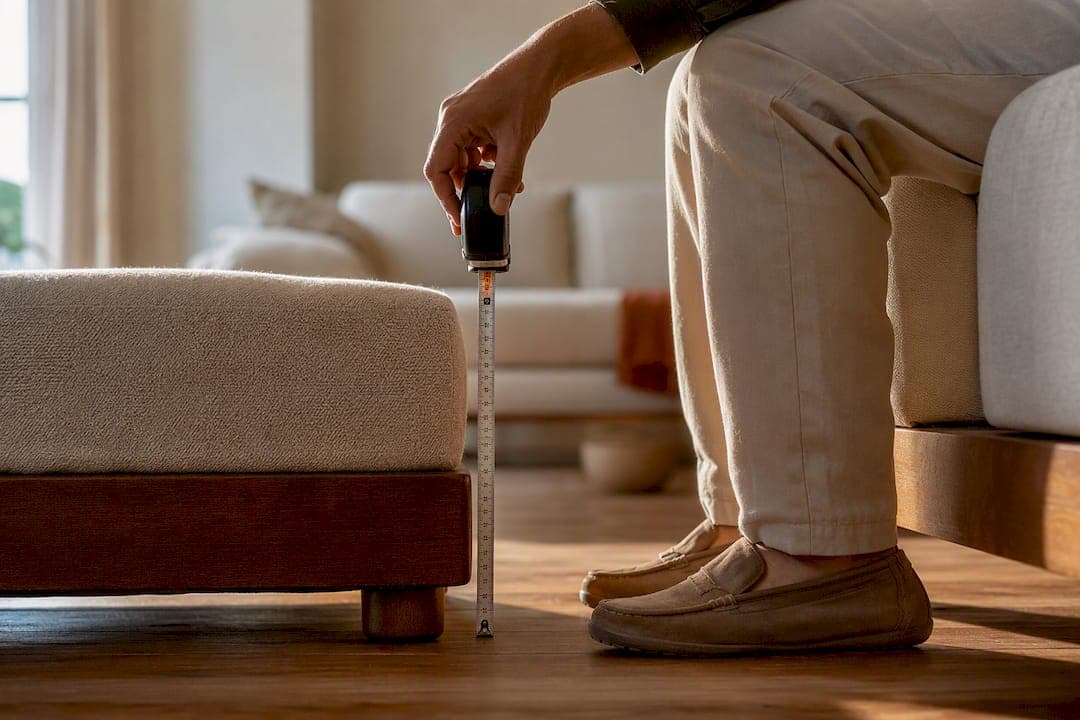
An ergonomic ottoman sits within 1 to 3 inches of your seat height, measures roughly 16 to 20 inches tall, and offers medium-firm support rather than a plush sink. Height parity with your chair keeps your knees near a 90-degree angle instead of forcing your pelvis to tilt. A five-minute seated test at home confirms the fit before you buy. At Createdecorus, that measurement discipline shapes every handcrafted piece we build, and Ernesto has spent years studying how artisan design and body mechanics meet in the same room.
TL;DR:
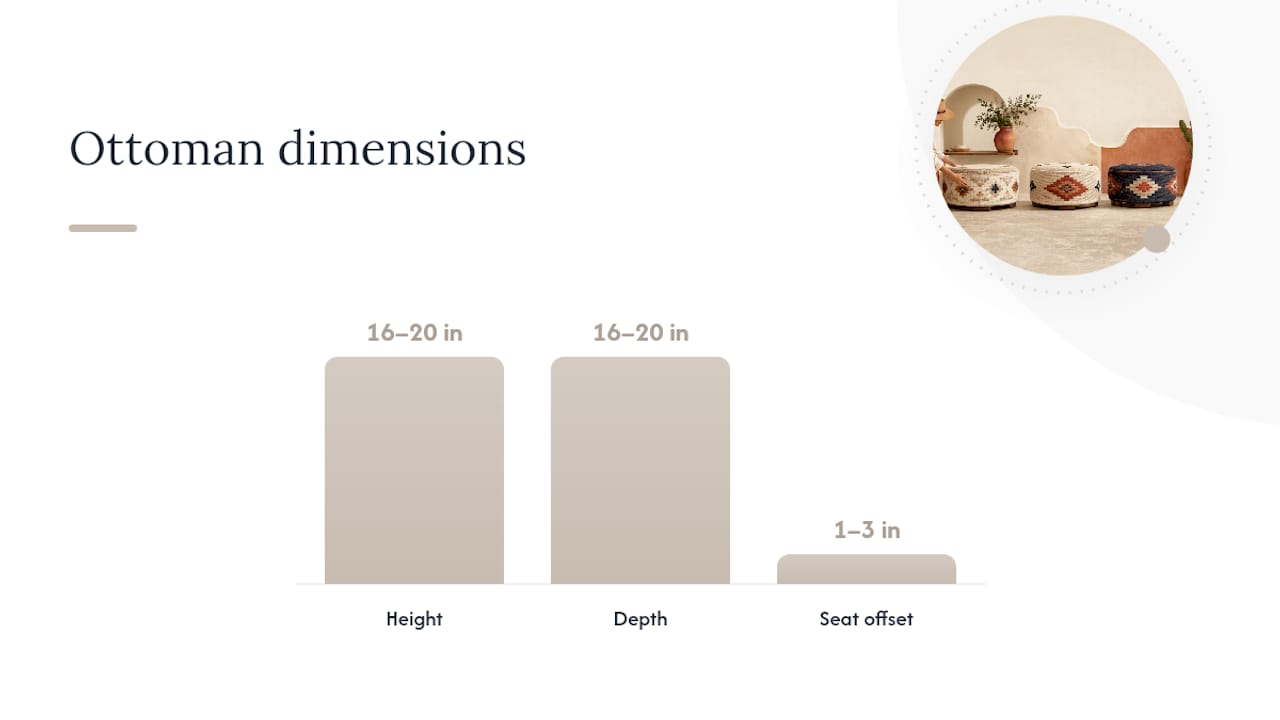
- An ottoman should be 16 to 20 inches tall, 16 to 20 inches deep, and positioned 1 to 3 inches below your seat height for optimal comfort.
- Medium-firm support with firm fills like memory foam prevents sagging and maintains proper height, supporting healthy blood flow and posture.
- Place the ottoman within 18 inches of your seat, ensure 36 inches of walkway clearance, and lock casters to prevent shifting and tripping hazards.
- Test the fit by sitting in your usual chair, measuring your seat height, and sitting with your feet on the ottoman for 5 to 10 minutes before purchasing.
- Custom sizing and fixed height options are available from artisans like Createdecorus to ensure the ottoman aligns perfectly with your body and space.
Table of Contents
- Ergonomía de otomanes: las medidas que realmente importan
- What Firmness and Materials Actually Support Good Posture
- Where Should You Place an Ottoman for Everyday Use?
- How Do You Test an Ottoman's Fit Before You Buy?
- How Createdecorus Builds Ergonomics Into Every Ottoman
- Why Measurement Should Come Before Style
- Artisan Ottomans Built Around the Numbers That Matter
- Sources
Ergonomía de otomanes: las medidas que realmente importan
Getting the proportions right on an ottoman is less about style and more about basic joint mechanics. When the surface sits too high, your knees rise above your hips, your pelvis rotates backward, and your lower back loses its natural curve within minutes of sitting. When it sits too low, your legs dangle without support and circulation in your calves takes the hit instead.
The dimensions that matter most for living-room seating:
- Height: 16 to 20 inches (40 to 50 cm), matching the standard range for most sofas and lounge chairs.
- Depth: 16 to 20 inches (40 to 50 cm), enough surface for feet, calves, or a relaxed recline without feeling like a plank.
- Vertical offset from the seat: 1 to 3 inches (2.5 to 7.5 cm) lower than your chair cushion, never higher.
That offset is the detail most shoppers skip, and it is the one structural and ergonomic furniture design principles treat as foundational. Keeping the ottoman just below seat height lets your thighs stay level or angle slightly downward, which supports healthy blood flow through the legs rather than restricting it at the knee.
Statistic Callout: Ergonomic guidance for lounge and workplace settings consistently points to 16 to 20 inches as the comfortable range for ottoman height, a figure that holds whether the piece sits in a den, a reading nook, or a home office corner.
Clearance matters as much as the ottoman itself. Maintain adequate walkway width where foot traffic passes through the room, and position the ottoman close enough to your seat to avoid leaning forward to reach it. Reaching past that distance defeats the entire purpose of having a footrest nearby.
What Firmness and Materials Actually Support Good Posture
A cushion that feels luxurious in the showroom can betray your body an hour into sitting. Overly plush fill compresses under sustained weight, and once it does, your feet sink below the ideal angle and your knees creep upward again, undoing the height calculation you worked out on paper.
Medium-firm to firm fill holds its shape under regular use, which is why Createdecorus builds its ottomans with premium memory foam and polyester combinations rather than loose, decorative stuffing. A few material signals worth checking before you buy:
- Edge shape: rounded or softly beveled edges prevent pressure lines across the back of your calves during extended sitting.
- Fabric durability: look for upholstery with strong rub-count ratings if the piece will see daily traffic; durable textiles matter more in active households than most buyers expect.
- Fill consistency: a well-packed core resists the slow sag that turns a 17-inch ottoman into a 14-inch one after a year of use.
Casters and hidden storage compartments deserve a second look too. Wheels can shave height and shift under pressure if they lack a locking mechanism, and storage lids sometimes add unexpected thickness that pushes your measured height off target.
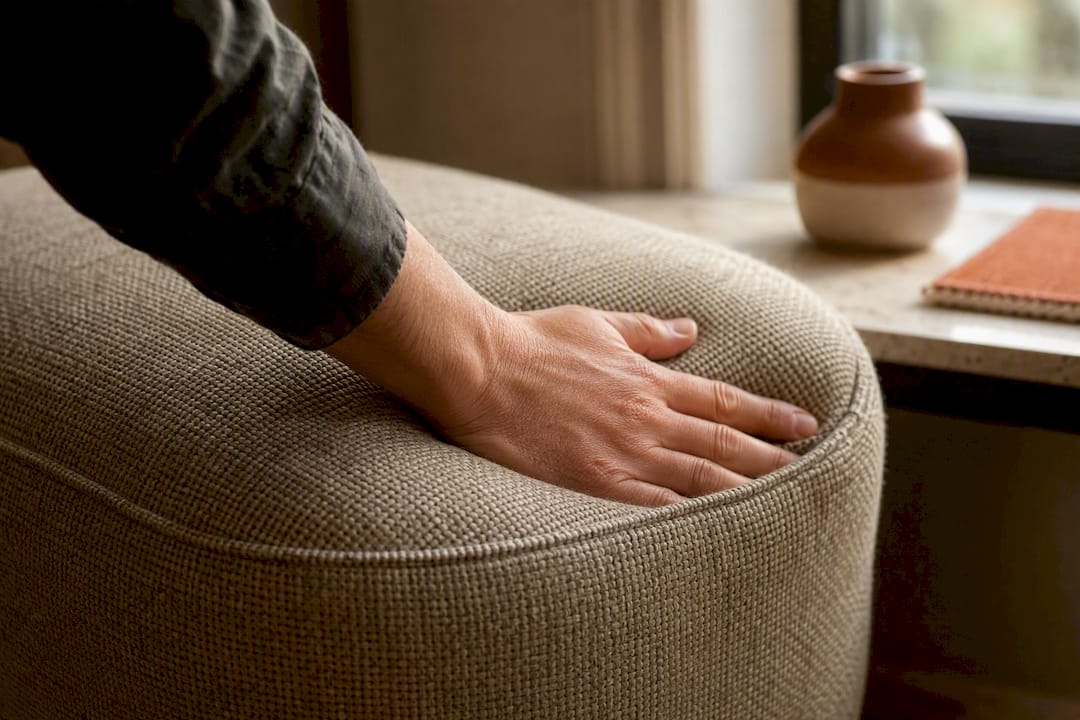
Pro Tip: Press your palm flat into the cushion and hold for ten seconds. If your hand sinks past the second knuckle before resistance kicks in, the fill is too soft for reliable ergonomic support.
For readers curious about how filling density translates into everyday comfort, the best cushion filling for every type of pillow breaks down the same density principles that apply to ottoman cores.
Where Should You Place an Ottoman for Everyday Use?
Placement decides whether an ottoman actually gets used the way it was designed to be used, or ends up as a coffee table nobody sits at. The rules are simple, but skipping them turns a well-built piece into an awkward stretch.
- Position the ottoman within 18 inches of the primary seat so your legs rest without leaning or reaching.
- Preserve at least 36 inches of open walkway wherever the room requires foot traffic to pass.
- Rotate your posture every 20 to 30 minutes rather than locking your legs in one elevated position for hours. This is the "next posture" principle: an ottoman works best as a tool for movement, not a fixed pedestal.
- Confirm the load rating supports full body weight if you plan to sit directly on it, generally 220 pounds (100 kg) or more for seating-grade construction.
- Lock any casters before use, and keep the ottoman fully tucked when not in service to remove trip hazards in shared spaces.
Postural variety beats a single "correct" angle held for hours. Research on office ottomans backs this directly: shifting between elevated, flat, and unsupported foot positions throughout the day reduces static loading far more effectively than chasing one perfect measurement and holding it rigidly. For shared lounges, designers often plan around a 1:2 ratio of ottomans to primary seats with 24 to 30 inches of clearance between clusters, which keeps a room feeling open rather than obstructed.
How Do You Test an Ottoman's Fit Before You Buy?
You do not need a tape measure and a calculator to know if an ottoman will feel right. You need about ten minutes and your own body as the instrument.
- Sit in your usual chair or sofa and measure the height from the floor to the top of the seat cushion. This number is your reference point.
- Measure the ottoman's height the same way, floor to cushion top.
- Compare the two. Ideal fit means the ottoman sits equal to that seat height or 1 to 3 inches lower.
- Sit with your back fully supported, rest your feet or calves on the ottoman, and hold the position for 5 to 10 minutes.
- Notice your knee angle and your lower back. If your knees sit higher than your hips, or your lumbar curve flattens against the chair, the ottoman is too tall for that seat.
Statistic Callout: Mismatched heights between a chair and its ottoman are one of the most common comfort complaints in retail guidance on choosing a lounge ottoman, which is exactly why an in-person or at-home trial beats guessing from a product photo.
If the fit feels close but not quite right, try a firmer cushion insert before replacing the whole piece. If the height gap exceeds 3 inches in either direction, an adjustable-height footrest may serve you better than a fixed ottoman.
How Createdecorus Builds Ergonomics Into Every Ottoman
We start every ottoman design with the same numbers this guide walks through: height ranges that pair naturally with standard seating, fill density that resists sag, and textiles chosen for how they hold up under daily contact, not just how they photograph. Firm-fill construction and rounded profiles are not aesthetic choices for us. They are the difference between a piece that supports a body for years and one that flattens within a season.
Ernesto has guided that design philosophy at Createdecorus, pairing traditional Mexican craftsmanship with the kind of measurable, testable comfort standards this article lays out.
Every handcrafted piece we build carries that same intention: comfort as a measurable outcome, not a marketing word.
Why Measurement Should Come Before Style
Most furniture advice treats ottomans as accessories, an afterthought purchased to match a sofa's color rather than a body's proportions. That gets the priority backward. The research on seat height and pelvic alignment is consistent enough that ignoring it produces a predictable outcome: a beautiful piece that nobody actually wants to sit at for more than ten minutes.
The bigger blind spot in conventional buying advice is the obsession with a single "correct" posture. Chasing one perfect knee angle and expecting to hold it for an evening is not how bodies work. An ottoman's real value is in letting you shift, recline, and readjust throughout the day, which matters more than nailing an exact height on paper.
If you take one thing from this guide, let it be the 1 to 3 inch rule and the ten-minute seated test. Everything else, fabric, color, craftsmanship, are worth choosing with your eyes. Height and firmness are worth choosing with your body.
— Ernesto
Artisan Ottomans Built Around the Numbers That Matter
Createdecorus designs every ottoman around the exact height and firmness ranges this guide covers, so you are not left reconciling a beautiful piece with an uncomfortable one. Our collection offers height options built for standard seating pairs, medium-firm memory foam and polyester fill that holds its shape, and hand-selected textiles rated for daily use in real households.

If your current sofa or armchair sits outside the standard range, custom sizing is available so the ottoman meets your seat height instead of forcing a compromise. Designers and boutiques working across multiple projects can also access our trade program for bulk and custom orders, with pricing built for repeat sourcing. For home offices layering in a dedicated footrest alongside a desk chair, pairing an ottoman with an adjustable ergonomic chair setup can fine-tune support even further. Browse the full ottoman and pillow collection and measure your own seat height today to find the piece that actually fits.
Sources
- Diseño Estructural y Ergonomía en Muebles para el Hogar
- Sillón con otomano: guía para elegir el rincón de descanso ideal
- Office Ottomans: Postural Variety for Better Health | Eureka Ergonomic