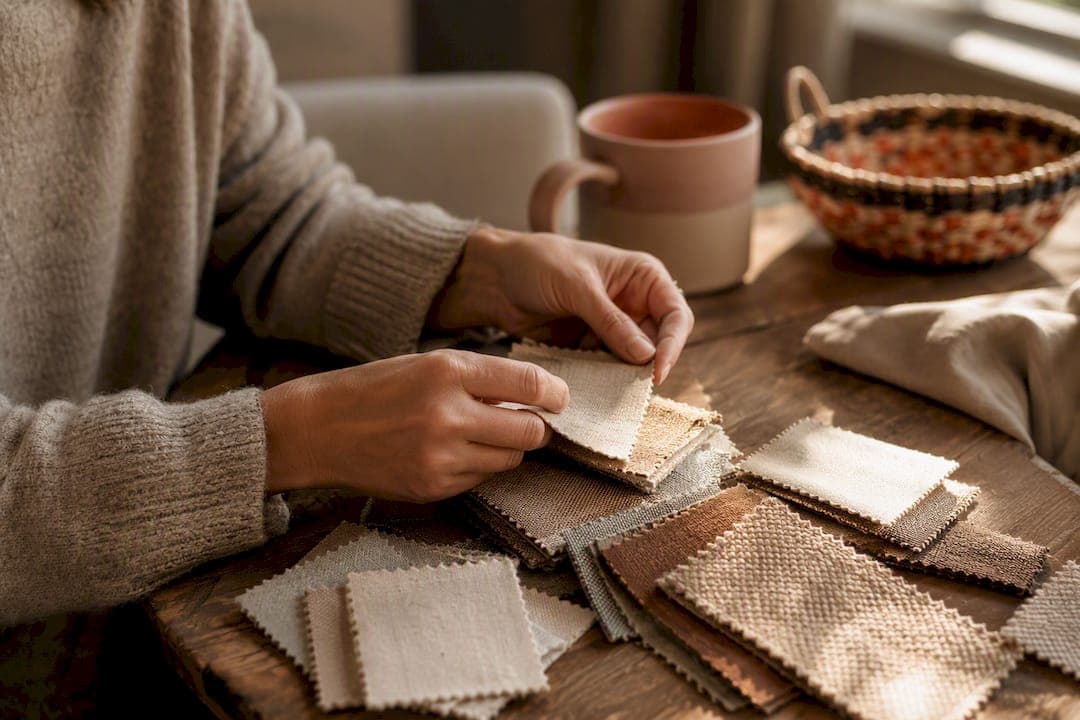
Order fabric swatches directly from a retailer's sample program, a fabric marketplace, or a mill's sample card service. Most swatches arrive free or for a small fee, with delivery windows running 3 to 14 days depending on whether the sample is cut from stock or produced on request. The fastest path to a confident decision is simple: pick a small number of swatches that fit your palette and project, request them today, and evaluate them against your actual space, not a screen.
Before you order, know what you're asking for:
- Retailer swatch programs for consumer upholstery and drapery fabrics, usually free up to a limit
- Fabric marketplaces and wholesalers for broader selection and trade-level detail
- Mill or direct sample cards for custom runs, lab-dips, and strike-offs
- Curated sample packs from independent sellers, often sized around 4 by 4 inches and sold in small sets
Key Takeaways
Physical fabric swatches remain the only reliable way to judge true color, texture, and drape before committing to a larger fabric order.
| Point | Details |
|---|---|
| Order a focused set | Request three to eight swatches at once to keep comparisons manageable and relevant to your project. |
| Know your terminology | Distinguish a swatch from a lab-dip or strike-off before requesting custom color or print approval. |
| Test under real conditions | Check every sample in natural and artificial light against the finishes it needs to match. |
| Confirm return terms early | Ask whether sample fees credit toward a future order and whether batch matching is guaranteed. |
| Consider curated, artisan options | Createdecorus offers curated sample sets and trade support for handcrafted textiles beyond standard retail swatch programs. |
Table of Contents
- How Do You Request and Order Fabric Swatches Without Delays?
- What Should You Check When Your Swatches Arrive?
- Where Can You Actually Get Fabric Swatches?
- How Do Designers Organize and Present Fabric Swatches?
- What Are the Return Policies and Sample Guarantees?
- How Do You Compare Swatches Side by Side?
- Curated Swatch Sets and Trade Support at Createdecorus
- Sources
How Do You Request and Order Fabric Swatches Without Delays?
Ordering fabric samples sounds simple until you're staring at forty browser tabs of near identical taupe linen. A little preparation before you click "add to cart" saves you a second round of shipping and a week of waiting.
1. Identify the exact SKU or colorway. Every fabric has a name and often a number attached, whether it's a mill code, a colorway ID, or a product SKU listed on the retailer's page. Write these down before requesting anything. If a supplier lists a fabric as "Terracotta Weave 214," ordering "the orange one" gets you the wrong sample more often than not.
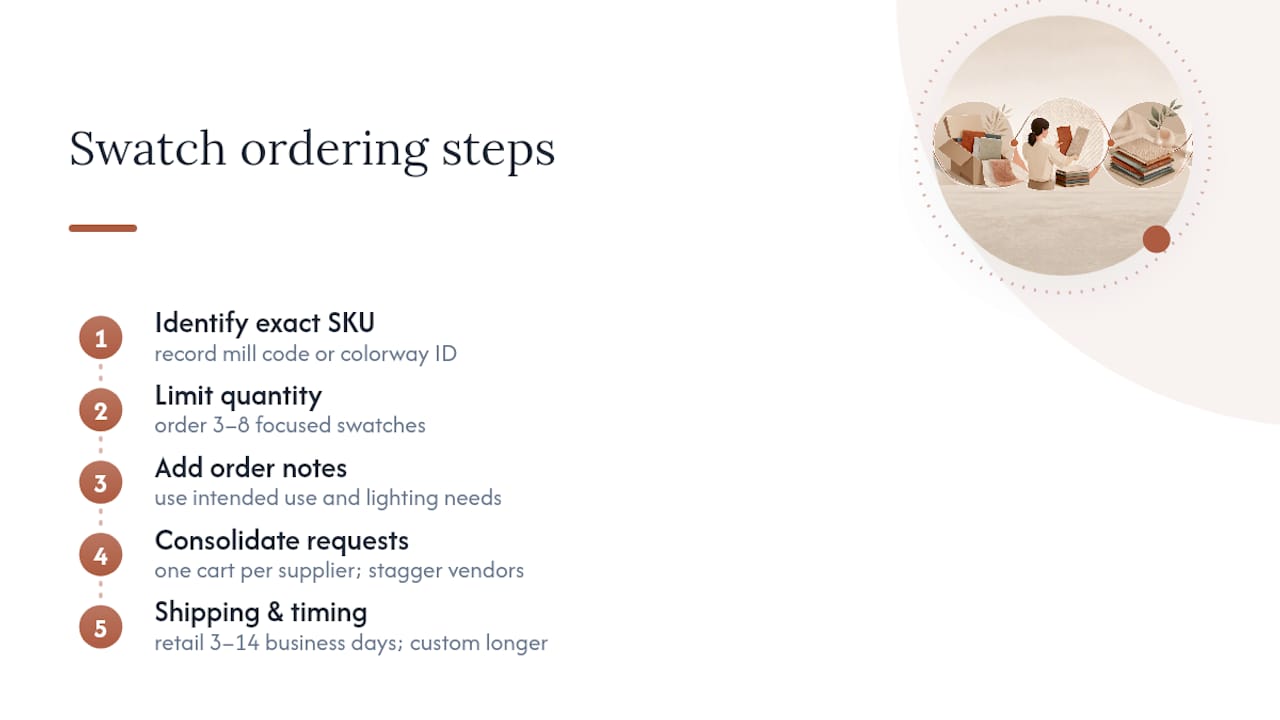
2. Cap your first order at three to eight swatches. Ordering a small, targeted set is almost always more effective than requesting a dozen options that blur together on your coffee table. Narrow your choices by color family and texture first, then request only the finalists.
3. Add order notes that matter. Mention the intended use (upholstery, drapery, pillow covers), whether you need to check the fabric under specific lighting, and any delivery deadline tied to a project timeline. Suppliers who offer custom sample services will often accommodate a note like "checking against existing walnut furniture" or "need before March 20 install."
4. Consolidate requests into one order. Splitting swatch requests across five separate checkouts multiplies shipping charges and confuses your own tracking. Group everything from one supplier into a single cart, and if you're working with multiple vendors, stagger the orders so they arrive close together for a fair side-by-side comparison.
Retail programs commonly ship within 3 to 14 business days, while custom lab-dips or strike-offs from a mill can take longer since they involve an actual production step rather than a cut from existing stock.
Pro Tip: Order your swatches at the same time you're deciding between paint colors or flooring samples. Comparing all your material decisions in the same week, under the same light, prevents the classic mismatch where a sofa looks perfect until the new floor goes in.
What Should You Check When Your Swatches Arrive?
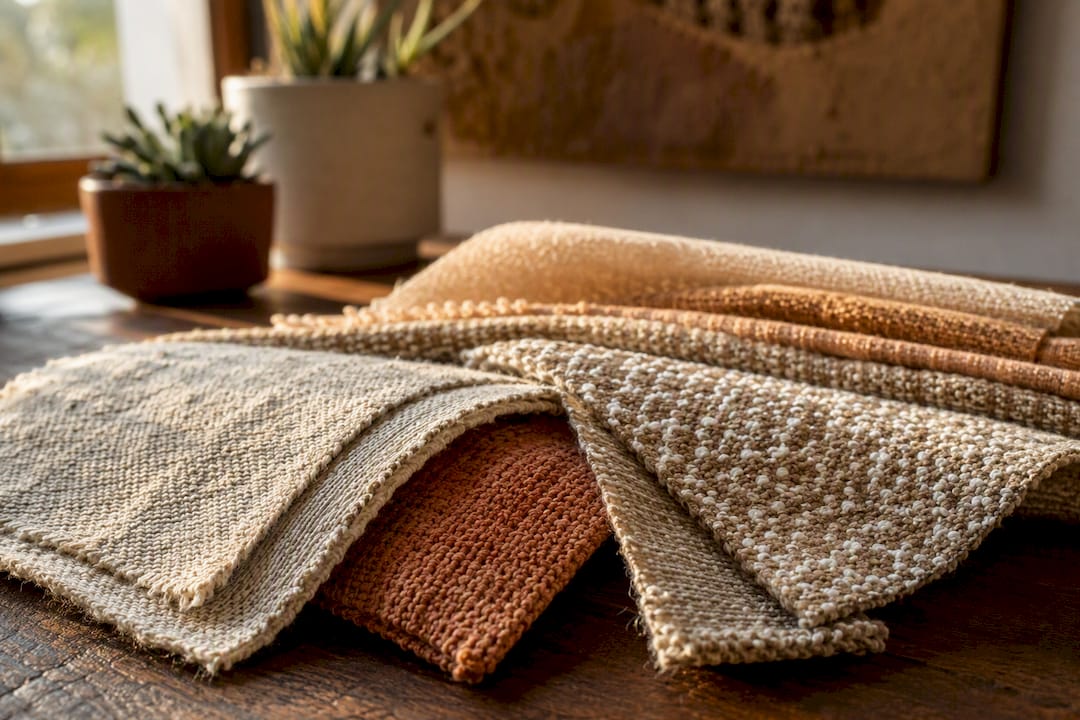
A swatch that looks flawless in a product photo can read completely differently once it's sitting on your actual sofa arm or draped near your window. This is exactly why designers rely on physical samples: screens and photos routinely misrepresent color, texture, and scale, and no amount of monitor calibration fully fixes that.
Run each swatch through the same checks:
- Light test: hold it in natural daylight, then under your evening lamps or overhead fixtures, since warm bulbs shift beiges toward yellow and cool LEDs can flatten rich terracottas.
- Handfeel and drape: upholstery fabric needs body and durability; a pillow cover can be softer and more relaxed; drapery needs to hang, not sit stiff.
- Weave and opacity: hold thinner fabrics up to a window to see how much light passes through, especially for anything going near a bedroom or living room window.
- Pattern scale: for prints, confirm the swatch is large enough to show a full repeat. A tiny cutting can hide the fact that a motif repeats every 18 inches, which changes how it reads across a large ottoman or sofa.
- Durability specs: ask the supplier for fiber content and, where available, abrasion ratings like Martindale or Wyzenbeek scores, along with cleaning codes, particularly for anything destined for daily-use upholstery.
Label each swatch as it arrives, with the SKU, source, and your first impression written directly on a tag or in a shared notes app. Memory fades fast once you're comparing your sixth beige linen against your seventh.
Where Can You Actually Get Fabric Swatches?
Not every source serves the same project. A homeowner refreshing a reading chair has different needs than a designer specifying yardage for a twelve-room hospitality install, and matching the source to the job saves time on both ends.
Retailer swatch programs are the easiest entry point. Most home decor and drapery retailers offer free samples up to a set number per order, with a small shipping fee for extras. These work well for consumer upholstery and window treatment fabrics, though selection is usually limited to what the retailer currently stocks.
Marketplaces and wholesalers open up a much wider catalog, often with trade pricing and technical spec sheets attached. These suit anyone who needs to compare fiber content, weave density, or performance ratings across many options rather than a handful of retail bestsellers.
Mill and direct sample cards are the professional's route for custom production. If a project involves dyeing or printing at scale, this is where lab-dips (plain-dyed color approvals) and strike-offs (trial prints checked before a full production run) come into play, distinct from the sample cut you'd request for a simple color check.
Curated sample sets and independent sample-card vendors fill the gap between the two. These quick color decks are built for fast browsing rather than production decisions.
If you're a designer or retailer ordering repeatedly, joining a trade program is usually worth the paperwork. Trade accounts often unlock faster sample turnaround and pricing that a one-off retail order never sees.
How Do Designers Organize and Present Fabric Swatches?
Sample books exist for a reason: they turn a pile of loose cuttings into something a client can actually flip through and remember. Sample cards and color decks consolidate options into a repeatable reference that speeds decisions and gets pulled back out on the next project.
At Createdecorus, we treat swatches the same way we treat the pieces themselves: with intention. Every sample we send is labeled by SKU, intended use, and suggested pairings, so a designer working through a client presentation can move through options without hunting for notes.
- We sequence swatches by color family, then by texture, so clients compare like against like.
- We reserve lab-dips and strike-offs for true custom runs, not standard consumer requests.
- We note recommended pairings directly on the sample tag, since a terracotta weave often needs a specific neutral beside it to read as intended.
A physical swatch is a small act of trust between a maker and a client. It says: judge this with your hands, not just your eyes.
What Are the Return Policies and Sample Guarantees?
Swatch return policies vary more than most shoppers expect, and reading them before you order saves a frustrating email exchange later. Because samples are typically small, low-cost cuttings, most retailers treat them as non-returnable, final-sale items rather than something you send back.
Where a real guarantee exists, it usually covers accuracy rather than the physical piece itself. A supplier might offer a replacement swatch, free of charge, if the sample sent doesn't match the color or pattern listed on their site, which is a fair protection against a mislabeled dye lot. That's different from a satisfaction guarantee on the fabric you eventually order in yardage, which typically falls under a separate, more substantial return policy tied to the finished product.
Trade and wholesale accounts sometimes get more flexibility, including the ability to request a replacement sample if a batch looks visibly different from a previous order. This matters more than it sounds: dye lots shift over time, and a swatch pulled six months ago may not perfectly match fabric ordered today. If consistency across a large order matters to your project, ask the supplier directly whether they guarantee batch matching or only approximate it.
Before ordering in volume, it's worth confirming in writing whether a sample fee is credited toward a future purchase, since many programs apply that small upfront cost to your eventual yardage order.
How Do You Compare Swatches Side by Side?
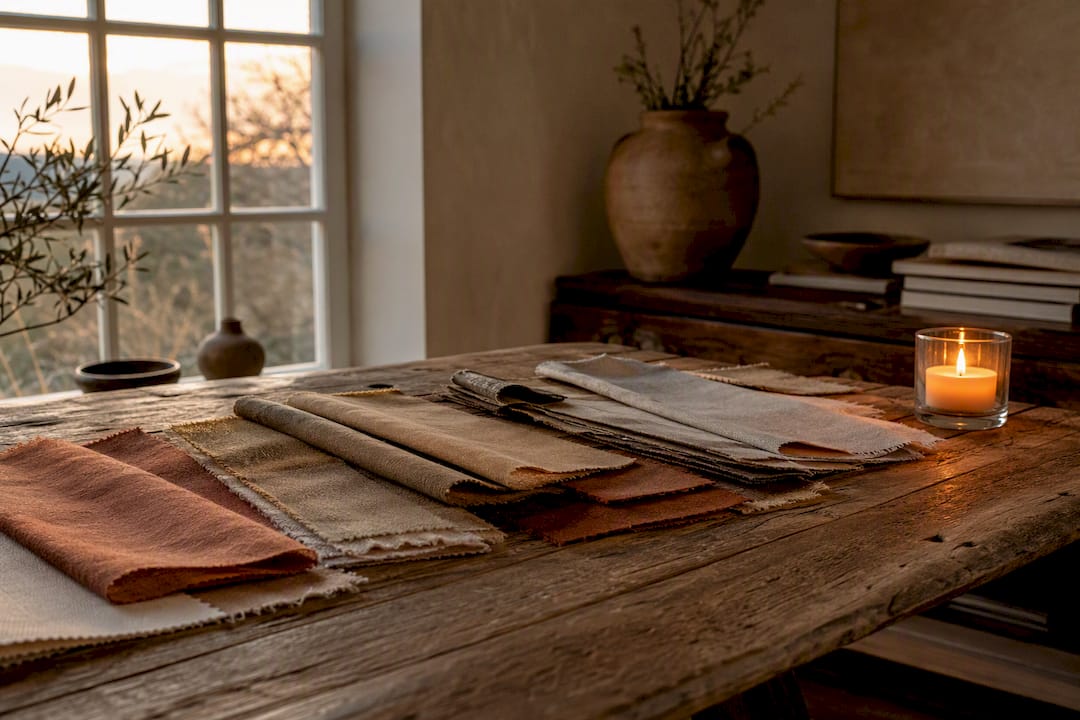
Comparing swatches works best under conditions that mimic the room they're headed for, not the kitchen counter where they happened to land after the mail arrived.
Lay every finalist together on a neutral surface, ideally near the actual furniture, flooring, or wall color it needs to coordinate with. Photograph the group together in both daylight and your evening lighting, then look at the photos later with fresh eyes. Colors that seemed nearly identical often separate once you're not holding them side by side in person, where your brain tends to smooth out small differences.
Pay attention to batch consistency if you're ordering more than one round of samples from the same supplier. A swatch requested in January and a second one requested in June can come from different dye lots, and slight variation is normal in natural and dyed fibers alike. If your project needs an exact match across a large yardage order, ask the supplier whether they can pull from the same production run.
Keep a simple comparison log: SKU, source, first impression, and how it read under each lighting condition. This turns a scattered pile of fabric squares into a decision you can actually defend later, whether that's to yourself or to a client who wants to know why you picked one weave over another.
Curated Swatch Sets and Trade Support at Createdecorus
Createdecorus gives you something generic swatch programs can't: samples cut from the same handcrafted, artisan-dyed textiles that go into our finished pillows and ottomans, not mass-produced stock fabric.
Because every piece we make carries the character of small-batch, Mexican artisan production, color and texture can shift subtly from one run to the next, which is exactly why we treat sample requests seriously rather than as an afterthought. Homeowners can request curated sets to check a colorway against their own space, and designers, boutiques, and retailers can apply for trade pricing through our wholesale program to get sample support built around real client timelines. If you already know the direction you want, browse the full pillow and ottoman collection and pair what you see there with a swatch request before committing to yardage or a finished piece. Visit Createdecorus to start a sample request today.
A Note From Ernesto
I've written before about how textiles shape the feel of a finished room, and one thing holds true across every project: photos lie, swatches don't. At Createdecorus, we send samples the way we'd want to receive them, labeled, honest about their imperfections, and ready for your hands. If you're weighing colors for your next piece, request a curated set from us before you decide.