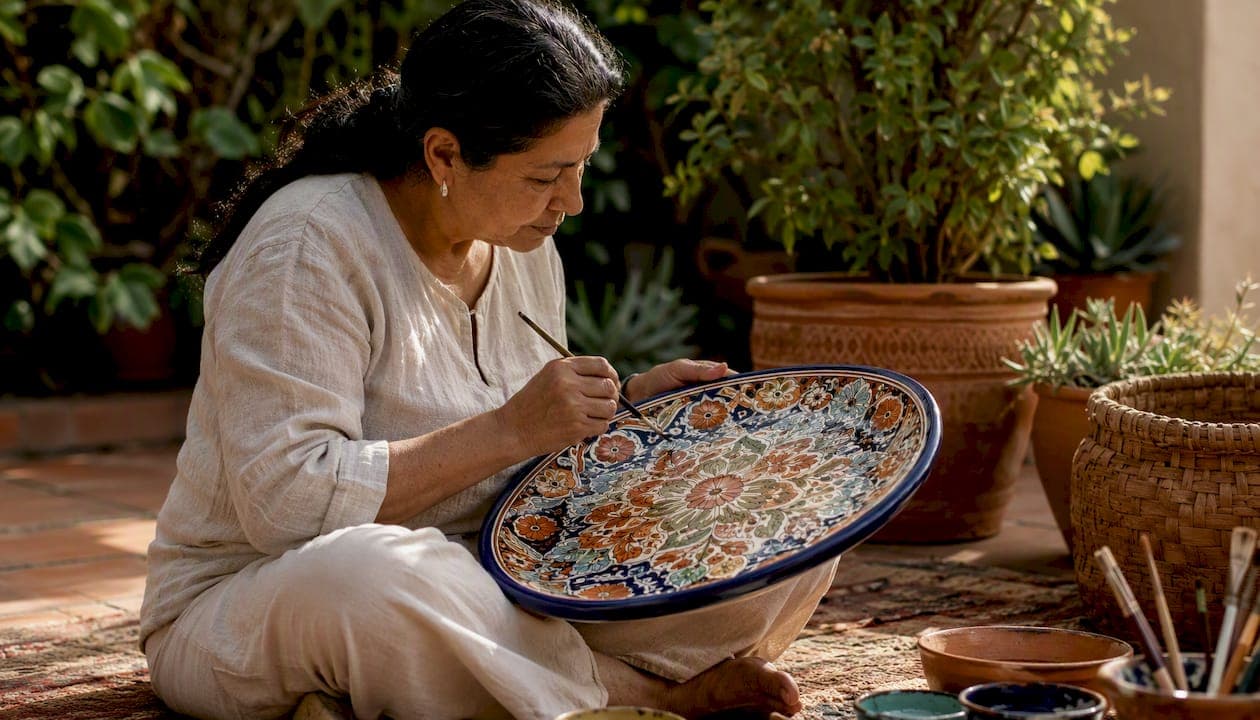
For luxury home accents, choose Talavera, Mexican lacquerware (maque), barro negro, hojalata, or hand-painted glazed ceramics depending on whether you want food-safe serving pieces or decorative statement platters. Each craft tradition carries its own material logic, visual character, and care requirements. Presentation plates act as a canvas for both elegance and function, which is exactly why the right platter plate does double duty: a centerpiece when the table is bare, a considered serving surface when guests arrive.
Quick buying checklist:
- Food safety: Confirm glazes are lead-free and kiln-tested before serving food
- Maker provenance: Look for the specific town and state in Mexico, not just "handmade in Mexico"
- Size and shape: Deeper, flared platters contain saucy dishes; flat shallow ones suit charcuterie and dry foods
- Photos: Expect front, back, and detail shots, including any maker marks or backstamps
- Shipping and duties: Confirm lead time, carrier, and whether US customs duties are included
- Return policy: Artisan pieces are fragile; a clear return window matters
Immediate red flags: no stated maker location, vague "food-safe" language with no glaze details, only one product photo, and no shipping or customs information.
Luxury artisan platters typically range from moderate to higher price points for ready-stock marketplace pieces to premium prices for made-to-order or gallery-quality works.
Table of Contents
- Which Mexican platter plate type is right for you?
- How to choose, verify, and style your platter plate
- The craft traditions behind Mexican serving platters
- When and how people actually use platter plates
- How Mexican platter plates compare to other traditions
- Createdecorus brings the same artisan spirit to your whole home
- Key Takeaways
Which Mexican platter plate type is right for you?
| Craft Type | Material & Method | Food-Safe / Dishwasher | Typical Size & Shape | Style & Finish | Durability | Price Range & Lead Time | Care |
|---|---|---|---|---|---|---|---|
| Talavera | Tin-glazed earthenware, hand-painted in Puebla | Food-safe when lead-free certified; hand-wash only | oval or round, wide rim | Vivid hand-painted motifs, glossy glaze | Moderate; chips if dropped | $50–$180; ready stock or 2–4 weeks made-to-order | Hand-wash; avoid thermal shock |
| Mexican lacquerware (maque) | Lacquered wood or gourd, inlaid motifs from Michoacán | Display only; not food-safe | round or oval | Rich gloss, intricate inlaid color | Moderate; avoid moisture | premium prices; often made-to-order | Dry cloth only; keep from humidity |
| Barro negro | Black clay, burnished and fired in Oaxaca | Display or dry foods only; not dishwasher-safe | round, shallow | Deep matte-to-gloss black | Fragile; handle with care | made-to-order lead times of 2–6 weeks | Dry cloth; no soaking |
| Hojalata | Hand-worked tin, punched or embossed folk motifs | Dry foods or display; not for liquids | oval or round | Metallic, folk-art embossed | Durable for wall display; dents on table | moderate price points; ready stock | Dry immediately; avoid rust |
| Hand-painted glazed ceramics | Studio clay, artisan glazes; varies by maker | Ask maker; food-safe if lead-free certified | wide variety | Highly variable; maker-specific | Moderate | price varies widely | Hand-wash; confirm glaze type |
| Etsy | Marketplace; individual Mexican artisans and importers | Varies by seller; verify before buying | Full range available | Full range available | Varies | prices vary; 1–6 weeks lead time | Per seller instructions |
| NOVICA | Curated artisan marketplace; ships to US | Varies; artisan backgrounds provided | Full range available | Curated selection | Varies | international shipping available | Per artisan instructions |
Provenance and trust signals to look for on any listing:
- Maker biography naming the workshop town and state in Mexico
- Clear glaze composition statement (lead-free, kiln-tested)
- High-resolution photos of front, back, and any maker marks
- Artisan program or fair-trade badge (NOVICA's artisan profiles ease this step)
- Stated return policy and shipping/duties estimate for US buyers
Etsy gives you direct artisan contact and made-to-order flexibility, but vetting falls entirely on you. NOVICA curates its roster and provides artisan backgrounds, which reduces the research burden for US shoppers.
How to choose, verify, and style your platter plate
- Define the use first. Serving food requires a certified lead-free glaze. Display or dry-food use opens the door to lacquerware, barro negro, and hojalata.
- Match material to occasion. Talavera and hand-painted glazed ceramics handle everyday entertaining. Lacquerware and barro negro belong on a sideboard or as a centerpiece.
- Verify food safety in writing. Ask: What glazes were used? Is this lead-free and kiln-tested? Can you share a backstamp photo?
- Confirm exact dimensions and weight. Shipping costs for ceramic platters add up quickly; a 14" piece can have a substantial weight before packaging.
- Check lead time against your event. Made-to-order pieces from Oaxaca or Michoacán can take 2–6 weeks plus transit.
- Read the return policy carefully. Fragile artisan pieces sometimes arrive damaged; a clear claims process protects your investment.
Red flags worth walking away from: "handmade" claims with no maker name or location, food-safe language with no glaze specifics, prices well below the typical range for the craft type, and listings with a single stock photo.
Styling the plate as a canvas: Plate color, rim space, and shape frame the focal point of whatever you place on or around it. Wide-rimmed Talavera pieces create a natural "collar" that draws the eye inward, a principle designer Ettore Sottsass described as the rim acting as an elegant frame. For high-impact plating, research confirms that large plates with high-stacked presentation score highest for perceived appeal and positive emotion.
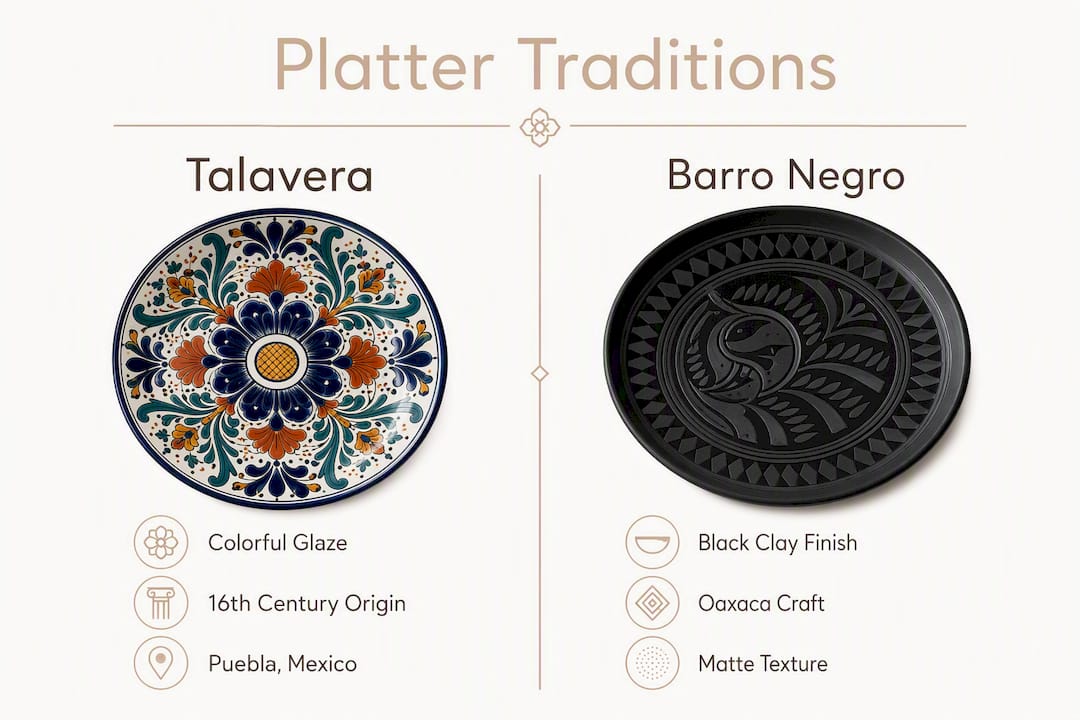
Pro Tip: Pair a bold Talavera platter with a terracotta or warm-toned Createdecorus pillow on a nearby bench or chair. The shared earthy palette ties the table to the room, creating a curated tabletop vignette that feels intentional rather than collected.
The craft traditions behind Mexican serving platters
Mexican platter plates carry centuries of layered history. Talavera's roots trace to 16th-century Puebla, where Spanish colonists brought Moorish tin-glazing techniques that merged with indigenous clay traditions and Chinese porcelain influences arriving via the Manila Galleon trade. The result was a distinctly Mexican aesthetic: bold cobalt, ochre, and terracotta motifs on a creamy white ground. Authentic Talavera from Puebla and Tlaxcala holds a Denomination of Origin status under Mexican law, meaning only certified workshops in those regions may use the name.
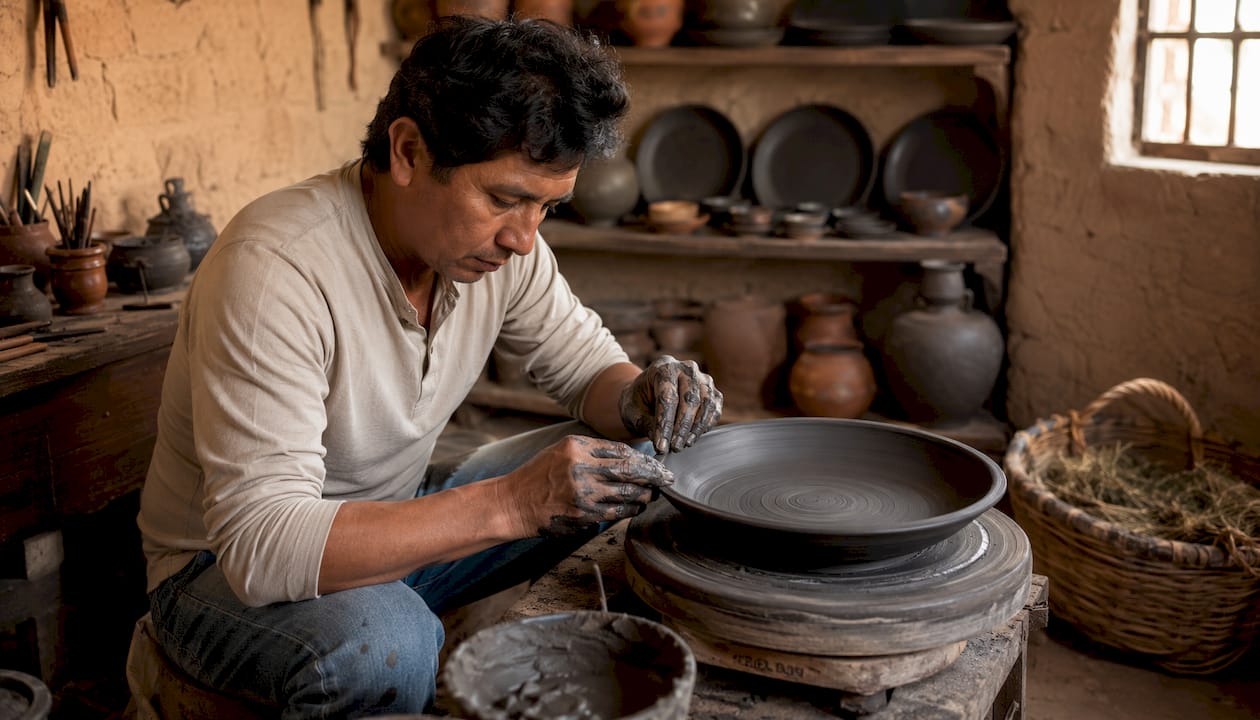
Barro negro emerged from the village of San Bartolo Coyotepec in Oaxaca, where master potter Doña Rosa Real de Nieto popularized the burnished black finish in the mid-20th century. The clay's deep color comes not from pigment but from the firing process itself, a reduction atmosphere that transforms the surface. Lacquerware (maque) from Michoacán, particularly from Uruapan and Pátzcuaro, descends from pre-Columbian gourd decoration refined through colonial-era trade. Hojalata, the punched tin tradition, grew from 19th-century workshops in central Mexico that repurposed imported tin into folk art.
Each tradition is a living craft, not a museum artifact. Buying one of these pieces supports a workshop lineage that may span four or five generations.
When and how people actually use platter plates
The large format of a serving platter is what makes it so versatile. At the table, an oval Talavera platter carries roasted vegetables, grilled fish, or a whole chicken with room to spare. A flat hojalata piece works beautifully for a dry charcuterie spread or a cheese board at a cocktail gathering. Barro negro, with its dramatic black surface, stages fruit, bread, or decorative gourds for a harvest table centerpiece.
Beyond the dinner table, these pieces earn their place year-round. A wide lacquerware platter on a console table holds candles and small objects. A hand-painted glazed ceramic plate mounted on a wall becomes a focal point in a kitchen or dining room. For party platter ideas that go beyond disposable trays, a set of coordinating Talavera pieces in graduated sizes creates a layered, festive spread that guests remember.
Occasions where Mexican artisan platters shine: holiday gatherings, housewarming gifts, wedding registries, and any hosting moment where the dishware itself is part of the story you want to tell.
How Mexican platter plates compare to other traditions
Italian majolica and Mexican Talavera share a common ancestor in Moorish tin-glazing, yet they diverged sharply. Italian majolica tends toward Renaissance figurative scenes and softer palettes; Talavera favors geometric borders, flora, and fauna rendered in saturated color with a distinctly indigenous energy. Both are food-safe when properly certified, but Talavera's thicker earthenware body gives it a more substantial, tactile presence on the table.
Japanese ceramic platters, particularly those in the mingei (folk craft) tradition, prize restraint: asymmetry, natural ash glazes, and quiet texture. Mexican barro negro shares that reverence for the material itself, but where Japanese folk pottery whispers, barro negro makes a statement. The deep black surface commands attention in a way that few other ceramic traditions match.
French faïence from Provence uses similar tin-glaze techniques to Talavera but leans toward pastoral motifs in lavender and yellow. The cultural weight is different: Talavera carries the memory of colonial encounter and indigenous resilience, which gives each piece a depth of meaning that purely decorative European ceramics rarely carry. That layered provenance is precisely what luxury shoppers respond to when they choose authentic Mexican crafts over mass-produced alternatives.
Createdecorus brings the same artisan spirit to your whole home
If a handcrafted Mexican platter plate speaks to you, the same values of artisan provenance, bold color, and intentional craft run through everything Createdecorus makes. While the platters above come from ceramicists, lacquer artists, and tin workers across Mexico, Createdecorus brings that same Hecho en México spirit to luxury decorative pillows and home accents, each piece shaped by traditional techniques and premium materials.
The practical difference: instead of hunting across Etsy listings or international marketplaces for provenance documentation and shipping clarity, Createdecorus offers a direct, curated path to artisan-made home accents with transparent sourcing and US-friendly fulfillment. A Talavera platter on your dining table and a Createdecorus pillow on your bench nearby create a dialogue between artisan heritage and contemporary design that feels whole rather than assembled. Browse the full collection or explore coordinating textiles to build a home that carries a piece of Mexican soul in every room.
Key Takeaways
Mexican platter plates reward careful material selection: Talavera and certified hand-painted glazed ceramics serve food safely, while lacquerware, barro negro, and hojalata excel as decorative statement pieces.
| Point | Details |
|---|---|
| Match material to use | Talavera and lead-free glazed ceramics are food-safe; lacquerware, barro negro, and hojalata are best for display or dry foods. |
| Verify provenance in writing | Ask for the maker's town and state, glaze composition, and backstamp photos before purchasing any artisan platter. |
| Size and shape affect presentation | Large plates with wide rims frame food beautifully; deeper flared edges contain saucy dishes, flat shallow platters suit charcuterie. |
| Budget for lead time | Made-to-order pieces from Oaxaca or Michoacán typically take 2–6 weeks plus US transit time. |
| Createdecorus completes the picture | Createdecorus artisan pillows and home accents pair with Mexican platter plates to create a cohesive, culturally grounded interior. |