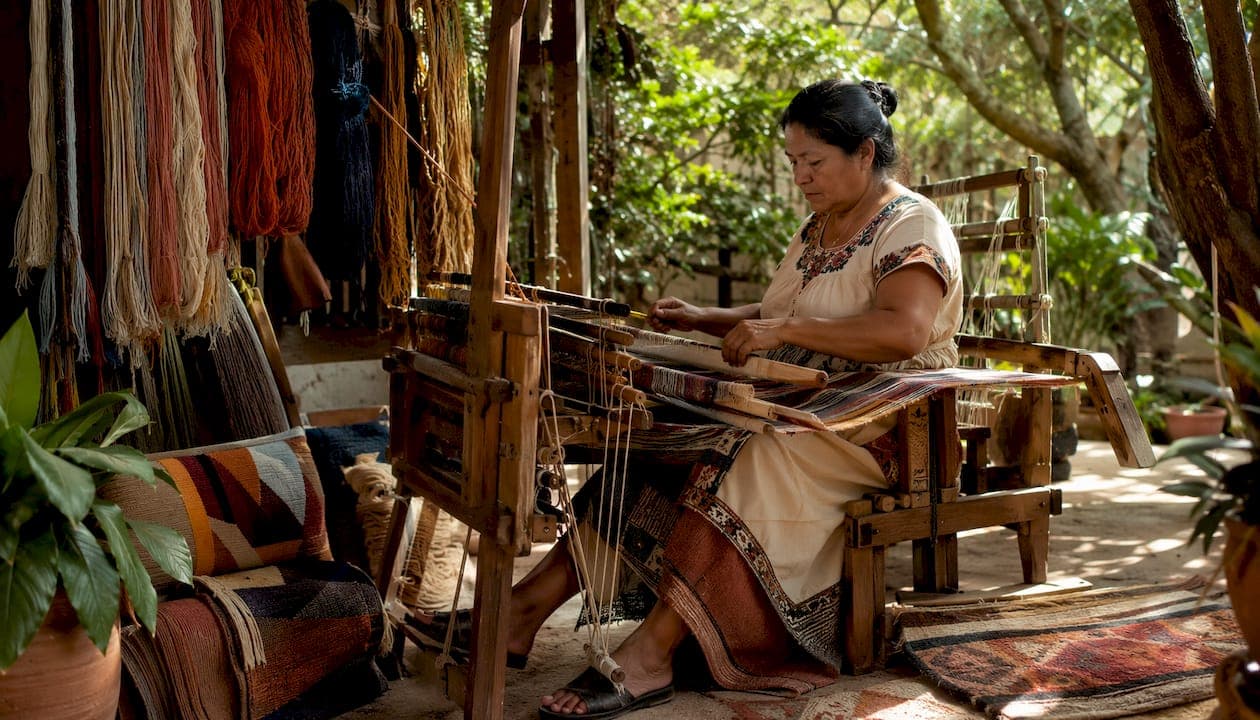
Wool is the backbone of Mexican handmade textile tradition, carrying centuries of cultural memory in every thread. When Spanish colonizers introduced sheep and pedal looms after the conquest, they transformed what indigenous weavers could create, enabling heavier, more durable garments like sarapes and rugs alongside the ancient backstrap loom. For communities like the Mazahua and Tzotzil, wool is not simply a material. It is a living marker of ethnic identity, a subsistence resource, and a connection to ancestral knowledge that no synthetic fiber can replicate.
- Wool arrived with the Spanish conquest, expanding textile complexity and durability
- Pedal looms allowed production of wider, heavier pieces impossible on backstrap looms
- Communities like Mazahua and Tzotzil use wool as both daily wear and cultural identity
- Natural dyeing with cochineal and indigo preserves symbolic color traditions
- Wool goods offer biodegradable, durable alternatives that resonate with sustainable fashion values
How wool shaped Mexican textile history and cultural practice
The Spanish conquest introduced wool to Mexico by the late 1530s, and by 1580 the country had become one of the most productive regions for wool cloth in the Americas. Workshops established in states like Oaxaca, Tlaxcala, and Puebla produced fabric for internal use and export to Spain, the Philippines, and Peru. Indigenous weavers quickly took over production, blending their own design sensibilities with European loom technology.
The pedal loom proved transformative. Unlike the backstrap loom, which was traditionally women's work and produced narrower cloth, the pedal loom allowed men to weave wider pieces, giving rise to the sarape, the rug, and the blanket as we recognize them today. Both tools coexisted, each shaping a distinct category of Mexican wool craftsmanship.
Textiles carried social weight far beyond clothing. According to historical records, blankets served as symbolic representations of marriage unions and political alliances, and tribute payments to Spanish overlords included vast quantities of dyed textiles. Natural dyes were central to this tradition. The Mazahua community of Santa Rosa de Lima maintained dyeing with indigo and cochineal from at least 1995 through 2017, with fermentation vats using human urine for indigo, a technique no longer practiced in most other Mexican communities.
Key cultural wool textiles and their significance:
- Sarape: Wide wool blanket with a central opening, worn in cold mountain regions, woven on pedal looms
- Rebozo: Shawl woven in wool or cotton, with Tenancingo as a historic production center
- Quechquemitl: Triangular wool garment worn by Mazahua women, dyed with indigo
- Wool rugs: Teotitlán del Valle in Oaxaca produces rugs dyed with cochineal and indigo, depicting Zapotec geometric patterns
- Wool dolls and accessories: Sold as crafts in Chiapas and Michoacán, rooted in community identity
| Weaving tool | Primary users | Typical products | Fiber preference |
|---|---|---|---|
| Backstrap loom | Women | Clothing, bags, ceremonial textiles | Cotton, wool |
| Pedal loom | Men | Sarapes, rugs, blankets | Wool |
| Spindle (malacatl) | Women | Spun wool thread | Wool |
How wool reflects ethnic identity and sustainable artisan tradition
Wool crafts are one of the clearest expressions of ethnic identity in indigenous Mexico. For the Tzotzil of Chiapas, sheep husbandry is a subsistence strategy, and the wool garments produced, including heavy black skirts, embroidered blouses, and children's blankets, are prized for their water resistance and durability. Tzotzil wool clothing is known for lasting 2–3 years of daily use, a quality that reflects both the coarseness of the fiber and the skill of the weaver.
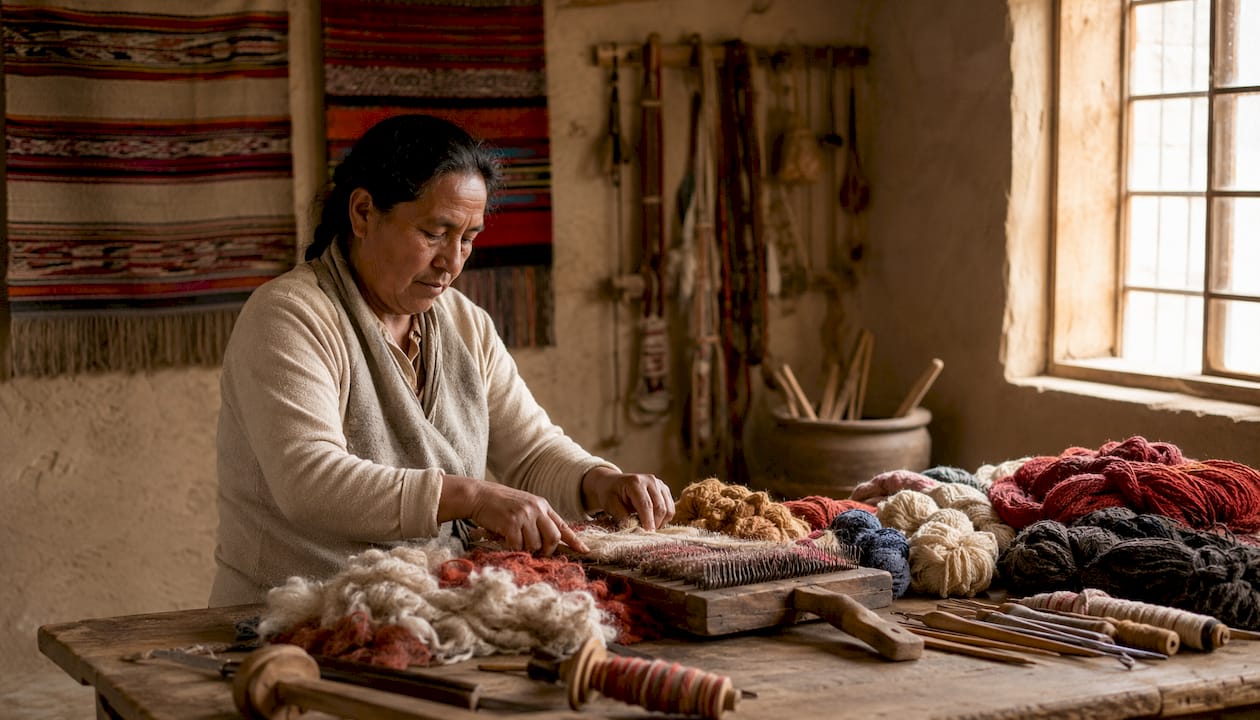
The Sierra de Zongolica research offers a compelling biocultural lens. Nahua artisans in Veracruz weave wool in ways inseparable from their mountainous environment, their indigenous worldview, and gendered roles. Women spin with the malacatl spindle; the landscape itself provides the plants used for dyes. This is not craft as hobby. It is craft as a complete way of inhabiting the world.
Mexico produces primarily coarse wool, and artisans in Chiapas sort fleeces by natural color, blending blacks, whites, and cinnamon browns directly into patterns without dyeing. The result is a palette of gray and brown shades that carries cultural prestige precisely because it requires no chemical intervention.
Wool's durability in mountain climates: Tzotzil wool garments are waterproof and known for their durability under daily use, a performance standard rooted in the coarse, double-coated fleece of native Chiapas sheep.
Indigenous wool textile traits that preserve cultural heritage:
- Natural fleece colors sorted and woven directly, reducing dyeing needs
- Coarse fiber construction designed for water resistance and warmth
- Gendered weaving roles embedded in community knowledge transmission
- Biocultural connection between local plant dyes, landscape, and artisan identity
- Clothing worn as identity marker in religious and ceremonial contexts
How to recognize and appreciate wool handmade goods today
Wool handmade goods are living traditions, not museum pieces. Artisans across Mexico continue adapting ancient techniques to contemporary markets, producing everything from Oaxacan rugs inspired by M.C. Escher to Tzotzil wool bags sold to tourists in Chiapas. The challenge is that market pressures and reduced interest among younger generations threaten the continuity of these skills, particularly in communities like Chiconcuac.
Sustainability is one of wool's strongest arguments in the current market. Wool is reusable, recyclable, and biodegradable, and sheep require no complex feeding systems beyond good grazing management. Natural dyes like cochineal and indigo add no synthetic chemicals to the process. For consumers who care about where their textiles come from, authentic Mexican wool goods offer a supply chain rooted in land, community, and craft.
Pro Tip: When purchasing handmade wool goods, look for natural color variation, slight irregularities in the weave, and the weight of the fabric. Authentic handmade wool feels heavier and has a slightly coarse texture compared to commercial wool blends. Ask the seller about the community of origin and the dyeing method.
Ways to recognize and value authentic wool handmade goods:
- Look for natural color variation from undyed fleece or plant-based dyes
- Expect slight weave irregularities as a sign of hand production
- Ask about community of origin, Tzotzil, Mazahua, Zapotec, or Otomi
- Prioritize pieces with documented natural dye use, cochineal, indigo, or marigold
- Choose goods that carry cultural context, not just aesthetic appeal
Createdecorus connects this tradition directly to your home. Each piece in our collection carries the artisan heritage of Mexican handmade crafts, bringing the warmth of coarse-wool texture and bold natural color into living spaces designed for people who value intentional beauty.
Profiles of notable indigenous artisan communities producing wool goods
Tzotzil weavers of Chiapas maintain at least 150,000 wool sheep in small family flocks across the mountains, with women serving as both shepherdesses and weavers. Their batsi chij, or "true sheep," produce the double-coated fleece essential to traditional garments. No exotic breed introduced by government programs ever replaced them.
Mazahua women of Santa Rosa de Lima in the State of Mexico preserve one of the last known uses of the human urine fermentation method for indigo dyeing. Their three-piece wool ensemble, including the navy-blue quechquemitl, remains worn at religious and ceremonial occasions as a direct expression of Mazahua identity.
Chiconcuac, in the northeast of the State of Mexico, earned national recognition for wool weaving transmitted across generations. Artisans there produce blankets, sweaters, and carpets with complex handmade patterns requiring months of work. Hand-woven wool carpets from Chiconcuac have received awards from European institutions, including the University of Madrid.
Nahua artisans of the Sierra de Zongolica in Veracruz weave wool within a biocultural framework, managing local flora and fauna for both fiber and dye production. Their work has been documented through participatory research that produced a storybook and awareness-raising materials for the broader community.
Zapotec weavers of Teotitlán del Valle in Oaxaca trace their textile roots to cotton production in 500 AD. Today they weave wool rugs on pedal looms using cochineal and indigo, depicting geometric patterns from Mitla and Monte Albán alongside contemporary designs.
How wool trade and market dynamics affect indigenous artisans
The U.S. market is the primary buyer of Mexican wool products, and shifts in American demand directly affect artisan livelihoods. When U.S. demand fell in 2009, the impact reached communities across Mexico. Most sheep in Mexico are now raised for meat, with wool often undervalued as a byproduct. Shearing costs fluctuate between $3.50 and $4.50 USD per sheep, and intermediaries sometimes pay as little as $0.10 USD per kilo of raw wool, leaving producers with little incentive to invest in quality fleece.
Handmade wool crafts remain socially and economically important despite these pressures. In Chiconcuac, rugs and sweaters can command premium prices reflecting the complexity of the weave and months of skilled labor. These prices reflect months of skilled labor, yet they compete against mass-produced clothing in the same market stalls.
Challenges and initiatives in preserving traditional wool craftsmanship
The central challenge in Chiconcuac is generational. Young people have largely shifted toward manufacturing commercial clothing, which is faster to produce and easier to sell. The artisanal wool weaving tradition there now rests primarily with older artisans, and the craft risks disappearing without active intervention.
Cultural tourism has emerged as one preservation strategy. Chiconcuac's authorities and artisans have developed tourism programs to attract visitors who can experience wool weaving firsthand, creating economic incentive for younger residents to learn the craft. The Mazahua community received institutional support from Mexico's Instituto de Investigación y Fomento de las Artesanías for dyeing training, helping women maintain traditional techniques through organized workshops.
The soulful quality of handcrafted Mexican goods that collectors recognize today is inseparable from these preservation efforts. Every piece that reaches a U.S. home carries the weight of a community's decision to keep weaving.
Wool's place in Mexican cultural festivals and ceremonies
Wool garments are not everyday wear in many communities. They are ceremonial dress. Mazahua women in Santa Rosa de Lima reserve their indigo-dyed quechquemitl and cochineal-colored skirts for religious celebrations and socially significant occasions. The colors themselves, navy blue from indigo and red or pink from cochineal, carry identity and status within the community.
Among the Tzotzil, ceremonial and daily clothing are both made from wool, and visitors to village markets encounter men in heavy black wool coats and women in richly embroidered blouses as a matter of cultural practice, not performance. The fiber is woven into the rhythm of community life, from birth to burial, from harvest festivals to saints' days.
In Oaxaca, Zapotec rug patterns depicting mythological figures and the cycle-of-life "greca" motif connect woven objects to pre-Hispanic ceremonial sites like Mitla and Monte Albán. A rug is not decoration. It is a visual record of a worldview.
Key Takeaways
Wool's role in Mexican handmade goods is inseparable from cultural identity, sustainable practice, and living artisan tradition, from the Tzotzil mountains of Chiapas to the market stalls of Chiconcuac.
| Point | Details |
|---|---|
| Wool transformed Mexican textiles | Spanish-introduced sheep and pedal looms enabled sarapes, rugs, and blankets alongside indigenous backstrap weaving. |
| Identity encoded in fiber | Communities like Mazahua and Tzotzil wear wool as ceremonial dress, with dye colors signaling cultural status. |
| Durability rooted in coarse fiber | Tzotzil wool garments withstand 2–3 years of daily use, prized for water resistance in mountain climates. |
| Market pressures threaten continuity | Wool is undervalued as a byproduct of meat production, and younger generations in communities like Chiconcuac are shifting away from the craft. |
| Consumers sustain the tradition | Choosing authentic handmade wool goods with documented origins and natural dyes directly supports indigenous artisan livelihoods. |