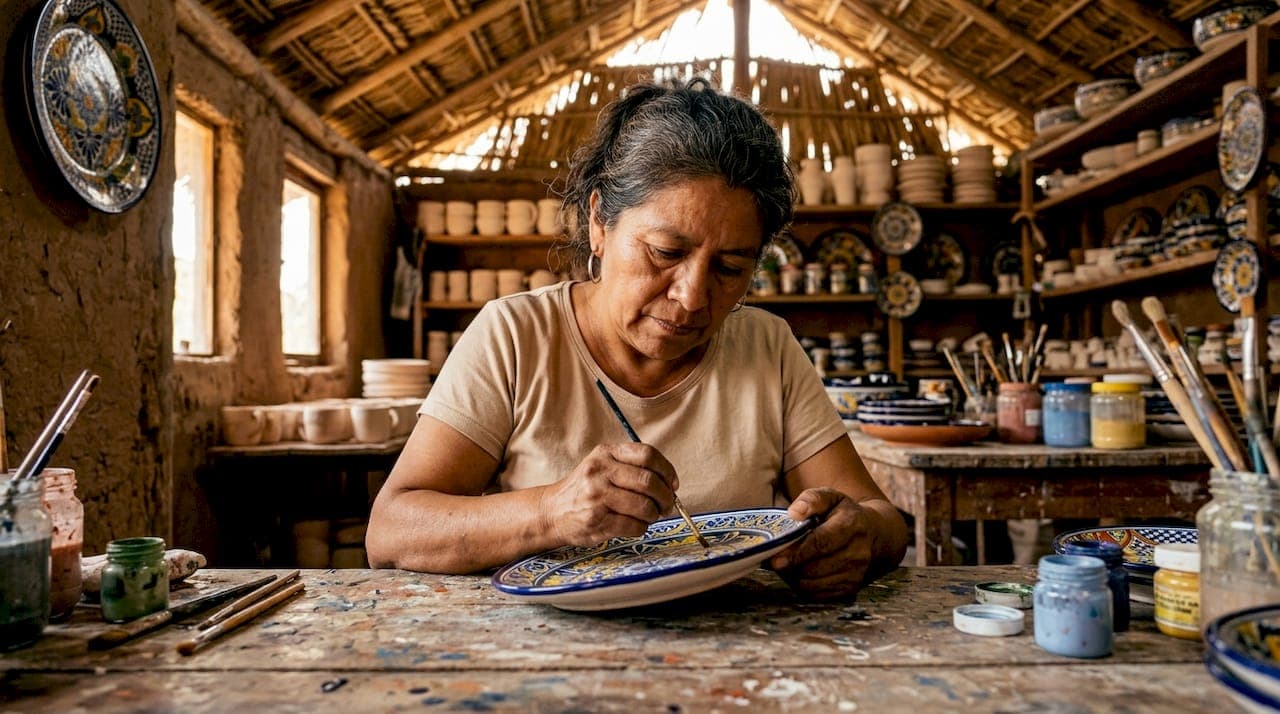
Artisan heritage is the living cultural foundation that defines Mexican identity, encoding centuries of memory, resistance, and community pride into every handcrafted object. This is not a romantic notion. It is a claim supported by UNESCO recognition, scholarly analysis from writers like Octavio Paz, and the daily reality of communities from Oaxaca to Yucatán. Understanding why artisan heritage defines Mexican identity requires looking at how craft traditions formed, what they carry symbolically, and how they continue to shape both local economies and global design. The answer reveals a culture that speaks most honestly through its hands.
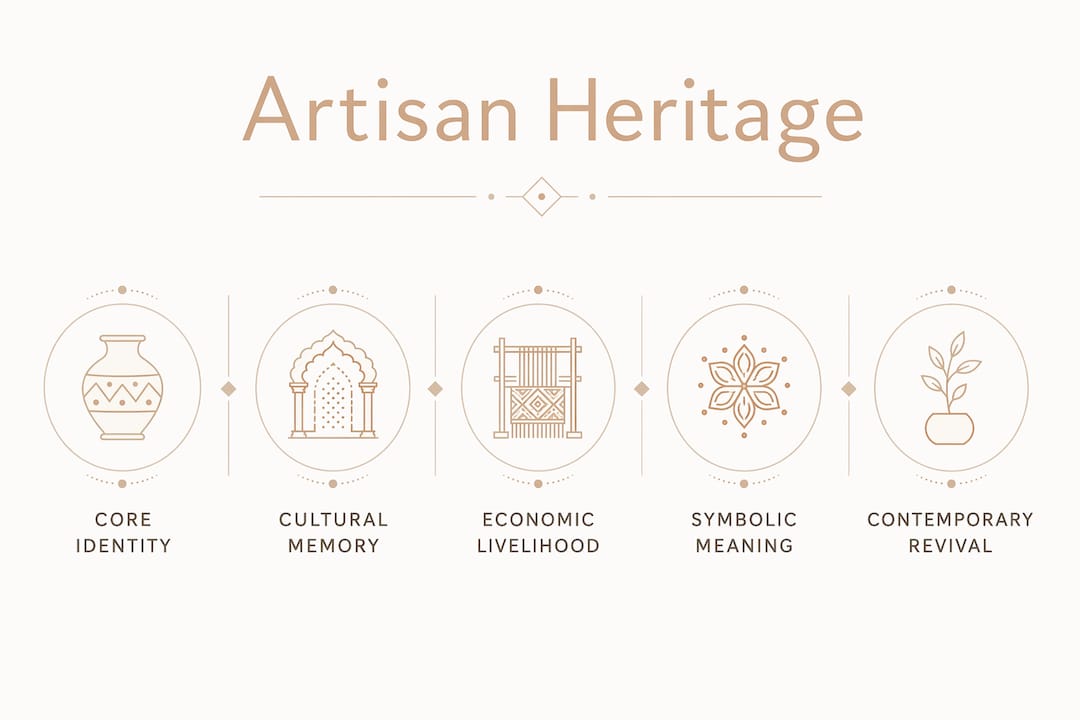
Why artisan heritage defines Mexican identity at its core
Mexican artisan heritage is defined as the body of craft knowledge, technique, and symbolic meaning passed down through generations of Indigenous and mestizo communities. It is not decoration. It is documentation. Each textile, ceramic, and woven piece carries information about the people who made it: their cosmology, their history, and their survival.
UNESCO recognized Talavera ceramics and Yucatecan embroidery in 2019, acknowledging these crafts as expressions of intangible cultural heritage. Yucatán alone preserves over 30 of the 40 national embroidery stitches. That concentration of technique in a single region shows how deeply localized and carefully maintained this knowledge is.
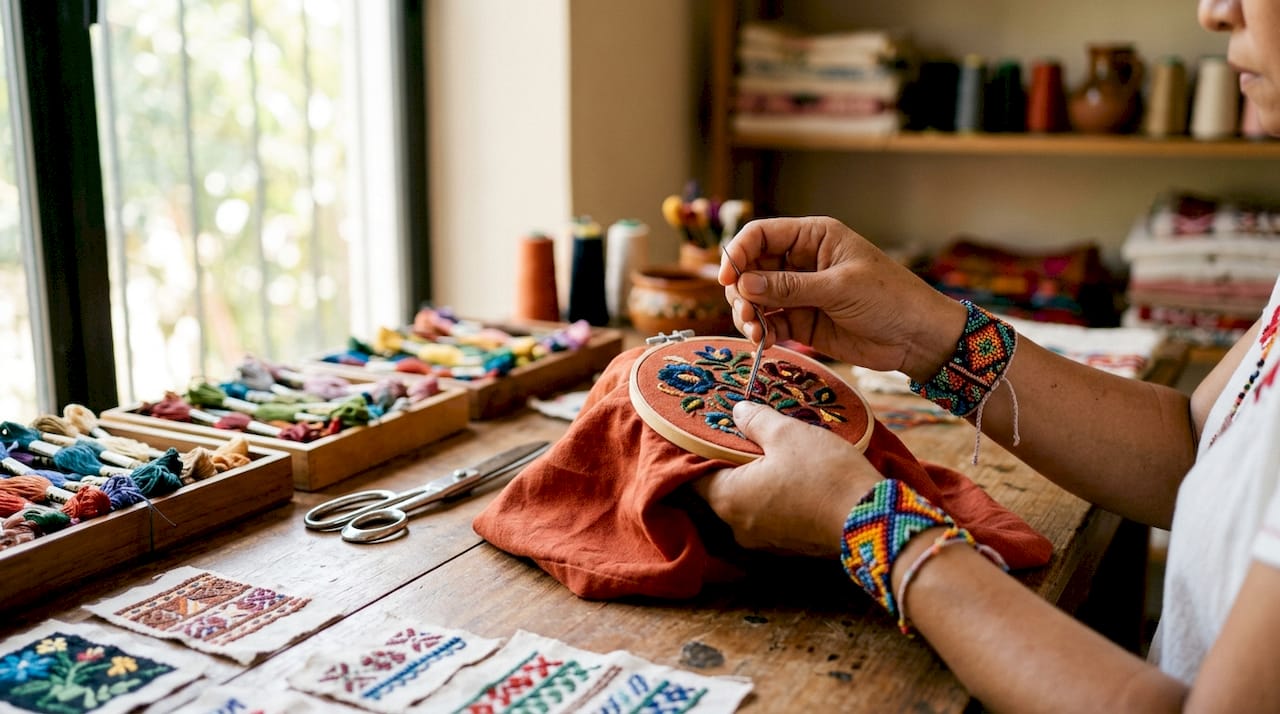
The cultural significance of heritage in Mexico is inseparable from the people who produce it. Artisans are not hobbyists. They are the primary bearers of knowledge systems that predate the Spanish colonial period by thousands of years. When a craft tradition disappears, an entire way of understanding the world disappears with it.
How did the mestizo tradition shape Mexican artisan history?
The mestizo artisan tradition emerged in the 16th century as a direct product of colonial encounter. Spanish missionaries and administrators introduced European techniques, materials, and aesthetic conventions. Indigenous communities absorbed these influences without abandoning their own. The result was something entirely new.
This synthesis produced what scholars now call Mexican folk art: a category that belongs to neither Europe nor pre-Hispanic Mesoamerica exclusively, but to the space between them. The defining characteristics of this tradition include:
- Material fusion: Indigenous clay and fiber techniques combined with Spanish glazing and weaving methods.
- Symbolic layering: Pre-Hispanic iconography embedded within Catholic visual frameworks.
- Regional specialization: Each region developed distinct craft identities, from Oaxacan black clay to Talavera from Puebla.
- Oral transmission: Knowledge passed through family lineages rather than formal institutions, preserving community ownership.
This is not a static historical category. The mestizo tradition is a living methodology. It continues to absorb new influences while maintaining its core logic: that craft is a form of cultural conversation, not mere production. Understanding artisan craft history in Mexico means recognizing that every object produced in this tradition carries the weight of that 500-year dialogue.
Why do artisan traditions still matter socially and economically?
Artisan traditions in Mexico sustain entire communities, not just culturally but economically. The silk production revival in San Pedro Cajonos, Oaxaca, is one of the clearest examples. Silk weaving there dates to the 1500s and nearly disappeared. After 2020, cooperatives and global connectivity brought it back, giving local families a viable income tied directly to their cultural identity.
This pattern repeats across Mexico. The importance of artisans extends beyond cultural preservation into genuine economic resilience. When craft traditions thrive, communities gain:
- Income independence: Artisan cooperatives reduce reliance on external labor markets.
- Knowledge retention: Young people learn traditional techniques, keeping expertise within the community.
- Cultural tourism: Authentic craft production attracts visitors and buyers who value cultural specificity over mass production.
- Intergenerational connection: Craft practice creates structured relationships between elders and youth.
UNESCO programs active in nine Latin American cities, including Oaxaca, promote integrating living artisan heritage into urban planning. The goal is to keep knowledge transmission embedded in daily community life rather than confined to museums. That distinction matters enormously. A craft displayed behind glass is history. A craft practiced in a family workshop is culture.
Pro Tip: When evaluating the authenticity of Mexican artisan goods, look for regional markers. Authentic Talavera carries a certification seal from Puebla's regulatory council. Authentic Oaxacan textiles often show slight variations in pattern, a natural result of hand production rather than machine replication.
What symbolic and political meanings does artisan heritage carry?
The symbolic dimension of Mexican artisan heritage is where the story becomes most complex. Artisans have historically used craft as a form of quiet resistance. Indigenous artisans embedded Aztec symbols beneath colonial art forms, replacing eagle motifs with cranes in Talavera ceramics. To Spanish authorities, the imagery appeared acceptably decorative. To Indigenous communities, it preserved sacred memory.
This practice of encoding meaning beneath surface appearance connects directly to Octavio Paz's analysis of Mexican identity. Paz argued that Mexican culture operates through masks: public faces that protect a deeper, more authentic self shaped by historical trauma and national myth.
"The Mexican, whether young or old, criollo or mestizo, general or laborer or lawyer, seems to me to be a person who shuts himself away to protect himself: his face is a mask and so is his smile." — Octavio Paz, The Labyrinth of Solitude. Paz's framework reveals how artisan objects function as cultural masks: beautiful on the surface, carrying unspoken histories beneath.
This analysis has real implications for how we understand the role of crafts in Mexico. A Zapotec rug is not simply a floor covering. It is a record of cosmological knowledge, a political statement about cultural survival, and a source of community income, all at once. The tension between these layers is precisely what makes Mexican artisan heritage so intellectually rich and so difficult to reduce to a single narrative.
The political dimension also includes a less comfortable truth. Celebrating Mexican artisan aesthetics while ignoring the economic precarity of the communities who produce them is a form of cultural extraction. The indigenous patterns that appear in global design trends originate in specific communities with specific histories. Recognizing that connection is not optional for anyone who takes cultural authenticity seriously.
How do neo-craft and Mexicanidad reinterpret artisan heritage today?
Contemporary Mexican design has produced two related movements that reframe the role of artisan heritage in modern identity: neo-craft and Mexicanidad. Both reject the idea that tradition is a fixed archive. Both insist that heritage is a living system.
Neo-craft, as a design philosophy, blends manual skill with contemporary design and global market engagement. It treats craft not as nostalgia but as an open methodology. Designers working in this mode use materials like obsidian, a volcanic mineral with deep pre-Hispanic significance, to create objects that communicate cultural narratives and emotional bonds. The material itself carries memory. The craft practice activates it.
The Mexicanidad movement operates on a more personal and communal level. Urban mestizos reclaim Aztec history through ritual, dance, and oral tradition, transforming what was once a source of colonial shame into a source of pride. This is embodied memory: knowledge held in the body and activated through practice, not stored in texts or museums.
The practical implications for contemporary artisan heritage are significant:
- Material specificity matters. Neo-craft designers choose materials for their cultural resonance, not just their aesthetic properties. Obsidian, copal resin, and natural dyes carry histories that synthetic alternatives cannot replicate.
- Community authorship must be credited. Designs that draw from Indigenous traditions should name and compensate the communities of origin, not simply cite "Mexican inspiration."
- Global markets can sustain local traditions. When done with integrity, international demand for authentic Mexican craft supports the communities that produce it.
- Tradition and innovation are not opposites. The most vital expressions of Mexican artisan heritage today combine deep technical knowledge with contemporary design thinking.
- Mexicanidad is not performance. It is a genuine reclamation of identity that gives artisan practice its emotional and political weight in the present.
Pro Tip: If you want to understand how Mexican craftsmanship influences global design today, look at how Mexican craftsmanship shapes contemporary interiors. The influence is not superficial. It runs through material choice, color theory, and the ethics of production.
Key Takeaways
Mexican artisan heritage defines national identity because it encodes historical memory, sustains communities economically, and continues to evolve as a living cultural system.
| Point | Details |
|---|---|
| Heritage as living system | Artisan traditions actively evolve through neo-craft and Mexicanidad, not just preserved in museums. |
| Colonial synthesis | The mestizo tradition formed in the 16th century by fusing Indigenous and Spanish techniques into a distinct cultural category. |
| Economic and social role | Craft cooperatives like those in Oaxaca sustain community income and keep intergenerational knowledge alive. |
| Symbolic resistance | Indigenous artisans encoded Aztec memory into colonial art forms, using craft as quiet cultural resistance. |
| Authenticity requires accountability | Celebrating Mexican aesthetics without crediting and supporting artisan communities is cultural extraction, not appreciation. |
Artisan heritage is more than a beautiful story
I have spent years studying how material culture carries identity, and the thing that strikes me most about Mexican artisan heritage is how uncomfortable it makes the purely aesthetic reading. Scholars and cultural enthusiasts often approach these objects with genuine admiration. That admiration is warranted. But admiration alone is not enough.
The communities behind these crafts have survived colonial suppression, economic marginalization, and the slow erosion of cultural memory. They did not survive by being decorative. They survived by being deliberate. Every stitch, every motif, every choice of material was a decision about what to remember and how to pass it on.
What I find most underappreciated in mainstream discussions of Mexican cultural identity is the political intelligence embedded in craft practice. The crane replacing the eagle in Talavera ceramics is not a quaint historical footnote. It is a model for how communities protect what matters most when direct expression is dangerous. That kind of cultural intelligence deserves more than admiration. It deserves serious study and genuine support.
The tension between aesthetic celebration and lived community presence is real, and it will not resolve itself. Scholars, collectors, and designers who engage with Mexican artisan heritage carry a responsibility to keep that tension visible. The soulful quality of handcrafted goods is not accidental. It comes from people who put everything they know into what they make.
— Ernesto
Artisan heritage, brought home with intention
Createdecorus was built on the belief that a handcrafted object carries its maker's knowledge into every space it enters. Each pillow, ottoman, and home accent in the Createdecorus collection is made in Mexico by artisans working within living craft traditions. The bold colors, rich textures, and thoughtful details are not stylistic choices. They are cultural expressions, crafted with pride and passed down through generations.

For cultural enthusiasts who want their living spaces to reflect genuine artisan heritage rather than mass-produced imitation, Createdecorus offers a direct connection to that tradition. Every piece is Hecho en México in the fullest sense: made by hand, rooted in place, and carrying a piece of Mexican soul. Visit Createdecorus handcrafted pillows to see the collection, or browse the full range at the shop.
FAQ
What is artisan heritage in the context of Mexican identity?
Artisan heritage refers to the body of craft knowledge, technique, and cultural symbolism passed through generations of Mexican communities. It defines Mexican identity by encoding historical memory, sustaining local economies, and expressing values that formal institutions cannot fully capture.
How did the mestizo tradition influence Mexican artisan crafts?
The mestizo tradition emerged in the 16th century as a fusion of Indigenous pre-Hispanic techniques and Spanish colonial influences. This synthesis created a distinct category of folk art that belongs to neither tradition exclusively but draws its strength from both.
Why does UNESCO recognize Mexican artisan crafts?
UNESCO recognized crafts like Talavera ceramics and Yucatecan embroidery in 2019 as expressions of intangible cultural heritage. This recognition reflects the crafts' role in sustaining community identity, transmitting knowledge across generations, and preserving cultural diversity.
What is Mexicanidad and how does it connect to artisan heritage?
Mexicanidad is a movement in which urban mestizos reclaim Aztec history through ritual, dance, and embodied memory, transforming colonial stigma into cultural pride. It connects to artisan heritage by treating craft practice as a form of living memory rather than historical artifact.
How does neo-craft differ from traditional Mexican artisan practice?
Neo-craft blends traditional manual skill with contemporary design thinking and global market engagement. It treats heritage as an open, evolving methodology rather than a fixed archive, using culturally significant materials like obsidian to communicate identity and emotional meaning in modern contexts.