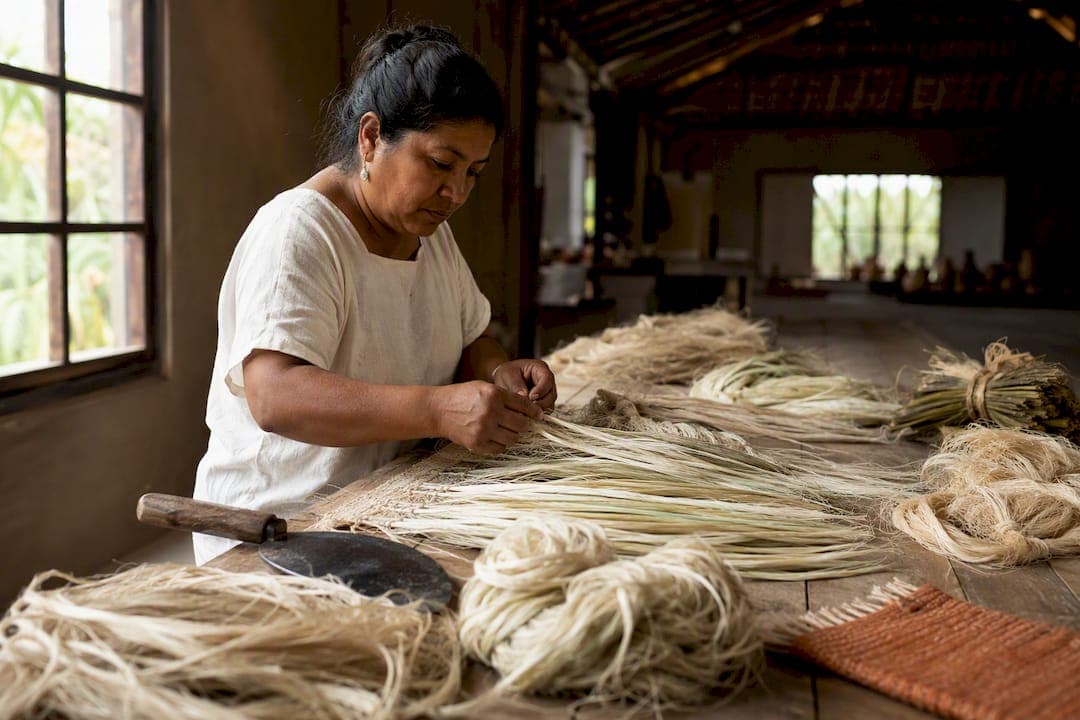
Sustainable Mexican textiles are fabrics made from renewable plant fibers like henequén, ixtle, and palma, or from recycled yarns produced through Mexico's growing textile-recycling movement, sourced with traceable, low-impact processes. For home buyers, the practical guidance is simple: look past marketing language and check the fiber, the process, and the people behind it. This article walks through both, starting with heritage fibers and ending with a sourcing checklist you can actually use.
TL;DR:
- Most Mexican heritage fibers like henequén, ixtle, and palma are naturally strong, regionally sourced, and benefit from sustainable cultivation practices.
- Traceability of raw materials and transparent processing details, including fiber origin and chemical use, are more reliable indicators of sustainability than certifications alone.
- Recycled yarns and mono-fiber construction are improving mainstream availability but still require more transparent supply chain practices from manufacturers.
- Proper care methods, such as low-impact washing and repairing, significantly extend the lifespan and sustainability of textile products.
- Buyers should prioritize asking about artisan conditions, fiber origins, and regional management to ensure authenticity and long-term social and ecological responsibility.
Table of Contents
- What Makes a Textile Truly Sustainable
- The Fibers and Innovations Behind Mexican Textiles
- How to Source Sustainable Textiles With Confidence
- Care Habits That Extend a Textile's Life
- Create Decorus and the Case for Mexican Fiber Heritage
- Where to Read More
- Why Heritage Fiber Deserves More Credit Than It Gets
- Bring Mexican Fiber Heritage Into Your Own Home
- Sources
What Makes a Textile Truly Sustainable
A textile earns the label "sustainable" based on what happens across its whole life, not just what the fiber is called on the tag. Four things matter most: how the raw material grows or gets made, how much water and energy the process uses, what chemicals touch the fabric, and what happens to it after years of use.
Mexico's own consumer protection agency, PROFECO, frames this clearly in its guidance on slow fashion, which pushes buyers toward durable, repairable pieces over disposable ones. That framing matters for home textiles especially. A pillow cover you replace every year has a worse footprint than one built to last a decade, regardless of what fiber it started with.
Circularity is the other half of the equation. A fabric that can be recycled at the end of its life, made from a single fiber type rather than an unlabeled blend, carries real long-term value. Watch for these signals when comparing options:
- Recycled content stated as a percentage, not just the word "recycled" somewhere on the label.
- Mono-fiber construction (100% cotton, 100% wool) rather than unspecified blends that are hard to recycle later.
- Traceability back to a region or producer, not a vague "sourced globally" claim.
- Take-back or repair programs offered by the maker.
Pro Tip: If a supplier can't tell you where the raw fiber came from or what happened to it before it reached the loom, treat that as a bigger red flag than any missing certification.
The Fibers and Innovations Behind Mexican Textiles
Mexico's textile identity runs through a handful of plant fibers that predate the country's modern borders. Archaeobotanical evidence shows magüey and yucca fibers in use for thousands of years, long before industrial spinning existed. That heritage still shapes what's available today.
Henequén, a hard fiber drawn from the agave plant and long associated with the Yucatán, remains one of the most studied Mexican fibers. Research from CICY on henequén shows the fiber has notably high tensile strength, which is why it's being tested as reinforcement in sustainable composite materials, not just rope and rustic textiles. That said, henequén cultivation is regionally concentrated, so large-scale sourcing depends on managed, well-supported farming rather than casual harvesting.
Ixtle, drawn from agave and yucca species, and palma, woven traditionally into baskets and mats, round out the plant-fiber trio most relevant to home decor. According to Biodiversidad Mexicana, roughly 80 plant species feed into Mexican basketry and cordage traditions, and modern henequén processing now channels leftover plant matter into compost and biogas rather than treating it as waste.
Alongside these heritage materials, a newer wave of Mexican projects is turning textile waste into new fabric. Ventures like Osomtex work with manufacturing offcuts and post-consumer textiles, while Novabori develops high-end recycled fabrics without owning a single factory, relying instead on partner mills. These recycled-yarn efforts depend on sorting fiber by polymer type and decontaminating it before respinning, a process buyers rarely see but should ask about.
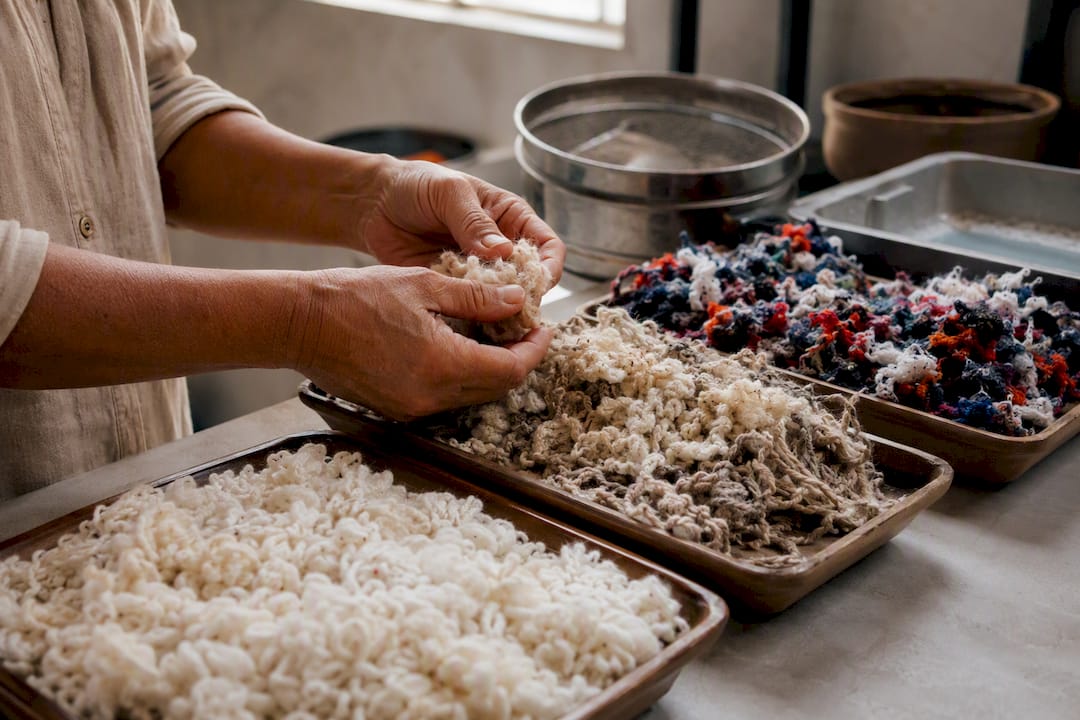
Availability varies widely. Cotton and wool blends show up in most home textile catalogs. Henequén and ixtle, by contrast, remain harder to find outside specialty or artisan channels, which is part of why sourcing them well takes more legwork than picking a fabric off a shelf.
How to Source Sustainable Textiles With Confidence
Buying well starts with asking better questions, not just reading better labels. Here's a sequence that works whether you're furnishing one room or stocking a boutique.
- Ask about origin first. Where did the raw fiber come from, and who grew or collected it? A supplier who can't answer specifically usually hasn't tracked it either.
- Ask about processing. Find out how the fiber was cleaned, dyed, and spun, and whether water or chemical use was controlled at any step.
- Request documentation. Fiber origin statements, recycled-content verification, or certifications like GOTS or OCS carry more weight than a general "eco-friendly" claim.
- Check worker conditions. Ask directly whether artisans or factory workers were paid fairly and worked in safe conditions. A supplier proud of its labor practices will usually volunteer this.
- Order a sample before committing. Small swatches or a single test piece reveal texture, dye consistency, and durability that photos never show.
- Favor mono-fiber fabrics when recyclability matters. A 100% cotton pillow cover has a cleaner end-of-life path than a cotton-poly-acrylic blend.
- Start with small-batch orders. Testing a small run before a bulk purchase protects you from committing to a fabric that doesn't hold up the way it was described.
Pro Tip: Small, transparent suppliers are often more willing to answer detailed sourcing questions than large ones. If a company can name the village or workshop behind a piece, that's usually a better trust signal than a certification logo.
Care Habits That Extend a Textile's Life
The most sustainable fabric in the world loses that status fast if it falls apart in two years. Real sustainability includes how a piece is cared for, not just how it was made.
Washing on cooler cycles, air drying instead of machine drying, and repairing small tears before they spread all add years to a textile's usable life. Design choices matter just as much as maintenance habits:
- A dense, tight weave resists pilling and wear far better than a loose one.
- Colorfast dyes keep fabric looking new through repeated washing, cutting down on premature replacement.
- Removable, washable covers let you clean a pillow or cushion without wearing down the whole piece.
There's a real trade-off worth naming here. A blended fill or fabric can sometimes perform better in a home setting, holding shape or resisting stains, but that same blend is harder to recycle once its life ends. Neither choice is wrong. It just depends on whether you're optimizing for the item's years in your home or its afterlife once you're done with it.
Create Decorus and the Case for Mexican Fiber Heritage
We build every piece around the same principle: a textile's sustainability is inseparable from the hands and heritage behind it. That means working with artisan techniques passed down through generations, sourcing fibers with respect for the communities who have managed them for centuries, and choosing packaging that protects each piece without adding unnecessary waste. Vacuum-compressed shipping, for instance, reduces the volume, and the fuel, needed to move each pillow from workshop to your door.
Stewardship of biodiversity and respect for the knowledge artisans carry matter as much as the raw performance of a fiber. A fabric with good tensile strength is only part of the story. Who managed the plant, who wove the piece, and how much waste the process left behind complete it.
If this approach speaks to how you want to furnish a space, our collection of handcrafted pillows and accents reflects it directly.
Where to Read More
For deeper detail, start with Biodiversidad Mexicana on natural fibers, the CICY study on henequén, PROFECO's slow fashion explainer, and Vogue México's overview of sustainable textiles.
Why Heritage Fiber Deserves More Credit Than It Gets
Most conversations about sustainable textiles jump straight to recycling technology, as if innovation only counts when it's new. That undersells something Mexico has quietly proven for centuries: a fiber like henequén, grown and processed with the same care artisans have used for generations, was circular before circularity became a marketing term. The residue from processing goes back into compost. The plant itself needs little irrigation. That's not a retrofit. That's the original design.
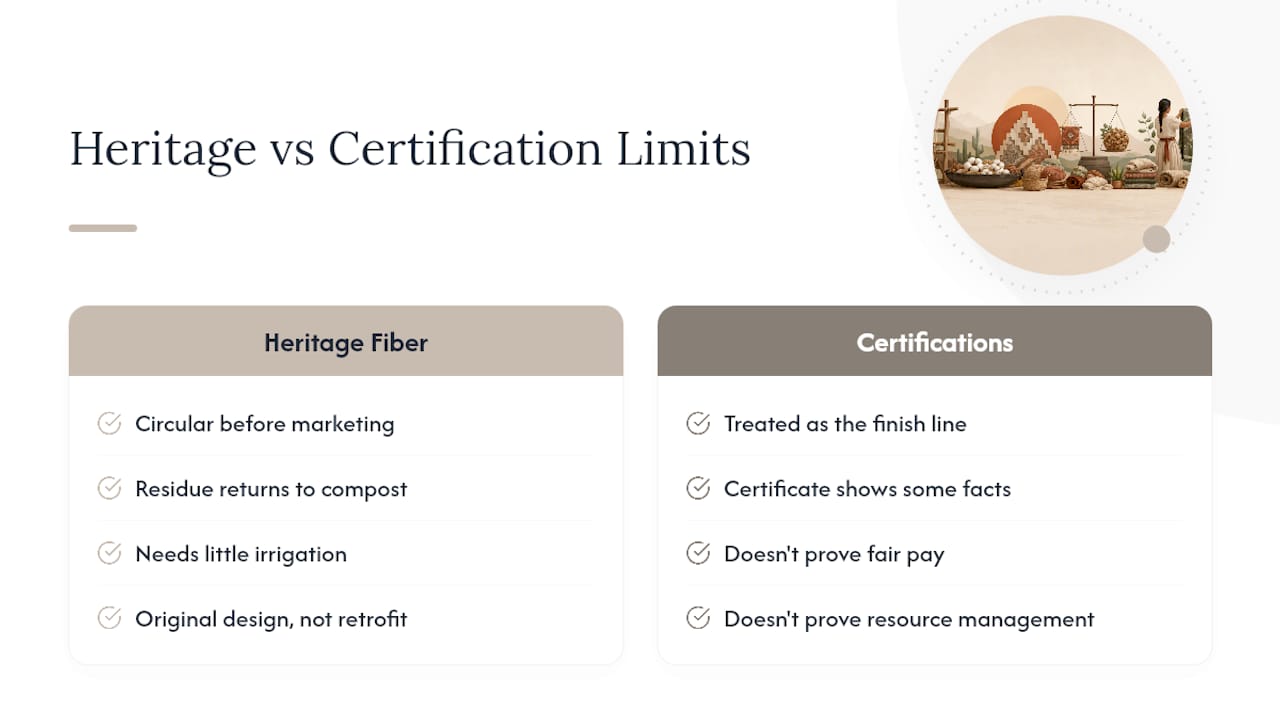
Where conventional advice falls short is treating certifications as the finish line. A GOTS label tells you something useful, but it doesn't tell you whether the artisan who wove your ixtle mat was paid fairly, or whether the region's palma supply is being managed responsibly. Paperwork and stewardship aren't the same thing, and buyers who chase one while ignoring the other end up with a fabric that looks sustainable on paper and hollow in practice.
If you take one thing from this, prioritize traceability over labels. Ask who made it and how, before you ask what it's certified as.
— Ernesto
Bring Mexican Fiber Heritage Into Your Own Home
Finished pieces can bring artisan craftsmanship together with materials chosen for both durability and cultural authenticity, offering customers the benefit of research without the legwork.

If you're furnishing your own home, browse a shop for handcrafted pillows to see the fibers and finishes described here in finished form. Boutiques and designers sourcing in volume can inquire about trade pricing through a wholesale program, designed for buyers who want consistent quality across larger orders. Either way, the next step is the same: pick a piece, and see the craftsmanship for yourself.
Sources
- Fibras naturales | Biodiversidad Mexicana
- La fibra de henequén (Agave fourcroydes) como una opción para materiales compuestos sustentables
- Moda sostenible Slow Fashion
- Textiles sustentables: de ellos depende el futuro de la moda