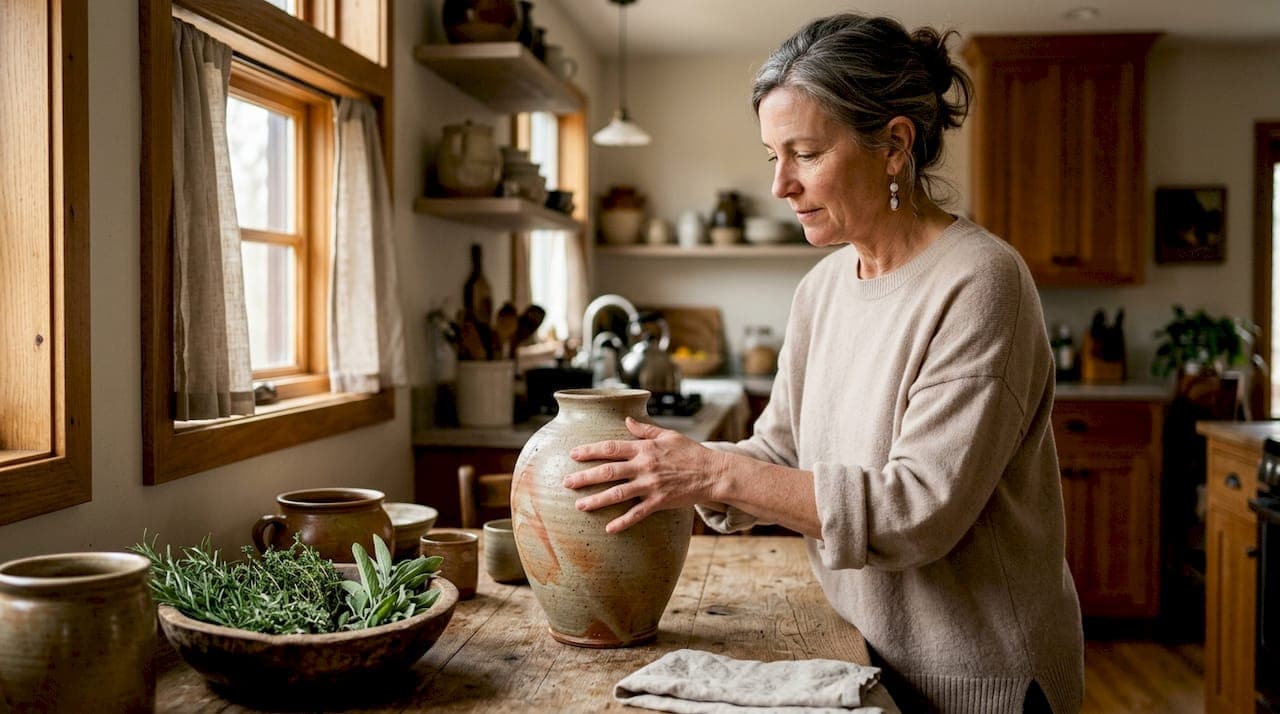
Handcrafted decor is defined by the visible evidence of human process embedded in every surface, mark, and texture. That evidence is why handcrafted decor feels different from anything a machine produces. Your senses detect it before your mind can name it. Nordnatur, My Chakchouka, and research published in Al-Academy all confirm this response is perceptual, not sentimental. The warmth you feel in a room filled with artisan pieces is real, measurable, and rooted in how your brain reads surfaces. This article explains the science, the craft, and the cultural meaning behind that feeling.
Why handcrafted decor feels different from machine-made pieces
Handcrafted decor carries visible process evidence that machine finishes erase entirely. Trowel marks in plaster, glaze variations on ceramic, and hand-rubbed oil irregularities on wood all tell your senses that a person was here. Nordnatur identifies these cues as the source of perceptual warmth, the quality that makes a room feel inhabited rather than staged.
Machine production creates uniform repetition. Every unit matches the last. Your visual system, which evolved to read natural and human-made environments, registers that uniformity quickly and moves on. Handcrafted surfaces hold attention longer because they contain structured variation, the kind of deliberate irregularity that signals human judgment at work.
This recognition happens before conscious thought. My Chakchouka describes it as pre-linguistic sensory detection. You feel the difference in a handcrafted piece before you can articulate why. That split-second perceptual response is the foundation of every emotional reaction that follows.
Understanding this helps explain why handmade accents feel unique even when placed alongside expensive machine-made furniture. The artisan piece reads differently to your eyes and hands. It creates a point of contrast that anchors the entire room.
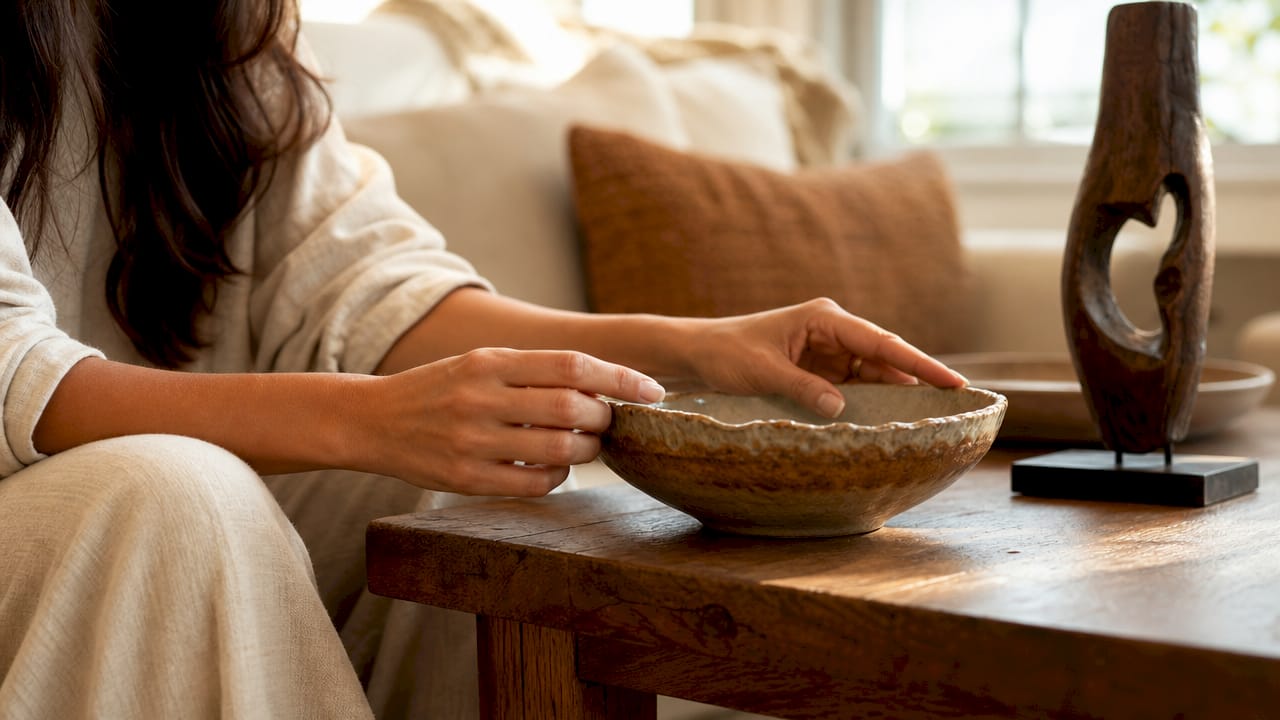
Pro Tip: When evaluating a piece in a store or online, look for slight color shifts, uneven edges, or surface texture that changes direction. These are signs of human involvement, not manufacturing defects.
What sensory cues make handcrafted decor stand out?
Sensory engagement with handcrafted decor operates across multiple channels at once. Vision registers surface variation and light behavior. Touch detects texture depth and temperature. Research published in Al-Academy found that texture choices influence not only vision and touch but also sound perception in materials. A hammered copper bowl produces a different acoustic quality than a stamped one. That layered sensory input is what makes artisan pieces feel alive in a space.
The specific cues that signal handcrafted origin include:
- Trowel and tool marks in plaster or clay that catch light at different angles
- Glaze pooling in ceramic work where color deepens at edges and recesses
- Surface grain variation in hand-rubbed wood finishes that shifts with viewing angle
- Slight dimensional inconsistency in woven or stitched textiles that creates visual rhythm
- Uneven patina in metalwork where oxidation settles differently across the surface
Nordnatur notes that light and touch register these differences and produce a warmer, more present feeling in the space. This is not nostalgia. It is sensory legibility. The surface communicates its own making.
Ways handcrafted accents differentiate designers from those who rely on mass-produced catalogs come down to this exact quality. A room styled with artisan pieces carries a sensory signature that cannot be replicated by sourcing from a standard retail catalog.
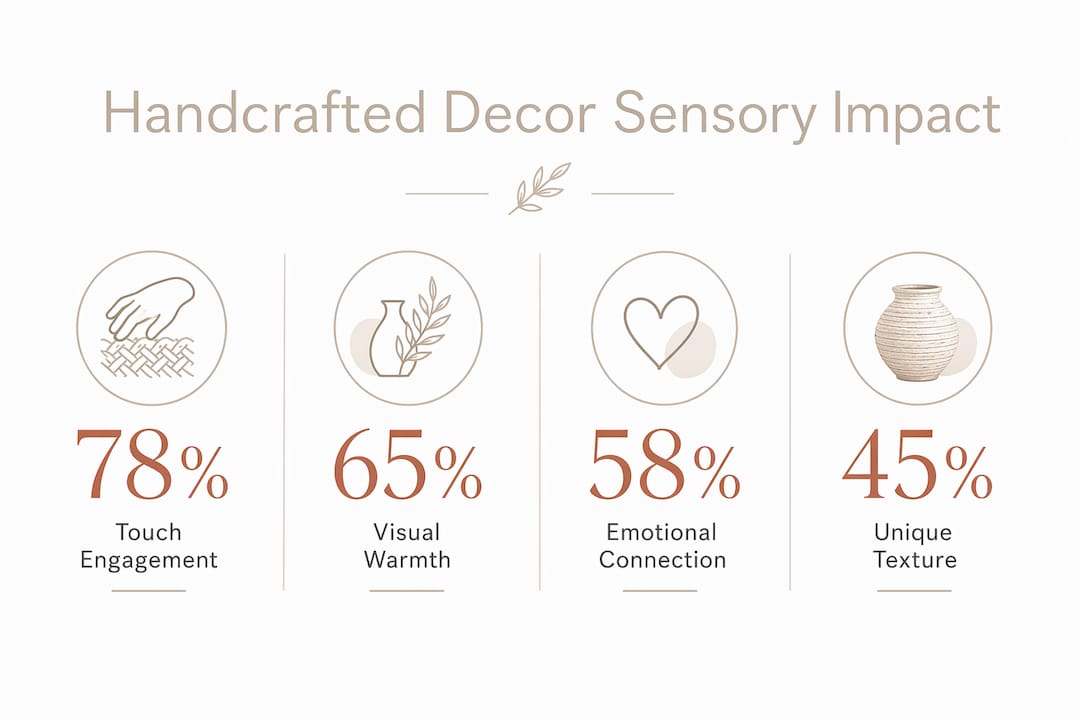
Pro Tip: Run your fingertips across a surface before buying. Genuine handcrafted pieces have texture depth that feels intentional, not applied as a coating. If the texture feels uniform across the entire surface, it was likely machine-pressed.
How do artisan techniques shape sensory and emotional experience?
Specific surface treatments produce distinct perceptual effects. A study of 68 participants evaluating metal craft surfaces found that hammered surfaces scored highest in sensory interaction, while polished surfaces scored higher in luxury perception. This means the technique an artisan chooses directly shapes how you experience the finished piece.
| Surface treatment | Primary perceptual effect | Emotional quality |
|---|---|---|
| Hammering | High tactile and visual engagement | Grounded, energetic |
| Polishing | Refined visual clarity | Elevated, formal |
| Oxidation | Depth and aged character | Warm, timeless |
| Perforation | Light play and visual rhythm | Airy, layered |
Each of these treatments requires a different skill set and a different relationship between the maker and the material. Hammering demands physical repetition and judgment about force. Oxidation requires patience and knowledge of chemical reaction. Perforation calls for spatial planning by hand. The artisan's decisions show up in the finished object.
This is why the impact of handmade decor on ambiance goes beyond aesthetics. The technique embedded in a piece changes how the room feels to move through. A hammered brass tray on a coffee table creates a different energy than a polished one, even at the same price point.
The multi-sensory nature of handcrafted surfaces also explains why photographs rarely capture the full experience. You need to be in the room, close to the piece, to feel what the maker built into it.
Pro Tip: Choose surface treatments based on the atmosphere you want. Hammered and oxidized finishes add warmth and texture to minimal spaces. Polished finishes work best when you want a piece to feel refined against rich textiles.
Why do handcrafted items evoke emotional warmth and personal connection?
The emotional connection to handcrafted decor begins at the sensory level and deepens through meaning. My Chakchouka makes a critical point: sensory response precedes narrative or belief. You do not need to know the story of a piece to feel its warmth. The feeling comes first. The story adds another layer.
Hanging Hammer describes how imperfections become memorable details that convey individuality and authenticity. A slight asymmetry in a hand-thrown bowl is not a flaw. It is evidence of a specific person making a specific decision on a specific day. That evidence creates a sense of presence in the object.
"Craftsmanship involves years of skill and process, embedding emotion into each handmade object." — Hanging Hammer
LaserNique notes that no two handcrafted pieces are identical, which fosters a personal bond uncommon with mass-produced items. When you own something that exists nowhere else in the world, your relationship to it changes. You become its steward, not just its buyer.
The emotional benefits of handcrafted decor in a home environment include:
- A sense of authenticity that makes a space feel genuinely personal
- Visual interest that rewards close attention over time
- A connection to the maker's culture, tradition, and skill
- Warmth that comes from knowing care went into every detail
- A feeling of permanence and quality that mass-produced items rarely sustain
These qualities explain why handmade items feel more personal than anything sourced from a large retail chain. The artisan craft tradition behind each piece carries its own history, and that history becomes part of your home.
How to appreciate and incorporate handcrafted decor in your space
Recognizing genuine handcrafted quality takes practice, but the signs are consistent. LaserNique confirms that handmade decor carries a unique narrative and craftsmanship heavy in care and quality. Knowing what to look for protects you from machine-made pieces marketed as artisan work.
Follow these steps to evaluate and integrate artisan decor with confidence:
- Examine the surface closely. Look for tool marks, color variation, and texture that changes across the piece. Uniformity signals machine production.
- Check the weight and material. Genuine handcrafted pieces often use denser, higher-quality raw materials. A hand-thrown ceramic pot feels heavier than a slip-cast one.
- Ask about the origin. Reputable artisan brands can name the region, tradition, or maker behind a piece. Vague answers suggest mass production.
- Pair with intention. Handcrafted pieces work best when given space to breathe. Place one artisan accent against a neutral backdrop rather than clustering several together.
- Mix scales deliberately. A large handwoven textile paired with a small hammered metal object creates visual dialogue. Both pieces benefit from the contrast.
Pairing Mexican crafts with contemporary furniture is one of the most effective ways to introduce artisan warmth into a modern interior without disrupting the overall design. The contrast between clean lines and rich texture is what makes both elements more visible.
Handcrafted materials also require specific care. Natural fibers, hand-applied finishes, and oxidized metals respond differently to cleaning products than machine-made surfaces.
Pro Tip: Avoid harsh chemical cleaners on hand-applied finishes. Use a dry or lightly damp cloth for most artisan surfaces. For oxidized metal, a light wax coating once or twice a year preserves the patina without stripping the surface character.
Key takeaways
Handcrafted decor feels different because its surface variations engage your senses at a perceptual level that machine-made uniformity cannot reach.
| Point | Details |
|---|---|
| Sensory recognition is pre-linguistic | Your senses detect handcrafted variation before your mind can explain the feeling. |
| Surface treatments shape emotional response | Hammered finishes maximize tactile engagement; polished finishes signal refined luxury. |
| Imperfection carries meaning | Slight asymmetries and tool marks are evidence of human presence, not manufacturing errors. |
| Emotional warmth precedes storytelling | You feel the warmth of a handcrafted piece before you know its cultural origin or maker. |
| Pairing and placement matter | One artisan accent placed with intention creates more impact than several pieces grouped together. |
What most people miss about handcrafted decor
I have spent years around artisan-made objects, and the most common misconception I encounter is that the appeal is purely visual. People assume they are drawn to handcrafted decor because it looks beautiful. That is only part of the story.
The real pull is tactile and spatial. A handcrafted piece changes the feeling of a room even when you are not looking directly at it. The texture reads in your peripheral vision. The weight of it on a shelf shifts the room's sense of gravity. These are not poetic exaggerations. They are perceptual realities that the research on structured variation and sensory legibility confirms.
What I find most overlooked is the cultural dimension. When Createdecorus sources pieces rooted in Mexican artisan traditions, those objects carry a lineage of knowledge passed through generations of makers. That lineage is not visible in a photograph, but it is present in the object. You feel it as a kind of seriousness, a density of intention that mass production cannot manufacture.
My honest advice: stop evaluating handcrafted decor from a distance. Pick it up. Run your hand across it. Let your senses do the work they were built to do. The difference becomes undeniable the moment you engage with it directly.
— Ernesto
Artisan luxury decor from Createdecorus
Createdecorus brings the sensory richness of Mexican artisan craftsmanship directly into your home through handcrafted luxury pillows and accents built with the same intentional detail this article describes.

Each piece in the Createdecorus collection reflects the bold color, rich texture, and cultural depth that define genuine artisan work. These are not decorative objects that fade into a room. They hold attention, invite touch, and carry the warmth of the tradition behind them. Trade buyers and interior designers can explore the wholesale trade program for access to the full range of handcrafted luxury accents at scale.
FAQ
Why does handcrafted decor feel warmer than store-bought pieces?
Handcrafted surfaces contain structured variation that your senses read as human presence. Nordnatur identifies trowel marks, glaze shifts, and hand-rubbed irregularities as the specific cues that create this perceptual warmth.
How can I tell if a piece is genuinely handcrafted?
Look for surface texture that changes direction, slight color variation, and dimensional inconsistency. Machine-made pieces repeat the same pattern uniformly across the entire surface.
Does the emotional response to handcrafted decor require knowing its story?
No. My Chakchouka confirms that sensory recognition of handcrafted uniqueness happens before conscious interpretation. The emotional warmth is perceptual, not dependent on knowing the maker or cultural origin.
Which artisan surface treatment creates the strongest sensory impact?
A study of 68 participants found that hammered metal surfaces scored highest in sensory interaction. Polished surfaces scored higher in luxury perception, making the best choice dependent on the atmosphere you want to create.
Why do handcrafted items feel more personal than mass-produced decor?
LaserNique explains that no two handcrafted pieces are identical, which creates a personal bond between owner and object. Owning something that exists nowhere else in the world changes your relationship to it.