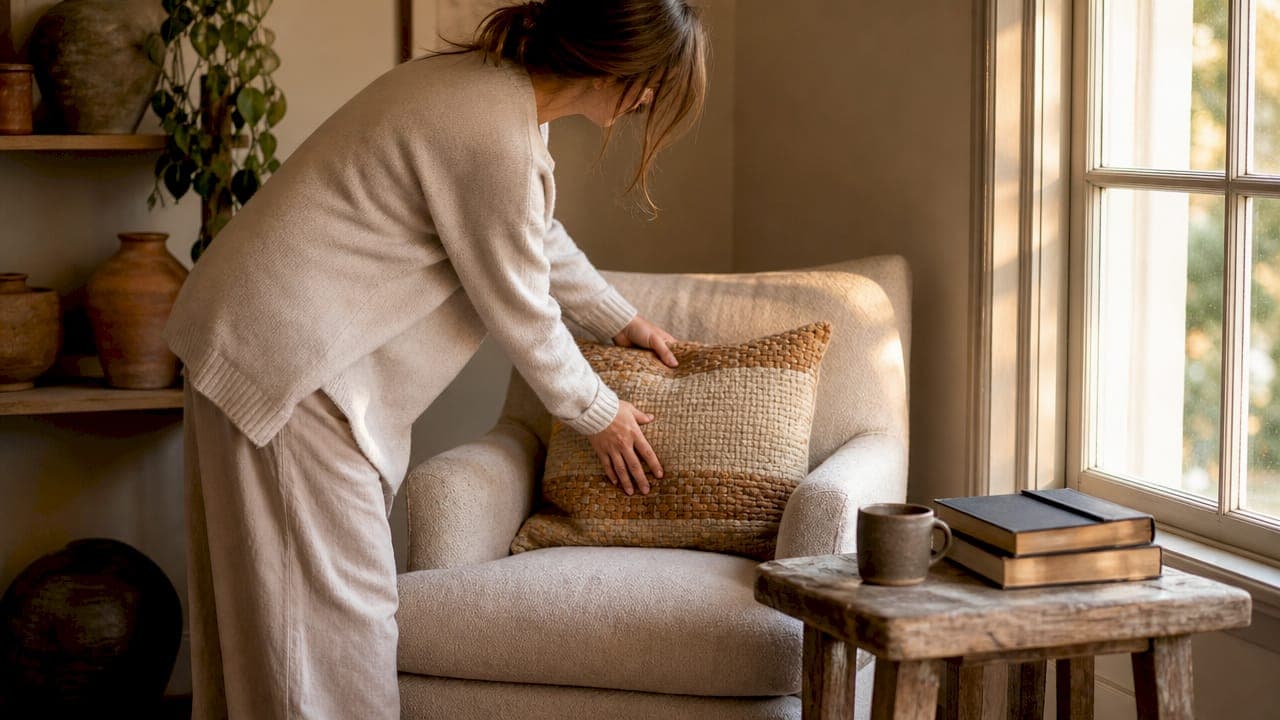
Soulful home decor is defined as the intentional blending of meaningful objects, layered textures, and sensory elements that reflect your personal story and create a warmly inviting environment. What makes home decor feel soulful has nothing to do with perfection or price tags. It has everything to do with emotional resonance, the kind that comes from a weathered ceramic bowl, a hand-knotted rug, or a pillow crafted by artisan hands in Oaxaca. Design experts in 2026 prioritize homes telling a story through layered, authentic pieces over fast, staged decor. That shift changes everything about how we think about building a home.
What makes home decor feel soulful?
Soulful interior design, the recognized term among design professionals, is grounded in emotional resonance rather than visual perfection. A room feels soulful when it carries the weight of lived experience. Objects with worn edges, inherited furniture, and handmade textiles all signal that real people inhabit the space. That signal is what separates a home from a showroom.
The concept goes beyond aesthetics. Sensory richness distinguishes soulful homes from those that are only visually pleasing. Touch, sound, and even scent contribute to how a room feels when you walk into it. A space that engages multiple senses creates calm and connection in a way that a purely visual arrangement never can.
Soulful decor also reflects cultural authenticity. Pieces rooted in a specific tradition, whether Mexican artisan craft, Japanese wabi-sabi, or Scandinavian folk art, carry a depth that mass-produced objects simply cannot replicate. That depth is what you feel but often cannot name when a room stops you in your tracks.
What materials and textures bring soul to home decor?
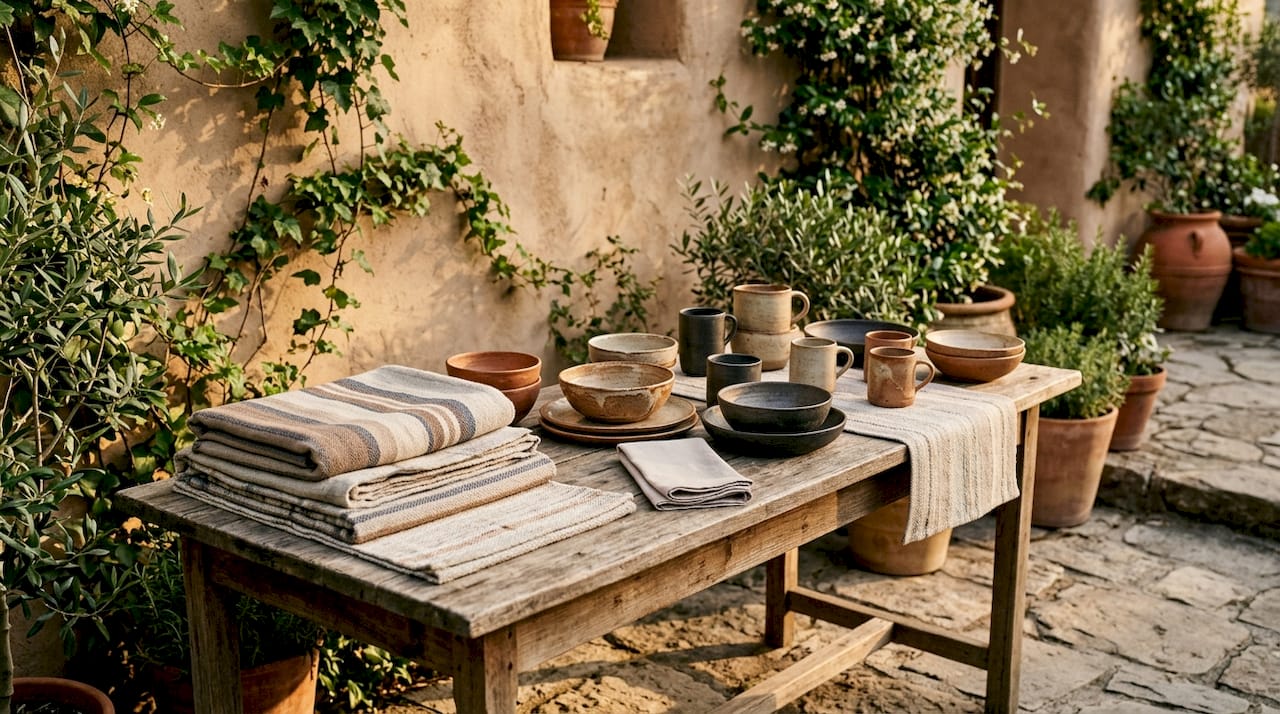
Texture is the single most underused tool in residential design. Tactile materials like unlacquered metals, limewashed plaster, and medium-toned woods ground a space in a way that glossy, lacquered surfaces never do. The shift away from high-shine finishes toward materials that show their making is one of the clearest signals of soulful design in 2026.
The most effective approach combines contrasting textures within the same room:
- Rough against soft: Pair jute or sisal rugs with velvet or bouclé cushions. The contrast creates visual and tactile depth.
- Aged against new: Place a weathered wood side table beside a freshly upholstered chair. The tension between them reads as intentional and lived in.
- Matte against warm: Use limewashed walls or unlacquered brass fixtures alongside plush textiles. The combination feels grounded and warm.
- Natural against refined: Handwoven baskets or raw linen drapes alongside polished stone or ceramic accents add layers without clutter.
Objects showing signs of age lend authenticity to otherwise cold spaces. Weathered wood and chipped ceramics bring humanity and warmth to interiors that might otherwise feel overly pristine. That imperfection is not a flaw. It is the point.
Soft surfaces like rugs and bookshelves absorb sound, lowering the sensory intensity of a room and creating calm atmospheres. A room lined with books and layered with textiles feels quieter and more intimate than one with bare walls and hard floors. That acoustic quality is a hidden element of soulful design most people feel but never consciously identify.
Pro Tip: Start with one tactile anchor, such as a handwoven throw or an artisan pillow from Createdecorus, and build your texture palette outward from there. One strong tactile piece does more for a room than five decorative objects.
How does personal storytelling shape soulful interior design?
A room with soul tells a story. That story does not need to be dramatic or exotic. It simply needs to be true to the person who lives there. The practice of building a room narrative starts with one anchor piece and evolves slowly over time. That approach prevents the sterile, all-at-once look that makes a room feel staged rather than inhabited.
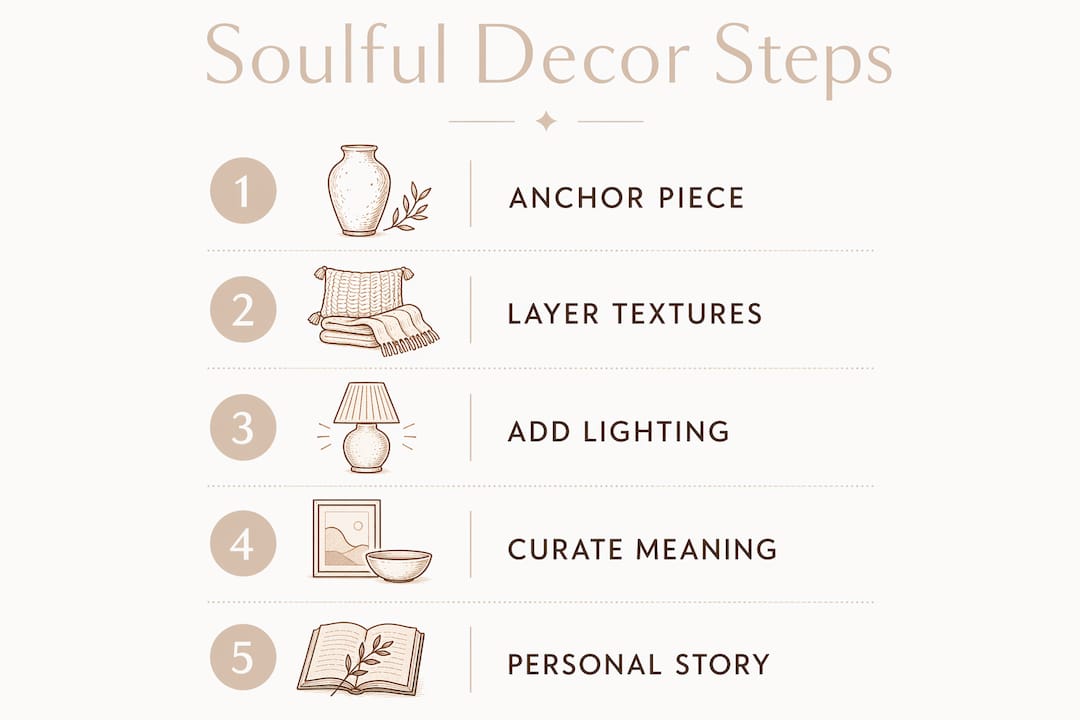
The most meaningful rooms are built through a process, not a shopping trip. Here is how to approach it:
- Choose an anchor piece. Select one object that carries genuine meaning. It might be an heirloom, a piece of art you saved for, or a handcrafted item tied to a place or culture you love. Every other decision in the room should respond to this piece.
- Repair rather than replace. Designers in 2026 emphasize repairing and restoring items rather than discarding them. A refinished chair or a re-covered cushion carries more character than anything bought new.
- Add one-of-a-kind pieces over time. Mass-produced decor fills space. Curated, singular pieces build narrative. Seek out handmade objects, market finds, and artisan work that cannot be replicated.
- Let the room evolve. Resist the urge to complete a room all at once. A space that grows with you over months and years feels genuinely inhabited. That gradual accumulation is what gives a home its curated home aesthetic.
"Soul in design is about emotional resonance achieved by objects showing signs of age, lending authenticity to otherwise cold spaces." — Interior design principle, 2026
The practice of celebrating heritage through home design is one of the most powerful ways to anchor a room's narrative. Objects tied to a specific cultural tradition carry layers of meaning that transcend personal taste. They connect a space to something larger than the individual.
What role does lighting play in soulful home decor?
Lighting is the element most likely to destroy a soulful room when done wrong. A single overhead fixture floods a space with flat, even light that erases shadow, flattens texture, and removes all sense of intimacy. That clinical quality is the opposite of what soulful design requires.
Layered lighting combining floor lamps, table lamps, and accent lights creates mood and depth. Each source operates at a different height, which creates pockets of warmth and draws the eye through the room in a natural, unhurried way. That movement is what makes a space feel alive.
The practical approach to layered lighting includes:
- Floor lamps in corners: They lift the eye and soften the room's edges without competing with furniture.
- Table lamps at seated height: They create pools of warm light that invite you to sit and stay.
- Accent lighting on shelves or artwork: It highlights texture and creates shadow, which adds depth to any surface it touches.
- Candlelight or flame-adjacent sources: Nothing manufactured fully replicates the warmth of a flickering flame. Even battery-operated candles in the right placement add a quality of light that feels genuinely warm.
Pro Tip: Swap one overhead light for two table lamps in the same room. The difference in atmosphere is immediate and requires no renovation.
Multiple light sources at different heights foster warmth and highlight materials' textures, making spaces genuinely inviting. Light that grazes a textured wall or a woven pillow reveals the material in a way that flat overhead light never does. Texture and lighting work together. Neither reaches its full potential without the other.
How to curate and layer decor without losing soul
The difference between a soulful room and a cluttered one is intention. Soulful spaces have a distinct point of view without excessive objects. Every piece earns its place through meaning, beauty, or both. The moment an object is present only to fill space, it dilutes the room's character.
The "red thread" technique offers a practical framework. A subtle recurring element, whether a consistent tone, finish, or material, runs through every room to create harmony without uniformity. It might be the warm brass of your fixtures, the natural linen of your textiles, or the terracotta in your ceramics. That thread unifies diverse pieces without making the space feel coordinated in a forced way.
| Curation | Clutter |
|---|---|
| Each object carries meaning or beauty | Objects fill space without purpose |
| Empty space is used as contrast | Every surface is covered |
| Decor evolves slowly with the inhabitant | Room is completed all at once |
| A red thread unifies diverse pieces | No visual connection between objects |
| Quality is prioritized over quantity | Volume substitutes for character |
Soulful decor is a gradual process that starts with an anchor piece and layers over time. That pace is not a limitation. It is the method. A room that grows with you resists the staged quality that makes so many interiors feel like photographs rather than homes. Empty space is not absence. It is the contrast that lets meaningful objects breathe.
The warm and inviting living room principle applies here directly. Warmth comes from restraint as much as from richness. A single handcrafted pillow on a clean sofa says more than a sofa buried under twelve decorative cushions.
Key Takeaways
Soulful home decor requires personal narrative, tactile materials, layered lighting, and intentional curation working together to create spaces that feel authentically lived in and emotionally resonant.
| Point | Details |
|---|---|
| Texture is the foundation | Combine rough and soft materials like jute, velvet, and aged wood to create depth and warmth. |
| Personal narrative anchors a room | Start with one meaningful piece and let the room evolve slowly around it over time. |
| Layered lighting creates intimacy | Replace single overhead fixtures with floor lamps, table lamps, and accent lights at varied heights. |
| Curation beats clutter | Prioritize meaningful objects and use empty space as contrast, not as a gap to fill. |
| The red thread unifies | A recurring tone, finish, or material creates cohesion without making a space feel staged. |
What I have learned about making a home truly feel like yours
People often assume soulful decor means filling a home with collected objects and layered textiles until every surface tells a story. That is a misreading. The rooms that move me most are the ones with room to breathe. One extraordinary piece on an otherwise quiet shelf does more emotional work than a shelf crowded with interesting things.
The other misconception I encounter constantly is that soul requires age or inheritance. It does not. What it requires is intention. A pillow crafted by an artisan in Mexico, made with the same techniques passed down through generations, carries as much soul as any heirloom. The handcrafted quality of an object, the visible evidence of a human hand in its making, is what creates emotional resonance. That quality is available to anyone willing to seek it out.
Patience is the real design skill. The rooms I admire most were not finished in a weekend. They were built over years, piece by piece, with each addition responding to what was already there. That process is not slow. It is how soul accumulates.
— Ernesto
Createdecorus handcrafted pillows for a soulful home
Createdecorus designs each pillow as a dialogue between artisan heritage and contemporary living. Every piece is crafted in Mexico using techniques passed down through generations, with rich textures, bold colors, and materials chosen for how they feel as much as how they look.

A single Createdecorus pillow placed on a sofa or reading chair functions as a gesture of care, a tactile anchor that grounds the room's narrative and invites touch. The handcrafted luxury pillows in the collection bring the warmth and cultural depth that soulful interiors require, without requiring a full redesign. For those building a room with intention, the full pillow collection offers a range of textures and colors to serve as that first meaningful layer.
FAQ
What is soulful home decor?
Soulful home decor is the intentional use of meaningful objects, tactile materials, and layered sensory elements to create spaces that feel emotionally resonant and personally authentic. It prioritizes lived experience over visual perfection.
How do I start creating soulful decor?
Begin with one anchor piece that carries genuine meaning, then layer additional objects slowly over time. Experts recommend repairing and restoring items rather than replacing them to build authentic character.
What materials make a home feel more soulful?
Unlacquered metals, limewashed plaster, weathered wood, jute, velvet, and handwoven textiles all contribute to soulful design. These materials show their making and engage the senses beyond sight alone.
How does lighting affect the soul of a room?
Layered lighting using floor lamps, table lamps, and accent lights at different heights creates warmth, depth, and intimacy. Avoiding single overhead fixtures prevents the flat, clinical quality that works against soulful design.
Is soulful decor the same as cluttered decor?
No. Soulful design prioritizes meaningful objects and uses empty space as contrast. The goal is a distinct point of view expressed through quality and intention, not volume.