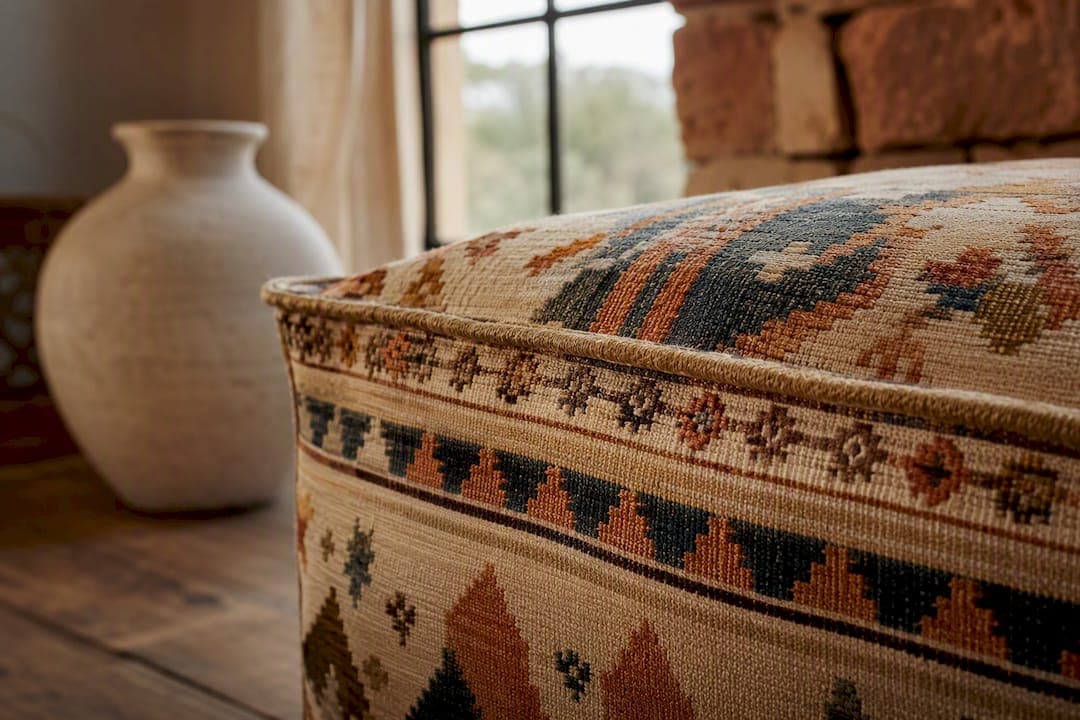
Yes, an ottoman can double as a coffee table if it meets three conditions: correct height, a stable surface such as a tray or firm panel, and a shape that fits your seating layout. Get those right, and it functions as beautifully as it looks. The sections below walk through each condition.
TL;DR:
- An ottoman used as a coffee table must be proportionally matched in height, ideally within 5 cm of the sofa seat height, for functional ease.
- Using a tray at least 35 cm across is essential to stabilize soft-topped ottomans for daily drink placements and reduce wobbling.
- Durable performance fabrics like textured weaves or leather are crucial for longevity in households with kids or pets, with reinforced frames ensuring stability.
- Rectangular or square ottomans around 90 by 60 cm fit larger sofas, while round or oval shapes between 65 and 85 cm suit smaller sofa configurations.
- Investing in handcrafted ottomans with reinforced frames and artisan textiles from a reputable maker ensures long-term support and aesthetic durability.
Table of Contents
- Otomán Como Mesa De Centro: Which Shapes and Sizes Work Best
- Getting the Height and Clearance Right
- How Do You Make an Upholstered Top Stable Enough for Drinks?
- Choosing Upholstery That Survives Real Life
- Should You Get a Storage Ottoman?
- Styling an Ottoman Coffee Table Like a Designer
- When Does an Ottoman Beat a Traditional Coffee Table?
- Why Handcrafted Construction Solves the Ottoman's Biggest Weak Points
- What the Rules Get Right, and Where They Fall Short
- Ready to Bring This Home?
- Sources
Otomán Como Mesa De Centro: Which Shapes and Sizes Work Best
Choosing an ottoman como mesa de centro starts with matching its footprint to your sofa, not just picking whatever looks good in a showroom photo. A round or oval ottoman between 65 and 85 cm in diameter suits most two to three-seat sofas, leaving enough surface for a tray without crowding the room. Rectangular or square shapes tend to work better for straight three-seaters, with a footprint around 90 by 60 cm offering enough length to feel proportional rather than stranded.
- Round or oval: 65–85 cm diameter for a 2–3 seat sofa.
- Rectangular or square: roughly 90 x 60 cm for a standard three-seater.
- General rule: the ottoman should span about two-thirds of your sofa's width.
- Wide sectionals: consider a pair of ottomans instead of one oversized piece.
Two paired ottomans also give you flexibility. Push them together for a full surface during a movie night, then separate one to use as extra seating when guests arrive.
Getting the Height and Clearance Right
Proportion is where most ottoman-as-table setups quietly fail. If the top sits noticeably above or below your knees when seated, it stops feeling like furniture and starts feeling like an obstacle.
- Measure your sofa seat height, typically 40 to 45 cm from the floor.
- Choose an ottoman within about 5 cm of that height, taller or shorter.
- Leave roughly 45 cm of clearance between the sofa front and the ottoman's edge for comfortable foot traffic.
- Sit down and reach toward the surface to confirm the height feels natural before you commit to a purchase.
That last step matters more than any tape measure. A quick seated test catches problems that numbers on a spec sheet never will.
How Do You Make an Upholstered Top Stable Enough for Drinks?
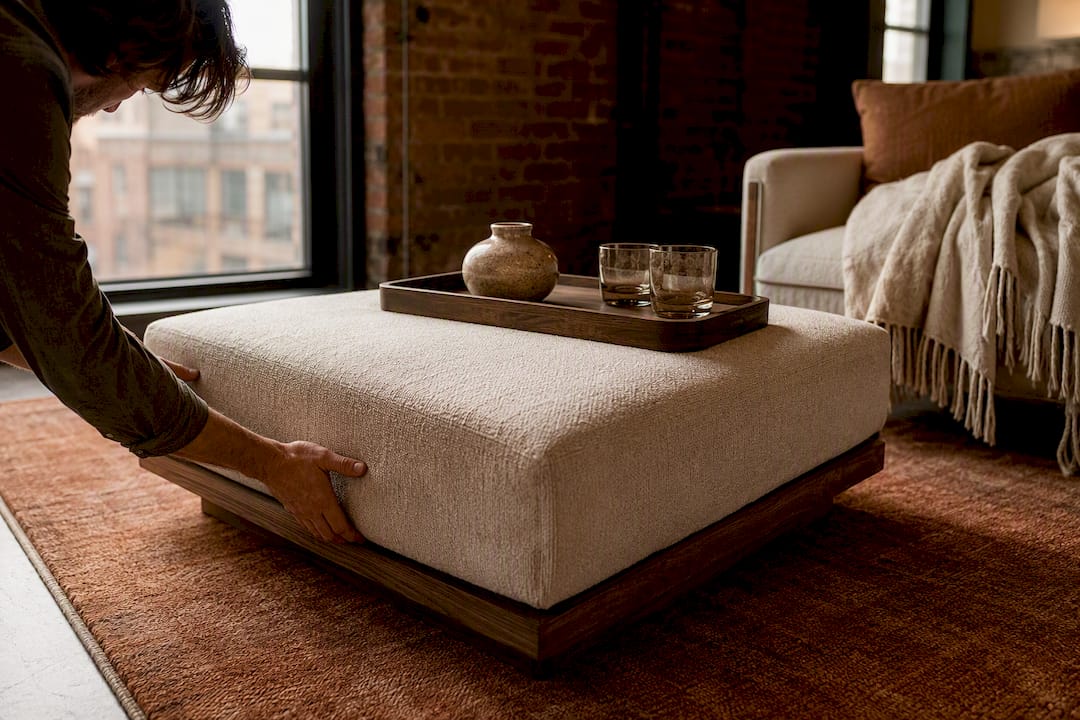
A soft ottoman top will never hold a mug the way a wood surface does, so a tray is not optional, it is the fix. Aim for a tray large enough to create a stable surface to create a flat, reliable landing zone for drinks, candles, or a stack of books.
Statistic Callout: A tray measuring at least 35 cm across is the benchmark designers use to turn a soft ottoman top into a workable surface for everyday use.
- Timber or lacquered wood trays add structure and a furniture-grade look.
- Rattan or woven trays soften the visual weight while still giving you a firm base.
- Cover about two-thirds of the ottoman's surface with the tray, leaving upholstered edges visible for texture.
- Tempered glass panels or removable firm inserts work well if you want a permanent hard surface, though they need regular wiping to stay smudge-free.
Choosing Upholstery That Survives Real Life
The fabric on your ottoman determines how long it looks good under daily use, not just how it photographs on day one. Performance fabrics and durable, textured weaves hold up best in households with kids or pets, since patterned surfaces disguise minor wear far better than plain, pale linen. Velvet and linen suit quieter, low-traffic living rooms where the ottoman is more showpiece than workhorse, while leather brings durability with an entirely different visual weight.
- Performance fabric: best for families, pets, and heavy daily use.
- Velvet or linen: ideal for formal or low-traffic rooms.
- Leather: durable and easy to wipe, with a firmer, more structured feel.
Construction matters as much as the textile itself. Look for reinforced frames and a firm internal panel beneath the cushioning, since a wobbly base undermines even the best fabric choice.
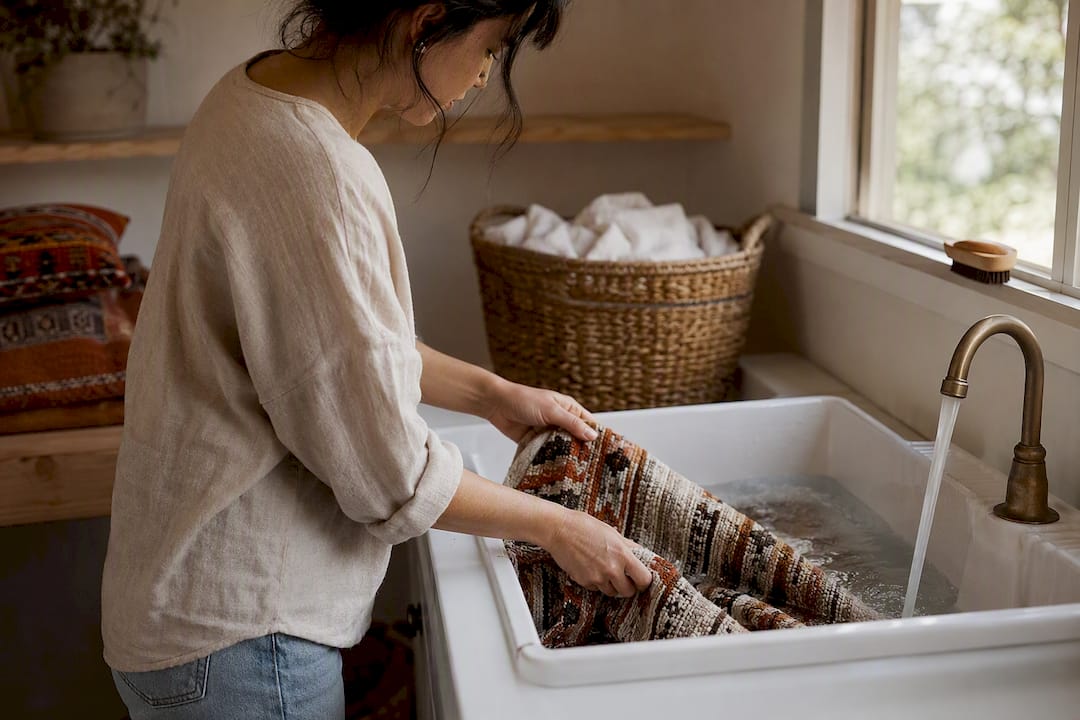
Pro Tip: Ask about removable, washable covers before you buy. They let you refresh the look seasonally without replacing the whole piece.
Should You Get a Storage Ottoman?
Storage ottomans solve a real problem for smaller living rooms: they give you a place for blankets, remotes, or board games without adding another piece of furniture to the floor plan. Some storage models support weights suitable for regular table use, depending on frame construction., which makes them sturdy enough for regular table use.
- Lift-top lids: sturdy and simple, though the hinge mechanism can shift under a tray if the frame is weak.
- Removable lids: flexible for access, but can feel less stable than a fixed hinge.
- Drawer-style storage: convenient for small items, generally the least disruptive to surface stability.
If you plan to use the ottoman as a table often, prioritize models with internal supports rather than storage boxes with thin, flexible walls.
Styling an Ottoman Coffee Table Like a Designer
Good styling on an ottoman coffee table follows a formula that holds up whether you have a round piece or a long rectangular one. Anchor the tray, then build a small, deliberate arrangement instead of scattering objects across the surface.
- Start with your tray, then add a short stack of two or three books.
- Place one accent object, a small vase, candle, or ceramic piece, beside the stack.
- Group items in odd numbers and vary their heights so the eye moves naturally across the surface.
- Include at least one natural material, wood, stone, or woven fiber, to keep the vignette from feeling flat.
- Reserve one open corner of the tray specifically for a drink, so guests never have to shuffle décor to set down a glass.
Round ottomans handle a centered, symmetrical grouping well, while rectangular ones look better with an asymmetrical cluster toward one end and negative space at the other. If your household drinks coffee or wine near the sofa daily, pair the ottoman with a small side table for regular use and keep the ottoman surface for styling.
When Does an Ottoman Beat a Traditional Coffee Table?
An ottoman earns its place in a family room because it softens the space and removes the hard corners that traditional tables introduce. It also doubles as extra seating when you have more guests than chairs, and a freestanding piece won't mark your floors, a real advantage for renters who move often.
- Pros: softer for kids and pets, doubles as seating, often includes storage, adds warmth and texture, easy to reposition.
- Cons: requires a tray for real stability, upholstery needs more care around spills, and lightweight frames can tip if you lean on one edge.
Before buying, run through a short checklist: Do you have young children or pets? How large is the room? How tolerant are you of occasional spot cleaning? Does your sofa configuration call for one ottoman or a pair?
Why Handcrafted Construction Solves the Ottoman's Biggest Weak Points
Every rule in this guide points back to the same thing: an ottoman only works as a table when its frame, filling, and fabric are built for the job. That's the standard behind Createdecorus, where each ottoman is handcrafted in Mexico with reinforced frames, premium filling, and artisan textiles chosen for durability as much as beauty.
Those construction choices directly answer the stability and upholstery concerns raised earlier. A firm internal frame keeps a tray level, and durable, richly textured fabric hides everyday wear better than a plain, delicate weave. For readers weighing which luxury ottoman fits their space, Ernesto's product picks on the Createdecorus blog go deeper into specific styles and finishes.
What the Rules Get Right, and Where They Fall Short
Most advice on using an ottoman as a coffee table treats height and tray size as the whole story. The research backs that up as a baseline, but it undersells how much fabric choice affects long-term satisfaction. A perfectly proportioned ottoman with the wrong upholstery will look tired within a year in a household with kids or pets, while a slightly imperfect height rarely bothers anyone once a tray is in place.
The conventional wisdom also skips over a detail worth prioritizing first: run the seated reach test before you buy, not after. Measurements on paper miss how a piece actually feels once you are sitting on your own sofa reaching for a mug. I'd also push back gently on the idea that any tray solves stability. A thin, lightweight tray on a soft, unsupported ottoman still wobbles, the frame underneath has to do real work.
What matters most, in order: a frame sturdy enough to support a tray without flex, fabric suited to how your household actually lives, then proportion. Get the construction right first, and the styling takes care of itself.
— Ernesto
Ready to Bring This Home?
Createdecorus solves the exact problem this guide walks through: a soft-topped ottoman that still holds up as a real coffee table. Every piece is handcrafted in Mexico with reinforced frames built to keep a tray level, plus premium filling and artisan textiles chosen for both texture and daily durability, not just first impressions.
Whether you want a round ottoman sized for a two-seat sofa or a rectangular piece anchoring a larger sectional, custom orders let you match the height, shape, and fabric to your own room measurements instead of settling for a generic fit. Browse the current collection and start a custom order to get an ottoman coffee table built around the proportions and household needs covered in this guide.
Sources
- Nate Berkus' kid-friendly coffee-table alternative (HouseDigest)
- 10 storage ottomans that prove multi-functional furniture is the ultimate small-space hack (Ideal House)
- Ottoman coffee tables: how to choose and style one (DIY Decorator)
- How to use an upholstered ottoman as a coffee table (Veranda)