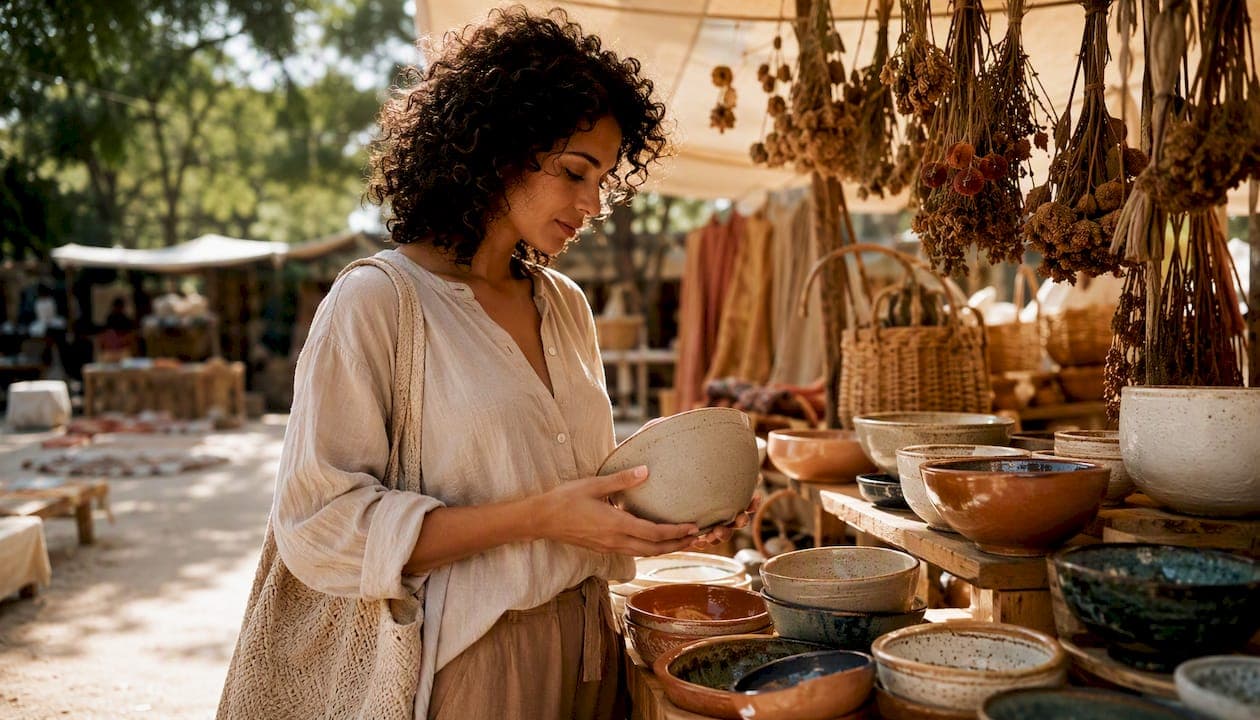
The most thoughtful sustainable artisan decor gift does three things at once: it replaces a high-waste habit the recipient already has, it comes from a maker whose name, location, and pay are publicly stated, and it is built from materials that will outlast a dozen disposable alternatives. When gifting sustainable artisan decor thoughtfully, those three criteria are the filter that separates a genuinely meaningful present from a well-intentioned one that still ends up in a landfill.
Here is a quick, buy-ready shortlist of artisan decor gift types that meet that standard:
- Handcrafted decorative pillow — replaces fast-fashion throw pillows; look for natural fiber covers and transparent maker origin (Createdecorus pillows, handcrafted in Mexico, are a strong example of this)
- Hand-thrown ceramic bowl or mug — displaces disposable cups and mass-produced tableware; check for OEKO-TEX or food-safe glaze notes
- Woven throw or wall hanging — replaces synthetic blankets; ask about fiber source (GOTS organic cotton or undyed wool)
- Reclaimed wood tray or serving board — upcycled material with zero new-tree impact; confirm the wood source on the product page
- Beeswax wraps or reusable kitchen textiles — direct swap for plastic wrap and paper towels; Going Zero Waste's sustainable gift guide names these as high-impact habit displacers.
- Handblown recycled glassware — beautiful, durable, and made from post-consumer glass
Before you buy, ask the seller two questions: Where was this made, and by whom? And does the product page include material sourcing details or a third-party certification such as B Corp or Fair Trade? If neither question gets a clear answer, keep looking.
Table of Contents
- What artisan decor gifts fit every budget?
- Which artisan gift suits your recipient's personality?
- How do you verify that an artisan decor item is truly ethical?
- What materials last longest, and how do you care for them?
- Why does the best sustainable gift replace a high-waste habit?
- Createdecorus: handcrafted gifts with real maker provenance
- How do you wrap a sustainable gift without undoing its values?
- Key Takeaways
- Why artisan gifting deserves more credit than it gets
- Createdecorus handcrafted pillows: a gift worth giving
- Useful sources and further reading
What artisan decor gifts fit every budget?
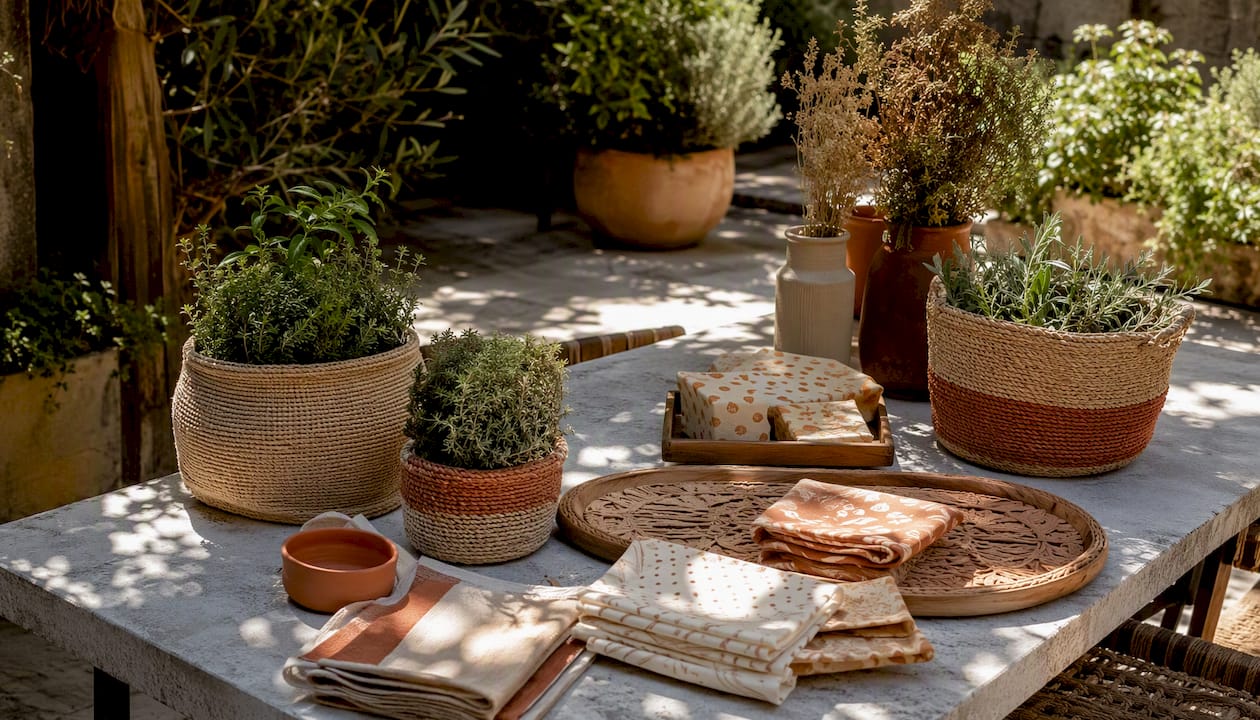
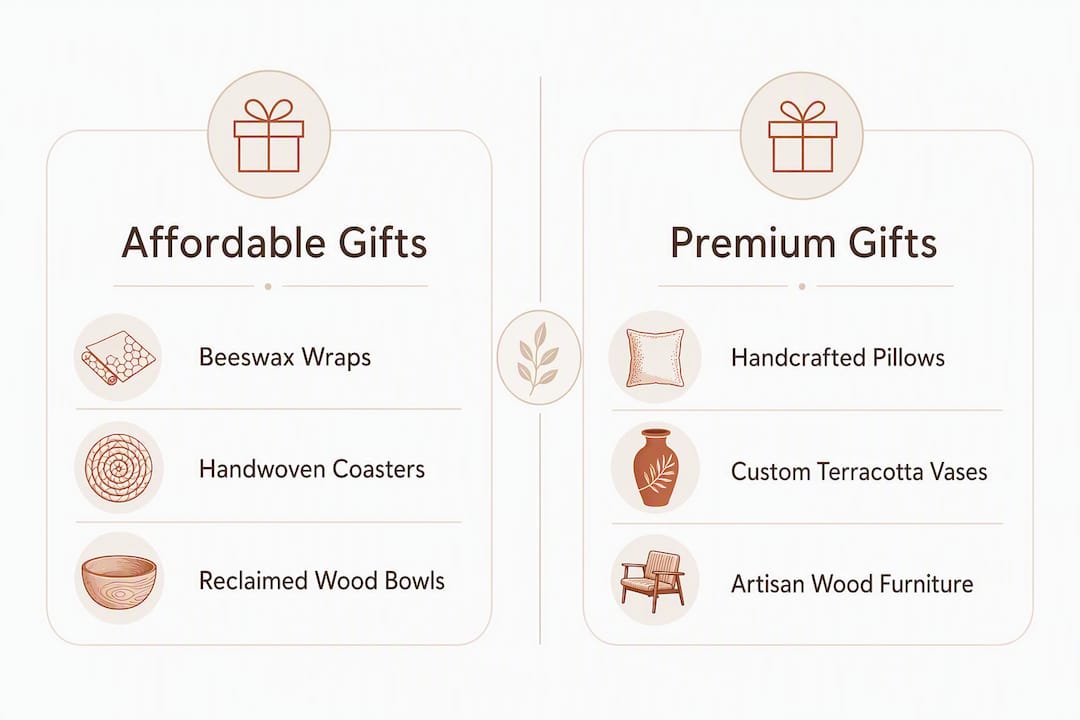
Price should not be a barrier to gifting with intention. Artisan-made items exist at every band, and the key is matching the material and scale of the piece to what you can spend without defaulting to something mass-produced.
| Price Band | Artisan Gift Types | Why It's Thoughtful | Pairing Idea |
|---|---|---|---|
| — | Beeswax wraps set, hand-dipped taper candles, small ceramic dish | Displaces single-use plastics or paraffin candles | Wrap in reusable fabric; add a handwritten care note |
| — | Hand-thrown mug, woven kitchen towel set, small wall hanging | Replaces disposable or synthetic alternatives; daily use reinforces the habit | Pair with a loose-leaf tea sampler or a small plant cutting |
| — | Bundled reusable kitchen sets (B Corp-certified, handmade) | Combines multiple habit displacers in one gift; certified supply chain | Add a maker story card explaining the swap |
| Under $100 | Handcrafted decorative pillow, reclaimed wood tray, artisan ceramic vase | Anchor piece for a room; longevity measured in years, not months | Pair with a matching textile or a small care kit |
| Splurge ($100+) | Handcrafted ottoman, large woven wall hanging, artisan-made rug | Heirloom-quality; replaces furniture bought cheaply and discarded quickly | Include provenance documentation and care instructions |
Sustainable housewarming gift guides consistently rank durable, handcrafted items above novelty eco-products because longevity is the single most reliable sustainability metric for a physical gift.
Pro Tip: Splurge on a single anchor piece rather than a bundle of small items when the recipient is moving into a new home. One handcrafted pillow or reclaimed wood tray used every day for a decade outperforms ten small gifts that get forgotten in a drawer.
Which artisan gift suits your recipient's personality?
A gift lands when it fits how someone actually lives. These six personas cover most of the people on your list, and each one maps to artisan decor types that will be used, not stored.
-
The Host — This person's home is their stage. They care about how a table looks and how a room feels when guests arrive. Give them a handcrafted serving tray in reclaimed wood, a set of hand-thrown ceramic appetizer plates, or a woven table runner. These pieces become part of every gathering they host.
-
The Minimalist — They own fewer things on purpose, so each object has to earn its place. A single, beautifully made ceramic vessel or a neutral-toned woven wall hanging respects that philosophy. Avoid bundles; one considered piece says more than three.
-
The Cozy / Hygge Devotee — Warmth, texture, and candlelight define their ideal evening. A plush handcrafted pillow in a rich, earthy tone, a hand-dipped beeswax taper set, or a chunky woven throw speaks directly to what they are already building at home.
-
The Plant Lover — They want their space to feel alive. A hand-thrown ceramic planter, a reclaimed wood plant stand, or a small sculptural vessel for propagating cuttings fits naturally into their world. Pair with a seed packet or a small cutting from a local nursery.
-
The Newly Moved — They are building a home from scratch and every piece matters. A sustainable housewarming gift that doubles as a functional anchor, such as a handcrafted pillow or a reclaimed wood tray, gives them something beautiful and useful from day one. Add a maker story card so the piece has meaning from the moment it arrives.
-
The Candle Lover — They already burn candles constantly, which means they are also burning through paraffin and single-use glass. A hand-poured soy or beeswax candle in a reusable ceramic vessel, or a set of hand-dipped tapers, replaces the habit with something cleaner and more beautiful. For kitchen-focused recipients who love curated, artisan-quality goods, artisan kitchen gifts can round out a thoughtful set.
How do you verify that an artisan decor item is truly ethical?
The word "sustainable" appears on a lot of product pages that do not deserve it. Greenwashing is common in the home decor space, and the only protection is a short, repeatable verification checklist you run before you buy.
What to look for:
- Maker provenance: The product page names the country, region, or artisan collective where the item was made. Vague phrases like "globally sourced" or "inspired by traditional craft" are not provenance.
- Material transparency: Specific fiber names (GOTS organic cotton, undyed merino wool), wood sourcing notes (reclaimed, FSC-certified), or glass composition (post-consumer recycled content) signal real transparency.
- Artisan pay statement: The brand states that makers are paid fairly, ideally with a specific policy or third-party certification. B Corp and Fair Trade certifications are the two most recognized standards for verified artisan pay and supply-chain ethics.
- Artisan bios or photos: Handmade marketplaces that include maker narratives and origin photos signal authenticity in a way that stock photography never can.
- Return and warranty policy: A brand that stands behind handcrafted quality will offer a clear return window and explain what "handmade variation" means so you are not surprised by natural irregularities.
- Low-waste shipping: Origin of shipment, recycled packaging materials, and carbon-offset notes are secondary signals that the brand's sustainability commitment extends beyond the product itself.
Red flags to avoid:
- "Eco-friendly" or "sustainable" with no supporting detail
- No country of origin listed
- Artisan photos that look like stock images
- Certifications listed without a link to the certifying body
- Prices so low they cannot support fair artisan wages
4Ocean's eco-conscious gifting guidance frames origin, material, and low-waste shipping as the three non-negotiable elements of a genuinely eco-conscious present. If a brand cannot answer all three, the "sustainable" label is marketing, not a commitment.
Pro Tip: Contact the seller directly before a large purchase. Ask: "Can you tell me who made this piece and where?" A brand with real artisan relationships will answer with a name, a region, and a story. A brand without them will give you a form response.
What materials last longest, and how do you care for them?
Durability is the most underrated sustainability metric for a gift. A piece that lasts ten years has a fraction of the lifetime environmental impact of one replaced every two. Choosing the right material and caring for it properly is how a thoughtful gift stays thoughtful for years.
| Material | Sustainability Advantage | Typical Lifespan | Basic Care |
|---|---|---|---|
| GOTS organic cotton (textiles) | No synthetic pesticides; biodegradable at end of life | durable with proper washing | Cold wash, line dry, avoid bleach |
| Handthrown ceramic | Inert material; no off-gassing; often locally sourced clay | Decades if not dropped | Hand wash; avoid thermal shock |
| Reclaimed wood | Zero new-tree impact; embodied carbon already accounted for | long-lasting | Occasional food-safe oil; keep dry |
| Recycled glass | Post-consumer content; lower energy than virgin glass | Indefinite if not broken | Dishwasher-safe (check maker notes) |
| Undyed or natural-dye wool | Renewable fiber; biodegradable; naturally soil-resistant | long-lasting | Dry clean or hand wash cold; air flat |
A few care habits make a real difference across all of these materials:
- Store woven textiles folded, not hung, to prevent fiber stress at fold lines
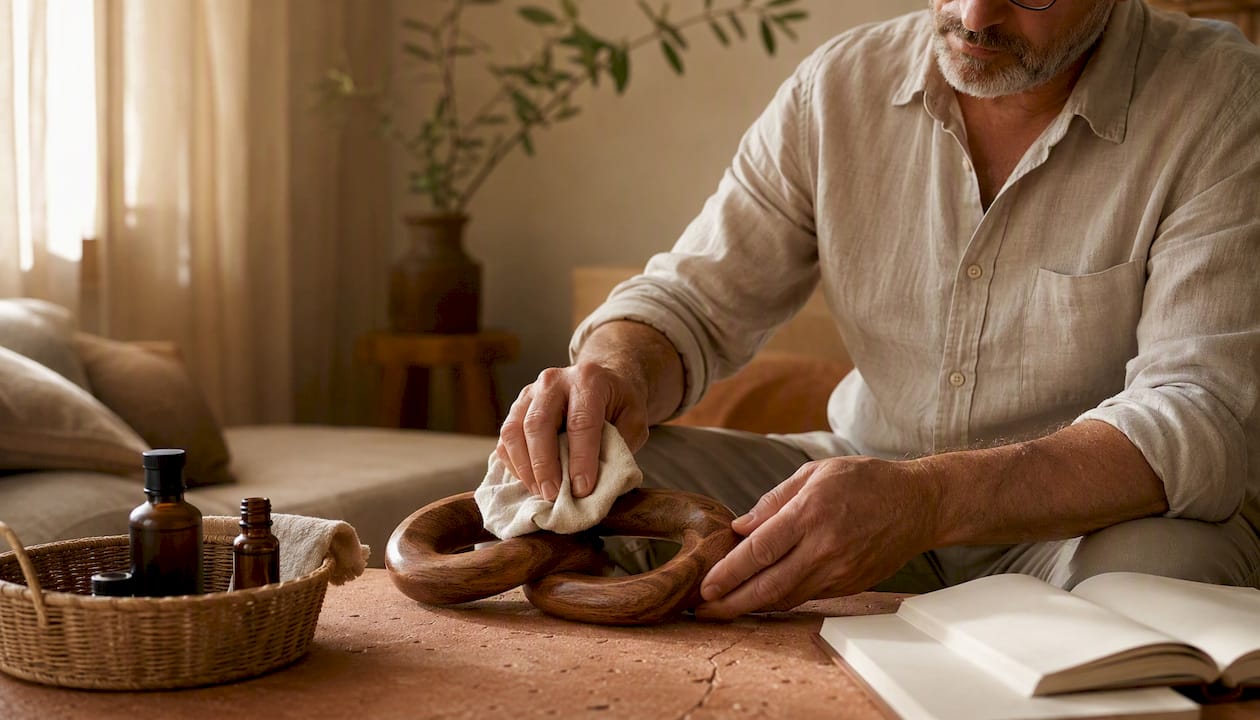
- Condition reclaimed wood trays with food-safe mineral oil or beeswax twice a year
- Keep ceramics away from sudden temperature changes, which cause micro-fractures over time
- Air wool pieces seasonally and store with cedar blocks rather than mothballs
Sustainable home decor guides consistently point to longevity as the primary measure of a material's true environmental value. A handcrafted piece that outlasts three generations of fast-furniture purchases is, by definition, the lower-impact choice.
Why does the best sustainable gift replace a high-waste habit?
The environmental math on gifting changes completely when a gift displaces something the recipient was already consuming and discarding. A beautiful object that sits on a shelf has modest impact. One that replaces a daily disposable habit compounds its value every single day it is used.
Going Zero Waste frames reusable, artisan-made items as opportunities to pass on eco-friendly habits, not just objects. The logic is straightforward: a gift that substitutes a high-waste routine creates environmental benefit that grows over time, while a gift that adds to a collection creates none.
Concrete examples of high-impact swaps:
- Beeswax wraps replace plastic wrap used multiple times a week; a quality set lasts a year or more
- Handcrafted linen or cotton towel sets replace single-use paper towels; Swedish dishcloths, for example, can replace up to 1,500 paper towels per cloth
- A sturdy ceramic mug replaces disposable coffee cups for a daily coffee drinker; at five cups a week, that is 260 disposable cups per year avoided
- A woven produce bag set replaces single-use plastic bags on every grocery run
- A handcrafted decorative pillow replaces a fast-fashion throw pillow that would have been discarded within a season
The presentation note matters here. When you give a swap gift, explain the swap in the card. "This beeswax wrap replaces plastic wrap in your kitchen" is a sentence that turns a beautiful object into a habit change. Without that context, the recipient may not make the connection.
Createdecorus: handcrafted gifts with real maker provenance
When gifting sustainable artisan decor thoughtfully, the trust signals that matter most are the ones a brand can prove, not just claim. Createdecorus meets that standard in a way that is worth understanding before you buy.
Every piece in the Createdecorus collection is handcrafted in Mexico by artisans who carry traditional textile techniques passed down through generations. The brand's decorative pillows, ottomans, and home accents are not manufactured to a template; they are made by hand, which means each one carries the subtle variation that distinguishes genuine craft from factory production. That variation is a feature, not a flaw. In craft traditions worldwide, it is known as artisan character, a quality that signals human hands and intentional work rather than mechanical uniformity.
Trust signals Createdecorus delivers:
- Maker origin: Handcrafted in Mexico, with cultural textile traditions embedded in every piece
- Material transparency: Artisan-inspired textiles, premium memory foam and polyester fill, with care instructions published on product pages
- Artisan heritage: Each piece reflects a dialogue between traditional Mexican craft and contemporary design sensibility
- Sustainable production: Vacuum-compressed shipping reduces packaging volume and freight emissions
- Wholesale and trade access: Boutiques and interior designers can apply for wholesale accounts, making it practical to gift at scale
The Createdecorus blog on why handmade decor supports local ecosystems explains the economic ripple effect of each purchase: when you buy a handcrafted piece from a maker with a named origin, you are supporting a local economy, not a supply chain optimized for margin.
For gifting, a Createdecorus handcrafted pillow in a rich terracotta or warm beige tone pairs naturally with a reclaimed wood tray and a maker story card. It fits the under-$100 band for a single pillow and the splurge band for a curated set. The artisan character of each piece means no two gifts are identical, which is precisely what makes them personal.
Pro Tip: When gifting a handcrafted piece, include a note that explains artisan variability. "The slight texture variation in your pillow is a sign it was made by hand, not a machine." That one sentence transforms a potential question into a point of pride for the recipient.
How do you wrap a sustainable gift without undoing its values?
The packaging around a sustainable gift carries its own environmental weight. Plastic bubble wrap, synthetic ribbon, and single-use tissue paper contradict the values of the object inside. Sustainable presentation is not complicated, but it does require a few intentional choices.
Wrapping options that hold the eco promise:
- Furoshiki fabric wrap: A Japanese reusable cloth-wrapping technique that becomes part of the gift itself; use a piece of organic cotton or linen fabric the recipient can keep
- Recycled kraft paper: Widely available, compostable, and pairs well with natural twine or a dried botanical sprig
- Upcycled boxes or tins: A vintage tin or a repurposed wooden crate adds character and gives the container a second life
- Compostable paper fillers: Shredded recycled paper or tissue made from FSC-certified stock instead of plastic peanuts or bubble wrap
How to write a maker story card (three-line template):
- Who made it: "This pillow was handcrafted by artisans in Mexico using traditional textile techniques."
- Where and why it matters: "Each piece supports a local artisan community and carries the cultural heritage of Mexican craft."
- How to care for it: "Spot clean with a damp cloth; the natural fiber cover can be removed and hand-washed cold."
Three lines. That is all it takes to turn a beautiful object into a story the recipient will remember and repeat when someone asks about the piece.
Pairing suggestions to complete the gift:
- A small linen care kit (natural fiber brush, cedar block, care card) for textile gifts
- A matching woven coaster set or small ceramic dish to complement a pillow or tray
- A tree-planting donation card from a verified reforestation program, tied to the gift's theme
Key Takeaways
The most impactful sustainable artisan decor gift replaces a high-waste habit, comes from a maker with named provenance, and is presented in packaging that holds the same eco values as the object inside.
| Point | Details |
|---|---|
| Replace a habit, not just add an object | Gifts that displace daily disposables create compounding environmental benefit over time. |
| Verify provenance before you buy | Ask for the maker's name, origin country, and material sourcing; accept no vague "sustainable" claims. |
| Choose durable materials | GOTS cotton, reclaimed wood, recycled glass, and hand-thrown ceramic all outlast synthetic alternatives by years. |
| Present sustainably | Furoshiki fabric wrap, recycled kraft paper, and a three-line maker story card complete the gift's values. |
| Createdecorus for handcrafted gifts | Handcrafted in Mexico with transparent artisan heritage, Createdecorus pillows and accents meet every trust signal in this guide. |
Why artisan gifting deserves more credit than it gets
There is a tendency in sustainable gifting conversations to focus almost entirely on what a product is made of, as if material choice alone settles the question of whether a gift is ethical. It does not. A pillow made from organic cotton by underpaid workers in an unnamed factory is not a sustainable gift. A ceramic mug with a vague "handmade" label and no maker bio is not a thoughtful one.
What actually matters is the combination: transparent provenance, fair artisan pay, durable materials, and a presentation that reinforces the values rather than undermining them with plastic wrap and synthetic ribbon. These are not idealistic standards. They are practical checkboxes any buyer can run through in five minutes before purchasing.
The artisan gifting space is also one of the few places where buying something beautiful and buying something ethical are genuinely the same act. A handcrafted pillow from Createdecorus, made by skilled artisans in Mexico using traditional textile techniques, is not a compromise between aesthetics and ethics. It is both, fully. That alignment is rarer than it should be, and it is worth seeking out deliberately.
Createdecorus handcrafted pillows: a gift worth giving
If you have read this far, you already know what to look for. Createdecorus delivers it. Each handcrafted pillow and home accent is made in Mexico by artisans whose craft carries generations of textile tradition, shipped with care instructions and material notes, and available for both individual purchase and wholesale accounts for designers and boutiques buying at scale.
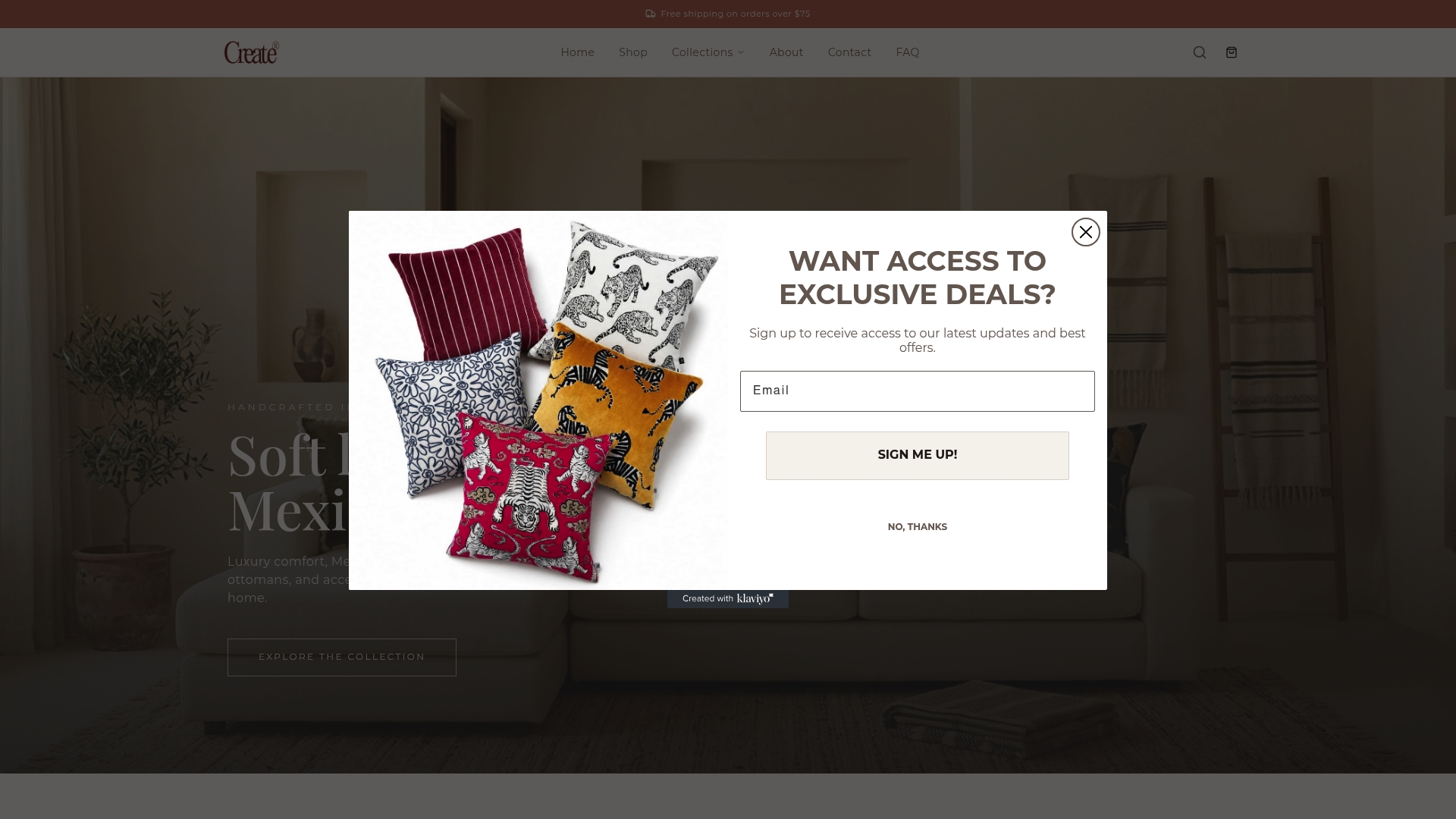
The rich terracotta, warm beige, and earthy brown tones in the Createdecorus collection fit naturally into the gift types this guide recommends: an anchor piece for a new home, a cozy addition for a hygge devotee, or a considered single object for a minimalist who owns things on purpose. The vacuum-compressed shipping reduces packaging waste, and the artisan character of each piece means every gift is genuinely one of a kind.
Browse the full collection of handcrafted luxury pillows and find the piece that fits your recipient. For trade clients purchasing multiple gifts, the wholesale program offers trade pricing and bulk options. Every order supports the artisan communities in Mexico whose skill and heritage make these pieces worth giving.
Useful sources and further reading
These references support the claims in this guide and offer deeper reading for buyers who want to verify sustainability credentials or discover more artisan gift options.
For verification and certification:
- Going Zero Waste: Sustainable Gift Guide — Practical framework for habit-displacing gifts and reusable item swaps
- 4Ocean: Eco-Conscious Gifting — Origin, material, and low-waste shipping as core trust signals
For artisan gift discovery:
- Handmade.com — Global marketplace with maker bios, origin details, and artisan provenance for handmade goods
Createdecorus education and product resources:
- Why Handmade Decor Supports Local Ecosystems — Economic and environmental impact of buying handmade
- What Is Sustainable Home Decor? A Practical Guide — Material sourcing and sustainability criteria explained
- What Is Artisan Home Decor? A Homeowner's Guide — Definitions, craft techniques, and buyer education for handmade pieces
- Mexican Artisan Crafts for Home Decor: Top Picks — Curated examples of Mexican artisan-made decor aligned with Createdecorus aesthetics