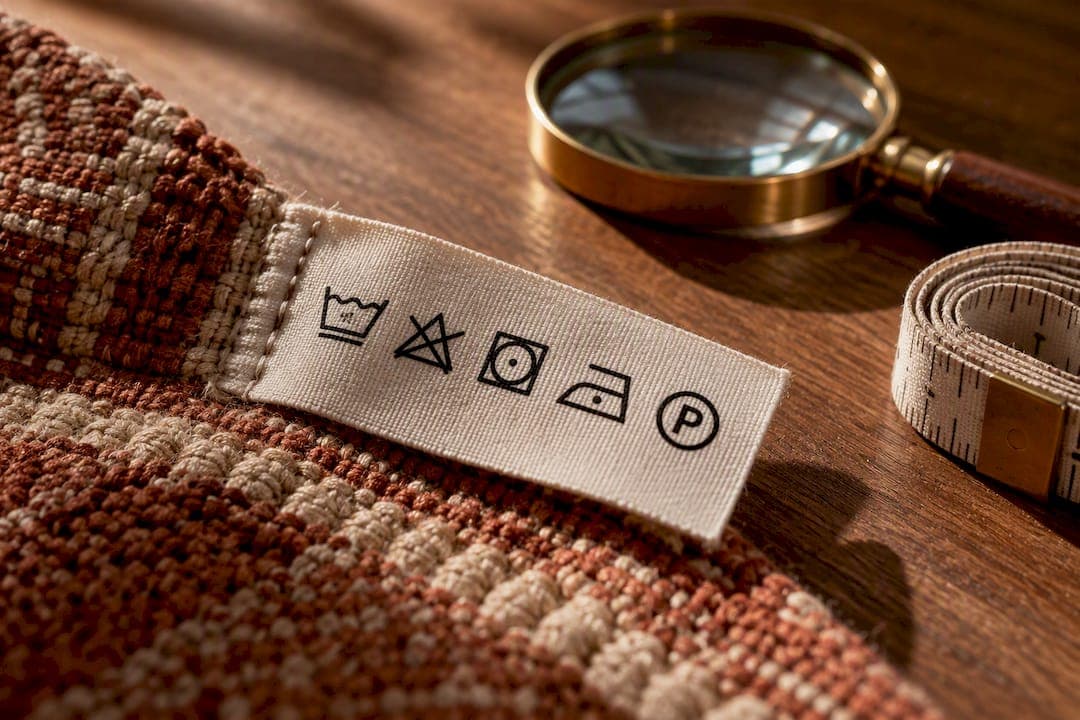
Textile care norms are the standardized symbols and rules manufacturers stitch into garment and home decor labels to show the maximum treatment a fabric can safely handle. When you see one, the rule is simple: never exceed what the symbol allows, but choose a gentler option when you have one: a cooler wash, a lower iron setting, a softer detergent, because that maximum is a ceiling, not a target.
TL;DR:
- Always follow care symbols' maximum treatment limits to prevent irreversible fabric damage and extend garment lifespan.
- The symbols indicate the harshest treatment textiles can withstand without harm, not recommended or ideal cleaning procedures.
- Different standards like ISO 3758, ASTM D5489, and NOM-A-240-1982 govern symbol designs depending on your region or manufacturer origin.
- Matching textile type to fiber-specific care guidelines reduces common mistakes such as overheating, improper drying, or ignoring professional care symbols.
- Using gentle settings below the maximum and avoiding unnecessary chemical or mechanical stress can improve sustainability and textile durability.
Table of Contents
- What Do the Five Care Symbol Groups Mean?
- Which Standards Define These Care Symbols?
- How Should You Care for Each Fabric Type?
- How Do You Safely Apply Label Instructions at Home?
- How Should You Store Textiles for Long-Term Care?
- How Does Createdecorus Recommend Caring for Handcrafted Textiles?
- What Mistakes Do People Make Most Often With Textile Care?
- How Can You Care for Textiles More Sustainably?
- What Happens When You Ignore Textile Care Instructions?
- Where Can You Verify These Textile Care Standards?
- An Editorial Take on Reading Care Labels Right
- Sources
What Do the Five Care Symbol Groups Mean?
Every care label you'll ever encounter draws from five families of symbols: washing, bleaching, drying, ironing, and professional care. Each one governs a different stage of a textile's life, and each has its own visual logic once you know what to look for.
The washtub symbol controls machine or hand washing. A number inside means maximum degrees Celsius; dots underneath (one, two, or three) signal low, medium, or high temperature tolerance instead of a printed number. A hand inside the tub means hand wash only, while a crossed-out tub means don't wash at all, only dry-clean.
The triangle handles bleach. An empty triangle allows any bleach; two diagonal lines inside mean non-chlorine bleach only; a crossed-out triangle means skip bleach entirely.
The square governs drying, with a circle inside for tumble drying (dots again indicate heat level) and horizontal lines for flat, line, or drip drying preferences.
The iron symbol uses dots the same way, one dot for low heat (synthetics), two for medium (silk, wool), three for high (cotton, linen), and a crossed-out iron means don't iron, full stop.
The circle represents professional care, with letters like P or F telling dry cleaners which solvents are safe.
According to GINETEX, the organization that originated this pictogram system, every symbol represents the harshest treatment a textile can tolerate without permanent damage, never a recommendation to push it that far.
- Washing (tub): temperature ceiling and cycle intensity
- Bleaching (triangle): what type of bleach, if any
- Drying (square): tumble heat or air-drying method
- Ironing (iron shape): heat ceiling by dot count
- Professional care (circle): solvent compatibility for dry cleaners
Pro Tip: A crossed-out symbol is a hard stop, not a suggestion. If the tub is crossed out, skip the washing machine entirely and go straight to hand washing or professional cleaning.
Which Standards Define These Care Symbols?
The symbols on your labels aren't arbitrary. They come from specific, documented standards, and knowing which one applies to you clarifies why labels sometimes look slightly different depending on where a garment was made or sold.
ISO 3758 is the international reference, most recently updated as ISO 3758:2023 and adopted regionally as EN ISO 3758:2024. It codifies the exact graphics, the tub, triangle, square, iron, and circle, and confirms each symbol marks the most severe treatment a textile can survive without irreversible harm. GINETEX, a European association, created and still holds trademark rights over the original pictogram system that ISO 3758 formalized, which is why you'll sometimes see the GINETEX name alongside ISO language in technical documentation.
In the United States, ASTM D5489 serves a parallel function, offering a uniform symbol system recognized in specific versions by the Federal Trade Commission, built to reduce reliance on written, language-specific instructions.
If you're shopping or manufacturing in Mexico, the governing document is NOM-A-240-1982, the official Mexican standard establishing graphic symbols for textile care and conservation. It mirrors the international logic but carries its own legal weight domestically.
- ISO 3758 / GINETEX: international symbol code and origin
- ASTM D5489: U.S. guide, FTC-recognized in specific versions
- NOM-A-240-1982: Mexico's official textile care standard
How Should You Care for Each Fabric Type?
Knowing the symbols is half the job. Matching them to the fiber in your hands is the other half, and this is where most laundry mistakes actually happen.
- Cotton and linen. Sturdy fibers that tolerate warm water (up to 40°C typically) and high heat ironing. Watch for shrinkage on the first wash and separate dark colors, since both fibers bleed dye readily early on.
- Wool and animal hair. Delicate under agitation and heat. Use cold water, a wool or hand-wash cycle, and lay flat to dry. Never tumble dry; heat and movement together cause felting that can't be reversed.
- Silk. Sensitive to both heat and harsh detergent. Hand wash or use a silk-specific cycle in cold water, iron on low with a press cloth, and consider professional cleaning for structured or embellished pieces.
- Viscose and lyocell. These act like silk when wet, weak and prone to distortion. Cold, gentle cycles only, and reshape while damp rather than wringing.
- Polyester and nylon. Resilient and heat-sensitive in a different way, they melt or glaze under high iron settings. Warm wash, low iron, and quick drying since they resist wrinkling anyway.
- Acetate and triacetate. Fragile when wet and vulnerable to solvent damage from some stain removers. Favor dry cleaning unless the label explicitly permits washing.
- Elastane and blends. Never iron the elastane content itself, low heat only, and always default to whichever fiber in the blend is most delicate. A cotton-elastane blend follows cotton's wash rules but wool-blend care for drying and heat.
Pro Tip: When a label lists a fiber blend, the most delicate fiber always sets the rule, not the majority fiber by weight.
How Do You Safely Apply Label Instructions at Home?
Reading a symbol correctly is one thing. Turning it into a safe wash cycle is another, and a few simple habits prevent most textile damage before it happens.
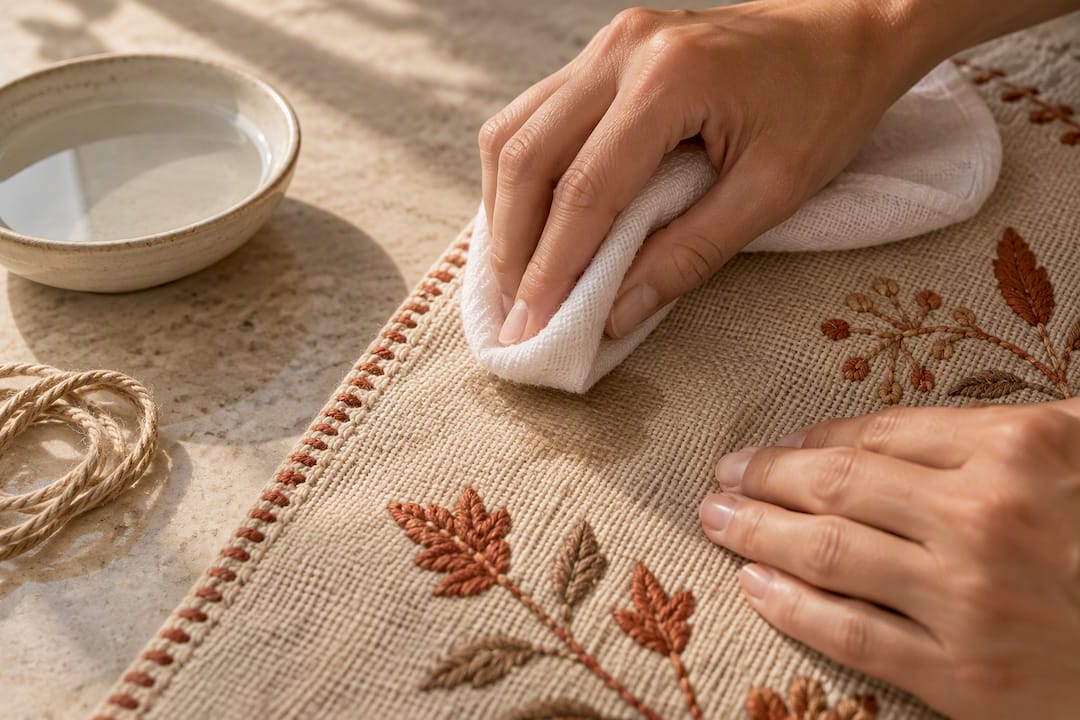
Start with a colorfastness test on any new or dark-colored item: dab a hidden seam with a damp white cloth and a touch of detergent, then check for dye transfer. If color bleeds, wash that item alone for at least the first few cycles.
Pre-treat stains only with methods the label's symbols actually allow. A crossed-out bleach triangle rules out oxygen-based stain removers too, since many contain bleach compounds even when marketed as "color-safe."
- Match detergent strength to fiber: enzyme detergents for cotton and linen, pH-neutral formulas for silk and wool
- Skip bleach whenever the triangle is crossed out, regardless of how tough the stain looks
- Use gentle or hand-wash cycles for anything marked with a single dot or a hand symbol
- Keep spin speed low for delicate fibers to reduce fiber stress and wrinkling
Consumer laundry guides, including brand resources like Tide's guide to reading wash symbols, walk through these steps in more visual detail if you want a side-by-side symbol reference while you sort a load.
How Should You Store Textiles for Long-Term Care?
Clean everything before it goes into storage; stains set permanently over months in the dark, even ones invisible to the eye now. Use breathable cotton bags rather than sealed plastic, which traps moisture and invites mildew.
- Keep stored textiles out of direct sunlight to prevent fading
- Control humidity and add cedar or lavender sachets to deter moths
- Rotate cushions and upholstery textiles periodically to even out wear
- Vacuum upholstery regularly and follow label guidance on removable covers
For seasonal cushion storage specifically, this guide to storing cushions between seasons covers the details worth knowing.
How Does Createdecorus Recommend Caring for Handcrafted Textiles?
Handwoven textures, embroidery, and natural trims deserve a more conservative hand than a factory label technically requires. It is recommended to treat the symbol's maximum as a last resort, not a starting point, favoring spot cleaning and air drying over any aggressive mechanical cycle that stresses hand-finished seams. Our guide on reinforced seams and cushion longevity and Ernesto's writing on the role of textiles in luxury decor go deeper into these choices.
What Mistakes Do People Make Most Often With Textile Care?
The most common error is treating the label's maximum temperature as the recommended one. A tub symbol showing 40°C means the fabric survives 40°C, not that 40°C is ideal; cooler water almost always preserves color and fiber structure better.
Another frequent mistake is ignoring the professional care circle entirely and machine washing anyway because "it looks fine." Structured items, tailored blazers, upholstered cushion covers with interior padding, often hide construction that a home washer can't replicate safely, even if the fabric itself would tolerate it.
People also assume a crossed-out bleach symbol only refers to chlorine bleach, then reach for an oxygen-based stain remover without checking the ingredients. Many of those products still contain bleaching agents that damage the same dyes the symbol was protecting.
There's also a persistent myth around a supposed "3-3-3 rule," some fixed formula for wash time, temperature, or drying cycles that applies universally. No such rule exists in ASTM's guidance or any international standard; fiber composition and finish determine safe treatment, not a memorized shortcut.
Finally, many people skip the colorfastness test on the assumption that "it's just one wash." One wash is exactly when bleeding happens most, before residual dye has had a chance to rinse out over repeated cycles.
How Can You Care for Textiles More Sustainably?
Choosing the gentlest treatment a symbol allows isn't just about fabric longevity, it also cuts water and energy use meaningfully over a textile's lifetime. Washing at 30°C instead of the label's 40°C maximum, for instance, uses noticeably less energy per cycle while still cleaning effectively for most everyday soil.
Air drying instead of defaulting to the tumble dryer saves energy and spares elastic fibers from the heat cycles that break them down fastest. When a square symbol permits either option, line drying is almost always the more sustainable and more fiber-friendly choice.
Washing full loads rather than small ones, using cold water settings paired with enzyme detergents formulated for lower temperatures, and skipping bleach in favor of oxygen-based or vinegar-based alternatives (when the triangle allows non-chlorine options) all reduce the chemical load entering wastewater.
Repair-first thinking matters too. A reinforced seam or a patched corner extends a textile's working life far longer than replacement, which is part of why construction quality on handcrafted pieces pays off over years rather than months.
GINETEX's own guidance reinforces this logic directly: symbols exist to show the ceiling, and choosing below that ceiling is framed as the responsible default, not an inconvenience.
What Happens When You Ignore Textile Care Instructions?
Fabric doesn't fail all at once. It degrades in specific, predictable ways tied directly to which instruction got ignored.
Washing wool on a hot cycle causes felting, an irreversible tightening and matting of fibers that shrinks the item and destroys its drape permanently. Overheating polyester with a hot iron glazes or melts the surface, leaving a shiny, damaged patch that no amount of washing corrects afterward.
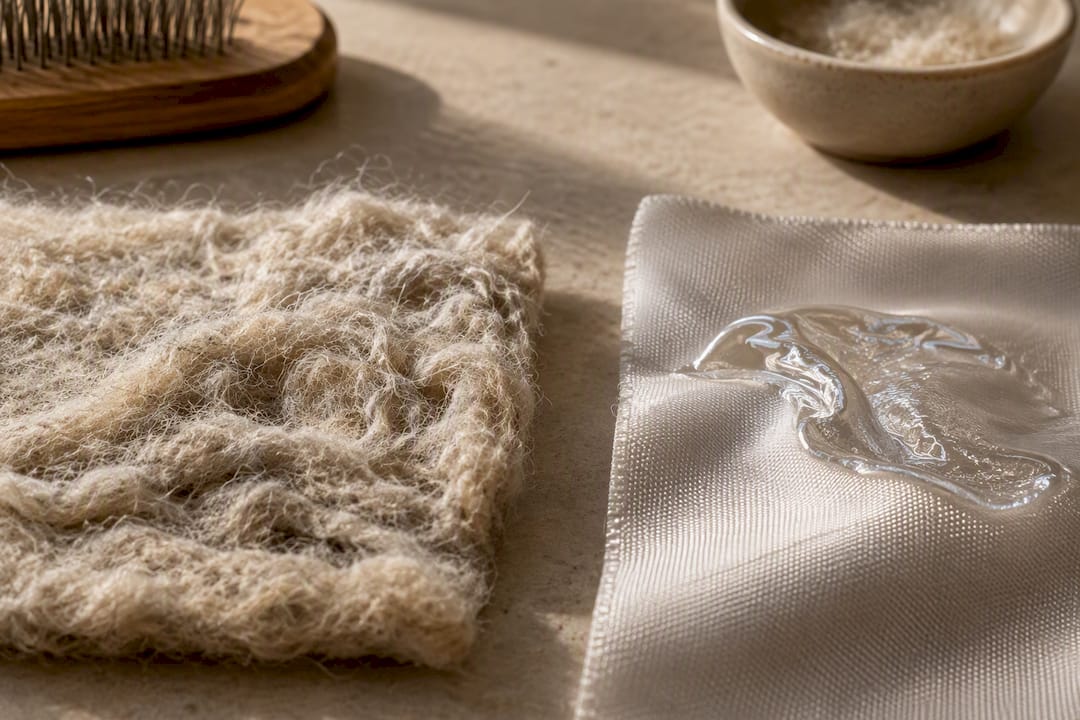
Skipping the colorfastness test leads to dye transfer that ruins not just the offending item but everything washed alongside it. Tumble drying silk or viscose when the label calls for flat drying distorts the weave, leaving garments that no longer hang the way they were cut to hang.
Ignoring professional care symbols on structured or padded items often causes hidden interior damage, clumped filling, warped seams, that only becomes visible weeks later when the piece looks lumpy or uneven despite an apparently successful wash. None of this is dramatic in the moment. It's cumulative, and by the time the damage is obvious, it's rarely reversible.
Where Can You Verify These Textile Care Standards?
For the technical text itself, consult ISO 3758 internationally or NOM-A-240-1982 if you're in Mexico. For plain-language consumer guidance, Productsafety breaks down the same five symbol groups without the legal language.
An Editorial Take on Reading Care Labels Right
Most advice on textile care treats the label as a mystery to decode. It isn't. The symbols are documented, standardized, and freely explained by the organizations that wrote them, ISO 3758 and GINETEX, and the gap isn't information, it's habit. People wash on habit, not on what the tub symbol actually permits.
The conventional wisdom oversells complexity and undersells discipline. You don't need to memorize every dot combination. You need one reflex: read the symbol, then choose gentler than its maximum whenever you reasonably can. That single habit prevents more damage than any amount of symbol trivia.
For handcrafted pieces especially, the ones with hand-finished seams, embroidery, natural trims, I'd go further than most guides do. Treat the label's maximum as an emergency setting, not a default. A textile built by hand rewards a hand that treats it with equal care. If you're shopping for pieces built with that philosophy from the start, Createdecorus's collection is worth a look, and wholesale buyers can find trade terms through our designer and boutique program.
— Ernesto
Sources
- NOM-A-240-1982 Simbolismo para la indicación en el cuidado y conservación de prendas y/o artículos textiles
- Textile care symbols — GINETEX guidance document
- Productsafety