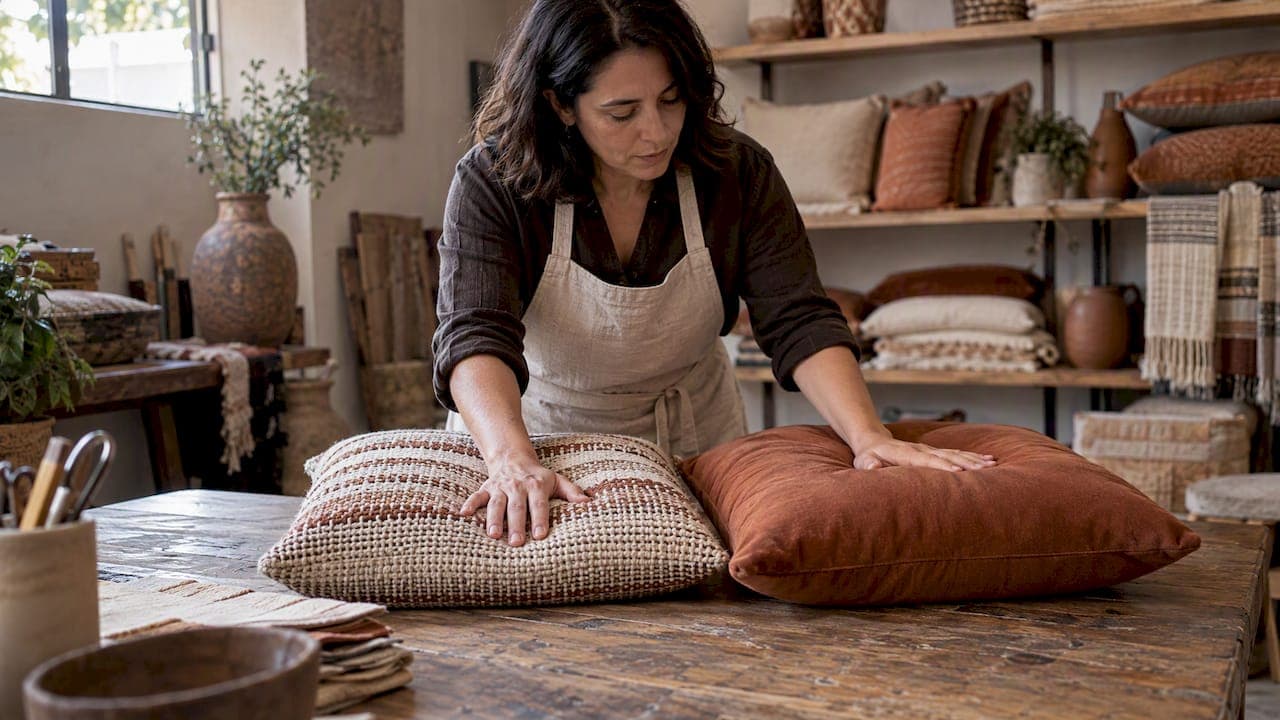
Tactile quality in a cushion comes from two things working together: the cover's surface and the filling's response underneath it. Perceptual research identifies four tactile dimensions that explain nearly everything your hand registers when it meets a cushion: soft or harsh, thin or thick, relief, and hardness. Judge both layers before you buy: stroke and rub the cover, then press and release the fill to see how it recovers.
TL;DR:
- The tactile experience of a cushion depends on both the cover material and the filling's response, which can be evaluated quickly through four basic tests.
- Contact area influences comfort and durability, making it important to choose gentler covers for cushions that touch the body frequently.
- Different fabric types such as linen, velvet, bouclé, and microfiber have distinct textures and wear characteristics suited to various environments and seasons.
- Filling options like memory foam, shredded foam, down, and polyester each produce different support and feel profiles, affecting how a cushion responds to pressure.
- Mixing textures should be done carefully by balancing dominant, complementary, and accent materials to avoid visual and tactile clashes.
Table of Contents
- The Four Tactile Dimensions and How to Test Them
- Cover Materials and What They Feel Like
- How Filling Changes the Way a Cushion Feels
- Mixing Textures Without Creating Visual Chaos
- Choosing Textures by Season and Room
- Caring for Cushions So They Keep Their Feel
- How We Approach Tactile Design at Create Decorus
- Choosing by Touch: A Few Principles Worth Keeping
- Shop Handcrafted Textures with Create Decorus
- FAQ
- Sources
The Four Tactile Dimensions and How to Test Them
Touch is more specific than "soft" or "rough." Researchers who tested 24 materials with 40 volunteers found that the tactile texture space organizes around four perceptual dimensions, and those same categories map cleanly onto cushion fabrics.
Soft/harsh describes how gentle a surface feels against skin, from a brushed cotton to a coarse jute weave. Thin/thick refers to the fabric's body, the difference between a crisp linen and a plush velvet. Relief captures texture that rises off the surface, like embroidery, bouclé loops, or a jacquard pattern you can trace with a fingertip. Hardness is really about what sits beneath the cover: a firm foam insert reads differently under your palm than a loose down fill, even wrapped in the same fabric.
A separate line of research on texture perception found that combining stretch and vibration cues improves how well people distinguish textures, which helps explain why a cushion never feels complete from sight alone. Your hand needs both the give of the surface and the resistance underneath to form a full impression, and single-mode information, like a photo or a fabric swatch alone, falls short.
Four tests, done in under a minute, cover all of this:
- Stroke the face of the cushion to judge surface softness and any raised texture.
- Press the center to 50% of its depth and count how many seconds it takes to spring back.
- Rub a small area in a circle to check for pile shedding or snag risk.
- Lean your forearm against it, the way you would on a sofa, to judge back support and hardness.
Contact area matters more than most shoppers realize. A lumbar cushion that touches your lower back all evening needs a gentler, more breathable cover than a decorative accent pillow that mostly gets glanced at. Save the boldest relief textures, heavy bouclé or raised embroidery, for pieces your hands and back touch less often.
Pro Tip: Do the press-and-release test with your eyes closed. It isolates touch from the visual bias of color and pattern, and it's often how a cushion will actually be judged once it's living on your sofa.
Cover Materials and What They Feel Like
The cover is the first thing anyone touches, and each material carries its own tactile signature. A useful descriptor repertory stays small: research on tactile vocabulary found that people reliably use only around ten descriptors to talk about texture, which is why vague terms like "soft" so often miss the point. A fabric needs to be described by how it behaves when stroked, pressed, and leaned on, not just labeled pleasant or unpleasant.
- Linen feels cool and slightly crisp, with a visible slubbed weave. It softens with washing and suits warm climates or rooms that want a relaxed, natural feel.
- Washed cotton is smooth, lightweight, and breathable, with almost no relief. It works everywhere but shows wear faster on high-traffic sofas.
- Velvet has a dense, warm pile that changes sheen depending on the angle you view it from. It reads luxurious but can crush or shed if brushed against rough surfaces.
- Bouclé brings visible loops and real relief under the fingers, with a warm, textured hand. It resists flattening well but needs occasional de-pilling.
- Jacquard and embroidered covers add raised pattern you can trace by touch, giving dimension without bulk. They tend to be sturdier than printed fabrics because the design is woven or stitched in.
- Faux fur and minky are the plushest options, dense and warm, best as accent pieces rather than everyday seat cushions since pile mats down under repeated pressure.
- Wool and mohair feel substantial and slightly textured, warmer to the touch than cotton, and suit cooler rooms or seasons.
- Microfiber is smooth, synthetic, and consistently soft, with strong resistance to staining, which makes it practical for households with pets or children.
For reference on wear and durability by weave density, our guide to cushion fabrics rated by Martindale count breaks down which materials hold up best under daily use. Choose linen and cotton for airy, year-round rooms, velvet and wool for spaces that want warmth, and bouclé or jacquard where you want a piece to invite touch on purpose.
How Filling Changes the Way a Cushion Feels
The cover sets the surface, but the fill decides what happens when you actually lean on something. Editorial testing comparing viscoelastic memory foam, shredded foam, polyester fiberfill, and down found clear, consistent differences in how each response to pressure, and those differences matter as much as fabric choice.
- Memory foam (viscoelastic) molds slowly to pressure and releases just as slowly, giving a cushion a contouring, supportive feel.
- Shredded foam offers more airflow and a looser, adjustable loft, since the pieces shift rather than compress as one solid block.
- Polyester fiberfill springs back quickly and feels light, though it compresses more over time than foam.
- Down or plumón sinks deeply under pressure and feels the softest initially, but needs regular fluffing to keep its loft.
- Blended fills combine a foam or down core with fiberfill around it, balancing structure with a plush outer feel.
Fill density and construction change how much surface contact you get: a solid foam insert holds its shape under your hand, while a shredded or down-filled chamber distributes and redistributes with each touch, which is part of why the same velvet cover can feel completely different over foam versus down. For a closer look at how these choices affect support, our breakdown of the best cushion filling by pillow type goes through the trade-offs in more detail.
Testing shows vacuum-compressed cushions need time to recover their full loft, typically 24 to 72 hours, with denser fills sometimes taking longer. Fluff and reshape by hand after unboxing rather than judging the feel immediately.

Mixing Textures Without Creating Visual Chaos
A sofa with five different textures competing for attention rarely looks intentional. Designers tend to work from a simple formula: a dominant texture, a complementary one, and a small accent, limiting the total to two or three types and varying scale and sheen so nothing fights for the same visual space.
- Washed linen, velvet, and a small bouclé accent balances a matte, cool base with one plush piece and a touch of relief.
- Smooth cotton, a jacquard pattern, and a faux fur throw keeps most of the sofa calm while one textured pillow and a draped throw carry the tactile interest.
- Wool, microfiber, and an embroidered lumbar pillow mixes warmth and practicality with one piece that rewards a closer look.
Not every cushion needs to compete for touch. Keep the largest or most central pieces smoother and more neutral, and reserve bouclé, embroidery, or fur for smaller accent pillows that act as focal points. Our guide to layering handcrafted pillows in a living room walks through this kind of composition piece by piece, and the 60/30/10 texture palette formula offers a simple ratio for balancing color and material across a seating arrangement.
Pro Tip: Lay your cushions on the floor before placing them on the sofa. It's much easier to judge whether textures clash when you can see them all at once, flat and unobstructed.

Choosing Textures by Season and Room
Texture carries a thermal impression before anyone touches it. Heavier, denser materials like velvet and wool read as warm, while linen and lightweight cotton feel cooler, a perceptual effect worth planning around rather than fighting.
- Cold months and cooler rooms favor velvet, wool, mohair, or bouclé, which feel warmer and visually cozier.
- Warm months and sunlit rooms favor linen, washed cotton, or microfiber, which stay breathable and feel cooler against skin.
- Bedrooms benefit from softer, lower-relief textures since they're in close, prolonged contact with skin.
- High-traffic sofas do better with durable weaves like cotton blends or performance microfiber rather than delicate embroidery.
- Covered outdoor or sunroom spaces call for tightly woven, moisture-resistant fabrics over anything with loose pile or down fill.
Texture can also cause friction, literally. Wool or mohair may irritate sensitive skin, bouclé loops can snag jewelry or pet claws, and heavy relief fabrics sometimes rub thin at contact points over time. Rotating cushions and keeping the roughest textures away from bare skin solves most of these issues without sacrificing the look.
Caring for Cushions So They Keep Their Feel
Texture fades with neglect long before color does. Each fabric family asks for different handling:
- Cotton and linen typically tolerate machine washing on a gentle cycle, though linen softens further with each wash.
- Velvet should be brushed with a soft, dry brush in the direction of the pile rather than scrubbed, which can crush or mat it.
- Bouclé benefits from a fabric shaver or de-pilling comb every few months to keep its loops from matting into felt.
- Faux fur and minky do best with a gentle shake and occasional light brushing rather than frequent washing.
- Down and foam fills should be fluffed by hand regularly, since both lose loft faster when left compressed under static weight.
Vacuum-packed cushions need a deliberate reset when they arrive: unpack them promptly, fluff by hand, and give them a day or two before judging the final feel. For seasonal storage between uses, our guide on storing cushions between seasons covers how to keep fill and fabric from compressing in storage. If you're comparing synthetic covers, a comparison of microfiber and cotton care routines outlines cleaning differences worth knowing before you commit to one or the other.
How We Approach Tactile Design at Create Decorus
We build every piece around the idea that texture should be felt as much as seen. Our collection is handcrafted in Mexico using artisan techniques passed down through generations, paired with premium materials chosen specifically for how they behave under a hand: woven relief that catches the fingertips, plush covers that hold their shape, fills selected for the right balance of support and softness.
That handcrafted construction is what connects directly to the tactile outcomes we've walked through above. A bouclé pillow from our collection holds its loops because of how it's finished, and a velvet piece keeps its sheen because of the materials chosen at the outset. For reinforcement details that affect how long that feel lasts, our piece on reinforced seams and cushion durability explains what to look for in construction quality. Browse our decor pillow shop to see these textures in person.
Choosing by Touch: A Few Principles Worth Keeping
Our approach, after thinking through this at length, comes down to one line: choose the cover by contact zone first, then choose the fill based on the support and durability you actually need.
A short checklist helps most people decide faster. Comfort comes first, since no texture is worth keeping if it bothers the skin it touches daily. Maintenance comes second, because a stunning bouclé you won't de-pill becomes a cushion you stop using. Pattern and scale come last, since they're the easiest thing to adjust once comfort and upkeep are settled.
Whenever possible, test a cushion in person before buying. Photos convey color accurately but rarely convey relief or hardness with any honesty.
— Ernesto
Shop Handcrafted Textures with Create Decorus
We offer decorative pillows and accent pieces crafted to combine artisan techniques with premium materials and thoughtful fillings, including memory foam and polyester blends chosen to match the tactile qualities we've described throughout this guide.

If any of the textures mentioned here, bouclé relief, velvet warmth, linen's cool matte finish, caught your attention, our texture collections are a good place to start browsing. Each piece carries the kind of craftsmanship that's meant to be felt, not just looked at.
FAQ
What are the different textures the hand can detect?
Perceptual research groups tactile textures into four dimensions: soft or harsh, thin or thick, relief, and hardness. These categories cover most of what you notice when touching a cushion, from surface softness to how firm the fill feels underneath.
What are the benefits of a sensory cushion?
Sensory cushions can offer calming or stimulating input for certain users, though systematic reviews of sensory interventions find mixed evidence that depends heavily on the technique and the population studied. They work best as a supportive comfort choice rather than a guaranteed therapeutic tool, and anyone seeking a clinical benefit should consult a professional first.
What is the material of a cushion cover called?
Cushion covers come in materials like linen, cotton, velvet, bouclé, jacquard, faux fur, wool, and microfiber, each named for its weave or fiber type rather than one generic term. The material name usually tells you a lot about expected texture, since velvet implies a dense pile and linen implies a crisp, breathable weave.
What types of cushions are there?
Cushions vary by shape (square, lumbar, bolster), by fill (memory foam, down, polyester fiberfill, shredded foam), and by cover material (velvet, linen, bouclé, and others). Our guide to cushion shapes covers how shape affects both support and the tactile experience of leaning against a piece.
Sources
- Perceptual dimensions of tactile textures (PubMed)
- Realism of tactile texture playback: stretch and vibration study (IEEE trans hap)
- Tom's Guide pillow reviews (Tom's Guide)
- Systematic review on sensory interventions (PubMed)
- Academia