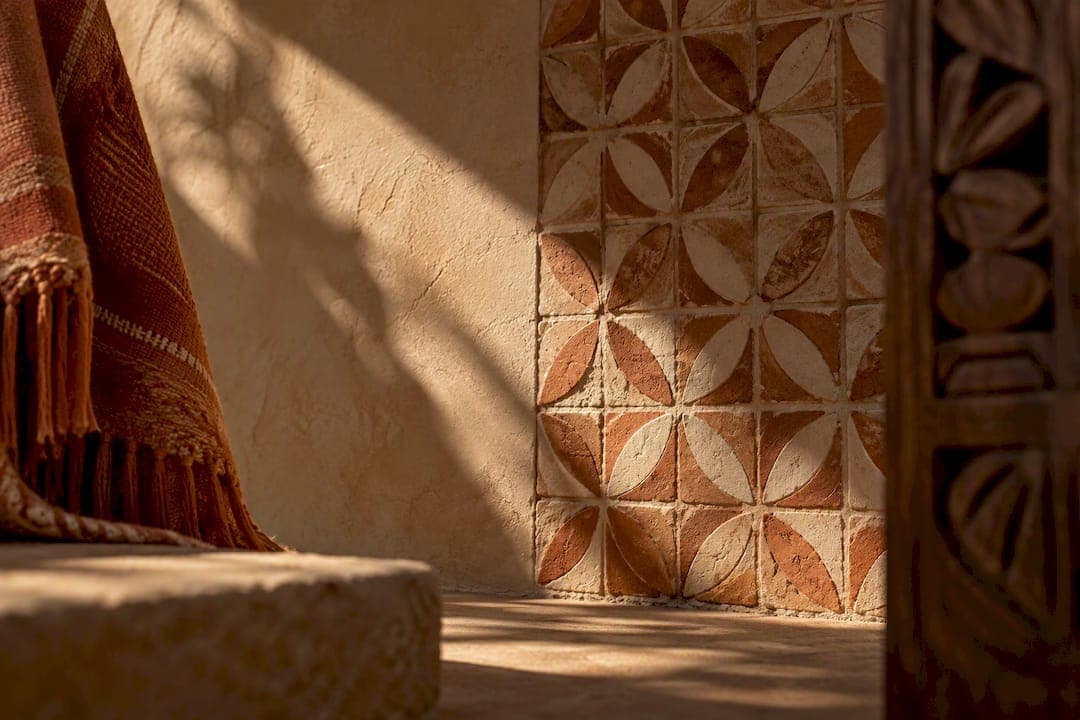
Slow decor defines 2026, built on fewer, better pieces made by hand rather than stamped out by machine. The five pillars driving it are a warm earthy palette, tactile handcrafted materials, curved and mixed furniture, layered sculptural lighting, and biofilic touches that bring the outside in. What follows is how to shop for these pillars, place them well, and avoid the mistakes that turn a thoughtful room into a cluttered one.
TL;DR:
- Artisan decor in 2026 emphasizes visible aging and imperfection in materials like ceramics, wood, and plaster to add character to spaces.
- The trend favors one meaningful statement piece per room paired with neutral bases, avoiding clutter and emphasizing provenance.
- Focus on regional craft traditions, especially Mexican textiles and mosaics, supports sustainability and local community development.
- Technology enhances artisan processes through digital design and e-commerce, but handcraft remains authentic through visible tool marks and irregularities.
- Purchasing fewer, high-quality artisan pieces that tell a story is more impactful than filling a space with multiple decorative objects.
Table of Contents
- What Are the Top Tendencias Decoración Artesanal 2026?
- Materials and Finishes Worth Prioritizing This Year
- How Do You Integrate Artisan Pieces Without Overdoing It?
- Lighting and Biofilic Touches That Bring It All Together
- Ernesto's Take: Making These Trends Work in Real Homes
- Regional Craft Traditions Shaping This Year's Look
- Sustainability Practices Behind the Artisan Decor Movement
- Where Technology Meets Traditional Craft
- Craft Techniques Gaining Ground in 2026
- Names and Studios Leading the Artisan Movement
- What the Trend Coverage Gets Wrong About Artisan Decor
- Quick Shopping Ideas for the 2026 Artisan Look
- Sources
- FAQ
What Are the Top Tendencias Decoración Artesanal 2026?
Six shifts define the artisan decor conversation this year, and they build on each other rather than standing apart. Understanding them as a set, not a checklist, is what separates a room that feels curated from one that feels assembled.
1. Warm, earthy palettes anchor the room. Coffee and espresso tones now pair with terracotta, burdeos, and jewel accents pulled from natural pigments, a shift several interior design forecasts for 2026 point to directly. These colors read as grounded rather than trendy because they echo clay, wood, and earth.
2. Materials that show the maker's hand. Handmade ceramics, tadelakt and estuco a la cal wall finishes, pasta mosaics, and solid woods carry visible imperfection, and that imperfection is the point in 2026.
3. Curved furniture mixed with vintage pieces. Soft, low-profile silhouettes are replacing hard angles, and a single vintage find sitting next to a contemporary sofa now reads as intentional rather than mismatched.
4. Lighting as a sculptural layer. Fixtures are doing double duty as both light source and art object, with warmth prioritized over brightness.
5. Biofilia woven into the composition. Plants are no longer an afterthought on a windowsill. They're placed as sightlines that connect one room to the next.
6. Folklectic and neo-Mexicanismo storytelling. Tenangos textiles, mosaicos de pasta, and other Mexican craft traditions are moving from souvenir status to genuine focal points, a pattern Mexican interior design trend coverage for 2026 documents in detail. Together, these five pillars and their folklectic expression form what design writers are now calling slow decor, a deliberate move away from fast, disposable furnishing.
Materials and Finishes Worth Prioritizing This Year
Not every artisan material earns its keep in a real home. Some need more care than most homeowners realize, and a few common combinations simply work better than others.
The strongest choices for 2026 share one trait: they age visibly, and that aging reads as character rather than wear.
- Estuco a la cal or tadelakt walls catch light differently depending on the hour, giving a room a living quality that flat paint can't match.
- Handmade ceramics with visible glaze irregularities or hand-tool marks signal genuine artisanal origin.
- Mosaicos de pasta work on floors, accent walls, or even furniture facing, and hold up to decades of use when properly sealed.
- Solid wood in warm tones grounds a room next to lighter textiles.
- Linen, wool, and matte velvet provide the tactile contrast that makes a single bouclé piece stand out instead of competing with itself.
Designers generally advise limiting high-texture materials like bouclé to one piece per room, then balancing it with linen, wool, or matte velvet elsewhere, according to IFD Interiorismo's 2026 trend analysis. That restraint is what keeps a textured room from feeling busy.
Maintenance matters more with handcrafted finishes than with mass-produced ones. Ceramics with irregular glazing often need periodic resealing, textiles should be spot-cleaned rather than machine-washed, and estuco walls should stay clear of high-moisture zones unless specifically treated for it.
Pro Tip: Place your most delicate handcrafted piece, whether it's a ceramic vase or a hand-loomed textile, away from direct afternoon sun. Natural pigments and hand-glazed finishes fade faster than synthetic ones.
How Do You Integrate Artisan Pieces Without Overdoing It?
The rule that separates a curated room from a cluttered one is simple: fewer, better pieces, chosen with intention.
- Start with one focal item per room. A single Tenangos textile, a hand-thrown ceramic lamp, or a mosaic side table gives the eye somewhere to land. Adding three competing statement pieces does the opposite.
- Pair bold craft with a neutral base. A vividly embroidered Tenangos pillow works because the sofa underneath is a quiet, warm neutral. The craft piece needs room to breathe.
- Check scale before you buy. A mosaic accent table suited to an entryway can overwhelm a small reading nook. Measure the space, not just the piece.
- Ask about provenance before paying a premium. Where was it made, and by whom? Fair pricing and documented origin matter more in 2026's market, as reporting on Tenango design trends makes clear, than it did even a few years ago.
- Avoid treating artisan pieces like souvenirs. A hand-carved bowl or embroidered textile isn't a shelf trinket. It's a design anchor, and it should be placed with the same care you'd give a piece of art. Learning why handcrafted decor feels different in your home helps clarify that distinction before you buy.
Lighting and Biofilic Touches That Bring It All Together
Layered lighting does more for a handcrafted room than any single overhead fixture ever could. The simplest recipe is ambient light for overall glow, task light for function, and accent light to highlight texture, all set in warm color temperatures rather than cool white.
- Choose pendant or table lamps with hand-thrown ceramic or woven bases so the fixture itself becomes a sculptural object.
- Use accent lighting to rake across textured walls like estuco or tadelakt, since that finish shifts appearance depending on the light angle.
- Anchor at least one room corner with a substantial planter rather than a small pot, creating a sightline between rooms.
- Choose resilient interior plants (snake plant, pothos, fiddle leaf fig) that survive real household conditions, not just staged photos.
Warm, textured, earth-toned interiors consistently read as more inviting than cool, glossy ones, a pattern Hospitalitas' 2026 interior forecast ties directly to the coffee and terracotta palette shift. Lighting and color work together here. Neither pillar functions well alone.
Ernesto's Take: Making These Trends Work in Real Homes
A single well-placed textile can change a room faster than any furniture swap. A hand-embroidered pillow on a plain sofa, a hand-loomed wall hanging above a console table. These small moves carry weight because they're made with intention, not mass-produced overnight.
Handcrafted pillows, ottomans, wall art, and rugs made in Mexico serve as anchor pieces, not filler.
When we help someone choose an accent color, we start with the room's existing neutral base, then pick one jewel tone or terracotta shade that already lives somewhere in the space, a rug, a wood floor, a wall. That's how you get a piece that feels chosen, not just purchased.
Scale matters just as much as color. A pillow that's too small on a deep sofa disappears. Size the accent to the furniture, not the other way around.
— Ernesto
Regional Craft Traditions Shaping This Year's Look
Mexican artisan traditions are doing heavy lifting in 2026's design conversation, and not as a passing aesthetic borrow. Otomí embroidery from Hidalgo, known as Tenangos, has moved from tourist markets into architect-specified interiors, appearing on everything from wall hangings to upholstery. The vibrant, symbolic animal and floral motifs carry meaning tied to Otomí cosmology, which is part of why designers treat them as storytelling elements rather than decoration.
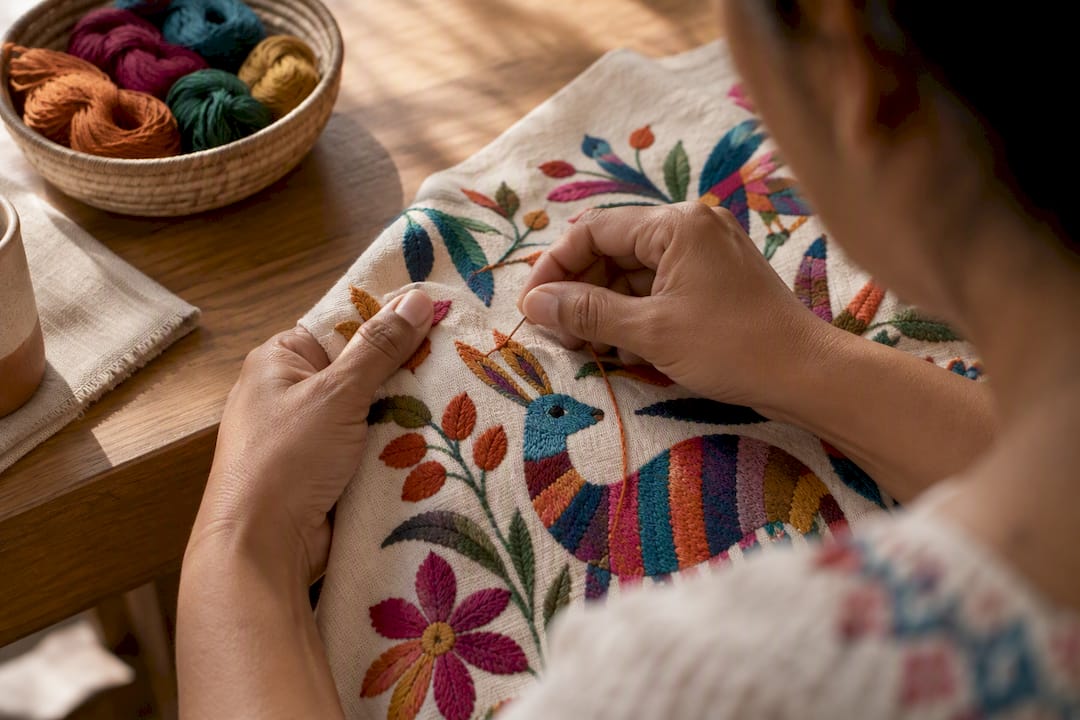
Mosaicos de pasta and mosaicos hidráulicos, cement-based tile traditions with roots stretching back generations in Mexican architecture, are seeing a parallel resurgence. They're showing up on floors, facades, and custom furniture facing, valued for durability as much as pattern.
Beyond Mexico, regional craft traditions are informing similar shifts elsewhere. Moroccan tadelakt plaster, Spanish estuco techniques, and various Latin American weaving traditions all feed into the same broader push toward materials with visible human origin. What ties these regional threads together isn't a single look. It's a shared rejection of uniformity.
UNESCO has framed this kind of craft revival as more than aesthetic. Its research on textile traditions in Latin America describes artisan work as a genuine tool for community autonomy and economic development, not just a design trend. That framing matters when you're deciding what to buy and from whom.
Sustainability Practices Behind the Artisan Decor Movement
Buying artisan means buying differently, and the sustainability case is stronger than most trend pieces let on. A hand-thrown ceramic vase or a hand-loomed rug typically outlasts its mass-produced equivalent by years, sometimes decades, simply because of how it's constructed and the materials used.
Fair-trade sourcing and documented provenance are becoming standard expectations rather than nice extras. Buyers increasingly want to know who made a piece and under what conditions, particularly for premium purchases like Tenangos textiles, a shift coverage of Mexican craft trends confirms is reshaping how these items get marketed and sold.
Material choice plays a role too. Estuco a la cal, natural fiber textiles, and solid wood carry a smaller environmental footprint over their lifespan than synthetic alternatives that need frequent replacement. Buying one well-made piece instead of three disposable ones is, in itself, a sustainability practice, not just a design preference.
There's also a community dimension that's easy to overlook. When artisan traditions stay economically viable, the skills behind them survive to the next generation. UNESCO's research on textile traditions ties this directly to regional development, not sentiment. Choosing handcrafted decor over fast furniture isn't just about how a room looks. It's about which economies and skills that purchase supports, a point worth remembering when you read about why handmade decor supports local ecosystems.
Where Technology Meets Traditional Craft
Technology isn't replacing artisan work in 2026. It's extending what individual makers can do without diluting the handmade quality that makes these pieces desirable in the first place.
Digital pattern design tools let embroidery artists and textile makers plan complex Tenango motifs with more precision before a single stitch goes in by hand, speeding up the planning stage while leaving the actual craft untouched. Similarly, ceramicists use digital kilns with more consistent temperature control, reducing failure rates on hand-thrown pieces without changing how they're shaped or glazed.
E-commerce has done more to change artisan decor's reach than any production technology. Small workshops that once sold only regionally can now document provenance, share maker stories, and reach buyers globally through the kind of direct online sales that platforms like Createdecorus depend on. That shift matters because it lets makers capture more of the value their work creates, instead of losing margin to layers of middlemen.
Where technology hasn't touched craft, and shouldn't, is in the actual making. Hand-tool marks, glaze irregularities, and the slight asymmetry of a hand-loomed textile remain the authenticity signals buyers look for, a point IFD Interiorismo's trend research makes when describing what separates genuine artisan work from decor that only looks handmade. The tools around craft are evolving. The craft itself, deliberately, isn't.
Craft Techniques Gaining Ground in 2026
A handful of techniques are moving from niche to mainstream this year, each for a different reason.
Tadelakt, the Moroccan lime plaster finish, is showing up well beyond its traditional bathroom application, now used on accent walls and even furniture surfaces for its light-catching quality. Estuco a la cal, its close cousin in Spanish and Latin American building tradition, is seeing similar crossover use.
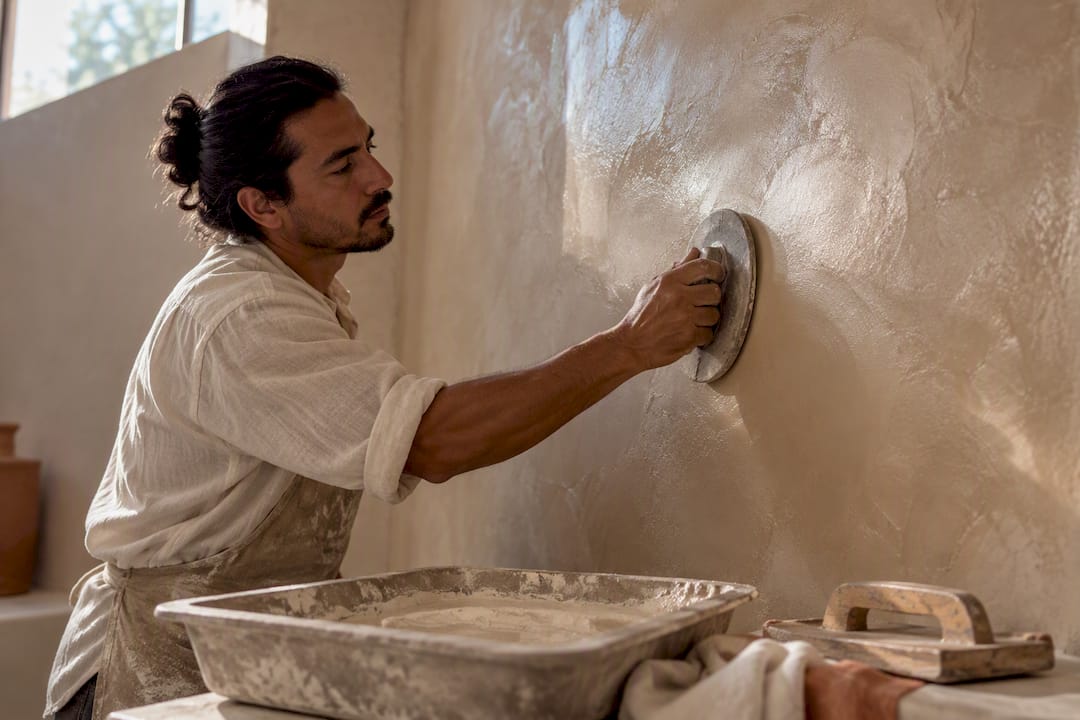
Otomí embroidery techniques behind Tenangos designs are expanding past textiles into wall art and even upholstery applications, a shift documented in recent Tenango trend coverage. What used to appear mainly on textiles now shows up on household objects like trays and serving boards.
Pasta mosaic and hydraulic tile techniques, long used primarily for flooring, are being adapted for vertical surfaces and custom furniture facing, giving designers a durable, patterned material for applications beyond the floor. This kind of technique migration, taking a traditional method and applying it somewhere new, is one of the clearest signals that a craft trend has staying power rather than fading after a season.
Hand-carved wood joinery, the kind that avoids metal fasteners entirely, is also resurging in furniture making, prized both for its visible craftsmanship and its durability over decades of use.
Names and Studios Leading the Artisan Movement
The artisan decor movement doesn't hinge on a handful of celebrity designers. It's driven by workshops, regional cooperatives, and brands that source directly from makers rather than mass-producing imitations.
Mexican textile cooperatives working in Otomí embroidery traditions are central to the Tenangos resurgence, often operating as collectives rather than single-designer studios, which keeps the economic benefit distributed across a community instead of concentrated in one name. That model aligns with UNESCO's own framing of textile work as a development tool rather than simply a design category.
In the mosaic space, workshops specializing in mosaicos de pasta and mosaicos hidráulicos are increasingly working directly with architects and interior designers on custom commissions rather than selling only pre-made tile, a shift toward treating mosaics as architectural statements rather than off-the-shelf materials.
Some brands fit into this landscape by specializing in handcrafted luxury home accents made in Mexico, with product lines like pillows, wallpaper, wall art, and rugs. The emphasis stays on artisan technique and rich cultural texture rather than mass production, which is the same principle running through every craft tradition covered here. Reading through why handcrafted pieces elevate design projects gives a clearer picture of how that principle plays out in practice.
What the Trend Coverage Gets Wrong About Artisan Decor
Most trend roundups treat artisan decor as an aesthetic category, something you add to a room the same way you'd add a throw blanket. That framing misses the point entirely.
The pieces that actually work in 2026 interiors aren't chosen because they match a color palette. They're chosen because someone can explain where they came from and who made them. That distinction sounds small until you're standing in a showroom deciding between a mass-produced "artisan style" pillow and one that's actually hand-embroidered. The difference shows up in the stitching, the slight irregularity, the weight of it in your hands.
Conventional decor advice also tends to undersell scale and restraint. Plenty of guides list ten trends and tell you to incorporate all of them. In practice, a room with one genuine Tenangos textile and a neutral base outperforms a room stuffed with five competing craft pieces every time. Restraint isn't a compromise here. It's the actual strategy.
If there's one thing worth prioritizing above the rest, it's provenance. Color palettes shift every year. Craft traditions, and the people who keep them alive, don't. Buy from makers and brands who can tell you that story, and the rest of the trend list takes care of itself.
— Ernesto
Quick Shopping Ideas for the 2026 Artisan Look
Matching product to purpose makes shopping for this trend far simpler. If your room needs tactile warmth, decorative pillows crafted with rich textures and bold, artisan-inspired patterns give you that focal texture without committing to a full furniture overhaul. If a wall feels blank and the room lacks a story, handcrafted wall art does the storytelling work that a folklectic room needs. And if your palette needs grounding, a rug in warm terracotta or jewel tones anchors the whole composition the way IFD Interiorismo's research suggests a room needs.
These handcrafted pieces embody the principle running through this entire trend: fewer, better, and imbued with real cultural texture, not surface-level imitation. If a fresh coat of paint is part of your plan too, pairing your new artisan pieces with an updated wall color, as this guide to interior painting covers, can make the whole room feel finished rather than half-renovated.

A good starting point if you're new to this look is a single statement pillow in a jewel tone or terracotta shade, paired with your existing neutral sofa. Browse the Decor Pillows collection to find a piece that fits your room's current palette, or check the wholesale trade program if you're sourcing for multiple client projects.
Sources
- Tendencias de interiorismo 2026 — Hospitalitas
- Tendencias decoración 2026 | IFD Interiorismo
- UNESCO — Textile traditions become autonomy and development tools, Latin America
- Diseño de Interiores México 2026: Tendencias — Mosaicos de Diseño
FAQ
What are the main decoration trends for 2026?
The core trends center on slow decor: warm earthy palettes, tactile handcrafted materials like ceramics and estuco finishes, curved furniture mixed with vintage pieces, layered sculptural lighting, and biofilic touches. Mexican craft traditions like Tenangos textiles and pasta mosaics are also central, as Mosaicos de Diseño's 2026 coverage details.
What things are trending in 2026?
Beyond color and materials, provenance and sustainability are trending as much as any single style. Buyers are increasingly asking where a piece was made and by whom before paying a premium price, a shift tied to broader interest in artisan work as a development tool, according to UNESCO's research on textile traditions.
What are the interior design trends for 2026?
Interior design in 2026 favors warm coffee and terracotta palettes, curved low-profile furniture mixed with vintage finds, and lighting treated as a sculptural element rather than pure function. Handcrafted textures like tadelakt walls and hand-thrown ceramics round out the look, following the five-pillar framework IFD Interiorismo outlines.
What are the home decoration trends for 2026?
At home, the trend translates into fewer, better artisan pieces rather than a full furniture overhaul. A single hand-embroidered pillow, a handcrafted wall art piece, or a rug in a warm jewel tone can anchor a room, which is the approach Createdecorus builds its pillow and wall art collections around.
Why are handmade pieces replacing mass-produced decor in 2026?
Handmade pieces carry visible irregularities, hand-tool marks, and natural-fiber finishing that signal genuine craftsmanship, qualities mass production can't replicate. They also tend to outlast their factory-made equivalents and support the kind of community-level economic sustainability UNESCO's research links to textile traditions specifically.