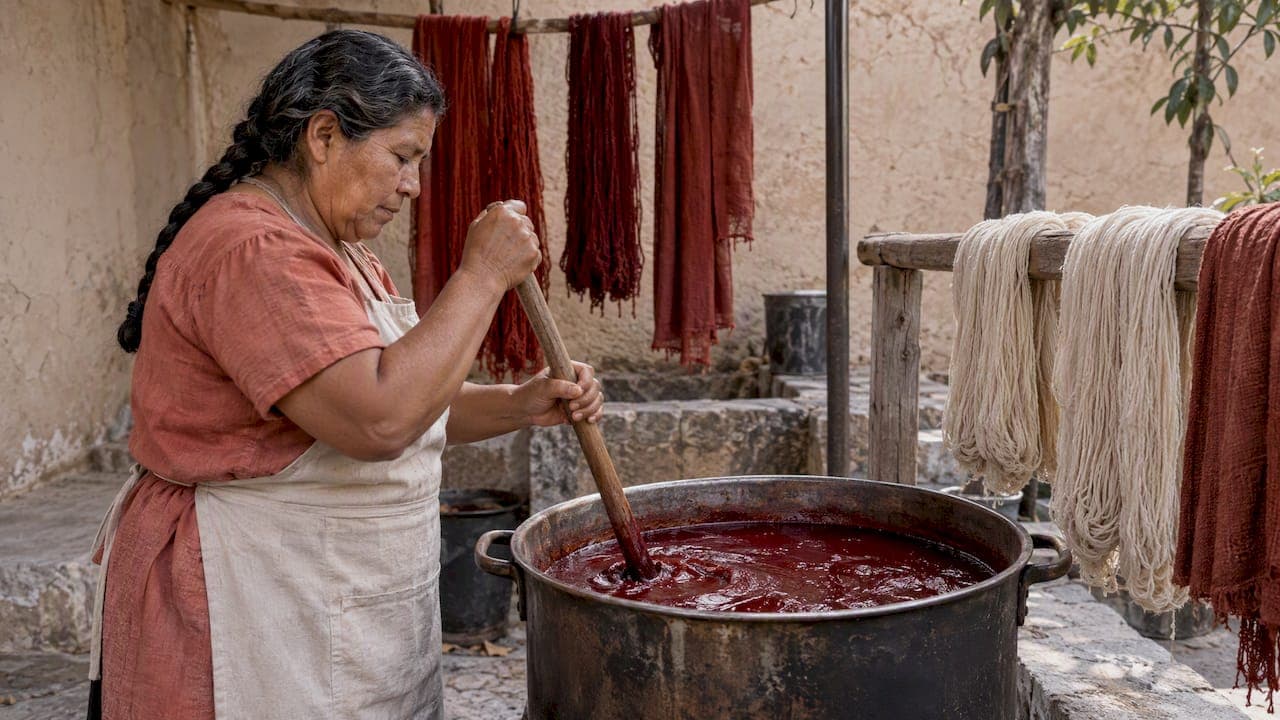
Hand-dyed textiles are fabric pieces colored by hand using artisanal techniques and natural or small-batch dyes. Each piece carries its own shade, its own small variations, and its own story, with care needs that differ from anything dyed in a factory. Brands like Create Decorus and traditional forms like Telar de Cintura show what the craft looks like when it's done with patience and skill.
TL;DR:
- Hand-dyed textiles use natural or small-batch dyes absorbed unevenly into fibers, creating depth and unique variations impossible to replicate industrially.
- Fiber choice is crucial, with silk and wool bonding well with natural dyes, while plant-based fibers like cotton require different preparation to hold color effectively.
- Pre-mordanting with alum or alternative eco-friendly mordants before dyeing significantly improves color fastness and evenness in small-batch dyeing.
- Natural dyes result in less consistent shades that fade faster over time, making proper care—cold washing, avoiding bleach, and avoiding direct sunlight—essential for longevity.
- Authentic hand-dyed pieces show subtle irregularities, uneven coloration, and imperfect edges, which distinguish them from machine-printed imitations and reflect traditional craftsmanship.
Table of Contents
- What hand-dyed textiles are made of and used for
- Common hand-dye techniques a beginner should recognize
- Preparing fiber and choosing a mordant that works
- How to dye fabric at home with plant-based color
- Keeping color and quality in hand-dyed pieces
- Honoring the artisans behind traditional dye practices
- What to look for when buying authentic hand-dyed pieces
- Why handmade color still matters in modern interiors
- Create Decorus: where to find handcrafted pieces for your home
- Sources
- FAQ
What hand-dyed textiles are made of and used for
Hand-dyeing means color applied by a person's hand, in small batches, using dye baths made from plants, insects, minerals, or synthetic dyestuff mixed and controlled manually. That's different from industrial dyeing, where machines push thousands of yards of fabric through continuous dye lines at controlled temperatures for uniform, repeatable color. It's also different from printing, which lays color on the surface of a fabric rather than letting it soak into the fiber. A hand-dyed piece absorbs color unevenly on purpose, which is exactly what gives it depth.
Fiber choice matters more in hand-dyeing than most people expect. Protein fibers like wool and silk take natural dyes readily because their molecular structure bonds well with dye compounds and mordants. Plant-based fibers like cotton and linen resist dye uptake more and usually need different preparation to hold color at all. A dyer working with silk and one working with cotton are, in practice, running two different processes even if they're using the same dye source.

You'll find hand-dyed textiles in scarves, table linens, decorative pillows, and upholstery fabric, anywhere a maker wants texture and color that a machine can't replicate. In Mexico, one of the clearest examples is the Telar de Cintura, a backstrap weaving technique that artisans have used for generations to produce textiles with hand-applied color woven directly into the structure of the cloth. The weaving and the dyeing are often inseparable parts of the same craft tradition.

Common hand-dye techniques a beginner should recognize
Most hand-dyeing falls into a handful of recognizable families, and knowing them helps you understand what you're looking at, whether you're learning the craft or buying a finished piece.
- Immersion dyeing: fabric is submerged whole in a dye bath, producing even color across the piece, often used as a base layer before other techniques.
- Vat or indigo dyeing: fabric is dipped repeatedly into a fermented indigo vat, oxidizing in the air between dips to build the deep blue tones indigo is known for.
- Resist methods like shibori and tie-dye: fabric is folded, bound, stitched, or clamped before dyeing so some areas resist the dye and others don't, creating patterned results.
- Eco-printing and bundle-dyeing: leaves, flowers, or bark are pressed directly against fabric, then bundled and steamed so plant pigments transfer as botanical prints rather than solid color.
Immersion dyeing shows up constantly in home textiles because it produces the kind of solid, saturated color that works on pillows and upholstery. Indigo vat dyeing tends to go into garments and accent pieces where that specific blue is the point. Shibori and tie-dye are popular with makers who want pattern control without printing equipment, and eco-printing has become a favorite for anyone chasing a botanical look that no two batches repeat exactly the same way.
Preparing fiber and choosing a mordant that works
Before any dye touches fabric, the fiber needs scouring, a wash that strips oils, waxes, and sizing agents so the dye can bond evenly instead of blotching around residue. Skipping this step is the single most common reason a home dye project comes out patchy.
Mordants are the next piece. A mordant is a substance that helps dye molecules bind to fiber permanently instead of washing out after the first rinse.
- Alum (potassium aluminum sulfate): the most common mordant for natural dyeing, affordable and widely available.
- Aluminum acetate: works especially well on cellulose fibers like cotton and linen.
- Iron: darkens and saddens colors, often used to shift a dye toward gray or green undertones.
- Tannins: plant-derived and useful as a pre-treatment on cellulose fibers before a metal mordant is applied.
Research comparing mordant performance has found that aluminum acetate matched or outperformed potassium aluminum sulfate on cellulose substrates in controlled trials, which matters specifically for dyers working with cotton or linen rather than wool or silk. On the environmental side, bio-mordants made from tannin-rich plant extracts, such as myrobalan and tamarind seed, produced good color strength and wash fastness in some tests while reducing reliance on metal salts, offering a lower-impact alternative for hobbyists who want to limit metal runoff.
Pro Tip: Pre-mordant your fiber a full day before dyeing and let it dry completely. Rushing straight from mordant bath to dye bath often produces uneven, blotchy color.
For home use, avoid chrome and tin mordants entirely. They're far more toxic than alum or iron and require disposal precautions most households can't manage safely.
How to dye fabric at home with plant-based color
Small-batch plant dyeing is approachable with basic kitchen equipment, as long as you respect a few safety and process rules.
- Gather your materials: a dedicated dye pot (never one used for cooking food again), gloves, a well-ventilated space, a scale, and your chosen fiber, Natural fibers hold color far better than synthetics.
- Scour the fabric: wash it in hot water with a mild, fragrance-free detergent to strip oils and finishing residue.
- Pre-mordant: dissolve your mordant, commonly alum at around 10 to 15% weight of fiber, in warm water and simmer the fabric for about an hour, then let it dry.
- Extract the dye: simmer your plant material, roughly equal to the weight of your fiber, for 30 to 60 minutes, then strain out the solids.
- Dye the fabric: submerge the mordanted, damp fabric in the dye bath and simmer gently for 30 to 60 minutes, stirring occasionally for even color.
- Rinse and dry: rinse in cool water until it runs clear, then dry out of direct sunlight.
If color comes out pale or splotchy, the most common culprits are incomplete scouring, under-mordanting, or fabric that wasn't fully submerged during the dye bath. A second dip in a fresh bath, after re-wetting the fabric, often deepens color significantly.
Pro Tip: Save your spent dye bath for a second, lighter-toned batch instead of discarding it. Plant dyes rarely exhaust in a single use.
Never pour used mordant baths down the drain without checking local wastewater guidance, and compost spent plant material rather than adding it to regular trash. Water from a finished, cooled dye bath can often be reused on garden plants, which keeps the whole process closer to zero waste.
Keeping color and quality in hand-dyed pieces
Natural dyes generally fade faster and shift in tone more than synthetic dyes, a trade-off most buyers and makers accept in exchange for depth of color and reduced chemical processing. Review research on natural dyes notes that poor fastness and reproducibility remain real limitations compared to synthetic alternatives, so expect gradual softening of color over years rather than a dye that holds forever.
Two simple tests tell you what you're working with:
- Wash swatch test: hand wash a small cut swatch in cool water with mild soap; if the rinse water runs clear, the dye is holding well.
- Light exposure test: tape a swatch half-covered in a sunny window for a week; visible fading on the exposed half signals the dye is light-sensitive and the piece should stay out of direct sun.
Care from there is straightforward. Wash hand-dyed textiles in cold water with a mild detergent, skip chlorine bleach entirely since it strips natural dye almost instantly, and air dry out of direct sunlight whenever possible. If a piece arrives with persistent color bleeding, it's worth asking the maker whether it received a post-mordanting or fixing step, since that's usually the fix for an otherwise well-dyed textile. Specific care guidance for handcrafted textile pieces can help extend the life of anything made this way.
Honoring the artisans behind traditional dye practices
Mexico holds one of the richest living traditions of natural textile dyeing anywhere, built around cochineal, añil, and regional plant knowledge passed down through generations of weavers and dyers. Institutional field research documents these dye plants, their traditional preparation methods, and the cultural knowledge tied to them, work that exists precisely because so much of this knowledge lives in practice rather than in written records.
That fragility is real. Community dye projects documented in Chiapas and Oaxaca show both the persistence of traditional knowledge and how easily it can fail to pass to younger generations, which is why documentation and training programs matter as much as the dyeing itself. Every piece sold ethically, every workshop taught, and every commission placed directly with an artisan helps keep that knowledge moving forward instead of disappearing with a single generation.
Some brands work from this same foundation, producing handcrafted home accents in partnership with artisans who carry these techniques forward, work explored further in how Mexican textile heritage shapes interior design. Supporting that chain, from dye plant to finished textile, is one of the most direct ways a buyer can help preserve it.
What to look for when buying authentic hand-dyed pieces
Authentic hand-dyeing leaves visible fingerprints, and knowing what they look like protects you from paying artisan prices for a machine-printed imitation.
- Look for unevenness: subtle variation in tone across a piece is a sign of a hand-dyed process, not a flaw to avoid.
- Check the selvedge and edges: hand-finished pieces often show slight irregularities at seams and edges that mass production smooths away.
- Ask about the dye source: a maker who can name their dye plant, mordant, and wastewater practice is almost always working authentically.
- Ask whether the result is repeatable: a true artisan piece usually isn't, since natural variation is part of the process.
- Watch for red flags: a price far below what hand labor and small-batch dye would reasonably cost, or a "handmade" label with no maker, material, or origin information attached.
For readers who want a curated path into this kind of craftsmanship without sourcing dye plants or mordants themselves, Create Decorus offers handcrafted decorative pillows and home accents built from the same artisan traditions, each piece carrying texture and color variation that only comes from work done by hand. If you want to see the technique applied directly to interiors, indigenous pattern work in home decor is worth a look, and for anyone picturing these textiles alongside custom soft furnishings, The Perfect Stitch shows what hand-finished fabric work looks like in a furnished room.
Why handmade color still matters in modern interiors
I think the appeal of hand-dyed textiles has little to do with trend and everything to do with honesty. A piece that varies slightly from one corner to the next tells you a person made it, mistakes and all, and that's worth more to me than perfect uniformity. Choosing these pieces, and the artisans behind them, is one small way to keep a disappearing craft alive.
— Ernesto
Create Decorus: where to find handcrafted pieces for your home
Learning how hand-dyed textiles are made changes how you see them in a room, and choosing them changes who benefits from that purchase. Some brands produce handcrafted decorative pillows, ottomans, and home accents built on artisan techniques and rich, deliberate color, with materials and craftsmanship chosen for warmth as much as durability.

Browse the full Decor Pillows collection to find pieces with the texture and depth that only hand-applied color delivers, or explore the Animal Print Pillow Collection for bolder statement pieces. Boutiques and interior designers sourcing in volume can apply for wholesale and trade pricing directly.
Sources
Natural dyes come from plants, insects, and minerals, and each source has its own character, its own quirks, and its own ethical considerations.
- PubMed article on biomordants and mordant comparison
- Advancements in Sustainable Natural Dyes for Textile Applications: A Review (Molecules)
- Los colores de la tierra: teñir con tintes naturales (UNAM Global)
Shade never repeats exactly from batch to batch. Soil composition, season of harvest, water mineral content, and extraction method all shift the final color, which is part of why no two hand-dyed pieces look identical. That unpredictability is a feature of the craft, not a flaw in it.
Sourcing carries real weight too. Some dye plants face overharvest pressure in the wild, and a handful of traditional dye species are now protected or regulated in parts of their native range. Field documentation from institutions studying Mexican dye traditions catalogs the specific plant species, parts used, and preparation methods tied to regional artisan practices, work that matters for keeping these techniques alive without stripping the ecosystems that supply them. Choosing dye sources that are locally grown, traceable, or cultivated rather than wild-harvested is one of the simplest ways a dyer or a buyer can support that balance.
FAQ
¿Cómo puedo teñir telas de forma natural?
Scour the fabric to remove oils and residue, pre-mordant it with alum or another mordant to help the dye bind, then simmer it in a plant-based dye bath for a suitable period before rinsing. Natural fibers like cotton, wool, and silk hold color far better than synthetics, and results vary by plant, water, and mordant.
¿Cómo puedo teñir ropa sin tinte?
Natural plant materials like onion skins, avocado pits, or turmeric can color fabric without commercial dye, though you'll still need a mordant for the color to last through washing. This approach works best on natural fibers and produces softer, less saturated tones than formulated dyes.
¿Cuáles son las técnicas de teñido textil?
The main families include immersion dyeing for even color, vat or indigo dyeing for deep blues, resist methods like shibori and tie-dye for patterns, and eco-printing or bundle-dyeing for botanical imprints. Each technique produces a distinct visual result and suits different fabrics and end uses.
¿Qué es el teñido de textiles?
Textile dyeing is the process of adding color to fiber or fabric, whether through industrial machine dyeing, surface printing, or hand-applied artisanal methods using natural or synthetic dyes. Hand-dyeing specifically refers to small-batch, manually controlled coloring that produces unique, non-repeating results.