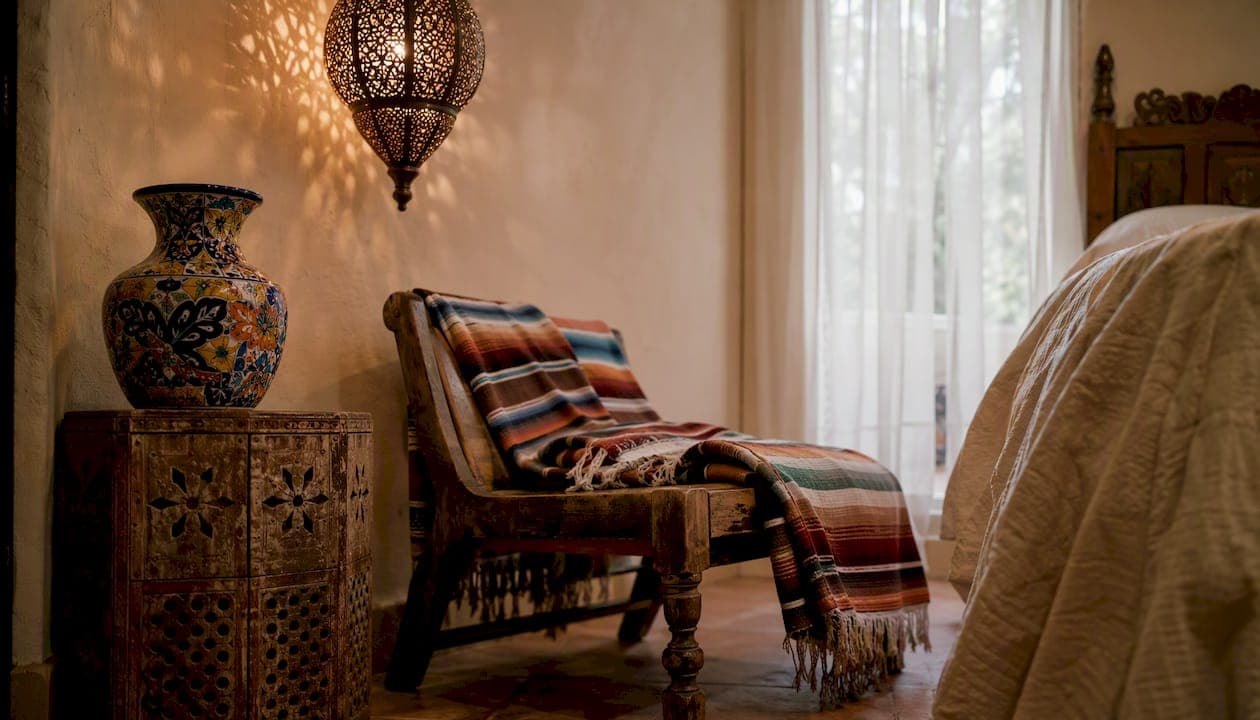
Authentic cultural home accents are handcrafted objects, including textiles, ceramics, metalwork, rugs, baskets, carved wood, and beadwork, sourced with clear provenance and used sparingly as meaningful focal points. The simplest rule: choose one or two pieces that carry genuine artisan heritage and let them anchor the room rather than attempting to dress an entire space in a single cultural style. Marymount University research confirms that integrating accents works best when items share a consistent scale, color palette, or texture, preserving cultural meaning while creating layered, sophisticated interiors. Createdecorus, which handcrafts luxury pillows and accents in Mexico, is one example of a brand that brings this philosophy to life through transparent artisan sourcing.
- Authentic = traceable provenance + named artisan technique
- Use one focal piece, supported by neutral surroundings
- Verify maker details before purchasing
Table of Contents
- What are the main types of authentic cultural home accents?
- How to mix cultural accents into a modern home without clutter
- How to verify authenticity and source cultural pieces ethically
- What materials do artisan accents use, and how do you care for them?
- Where to buy authentic cultural accents in the U.S. and what to budget
- Key Takeaways
- Why intent and provenance are what actually separate cultural decor from decoration
- Handcrafted Mexican accents, ready for your home
- Useful sources
What are the main types of authentic cultural home accents?
The richest category of handcrafted decor styles spans nine material families, each with distinct regional roots and visual signatures. One Home Therapy notes that global design works best when one or two strong cultural pieces anchor a room and the rest of the scheme supports them through consistent color or material.
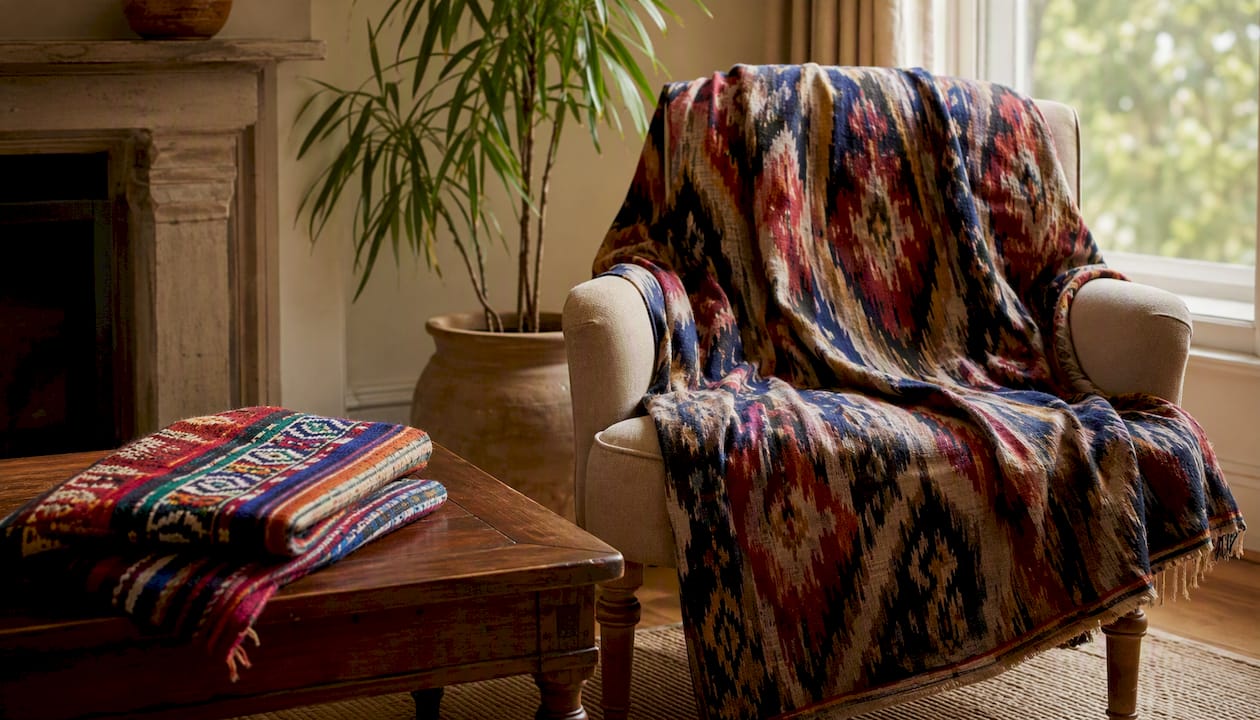
1. Handwoven textiles and throws Ikat throws from Uzbekistan and Tajikistan, produced on back-strap or pit looms, show characteristic color bleeding at pattern edges, a natural result of resist-dyeing yarn before weaving. Mexican serape blankets, woven in Saltillo with wool and cotton, carry bold geometric stripes that translate beautifully as sofa throws or wall hangings. Authenticity shows in slight warp irregularities and natural dye variation.
2. Rugs Beni Ourain rugs from Morocco's Atlas Mountains are hand-knotted in undyed Berber wool, recognizable by their ivory ground and sparse black geometric motifs. Persian Gabbeh rugs from Iran's Qashqai tribe use thick pile and naive pictorial motifs. Look for hand-knotted construction (visible knot backs) rather than tufted or machine-loomed alternatives.
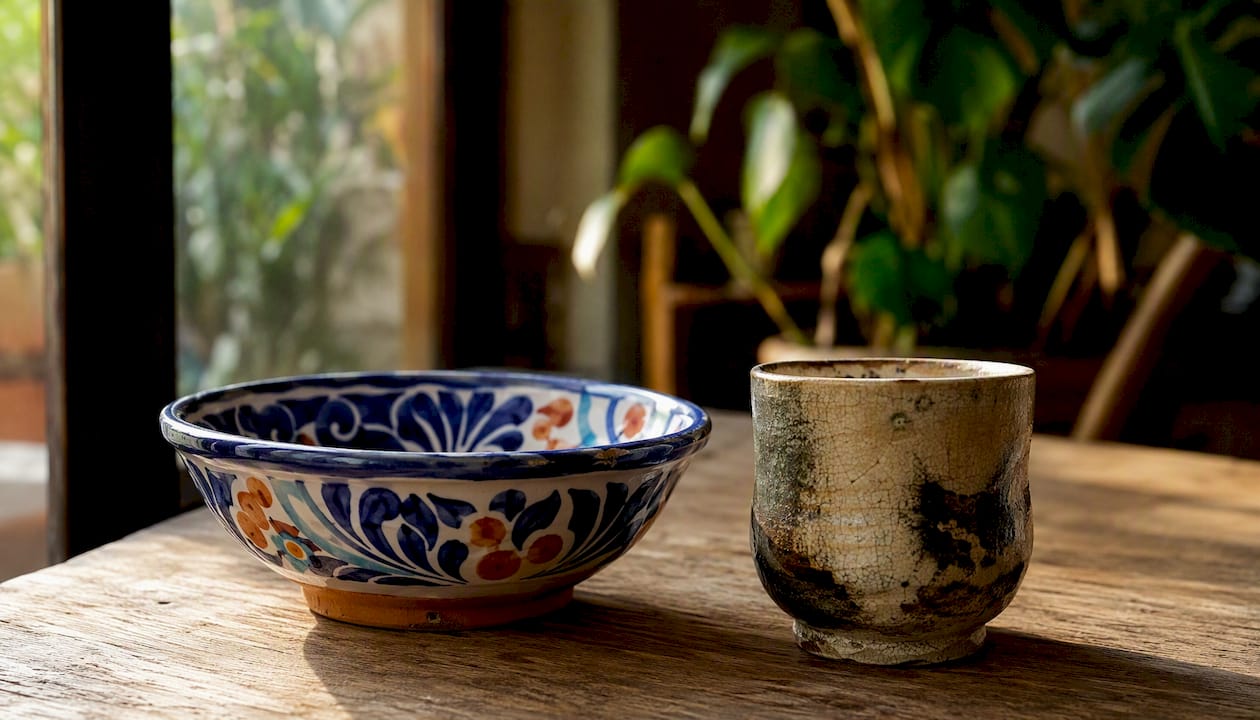
3. Ceramics and pottery Talavera ceramics from Puebla, Mexico, are tin-glazed earthenware painted freehand in cobalt, yellow, and terracotta. Raku-fired Japanese pottery carries intentional glaze crackle and carbon marks from the firing process. Both carry visible brushstroke variation that no machine replicates.
4. Metalwork Hand-hammered Moroccan brass lanterns show faceted surfaces and irregular punch patterns. Indian bidriwork features silver inlay on a zinc-alloy base, produced in Bidar using a centuries-old oxidizing technique. Hammer marks and slight surface asymmetry are authenticity signals.
5. Baskets and woven goods Sweetgrass baskets from South Carolina's Gullah Geechee tradition are coiled by hand and carry a faint, pleasant scent. Ghanaian bolga baskets are woven from elephant grass with leather-wrapped handles. Both age gracefully and work as storage or display pieces.
6. Carved wood Indian sheesham wood furniture features hand-carved floral jali patterns. West African Dogon stools are carved from a single piece of wood and carry ceremonial lineage. Grain direction and tool marks distinguish hand carving from CNC-routed reproductions.
7. Beadwork and textile jewelry as accents Maasai beaded wall panels from Kenya use glass seed beads in bold geometric patterns. Huichol yarn paintings from Mexico's Sierra Madre Occidental embed spiritual symbolism in pressed beeswax. Both work as framed wall accents rather than wearable pieces.
8. Folk art and prints Otomi embroidery from Hidalgo, Mexico, depicts animals and plants in vivid chain-stitch on natural fabric. Madhubani paintings from Bihar, India, use natural pigments on handmade paper. Frame them under UV-protective glass to preserve natural dyes.
9. Artisan lighting Pierced tin lanterns from Oaxaca, Mexico, cast intricate shadow patterns when lit. Woven rattan pendant lights from the Philippines filter warm light through organic weave gaps. Both add cultural texture without demanding a full room redesign.
Pro Tip: Choose a single focal cultural element first, then build the room's palette around its two or three dominant colors. Competing pieces from multiple traditions dilute each other's impact.
How to mix cultural accents into a modern home without clutter
Gorman Interiors advises clarifying your intent before selecting pieces: heritage connection, a travel memory, or genuine admiration each lead to different choices, and that clarity prevents impulse purchases that feel out of place. Layering texture and material often translates cultural references more powerfully than pattern alone.
- Display provenance. A small card noting the artisan's name, region, and technique adds meaning and signals respect to guests. Home as We Make It recommends documenting where each piece came from to preserve its meaning.
Before/after, living room: Remove three generic "global-inspired" printed cushions. Replace with one authentic Otomi embroidered pillow as the sofa's focal point. Result: the room gains cultural specificity without visual noise.
Before/after, bedroom: Swap a mass-produced patterned duvet for a hand-loomed ikat throw folded at the foot of the bed. Pair with a single hand-thrown ceramic lamp base. The room reads as considered rather than costumed.
Pro Tip: Pair a cultural accent with one related artifact, such as a small book on the tradition or a photograph from the region. It deepens the story the piece tells without adding visual clutter.
How to verify authenticity and source cultural pieces ethically
Provenance and technique names are the primary authenticity signals. EXOHOM describes how regional aesthetics, from Japanese minimalism to Indian carved wood, translate into modern homes through statement items aligned by material or palette. That translation only works when the pieces are genuine.
Buyer checklist:
- Global Design Elements: How to Infuse Worldly Style into Your Home | One Home Therapy
- The Intersection of Culture and Interior Design: Creating Culturally-Inspired Spaces | Marymount University
- Cultural Touches to Add to Your Living Room — Home as We Make It
- How to Incorporate Cultural Elements into Modern Interior Design? | Gorman Interiors
- How Culture Shapes Modern Interior Design Trends | EXOHOM
- Create Decor | Handcrafted Luxury Pillows
- What Is Artisan Home Decor? A Homeowner's Guide
Red flags:
Prefer direct-from-artisan channels, fair-trade retailers, museum shops, or documented commissions. Buying handmade decor also supports the local ecosystems and communities where these traditions live. When in doubt, request provenance documentation before completing a purchase.
What materials do artisan accents use, and how do you care for them?
Understanding what your pieces are made from protects your investment. Handcrafted decor adds texture, provenance-backed storytelling, and the maker-imperfections that signal authenticity over mass production.
| Material | What to expect | Basic care |
|---|---|---|
| Hand-spun wool (rugs, textiles) | Natural lanolin, slight pile variation | Rotate every 6 months, use a rug pad, spot clean only |
| Natural dyes (textiles, pottery) | Color deepens with age; some fading in direct sun | Keep out of direct sunlight; no harsh detergents |
| Terracotta / unglazed ceramics | Porous; absorbs moisture | Seal if used for plants; wipe with a dry cloth |
| Hand-hammered brass | Patina develops over time | Polish occasionally with a brass-safe cloth; avoid bleach |
| Rattan / woven grass | Can dry out in low humidity | Wipe with a damp cloth; avoid prolonged moisture |
| Vegetable-tanned leather | Darkens and softens with use | Condition with a natural leather balm twice a year |
Do's and don'ts:
- Do rotate rugs and use non-slip pads to distribute wear
- Do store folded textiles with cedar blocks to deter moths
- Don't machine-wash handwoven or embroidered textiles
- Don't use chemical cleaners on natural dyes or unglazed surfaces
- Don't place brass or copper pieces in direct, prolonged sunlight
For small decorative accents like tealight holders, mixing objects from different traditions can create a cohesive designer look when you unify them by finish or material family.
Where to buy authentic cultural accents in the U.S. and what to budget
Price depends on material, technique, size, and provenance. Small accents such as a hand-thrown ceramic bowl or a beaded wall panel typically run $30–$250. Mid-size textiles, quality pottery, or a hand-knotted small rug generally fall in the $250–$1,200 range. Furniture or large hand-knotted rugs start at $1,200 and rise considerably with size and origin. An artisan home decor guide from Createdecorus offers practical sourcing basics and buyer tips for homeowners at every budget.
Buying channels:
- Direct-from-artisan marketplaces (Novica, Ten Thousand Villages, regional craft cooperatives)
- Fair-trade retailers with documented maker programs
- Museum shops (the Smithsonian, regional folk art museums)
- Craft fairs and cultural festivals with artisan vendors present
- Regional importers who publish sourcing documentation
- Createdecorus custom orders for handcrafted Mexican pillows and accents
Commissioning an artisan:
Commissioning works well when a specific size, colorway, or technique must fit a defined space. Scope the project with dimensions, material preferences, and reference images. Expect lead times of 6–12 weeks for most textile commissions. A deposit of 30–50% is standard; always request a sample or swatch before approving the final piece.
Safe online buying checklist:
- Ask for photos of the maker or workshop
- Confirm the technique name in writing
- Review the return and damage policy before paying
- Verify packaging and shipping protection for fragile pieces
- Save all receipts and provenance documentation
Key Takeaways
Authentic cultural accents work best when chosen with intention, verified for provenance, and given space to speak for themselves in a modern interior.
| Point | Details |
|---|---|
| One focal piece anchors a room | Choose one strong cultural accent and build the palette around it rather than mixing many competing pieces. |
| Provenance is the authenticity test | Ask for the artisan's name, technique name, and materials list before every purchase. |
| Care preserves handcrafted value | Rotate rugs, keep natural dyes from direct sunlight, and avoid machine-washing handwoven textiles. |
| Budget realistically | Small accents start around $30–$250; mid-size textiles and pottery run $250–$1,200; large rugs and furniture begin at $1,200. |
| Createdecorus for Mexican artisan accents | Handcrafted pillows and accents produced in Mexico, available retail, wholesale, or as custom commissions. |
Why intent and provenance are what actually separate cultural decor from decoration
The conversation around cultural accents often focuses on aesthetics, and that misses the point. A Talavera vase placed on a shelf because it "goes with the color scheme" carries a fundamentally different weight than one chosen because the buyer understands the tin-glazing tradition behind it, or because it connects to a place they love. The difference is not visible to every guest, but it is felt by the person who lives with the piece.
What we find, working closely with artisan traditions, is that provenance documentation is not a bureaucratic nicety. It is the thing that keeps a handcrafted object from becoming a prop. When you know the name of the workshop, the region, and the technique, you treat the piece differently. You place it with more care. You explain it to people who ask. That story is part of what you paid for.
The ethical sourcing question is also more practical than it sounds. Choosing transparent channels, whether direct-from-artisan, fair-trade certified, or a brand like Createdecorus that documents its Mexican artisan sourcing, is the simplest way to avoid purchasing a machine-made approximation at a handcrafted price. The market for "globally inspired" decor is large and largely unregulated. Asking two questions, "Who made this?" and "What technique did they use?", filters out most of what does not belong in an authentic collection.
Handcrafted Mexican accents, ready for your home
Createdecorus offers a direct route to provenance-documented, handcrafted pillows and accents produced in Mexico, each one carrying the artisan heritage and material quality this article describes. Every piece reflects traditional Mexican artistry, from richly textured fabrics to bold, intentional color, without the uncertainty of sourcing through opaque supply chains.
Whether you are furnishing a single focal point or building out a cohesive cultural interior, Createdecorus's handcrafted luxury collection gives you pieces with a clear story behind them. Interior designers and boutique buyers can apply for a wholesale trade account for bulk and trade pricing. Custom commissions are available for homeowners who need a specific size, colorway, or textile technique to fit a defined space. Browse the full range at the Createdecorus shop and find the piece that becomes your room's anchor.
Useful sources
- One Home Therapy: Global Design Elements — Practical guidance on anchoring a room with one or two strong cultural pieces and sourcing from artisans with visible maker marks.
- Marymount University: Culture and Interior Design — Research-backed explanation of how scale, palette, and texture preserve cultural meaning in modern interiors.
- Home as We Make It: Cultural Touches — Homeowner-focused advice on documenting provenance and choosing pieces tied to genuine connection.
- Gorman Interiors: Cultural Elements in Modern Design — Designer perspective on clarifying intent and layering texture over pattern.
- EXOHOM: Culture Shapes Modern Interior Design — Regional aesthetic overview covering Japanese, Arabic, African, and Indian influences adapted for contemporary homes.
- Createdecorus: Handcrafted Luxury Pillows — Brand resource for handcrafted Mexican accents with artisan sourcing documentation.
- Createdecorus Blog: What Is Artisan Home Decor? — Homeowner's guide defining artisan decor and offering practical sourcing and commissioning advice.