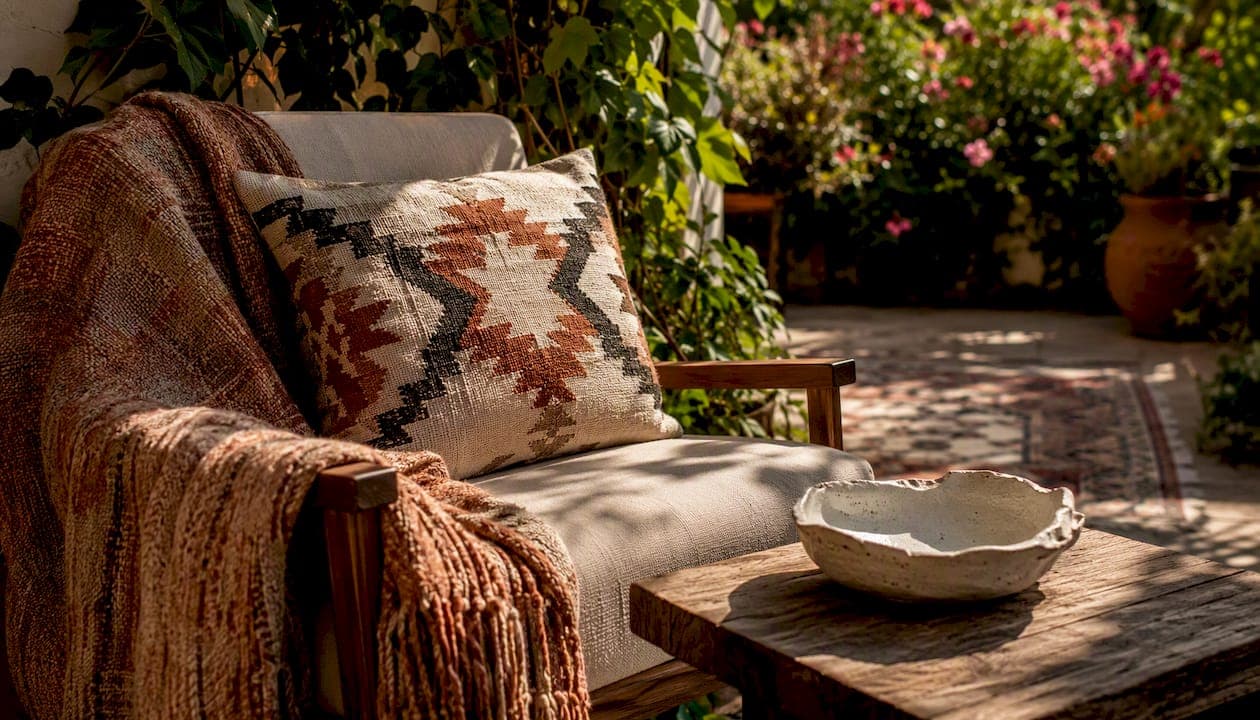
Visual storytelling through decor is the practice of using physical objects — textiles, pillows, ceramics, lighting, and layout — to communicate a personal or cultural narrative that makes a space feel emotionally alive. The moment a handcrafted pillow, a woven wall hanging, or a hand-thrown ceramic piece enters a room, it begins speaking. Your job is simply to give it something worth saying.
To get started, three steps are all you need:
- Identify your narrative. Choose one clear emotional or cultural thread: warmth and heritage, quiet minimalism, or a specific regional craft tradition.
- Choose one handcrafted focal piece. A single artisan textile or pillow anchors the story before anything else is added.
- Layer and place with intention. Build outward from that anchor using complementary colors, textures, and objects that reinforce the same theme.
Decorative visual storytelling is gaining real momentum. Textile art reporting notes that Google searches for "wall tapestry" and "vintage tapestry" have risen significantly in recent months, reflecting increased interest in tactile, narrative-rich decor, signaling that people are actively seeking tactile, narrative-rich decor. Interiors with strong cultural expression also tend to improve a sense of wellbeing and belonging, according to culturally rooted design research. The soulful decor guide from Createdecorus captures this well: the pieces that resonate most are the ones that carry a maker's hand and a place's memory.
Key Takeaways
Visual storytelling through decor works when every element — textile, object, color, and light — serves a single, clearly defined narrative.
| Point | Details |
|---|---|
| Start with one sentence | Write your narrative statement before sourcing a single piece; it filters every decision. |
| Anchor with handcrafted | One artisan focal piece sets the palette, motif, and emotional register for the whole room. |
| Layer with restraint | Three well-chosen handcrafted pieces tell a clearer story than nine competing ones. |
| Source with provenance | Request a written provenance note — maker, region, technique — for every significant piece. |
| Createdecorus for trade | Artisan-made pillows and accents from Createdecorus support both retail and wholesale design projects with custom commission options. |
Table of Contents
- What is visual storytelling through decor, and which elements carry it?
- How do you design a narrative room using handcrafted decor?
- Where should you source handcrafted pieces, and how do you do it ethically?
- What materials and installation methods work best for handcrafted decor?
- Room-by-room examples that show the approach in action
- How do you commission an artisan or brief a designer?
- A one-page checklist for client approvals and retail sign-off
- Why handcrafted decor carries a story that mass production cannot
- Createdecorus handcrafted pieces bring your narrative to life
- Sources
What is visual storytelling through decor, and which elements carry it?
Every room tells a story whether you plan it or not. The question is whether that story is intentional. These are the core elements designers use to shape a visual narrative through decor:
- Textiles. Woven, embroidered, or flatweave fabrics carry the most immediate emotional weight. Their texture communicates touch before the eye fully registers color. Handcrafted textiles return a sensory warmth that machine-made pieces rarely match, making interiors feel human and story-laden.
- Color and palette. A terracotta-and-warm-beige palette reads as grounded and earthy; deep indigo reads as contemplative. Palette is the room's emotional key signature.
- Pattern and motif. Geometric motifs from a specific craft tradition, floral embroidery, or abstract weave patterns each carry cultural provenance. Pattern is where heritage becomes visible.
- Artisan objects. Hand-thrown ceramics, carved wood, and cast metal carry the visible marks of a maker's hand. Those marks are the story. Cultural storytelling in interior design uses artifacts and symbolic elements precisely because they connect inhabitants to heritage in ways that printed reproductions cannot.
- Scale and placement. A large textile hung low reads as intimate; the same piece hung high reads as architectural. Placement controls how the narrative is paced across a room.
- Lighting. Warm, directional light draws attention to texture and depth. It is the editor of the room's story, deciding what the eye reads first.
- Repetition. Repeating a color, a motif, or a material across three or more pieces creates coherence. Without repetition, a room feels like a collection of unrelated sentences.
Pro Tip: Choose one narrative thread before you source a single piece. "Warmth and Mexican craft heritage" is a thread. "Things I like" is not. A single clear thread makes every subsequent decision faster and the final result more coherent.
The role of textiles in luxury decor is particularly worth studying: layering different textile weights and weave structures in the same palette creates depth that a single statement piece cannot achieve alone.
How do you design a narrative room using handcrafted decor?
This process works for a living room, a boutique display, or a client presentation. Follow it in order.
- Define the narrative in one sentence. Write it down: "This room honors the warmth of artisan craft and the colors of the high desert." That sentence becomes your filter for every decision that follows.
- Audit what you already own. Identify which existing pieces support the narrative and which contradict it. Set contradicting pieces aside rather than forcing them to coexist.
- Source or commission a focal handcrafted piece. This is the anchor — a pillow with bold embroidery, a flatweave rug, or a woven wall hanging. It sets the palette, the motif, and the emotional register for everything else.
- Plan layering and placement. Work outward from the focal piece. Add a secondary textile in a complementary color, then a ceramic or carved object that echoes the motif. Layering handcrafted pillows in varying sizes and textures builds the kind of depth that feels collected rather than staged.
- Finalize lighting and small objects. Warm-toned bulbs (2700K–3000K) amplify the richness of handcrafted textiles. Small objects — a hand-thrown bowl, a carved figurine — close the narrative loop.
Designers layering antique textiles with ceramics and artwork consistently describe the result as feeling "lived-in" rather than designed, according to practitioner accounts in textile art reporting. That quality is the goal.
Designer client checklist:
- Narrative statement written and approved
- Focal handcrafted piece selected and sourced
- Palette confirmed across all layers
- Lighting plan reviewed
- Provenance of key pieces documented
Pro Tip: Restraint is a storytelling technique. Three well-chosen handcrafted pieces tell a clearer story than nine competing ones. When in doubt, remove rather than add.
Where should you source handcrafted pieces, and how do you do it ethically?
Sourcing well means sourcing honestly. These channels consistently yield authentic, provenance-documented pieces:
- Artisan cooperatives and fair-trade networks with transparent maker profiles
- Local markets where you can speak directly with the maker
- Vetted online marketplaces that publish artisan payment policies
- Direct commissions through studios or brands like Createdecorus, which produces handcrafted accents in Mexico with documented artisan craftsmanship
Ethical sourcing requires asking specific questions before you buy:
- Who made this piece, and where?
- Is the motif or pattern culturally sacred or community-owned?
- How is the artisan compensated — per piece, per hour, or through a cooperative share?
- Can you provide documentation of origin for client presentations?
Authentic cultural design requires listening, contextual research, and genuine collaboration with artisans rather than superficially borrowing motifs. Ask about rituals, research symbolism, and partner with craftspeople who can speak to the meaning behind the work. The storytelling in Mexican decorative arts guide from Createdecorus is a practical starting point for understanding provenance in that tradition.
Pro Tip: Request a written provenance note with every significant purchase: maker's name or cooperative, region, technique, and approximate production date. This document becomes a trust signal in client presentations and a care guide for the piece itself.
What materials and installation methods work best for handcrafted decor?
Material choice determines how a piece ages, how it hangs, and how much care it demands.
- Flatweave rugs and embroidered textiles: Lightweight, UV-sensitive, and prone to fading in direct sunlight. Rotate seasonally and store flat, away from moisture.
- Hand-thrown ceramics: Heavy and fragile. Secure on shelves with museum putty; never hang without a purpose-built ceramic hanger rated for the piece's weight.
- Carved wood: Expands and contracts with humidity. Keep away from heating vents and exterior walls in climates with wide seasonal swings.
- Woven wall hangings: Hang using a wooden dowel or a curtain rod with ring clips to distribute weight evenly. For heavier pieces, locate wall studs or use toggle anchors rated above the piece's weight.
For textile panels hung on doors, interior panel door guidance is worth consulting to understand surface compatibility before attaching hardware.
Care checklist:
- Spot-clean embroidered textiles with a damp cloth; avoid machine washing unless the maker specifies otherwise
- Dust ceramics and carved wood with a dry microfiber cloth
- Rotate displayed textiles every six months to prevent uneven UV exposure
- Store off-season pieces rolled (never folded) in acid-free tissue
Pro Tip: For any handcrafted textile valued above a few hundred dollars, consult a textile conservator before attempting cleaning. The cost of a consultation is far less than the cost of an irreversible mistake.
The why handcrafted pieces elevate design projects resource from Createdecorus covers material durability and display considerations in practical detail.
Room-by-room examples that show the approach in action
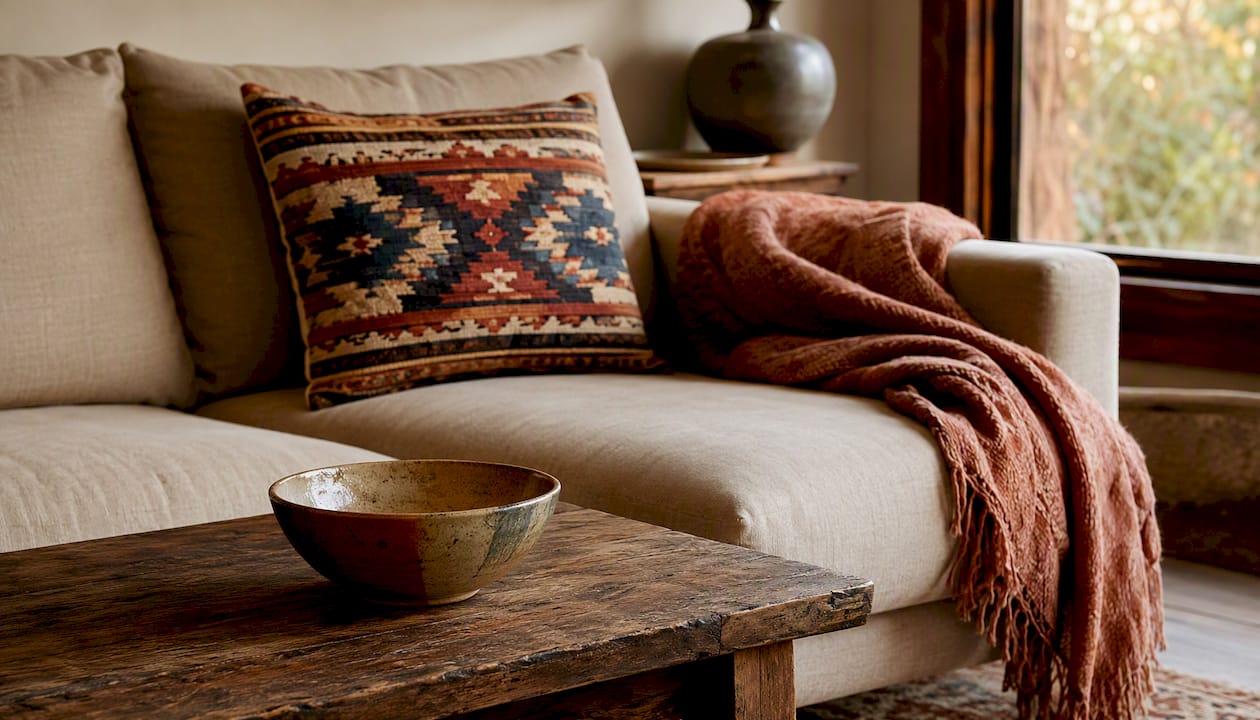
Living room. Anchor with a handcrafted pillow in a bold motif on the sofa. Add a flatweave throw in a complementary tone draped over one arm. A hand-thrown ceramic bowl on the coffee table closes the triangle. The warm living room guide from Createdecorus shows how this layering reads in practice.
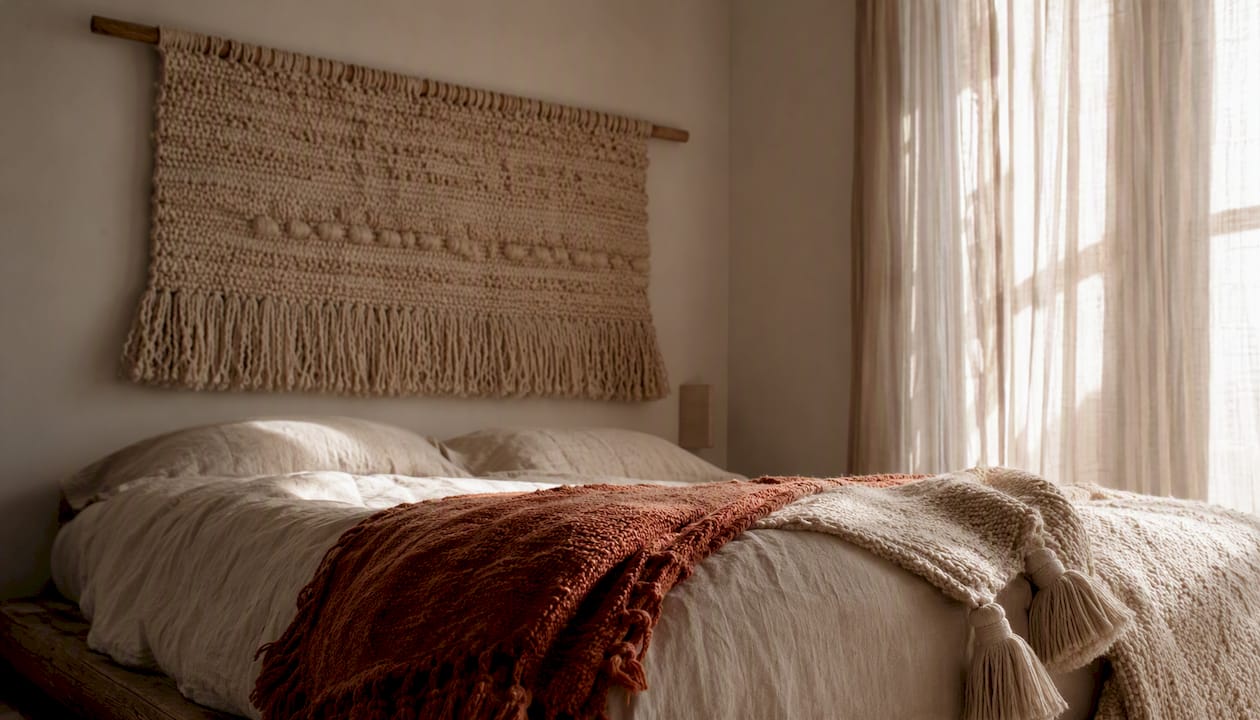
Bedroom. Replace a standard headboard with a large woven textile mounted on a dowel. Layer two or three handcrafted throws at the foot of the bed in tones that echo the hanging. The result reads as a considered, personal sanctuary rather than a catalog page.
Entryway. Use a sequence of three objects at different heights — a ceramic vessel on a low table, a framed textile fragment at eye level, a hanging lantern above — to create a narrative that greets visitors before a word is spoken.
Retail vignette. A boutique display works best when it tells one story per shelf unit. Group a handcrafted pillow, a ceramic piece, and a folded textile in the same palette. Add a small provenance card. Shoppers who understand the story behind a piece are far more likely to connect with it emotionally and purchase.
Pro Tip: For retail displays, pairing Mexican crafts with contemporary furniture offers practical visual contrast ideas that translate directly to boutique merchandising.
A numbered sequence for a retail vignette:
- Choose one palette (three colors maximum).
- Select one hero handcrafted piece as the focal point.
- Add two supporting objects that echo the palette or motif.
- Write a three-sentence provenance card for the hero piece.
- Light the display with a warm directional spot.
How do you commission an artisan or brief a designer?
A clear brief protects both the buyer and the maker. Include these elements:
- Purpose and placement: Where will the piece live, and what narrative role does it play?
- Dimensions: Exact measurements, including clearance for hanging hardware.
- Material preferences: Fiber type, weave structure, color palette with reference swatches.
- Visual references: Three to five images that capture the mood, not necessarily the exact style.
- Deadline and milestones: Delivery date, plus a mid-production review point for larger commissions.
- Budget range: State it clearly. Artisans price more accurately when they know the range.
Typical timelines for handcrafted commissions:
- Small accent pieces (pillows, small ceramics): 2–4 weeks from approved brief.
- Medium furnishings (ottomans, medium wall hangings): 4–8 weeks.
- Bespoke large textiles (room-scale rugs, large wall pieces): 10–16 weeks, with one or two review milestones.
Budget ranges vary widely by region, technique, and maker. Request an itemized quote that separates materials, labor, and shipping. For unique handcrafted pieces for client projects, Createdecorus offers custom commission options with trade pricing for designers and boutiques.
Pro Tip: Always request a small sample of the proposed material or colorway before approving a full commission. A physical swatch in your actual lighting conditions tells you more than any digital reference.
A one-page checklist for client approvals and retail sign-off
Use this checklist before presenting a design to a client or finalizing a retail display.
- Narrative statement written in one sentence and shared with the client
- Focal handcrafted piece selected, sourced, and delivery confirmed
- Palette consistent across all textiles, objects, and accent pieces
- Pattern hierarchy clear (one dominant motif, one or two supporting)
- Lighting plan reviewed and warm-tone sources confirmed
- Provenance note prepared for each significant handcrafted piece
- Care and maintenance instructions obtained from the maker
- Client or buyer has approved the narrative statement in writing
For client presentations, open with the narrative statement, then show the focal piece, then walk through the layering logic. Clients approve designs faster when they understand the story first and the individual pieces second.
Pro Tip: The role of accent pieces in rooms resource from Createdecorus includes practical guidance on how small handcrafted objects signal narrative — useful reference material to share with clients who are new to the concept.
A numbered presentation sequence:
- State the narrative (one sentence, out loud).
- Show the focal piece and explain its provenance.
- Walk through the layering: palette, pattern, scale.
- Confirm the lighting plan.
- Hand over the provenance notes and care guide.
Why handcrafted decor carries a story that mass production cannot
We have spent years working closely with artisans who produce every piece with a specific intention: that the object should carry something of the place and the person who made it. That belief is not sentimental. It is structural. A hand-embroidered pillow made in a Mexican workshop carries visible stitch variation, color decisions made by a human eye, and a material weight that a machine-pressed alternative simply does not have. Those qualities are what make a room feel inhabited rather than assembled.
At Createdecorus, our production in Mexico is not a marketing detail. It is the reason our pieces work as narrative anchors. When a designer or homeowner places one of our pillows in a room, they are placing a specific cultural conversation into that space — a dialogue between artisan heritage and contemporary design. We also support designers and boutiques through our trade program, because we believe the people who curate spaces professionally deserve a sourcing partner who can speak to provenance with confidence.
Createdecorus handcrafted pieces bring your narrative to life
The method described in this guide works best when the focal piece is genuinely handcrafted, with documented provenance and the kind of material richness that holds a room's attention over time. Createdecorus's collection of artisan-made pillows, ottomans, and home accents — each produced in Mexico with traditional craft techniques — is built precisely for this role. Whether you are furnishing a single living room or curating a boutique display, our pieces arrive ready to anchor a visual narrative.
Designers and boutique buyers can apply for trade and wholesale pricing, with custom commission options available for bespoke projects. To see the full collection and find your next focal piece, shop all handcrafted accents and bring your story home.